
Faith in the age of science: Why God still matters

Once an outspoken atheist, Stanford bioengineering professor Annelise Barron was deeply influenced by Richard Dawkins and Christopher Hitchens — before rediscovering God through personal tragedy and the limits of science.
“I lost someone super close to me in a very shocking way to suicide two and a half years ago. And because he had killed himself, I suddenly became super anxious — like, is he in hell? You know, because this is what you vaguely hear, like, if you kill yourself, this is a cardinal sin,” Barron tells BlazeTV host Nicole Shanahan on “Back to the People.”
“So I started researching it and reading the Bible, and I just, you know, had an incredible revival of my own faith based on thinking about that question,” she explains.
And when Barron began hearing the testimonials of other believers who survived tragic circumstances that science couldn’t explain, her faith deepened further.
“What’s astonishing is, like, from one moment to the next, if you ask for help in a sincere way, you ask for healing, it can be given. And whether it’s an addiction or a disease or, you know, a habit that you’re not happy with — so I am just 100% certain that God is real and that He does love each one of us,” Barron tells Shanahan.
“All He wants from us is to be in closer relationship with Him. And I think it’s extraordinary how that can help your personal happiness,” she adds.
Shanahan couldn’t agree more, explaining that the healing she’s “found in full faith of Jesus as savior” can’t be replicated “through any other bioengineered mechanism.”
“I believe that,” Barron agrees.
Want more from Nicole Shanahan?
To enjoy more of Nicole's compelling blend of empathy, curiosity, and enlightenment, subscribe to BlazeTV — the largest multi-platform network of voices who love America, defend the Constitution, and live the American dream.
Club Misery: How the godless elite let the truth slip about atheism

What do Richard Dawkins, Sam Harris, Bill Maher, and Ricky Gervais have in common?
If you’re the sort of person who reads HuffPost, sips oat milk lattes, and thinks everything wrong with the world boils down to white men with opinions, you probably already have your answer: privileged patriarchal monsters.
Atheism, in its purest form, is an ideology of erasure, a faith in subtraction.
But if you’re a little more honest — and a little more curious — you’ll notice something different.
These aren’t just successful men. They’re atheists — and they’re also, quite clearly, miserable.
Bill Maher
Maher is a comedian by trade, but rarely funny any more — at least not in the way that feels joyful or generous.
On "Club Random," his podcast that masquerades as freewheeling conversation, Maher talks over his guests so relentlessly that it’s become the most consistent punch line in his YouTube comments.
- “Stop cutting them off, Bill.”
- “Let them speak, for once.”
- “Do you invite guests just to hear yourself talk?”
He lectures, sneers, and plays the same greatest hits week after week. He’s not sharing ideas — he’s performing superiority. You can practically feel the clenched teeth through your screen.
Richard Dawkins
Then there’s Richard Dawkins, the patron saint of Darwinian superiority, the man who turned religious skepticism into a career of scowling, condescension, and book tours.
Dawkins hasn’t smiled in public since the Cambrian explosion. He scolds believers like a substitute teacher who can’t believe anyone is still talking about God after he’s assigned the fossil chart. Every public appearance is an exercise in barely contained frustration — at creationists, at the Bible, at people who pray for the sick instead of shrugging their shoulders.
RELATED: Richard Dawkins' atheism collides with reality — then it crumbles
Dawkins doesn’t merely disbelieve. He resents belief, and nothing is more exhausting than a man perpetually outraged that billions of people don’t think exactly like him.
Ricky Gervais
Some will point to Ricky Gervais as the exception.
An atheist, a comedian, a master of satire, and they’d be right — at least partly. Gervais is funny. Incredibly so. But happy? That’s another story.
Gervais has never struck me as someone content. Even in interviews, there’s a fog of irritation that never quite lifts. He’s always complaining, always nagging, always rolling his eyes at something. And while he packages the whole thing in charm and wit, the engine underneath doesn’t sound like joy. It sounds like frustration dressed up for a Netflix special.
His entire career — brilliant as it may be — has been a decades-long monologue of gripes. Yes, he makes people laugh. But the deeper source of it all feels like a man quietly suffocating on his own disbelief. If in doubt, feel free to watch his recent interview with Jimmy Kimmel, a practicing Catholic, where he spent minutes rambling about everything wrong with himself and the world — his body, his brain, society, death.
Funny? Sure, but also bleak. The laughter lands, but the undertow is pure despair.
And then there’s "After Life," his hit Netflix show. Lauded for its honesty, praised for its emotion. But look closely, and what you see isn’t fiction; it’s confession. A man mourning his wife’s passing, clinging to sarcasm like a flotation device in a sea of grief. It’s gulag humor without the bars — just a soulless bloke with a dog and a sharp tongue, cracking jokes to keep the walls from closing in.
Gervais is playing himself. "After Life" isn’t just a comedy — it’s an atheist’s eulogy.
Sam Harris
Gervais' close friend Sam Harris is no better.
Before he was consumed by Trump derangement syndrome, he was a sharp mind who took a blowtorch to radical Islam. Harris positioned himself as the cold, rational surgeon cutting through sacred narratives full of hate and delusion.
But even then, the man radiated pessimism. There was always an oddness to him — like he was describing humanity from orbit, distant and curiously detached.
These days, it’s worse. His permanent frown, his stilted delivery, his fixation on Trump supporters as if they’re some primitive tribe to be studied under glass — it all screams anxiety, not authority. He doesn’t project clarity. He projects burden. Every podcast, every essay, every panel feels like another brick in a bunker of airtight, joyless "reasoning" — sealed off from awe, from beauty, from anything resembling peace.
No comfort. No transcendence. No light. Just a man methodically dismantling meaning while sounding more drained with each attempt. Harris whispers meditations and mouths moral truths, all while insisting there’s no divine author behind any of it.
Christopher Hitchens
Even the great Christopher Hitchens — brilliant in so many ways — died with a cigarette in one hand, a scotch in the other, and a rage against the God he claimed didn’t exist.
Hitchens was a man of genuine intellect and rhetorical firepower. He could dazzle a room into silence. He could devastate an opponent with a single line. Joy, however, was never part of the package. The Brit burned hot, but never warm. His wit wasn’t rooted in love. It was weaponized. He didn’t laugh with you; he laughed at the absurdity of the world and often at the people trying to find meaning in it.
RELATED: Neil deGrasse Tyson tries to mock Christianity — but exposes his own ignorance instead
His takedowns of Mother Teresa, of Henry Kissinger, of religion itself — they were theater, yes. But they were also therapy. They came from a place of deep unrest. His war wasn’t just with belief systems but with the very structure of consolation. The human need for mercy, for absolution, for something sacred. He couldn’t tolerate it, maybe because he wanted it too much.
Atheism didn’t bring him peace. It gave him license to rage: to reject sentiment, spit on tradition, and scorn the spiritual longings of billions.
He could speak for hours. But when it came to rest — to true stillness — he had none.
The problem with atheism
The problem with modern atheism isn’t just lack of belief. It’s that it builds identity around lack itself, around the removal of things. Strip away God, strip away the soul, strip away metaphysics, strip away teleology, and what’s left isn’t freedom — it’s vacancy.
Atheism, in its purest form, is an ideology of erasure, a faith in subtraction. And subtraction, no matter how eloquently defended, is not a place from which joy can grow.
It is, however, a place from which misery flourishes. Consciousness gets recast as a glitch, morality as adaptive behavior. Love? A chemical bribe from nature. Everything that once lifted the human soul now gets filed under "illusion."
And illusions, we’re told, are best destroyed.
RELATED: How atheism created a terrorist — but his bomb shattered secularism's illusions
But here’s the truth atheists ignore: You cannot build a life — let alone a civilization — on negation. You cannot inspire the heart with “there is no God,” no matter how clever the phrasing. You can’t raise a child on “nothing matters” and expect the child to thrive. You can’t look into the eyes of someone dying and offer neurons as comfort.
This public face of atheism — the podcast hosts, the viral thinkers, the smug Substack intellectuals — don’t sell joy. They sell despair dressed up as clarity. They tell you that meaning is a delusion, that your suffering has no higher context, that the love you feel is just your DNA playing dress-up. They perform autopsies on transcendence, then wonder why their audiences walk away spiritually numb.
Humans don’t just crave truth. They crave belonging, direction, awe, and something to serve that isn’t themselves.
Atheism offers none of that. It hands you a mirror and tells you it’s a map — and then it dares you to walk in circles and calls it freedom.
What Went Wrong in ‘Jordan Peterson vs 20 Atheists’
 Jordan Peterson professes to be an expert on Christianity but doesn't believe in Jesus — in fact, the only higher authority he seems to recognize is himself.
Christopher Hitchens’ dark prediction that just came true
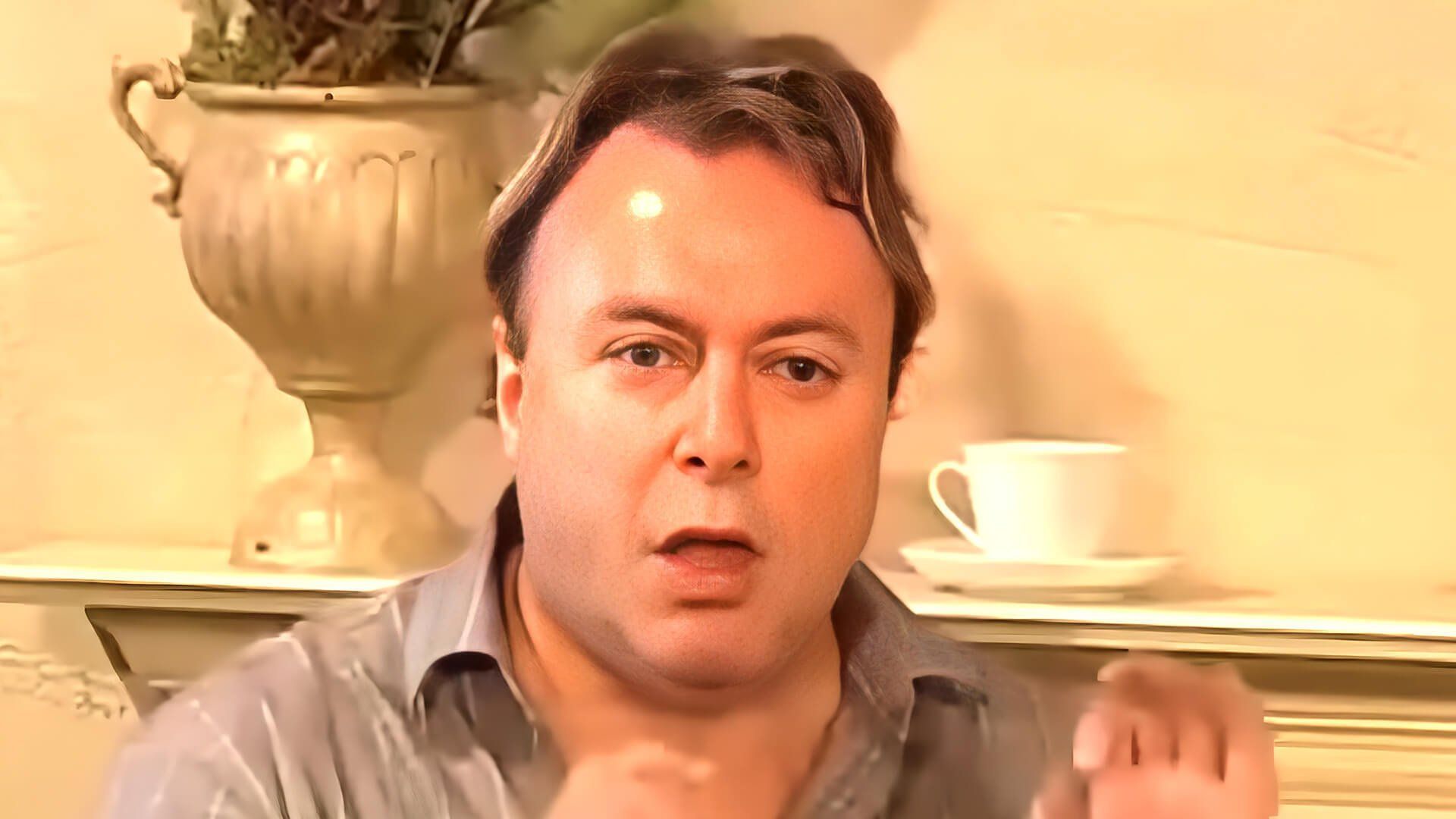
The late great Christopher Hitchens was an undeniable intellectual force — and, unfortunately, some of his darkest predictions are coming true.
“Give it up or give it to your deadliest enemy and pay for the rope that will choke you,” Hitchens said in a 2009 interview. “This is very urgent business, ladies and gentlemen.”
“I beseech you, resist it while you still can, and before the right to complain is taken away from you, which will be the next thing. You will be told you can’t complain because you’re Islamophobic. The term is already being introduced into the culture as if it was an accusation of race hatred,” he continued.
“The barbarians never take a city till someone holds the gates open for them. And it’s your own preachers who will do it for you, and your own multicultural authorities who will do it for you. Resist, resist it while you can,” he added.
Dave Rubin of “The Rubin Report” is floored.
“Christopher Hitchens warned his country, he was warning the entire world, but he was warning his country — resist it while you can,” Rubin says, noting that Democrat politicians are now openly discussing how “they’re going to censor misinformation.”
“You might go, 'Oh, it doesn’t really make sense that these gender queer weirdos are working together with the Hamas people except if their goal is complete and total power.' Then it actually does make perfect sense, and that really is where we are at,” he adds.
Want more from Dave Rubin?
To enjoy more honest conversations, free speech, and big ideas with Dave Rubin, subscribe to BlazeTV — the largest multi-platform network of voices who love America, defend the Constitution, and live the American dream.
Thanks To Neo-Atheists, New Zealand Teaches Primitive Pagan Nonsense As Equal To ‘Western’ Science
 Atheist Richard Dawkins may wash his hands of New Zealand’s pagan nonsense, but he is the useful idiot who made this all possible.
What ’60 Minutes’ Could Learn From Oriana Fallaci
 It would be nice if journalists were as tough on murderous dictators as they are on their domestic partisan foes.
 thefederalist.com
 www.theblaze.com