If The West Won’t Defend Itself, Third World Hordes Will Destroy Us
 We can defeat the people who want to kill our civilization. Or we can weep when the hordes have robbed us of children, spouses, and homes.
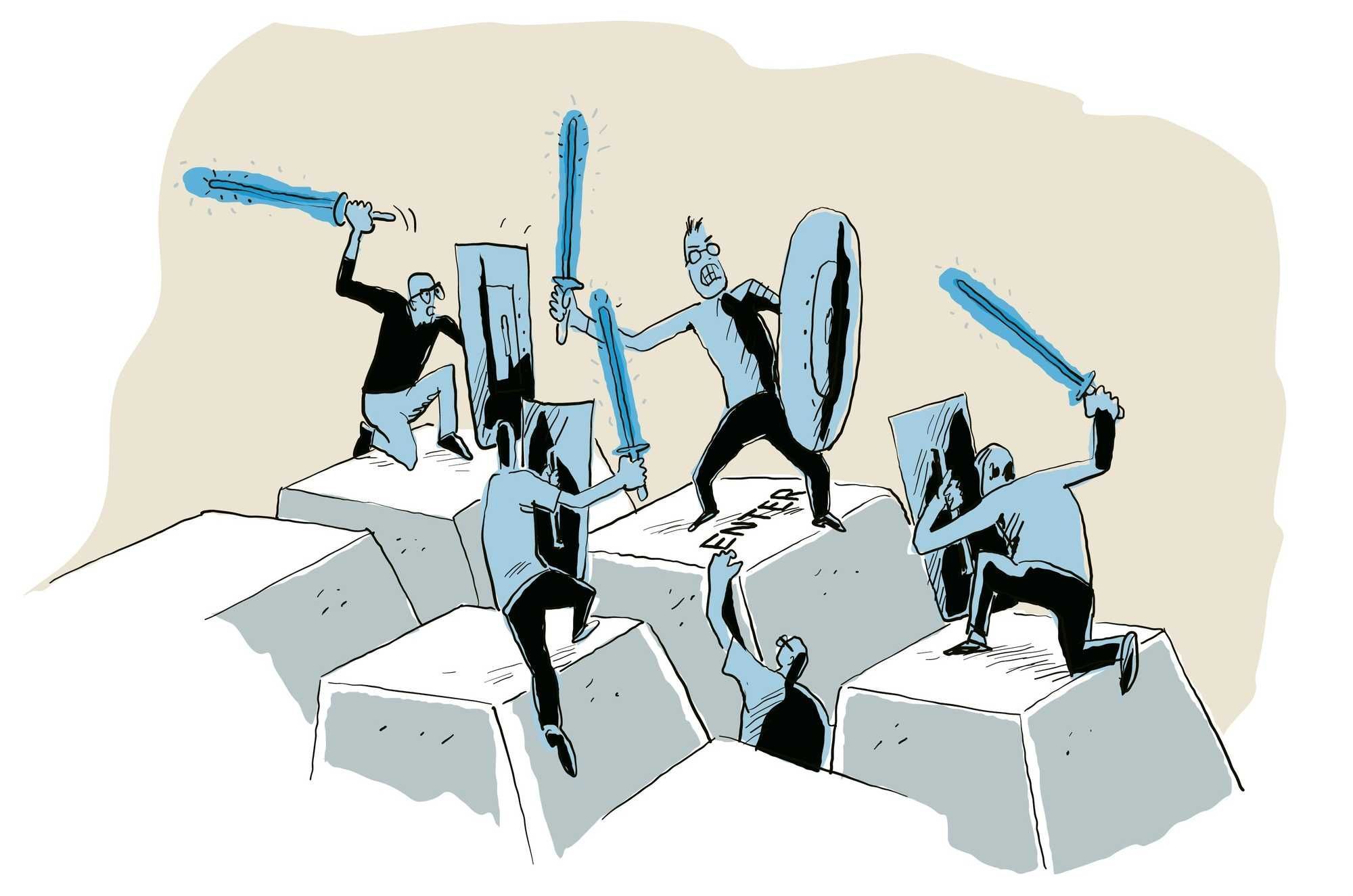
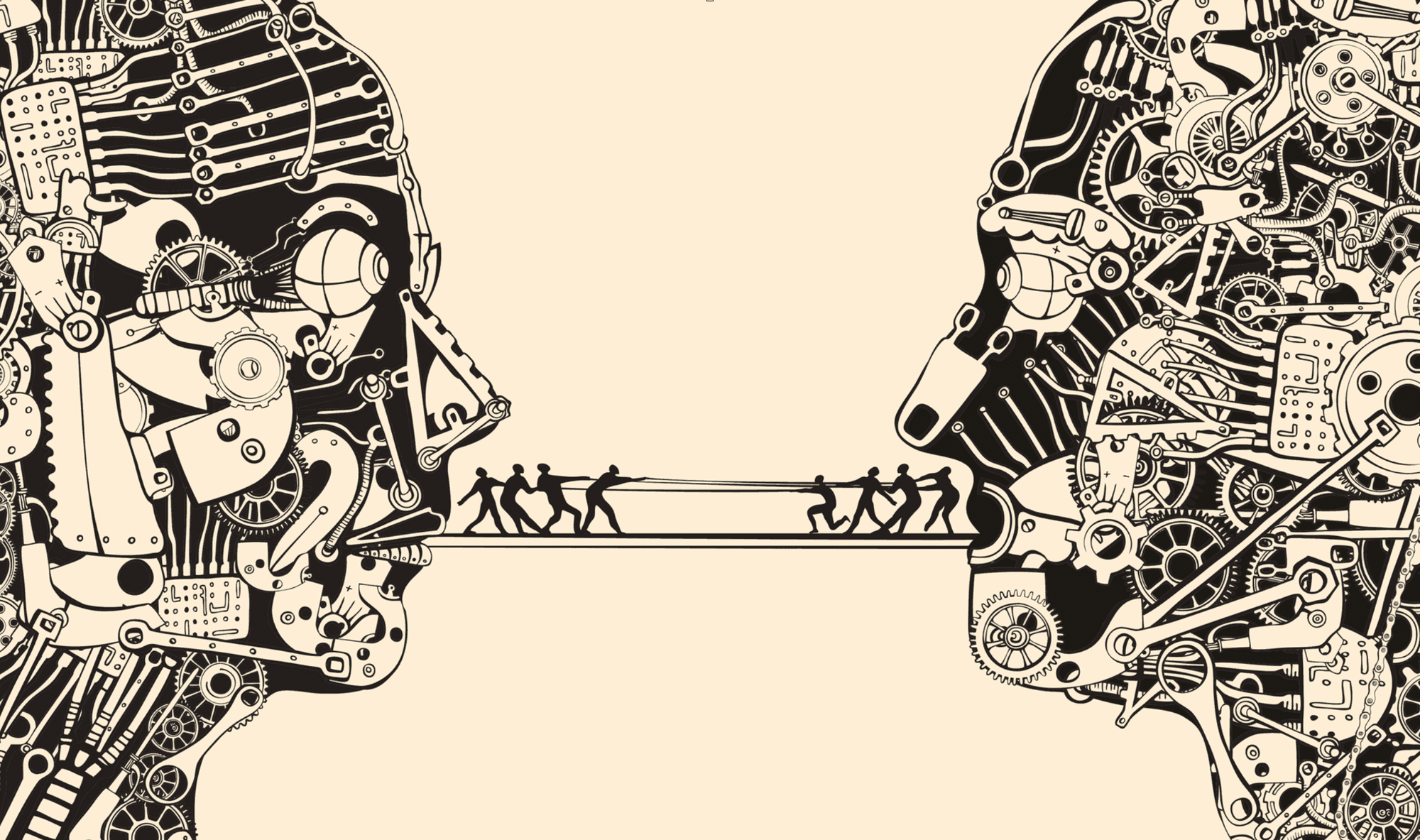
One day, not long ago — no one can recall exactly when — AI dropped from the sky, a deus ex machina springing fully formed from the head of, well, maybe its own head.
Or so it seems.
The context around the technology matters even more than the content.
In reality, AI’s origin story runs much deeper. So does the backlash against it. Both look stranger than they are because our shared memory of the recent past keeps shrinking.
AI has been a long time coming. In the mid-20th century, when human imagination still outran human and machine memory, artists produced vivid narratives about supercomputers and superintelligence. Scientists and engineers did the same, especially after World War II. Go back and read atomic-age Vannevar Bush, who mentored the namesake of Anthropic’s Claude, and the surprise is not that AI arrived. The surprise is that it took so long.
So why has AI produced such powerful future shock?
Not long ago, Americans rushed to embrace new technology. Yes, we were naïve about social media. We underestimated how people and governments would peep into our personal cyberspace. But when social media exposed our own questionable collective character, the reaction was not fury. Troubled? Yes. Shocked? No.
Even now, despite evidence that smartphones have entrenched bad habits and unhealthy temptations, we broadly regard the phone-and-app ecosystem as manageable. The trade-offs seem worth the bother if we clean up our act and make responsible choices.
AI is different. For millions participating in the backlash, AI differs from smartphones and social media not merely in power and scope, but in perceived injustice. Smartphones may rot our brains slowly. According to the backlash, even moderate AI use will swiftly destroy society.
Left-wing critics describe this destruction in terms of justice and the human nature Marx called our “species being.” Right-wing critics reach for the language of spiritual illness and stolen souls. The claim remains roughly the same: AI uniquely threatens our humanity, so the conversation about how to respond need not account for anything else.
Introduce any complicating factor outside AI and its creators, and critics may accuse you of distraction, dissembling, excuse-making, or apologizing for a permanent underclass — perhaps even human extinction.
I understand why so many people are so freaked out and so unwilling to pull focus away from AI. But the biggest reason lies outside AI and the AI debate.
Look at the arc Americans traveled with smartphones and social media. These transformative technologies became ubiquitous around the time of the 2008 financial crisis. Thanks to “innovative” monetary policy and frantic institutional improvisation, the world avoided penury, and technological development kept moving along its established trajectory.
Many Americans surely spent more time online as economic slack and stagnation spread after the crisis. Yet that shock was nothing like the blow that came during the COVID lockdowns.
Over those two decades, America’s fundamentals became dangerously unsound. Governance embraced can-kicking, corruption, patronage, fraud, and self-dealing legerdemain that cooked the country as much as it cooked the books. But the populist backlash — as veterans of Occupy Wall Street, the Ron Paul “rEVOLution,” or the Bernie Bro movement will remember — remained contained and controlled.
RELATED: There's a surprising fix for our AI oversight anarchy
At least until Trump came along.
Even during Trump’s first term, few Americans felt like sitting ducks in the shadow of cataclysm. Times were tough, the middle class felt squeezed, and the dollar didn’t go as far. But those pressures had become baseline dynamics — the same problem set Ross Perot once explained with his chicken-foot pointer in populist third-party infomercials.
The lockdown era obliterated that holding pattern. It also wiped out many people’s ability to process the new normal. The socioeconomic malaise accelerated into territory so unsustainable that people simply stopped trying to understand it.
They blocked it out like an event too awful to remain in our memory.
Runaway inflation. Church closures. Rising living costs. Soaring entry costs for upward mobility. Devalued savings. Exhausted savings. The mathematical impossibility of building a middle-class life across family, education, and wealth formation within the given number of workweeks in a year.
That was the comprehensive catastrophe.
And it unfolded before robust AI asserted itself on the social scene.
That means we cannot understand the AI backlash unless we recognize that the context around the technology matters even more than the content.
For many millions across the political spectrum, the American dream was already destroyed before they could form real judgments about AI. In a national atmosphere of spiritual sickness, financial insolvency, economic weakness, and social disintegration, AI appeared as the final blow — especially as AI leaders themselves forecast the end of paychecks, jobs, careers, and perhaps humanity itself.
Deep down, many Americans feel that the habits, institutions, and confidence that might have allowed them to participate fruitfully in the AI era were stripped away years ago. AI seems big, alien, and wrong. Worse, it seems forced on them at a moment of unprecedented weakness, after any hope of recovery has already vanished.
Because they now feel they can fight the “clankers” and their makers in a way they cannot fight their own downward mobility and immiseration, AI has become the perfect scapegoat.
And that is the danger.
Killing AI will not regrow our spiritual and social roots. In fact, our structural situation has deteriorated so badly that leaning harder on the machines than we otherwise would may now be necessary.
We need a financial reboot. We need to dismantle the governance system that sucked us dry. We need to shift from overextended sole superpower to sustainable civilization-state fast enough to avoid the geopolitical spike pit between those two conditions.
Without those urgent needs, we would have more time and room to maneuver on AI. But we do need those things, and we do not have much choice or time — at least not if we want to hold the country together long enough to give Americans back the freedom to regrow their spiritual and social shoots.
The real way. The slow way. The human way.
Treating AI as the ultimate scapegoat for all our ills will distort and delay that process. Treating AI as the ultimate savior will derail and damage us in the opposite direction.
Nor will the fantasy of curing our national trauma by using AI to solve all human problems restore American life as a challenge worth living. Our new technology can be much more, and much less, than a replacement plan for people reduced to polyp status.
That is the opening for a constructive approach to AI that most of us can ultimately live with.
Vice President JD Vance, who with second lady Usha Vance is expecting the delivery of their fourth child in July, told pro-life advocates gathered for the 52nd annual March of Life last year, "I want more babies in the United States of America; I want more happy children in our country; and I want beautiful young men and young women who are eager to welcome them into the world and eager to raise them."
While an American baby boom might be in the cards, it certainly did not take place last year.
'This is the choice that Americans now face, and the stakes could not be higher.'
New data from the Centers for Disease Control and Prevention reveal that U.S. fertility rates dropped to an all-time low in 2025.
There were an estimated 3,606,400 births last year — a 1% decline from 2024. A plurality of babies — just over 1.11 million — were born to mothers in the 30-34 age group, which conforms to the years-long trend of women increasingly delaying family generation until older ages or putting it off altogether.
The general fertility rate, which references the average number of children born to a woman in her lifetime if she were to experience the age-specific fertility rates of a given year, was 53.1 births per 1,000 women ages 15-44. The rate has decreased by 23% since 2007, the year of the Great Recession.
Whereas the year-over-year decline in births per woman in the 15-44 cohort was 1%, the fertility rate for females ages 15-19 declined by 7% last year, dropping to 11.7 births per 1,000 females — another record low. The CDC notes that the fertility rate for teenagers has decreased by 72% since 2007 and 81% since 1991.
RELATED: 5 steps to reset your body's clock to God's natural design
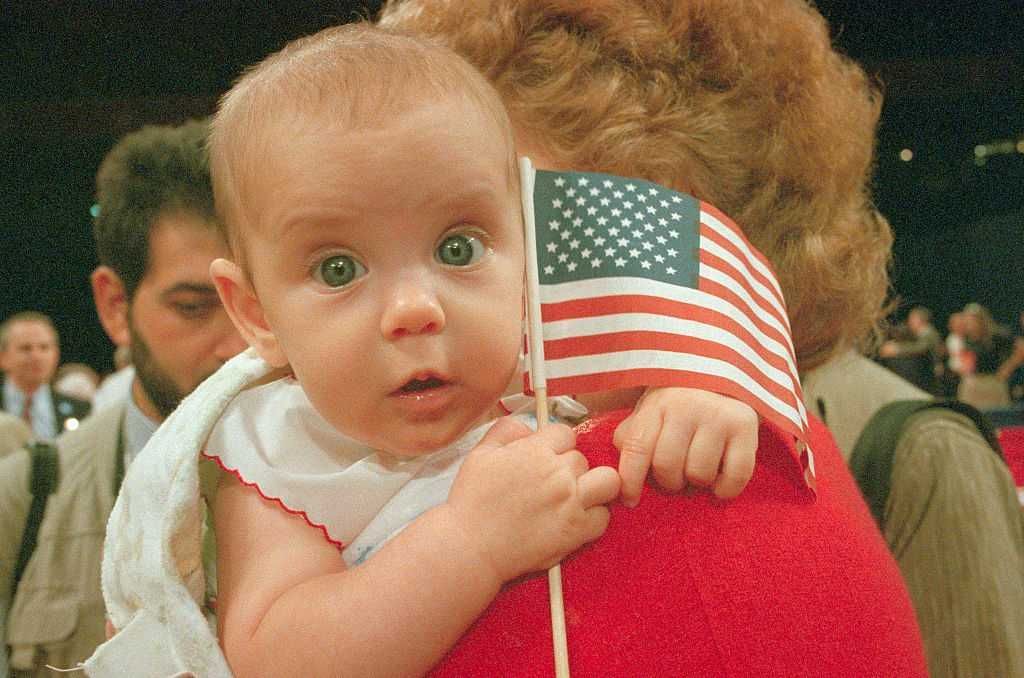
The total fertility rate averaged 3.7 births per woman in 1960; 2.12 births in 2007; 1.64 in 2020; and 1.6 in 2024. It fell again last year to 1.57, according to a Wall Street Journal calculation using the new CDC data.
This is particularly bad news for those keen to bequeath the nation to heritage Americans since the total fertility rate necessary for a population to maintain stability and replenish itself without requiring replacement by foreign nationals — what is referred to as replacement level fertility — is 2.1.
Health and Human Services Secretary Robert F. Kennedy Jr. said last year that a rate below replacement "is a national security threat to our country."
Total fertility rates have plummeted across the first world. In the European Union, for example, the rate reportedly dropped from 2.62 in 1964 to 1.34 in 2024. The same year, the rate in Scotland dropped to 1.25 and to 1.41 in England and Wales.
Canada became one of the developed nations suffering "ultra-low fertility" in 2024, with a total fertility rate of 1.25 kids per woman. The Canadian government credited "increased educational levels, greater participation in the labor market, changing social norms, and the widespread use of contraception" for helping drive down the number.
The U.S. Congressional Budget Office projected in a report earlier this year that the fertility rate for foreign-born women in America this year will be substantially higher than the rate for native-born women, leading the home team 1.79 to 1.53.
The report noted further that:
on the basis of recent laws, policies, and demographic trends, CBO projects that the rate of population growth will generally slow over the next 30 years, from an average of 0.3% a year in the next decade to an average of 0.1% a year from 2037 to 2056. The total population is projected to stop growing in 2056 and remain roughly the same size as in the previous year.
The CBO added that net immigration is expected "to become an increasingly important source of population growth, especially if the annual number of deaths begin to exceed the annual number of births as expected in 2030."
Some analysts have attempted to put a positive spin on America's dwindling fertility rate.
"Women now have better control over their reproductive lives, so there’s not as much unintended pregnancy as there used to be," Alison Gemmill, an associate professor of epidemiology at the UCLA School of Public Health, told CNN. "Our timelines have shifted."
According to data released last month by the pro-abortion Guttmacher Institute, there were an estimated 1,126,000 clinician-provided abortions last year — nearly one-third the number of the reported live births.
In addition to exerting "better control" over their God-given procreative ability, Gemmill suggested that some would-be parents are rethinking having kids in light of concerns about so-called climate change, the economy, and raising a child in a supposedly "inequitable world."
Karen Benjamin Guzzo, a demographer at the University of North Carolina at Chapel Hill, recently told the New York Times, "There’s been a lot of doom and gloom about the birth rate, but the decline is also a success story."
The Heritage Foundation has, alternatively, acknowledged this bleak trend as a crisis, noting in a January report, "American family life is truly at a crossroads. One path is marked by unwed childbearing, low rates of marriage, low fertility, low commitment, and easy divorce. This path is associated with the view that family formation (or its avoidance) is primarily about fulfilling adult desires and adult needs."
"The other path elevates the family unit as an inherent good based on the commitment and sacrifice of husbands and wives for each other’s sake and for the sake of children that their union would welcome into the world. This path is associated with the view that all life is sacred and that sees the family as a source of fulfillment for adults because they direct their energies to the good of the family unit instead of to themselves alone," continued the report. "Underlying this view is a deep sense of gratitude in knowing that human beings are here by God’s grace and that children are divine gifts."
"This is the choice that Americans now face, and the stakes could not be higher," the report added.
Like Blaze News? Bypass the censors, sign up for our newsletters, and get stories like this direct to your inbox. Sign up here!
I recently did something that I usually avoid. I stayed up too late and wandered into the digital sewer we politely call “the conversation.” X, feeds, clips, comments, rage-bait. I knew it would not end well, but I kept scrolling anyway. By the time I finally shut it off, it was clear that the despair and resentment social media produces are not a bug — they are the feature.
The world you see online is a world stripped of context and proportion. Everything is framed as an emergency, everything demands outrage, nothing asks for wisdom. Human suffering is turned into ammunition, children are turned into slogans, and hatred is dressed up as moral clarity. If you sit with it long enough, you begin to feel foolish for believing in decency at all.
God is not dead. He is not asleep. And the story is not finished, no matter how much the algorithm wants you to believe otherwise.
It made me think of a poem I had not thought about for some time.
Henry Wadsworth Longfellow’s “Christmas Bells” is often quoted for its opening lines about peace on earth and goodwill toward men. That is usually where people stop.
But Longfellow wrote the poem in the middle of the Civil War. His country was fractured, his own son a casualty of the fighting, and his wife killed in a tragic accident. The poem is an honest look into the mind of a man laid low.
In the early stanzas, Longfellow describes hearing church bells repeat the old promise of peace. Then reality intrudes, cannons thunder, violence drowns out the song. He writes that it felt “as if an earthquake rent the hearthstones of a continent.” That is what civil war feels like from the inside.
That line has stayed with me for a very long time.
We are not there yet, but the pressure is mounting. Anti-Semitism has returned openly, not whispered, but justified. The Jewish people — history’s most reliable early warning system — are being threatened again, and too many voices respond with silence, excuses, or applause. We swore we would never allow this again. Now it is happening all over the West.
At the same time, the world is edging toward wider conflict. Alliances are hardening, borders matter again. But this time, there is no obvious force capable of stabilizing the chaos. America is busy devouring itself. Europe is exhausted. The rest of the world is watching to see what happens next.
This is the part of the poem most people skip.
Longfellow does not rush to hope. He admits his despair. “There is no peace on earth,” he writes, “for hate is strong, and mocks the song.” Honesty is not weakness. Pretending everything is fine when it is not is how civilizations collapse quietly.
But the poem does not end there.
The final stanza matters because it follows despair instead of denying it. Longfellow writes:
Then pealed the bells more loud and deep:
“God is not dead, nor doth He sleep;
The Wrong shall fail,
The Right prevail,
With peace on earth, good-will to men.”
That is not cheap optimism promising a quick end to suffering. It is a conviction insisting that evil does not get the last word.
That distinction matters a lot right now.
RELATED: Culture’s great subversion machine has broken down at last

Hope is not pretending the algorithm is wrong. It is recognizing that what trends is rarely what endures. The quiet courage that holds families together, the decency that stops violence when no camera is present, the faith that steadies people when institutions fail — those things do not go viral, but they do prevail. History does not turn on outrage. It turns on character.
Every civilization that survives a moment like this does so because enough people refuse to surrender their moral bearings. They do not deny the danger or excuse the evil. They do not outsource conscience to crowds or machines. They decide, quietly and stubbornly, to let their lives reflect the fact that truth still matters.
Longfellow had not yet seen the end of the war when he wrote that poem. He wrote it because despair was real and hope was necessary anyway. The bells did not silence the cannons overnight. But they reminded him — and us — that order is not an illusion and truth is not negotiable.
God is not dead. He is not asleep. And the story is not finished, no matter how much the algorithm wants you to believe otherwise.
President Donald Trump has set about bringing the "golden age of America" into existence though appears keen also to strengthen Western civilization at large. Nations across the Atlantic have, however, proven reluctant to join the U.S. in rejecting the "false song of globalism" and in turning away the hordes of unassimilable migrants who threaten to transform their lands into places both unsafe and unrecognizable.
The Trump administration made abundantly clear in its newly released 33-page National Security Strategy that European allies now have a choice to make: lean into their strengths and former greatness, reassert their national identities, and reject the liberal policies that have led them to relative ruin or continue down the path to "civilizational erasure" without the United States of America holding their hands.
'We want Europe to remain European.'
European officials and liberals on both sides of the Atlantic — including a former Obama official — have melted down over the document, attacking the Trump administration for daring to identify the threat and choice now facing Europe.
The administration has attempted on several occasions to give America's European allies a helmet readjustment.
Vice President JD Vance, for instance, noted in a Feb. 14 speech at the Munich Security Conference in Europe that it is high time to "change course and take our shared civilization in a new direction."
In addition to blasting the British and European political establishment for their ruinous mass migration polices, Vance expressed disappointment over their suppression of popular political movements, crackdown on free speech, and routine attacks on religious liberties.
RELATED: No more stiff upper lip: My fellow Brits are fed up with 'diversity'
The State Department has similarly expressed concerns about the trends weakening Europe and the need for America's friends across the Atlantic to buck up and get their affairs in order.
In a May essay shared on its Substack, the State Department suggested that the globalist liberal campaign to "usher in an era of unprecedented peace" in the wake of World War II "by overcoming the anchors of nationhood, culture, and tradition" was a colossal failure.
"This promise lies in tatters," wrote Samuel Samson, a senior adviser for the State Department's Bureau for Democracy, Human Rights, and Labor. "What endures instead is an aggressive campaign against Western civilization itself."
"Our relationship is too important, our history too valuable, and the international stakes too high to allow this partnership to be undermined," continued the essay. "Therefore, on both sides of the Atlantic, we must preserve the goods of our common culture, ensuring that Western civilization remains a source of virtue, freedom, and human flourishing for generations to come."
The 33-page National Security Strategy document released by the Trump administration on Friday signaled a continued break with the thinking of previous administrations on a number of matters, including on America's special relationship with Europe, which the document suggested is conditional on Europe maintaining its values and culture.
In a section titled "Promoting European Greatness," the document notes that Europe has lost significant share of global GDP over the past 35 years largely as the result of "national and transnational regulations," "but this economic decline is eclipsed by the real and more stark prospect of civilizational erasure."
"The larger issues facing Europe include activities of the European Union and other transnational bodies that undermine political liberty and sovereignty, migration policies that are transforming the continent and creating strife, censorship of free speech and suppression of political opposition, cratering birthrates, and loss of national identities and self-confidence," continued the strategy document. "Should present trends continue, the continent will be unrecognizable in 20 years or less."
The Trump administration's strategy document indicated that if certain NATO members continue down their present path, they might not only cease to be recognizably European but cease to remain "reliable allies."
Deputy Secretary of State Christopher Landau summarized on X that despite insisting upon transatlantic cooperation while wearing their NATO hats, "when these countries wear their EU hats, they pursue all sorts of agendas that are often utterly adverse to US interests and security — including censorship, economic suicide/climate fanaticism, open borders, disdain for national sovereignty/promotion of multilateral governance and taxation, support for Communist Cuba, etc etc. This inconsistency cannot continue."
"Either the great nations of Europe are our partners in protecting the Western civilization that we inherited from them or they are not," continued Landau. "But we cannot pretend that we are partners while those nations allow the EU’s unelected, undemocratic, and unrepresentative bureaucracy in Brussels to pursue policies of civilizational suicide."
With the understanding that "Europe remains strategically and culturally vital to the United States" and that the U.S. cannot "afford to write Europe off," the Trump administration emphasized its support for "genuine democracy, freedom of expression, and unapologetic celebrations of European nations’ individual character and history," and recommended its European allies get their acts together.
The strategy document was welcomed by many of those on both sides of the Atlantic who've read the writing on the wall and paid close attention to the various crises now destabilizing Europe.
British-American historian Niall Ferguson noted, for instance, "However unpalatable you may find this analysis, you will struggle to find evidence to the contrary. My better-informed British and European friends whisper it softly: 'Maybe it's true.'"
'We must stop behaving as a friend.'
Missouri Sen. Eric Schmitt (R) wrote, "America is back to practicing a foreign policy rooted in strength, restraint, and national interest, not Wilsonian fantasy. The new National Security Strategy marks a clear return to a distinctly American tradition: Realism."
Of course, those supportive of Europe's current path condemned the document.
RELATED: 'Begin repatriating': German chancellor admits it's time to give Syrian migrants the boot

Valerie Hayer, a member of the European Parliament and president of the liberal political group Renew Europe, called the document "unacceptable and dangerous," stating that the Trump administration "has no right to question what makes the European Union, its values, its democratic choices" and no right "to attempt to impose onto our territory the xenophobic and ultra-conservative vision of the MAGA networks."
Hayer suggested further that the National Security Strategy served as confirmation that the "Trump administration is an enemy of Europe" and that "we must stop behaving as a friend toward it."
Shashank Joshi, an editor at the Economist, echoed Hayer, saying it was "a radical, dangerous document" and suggesting the strategy was to "Make Europe White Again."
Brett Bruen, a former diplomat who served as director of global engagement at the Obama White House, told the Independent that the plan was a "disastrously dumb, deeply damaging document for American diplomacy."
"It only further fuels distrust and puts more distance between Washington and the allies we most desperately need to ensure our own security and prosperity," added Bruen.
The German foreign minister, Johann Wadephul, was reportedly also prickled by the document, stating that "we see ourselves as being able to discuss and debate these matters entirely on our own in the future, and do not need outside advice."
In Wadephul's country, which had a birthrate of 1.35 children per woman last year, has in recent years, like other European nations, suffered an explosion in violent crime as a result of its admission of third-world migrants; has a capital city with apparent no-go zones where Jews and homosexuals cannot safely transit certain areas; and has sought to ban, vilify, disarm, debank, and criminalize the popular party that has attempted to turn things around.
Like Blaze News? Bypass the censors, sign up for our newsletters, and get stories like this direct to your inbox. Sign up here!
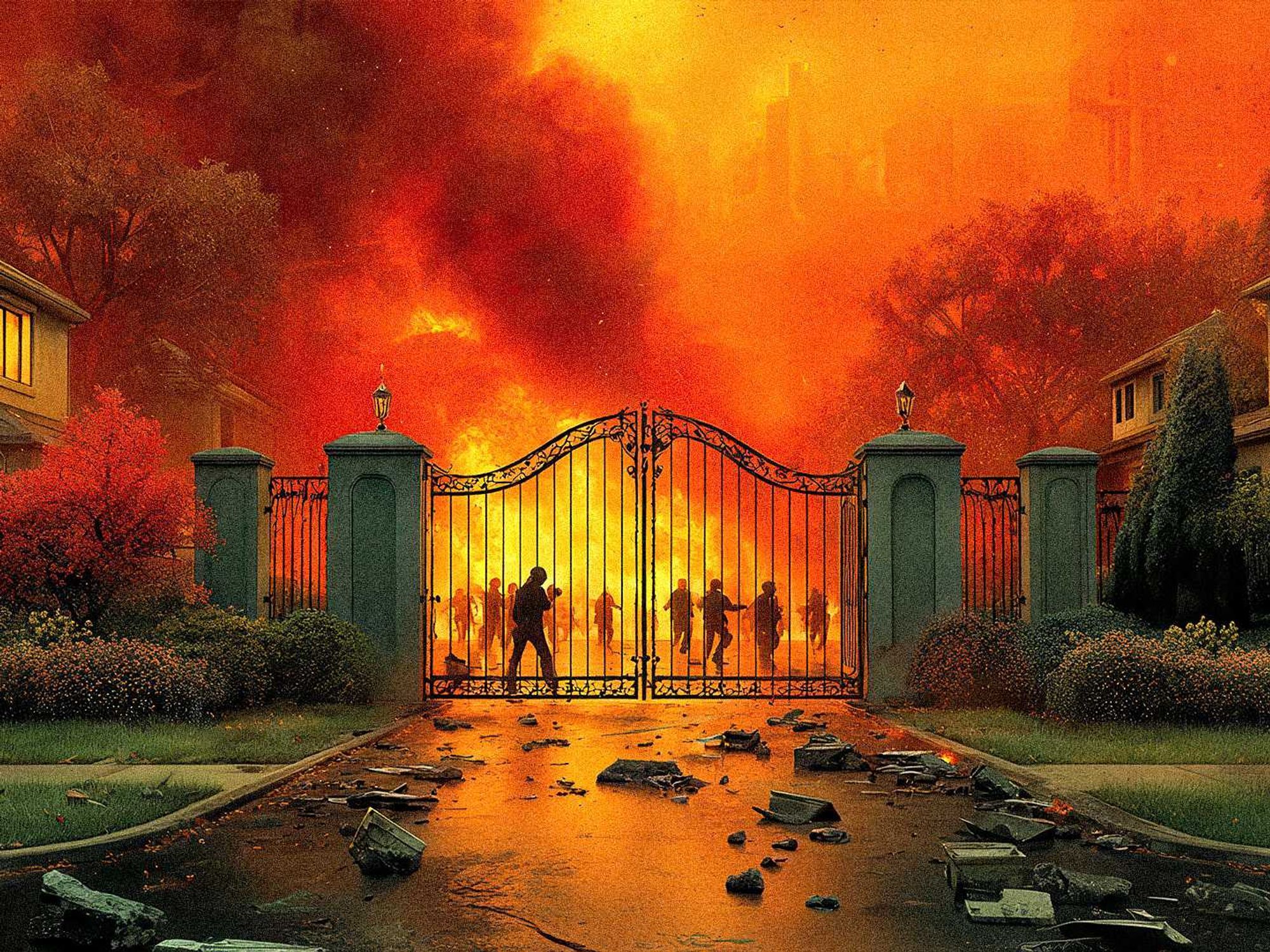
Homeowners’ associations exploded across America beginning in the 1960s. No one describes HOAs as “popular,” and the horror stories of petty rules and bureaucratic neighbors are legion. Yet more Americans fight for the privilege of buying into them every year. The reason is simple: The HOA is the last legal mechanism Americans have to artificially recreate something the country once produced organically — a high-trust society.
People want neighborhoods where streets feel safe, houses stay maintained, and neighbors behave predictably. We call these places “high trust” because people do not expect those around them to violate basic standards. Doors remain unlocked, kids play outside, and property values rise. Americans once assumed this was the natural condition of ordinary life. It never was.
Everyone complains about HOAs, but they remain the only defense against the chaos modern culture produces.
High-trust societies are not accidental. They emerge only under specific cultural conditions. Trust forms when people can understand and predict the behavior of those around them. That requires a shared standard — how to act, how to maintain property, how to handle conflict. When those standards come from a common way of life, enforcement becomes minimal. People feel free not because they reject limits, but because the limits match their instincts and expectations.
Every social order requires maintenance, but the amount varies. When most residents share the same assumptions, small gestures keep the peace. A disapproving look from Mrs. Smith over an unkempt lawn prompts action. A loud party until 1 a.m. results in lost invitations until the offender corrects the behavior. Police rarely if ever enter the picture. The community polices itself through mutual judgment.
Several preconditions make this coordination possible. Residents must share standards so violations appear obvious. They must feel comfortable addressing those violations without fear of disproportionate or hostile reactions. And they must value the esteem of their neighbors enough to respond to correction. When those conditions collapse, norms collapse with them. As New York learned during the era of broken windows, one act of disorder invites the next.
American culture and government spent the last 60 years destroying those preconditions.
Academics and media stigmatized culturally cohesive neighborhoods, and government policies made them nearly impossible to maintain. Accusations of racism, sexism, or homophobia discourage the subtle social pressure that once corrected behavior. The informal network of mothers supervising neighborhood kids vanished as more women entered the corporate workforce. And as Robert Putnam documented, social trust deteriorates as diversity increases. Residents retreat into isolation, not engagement.
The HOA attempts to reconstruct a high-trust environment under conditions that no longer support it. Ownership, maintenance, and conduct move from cultural consensus to legal contract. Residents with widely different expectations sign binding agreements dictating noise levels, lawn care, parking, paint colors, and countless other micro-regulations. A formal board replaces Mrs. Smith’s frown. Fines replace gentle rebukes. Gates and walls replace the watchful eye of neighborhood moms.
What once came from community now comes from bureaucracy.
With home prices surging, families dedicate larger portions of their wealth to their houses. Few want to gamble on declining property values because their neighborhood slips into disorder. Everyone complains about HOAs, but they remain the only defense against the chaos modern culture produces. People enter hostile, artificial arrangements where neighbors behave like informants rather than partners — because the alternative threatens their largest investment.
RELATED: Do you want Caesar? Because this is how you get Caesar

This analysis is not about suburban frustration. The HOA reveals a far broader truth: Modern America replaced a high-trust society with a trustless system enforced by administrative power.
As cultural diversity rises, the ability of a population to form democratic consensus declines. Without shared standards, people cannot coordinate behavior through social pressure. To replicate the order once produced organically by culture, society must formalize more and more interactions under the judgment of third parties — courts, bureaucracies, and regulatory bodies. The state becomes the referee for disputes communities once handled themselves.
Litigiousness rises, contracts proliferate, and coercion replaces custom. The virtue of the people declines as they lose the skills required to maintain trust with their neighbors. Instead of resolving conflict directly, they appeal to ever-expanding authorities. No one learns how to build trust; they only learn how to report violations.
The HOA problem is not really about homeowners or housing costs. It is a window into how America reorganized itself. A nation once shaped by shared norms and informal enforcement now relies on legalistic frameworks to manage daily life. Americans sense the artificiality, but they see no alternative. They know something fundamental has changed. They know the culture that sustained high-trust communities no longer exists.
The HOA simply makes the loss unavoidable.
President Donald Trump had a cordial meeting at the White House on Friday with Hungarian Prime Minister Viktor Orbán, who he emphasized was a "good person" and a "great leader."
In addition to discussing trade, the war in Ukraine, and energy, the two leaders discussed two transformative matters where Hungary has distinguished itself from the rest of Europe, namely immigration and faith.
'We want a Christian Europe because we believe that this is the only way forward.'
Trump noted that while other European nations have made "tremendous mistakes on immigration and it's really hurting them very badly, [Orbán] has not made a mistake on immigration," adding that while not universally liked, Orbán, who has been prime minister since 2010, "is respected by everybody" and well-positioned to win his 2026 election, where he's likely to face off against liberal Europhile Péter Magyar.
After Trump celebrated the conservative nationalist's leadership, Orbán made a point of clarifying the nature of his government: "We are the only government in Europe which considers itself as a modern Christian government. All the other governments in Europe are basically liberal, leftist governments."
Orbán noted that since retaking office in 2010, he and his Christian government have endeavored to break from the pack "at the philosophical level and at the level of practice as well."
RELATED: Christians are refusing to compromise — and it's terrifying all the right people

"We are kind of a special island of difference in a liberal ocean in Europe and consider ourselves as a modern Christian government," the prime minister continued.
Orbán has made no secret of his antipathy for atheistic establishmentarians and liberal bureaucrats in Brussels, noting in a September statement, for instance, that "the European Union is teetering on the brink, with debt, migration, violence, and failing policies everywhere. Hungary stands firm: migrant-free, pro-family, providing opportunities to those willing to work. We need courage — intellectual, political, and personal — to recognize that the West is no longer a role model to follow, and to show that there is a better way."
The prime minister's policies have long enraged liberals — who frequently refer to him as an "authoritarian" — and in some cases resulted in threats and financial penalties from the European Commission.
Hungary under his leadership has, for instance, imposed a ban on LGBT propaganda targeting children; signaled opposition to Ukraine's proposed admission to the European Union; drove bums out of public spaces; built a barrier to keep out border jumpers; and implemented various pro-natalist measures including tax exemptions for mothers.
"We want a Christian Europe because we believe that this is the only way forward," the prime minister said earlier this year. "In the shadow of empires, at the crossroads of civilizations, we have always won our battles for the survival of our homeland, the preservation of our nation, and Christian culture."
— (@)
Like Blaze News? Bypass the censors, sign up for our newsletters, and get stories like this direct to your inbox. Sign up here!
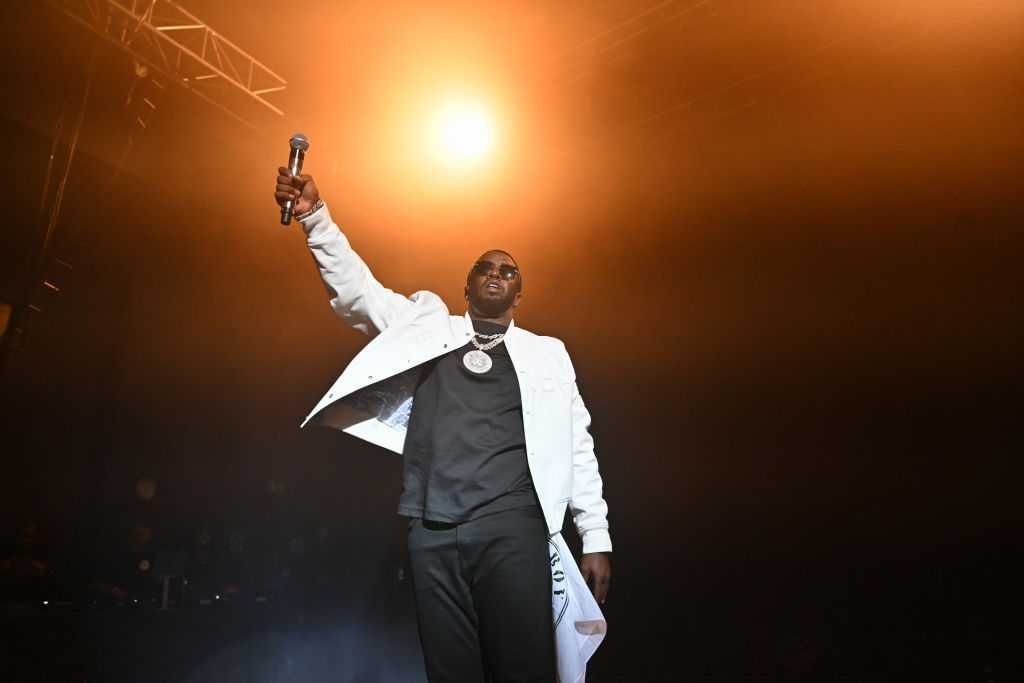
Sean “Diddy” Combs — mogul, producer, and architect of a billion-dollar brand — was sentenced Friday to more than four years in federal prison for his despicable crimes against women. The sentence won’t shatter the glossy mythology he’s sold for decades. The headlines will obsess over the punishment and whether justice was done. But the deeper story is the culture he built — and that millions of Americans continue to bankroll.
Let’s stop pretending: No other major American music genre has a criminal record like rap. This isn’t a bad apple. It’s a poisoned orchard.
No other genre has turned crime, misogyny, and hatred for order into cultural virtues.
Tay-K was convicted of murder in 2019 and again in 2020 for a separate shooting. He’s serving 55 years. South Park Mexican is doing 45 years for child sexual assault. C-Murder? Life for killing a teenager. Big Lurch is doing life for murder and cannibalism. B.G. just got out after 14 years for weapons and witness tampering. Chris Brown — who still charts — pled guilty to felony assault of Rihanna and keeps finding trouble. Shyne served nearly a decade for a nightclub shooting that Diddy himself may have committed. Kodak Black, Max B, Crip Mac, Flesh-N-Bone, Big Tray Deee — all convicted felons.
That’s not some obscure playlist. That’s the soundtrack.
Try compiling a similar rap sheet for classical violinists, country balladeers, or pop crooners. Even rock, infamous for its drug excesses, never reached this level of violence or degradation.
Still think this is just about “personal behavior”? Listen closer.
Even when not committing crimes, many hip-hop “artists” glorify them. Anti-police, anti-woman, anti-civilization — these aren’t exceptions but industry standards. “F**k the police” wasn’t a phase. It was a forecast. “Shoot a cop, that’s my solution” isn’t satire. It’s strategy.
You don’t have to dig to find chart-toppers dripping with misogyny, death threats, and celebrations of drug-dealing and street violence. This isn’t fringe content. They’re topping the Billboard charts.
In what other industry could someone openly brag about pimping women, selling narcotics, or “sliding on ops” and still land Super Bowl halftime shows, Sprite deals, and White House invitations?
RELATED: Bad Bunny gets the ball, football fans get the finger

Defenders call it “storytelling,” “street realism,” or “art.” But these aren’t neutral observations. They’re recruitment ads for a culture of moral rot. Many rappers don’t just depict criminality — they embody it, and their fans reward them for it.
Every stream, download, and ticket sale is a vote for decadence — a few more dollars for the next defense attorney, a little more validation for the notion that responsibility is oppression and chaos is authenticity.
Even academics have noticed. Law journals have dissected the way hip-hop glorifies violence while its corporate enablers polish the packaging. The same elites who decry “toxic masculinity” will nod along to lyrics calling women “bitches” and “hoes.” The same corporations that preach “inclusion” will bankroll artists who sneer at civilization. The same politicians pushing gun control will campaign beside men who made fortunes romanticizing drive-bys.
Yes, hip-hop has artistic power. It grew from hardship and gave voice to the voiceless. But no other genre has turned crime, misogyny, and hatred for order into cultural virtues.
There’s a difference between reflecting reality and selling it — between giving voice to pain and turning pain into product. Today’s rap industry isn’t holding up a mirror to society. It’s pointing a gun at it.
The Diddy sentencing should be a wake-up call. It isn’t just a reckoning for one man. It’s a moment of clarity for a culture that has lost its moral compass.
The question isn’t only who committed the crime. It’s who bought the album.
The ruling class trades in carbon outrage like it’s gold. Sanctimony fuels its crusade against oil, gas, and coal — never mind that those very fuels built the modern world. The comforts we take for granted — from longer lives and stocked shelves to clean water and lifesaving medicine — all trace back to the energy abundance that hydrocarbons made possible.
Still, the decarbonization faithful press forward. They dream of a carbon-free Eden, even as the global power grid, still humming on fossil fuels, refuses to cooperate.
Critics keep forecasting a shift away from fossil fuels. Reality keeps proving them wrong.
You won’t find a clearer contradiction than in the Yuxi Circle.
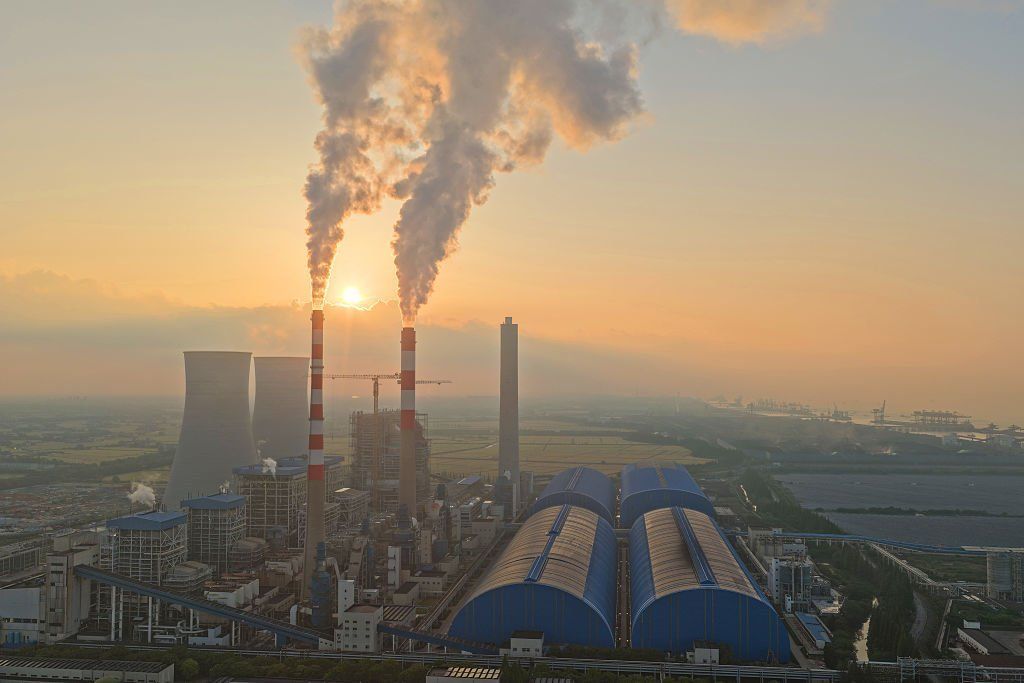
Draw a circle with a 2,485-mile radius around the southern Chinese city of Yuxi. British geographer Alasdair Rae did just that — and inside it resides 55% of the world’s population: some 4.3 billion people crammed into just 7% of Earth’s surface. The region includes China, India, much of Southeast Asia, and parts of Pakistan. Some of it — like the Tibetan Plateau and the Taklamakan Desert — is barren. But the rest is packed with cities, factories, and the aspirations of hundreds of millions clawing their way toward modern life.
Why does this matter? Because this region now anchors the world’s biggest fight over energy, growth, and climate policy.
While bureaucrats in Brussels sip espresso and activists glue themselves to the pavement in London, the real action plays out in Asia’s economic engine. In cities like Shanghai, Delhi, and Tokyo, energy demand soars — and fossil fuels do the heavy lifting. Coal and gas plants keep the lights on, while wind and solar trail far behind.
China burns more coal than the rest of the world combined. India burns more than the United States, the European Union, and the United Kingdom combined. The 10 ASEAN countries rank third. Oil use tells the same story: China and India sit alongside the U.S. atop the global leaderboard of consumption. Economic growth, it turns out, runs not on hashtags but on hydrocarbons.
Critics keep forecasting a shift away from fossil fuels. Reality keeps proving them wrong.
Hundreds of millions in the Yuxi Circle are still striving for what Westerners call a “decent life.” That means refrigerators, washing machines, air conditioning — and with them, a dramatic spike in electricity demand.
RELATED: Climate orthodoxy punishes the West
For context: The average American consumes 77,000 kilowatt-hours of energy each year. The average Indian uses a 10th of that. A Bangladeshi? Just 3% of what the average Norwegian consumes.
Now multiply that gap by a population of billions, and you begin to understand what’s coming.
The living room revolution is only the start. An industrial boom is building behind it — factories, office towers, and shopping malls all hungry for electricity. The coming surge in energy use across the Yuxi Circle will make the West’s climate targets look like a quaint relic of the past.
In this part of the world, the green fantasy runs headfirst into human need. Wind and solar can’t meet the moment. Coal, oil, and gas can — and do.
Just as they did for the West, these fuels now power the rise of the rest. And no amount of Western guilt or climate alarm will change that.
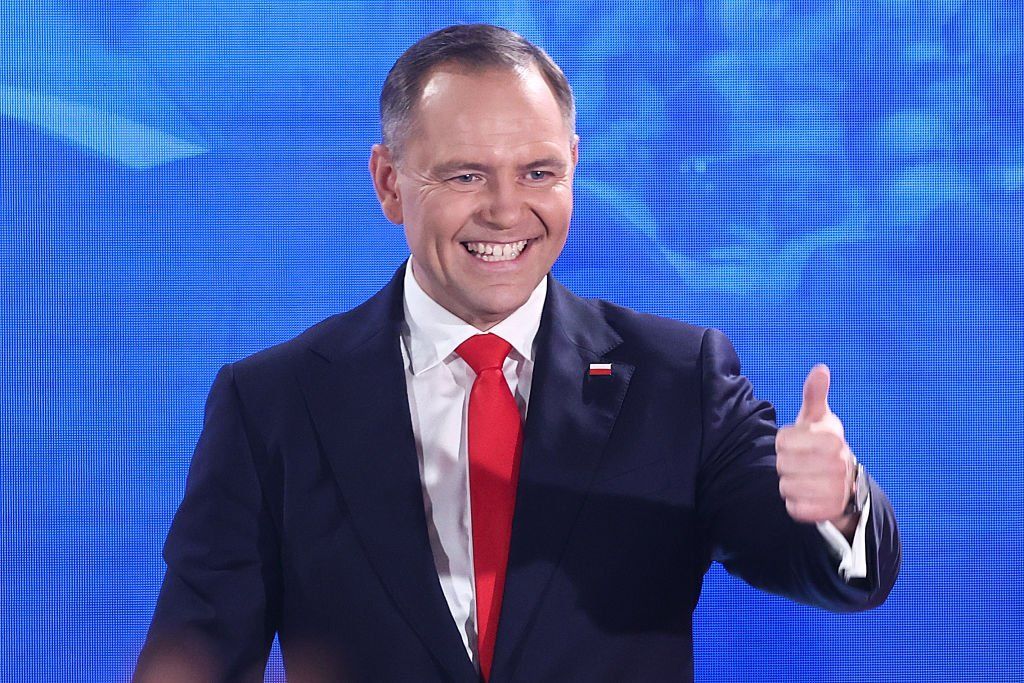
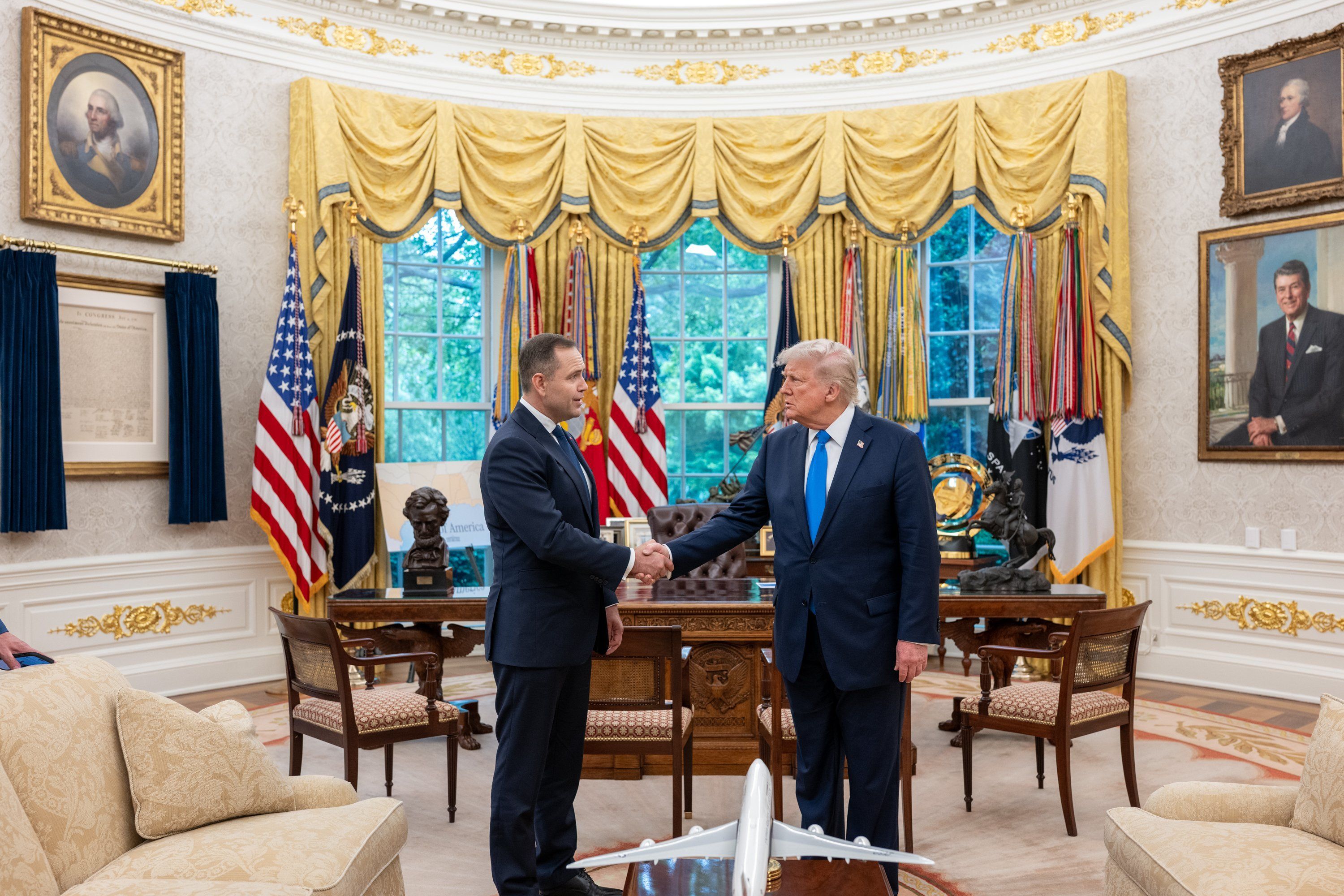
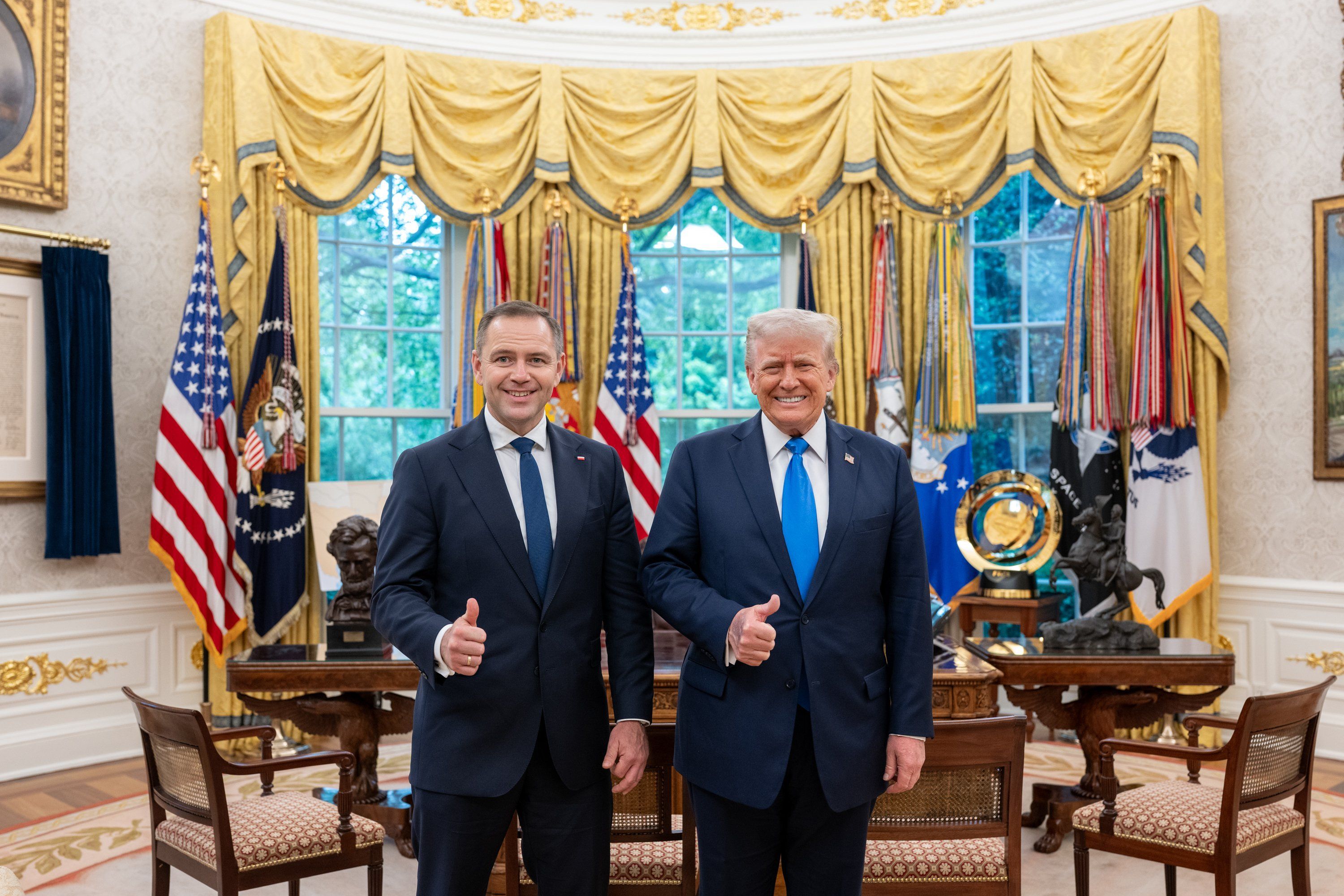
Polish boxer-turned-historian Karol Nawrocki met last month with President Donald Trump and attended an event at the White House marking the National Day of Prayer. Nawrocki reportedly shared with Polish media that Trump told him he would win the Polish presidential election.
Trump was right again.
Nawrocki, backed by Poland's national-conservative opposition Law and Justice (PiS) Party, defeated the liberal mayor of Warsaw — whom Homeland Security Secretary Kristi Noem deemed a "train wreck" — in Poland's presidential election runoff on Sunday. The results, published on Monday, showed that Nawrocki beat Rafał Trzaskowski 50.89% to 49.11%, thereby securing a five-year term.
'You picked a WINNER!'
Upon taking office on Aug. 6, Nawrocki can continue former President Andrzej Duda's work of preventing Polish Prime Minister Donald Tusk's "globalist liberal government" from simultaneously advancing its leftist, pro-European Union agenda and from undoing the reforms undertaken by the previous PiS government.
Secretary of State Marco Rubio congratulated Nawrocki on his "hard-earned victory," noting that "together, the United States and Poland will forge the most ambitious alliance in our shared history on defense, energy, and commerce."
Trump said in a Truth Social post, "Congratulations Poland, you picked a WINNER!"
Nawrocki noted in response that his top priorities are a "strong alliance with the USA, as well as partnership based on close cooperation."
In addition to opposing illegal immigration and the EU's ruinous migration frameworks, the former boxer made abundantly clear on the campaign trail his opposition to leftist social policies, promising to axe any legislation that threatens to weaken Poland's pro-life legislation or normalize non-heterosexual unions, reported the Catholic News Agency.
Nawrocki also emphasized that Poland's national culture is rooted in traditional Catholic values, telling supporters, "Poland's strength lies in its faith and family values."
'It's bad news for the EU, Ukraine and women.'
Homeland Security Secretary Noem likened Nawrocki to Trump last month at the Conservative Political Action Conference in Poland and suggested that under his leadership, Poland could "steer Europe back toward conservative values."
Various European conservatives and populists celebrated Nawrocki's victory, including Jordan Bardella, the president of France's right-wing populist National Rally party, who tweeted, "The Polish people have spoken and their free and democratic choice must be respected, including by the Brussels leaders who ardently hoped for their defeat."
"Faced with a European Commission whose authoritarian policies and federalist ambitions are brutalizing national sovereignty, Karol Nawrocki's victory in the Polish presidential election is welcome news," said Marine Le Pen, former National Rally president. "It is a rebuff to the Brussels oligarchy, which intends to impose a standardization of legislation on member states, contrary to any democratic will."
Hungarian Prime Minister Orbán Viktor called the election a "nail-biter," calling the outcome a "fantastic victory."
Western liberals, meanwhile, clutched pearls and ramped up their fear-mongering.
Adam Simpson, a lecturer at the University of South Australia, wrote, "Nawrocki's win has given pro-Donald Trump, anti-liberal, anti-EU forces across the continent a shot in the arm. It's bad news for the EU, Ukraine and women."
RELATED: Rubio wages war on foreign free-speech tyrants with visa ban
Simpson acknowledged that it's harder to frame Nawrocki as "Russia-friendly" — a framing routinely used by critics of other national conservatives and populists in the region.
'More anti-European, nationalist and pro-Trump.'
It'd be an especially hard case to make that Nawrocki is sympathetic to Moscow given he has called Russia a "barbaric state," recommended cutting off diplomatic relations with the Kremlin, and has personally been put on a Russian wanted list after leading efforts to topple Soviet monuments while director of the Museum of the Second World War and head of the Institute of National Remembrance, reported ABC News.
Nevertheless, critics have made hay out of the incoming Polish president's vow to oppose NATO membership for Ukraine and suggestion that Ukrainian President Volodymyr Zelenskyy "treats Poland badly."
Piotr Buras, head of the European Council on Foreign Relations' Warsaw office, told the Washington Post that Nawrocki will be a "much more radical politician" than his predecessor — "more anti-European, nationalist and pro-Trump."
Anne Applebaum, the Atlantic staff writer who smeared as propagandists early proponents of the pandemic lab-leak theory and wasted ink last year imagining parallels between Trump and various 20th-century dictators, made sure to repeatedly label Nawrocki as an "authoritarian populist."
In the wake of the election, Tusk, now facing some calls to step down, indicated the Polish parliament will hold a confidence vote on his government.
Jacek Sasin, a PiS parliamentarian, suggested that Tusk was a "completely frivolous man who got a red card from the Poles."
Like Blaze News? Bypass the censors, sign up for our newsletters, and get stories like this direct to your inbox. Sign up here!



 www.theblaze.com
 www.theblaze.com
 www.theblaze.com
 www.theblaze.com