How do you solve a problem like Wikipedia?



Wikipedia has recently come under the microscope. I take some credit for this, as a co-founder of Wikipedia and a longtime vocal critic of the knowledge platform.

In September, I nailed (virtually) “Nine Theses About Wikipedia” to the digital door of Wikipedia and started a round of interviews about it, beginning with Tucker Carlson. This prompted Elon Musk to announce Grokipedia’s impending launch the very next day. And a national conversation evolved from there, with left- and right-leaning voices complaining about the platform’s direction or my critique of it.

As long as Wikipedia remains open, it is entirely possible for those who think differently to get involved.

As its 25th anniversary approaches, Wikipedia clearly needs reform. Not only does the platform have a long history of left-wing bias, but the purveyors of that bias — administrators, everyday editors, and others — stubbornly cling to their warped worldview and vilify those who dare to contest it.

The “Nine Theses” are the project’s first-ever thoroughgoing reform proposal. Among the ideas:

  • Allow multiple, competing articles per topic.
  • Stop ideological blacklisting of sources.
  • Restore the original neutrality policy.
  • Reveal the identities of the most powerful managers.
  • End unfair, indefinite blocking.
  • Adopt a formal legislative process.

Such ideas were bound to be a hard sell on Wikipedia. It has become institutionally ossified.

Nevertheless, I was delighted that the discussion of the theses has been robust, without much further prodding from me. Following the launch, Jimmy Wales actually stepped into the fray on the so-called talk page of an article called “Gaza genocide,” chiding the participants for violating Wikipedia’s neutrality policy. I chimed in as well. But the criticism was thrown back in our faces.

This brings me to the deeper problem: Wikipedia is stuck in its ways. How can it possibly be reformed when so many of its contributors like the bias, the anonymous leadership, the ease of blocking ideological foes, and other aspects of dysfunction? Reform seems impossible.

Yet there is one realistic way that we can make progress toward reform.

Above all else, those who care should get involved in Wikipedia. The total number of people who are really active on Wikipedia is surprisingly small. The number editing 100 times in any given month is in the low thousands, and this does not amount to that much time — perhaps one or two hours per week. Those who treat it as a part-time or full-time job — and so have real day-to-day influence — number in the hundreds.

In interviews, I have been urging the outcasts to converge on Wikipedia. You might think this is code for saying that conservatives and libertarians should try to stage a coup, but that is not so. Hindus and Israelis, among others, have also complained of being left out in recent years. The problem is an entrenched ruling class. As long as Wikipedia remains open, it is entirely possible for those who think differently to get involved.

RELATED: Wikipedia editors are trying to scrub the record clean of Iryna Zarutska’s slaughter by violent thug

Photo by Peter Zay/Anadolu via Getty Images

If you are a conservative or libertarian who is concerned about the slanted framing of Charlie Kirk’s assassination, get involved. If you are a classical liberal who is alarmed by the anti-Semitism within Wikipedia — like Florida Democrat Debbie Wasserman Schultz — it is time to make your presence felt. Wherever you may fall on the ideological spectrum, I call on good-faith citizens to become engaged editors who take productive discourse seriously, rather than scapegoating “the other side.”

Even a dozen new editors could make a difference, let alone hundreds or thousands who might be reading this column. Given that Wikipedia attracts billions of readers, in addition to featuring prominently in Google Search, Google Gemini, and elsewhere, improving the platform will strengthen our collective access to high-quality information across the board. It will bring us closer to truth.

So how do we solve the Wikipedia problem? With you, me, and all of us — individual action at scale.

Editor’s note: This article was originally published by RealClearPolitics and made available via RealClearWire.


Is Western civilization worth saving?


Lamentations asks, “Is it nothing to you, all ye that pass by?”

That question has been weighing on me heavily. Not just as a broadcaster, but as a citizen, a father, a husband, a believer. It is a question that every person who cares about this nation, this culture, and this civilization must confront: Is all of this worth saving?

We have squandered this inheritance. We forgot who we were — and our enemies are eager to write our ending.

Western civilization — a project born in Judea, refined in Athens, tested in Rome, reawakened in Wittenberg, and baptized again on the shores of Plymouth Rock — is a gift. We didn’t earn it. We didn’t purchase it. We were handed it. And now, we must ask ourselves: Do we even want it?

Across Europe, streets are restless. Not merely with protests, but with ancient, festering hatred — the kind that once marched under swastikas and fueled ovens. Today, it marches under banners of peace while chanting calls for genocide. Violence and division crack societies open. Here in America, it’s left against right, flesh against spirit, neighbor against neighbor.

Truth struggles to find a home. Even the church is slumbering — or worse, collaborating.

Our society tells us that everything must be reset: tradition, marriage, gender, faith, even love. The only sin left is believing in absolute truth. Screens replace Scripture. Entertainment replaces education. Pleasure replaces purpose. Our children are confused, medicated, addicted, fatherless, suicidal. Universities mock virtue. Congress is indifferent. Media programs rather than informs. Schools recondition rather than educate.

Is this worth saving? If not, we should stop fighting and throw up our hands. But if it is, then we must act — and we must act now.

The West: An idea worth saving

What is the West? It’s not a location, race, flag, or a particular constitution. The West is an idea — an idea that man is made in the image of God, that liberty comes from responsibility, not government; that truth exists; that evil exists; and that courage is required every day. The West teaches that education, reason, and revelation walk hand in hand. Beauty matters. Kindness matters. Empathy matters. Sacrifice is holy. Justice is blind. Mercy is near.

We have squandered this inheritance. We forgot who we were — and our enemies are eager to write our ending.

If not now, when? If not us, who? If this is worth saving, we must know why. Western civilization is worth dying for, worth living for, worth defending. It was built on the blood of martyrs, prophets, poets, pilgrims, moms, dads, and soldiers. They did not die for markets, pronouns, surveillance, or currency. They died for something higher, something bigger.

RELATED: What happens when America kills its Christian soul

Photo by MATTHIEU RONDEL/AFP via Getty Images

Yet hope remains. Resurrection is real — not only in the tomb outside Jerusalem, but in the bones of any individual or group that returns to truth, honor, and God. It is never too late to return to family, community, accountability, and responsibility.

Pick up your torch

We were chosen for this time. We were made for a moment like this. The events unfolding in Europe and South Korea, the unrest and moral collapse, will all come down to us. Somewhere inside, we know we were called to carry this fire.

We are not called to win. We are called to stand. To hold the torch. To ask ourselves, every day: Is it worth standing? Is it worth saving?

The light shines in the darkness, and the darkness has not overcome it. Pick up your torch. If you choose to carry it, buckle up. The work is only beginning.

Want more from Glenn Beck? Get Glenn's FREE email newsletter with his latest insights, top stories, show prep, and more delivered to your inbox.

This immigrant is FIGHTING against US-hating youth


America has historically been viewed by immigrants as a place where freedom and prosperity await them — but for some reason, American youth don’t see it the same way.

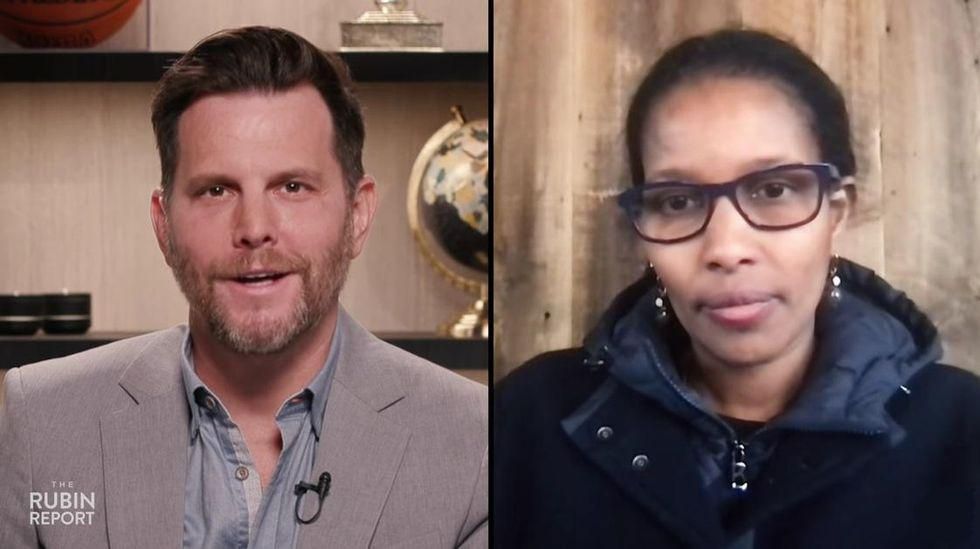
Faisal Saeed Al Mutar, the founder of Ideas Beyond Borders, sits down with Dave Rubin to discuss why that is and why he’s actually quite fond of American values himself.

Mutar tells Rubin that when he first moved to America, he originally believed “that people would appreciate the values” that he used to fight for in Iraq.

“And now 10 years later, I think that I was wrong,” he says.

His issue is not with the country itself, but rather those who try to speak on behalf of those they claim are victims. “And that pisses me off,” he tells Rubin.

“We need to figure out a way to make them realize what they are taking for granted,” he adds.

While Mutar takes issue with the attitude of many Americans, he refuses to let that dim his own love for the country.

“I loved this country even before I came here,” he tells Rubin.

Mutar’s non-profit, Ideas Beyond Borders, focuses on spreading American values worldwide.

“My goal is to bring those values into the region that I came from,” he says, “which I think are the reason why thousands and hundreds of thousands of people are prosperous — are the values that are found in America. Which I think our values are spreading.”

“If America turns against America,” he continues, “I think that these values are so worth defending. So I think that spreading the values of freedom is itself an idea.”

Mutar believes that unlike any other country, America was founded on important ideals, but the American people are turning against those ideals.

“I think that the people, those who have lived under prosperity for a long time, and that’s one of the main contradictions, is that they start turning against ideas that made them prosperous,” he says.


Want more from Dave Rubin?

To enjoy more honest conversations, free speech, and big ideas with Dave Rubin, subscribe to BlazeTV — the largest multi-platform network of voices who love America, defend the Constitution, and live the American dream.

Mark Levin warns 'we HAVE to start using the Left's tactics against the Left' — here's why


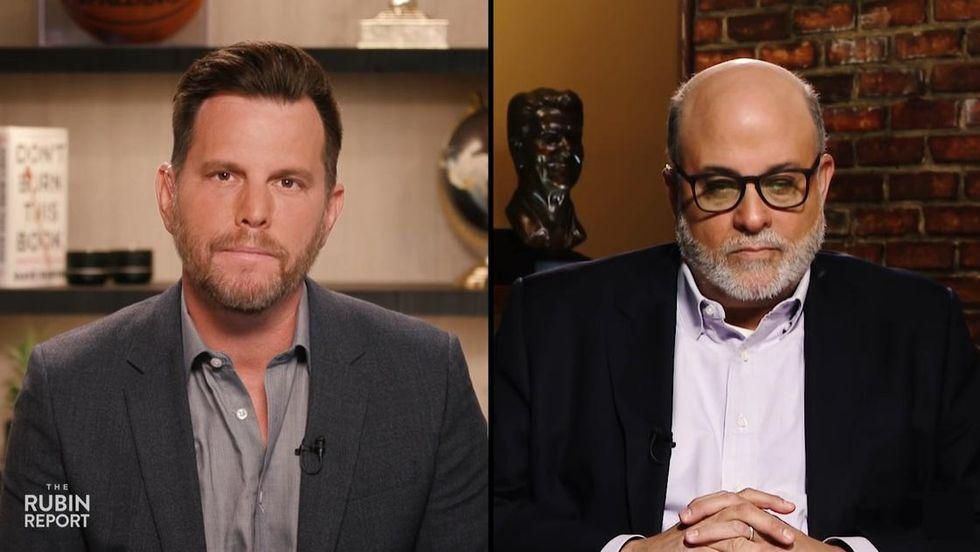
On the most recent episode of "The Rubin Report," Dave Rubin spoke with fellow BlazeTV host Mark Levin about the lesser-known origins of Karl Marx and why liberal Democrats need to join conservatives to save the U.S. from the radical Left.

Mark highlighted the importance of the U.S. Constitution and what people misunderstand when interpreting its meaning. He said he fears that critical race theory and the ideas of cultural Marxism may be leading us to a constitutional crisis. Then he shared the true history of Karl Marx: a man who was a supporter of classical liberalism before he became an angry man suffering from social alienation, living off of subsidies from his wealthy friend Friedrich Engels who turned his attention to class conflict.

Dave and Mark discussed how progressives have fundamentally altered public schools and higher education in America, attacking "Americanism" and erasing history to change the way people look at our country.

Dave asked what we can do to push back against the "slow march" of Marxist ideology in our institutions in an age of social media and culture war.

"We have to start using the Left's tactics against the Left," Mark answered. "I never used to believe that. I used to preach free market capitalism, and I still believe that ... but tactically, we're going to have to get active. We're going to have to do things we've never done before because Marxism is a constant revolution. Conservatism or constitutional conservatism is a stand-in-place. And so they are always on the move, and we are always on defense — if we're doing anything at all."

"The Democrat Party is always [figuratively] breaking windows. The Republican Party is always sitting in rocking chairs, you know, and just watching," he continued. "This has to change ... I think that's why a lot of people like Trump, wittingly or not, because he would break windows when they break windows.

"More and more of us in our everyday lives are going to have to become activists — I don't mean violent activist, I mean activists in the everyday things we do, where we choose to buy things, when we talk to neighbors to form groups to go to school boards and these sorts of things, start pressuring our legislatures so we have friendly legislatures to pass laws like they have in Florida to address Big Tech," Levin said.

"We need to be on offense. We need to bring litigation. We need to throw as much against them as they throw against us, and do everything we possible can ... we're up against street Marxists or mobs or whatever you want to call them, that want to destroy our society," he added, noting how many of history's communist revolutions had the same goal.

Watch the video below to catch more of the conversation:


Want more from Dave Rubin?

To enjoy more honest conversations, free speech, and big ideas with Dave Rubin, subscribe to BlazeTV — the largest multi-platform network of voices who love America, defend the Constitution and live the American dream.

Former Muslim Ayaan Hirsi Ali: 'Wokeism' has far more in common with radical Islam than you'd think


On "The Rubin Report" this week, BlazeTV host Dave Rubin spoke with Ayaan Hirsi Ali, author of "Prey" and host of the "Ayaan Hirsi Ali Podcast," about how woke culture is destroying classical liberalism, how elites are finally acknowledging that immigration in Europe is backfiring, and how immigration policies in Europe have negatively impacted women's rights and made Europe less safe for women.

In this clip, Ayaan and Dave discussed how liberalism is being weakened by the identity politics of the woke left. Ayaan explained how "wokeism" has far more in common with radical Islam than many would think. Both seek to shut down free speech, to censor and destroy those who disagree, to divide societies into subsets, and to deny objective truth.

The only way to defend liberalism is to build alliances with centrist and moderate political opponents and create a "new centrism," Ayaan suggested. She emphasized that young people should not seek out safe spaces at university, but should actually want to be triggered.

Watch the video clip below for more details, or find the full episode with Ayaan Hirsi Ali here.


Want more from Dave Rubin?

To enjoy more honest conversations, free speech, and big ideas with Dave Rubin, subscribe to BlazeTV — the largest multi-platform network of voices who love America, defend the Constitution and live the American dream.

It’s Time For The Right To Rededicate Ourselves To The Moral Vision Of The American Founding

Now is the time to let prudence and cool deliberation dictate how to move forward as we roll up our sleeves and get to work. Now is the time for courage.