Stupid Democrats Are Lying About Obamacare Fraud
 The termination of fraudulent Obamacare enrollments is a normal CMS activity. The Trump administration is doing normal anti-fraud work with increased focus and seriousness.
The Centers for Medicare and Medicaid Services may have just signaled the beginning of the end for one of California’s most aggressive Medicaid financing schemes.
In late May, CMS proposed a rule that would limit many Medicaid payment arrangements to Medicare-equivalent reimbursement levels while targeting the financing mechanisms that shift excessive costs onto federal taxpayers.
The more states spend, the more federal money they receive.
The proposal specifically highlights intergovernmental transfers and similar arrangements that have allowed states to inflate federal reimbursement claims.
This rule comes as California health officials are asking CMS to approve a set of pending state plan amendments that would further expand reimbursement arrangements built around intergovernmental transfers — the very type of financing mechanism now facing increased scrutiny from federal regulators.
For years, states have exploited these loopholes in Medicaid’s financing rules to draw down more money from Washington. CMS now appears ready to put some limits on that practice.
Vice President JD Vance and CMS Administrator Mehmet Oz deserve credit for cracking down on these kinds of abuses. Vance said the administration is withholding $1.3 billion in Medicaid reimbursements from California because the state does “not take Medicaid fraud very seriously.”
Oz warned that states have exploited “the cracks and crevices” between state and federal systems — describing California as a member of the “varsity team” of fraud alongside Massachusetts and New York.
The proposed rule makes the fate of California’s pending SPAs clear: They cannot survive. Approving them would directly contradict a rule CMS has already put forward, expanding the exact reimbursement scheme the agency has identified as a threat to Medicaid program integrity.
The only question now is whether CMS will formalize what its own rulemaking has already decided.
At the center of the IGT problem is Medicaid’s open-ended reimbursement structure. States spend money, and the federal government reimburses a percentage of those expenditures. Public entities recycle funds through multiple agencies to trigger larger federal Medicaid matching payments.
The more states spend, the more federal money they receive.
These arrangements may technically comply with federal rules, but they function as financial engineering schemes rather than legitimate health care financing. Medicaid was designed to fund health care for vulnerable Americans, not maximize revenue for governments and health care bureaucracies.
California’s ambulance reimbursement system provides a textbook example of the kind of payment arrangement CMS now appears determined to rein in.
RELATED: Trump’s next bill needs tax relief with teeth
Under current rules, a public fire district can hold an emergency medical services franchise while subcontracting the actual ambulance operations to a private company.
Even though the private contractor performs the transport itself, the public entity can still bill Medi-Cal at the elevated IGT reimbursement rate — around $1,168 per transport in 2024, with a proposed increase to nearly $1,600.
If that same private ambulance provider billed Medi-Cal directly, that $1,600 would become roughly $339 under the standard fee schedule.
Federal taxpayers are therefore paying nearly five times the normal reimbursement rate for operationally identical services, simply because the billing structure has been routed through a government intermediary eligible for enhanced federal matching funds. For ACA expansion enrollees, a large share of Medi-Cal, Washington covers 90% of that already inflated cost.
The fire district keeps the difference between the inflated Medi-Cal reimbursement and the private contractor’s actual operating payment. Taxpayers finance the excess.
Unlike these existing payment arrangements that may eventually be required to conform to the new federal standards, California’s pending ambulance SPAs have not yet been approved. Federal regulators should not authorize an expansion of a reimbursement model they have already identified as inconsistent with Medicaid’s future direction.
CMS has now made clear that payment arrangements built around inflated reimbursement rates, intergovernmental transfers, and excessive federal matching dollars are no longer business as usual. States have been put on notice.
California’s pending ambulance SPAs should be among the first tests of whether the agency intends to enforce the principles it has now announced. If CMS truly believes Medicaid exists to fund patient care rather than reimbursement gamesmanship, these proposals should not survive review.
Vice President JD Vance, who chairs the Task Force to Eliminate Fraud, declared that “no amount of fraud is too big or too small” and stated that the task force plans to target bad actors regardless of the amount of money they have stolen from taxpayers.
During a Turning Point USA event at the University of Georgia on Tuesday, Vance highlighted the task force’s early victories.
'If you’re defrauding the taxpayer, you ought to go to prison, and anybody who’s helping you ought to go to prison too.'
President Donald Trump established the Task Force to Eliminate Fraud by executive order in mid-March. Since then, the Centers for Medicare & Medicaid Services has worked with the task force to close hundreds of allegedly fraudulent health care providers.
On Tuesday, Vance discussed the issue of widespread fraud in the Minneapolis area, stating that the task force had turned off a government assistance program for autistic children that was being widely exploited.
“We’ve completely stopped the funding to that program. And we basically told the state of Minnesota, ‘You don’t get any more of our money unless you’ve verified that you’re taking fraud seriously,’” he stated, and the crowd responded with applause.
The federal government announced in February that it was withholding $259.5 million in Medicaid funding from Minnesota.
RELATED: Vance's task force shutters 221 hospices in 'fraud king' Gavin Newsom's California

During Tuesday’s event, Vance commended CMS Administrator Dr. Mehmet Oz for his work on eliminating fraud.
“We had our weekly fraud check-in call two weeks ago, and Dr. Oz called in, but he’s like, ‘Hey, I got to go because I’m about to hop on the bus, and we’re going to go arrest a bunch of fraudsters in Los Angeles.’ And I was like, ‘That’s exactly what I want you to do. By all means, get off the phone.’ So we’re doing a lot of that stuff.”
Vance explained that under the Biden administration, the federal government overlooked fraudsters who stole smaller amounts of money from taxpayers. He stated that this approach has changed under the Trump administration.
“No amount of fraud is too big or too small. If you’re defrauding the taxpayer, you ought to go to prison, and anybody who’s helping you ought to go to prison too,” Vance remarked.
RELATED: How a California crook committed $178 million worth of health care fraud — in just one year

As of Wednesday, the task force has suspended 447 hospices and 23 home health agencies in Los Angeles, with an estimated fraud total exceeding $600 million.
“With @VP’s leadership, we’re crushing fraud faster than ever,” Oz stated.
Like Blaze News? Bypass the censors, sign up for our newsletters, and get stories like this direct to your inbox. Sign up here!
John Locke’s "Second Treatise of Government," which inspired many of our nation’s founding principles, makes the simple assertion that the basic role of government is to protect the lives, liberty, and property of the consenting governed. Though our federal government has long since strayed from this purpose, opportunities to defend it are always a worthy endeavor.
That is why President Trump’s appointment of Vice President JD Vance to lead a new task force dedicated to rooting out fraud in the United States is a welcome undertaking.
There’s no incentive for states to police fraud: They can’t go over budget, and the feds still pick up the tab for illegitimate claims.
For too long, numerous states have abused federal dollars, failing to ensure that many recipients are even real or qualified for federal funds and leaving taxpayers to pick up the tab. Contrary to the media narrative that the administration is simply on a blue-state witch hunt, the billions of dollars stolen in Minnesota (yet to be returned) tell a different story.
For once, the executive branch is demonstrating proper oversight in the service of the American taxpayer, and it is long overdue.
Federal prosecutors estimate that, across 14 Minnesota Medicaid-funded programs, fraud totals more than $9 billion. That number is half of all federal matching funds allocated to the state since 2018.
It’s often said that taxation is theft. In Minnesota, it appears to be policy.
Correctly, Mehmet Oz, administrator of the Centers for Medicare and Medicaid Services, and Vice President JD Vance, have turned off the credit card until Minnesota officials can clean up their act.
Following a January CMS effort to get the state into compliance, the agency is also deferring payment for Q4 of 2025, having identified $259.5 million in fraudulent and illegal claims.
Like clockwork, officials, including Gov. Walz, began to plead on behalf of victims of a potential Medicaid fallout, portraying themselves as the defenders of the very Minnesotans victimized by the fraud they enabled.
In a House Oversight Committee hearing just a few weeks ago, Walz and Attorney General Keith Ellison faced questions with a surprising lack of urgency. When asked if he felt the state’s efforts to return funds were successful, Walz denied culpability: “I can’t speak to that ... I don’t have any part in that.”
Despite media outlets defending the state’s “good-faith effort” to make amends, the estimated $80 million returned still falls short of even 1% of the money stolen from taxpayers.
Similarly, Walz refused to elaborate on whether government officials who enabled fraud had been fired. During the Oversight Committee’s investigation, it was revealed that dozens of whistleblowers who reported fraud inside the Minnesota Department of Human Services were retaliated against. Minnesota DHS hired outside entities to investigate staff who fell out of line.
The reason? Dozens of whistleblowers reported that they were told not to say anything about the fraud for fear of being called “racist” or “Islamophobic.”
Not only did Walz and Ellison know about massive welfare fraud in the state, but they went to great lengths to keep it that way, afraid that cracking down on the disproportionate amount of Medicaid fraud in the Somali community would harm them politically.
RELATED: Tax-exempt hospitals are not putting their patients first

This level of fraud is historic. But rather than making a good-faith effort to identify fraud and recover taxpayer funds, Minnesota may become the first state to pursue the unprecedented step of suing CMS instead of using the agency’s internal appeals process. While state officials claim they are at a loss over how to satisfy CMS requirements, doubling down on fraud is doubtlessly not the solution CMS is looking for.
Vance, now tasked with developing a nationwide anti-fraud strategy, should build on CMS’ approach in Minnesota, one that directly targets the root of the problem.
Minnesota, like many states, receives a Federal Medical Assistance Percentage of 90% for adults covered under the ACA expansion. In practice, that means for every dollar the state spends, the federal government contributes nine. States that spend more get more. There’s no incentive for states to police fraud: They can’t go over budget, and the feds still pick up the tab for illegitimate claims, ultimately passing the balance on to taxpayers.
In context, CMS’ Medicaid funding pause in Minnesota functions as a blunt but effective check: no oversight, no money. Should Minnesota decide to bolster program integrity and ensure that Medicaid assistance only goes to Americans who are truly in need, it can confidently spend its cash again with the assurance of federal backing.
In the meantime, every other state would be wise to take note and get its house in order before Vance drops the hammer.
 The government is looking for your input to decide whether the medical elite should continue to decide what your health care looks like.
 A recent KFF story bemoans the fact that states might not get to use the Medicaid program to engage in more questionable cash grabs.
 The temporary and extralegal bailout that provided billions of dollars in subsidies to insurers cost the program far more than Dems claimed.
 The law should encourage able adults receiving taxpayer-funded benefits to contribute to the community while advancing their own self-sufficiency, and the new Medicaid rule does just that.
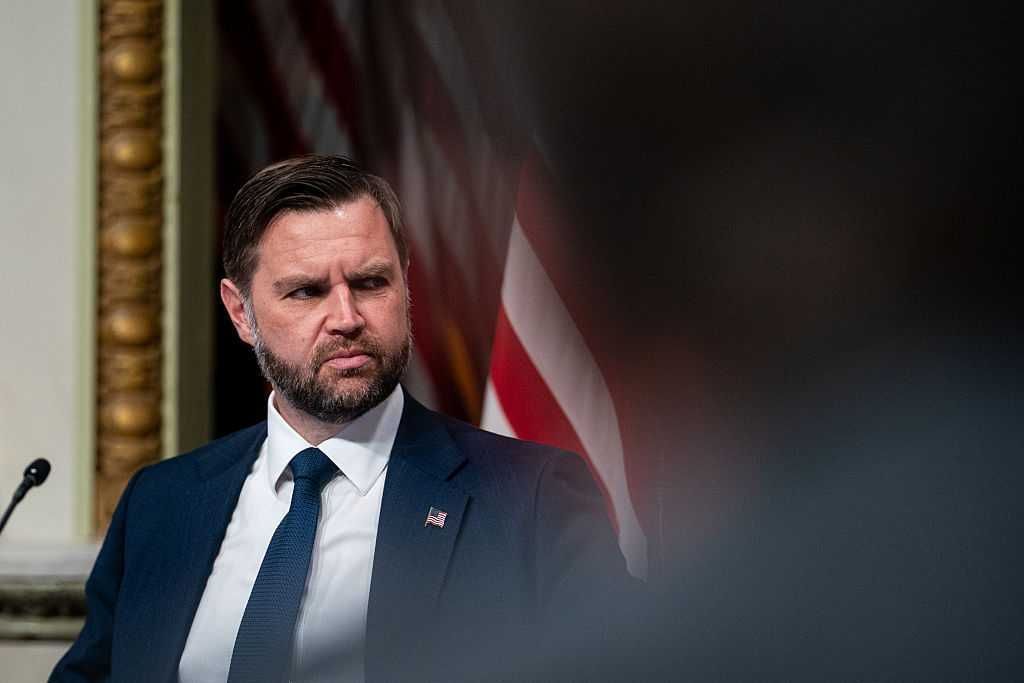
 Vance announced that the government is deferring $1.3 billion in Medicaid reimbursements to California for its leaders' neglect.
 CMS will issue billing guidance that will allow providers to get paid for deprescribing psych drugs.


 www.theblaze.com
 thefederalist.com
 www.theblaze.com