Scarface of Springfield: Massachusetts Governor's Senior Staffer Arrested for Drug Trafficking

Authorities have arrested a senior staffer to Massachusetts Democratic governor Maura Healey on drug trafficking charges following a sting operation at a government building.

The post Scarface of Springfield: Massachusetts Governor's Senior Staffer Arrested for Drug Trafficking appeared first on .

Trump’s Caribbean ‘drug wars’ are forging a new Monroe Doctrine


For decades, we’ve been told America’s wars are about drugs, democracy, or “defending freedom.” But look closer at what’s unfolding off the coast of Venezuela, and you’ll see something far more strategic taking shape. Donald Trump’s so-called drug war isn’t about fentanyl or cocaine. It’s about control — and a rebirth of American sovereignty.

The aim of Trump’s ‘drug war’ is to keep the hemisphere’s oil, minerals, and manufacturing within the Western family and out of Beijing’s hands.

The president understands something the foreign policy class forgot long ago: The world doesn’t respect apologies. It respects strength.

While the global elites in Davos tout the Great Reset, Trump is building something entirely different — a new architecture of power based on regional independence, not global dependence. His quiet campaign in the Western Hemisphere may one day be remembered as the second Monroe Doctrine.

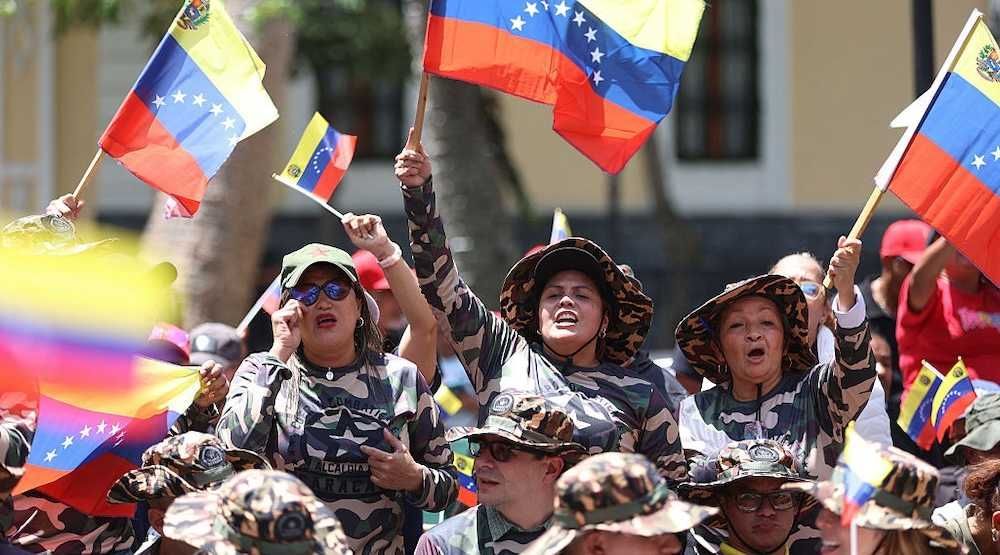
Venezuela sits at the center of it all. It holds the world’s largest crude oil reserves — oil perfectly suited for America’s Gulf refineries. For years, China and Russia have treated Venezuela like a pawn on their chessboard, offering predatory loans in exchange for control of those resources. The result has been a corrupt, communist state sitting in our own back yard. For too long, Washington shrugged. Not any more.

The naval exercises in the Caribbean, the sanctions, the patrols — they’re not about drug smugglers. They’re about evicting China from our hemisphere.

Trump is using the old “drug war” playbook to wage a new kind of war — an economic and strategic one — without firing a shot at our actual enemies. The goal is simple: Keep the hemisphere’s oil, minerals, and manufacturing within the Western family and out of Beijing’s hands.

Beyond Venezuela

Just east of Venezuela lies Guyana, a country most Americans couldn’t find on a map a year ago. Then ExxonMobil struck oil, and suddenly Guyana became the newest front in a quiet geopolitical contest. Washington is helping defend those offshore platforms, build radar systems, and secure undersea cables — not for charity, but for strategy. Control energy, data, and shipping lanes, and you control the future.

Moreover, Colombia — a country once defined by cartels — is now positioned as the hinge between two oceans and two continents. It guards the Panama Canal and sits atop rare-earth minerals every modern economy needs. Decades of American presence there weren’t just about cocaine interdiction; they were about maintaining leverage over the arteries of global trade. Trump sees that clearly.

RELATED: A war on Venezuela would be a war on reality

Photo by PEDRO MATTEY/AFP via Getty Images

All of these recent news items — from the military drills in the Caribbean to the trade negotiations — reflect a new vision of American power. Not global policing. Not endless nation-building. It’s about strategic sovereignty.

It’s the same philosophy driving Trump’s approach to NATO, the Middle East, and Asia. We’ll stand with you — but you’ll stand on your own two feet. The days of American taxpayers funding global security while our own borders collapse are over.

Trump’s Monroe Doctrine

Critics will call it “isolationism.” It isn’t. It’s realism. It’s recognizing that America’s strength comes not from fighting other people’s wars but from securing our own energy, our own supply lines, our own hemisphere. The first Monroe Doctrine warned foreign powers to stay out of the Americas. The second one — Trump’s — says we’ll defend them, but we’ll no longer be their bank or their babysitter.

Historians may one day mark this moment as the start of a new era — when America stopped apologizing for its own interests and started rebuilding its sovereignty, one barrel, one chip, and one border at a time.

Want more from Glenn Beck? Get Glenn's FREE email newsletter with his latest insights, top stories, show prep, and more delivered to your inbox.

A war on Venezuela would be a war on reality


The drums of war are echoing across the Caribbean. U.S. warships patrol the southern sea lanes, and squadrons of F-35s wait on standby in Puerto Rico. Strike lists are reportedly being drafted in Washington. The question is not whether the United States can act but whether it should. And more importantly: Who is the real enemy?

All signs point to Venezuela, long a fixation of neoconservatives who see regime change as a cure-all. For years, some in the Republican Party have argued that Venezuela sits at the center of Latin America’s drug trade and that military action is overdue.

A legitimate campaign to combat drug cartels must not morph into another regime-change crusade.

That narrative is convenient — but false. Venezuela is not a cartel state, and this is not a war on drugs.

A tale of two narco-states

In September, the Trump administration made two moves that reshaped the regional map. It added Venezuela to its annual list of major drug-transit and production countries and, for the first time since 1996, decertified Colombia as a U.S. partner in the war on drugs.

That decision was deliberate. It acknowledged what U.S. policymakers have long avoided saying: Colombia, not Venezuela, is the true narco-state.

Colombia remains the world’s leading producer of cocaine. From Pablo Escobar’s Medellín empire to the FARC’s narco-financing, traffickers and insurgents have repeatedly seized control of state institutions and vast territories. At their height, these groups ruled nearly half the country. Decades of U.S. intervention under “Plan Colombia” have failed to stem coca cultivation, which remains near record highs.

Venezuela, by contrast, has never been a major coca producer. Its role is mostly as a minor transit corridor for Colombian cocaine en route to global markets. Corruption is real — particularly within elements of the military, where networks of officers known as the “Cartel of the Suns” have profited from trafficking. But those are rogue actors, not the state itself.

Unlike Colombia, Venezuela has never seen cartels seize entire provinces or build autonomous zones. The country’s economic collapse has weakened state control, but it hasn’t transformed Venezuela into another Sinaloa or Medellín.

Regime-change fever returns

Despite this, Washington appears to be edging toward confrontation. Naval buildups and targeted strikes on Venezuelan vessels look increasingly like the opening moves of a regime-change operation.

The danger is familiar. Once again, the United States risks being drawn into a war that cannot be won — one that drains resources, destabilizes the region, and achieves nothing for the American people. The echoes of Iraq and Afghanistan are unmistakable. Those conflicts cost thousands of American lives and trillions of dollars, only to end in retreat and disillusionment.

Americans have every reason to demand a serious, coordinated strategy against the cartels that flood our communities with cocaine and fentanyl. But targeting Venezuela misreads the map. Only a fraction of the hemisphere’s narcotics pass through Venezuelan territory — and the country produces no fentanyl at all.

If Washington wants to dismantle the cartels, it must focus on the coca fields of Colombia and the trafficking corridors of Mexico, not Caracas.

RELATED: Oops! The man they call a ‘threat to democracy’ just made peace again

Photo by Hu Yousong/Xinhua via Getty Images

No exit

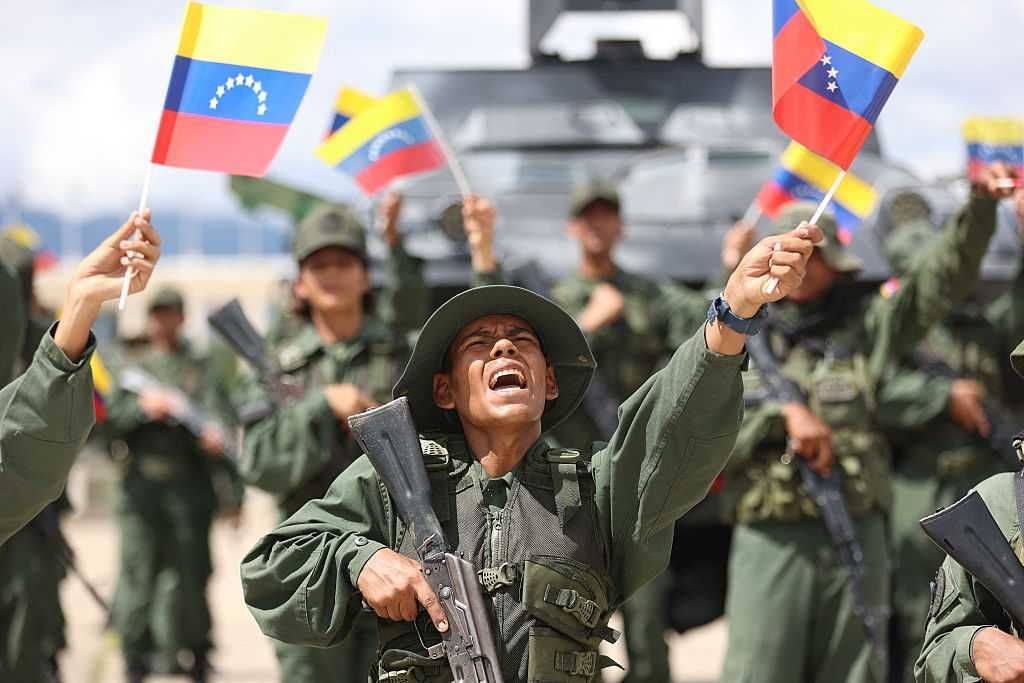
A U.S. invasion of Venezuela would be a disaster. The Maduro regime has already begun arming civilians. Guerrilla groups operate in both urban and jungle terrain. The population is hostile, the geography unforgiving, and the odds of a prolonged insurgency high.

The opposition, eager for power, would have every incentive to let American soldiers do its fighting — then disavow the costs.

A war would not remain confined to Venezuelan borders. It would destabilize Colombia, Ecuador, and Brazil, and unleash a wave of migrants heading north. The fall of Saddam Hussein set off migration patterns that reshaped Europe for a generation. A conflict in Venezuela could do the same to the United States.

Limited airstrikes would achieve little beyond satisfying the egos of Washington’s most hawkish voices. A full-scale invasion would create a power vacuum ripe for chaos.

The real test

President Trump faces a critical test of restraint. Interventionists inside his own administration will press for action. He must resist them. A legitimate campaign to combat drug cartels must not morph into another regime-change crusade.

America has paid dearly for those mistakes before. It should not make them again.

NC election official resigns after police say they caught him drugging teenagers' ice cream


The head of the Surry County Board of Elections in North Carolina resigned after police say he was caught on camera drugging his step-granddaughter and her friend.

On August 3, Republican election official James Yokeley Jr. allegedly flagged down police officers at a gas station near a Dairy Queen in New Hanover County, North Carolina.

According to a report from local outlet NC Newsline, Yokeley claimed that the two teens had found hard objects inside their Dairy Queen Blizzards, a whipped ice cream treat. Police alleged that was not the case, however, after they saw surveillance footage from inside the restaurant.

'I remain prayerfully confident that I will be exonerated of all accusations levied against me.'

"He can be seen placing something on the counter, and it's pretty apparent that when the employees make the drinks, he's trying to observe if anybody's observing him," Wilmington Police Lt. Greg Willett said in a press conference on Friday.

Willett said officers went to the Dairy Queen and asked for the in-store video, which Willett claimed "clearly shows Mr. Yokeley placing the pills in the ice cream."

What was actually in the pills was perhaps more disturbing; police field tests showed that the small blue pills contained cocaine and MDMA. The girls did not ingest the drugs, though, police stated.

In a letter, Yokeley not only issued his resignation, but he also denied the allegations that have been levied against him.

RELATED: Woman shot in the face and dead man found in home where 2 children were sleeping safely, police say

"I am writing to formally resign from my position as Board Chair," Yokeley wrote in the letter.

He concluded that it was in the "best interest" of the state and local board but described the case as his "own falsely accused circumstances."

"Based on the truth and facts, I remain prayerfully confident that I will be exonerated of all accusations levied against me."

Sarah Whisenant, owner of the Dairy Queen in question, told WECT-TV that she did not recognize Yokeley or the two teenagers, but emphasized that her staff would never do such a thing.

"Thank goodness we had video," Whisenant said.

Four employees were working at the Dairy Queen at the time.

RELATED: Study warns of possible link between world's most popular painkiller and autism

Photographer: Noah Berger/Bloomberg via Getty Images

The North Carolina State Board of Elections and Surry County Board of Elections said they are both "aware of the charges against Mr. Yokeley" and will "continue to collect information about the situation and will provide support to the Surry County board, as needed."

Yokeley was appointed as the head of the Surry elections board in June 2025. He has been charged with two counts of felony contaminating food or drink with a controlled substance, felony child abuse, and felony possession of Schedule I narcotics.

In court, the 66-year-old reportedly waived his right for a court-appointed attorney and was told he was not allowed to have contact with the teenagers. According to a report from NBC10 Boston, he posted $100,000 bond.

Like Blaze News? Bypass the censors, sign up for our newsletters, and get stories like this direct to your inbox. Sign up here!
Fact Check: Hunter Biden Claims He's 'No Expert' on What Makes Smoking Crack So Great

Claim: "I'm no expert. "Who said it: Hunter Biden, the Los Angeles-based artist and "former" crackhead who previously served as a senior adviser to the White House, in a recent interview exchange with a Gen-Z YouTuber about how to make crack from powder cocaine, as well as the differences between the two drugs. He is the 55-year-old boy-child of former president Joe Biden.

The post Fact Check: Hunter Biden Claims He's 'No Expert' on What Makes Smoking Crack So Great appeared first on .

Bongino may have given big hint about nature of J6-related pipe bomb case


FBI Deputy Director Dan Bongino announced Monday that the bureau will revisit a number of "cases of potential public corruption" that apparently went nowhere under previous management.

Bongino indicated that he and FBI Director Kash Patel have decided to re-open or assign "additional resources and investigative attention" to the following cases: "the DC pipe bombing investigation, the cocaine discovery at the prior administration's White House, and the leak of the Supreme Court Dobbs case."

This renewed interest in improprieties swept aside during the Biden era signals the FBI's new leadership might actually be serious about restoring trust in the agency, which was badly damaged in recent years by its politicization and apparent engagement in "election interference"; its difficulty holding leftist extremists accountable; and its zealous targeting of conservatives and Democrats' political opponents.

Blaze Media contributor and investigative reporter Steve Baker — who with Joseph Hanneman has dug extensively into the planting of pipe bombs near the Washington, D.C., offices of the Democratic National Committee and the Republican National Committee on Jan. 5, 2021 — welcomed the news.

Baker noted, however, that there was something "curious" about Bongino framing the cases as instances of "potential public corruption," particularly with regard to the case of the pipe bombs.

"It's not public corruption if it was MAGA [behind it]; if it was Antifa; if it was BLM; if it was Oath Keepers; the Proud Boys; the 3% Militia or something like that," Baker told Blaze News. "It's only a public corruption case if they believe that it's an inside job by Capitol Police, Metro Police, FBI, or U.S. Secret Service."

On its website, FBI uses the term "public corruption" in reference to violations of federal law by public officials at the federal, state, and local levels of government.

RELATED: Was the DNC pipe bomb planted while Kamala Harris was inside on January 6?

Photo from US Capitol Police CCTV camera 8021 on Jan. 6, 2021

Baker downplayed the possibility that the public corruption framing was the result of careless wording, suggesting that Bongino likely "can't even type out a single X post without going through general counsel."

Baker also suggested that if one or more of the cases had been closed, the bureau should have said as much and disclosed its conclusions to the public.

"For them to say that they're reopening the case implies that the FBI closed the case, that it was not an ongoing case. Therefore, they should have told the American people that they didn't or couldn't solve it," said Baker.

Blaze News reached out to the FBI for comment but did not receive a response by publication time.

Baker indicated that the FBI signaled as recently as January that the investigation into the pipe bomb case was still alive. On Jan. 4, the bureau announced that the $500,000 reward for information pertaining to the bomber remained in effect.

According to Axios, the case remains unsolved even after the FBI assessed over 600 tips and conducted over 1,000 interviews.

RELATED: Blaze News original: FBI agents: True servants of justice — or bullies 'just following orders'?

Photo by Anna Moneymaker/Getty Images

While seemingly easier cases to solve, the probes into who primed pro-abortion radicals by leaking the Supreme Court's Dobbs v. Jackson Women’s Health Organization decision and who left cocaine in the Biden White House similarly left the public with their suspicions unverified.

White House mystery

White powder was discovered near the West Executive Entrance of the Biden White House, not far from the Situation Room on July 2, 2023, by members of the Uniformed Division of the Secret Service. Precautionary closures were undertaken while D.C. Fire and EMS investigated.

Following a field test, a firefighter with the department's hazardous material team concluded that the substance was "cocaine hydrochloride."

'You still don't know what everyone in the public knows.'

The U.S. Secret Service launched an investigation into how the cocaine made it into the White House while Hunter Biden — a longtime drug-abuser who was kicked out of the Navy Reserve for cocaine use — had then been visiting.

The FBI's crime lab conducted "advanced fingerprint and DNA analysis" on the cocaine baggie. Unfortunately, the FBI results received by the Secret Service were allegedly a dead-end on fingerprints and DNA.

The Secret Service announced it was ending its probe into the matter without a suspect on July 13, 2023.

Blaze Media co-founder Glenn Beck suggested that in the cocaine case, the Secret Service and FBI were either evidencing extreme incompetence or engaged in a cover-up, stating in 2023, "At some point you need to say, 'You know, you're really bad at these ongoing investigations because you've had an ongoing investigation on Hunter Biden for how many years? And you still don't know what everyone in the public knows.'"

High court leaker

An initial draft of the Supreme Court's decision to overturn Roe v. Wade was leaked a month early, then published in May 2022 by Politico.

'I personally have a pretty good idea who is responsible.'

The high court characterized the leak as "one of the worst breaches of trust in its history," stressing it was "no mere misguided attempt at protest" but rather "a grave assault on the judicial process."

Chief Justice John Roberts directed Gail Curley, the marshal of the court, to investigate the leak. The marshal failed to identify the responsible party and admitted as much in her 2023 report. Then-Homeland Security Secretary Michael Chertoff attested to the thoroughness of the court's inquiry.

In the wake of the investigation's conclusion, President Donald Trump noted on Truth Social, "The Supreme Court has just announced it is not able to find out, even with the help of our 'crack' FBI, who the leaker was on the R v Wade scandal. They'll never find out, & it's important that they do."

RELATED: Kash Patel, Dan Bongino say Jeffrey Epstein DID commit suicide: 'I've seen the whole file'

Photo (left): Roy Rochlin/Getty Images; Photo (center): Kayla Bartkowski/Getty Images; Photo (right): Stephanie Keith/Getty Images

Supreme Court Justice Samuel Alito later indicated that he had an idea who might have been responsible but that his suspicion wasn't enough.

"I personally have a pretty good idea who is responsible, but that's different from the level of proof that is needed to name somebody," Alito said, according to the Wall Street Journal. "It was a part of an effort to prevent the Dobbs draft ... from becoming the decision of the court. And that's how it was used for those six weeks by people on the outside — as part of the campaign to try to intimidate the court."

Bongino noted in his post Monday, "I receive requested briefings on these cases weekly and we are making progress. If you have any investigative tips on these matters that may assist us then please contact the FBI."

Like Blaze News? Bypass the censors, sign up for our newsletters, and get stories like this direct to your inbox. Sign up here!

McGregor’s cocaine confession: A shocking twist in his legal battle


Renowned MMA fighter Conor McGregor has found himself in some serious trouble.

Not only is the former UFC two-division champion facing a civil lawsuit in Dublin’s high court over a 2018 sexual assault complaint after local prosecutors decided not to press criminal charges — he has now added drug use to his criminal resume.

In court, McGregor admitted to using cocaine and confirmed having a bag of the drug on the night of the alleged incident.

While McGregor claims that the sexual act with the plaintiff was consensual, a civil court jury awarded the woman nearly 250,000 euros, which is $257,000, for the alleged assault.


Now, the question remains as to whether or not McGregor’s career is going to take a hit from this.

“Joe Rogan basically said, ‘I don’t know that Conor is ever going to fight again,’” Hilary Kennedy of “4-Minute Buzz” tells Pat Gray of “Pat Gray Unleashed.” “He said because he’s using cocaine. He said a lot of fighters, especially towards the end of their careers, turn to drugs.”

However, Rogan may be wrong.

“This morning I saw the headline, ‘Conor McGregor confirms huge boxing fight against Logan Paul and reveals UFC comeback is on after civil rape case,’” Kennedy explains, adding, “He’s going to fight Logan Paul in India. So we’ll see.”

Want more from Pat Gray?

To enjoy more of Pat's biting analysis and signature wit as he restores common sense to a senseless world, subscribe to BlazeTV — the largest multi-platform network of voices who love America, defend the Constitution, and live the American dream.

'Our house is quiet as a tomb': Drunk driver who killed 'pure' 13-year-old girl in cocaine-fueled crash learns fate


A grieving Massachusetts family is attempting to put the pieces together after a drunk driver killed a "sunny" 13-year-old girl in a cocaine-fueled crash.

Gregory Goodsell, 36, attended his company's Christmas party in December 2019. Goodsell was so intoxicated that his co-workers said they tried to prevent him from driving, but he ignored them, the Boston Herald previously reported.

'After Claire died, I didn't want to live.'

Goodsell allegedly attended an after-party at a home before getting behind the wheel of his company truck. Police said Goodsell struck a tree while driving the white Ford F-250 truck, which broke his passenger-side headlight around 6:40 a.m. Dec. 29.

Goodsell reportedly ran a red light and smashed into a Subaru while he was drunk and high on cocaine in Pembroke.

"Through evidence and witness interviews, investigators determined that Goodsell was intoxicated with a BAC of 0.266, under the influence of cocaine, and passed through a red light at 67 miles per hour before broadsiding the Subaru," the office of Plymouth County District Attorney Timothy Cruz stated.

At the time of the crash, police found a bottle of whiskey, a beer can, two nip bottles, marijuana, and a pipe in Goodsell's vehicle.

“I’m so [expletive] up. … I know I shouldn’t have been driving. … I can’t believe I did this. … I drank way too much, I’m so sorry,” Goodsell reportedly told police officers at the scene of the fatal crash.

Investigators determined that the Subaru broadsided by Goodsell contained 51-year-old driver Elizabeth Zisserson; her daughter, 13-year-old Claire Zisserson; and Claire’s 13-year-old friend Kendall Zemotel.

Claire was killed in the crash.

Her mother and friend suffered what the DA's office described as “catastrophic injuries.”

Claire's friend Kendall recalled standing “speechless” while looking at herself in the mirror for the first time at the hospital and seeing a large scar on her right cheek, under her eye, with a feeding tube coming out of her nose.

“Emotionally, I think about something that I know I shouldn’t, but I really can’t help myself — what I could have done to prevent this from happening to us,” Kendall wrote in an impact statement that was read by a prosecutor in the courtroom. “I could have just gone to the bathroom before we left the house that day or taken a little longer to get ready. … I could have saved Claire’s life if I was a minute late to everything I did that morning.”

Kendall added, “Claire was my best friend, the sister I never had, and my twin. Claire was always there for me before I even realized I needed someone. It is so extremely hard to process that Claire is gone. She deserved so, so, so much more out of life.”

Claire's mother said that her emotional scars will never heal.

"After Claire died, I didn't want to live," Zisserson said in court as she wiped away tears. "The ache of Claire's loss is overwhelming to me."

"My world changed the day that Claire was killed. I don't recognize the person I am today, versus the one I used to be," the heartbroken mother explained. "I was a super-busy mom juggling sports, Scouts, carpools, school projects, away games, and everything else in daily life."

“Life was happy and busy and crazy, and we talked about the future with hope and excitement, but now I function in survival mode ruled by loss, fear, and grief," Zisserson added. "The car crash destroyed my life and caused a ripple effect of damage that can never be undone.”

"Our table of four is now three. Our house is quiet as a tomb," she expressed. "The colors of our world are dull."

'Nobody should ever have to attempt to live through the pain that I’ve caused to all these people through my careless, destructive behavior.'

Claire's father, Ken Zisserson, added, "One day Claire was here, and the next, she was gone forever."

"When someone says, 'I can't even imagine,' I reply, 'You shouldn't have to. It's not natural,'" he noted.

Claire was described as “pure” and “sunny” by those who knew her best, according to the Patriot Ledger.

Late last month, a jury convicted Goodsell of second-degree murder, motor vehicle manslaughter while operating under the influence, leaving the scene of property damage, and two counts of operating under the influence causing serious bodily injury.

Before sentencing, the anguished mother asked the judge, "Please help me keep him from ever doing this again. He can watch the sunrise every day, but Claire won't ever see another sunrise. And we won't ever escape the devastation of losing Claire."

Judge Diane Freniere sentenced Goodsell to life in prison for the murder charge and eight years in prison for seriously injuring Kendall, which will run concurrently with a six-year sentence for injuring Elizabeth Zisserson. Goodsell also will serve 12 years for manslaughter concurrently with the murder sentence.

Goodsell will be eligible for parole after serving 20 years.

“Judicial discretion does not commit to the court to assign a value to a victim’s life because every human life is incalculable,” the judge told Goodsell. “I have considered the life of an innocent, remarkable bright light, Claire Zisserson, a 13-year-old girl beloved by her family, and a compassionate and kind friend who was taken because of your criminal conduct.”

Goodsell said during sentencing, “I shamefully take responsibility for what happened.”

“Nobody should ever have to attempt to live through the pain that I’ve caused to all these people through my careless, destructive behavior,” Goodsell read from a prepared statement. “If I could go back to that day and die, instead of Claire, I would in a heartbeat.”

“The constant nightmares, never being able to sleep because of what I did that morning, that is something that I will carry with me for the remainder of my life,” he continued. “Sorry is an understatement. I sincerely apologize from the bottom of my heart.”

Like Blaze News? Bypass the censors, sign up for our newsletters, and get stories like this direct to your inbox. Sign up here!

Woman spills cocaine at elementary school, beats staffer who tries reporting — even strangles victim with his own tie: Police


An Illinois woman was arrested after she reportedly attacked a staff member of an elementary school Wednesday — and baggies of cocaine spilled upon the floor sparked the alleged assault, according to authorities.

Officers with the Rockford Police Department arrested Shakeda Barfield, 33, on Wednesday after accusations that she battered an elementary school employee.

The elementary school visitor reportedly became violent and subsequently attacked, punched, scratched, and bit the victim.

According to WREX, the Winnebago County State’s Attorney’s Office filed the following charges against Barfield: possession of a controlled substance, possession with intent to deliver a controlled substance, aggravated battery/strangulation, aggravated battery to a school employee, and disorderly conduct.

Police were summoned to the Welsh Elementary School around 9:35 a.m. after a 911 call about a “disruptive visitor” who was battering a staff member, according to WTVO.

The news outlet reported that Barfield was at a morning meeting with a school staff member when baggies of cocaine fell from her clothing to the floor. The elementary school employee noticed the baggies of cocaine before Barfield scooped them up, according to court documents.

The school staff member allegedly attempted to call police to report the illegal drugs, but Barfield reportedly became violent and subsequently attacked, punched, scratched, and bit the victim.

During the physical altercation, Barfield purportedly attempted to strangle the male victim with his own tie, court docs said.

Police said the elementary school employee suffered multiple injuries and was bleeding when officers arrived. Medics arrived at the Welsh Elementary School to tend to the staff member's injuries, which were considered non-life-threatening.

The alleged violent confrontation caused a lockdown at the school. Classes reportedly continued after the lockdown was lifted.

Officers arrested Barfield and took her to the Winnebago County Jail.

Like Blaze News? Bypass the censors, sign up for our newsletters, and get stories like this direct to your inbox. Sign up here!