The man who kept the CIA up at night

“Angelo.” With no surname necessary, the mere mention put Washington’s late-Cold War intelligence establishment on edge. Their tormentor was but a thirtysomething staffer on the Senate Intelligence Committee. Contrarily, to the Cold Warriors sacrificing their all to defend the nation from communist subversion and nuclear missile threats, that single name, like a messenger from heaven, brought comfort and joy.
Angelo Codevilla, who died in 2021, knew and understood that the country that took him in as a boy would preserve itself and its founding principles by having the most capable intelligence and counterintelligence services the world had ever seen. “Most capable” didn’t mean the largest, or the most lavishly funded, or supplied with the most high-tech gear. It meant having the most creative, most principled, most virtuous, and wisest people doing the job.
Angelo was his own man. He stood true to his principles, never feared burning bridges, and often anticipated enjoying the flames.
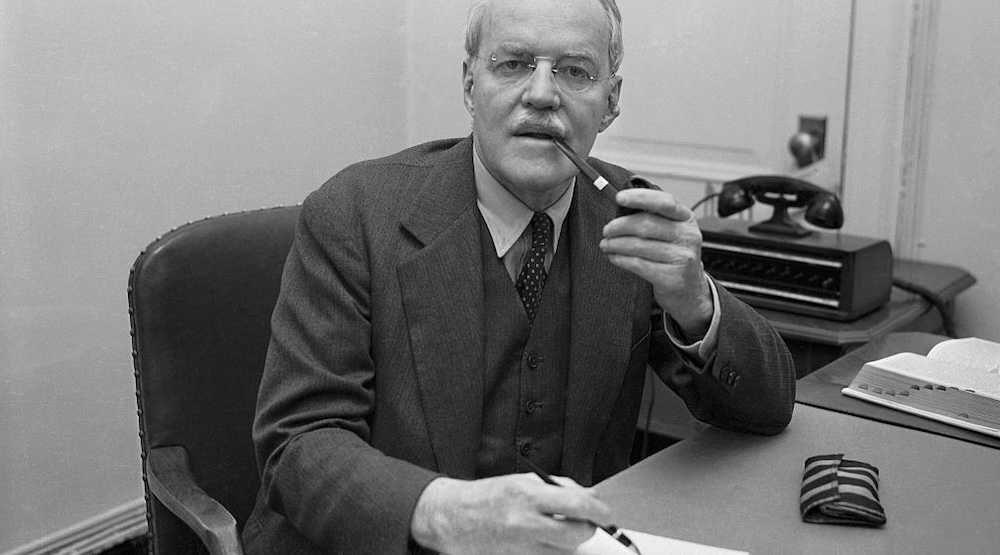
Angelo watched the U.S. intelligence apparatus deteriorate. Visiting CIA headquarters over the years, he passed the stone inscription that the late and great CIA Director Allen Dulles placed as what he intended as a permanent greeting: “And ye shall know the truth and the truth shall set you free” — the Gospel according to John.
In the last year of his life, Angelo saw the videos of CIA corridors festooned with mind-numbing murals and telescreens promoting diversity, equity, and inclusion. To Angelo, who spoke Latin, DEI meant “of God.” A new god, a false one, possesses the American intelligence community today.
The evolution to this point was entirely predictable, and Angelo foresaw it early. He had the most remarkable track record of any American. Close to a half-century ago, on the newly formed Senate Select Committee on Intelligence, Angelo called out the CIA, not for its cult of secrecy, but for its cult of untruthfulness.
A relentless force
Angelo arrived at the Senate in 1977, just as George H.W. Bush left his 11-month stint as CIA director and as the liberal Sen. Frank Church (D-Idaho) wrapped up sensational hearings and reports about the intelligence community.
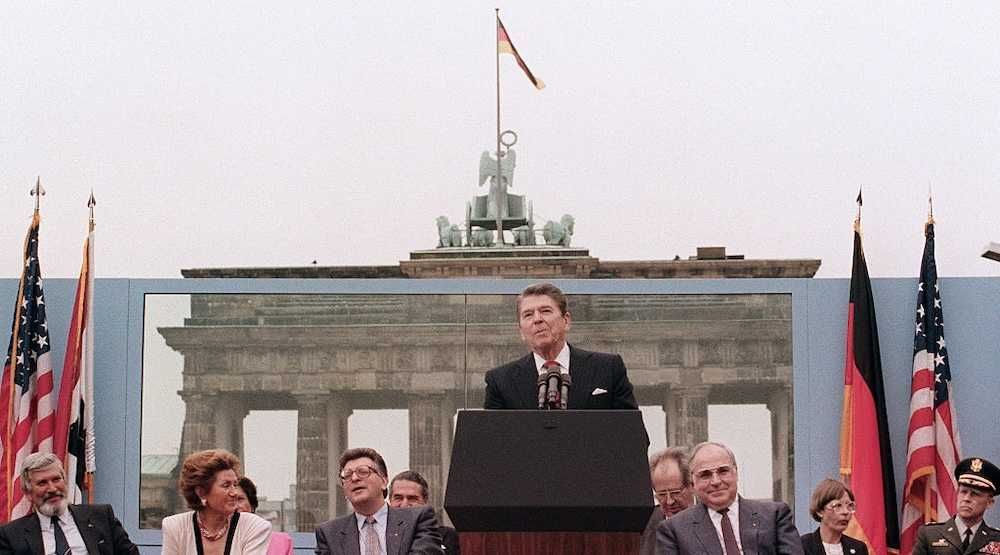
Angelo’s committee work and intellectual rigor were so distinguished that President Ronald Reagan’s 1980 presidential transition team chose him to be part of its intelligence and diplomatic section. He had built a rapport with Reagan’s campaign manager, the distinguished Office of Strategic Services veteran William J. Casey. Casey had done the unthinkable during World War II by proposing, then running, operations behind German lines after D-Day to open the invasion route for Allied American, French, and British Empire forces to march to Berlin.
Rapport and mutual respect grew to deep trust when Casey ran the CIA. Angelo became Bill Casey’s man in the Senate. But Angelo Codevilla was never the CIA’s man. To him, the CIA was just a bureaucracy that performed a necessary function. He believed that the bureaucracy was performing its function poorly and going in the wrong direction. No bureaucracy, he believed, was sacred. Certainly, none should ever be permanent.
Angelo wasn’t even Bill Casey’s man. He was his own man. He stood true to his principles, never feared burning bridges, and often anticipated enjoying the flames.
Angelo trusted and admired President Reagan for the good in him and for his ideals. He worked closely in a fraternal and trusting relationship with Reagan’s national security adviser, Judge William Clark. Casey brought the Senate staffer Angelo to private White House meetings with President Reagan.
Angelo found himself in the curious situation — or, knowing him, he created the situation — of serving on the Senate committee whose job was to oversee the CIA while also working with the CIA director himself to get ahold of the dysfunctional and demoralized bureaucracy. The CIA wasn’t being truthful with Congress, and it wasn’t being truthful with Casey either.
It wasn’t a matter of the CIA’s being secretive. Angelo had all the necessary clearances. It was a matter of being truthful. This bothered Angelo immensely. So did incompetence. And so did ideological blinders. Angelo was never in awe of the CIA or the FBI, though he did say once, 33 years ago, that the FBI merited some of his esteem. That was then.
That year, as the Soviet Union was collapsing, he wrote a monumental work, “Informing Statecraft: Intelligence for a New Century,” on what a successful intelligence community should look like, how it should act, and why. The CIA was far, far behind the curve, looking backward instead of forward. “The major elements of U.S. intelligence will have to be rethought and rebuilt,” he said.
Of course, they were not rethought or rebuilt until after their hand was forced — after the Sept. 11, 2001, terror attacks. Even then, the rethinking and rebuilding were done entirely wrong. Instead of the eternal standards of philosophical soundness and professional excellence that Angelo laid out in 1991, the U.S. intelligence system treated its bureaucratic instincts as sacrosanct, taking critical theory as its lodestar, and glowering establishmentarians cemented the new order.
The CIA leveraged its network of mid- to late-career bureaucrats — the “Old Boys” — to manage perceptions by leaking to the press, helping write or actually writing the popular histories, dominating the academic studies of intelligence, and credentialing those who would play well with others.
Angelo understood strategy the way others pretended to.
Angelo had his own exceptional network, however. He played five-dimensional chess in his sleep. He knew all about bureaucratic warfare and subversion both as a scholar and a practitioner. He knew exactly whom to call, when, and what to say.
Certain senators dreaded him. So did select high-ranking CIA and FBI officials.
He had a bipartisan spleen. On the Senate Intelligence Committee, Codevilla gleefully terrorized Republicans and Democrats alike with pointed, relentless inquiries that exposed intellectual inconsistencies and sheer sloppiness. He forced analysts and policymakers alike to address inconvenient facts as facts. They hated him for it, but many of them admitted he was right in private.
Angelo was known for his broad smile of iron teeth long before Soviet Foreign Minister Andrei Gromyko (or a KGB officer assigned to the pliant Washington Post reporter Dusko Doder, who related it to the American audience) came up with the term to describe Soviet Premier Mikhail Gorbachev.
“Iron teeth” applied to Angelo far better than it did to the Soviet leader. Codevilla’s militant joviality while pummeling Washington’s morally corrupt and weak-minded power elite flummoxed both friends and enemies. Hit hardest were the victims of Codevilla’s intellectual inquisitions. They could never quite tell whether the iron smile was a signal of genuine joy in shepherding one lost in a sea of laziness and prejudice toward logical reasoning or whether the smile was a precursor to a deadly verbal salvo — until it was too late.
Challenging the Old Boys’ club
Angelo was a perceptive talent-spotter. He sized you up quickly. He would go out of his way to help those whom he deemed earnest. He reveled in discussions of facts, reason, and philosophy. One didn’t have to agree with him to be his friend. But if you were out, you were out permanently. He despised what he called “dishonest treachery.”
Treachery is part of the intelligence profession. It has to be. Angelo studied treachery and respected it. Dishonest treachery, to Angelo, was treachery executed in a morally wrong way and for morally wrong reasons. The world is treacherous. People are treacherous. To navigate treachery for a cause larger than oneself, one had to understand treachery, expect it, and deal with it on its own terms.
Born in Italy during the collapse of Mussolini’s fascist regime during World War II, Angelo always focused on the fundamentals. He always referred to the classics. He was the only member of the Senate Intelligence Committee staff, and perhaps the only person on earth, who read and studied the intelligence community’s entire super-secret annual budget, line by line — a pile of papers two feet high — year after year.
Angelo had a fear-inducing way of questioning intelligence leaders. He would say, “I asked Aristotle’s simple questions of officials throughout the Intelligence Community: What is the purpose of this activity? Why do you do this rather than something else? Do you do this for the sake of that, or vice versa? By what criteria do you judge your products good or bad?”
“I was astounded,” he remarked, “at how little thought had been given to decisions that affected thousands of careers, billions of dollars, and the nation’s very future. All too often, the answers to my questions were ‘We’ve always done it this way,’ and ‘How insulting for you to ask!’”
Angelo understood strategy the way others pretended to.
He was offending the agency or the bureau. Not the missions. The mission is never first in a permanent bureaucracy.
Angelo played five-dimensional chess in his sleep. He knew all about bureaucratic warfare and subversion both as a scholar and a practitioner.
Reasoned arguments were not part of the debate. The custom, then as now, was to attack the questioner and defend the bureaucracy. Decades before DEI and LGBTQ+, the FBI had its own informal acronym for its personnel: “DEB,” or “Don’t Embarrass the Bureau.”
“The attack is usually three-pronged,” Angelo explained when unpacking bureaucratic argumentative tactics. “First, this person must be revealing classified information. Second, this person does not know the whole story, and we who do know it are forbidden from commenting, except to say ‘You’re wrong.’ Third, this person’s demeaning tone precludes a rational explanation of some admittedly valid points.”
“So, in practice, three points boil down to one: Leave the field of intelligence for the Old Boys.”
The Old Boys would retire or die out, having mentored a new set of Old Boys, or New Genders, or whatever the flavor of the month may be, but the goal would be the same: Silence honest discussion about intelligence, counterintelligence, and whatever has become of “national security.”
Making truth-telling politically incorrect, and therefore wrong or immoral — and thus evil and professionally destructive — remains a defense tactic for intelligence agency bureaucrats. Angelo decried political correctness very early as it came into vogue. As it was killed off in favor of a more virulent strain, wokeness, he continued his crusade against it.
The Old Boys' networks that he called out from the 1970s became, or were already part of, what he would later define as “the ruling class.”
‘Why? What for?’ And other inconvenient questions
Before the pale riders of cultural Marxism penetrated the intelligence community, Angelo was hammering away at the sheer aimlessness of American intelligence collection and analysis, most of which he saw as existing for its own sake.
After World War II and the bipartisan consensus about containment of communism, defining American national interests was easy: Take the fight to the communists, who were strategically mobilized to tear apart our country and our culture by any means necessary, both ideologically and physically. By defining national interests, even broadly, America can define the scope of its foreign intelligence, counterintelligence, and national security services.
Even the beginning faced deep flaws, plus tensions about growing globalism. That mission was poorly understood and became diluted over time, with priorities left up to “experts” from the Washington establishment and the Ivy League, further distorted by critical theorists of the Frankfurt School variety. Reagan temporarily disrupted that trend, but his monumental mission to bring down the USSR itself required immense intelligence and counterintelligence capabilities.
The end of the Soviet Union allowed anyone with eyes to see that the intelligence establishment had become, as Codevilla had warned from his Senate staff perch, a huge intelligence-industrial complex that existed more for itself than for the national interest, whatever that national interest had become.
Codevilla became one of the first serious people after the Cold War to question why the United States was pouring so many resources into technologies to spy on everything possible around the world. Surveying America’s colossal human- and technological-intelligence might in 1992, he asked, “What for?”
Then, he crystallized the obvious but inconvenient facts. “To what does all of this amount? The activities to which we loosely refer as the U.S. technical collection system [were] never planned according to any single purpose, nor are they administered by a single organization,” he said. Some congressional oversight “sometimes prod[s] the system toward coherence. Yet coherence is elusive, because coordination is ex post facto to budgetary planning.”
Angelo’s unwelcome observation went unheeded, with Osama bin Laden proving the point with his ingeniously simple attacks of Sept. 11, 2001, and all the Saudi and Qatari funding behind them. The al-Qaeda leader was but the most famous of a parade of “known wolves.” A bright and aggressive CIA man in Sudan tried to arrange bin Laden’s capture or elimination before he carried out the acts of terror he was openly planning, but he found little support up the intelligence chain and zero at the top of the CIA and in the Clinton White House. So bin Laden was allowed to remain free to attack.
Angelo had a bipartisan spleen. He gleefully terrorized Republicans and Democrats alike with pointed, relentless inquiries that exposed intellectual inconsistencies and sheer sloppiness.
It took a madman in a cave to force the United States to drop everything and try to add coherence to American intelligence. When that coherence came, it arrived in the hurried form of a huge centralized security apparat with near-limitless capabilities: the Office of the Director of National Intelligence, an überpowerful post that, in the wrong hands, would build coherence by abusing power and politicizing the apparat, resulting, by the time of Codevilla’s death, in a largely incoherent intelligence politburo, a rogue state deeply embedded within a state, whose modus operandi became guided by a revived Comintern’s critical theory and wokeness.
“Intelligence concerns human activities, and human beings, unlike God, go to great lengths to disguise their work. So perhaps the most serious charge that can be made against the fruits of U.S. intelligence concerns not the collectors but another set of people: the counterintelligence officers who should have guarded the integrity of the collectors’ work,” Angelo wrote in “Informing Statecraft.” American counterintelligence failed to do so, and Codevilla is one of the very few scholars to explain why.
Weaponized language
Angelo carefully studied language and the weaponization of words and grammar. He disdained wishy-washy intelligence products full of caveats, euphemisms, and that terrible passive voice.
He embraced the ancient treasure of virtue. Here I speak of virtue in the Aristotelian, Hebraic, and Christian senses. Niccolò Machiavelli changed the public understanding of virtue, influencing philosophers of liberalism in subsequent centuries. He taught how to change language to trick the reader to agree with the opposite of the original definition and intent and to reason, with easy logic, that evil was a virtue.
This was the most subversive aspect of Machiavelli’s writings. Subversion is an operational part of intelligence, though seldom adequately practiced by the CIA abroad or identified and combatted by the FBI to protect our constitutional republic at home (though competently waged against the American public).
Most readers of Machiavelli rely on translations. Angelo grew frustrated with some of those translations, even those by the finest scholars. Raised in an Italian-speaking home, he read Machiavelli in its original form and discovered that, especially in the case of the Florentine’s most important work, “The Prince,” the translators had “cleaned up” the Florentine evil genius’ imprecise uses of words, his often poor grammar, double meaning, or doublespeak, and indeed his bad use of pronouns. The cleanups improved the flow and readability of the translations and arguably corrected Machiavelli’s sloppy mistakes.
Angelo found that Machiavelli’s mistakes were purposeful, intended to convey or obscure meaning. So he set out to re-translate “The Prince,” in a literal but what he called an “inelegant” translation, and packed it with footnotes to explain the calculated plays on words and puns to distort language and understanding.
RELATED: Trump must clean house at DEI-crazy CIA
Machiavelli was all about power for power’s sake — not for higher ideals, as Allen Dulles or Bill Casey later sought. It was power politics simply. Angelo explained how the mistranslators of Machiavelli, inadvertently or otherwise, taught people to dispense with goodness and all forms of higher purpose, to break down human relationships and society for the purposes of power.
Machiavelli twisted the meaning of virtue into a “tool for wretchedness,” suggesting that evil may be praiseworthy, twisting the concepts of evil and good. “The Prince,” Angelo said, marked the center of gravity from the standpoint of the sovereign: “Do I do virtuous things that don’t keep me #1, or do I do evil things and stay on top?” It refers to no higher purpose than that.
And so Angelo foresaw, whether translating Machiavelli or writing on — and acting for — intelligence, counterintelligence, and national security, that the machinery created to defend our constitutional republic has been perverted to seek and preserve power for power’s sake. The CIA as a bureaucracy, the FBI as a bureaucracy, Old Boys' networks against citizens, the ruling class, political correctness, wokeness, critical theory, and cultural Marxism are all effectively automatons stockpiling power for their own sake.
Subversion
Treachery had a love child called subversion. Few mainstream American studies of intelligence or counterintelligence over the past six decades or so devote much attention to subversion — how both to defend ourselves and our society against it and to utilize it against our enemies. Codevilla treated subversion as a natural human behavior. He devoted a whole chapter to it in “Informing Statecraft.”
He also made a study of one of the 20th century’s most notorious subversives, the Italian Comintern man Antonio Gramsci. Gramsci adopted the gradualist, cultural-Marxist approach to revolution, combining the evils of Marxism with the evils of Machiavelli and a dash of Mussolini to give us an early strain of critical theory.
Angelo embraced the ancient treasure of virtue in the Aristotelian, Hebraic, and Christian senses.
Few besides Gramsci knew and applied Machiavelli as well as Angelo. Gramsci did it to subvert and destroy Western civilization. Codevilla understood and explained Machiavelli in a bid to save civilization and its moral foundations and to save its chief protector, at least then: the United States of America.
Angelo also understood Gramsci’s kindred spirits at the Germany-based Frankfurt School, another Comintern enterprise, which was rooted at Columbia University and fanned out through the Ivy League and West Coast universities. The Frankfurt School populated the OSS Research and Analysis Branch during World War II and infiltrated the early CIA’s intelligence directorate and its analytical products with a cultural-Marxist worldview. It penetrated the FBI after Robert Mueller’s centralization and indiscriminate mass hires following 9/11, which is quite likely why President Barack Obama asked Congress to extend Mueller’s statutory 10-year term limit as director for another two years, making the then-cognitively-impaired Mueller the second-longest-reigning FBI director since J. Edgar Hoover.
This wreaked damage that the rest of us are only beginning to understand as we watch the rot of critical theory permeate the Intelligence Community, just as it has our military and educational systems.
Angelo called it early. In a work on political warfare that he wrote in 2006 titled “Political Warfare: Means for Achieving Political Ends,” he noted that as dangerous as the enemy spies are who steal secrets, they merely steal secrets. Alger Hiss was a valuable Soviet spy, but his greatest value to the Soviet enemy was something else by far: a major controlled agent of influence and recruiter for Moscow within the Democrat and diplomatic establishments.
Worse than the spies who steal secrets and the controlled agents of influence, Angelo warned, were the subversive, uncontrolled fellow travelers, the so-called innocents and useful idiots who followed and mainstreamed the work of controlled agents — the men who designed the sellout to Stalin at Yalta, for example.
Since World War II, United States foreign policy succeeded despite, not because of, its giant intelligence-industrial apparat, Codevilla argued in his 1992 book. “Informing Statecraft” is so fundamental, and its principles and guidance so timeless, that it remains among the most important and informative volumes on both statecraft and intelligence more than three decades later. A future president should require all his intelligence, national security, and foreign-policy appointees to master the book.
American intelligence and counterintelligence understand little of this in terms of performing their missions that the public has entrusted to them. Nor does Congress, which makes the laws.
Nor do the courts, which interpret them. Nor do all but a very few of the nation’s schools. And so Angelo Codevilla’s approach to intelligence laid the foundations for his studies of America’s national character and of the ruling class.
Enduring character
To Angelo, America’s superpower status was an exception to its exceptionalism, an anomaly brought about by its defeat of fascism and its brief but squandered victory in the Cold War over the Soviet Union and communism. The post-Soviet world, he reasoned, was the time for America to return to its founding roots.
Nations have character. Their governments affect society, the moral order, and family. In a vicious circle, politics make or break all. America’s founders were all men of character. They spoke openly of virtue, not in the twisted Machiavellian sense, but in its real essence.
A coherent and strategic foreign policy was a core element of the American Revolution, the founding of the American constitutional republic, and the growth of the United States and the American dream to become a superpower. The greatest successes occurred when American intelligence, like the federal government itself, was very limited and very small and when U.S. strategic goals were simple and understandable to the average citizen who could support them.
Times are different, but the principle remains. The United States needs a strong foreign secret-intelligence service to collect and analyze information on issues vital to its national interests to inform a president and his administration. It needs a similar service to conduct activities covertly that diplomats and the military cannot or should not do. It needs a robust counterintelligence service to neutralize foreign spying and influence against us and a moderate security service to defend against violent or subversive internal threats to the Constitution.
Sheer size bears no relation to strength and robustness. As the world’s sole superpower, the United States built a Leviathan government that created a new ruling class through a form of bureaucracy and corporatism that linked political power and wealth. It attacked family, religious belief, and personal character. Surveying history, and stressing the profound America chronicled by Alexis de Tocqueville, Angelo in 1997 recognized the culture wars under way that ultimately begat today’s critical theory of wokeness.
How could America keep the peace in the world if it wasn’t even at peace with itself? Angelo naturally wrote a book about it: “To Make and Keep Peace,” subtitled “Among Ourselves and with All Nations.” Much earlier, with Paul Seabury, he wrote one of the most important modern textbooks of peace’s opposite, titled “War: Ends and Means.” And then, he provided a collection of essays during the Global War on Terrorism titled “No Victory, No Peace,” which observed, in what would mark the early part of a forever war, “The Bush Administration has not achieved peace because it has not sought victory.” That was back in 2005.
Angelo constantly asked the annoying question, “Why go to war if you don’t intend to win?”
A common thread bound all his works on conflict, defense, intelligence, peace, and treachery. That thread was about keeping America first, a solid and reasoned approach without the politicized jingoism, and tempered by a firm grounding in America’s founding principles and the Western moral tradition.
As time went by, after Reagan’s successful strategy brought down the Soviet Union and the military-industrial and intelligence-industrial complexes mushroomed to what they are today, Angelo focused extensively on the elites who run American politics and policy and the uniparty that became known as the Swamp and the permanent ruling class.
As an aside, perhaps Angelo’s most impactful legacy, more than 40 years ago, was to build up a leader in the U.S. Senate to push for a space-based weapons system to shoot down incoming ballistic nuclear missiles. This effort involved constant coordination with the Reagan White House. A Soviet active-measures campaign aimed at weak and treacherous politicians and other elites kept Congress from providing the funds to build and deploy that revolutionary, workable system.
The prospect of an American strategic missile-defense system wrecked the Soviets’ nuclear war calculus and, with Reagan’s own nuclear modernization, tricked the Kremlin into bankrupting the USSR with needless new weapons programs that Reagan planned to negotiate away. However, Congress never funded a functional space-based missile defense, and to this day, America remains completely vulnerable to a strategic nuclear missile attack.
The ruling class, as personified by President George W. Bush and Hillary Clinton, never tried to understand the nature of the jihadist enemy. Angelo called them out for it at the time. Unlike in domestic politics, where they worked tirelessly to keep themselves in power, he observed, they never sought to win abroad.
Angelo Codevilla flew with the high and mighty, not because he craved being among them but because he knew he had to be.
The same was true for the permanent class within the military and intelligence communities. Indeed, by the 2000s, the Joint Chiefs of Staff had completely removed the word “victory” from its annual 400-page “Dictionary of Military and Associated Terms.”
On learning this during dinner with friends, Angelo grew incensed but was not at all surprised, switching the conversation to pose the question, “Why have a military if our leaders say nothing of victory?”
This need for an endlessly growing spy machine resulted more through the incrementalism of American interventionism and forever wars than through a grand design for a giant foreign and domestic spy apparat, or so we’d like to think, but the result was the same. A grandly designed spy apparat would have been more logical and effective than the one we have.
Angelo Codevilla flew with the high and mighty, not because he craved being among them but because he knew he had to be.
Even in Washington, he always took the time to mentor young people to become the next generation of diplomats, spies, and national security leaders.
He taught, among remarkable colleagues, at Boston University during the years when BU President John Silber was on the cusp of transforming the middling school into a top-flight institution with a world-class national security and international diplomacy program — a transformation that died with Silber and swirled down the loo of intellectual mediocrity, wokeness, and the scam of critical-race-theory corruption. Still, Boston University’s very woke Pardee School of Global Studies, of which Angelo was never on the faculty because the school didn’t exist at the time, proudly claims him as a professor emeritus.
Bureaucracies in need of replacement
Government bureaucracies are just bureaucracies. When they atrophy and abuse the public trust, they should be abolished. In an orderly way, their essential functions can be transferred to another bureaucracy that can do the job, or, better yet, they can be culled to create a new bureaucracy to last for as long as it faithfully executes its intended purpose.
Angelo agreed that we don’t need the FBI and CIA as they are. But that doesn’t mean that America doesn’t need strong foreign intelligence, counterintelligence, and even internal security agencies to defend the country and its interests from foreign adversaries. Bureaucracies come and go. And just as the FBI and the CIA came from parts of the distant past, Angelo argued in his later years that it was time for them to go in favor of something better.
Replacements would have to be designed according to the priorities of America’s mission in the world, which he saw as driven by the American people’s priorities for the central government to serve them, with their consent as the governed, and not for the ruling class to serve itself. The people determine their needs, the elected officials determine strategies and policies to fulfill those needs, and then the officials design and authorize the intelligence apparatus necessary to execute those strategies and policies.
And this is where Angelo labored his last. For years, he had referred to the America seen by Tocqueville — its mission, its place in the world, its relations with foreign countries, and its securing its own defense. His last work, published posthumously in 2022, drew lessons in statecraft from an intellectual and political giant and near-forgotten contemporary of Tocqueville, President John Quincy Adams.
Although America had leading political families such as the Adamses even when Tocqueville made his observations, there was no ruling class. America’s founders fought relentlessly to avoid the emergence of a national class of elites, even though several states in the federation had their own dominant political or economic families and clans. But there was no massive, permanent central government with a constellation of companies with business models of milking the taxpayers’ udders. There was no interstate ruling class.
The superficiality of popular American history almost passes over John Quincy Adams, viewing him as the son of a founding father and a one-term president during a period of undistinguished one-termers.
In “America’s Rise and Fall Among Nations: Lessons in Statecraft from John Quincy Adams,” Codevilla described a true American foreign policy, one as consistent with the vision of the founding fathers as with present-day America First nationalism. Adams was the brilliant but practically forgotten 19th-century secretary of state and president who, as a 5-year-old, had been brought by his parents, John and Abigail Adams, to watch the Battle of Bunker Hill in 1775.
John Quincy Adams effectively founded U.S. foreign policy and grand strategy. He authored the Monroe Doctrine to preserve the independence of the new American republics from Mexico to South America and to keep European powers out of the region.
RELATED: The CIA’s greatest failure: Intelligence
In studying Adams’ extraordinary experiences as diplomat, secretary of state, president, and statesman, Codevilla showed America’s successes in determining its own national interests in geopolitics by limiting them, reducing the need for a global, expeditionary military and a centralized, European-style security state to prop up, among other things, a ruling class.
He celebrated John Quincy Adams’ principles and achievements — among them, ghostwriting the extraordinarily successful Monroe Doctrine as secretary of state — and tracked American foreign policy and geostrategy from Adams’ time to the present, uncovering a consistency of principles regardless of international circumstances.
Application of those principles is associated directly with America’s rise. Abandonment of them, over time, tracks with America’s relative decline. Revival of them, Codevilla would argue, would be cause for optimism.
Editor’s note: This article was originally published at the American Mind and was adapted from “Fighting Enemies Foreign and Domestic: The Legacy of Angelo Codevilla” (Encounter Books).
The UN once defended the oppressed. Now it defends the powerful.

I should be dead. Buried in an unmarked grave in Romania. But God had other plans.
As a young attorney living under Nicolae Ceaușescu’s brutal communist regime in the 1980s, I spent my life searching for truth in a regime of lies. I found it in the Bible — forbidden in my country. I answered the divine call to defend fellow Christians facing persecution in an ungodly land.
If the United Nations is to mean anything again, it must rediscover the courage that once gave refuge to dissidents like me.
For that “crime,” I was kidnapped, interrogated, beaten, and tortured. I spent months under house arrest and came within seconds of execution when a government assassin pointed a gun at me. I survived and fled to the United States as a political refugee.
The UN once stood for something
In his recent address to the 80th session of the U.N. General Assembly, President Donald Trump said the organization “has tremendous potential — but it’s not even close to living up to that potential.” He’s right.
When the United Nations was founded in 1945, its mission was noble: to promote peace, security, and human rights worldwide. It was meant to be a platform for honest dialogue, a beacon for humanitarian action, and a voice for the voiceless.
It once lived up to that promise. During the Cold War, the U.N. amplified the voices of dissidents behind the Iron Curtain and gave cover to lawyers like me defending Christians in communist courts. Its support for human rights cases in Romania helped expose Ceaușescu’s tyranny to the world.
That international pressure saved my life and countless others.
Bureaucracy replaced moral courage
Today’s U.N. bears little resemblance to that courageous institution. It has become paralyzed by bureaucracy and corrupted by politics. Instead of defending the oppressed, it often defends the powerful — or looks away altogether.
In Nigeria, Syria, and Yemen, millions suffer while the U.N. Security Council stalls over procedural votes. Permanent members protect their allies, veto resolutions, and block humanitarian intervention. Political calculations routinely outweigh moral imperatives.
When the institution created to prevent genocide can’t even condemn it, the crisis isn’t merely diplomatic — it’s spiritual.
Reform begins with courage
President Trump has proposed bold changes to restore the U.N.’s relevance. He called for adding permanent Security Council members — emerging powers such as India, Brazil, Japan, and Germany — to reflect modern realities and make the council more decisive.
He urged the U.N. to prioritize global security and counterterrorism while aligning its agenda with the legitimate interests of free nations. First lady Melania Trump, addressing the same assembly, launched Fostering the Future Together, a coalition promoting education, innovation, and children’s welfare.
These initiatives could help revive the U.N.’s moral voice and refocus it on its founding purpose: defending the oppressed and restraining the oppressors.
RELATED: Trump strongly defends Christianity at UN: ‘The most persecuted religion on the planet today’

Faith and courage still matter
My own survival came down to faith. When Ceaușescu sent an assassin to kill me, he pulled a gun and said, “You have ignored all of our warnings. I am here to kill you.”
In that moment of terror, I prayed: “Come quickly to help me, my Lord and my Savior.” Peace replaced panic. I began sharing the gospel.
That armed killer, confronted with God’s word, lowered his weapon, turned, and walked away. Today, he is a pastor — serving the same faith he once tried to destroy.
The lesson is simple: Hearts can change. Institutions can too. But it takes conviction.
If the United Nations is to mean anything again, it must rediscover the courage that once gave refuge to dissidents like me. It must speak for the enslaved, the persecuted, and the forgotten — not for dictators and bureaucrats.
God spared my life so I could keep fighting for truth. The U.N. was part of that story once. It can be again — if it remembers why it was born.
Strange but true tales from a communist childhood
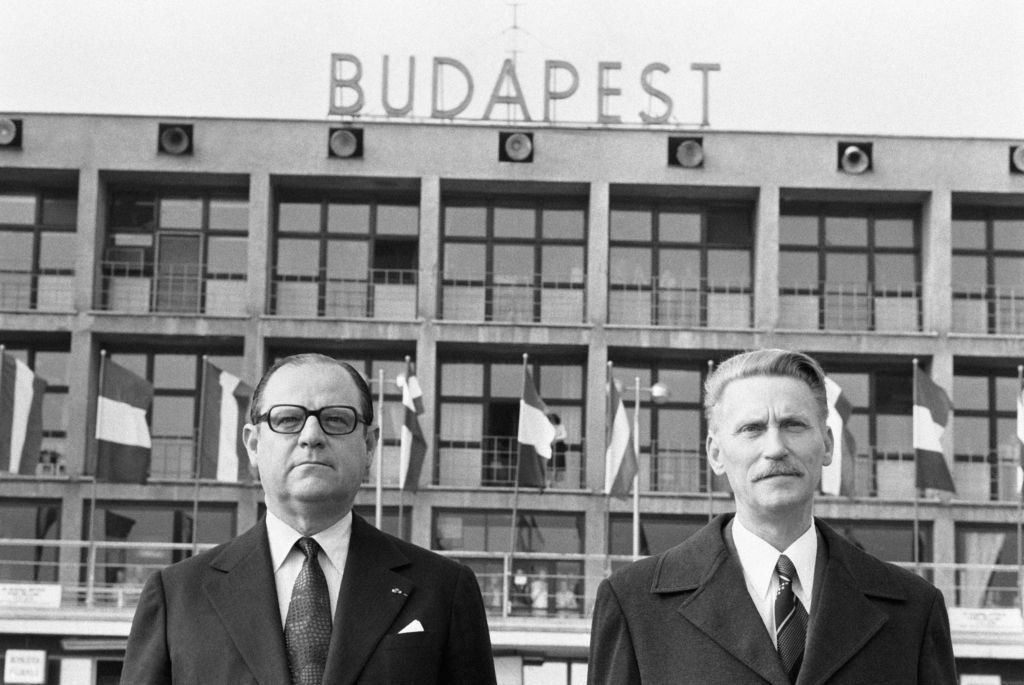
I’d been in Budapest for a week, and I was running out of things to do, so I decided to check out a free walking tour.
Usually with these, you walk around with a local person who tells you random things: some local history, a little trivia, maybe a famous war they fought in 1832 that you’ve never heard of.
The Japanese girls became confused. And frustrated. Sofia tried to explain. Under communism, you were constantly denied things. Sometimes the leaders did this on purpose.
Often these tours were not very good. Often, they were so bad you had to sneak off in the middle of them.
This tour met up in a downtown park. I got there a little early and sat on a bench nearby. That way, I could escape if the tour group didn’t look promising.
People started to show up. Three college-age Japanese girls. A young American couple (newlyweds?). A German woman and her daughter. Other random tourists. About a dozen in all.
But I still kept my distance. I wanted to see what the tour guide looked like before I committed.
Punk perambulator
Finally, the guide showed up. It was a woman. 50-ish? Her name was Sofia. She was dressed all in black. She looked like the “cool” gender studies professor at your local community college. Short, dyed-black hair in an '80s, punkish style.
In Budapest, it was often difficult to size people up by their fashion choices or their appearance. The city was still struggling style-wise because of its long history under Soviet rule. There were still a lot of babushka ladies wandering around.
But Sofia was at least trying to look like a chic European intellectual. That seemed like a positive sign.
I got off my bench. I joined the group
Nice revolution — when's lunch?
She started us off with some normal stuff. The park we were standing in once held a famous rock concert. Pink Floyd? Metallica? Rock Against Racism? Something like that.
She told us some basic Budapest history. Lots of wars. Lots of violence and political upheaval.
She must have mentioned the Hungarian Revolution of 1956, which is a huge deal in Hungary. The people rose up against their communist rulers, and for a brief moment — a week or two — it appeared they might free themselves from Soviet rule.
But the communists regained control and of course executed anyone even remotely associated with the rebellion. I don’t remember how much Sofia said about this. And even if she did, our little tour group would probably not absorb it.
That is the nature of tours like this. You tell ordinary tourists about wars and brutality and horrific events, and they just nod and ask about lunch.
Hungary heart
About half way through the tour, Sofia began to talk about her family. By now, everyone liked Sofia, myself included. She was engaging. She was easy to listen to. Her English wasn’t the greatest, but that added to her appeal.
She told us about growing up in Budapest. She talked about her parents and siblings. Her father was educated and had a good job. Her mother was a teacher. They lived not far from where we were walking.
She described her childhood. For one thing, they didn’t have toys. They had other things to play with. But you couldn’t just go to the store and buy a Barbie doll. They didn’t have things like that.
Wait for it
Then she explained how her mother had to stand in breadlines. And sometimes her father would have to buy food on the black market. It was illegal to do this, but everyone did it. Sometimes you had no choice.
When Sofia got older, she only had two dresses and very uncomfortable shoes. The shoes were so stiff and badly made that by the time they stopped giving you blisters, you’d outgrown them.
Everyone listened without comment as she described these hardships. Nobody asked any questions. Sofia explained how frustrating it was to stand in a two-hour line, twice a week, to get bread. The tour group nodded their heads.
Droog, where's my car?
Then she explained about the car. Her father had ordered a car when she was a child, maybe 6 years old. So she was excited that they were going to get a car. The whole family was.
But as Sofia got older, the car didn’t come. And this wasn’t the 1930s when cars were rare. This was the 1980s, when everyone in Western Europe had a car. Sofia and her friends could see on TV how common cars were in the rest of the world. But they were still waiting for her father’s car to come.
Eventually, Sofia turned 12. Still no car. And then her family stopped talking about it. Sofia continued to get older. She got well into her teens. The dream of riding in a car with her family was eventually forgotten.
The cheating classes
This was the point when one of the Japanese girls raised her hand. She didn’t understand about the car. Why didn’t her family get their car? Did Hungary not have factories to build cars?
Yes, said Sofia. They did build cars, but you had to wait to get one.
The Japanese girls didn’t understand. Why did they have to wait? Did her father not have the money for the car?
Yes, Sofia assured her, he had the money, but the car was like the bread. The government had the bread. They just made you wait for it. And sometimes, even if you waited a long time, you still couldn’t get it.
The Japanese girls became confused. And frustrated. Sofia tried to explain. Under communism, you were constantly denied things. Sometimes the leaders did this on purpose, to maintain control of the people.
Other times it happened because the leaders didn’t know how to run the country. The factory would break down. Or someone in the government would steal your car.
Beggaring belief
Everyone in our tour group thought this was very bad. The newlywed couple shook their heads. This wasn’t right. They didn’t like hearing about this.
Sofia explained that there was nothing you could do. You couldn’t leave the country. That wasn’t allowed. You couldn’t move to a different town. You couldn’t even move to a different apartment without permission. And then you had to bribe someone.
The Japanese girls looked at each other. There was a kind of rebellion in the tour group. Like, surely, it couldn’t have been that bad. Surely, Sofia was exaggerating.
I could feel Sofia getting upset on her side. How could these young people not know about this? This was history. Sofia thought everyone knew.
As I looked around, I saw that I might be the only one who fully believed Sofia’s story.
RELATED: What moving my family to Budapest has taught me about America

Cruel summer
I had visited several communist countries in the 1980s. I was shocked by how poor they were, how hopeless the people seemed, how cruel everyone was to each other. It was illegal to criticize the government, so they turned on each other.
But the nice Japanese girls couldn’t imagine that. It seemed impossible to them that a person could not have a car if he had the money to buy a car.
The other young people were also incredulous. Sofia’s father had a good job, but she couldn’t have toys? How was that possible?
And breadlines? You could tell people had heard of “breadlines.” But that couldn’t have happened to people in a modern society. How could there not be bread? That was the cheapest thing in the supermarket where they lived.
Tour's end
When the tour officially ended, our group shifted back into docile tourist mode. Everyone thanked Sofia and gave her generous tips. Most people seemed happy and genuinely impressed by her, despite those few tense moments near the end.
And now they felt sorry for her. Having no toys as a child? And no car for her family? How sad!
The Japanese girls were especially polite and gracious. They were sorry if they had offended her. Sofia would get their highest ratings on Yelp, or whatever the equivalent was in Japan.
I hung back and waited for everyone else to leave. I had a big tip for Sofia. Also, I wanted to ask her to lunch. Or coffee. I liked her. I thought she was cool.
When it was just her and me, I quickly told her that I had been in Eastern Europe myself. Back in the 1980s. And I knew she was right. I had seen it myself.
On the other hand, I could understand how younger people had trouble believing it. It must seem like another age to them.
She agreed and thanked me. She took my money. But she never really made eye contact. She seemed wary of me. And suspicious in general. So I didn’t ask her to lunch.
Trust fall
Instead, I watched her hurry away. And then I had a weird thought: What if she did exaggerate the communist stuff? Probably that would get her bigger tips.
And what if she didn’t even live under communism? I couldn’t tell how old she was. 40? 50?
Maybe she was just repeating stories she’d heard from older people. What if she wasn’t even from Budapest?
I turned and headed back to my hotel. That’s how it is in cities like Budapest. A lot of strange stuff goes on. You never knew who was telling the truth, who you could trust, what the reality of the situation was.
And this was 30 years after communism fell. And it was still like that.
China is winning the Cold War 2.0 ... and we’re letting it happen
The threat to the United States from the People’s Republic of China is multifaceted, long-term, and aggressive. Whether it’s from military modernization to economic coercion, cyber warfare to space competition, China’s national security challenge is global, and it targets U.S. interests, values, security, and standing in the world.
While much of the focus of U.S. policymakers has been on the military threat from China, the communist country has also implemented a multipronged approach to weaken the United States economically, politically, culturally, and diplomatically. It is enlisting a whole-of-government strategy, blending civil and military approaches with tactics short of war to expand its influence and improve its geopolitical position.
The US is involved in a cold war with China and urgently needs to do more to stop its aggressive actions.
China's determined plan uses economics, media, education, politics, culture, diplomacy, and information — among many other approaches — in a highly integrated and orchestrated fashion. Its actions take place within the U.S. domestically. It seeks to undermine the U.S. regionally and globally, while sowing doubt in the minds of U.S. allies.
In short, in many respects, the U.S. is involved in a cold war with China and urgently needs to do more to stop its aggressive actions.
Reshaping public opinion
A central component of the cold war with China is the effort of its government to influence American public opinion and culture. The Chinese government has a veritable army of anonymous social media accounts, which it uses to not only present its views but to foment division among our people while silencing critics of its regime. It also distributes government-funded newspapers within the U.S., little more than propaganda broadsheets, and invests in key media infrastructure — not only to support its views but also to mute criticisms of its policies.
Additionally, through massive state support, it also seeks to shape American culture through supporting select movies, such as the 2019 movie "Midway," to create division between the alliance of the United States and Japan as well as prompting the temporary removal of the flag of Taiwan from the jacket of the actor Tom Cruise in the 2022 movie “Top Gun: Maverick.”
Much like the Soviet Union during the Cold War, China uses all of its resources to challenge, coerce, silence, and divide opinions about its policies and actions. It uses cultural influence as much as any other capability at its disposal.
No better example of China’s cold war tactics is what the regime has done to expand its capabilities in space. Through robust state-funded support, economic espionage, theft, and coercion, China has aggressively grown its constellation of satellites and other capabilities, giving its military and intelligence services, as well as its state-run industries, significant advantages. To this end, it has even tried to replicate Elon Musk’s reusable rocket concept, the Starship, as well as its Mechazilla Catching Tower.
These are just the latest examples of Chinese economic espionage, which has been going on for decades and done great harm to our commercial space companies. Even as it has advocated for peaceful uses of space, China has also aggressively militarized space, creating advantages that could be used in a future conflict. The U.S. needs to do a better job at confronting this sustained threat.
Attacking global institutions
The Chinese government has also sought to systematically expand its power and take over international institutions affiliated with the United Nations and other global and regional organizations. These efforts are made not only to expand its control but also to mute international criticism of China’s actions and to create diplomatic and other complications for the U.S. and its allies.
Consider China’s involvement with United Nations environmental organizations — how it has been able to silence criticism and prevent investigations of the activities of its maritime militia.
RELATED: America’s faith in ‘free trade’ empowered China’s apartheid machine
China pillages fish stocks around the globe and often destroys reefs and harasses other national fishing fleets. It has also done much to downplay the country’s significant contributions to air pollution and how its development projects worldwide, as part of its Belt and Road Initiative, destroy the environment. Finally, it consistently seeks to reduce Taiwan’s role on the world’s stage and delegitimize its political system and exclude it from international forums.
While China’s leaders publicly call for peaceful relations with the United States, they are relentlessly pursuing a campaign to challenge the United States in virtually every economic, political, diplomatic, and military sphere of activity. China consistently seeks advantages using a sustained, long-term campaign of relentlessly expanding its influence using all of the resources of its government.
In many respects, our country is involved in a new cold war with China, requiring a similarly enduring approach that enlists not just the resources of the United States government but also of our own civil society, allies and partners, and freedom-loving people across the world. We must do a better job of making America first and China last.
Editor’s note: This article was published originally by RealClearDefense and made available via RealClearWire.
Today's top stories
 www.theblaze.com