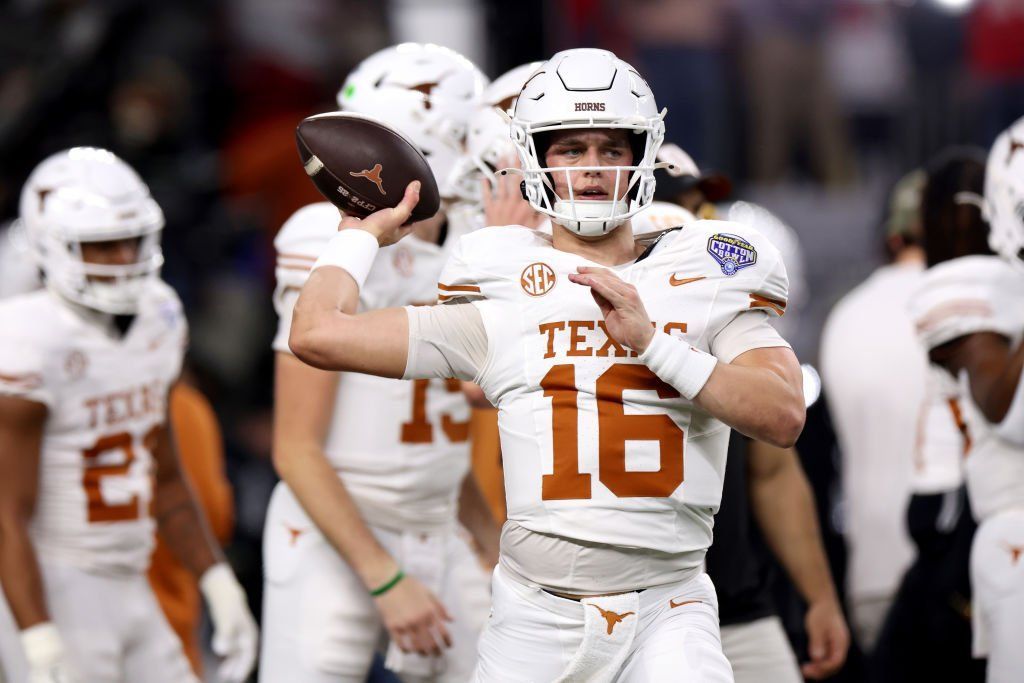
Will Trump save college sports? The NCAA thinks so — but these changes are big
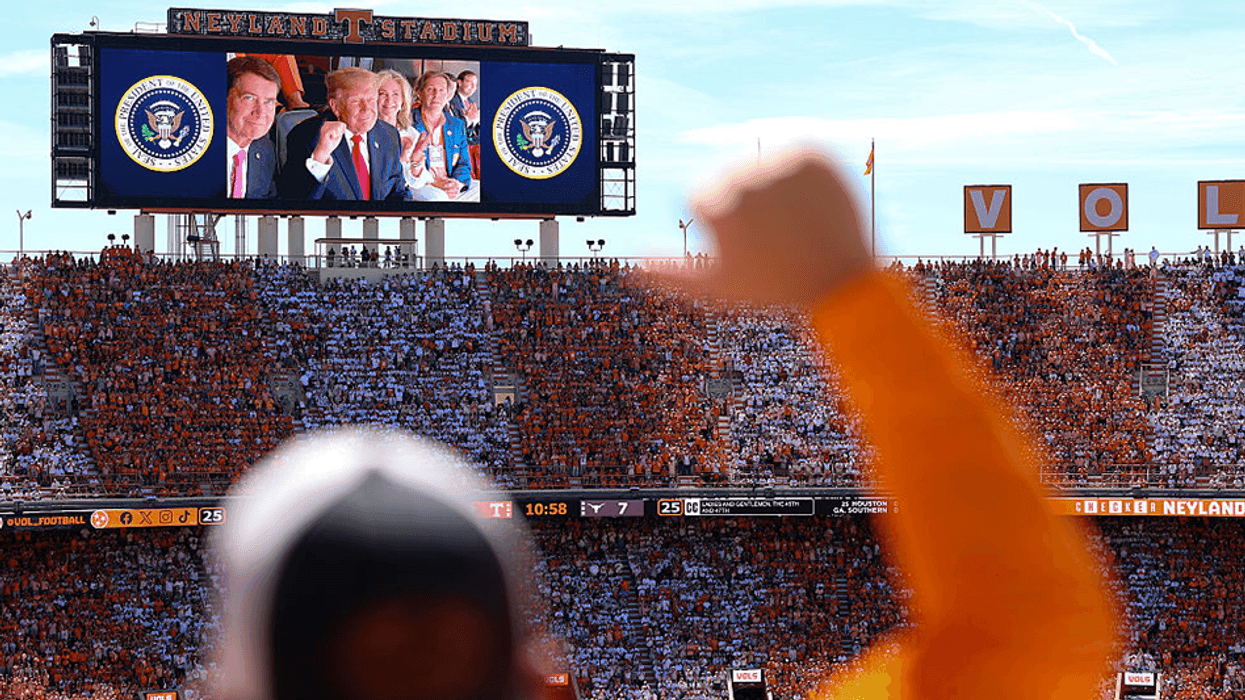


The NCAA got one step closer to achieving its President Trump-aligned rule changes this week.

For months, the president has been pushing sweeping adjustments to college athletics that would limit transfers, payments, and eligibility for athletes.

'It will not only save college sports, it will save the colleges themselves.'

On Monday, the Senate passed the Protect College Sports Act of 2026 in a 77-22 vote, with the bill sponsored by Sen. Ted Cruz (R-Texas).

The vote came months after Trump's executive order that urged national action on the issue in April and received support from legendary college coaches.

While the legislation does favor the historic college institutions in some regards, it also benefits student-athletes.

The bill prohibits schools, conferences, and the like from restricting student-athletes from entering into name, image, and likeness agreements; students must report any NIL compensation to their school that is greater than $600.

Other big changes come in the form of limiting player and personnel movement. Student-athletes are allowed only one transfer during their eligibility, or they otherwise face having to sit out for a year.

The five-year eligibility window would also change, effectively upending the redshirt system and replacing it with a fixed eligibility window. Under the bill, five calendar years of eligibility would be initiated at the start of the academic year after the athlete has turned 19 or the day the athlete first enrolls full-time in college, whichever comes first.

For coaches, football personnel cannot become the head football coach at a different institution during the same season.

The bill still faces a battle in the House in order to become law and will likely have to wait until after the midterm elections. However, the president still called the Senate vote "a really big deal."

"It will not only save college sports, it will save the colleges themselves," Trump wrote on Truth Social. "Congratulations to Randy Levine, President of the New York Yankees, and all of those who worked with him, on a job well done!"

RELATED: ESPN's Pat McAfee gets death threats over Trump comments. There's just one problem — he didn't say them.

Other changes in the bill would prohibit Division 1 conferences from "reducing the number of varsity or Olympic sports teams that a member institution must sponsor," with schools that make $80 million in athletics revenue prevented from reducing the number of roster spots for sports that they provided in 2024-2025.

Student-athletes also get a 10-year window after eligibility to come back and finish their degree, and schools must provide the same grant-in-aid amount as when they were student-athletes.

As well, agent endorsement contract fees are capped at 5% under the bill, and school spending on athletes is capped at $50 million annually.
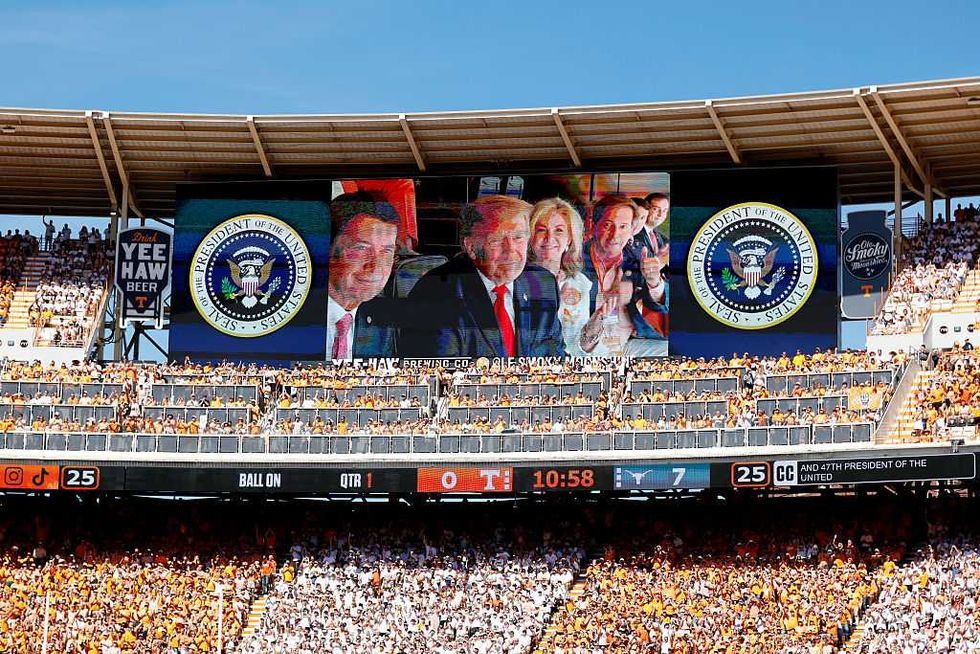
RELATED: NY Giants quarterback labeled 'insane' over pregame comments — almost no one knew he was quoting the Bible

Johnnie Izquierdo/Getty Images

The NCAA has boasted about the Protect College Sports Act on its website, insisting it will "level the playing field" nationwide.

The NCAA says it supports "sustainable, fair revenue sharing," protecting women's and Olympic sports, and "reasonable" transfer limitations.

The Big Ten Conference also issued a statement Monday: "We look forward to the next steps to passage as we continue to support the act as passed by the Senate."

The Hill reported the bill as granting the NCAA sweeping federal antitrust protection that would shield it from lawsuits, with Sen. Chris Murphy (D-Conn.) claiming it will only perpetuate exploitation.

"What this bill does, at its core, is protect a system of exploitation," Murphy said, per CNN. "This bill protects the billions of dollars that coaches and executives are making by suppressing compensation for some of the most highly valued athletes in the world."

Sen. Cory Booker (D-N.J.) said the bill seeks to serve "the large, wealthy interests that have been controlling college sports for a long time."

Like Blaze News? Bypass the censors, sign up for our newsletters, and get stories like this direct to your inbox. Sign up here!

Congress, Ignore The Predatory Agents Trashing The ‘Protect College Sports Act’

Before Congress takes advice from the agents attacking the Protect College Sports Act, senators should ask a simple question: Who makes money if the bill fails?
Everyone loved revenue sharing … until the revenue got shared


Congress is considering competing bills to “save college sports” after last year’s landmark name, image, and likeness settlement. The debate often begins with athlete compensation. It should begin with the financial structure that compensation is about to disrupt.

Football and men’s basketball do not merely pay for themselves at major universities. They subsidize nearly everything else.

Football and men’s basketball laid the golden eggs, and nearly everyone else lived on them. That arrangement may be ending.

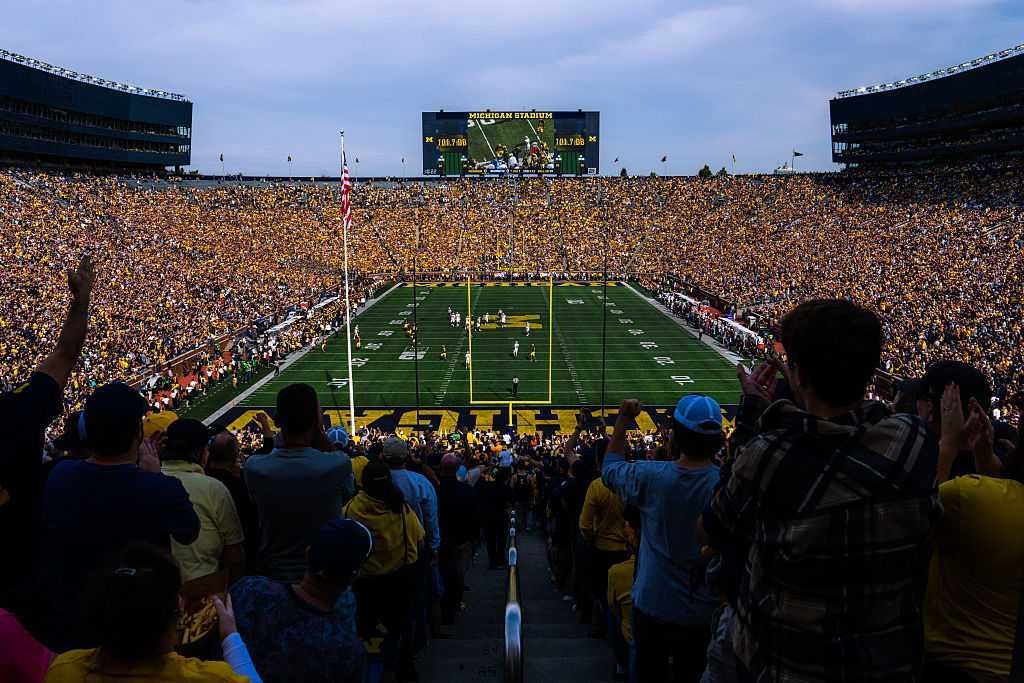
Equity in Athletics Disclosure Act reports show the scale of those surpluses. In 2025, the last year before the settlement took effect, Michigan reported more than $120 million in combined surplus from football and men’s basketball. Tennessee exceeded $116 million. Notre Dame topped $102 million.

Those schools are not outliers. At least 12 of the Big Ten’s 18 members cleared more than $50 million from the two sports. At least eight of the SEC’s 16 members did the same. Half of the ACC schools reporting usable figures generated more than $17 million.

The pattern extends beyond the largest programs. Football and men’s basketball produced more than $20 million at Boise State and about $6 million at San Diego State.

Even those figures may understate the subsidy. EADA reporting is inconsistent and often opaque. Some universities hide profits and losses across entire athletic departments. Others report revenue from profitable sports while obscuring deficits elsewhere. Yet wherever the figures are complete, the same structure appears.

Football and men’s basketball generate cash. Nearly every other sport consumes it.

At the 12 Big Ten schools with complete women’s sports data, the average deficit approached $20 million. Nine SEC women’s programs reported deficits above $27 million. The seven ACC schools with complete figures averaged shortfalls greater than $11 million.

Success on the field rarely changes the arithmetic. Nebraska and Wisconsin built elite volleyball programs, yet each lost well over $1 million in 2025. Purdue volleyball and women’s basketball were rare Big Ten programs to report profits above $4 million. Duke volleyball posted only a small surplus in the ACC. South Carolina’s national champion women’s basketball program ran a deficit exceeding $5 million.

RELATED: Texas AG Ken Paxton threatens Big 12 over possible Texas Tech boycott

Antranik Tavitian/Bloomberg/Getty Images

Men’s nonrevenue sports also lose money, though generally less. At the Big Ten schools with complete reports, those programs averaged roughly $10 million in losses. The SEC average was about $11 million. Wisconsin men’s hockey lost $1.3 million; the national champion women’s team lost nearly $3 million.

The disparity is not an argument against women’s or Olympic sports. It explains how those sports have survived at their current scale.

Ticket sales, television contracts, and donations tied to football and men’s basketball have long financed teams that cannot cover their own costs. The surplus from the two commercial sports has sustained the breadth of the modern athletic department.

The NIL settlement is redirecting that surplus.

Schools may now share revenue directly with athletes under a cap, while collectives and boosters can make additional uncapped payments. Early evidence suggests that most capped money is flowing to the athletes who generate it.

Texas Tech spent 74% of its cap on football and 17.5% on men’s basketball. North Carolina State spent more than 85% on those two sports. North Carolina spent nearly 98%.

The logic is obvious. Schools competing for quarterbacks, pass rushers, and starting guards will direct money toward the players who determine wins, television audiences, and donor enthusiasm. Every dollar paid to those athletes is a dollar no longer available to subsidize programs that run permanent deficits.

The uncapped side payments create a second pressure. Donors who once gave to athletic departments — where their money could support the entire portfolio of teams — may instead direct funds to outside collectives focused on recruiting and retaining football and basketball players.

The same revenue engines are therefore being tapped twice: once through direct school payments and again through donor-backed NIL deals.

RELATED: Women’s sports finally got a reality check

Oliver Contreras/AFP/Getty Images

President Trump’s executive order on college athletics recognizes the danger. It warns that the new financial pressures could jeopardize women’s and Olympic sports and seeks greater discipline in the post-settlement system.

Whether the order or any pending bill can preserve the old model remains an open question. Congress cannot legislate away basic economics.

Athletes in revenue sports now have a stronger claim on the money they generate. Schools still want to maintain dozens of teams that do not generate enough revenue to sustain themselves. The same dollars cannot fully satisfy both demands.

For decades, college athletics concealed this trade-off behind the language of one unified department. The financial reports tell a simpler story: Football and men’s basketball laid the golden eggs, and nearly everyone else lived on them.

That arrangement may be ending. Congress should understand what it is trying to save before promising that every program can survive unchanged.

Collegiate ‘Likeness’ Deals Tempt Teens To Forfeit Future Millions For A Blinged-Out, $80,000 Prom

College 'name, image, and likeness' deals are seducing young athletes into making rash financial choices with long-term ramifications.

UConn star Tarris Reed praises Jesus ahead of national championship: 'He changed everything about me'


University of Connecticut star Tarris Reed Jr. spoke beautifully about Easter, the Resurrection, and how Jesus has affected him following the March Madness semifinals on Saturday.

Reed took the podium following a 71-62 win over Illinois, which sent UConn to the national championship against Michigan, his former team, on Monday night.

'He changed everything about me.'

Surprisingly, a reporter in Indianapolis brought up Easter weekend during Reed's press conference, asking the 22-year-old what the Resurrection means to him.

Praise and proof

With a smile on his face, Reed rubbed his chin and said, "That's a great question."

"The resurrection is really everything," he began. "That's like, the staple of Christianity. So like, without the Resurrection, there is no Christian [faith], there is no Jesus."

Reed then went into details that are rarely heard in the sports world, which may signal a continued shift into faith being proclaimed by high-level athletes.

"I feel like once you can show a lot of significant evidence for the Resurrection, I mean, it shows a lot of proof towards Christianity. So I feel like just to go through, where I came from throughout my college career ... Jesus just literally changed my mind."

RELATED: Olympic Committee adopts new policy on 'trans' athletes

Bible based

Before the national tournament, Reed said he has been drawing inspiration from his Christianity, saying he reads the Bible every morning. When his confidence has been low, he has turned to God and been "strong" in his faith.

It was then that Reed began telling reporters that his belief in Jesus has changed him completely.

"He changed everything about me," Reed said on Saturday night. "It's crazy looking back; like I saw my old team Michigan the other day and spoke to a couple of those guys. We [have] just seen each other just grow so much and just change. So it's just been a blessing just to see myself just, like I said, grow through Jesus. I mean He just, like I said, wiped my eyes clean."

While there aren't as many instances, Reed had spoken about being a Christian during his time at Michigan, but he admitted recently he did not read the Bible when he played there.

Interestingly enough though, he cited similar reasoning for turning to his faith in 2023 with the Wolverines.

"When things are crumbling down, I know that I have faith in Jesus Christ. He's going to produce and carry me through the storm," he said at the time.

RELATED: Jason Whitlock: The NCAA tournament has a Bruce Pearl problem

Patrick Smith/Getty Images

Walking of faith

Ahead of the tournament final, the 6'11'' center says he has completely changed due to his faith, right down to the way he walks.

"My whole mind is different. The way I talk, walk, act changed. The way I treat other people. It's like more not to get, but more to serve. You know, I feel like I'm here to really serve and serve others."

UConn plays Michigan Monday night at 8:50 p.m. ET for the national championship.

Like Blaze News? Bypass the censors, sign up for our newsletters, and get stories like this direct to your inbox. Sign up here!

Lee Corso Epitomizes The Spectacle Of Modern College Football

On Saturday, Lee Corso will make his final appearance on College GameDay, the ESPN show he has worked for since its inception in 1987.

GOP Should Save College Sports For The Young Men Who Elected Them

Bill Clinton's misguided Title IX 'proportionality test' quotas are destroying men's non-revenue college sports.

The Saga Of Tennessee’s Nico Iamaleava Is The Latest Expression Of The Brokenness Of College Sports

This is only the latest example of the rapid destruction of college sports in America.

EA Sports doubles NIL compensation for NCAA football players ahead of new game release


Electronic Arts will increase its payments to college athletes this year for their name, image, and likeness, more than doubling the payouts from 2024.

In email to Division I NCAA athletes on Tuesday, EA Sports announced it would increase payments from $600 to $1,500 to football players for their inclusion in the upcoming college football video game.

Players included in the deal will also receive a copy of the deluxe edition of College Football 26, a bonus they similarly received for the last game. Some players will again serve as brand ambassadors for the game and receive further compensation.

Discussions did not go so easily for EA Sports last year. Many accused the game giant of undercompensating athletes, something Texas quarterback and legacy player Arch Manning seemed very aware of.

The nephew of Super Bowl winners Peyton and Eli Manning, Arch held out on negotiations until the 11th hour, when Electronic Arts eventually caved and paid a reported $50,000 (or more) to have the young star appear in the game. Soon thereafter, Manning released a promotional video with his uncle Eli to promote the title.

"I'm IN the game," Manning wrote, along with the signature "horns up" emoji representing Texas.

College sports reporter Pete Nakos told Blaze News at the time that cover athletes for the game received payments in the low six figures.

Texas QB Arch Manning held out for a reported 84x pay increase for his inclusion in NCAA Football 25. Photo by Sam Hodde/Getty Images
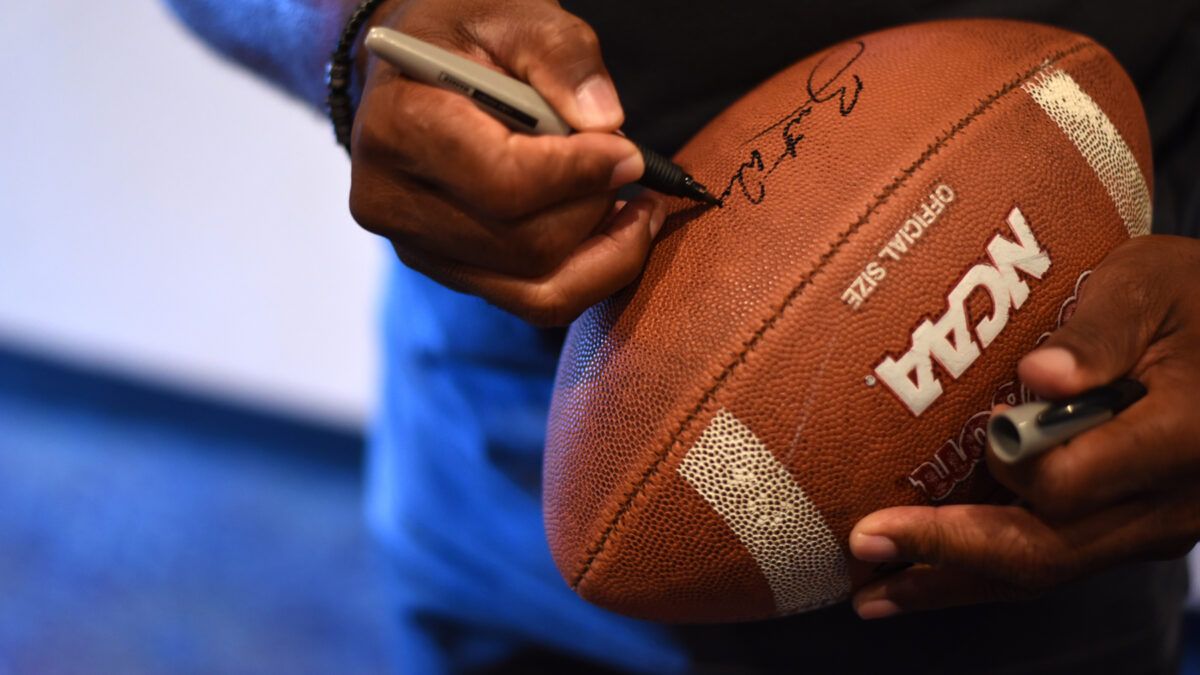
More than 8,000 players agreed to be in to the previous game within days of being offered a deal in 2024, with a total of 14,000 athletes opting in. This averaged out to about 85 players per team.

NCAA Football 25 was the first video game of its kind in 10 years, and fans flocked to stores and online retailers to make it the highest-selling sports game of all time. It was reported last July that the game had taken in a reported $500 million in just a few weeks, according to On3.

Speaking on the new NIL deal, EA Sports executive Sean O'Brien said the company's approach "empowers each athlete to make their own decision."

"College sports are growing and changing," O'Brien continued. "Our focus at EA Sports is on continuing to put athletes first as we bring them in the game in College Football 26 and beyond."

Agency OneTeam Partners has a multiyear contract with EA Sports to negotiate group licensing rights and reportedly claims to advocate on behalf of the players due to their lack of unionization. However, EA still makes the final decision in terms of how much the company will pay the college athletes.

Like Blaze News? Bypass the censors, sign up for our newsletters, and get stories like this direct to your inbox. Sign up here!

D.C. Decision Makers Could Kill College Sports By Giving NCAA Big Dogs A Legal Monopoly

The NCAA is broken, but handing the keys to a few fat cats will make it even worse.