Communist dictator of Cuba INDICTED for murder of US citizens by Trump Justice Department
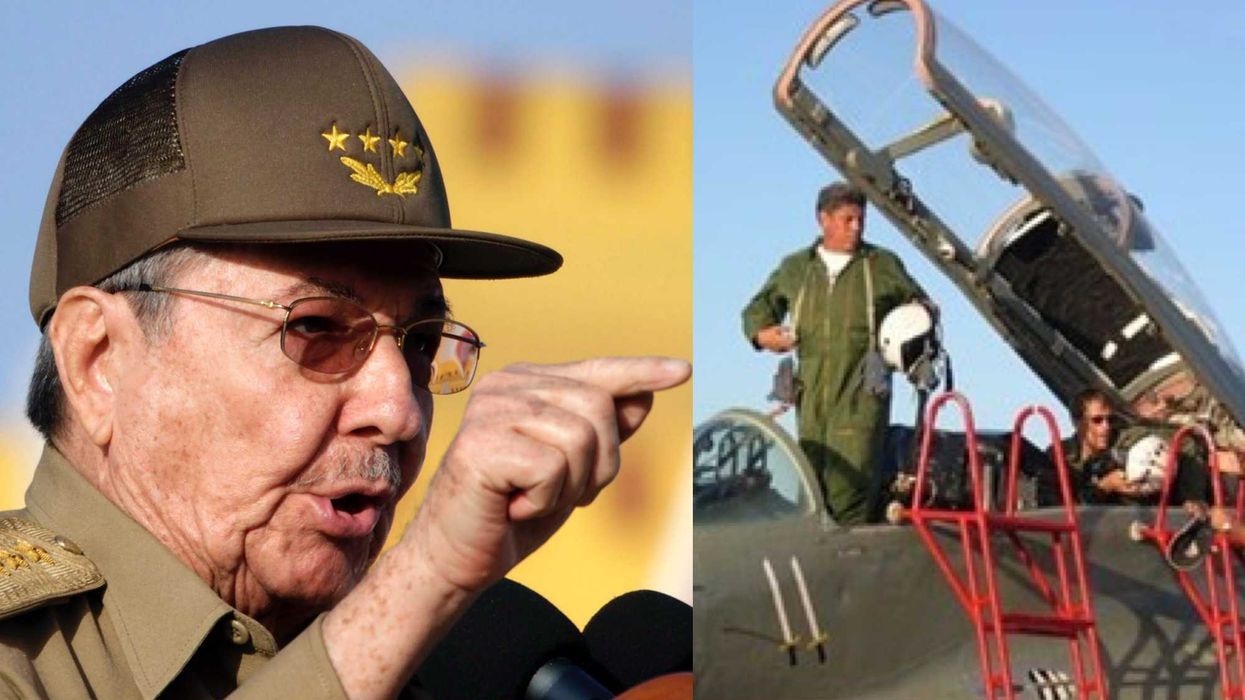


The U.S. Department of Justice says Cuban ex-dictator Raul Castro has been indicted on charges related to the shooting down of two planes in international waters.

Castro, 94, ruled over the communist government in the island nation until 2018 after his brother, revolutionary icon Fidel Castro, passed over control in 2008 over his health issues. Fidel Castro died in 2016 at the age of 90.

'If you kill Americans, we will pursue you. No matter who you are. No matter what title you hold.'

In an indictment unsealed Wednesday, the U.S. government charged that the surviving Castro should be held criminally responsible for the deaths of American citizens.

On Feb. 24, 1996, the Cuban government fired upon and shot down two unarmed U.S. civilian aircraft, killing four Americans who were on a rescue mission, according to the indictment.

"For the first time in nearly 70 years, senior leadership of the Cuban regime has been charged in the United States for alleged acts of violence resulting in the deaths of American citizens," reads a statement from acting Attorney General Todd Blanche.

"President Trump and this Justice Department are committed to restoring a simple principle: if you kill Americans, we will pursue you. No matter who you are. No matter what title you hold."

The four Americans were working with Hermanos al Rescate, or Brothers to the Rescue, a humanitarian operation that sought to aid Cubans trying to flee the communist regime.

The DOJ alleges that the organization was infiltrated by communist agents who provided information to the Cuban military in order to plan the attack on the planes.

The indictment alleges charges of conspiracy to kill U.S. nationals, two counts of destruction of aircraft, and four counts of murder.

In addition to Castro, the indictment also names five other Cuban officials who are allegedly partly responsible for killing the Americans.

RELATED: 'I can do anything I want with it': Trump confirms he's eying another country for the 'taking'

The U.S. nationals killed in the operation were Carlos Costa, Armando Alejandre Jr., Mario de la Peña, and Pablo Morales.

"For 30 years these families have waited for answers — and this FBI never forgot," FBI Director Kash Patel said. "We will continue working with our Justice Department partners to bring to justice those who attacked our civilians."

The defendants face a maximum penalty of death or life imprisonment on the murder and conspiracy charges if convicted, the DOJ said.

In response to the indictment, current Cuban President Miguel Díaz-Canel Bermúdez claimed in Spanish: "On February 24, 1996, Cuba acted in legitimate self-defense within its jurisdictional waters, following repeated and dangerous violations of our airspace by notorious terrorists — a fact of which the U.S. administration at the time was alerted on more than a dozen occasions, yet it ignored the warnings and allowed those violations to continue."

Whether Castro and the other defendants will be extradited to the United States to face the charges is unclear. Blanche said of Castro: "There was a warrant issued for his arrest. So we expect that he will show up here, by his own will or by another way."

Like Blaze News? Bypass the censors, sign up for our newsletters, and get stories like this direct to your inbox. Sign up here!
Fraud-busting journalist Nick Shirley risks everything in Cuba to expose America’s socialist fantasy


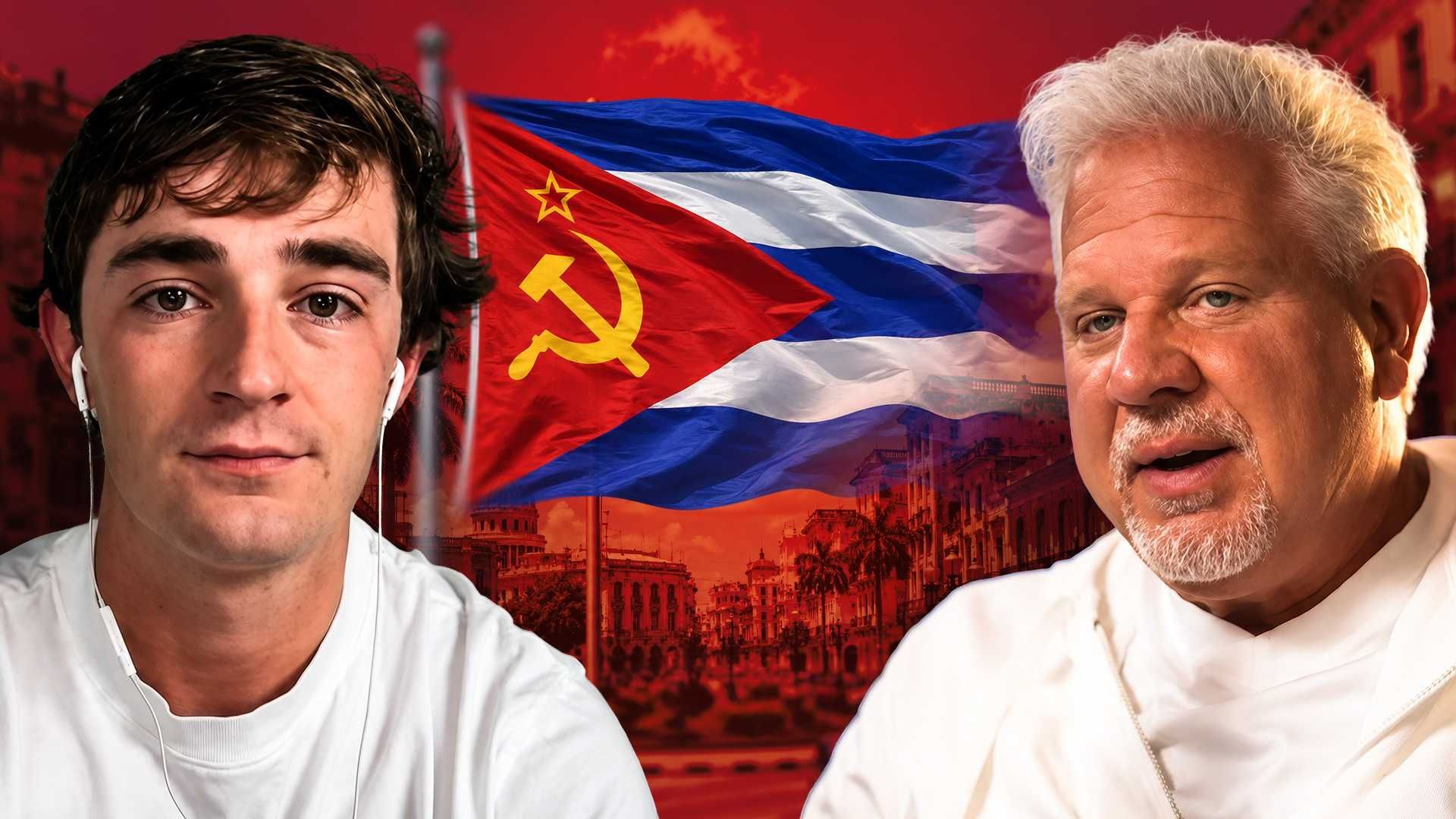
After exposing an alleged billion-dollar fraud scandal in Minnesota's Somali-run child care programs, 24-year-old independent journalist Nick Shirley became an overnight sensation. While he continues to bust suspected fraud rings, like alleged hospice/Medi-Cal fraud in California, lately he’s had his sights set on busting a different kind of scandal: America’s dangerous flirtation with socialism.

This endeavor recently led him to Cuba, where he spent only 24 hours documenting life under communism before he was forced to leave due to being followed by intelligence agents, experiencing seizure of his equipment, and having a disturbing confrontation with a Cuban general.

On a recent episode of “The Glenn Beck Program,” Shirley recounted his intense venture into a country that captures the dark reality of socialism.

Shirley tells Glenn that he decided to go to Cuba primarily because of the “rise of communism and socialism here in the United States.”

“I was shocked by what I saw inside of Cuba,” he says.

“Somebody described Cuba to me just the other day as from a distance it looks beautiful and quaint, and then when you get right up to it, it is rot and decay and suffering. Is that what you found?” asks Glenn.

“One hundred percent,” says Shirley, recalling how Cuba’s beautiful historic buildings are “crumbling” and their streets are “not in good condition.”

And then there’s the plight of the people.

“People are starving. Seven out of 10 people are going without three meals a day. Kids aren't going to school because there's no power. The universities actually shut down because they can't go to school when there's no power,” says Shirley.

Even though Cuba blames the nation’s condition on the United States, he argues time does not corroborate this narrative.

“For 60 years, they've been underneath this communist regime, and they haven't figured it out. ... They've decided to be our enemy for so long, and now the United States is even offering support, it looks like, and it seems like they've rejected that support,” says Shirley.

Shirley’s mini documentary that captures his short stint in Cuba is an honest picture of what the socialism so many left-wing Americans and politicians are advocating for here in the U.S. actually looks like.

“So you're going to see how people really don't have freedom of speech inside of this country, how the buildings are eroding, how these children aren't going to school, how there's no hope in the eyes of these people,” says Shirley.

“All the young people that I spoke to, they're all ready for a change. A lot of them even said like communist is the worst thing that can possibly happen,” he adds.

Communism certainly wasn’t beneficial for Shirley, a visiting foreigner, either.

Upon landing in Cuba, authorities at the airport immediately seized most of his professional camera equipment. He and his team were then followed all day by intelligence agents. When they tried to sneak out of their hotel around 4 a.m. to leave early, a two-star general was waiting and interrogated them about their filming and interviews before they managed to escape to the airport.

Shirley points out the irony of the Americans who are actively pushing for a socialist government in the U.S.

“Right now, we have this huge movement inside of our country for ideas like socialism, for communism, and these people are protesting every week,” he says. “Underneath the communist regime, they would not be able to protest, so they're wanting something that would actually suppress them and stop them from doing exactly what they are doing here inside the United States.”

And yet when he or others show the grueling reality of communism in other countries, these protesters only seem to double down.

“Either they're getting paid heavily to promote this communist idea that it would be great here inside the United States, or quite literally they are brainwashed to the point where they have somehow believed that capitalism have spelled them so bad that they want to accept a government that would make them so suppressed that they would not even be able to voice their opinions out in public,” he tells Glenn. “That's what really shocked me.”

To hear more, watch the video above.

Want more from Glenn Beck?

To enjoy more of Glenn’s masterful storytelling, thought-provoking analysis, and uncanny ability to make sense of the chaos, subscribe to BlazeTV — the largest multi-platform network of voices who love America, defend the Constitution, and live the American dream.

Massive blackout hits Cuba after entire power grid fails; communist government blames the US


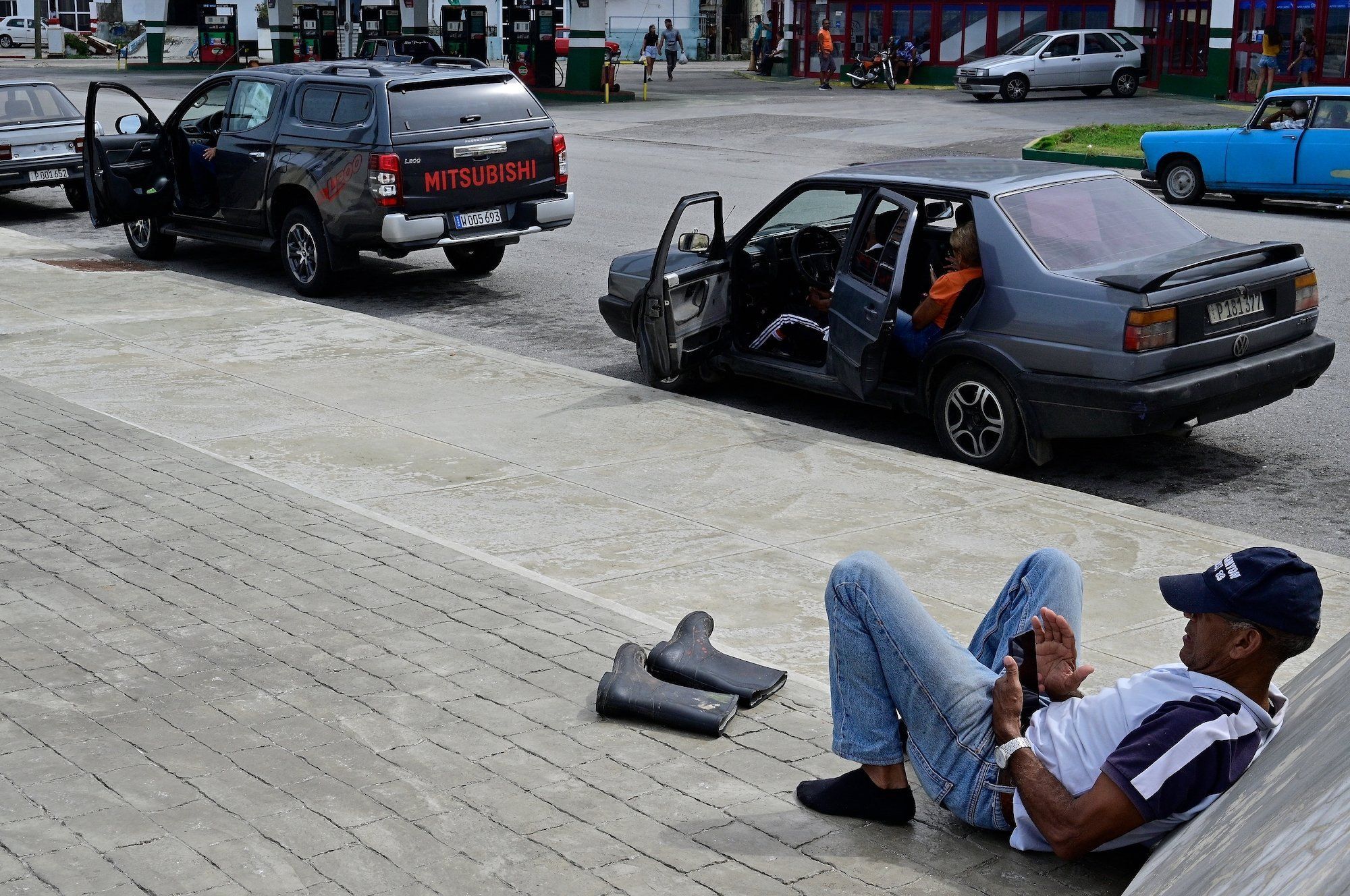
The entire island country of Cuba was plunged into darkness on Friday after a major power plant failed, the state energy minister confirmed.

Severe power shortages had already forced the communist government to limit electricity use in an attempt to spare the power grid. State workers were sent home and non-essential industry as well as schools were shut down.

'We went to a restaurant and they had no food because there was no power, now we are also without internet.'

Despite the last-ditch effort by the government, the Antonio Guiteras thermonuclear power plant near Havana failed Friday, though officials did not say what led to the failure.

The blackout has affected about 10 million people in Cuba.

Prime Minister Manuel Marrero blamed the worsening energy situation on deteriorating infrastructure and U.S. embargoes that hindered the country's efforts to obtain spare parts and fuel.

"The complex scenario is caused primarily by the intensification of the economic war and financial and energy persecution of the United States," said Cuban President Miguel Diaz-Canel.

A spokesperson for the White House National Security Council denied the accusation.

"The United States is not to blame for today's blackout on the island, or the overall energy situation in Cuba," the spokesperson said.

The blackout is also affecting tourism in Cuba, as shops and nightclubs were ordered to close.

“We went to a restaurant and they had no food because there was no power, now we are also without internet," said Carlos Roberto Julio, a tourist from Brazil. "In two days, we have already had several problems.”

The power plant was named after Antonio Guiteras y Holmes, a communist revolutionary born in Pennsylvania who died fighting to overthrow the Cuban government in 1935.

Like Blaze News? Bypass the censors, sign up for our newsletters, and get stories like this direct to your inbox. Sign up here!

Cuban woman exposes 'failures of communism' on YouTube — and is imprisoned for it


Cuba resident Ruhama Fernandez, an activist and YouTuber, says that she dared criticized communist Cuba on YouTube, and ended up in prison for it.

What are the details?

In a widely read op-ed for USA Today, Fernandez said that she was at home on Aug. 10 when members of the Cuban regime arrived at her home and detained her.

She was held in isolation, she recalled, and her belongings were taken from her — and this wasn't the first time.

"In truth, the Cuban regime has persecuted my family and me for years," she wrote. "In 2020, I began posting YouTube videos of daily life in Cuba, exposing the failures of communism and how the system established by the Castro brothers hurts everyday people. I decided to post videos online because I was fed up living in a communist country where it is impossible to thrive, innovate, and progress. I chose to accept the risks in the name of freedom."

Fernandez said that she received punishment in response to her videos.

"Leading up to my arrest, the regime sent threats and intimidated my friends and family unless I stopped criticizing the government," she recalled, but she was undeterred from her mission even though the regime cut off her internet.

She continued, "[O]n Aug. 10, I was at home with my family when the regime arrived, rebuked me, and took me away. I was separated from my family without any respect for my legal rights (which are regularly violated by the regime). I was taken to a prison where I was detained for two days."

Fernandez said that she was released after two days, but vowed to continue speaking out against the communist country's oppression and persecution of its people.

"In Cuba, the victims of communism are crying for help – yet again," she insisted, pointing out that hundreds of Cubans remained behind bars as of Aug. 12. "I am not alone: More than one month after nationwide protests beginning July 11 united thousands of Cubans in opposition to the regime, the Cuban government has continued to gradually, quietly crack down on the dissenters."

What else?

Fernandez said that Cubans need Americans to support them, which to her means "unequivocally condemning the communist regime."

"Ignoring or sugarcoating the problem undermines the Cubans fighting back and risking their lives," she added. "This is not a Democratic or Republican issue: All Americans can and must speak up for freedom — the freedom they enjoy in the states. Cubans deserve that same freedom."

She added, "Led by President Joe Biden, U.S. policymakers have a unique opportunity to denounce a political system that has killed more than 100 million people around the world. For example, the Biden administration should speed up its efforts to provide uncensored Internet access to the people of Cuba and issuing targeted sanctions against our oppressors. Biden must also strengthen the U.S. commercial embargo, putting pressure on Cuba's leaders to advance long-overdue reforms. Through it all, the Biden administration should meet regularly with Cuban American leaders, gaining insight into the situation on the island."

"It is time to fight back against communism," Fernandez concluded her impassioned editorial. "It was time yesterday. Political activists like me should not be imprisoned simply for making YouTube videos."

How My Cuban Heritage Taught Me To Hate Communism And Love America

Young people should care about communism in Cuba because it is communism in its purest and most raw form: Unsuccessful, deprived, and dangerous.