How to break Washington’s dumbest habit



Every year, Congress flirts with a government shutdown, driven by partisan squabbling and political showmanship. It’s an avoidable cycle that harms taxpayers, disrupts businesses, and creates uncertainty for the public — without producing meaningful policy outcomes. Shutdowns have become a costly ritual Washington should abandon.

Last year’s record 43-day shutdown brought large parts of government to a standstill. Flights were canceled. Permits stalled. Military personnel and civilian federal workers went without paychecks. The nonpartisan Congressional Budget Office estimated that the lapse caused as much as $14 billion in permanent GDP loss — about the size of Kosovo’s entire economy.

Supporters of shutdown brinkmanship claim deadlines create leverage to force policy changes. In practice, shutdowns harden positions instead of producing compromise.

Now Democrats are holding up funding for the Department of Homeland Security, which has been closed for over a month. This partial shutdown is hitting TSA workers and other essential homeland security personnel.

Nobody wins in a shutdown.

The good news: Congress has tools to stop this nonsense for good. Last year, Rep. Jodey Arrington (R-Texas) and Sen. James Lankford (R-Okla.) reintroduced the Prevent Government Shutdowns Act. The bill would keep the government operating temporarily at current funding levels while negotiations continue on longer-term deals. It would also bar members of Congress from spending taxpayer dollars on travel, taking recess, or considering most non-spending legislation until they finish the budget.

Shutdowns don’t save money. Agencies burn time and resources preparing contingency plans, restarting operations, and cleaning up the mess. Workers ultimately receive back pay after funding is restored. Taxpayers foot the bill for Washington’s dysfunction.

Financial markets and businesses also pay a price. Companies that depend on permits, contracts, or federal data releases face delays that disrupt investment decisions. Entrepreneurs seeking approvals may postpone hiring or expansion. Credit rating agencies have warned repeatedly that shutdown brinkmanship undermines confidence in America’s governance — an unnecessary risk for the world’s largest economy.

The politics make reform urgent. Nearly all government funding is set to expire just weeks before Election Day, a pressure point at the height of campaign season. Recent history shows how easily the minority party can see strategic advantage in prolonging a lapse to reinforce a narrative of chaos and dysfunction heading into the midterms.

RELATED: Bidenflation? Trumpflation? Try unipartyflation

RonBailey via iStock/Getty Images

Americans expect disagreement in a democracy. They also expect basic governance to continue. Shutdowns signal that politicians will use essential functions as bargaining chips. That deepens cynicism about institutions and reinforces the belief that Washington prizes partisan victories over practical solutions.

Supporters of shutdown brinkmanship claim deadlines create leverage to force policy changes. Last year, Democrats tried to use a shutdown threat to extend temporary, expensive tax credits to subsidize Obamacare. In other cases, Republicans tried to use shutdowns to force a repeal of Obamacare. Neither strategy worked. In practice, shutdowns harden positions instead of producing compromise.

Ideally, Congress would pass the 12 regular appropriations bills before the fiscal year begins on October 1. It hasn’t done that in nearly 30 years, largely because the process has become a political weapon.

Avoiding shutdowns doesn’t mean abandoning fiscal discipline. It means recognizing that responsible governing requires stability alongside vigorous debate. Congress can fight over spending levels, taxes, and policy priorities without threatening the continuity of government operations.

Washington should end the brinkmanship, reopen the government, and adopt reforms that keep shutdown threats from holding the country hostage again.

No, President Trump: The sanctity of life is not ‘flexible’


This September marks the 50th anniversary of the Hyde Amendment’s first passage in the House of Representatives — the annual appropriations rider that bars federal funding of elective abortion.

No one should be surprised that Democrats would mark the moment by extending Affordable Care Act subsidies that help enable backdoor abortion funding in blue states. What did surprise pro-lifers was President Donald Trump’s recent declaration that Republicans “have to be a little flexible on Hyde.”

Human lives aren’t negotiable. Neither is the Hyde Amendment.

“We’re all big fans of everything, but you have to have flexibility,” Trump told House Republicans in Washington on Jan. 6. He urged them to “work something” out on health care, a line that seemed to suggest Hyde could become a bargaining chip.

For millions of GOP voters, it cannot.

Just one year ago, the president aligned himself with them. On his fourth day in office, he signed an executive order declaring that “consistent with the Hyde Amendment,” it is the policy of the United States “to end the forced use of Federal taxpayer dollars to fund or promote elective abortion.”

The same president helped overturn Roe v. Wade, restored the Mexico City policy ending funding for overseas abortions, and declared himself the “most pro-life president” in history.

If his position has changed, Americans have the right to know.

The Hyde Amendment is estimated to have saved more than 2.6 million lives over the past five decades. It forbids the use of federal tax dollars for abortions except in cases of rape, incest, or a life-threatening medical emergency.

Yet the abortion lobby found a work-around. Twenty state Medicaid programs cover elective abortions using state funds, and millions of enrollees in those plans receive federal subsidies to help pay their premiums.

In plain terms, federal tax dollars indirectly support abortion in blue states, regardless of Hyde. It’s the same moral and fiscal problem that drove Congress to defund Planned Parenthood in Trump’s One Big Beautiful Bill Act spending package last July. Why cut off one pipeline while leaving another one wide open?

The Jan. 1 expiration of Biden-era enhancements to Obamacare subsidies offered Republicans a chance to close this loophole.

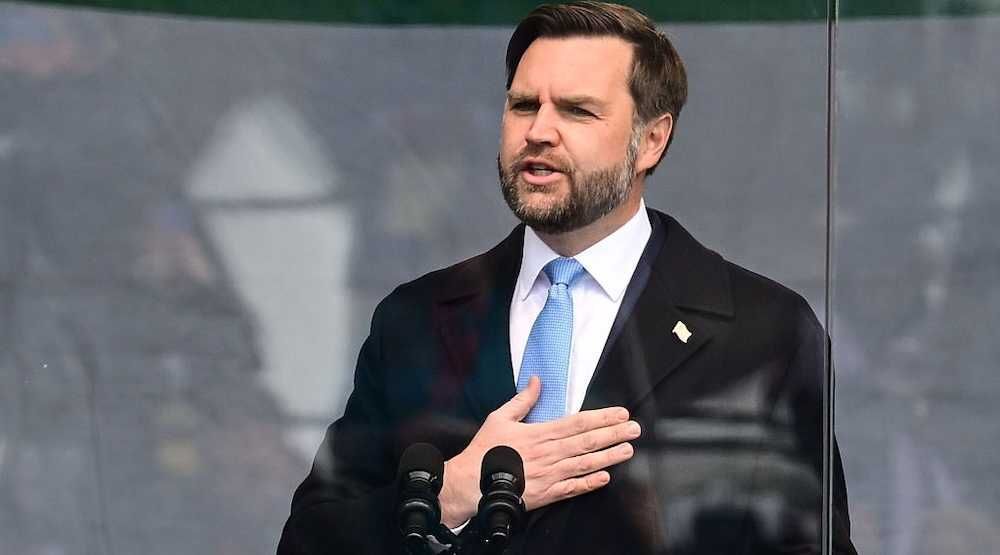
RELATED: ‘Fraud ... for abortion’? Vance announces probe into Planned Parenthood's $88M taxpayer-funded loans at March for Life

Photo by Kyle Mazza/Anadolu via Getty Images

House Republicans, to their credit, tried. In December, they passed H.R. 6703, which would explicitly block federal dollars from helping pay for a Medicaid plan that covers elective abortion. The Congressional Budget Office projects that the bill would lower Obamacare premiums by 11% on average through 2035 — nearly double the estimated reduction in the Democrats’ plan — and shrink the national deficit by $35.6 billion.

Then 17 Republicans defected.

On Jan. 8, they voted with Democrats to force a “clean” three-year extension of Obamacare subsidies with no language protecting taxpayers from subsidizing abortion.

Now the bill moves to the Senate, where negotiations reportedly continue on a bipartisan package. Thankfully, contrary to Trump’s calls for “flexibility,” Majority Leader John Thune (R-S.D.) has signaled that Hyde will remain non-negotiable in any deal.

“We want to ensure that, if we do anything, it’s done in a way that reforms these programs and ... ensures that those dollars aren’t being used to go against the practice that’s been in place for the last 50 years around here, when it comes to taxpayer dollars being used to finance abortions,” Thune told reporters on Jan. 6.

The president — and any Republicans tempted to treat Hyde as disposable — should follow Thune’s lead. Trump may have a gift for “the art of the deal,” but the values at the center of the Republican coalition are not bargaining chips.

The GOP has long cast itself as a party of abolitionists, freedom fighters, and defenders of the vulnerable unborn. It should not compromise those claims for short-term political convenience — and become what it says it opposes.

Respectfully, Mr. President, human lives aren’t negotiable. Neither is the Hyde Amendment.

America now looks like a marriage headed for divorce — with no exit


Marriages rarely end over one argument. They fall apart through a long breakdown in communication, a growing inability to resolve disagreements, and the slow realization that two people no longer walk toward the same future.

Healthy marriages don’t require full agreement on every subject. They require compromise on the decisions that shape daily life: money, children, priorities, responsibilities. They also require shared goals.

No tidy divorce court exists for a nation-state. We share one flag, one legal framework, and one public square.

When those goals diverge — and neither side will realign — the relationship becomes unsustainable. The law calls the condition “irreconcilable differences.”

America now lives in that condition.

We remain bound under one nation, one Constitution, and one civic home. But we no longer share a common purpose. We no longer share a common story about what the country is, why it exists, or whether it deserves to endure.

This conflict no longer turns on tax rates or regulatory policy. It turns on the legitimacy and direction of the American experiment itself.

The modern left no longer argues about how to preserve the American system. It treats the system as the problem. Democratic leaders and activists call for “fundamental transformation,” flirt with socialism, and talk about the founding less as a flawed but noble legacy than as a moral failure that demands replacement. In that worldview, America doesn’t need reform. America needs erasure.

The right still believes the country can be repaired and preserved. The left increasingly treats the country as something to dismantle.

This rupture shows up in concrete ways. In 2021, the National Archives placed a “harmful language” warning on the Constitution and the Declaration of Independence — the documents that define the nation. That doesn’t signal ordinary partisan dispute. It signals contempt for the country’s moral foundation.

Socialism sits at the center of this divide. It contradicts the American system at its roots. America rests on the premise that rights come from God, not government. Socialism elevates the state over the individual and makes rights conditional on political approval. It centralizes power in the name of enforced equality — “equity.”

RELATED: Americans aren’t arguing any more — we’re speaking different languages

Photo by Win McNamee/Getty Images

America protects private property as an extension of liberty. It channels ambition into innovation and prosperity. Socialism treats success as a social offense and demands equality of outcome. When people refuse to surrender the fruits of their labor, socialism turns to coercion. Coercion requires centralized authority. Centralized authority punishes dissent.

The pattern repeats: less freedom, greater dependency, and a governing model incompatible with constitutional self-rule.

The irony remains hard to miss. The left calls Donald Trump “Hitler” while cheering figures like New York City Mayor Zohran Mamdani, an avowed socialist. Yet the Nazi Party sold itself as the National Socialist German Workers’ Party — a collectivist project built on centralized power and state control.

The same left often excuses Antifa, a movement built on intimidation, street violence, and political enforcement designed to silence opposition. Those tactics don’t belong to liberal democracy. They belong to regimes that fear debate.

Even basic reality has become contested. The left and right can’t agree on something as elemental as what a man or a woman is. The Supreme Court recently showcased the collapse when ACLU attorneys arguing sex-based discrimination refused to define “woman.” When a society refuses to name biological facts that every civilization once treated as obvious, compromise collapses with it.

This crisis goes deeper than polarization. It reaches the level of knowledge itself. The left increasingly treats biology, history, and moral limits as malleable social constructs. The right still believes objective reality binds us all.

These aren’t normal disagreements. They describe incompatible worldviews. And incompatibility carries consequences.

During the COVID era, polls found majorities of Democrats willing to endorse coercive measures against the unvaccinated, including house arrest. Nearly half supported imprisoning people who questioned vaccine efficacy. Those numbers didn’t represent a fringe. They revealed a growing comfort with state force in service of ideological conformity.

After Trump’s 2016 election, many friendships survived political conflict. By 2020, after years of dehumanization — after constant accusations of “Nazism” aimed at ordinary voters — many of those relationships broke. The political battle stopped sounding like disagreement and started sounding like moral extermination.

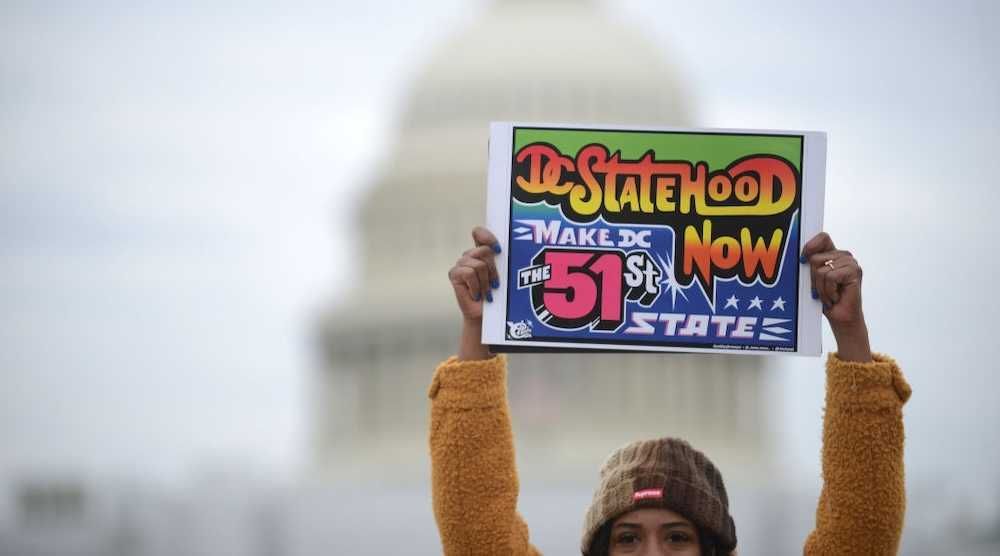
RELATED: Washington, DC, has become a hostile city-state

Photo by Astrid Riecken For The Washington Post via Getty Images

In September 2025, someone assassinated Charlie Kirk. Large segments of the left didn’t just rationalize the killing. Many celebrated it.

After Scott Adams died following a long fight with cancer, prominent voices responded with mockery instead of decency. People magazine ran a headline labeling him “disgraced.” Even death became a political verdict.

This is what irreconcilable differences look like at a national scale.

A country cannot endure when one side believes the nation stands as fundamentally good — worthy of preservation and reform — while the other believes it stands as irredeemably evil and must be dismantled. Marriages end when partners stop seeing each other as allies and start treating each other as enemies.

Nations fracture for the same reason.

America cannot solve this the way a couple dissolves a marriage. The Constitution binds us to one civic order. No clean separation awaits. No tidy divorce court exists for a nation-state. We share one flag, one legal framework, and one public square.

When irreconcilable differences exist but separation remains impossible, the danger grows.

Only three paths remain: recommitment to constitutional principles, enforced coexistence through expanding coercion, or escalation into open conflict as dehumanization becomes normal.

Pretending this amounts to another election cycle, another policy dispute, or another cable-news food fight invites catastrophe. A nation cannot survive when its people no longer agree on what it is, why it exists, or whether it deserves to continue.

Unlike a failed marriage, America can’t walk away.

Biden's budget proposal is a financial catastrophe


President Joe Biden is refusing to discuss the $7 trillion budget he has proposed, which is not only the largest budget in human history — but has far surpassed America’s debt ceiling.

This is on top of the $31.6 trillion debt that is currently burdening our country.

Mark Levin is asking why the president refuses to work with Republicans in order to fix this and seems to want to make it worse.

“I mean you’re increasing the EPA by 19%, the Department of Education by 13%, defense by 3%. Doesn’t even keep up with inflation, so everything’s upside down.”

He says Biden and his administration are refusing to negotiate on a penny because they want more money aimed at causes that align with their Marxist ideology.

But the money is “not for the border, not for law enforcement, not for the military, not for the things the government is supposed to do.”

Rather, they want the money “for redistribution of wealth, for climate change, for the EPA, for the Department of Education to destroy education, and so forth and so on.”

According to Representative McCarthy, Biden was supposed to be in discussions with him on the budget and debt ceiling but has been refusing to return his phone calls.

Biden has been avoiding the discussion for 75 days and counting.

McCarthy warns, “If the president won’t pay attention to this — if he doesn’t believe that you can find one dollar in savings — Republicans in the next couple of weeks will act and send a debt ceiling increase that will limit, save, and grow.”

Levin says Biden “doesn’t want to talk about it, so he’s going to play chicken. And then they’re all going to blame McCarthy and the Republicans because McCarthy and the Republicans will not raise the debt ceiling ... like Schumer, McConnell, the Republican RINOs, the Democrat Marxists, and the fool in the White House are demanding.”


Want more from Mark Levin?

To enjoy more of "the Great One" — Mark Levin as you've never seen him before — subscribe to BlazeTV — the largest multi-platform network of voices who love America, defend the Constitution, and live the American dream.