America can’t afford to lose Britain — again
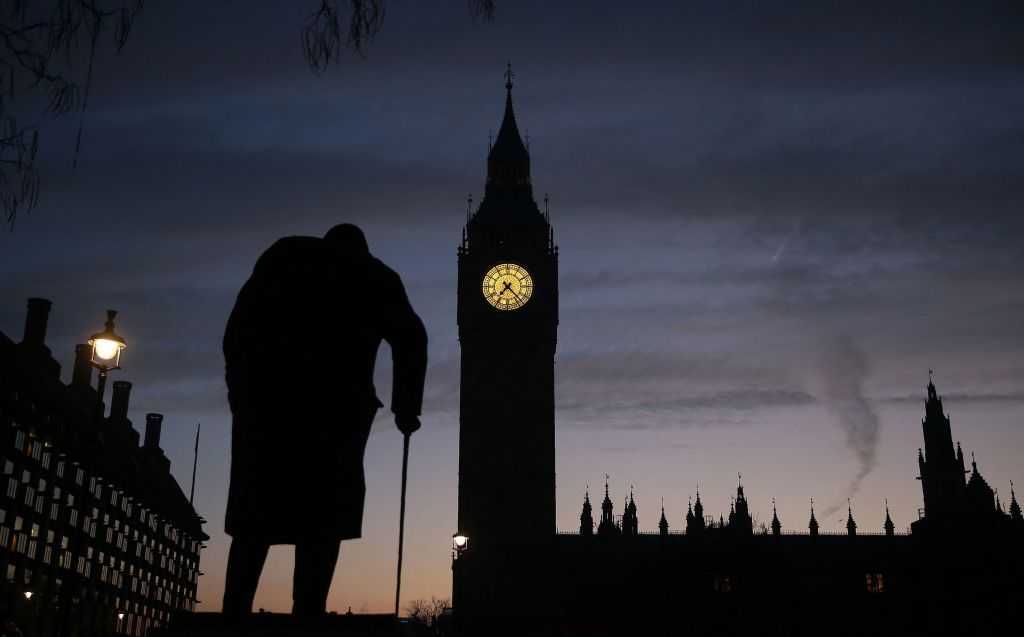
The Labour government that rules the United Kingdom is hardly a year old, but its time is already coming to an end. Its popular legitimacy has collapsed, and it is visibly losing control of both the British state and its territories.
Every conversation not about proximate policy is about the successor government: which party will take over, who will be leading it, and what’s needed to reverse what looks to be an unalterable course. What is known, however, is that the next government will assume the reins of a fading state after what will likely be the final election under the present, failed dispensation.
We should equip our friends on the other side of the Atlantic with the lessons of the new right’s ascendancy and of a nation-first government in America.
The Britain birthed by New Labour three decades ago, deracinated and unmoored from its historic roots, is unquestionably at its end. Its elements — most especially the importation of malign Americanisms like propositional nationhood — have led directly to a country that is, according to academics like David Betz of King’s College London, on the precipice of something like a civil war. That’s the worst-case scenario.
The best case is that a once-great nation made itself poor and has become wracked with civil strife, including the jihadi variety. It is a prospect that will make yesteryear’s worst of Ulster seem positively bucolic.
American policymaking is curiously inert in the face of the dissolution of its closest historic ally. This is not because Britain’s decline is anything new: the slow-motion implosion of that nation’s military power has been known to the American defense establishment for most of the past 20 years. Ben Barry’s excellent new book, “The Rise and Fall of the British Army 1975–2025,” offers many examples to this end, including the 2008 fighting in Basra in which American leadership had to rescue a failing British effort.
The knowledge that Britain is facing a regime-level crisis has remained mostly confined to the establishment. Outside of it, the American right has mostly dwelled on an admixture of Anglophilia and special-relationship nostalgia, obscuring the truth of Britain’s precipitous decline.
The American left, of course, entirely endorses what the British regime has done to its citizenry — from the repression of entrepreneurialism and the suppression of free speech to the ethnic replacement of the native population — and regards the outcomes as entirely positive.
It is past time for that inertia to end. The last election will redefine the United Kingdom — and therefore America’s relationship with it. Even before it comes, the rudderless and discredited Labour government has placed Britain into a de facto ungoverned state that may persist for years to come.
The United States has an obligation to protect its own citizenry from the consequences of this reality. It also has what might be called a filial duty to assert conditions for Britain to reclaim itself.
That duty means taking a series of actions, including denying entry to the United States to British officials who engage in the suppression of civil liberties. American security and intelligence should focus on the threats posed by Britain’s burgeoning Islamist population. The U.S. should give preferential immigration treatment to ethnic English, Scottish, Welsh, and Northern Irish who are seeking to escape misgovernance or persecution in the United Kingdom.
Furthermore, the United States should make it clear that the robust Chinese Communist Party penetration and influence operations in U.K. governance will result in a concurrent diminishment of American trust and cooperation.
Also necessary is the American government’s engagement with pro-liberty and pro-British elements within the U.K. This means working with Reform U.K., which presently looks to gain about 400 parliamentary seats in the next election. Its unique combination of a dynamic leader in Nigel Farage, intellectual heavyweights like James Orr and Danny Kruger, and operational energy in Zia Yusuf makes it a compelling and increasingly plausible scenario.
RELATED: Cry ‘God for England’

Although the Tories are polling poorly and have had their reputations battered by their substandard record in government over the past decade, they nonetheless merit American engagement.
America’s role here is not to endorse, and still less to select, new leadership for Britain, which would be both an impossibility and an impropriety. However, we should equip our friends on the other side of the Atlantic with the lessons of the new right’s ascendancy and of a nation-first government in America.
In the fraught summer of 1940, the American poet Alice Duer Miller wrote, “In a world where England is finished and dead, I do not wish to live.” The island nation has not feared its own end at foreign arms for a thousand years. But its crisis today is from within, carrying existential stakes.
The current British regime is nearing its end, and the last election is coming. So too is our decision on how to engage it in the years ahead.
Editor’s note: A version of this article appeared originally at the American Mind.
Rule by the people? Not anymore in the Western world
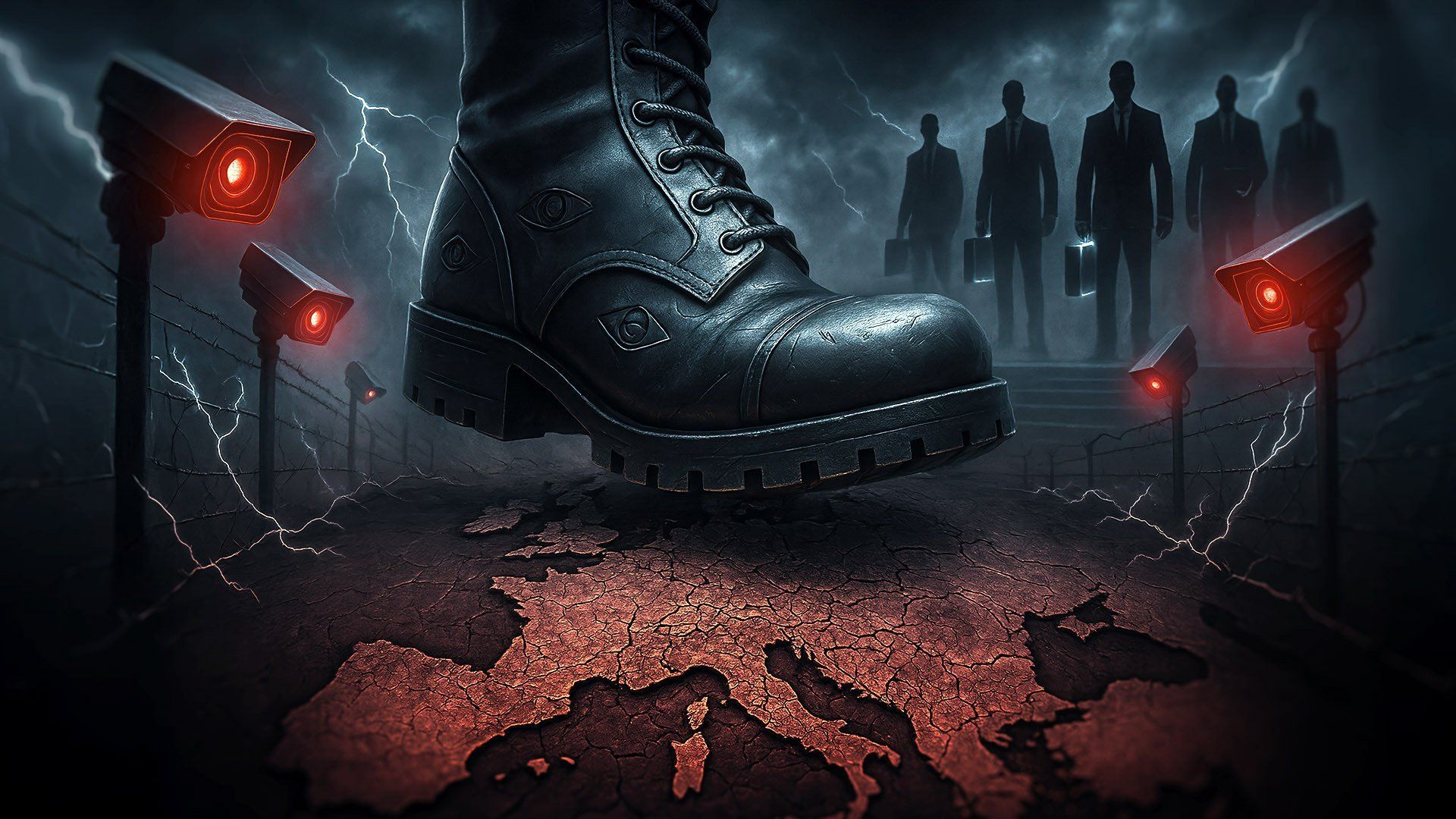
On Friday, Germany’s domestic intelligence agency officially labeled Alternative for Germany — the country’s most popular conservative party — as a “right-wing extremist” organization. The nationalist party surged to second place in February’s federal election, winning 20.8% of the vote. This new designation grants the ruling government expanded powers to surveil Alternative for Germany leaders and supporters and sets the stage for an outright ban.
Germany has now joined a growing list of Western governments that delay elections, disqualify candidates, and ban opposition parties — all in the name of defending democracy.
Democracy has become a marketing slogan — useful for justifying war and globalist expansion, but disposable when it interferes with ruling-class priorities.
To call Germany’s relationship with authoritarianism “complicated” understates the case. The country’s historical memory fixates on Nazism as the ultimate expression of right-wing extremism and mass atrocity. But that singular focus conveniently ignores the fact that the Soviet Union, which helped defeat the Third Reich, imposed its own brutal regime across East Germany until the Berlin Wall fell.
Modern Germany has seen tyranny from both the far right and the far left. Yet its national identity now orbits entirely around a rejection of right-wing politics. Anti-fascism has become something like a state religion. But when a country builds its identity on shame and self-repudiation, it risks cultural collapse. We’ve seen the same pathology infect America, where elite institutions push a national narrative defined entirely by slavery and racial guilt.
Every nation has dark chapters. A mature society learns from them. It doesn’t define itself by them forever.
While German history explains some of its deep aversion to nationalism, the trend of suppressing populist movements in the name of democracy has spread far beyond Berlin.
Brazil’s Supreme Court banned former President Jair Bolsonaro from seeking office until 2030. Romania’s Constitutional Court voided its 2024 election, citing supposed Russian influence in the rise of populist candidate Călin Georgescu. And in the United States, courts came dangerously close to removing Donald Trump from the ballot — while the president now fights legal battles over whether he can exercise executive power at all under Article II of the Constitution.
This isn’t democracy defending itself. It’s ruling elites trying to outlaw their opposition.
Western elites justify their dominance by invoking democracy and individual liberty. That wasn’t always the case. The West once called itself Christendom — a civilizational identity grounded in faith, tradition, and truth. But it abandoned that foundation in favor of secular platitudes.
The United States has waged entire wars in the name of exporting democracy to places like Iraq and Afghanistan — nations that never wanted it and were never going to keep it. These projects were doomed from the start. Yet at least they wrapped American power in the language of benevolence.
Today, even that fig leaf has disappeared.
The modern West treats democracy as a branding exercise, not a principle. Leaders like Joe Biden, Justin Trudeau, and Keir Starmer love lecturing the world about “liberal norms,” even as they jail political dissidents, censor speech, and turn domestic intelligence services against their own citizens. They condemn Vladimir Putin’s authoritarianism while staying silent as NATO allies crush dissent at home.
Democracy has become a marketing slogan — useful for justifying war and globalist expansion, but disposable when it interferes with ruling-class priorities.
Vice President JD Vance and Secretary of State Marco Rubio both slammed the German government for labeling Alternative for Germany as extremist. On social media, Rubio went further, blaming Germany’s open-border policies for the Alternative for Germany rise and calling the state’s surveillance powers tyranny in disguise.
Germany’s Foreign Office issued a formal reply, insisting the decision stemmed from an “independent” and “thorough” investigation.
The claim is absurd on its face.
No government can “independently” investigate and condemn its most prominent political opposition — especially not when the accusation is “extremism,” a term that now means little more than holding views the ruling class finds inconvenient.
I’ve made no secret of my dislike of modern mass democracy. But the original concept, at least, had merit. Democracy once meant rule by the demos — the people of a particular nation, rooted in shared history, culture, and civic identity. Its legitimacy came not from procedure or process but from the bonds between citizens and their country.
Today’s ruling class has twisted that definition beyond recognition. As I’ve written before, globalist elites now use the word “democracy” to describe a system governed by unaccountable institutions they alone control. Populism, they say, is dangerous. Democracy, they insist, must be preserved. But in practice, they oppose the popular will and protect only the process they’ve captured.
Elections have become sacraments — rituals that legitimize the rule of bureaucracies, not expressions of the people’s will. The process is sacred, not the outcome. That’s why Western politicians now speak of “our sacred democracy,” which must be defended not from tyranny, but from actual democratic movements.
Western leaders still try to justify their global power by invoking freedom and liberty. But their credibility has collapsed. It’s farcical to hear men like Justin Trudeau or Keir Starmer preach about “shared Western values” while jailing political opponents and silencing dissent at home.
The moral authority of liberal democracy is crumbling. And the cause isn’t Putin or China. It’s Western leaders who’ve gutted the electoral process and replaced it with rule by managerial elites.
The Trump administration should continue to expose this hypocrisy. But it also must act. That means offering political asylum to dissidents facing persecution in places like Germany, Canada, and the United Kingdom.
Americans rightly recoil at repression in Russia. They should feel the same revulsion when it comes from our “allies” in Berlin, Ottawa, or London.
The ‘Far Right’ Is Surging In Europe Because The Left’s Version Of ‘Democracy’ Has Failed
 Democracy is not in danger; it’s the left's version of 'democracy' that’s threatened as the right is beginning to flex its political muscles.
Spy Agency Says Red China Interfered In Canada’s Elections To Help Justin Trudeau
 CSIS confirmed Red China interfered in Canada's 2019 and 2021 elections to prevent Justin Trudeau's opponents from taking power.
The U.K.’s New ‘Conservative’ Prime Minister Is Just Another Vessel For Globalism
 Sunak is not a conservative champion of national sovereignty and individualism, but a proponent of globalism.
 www.theblaze.com
 thefederalist.com
 www.theblaze.com
 www.theblaze.com