Democrats can't erase the price shock of the Biden years
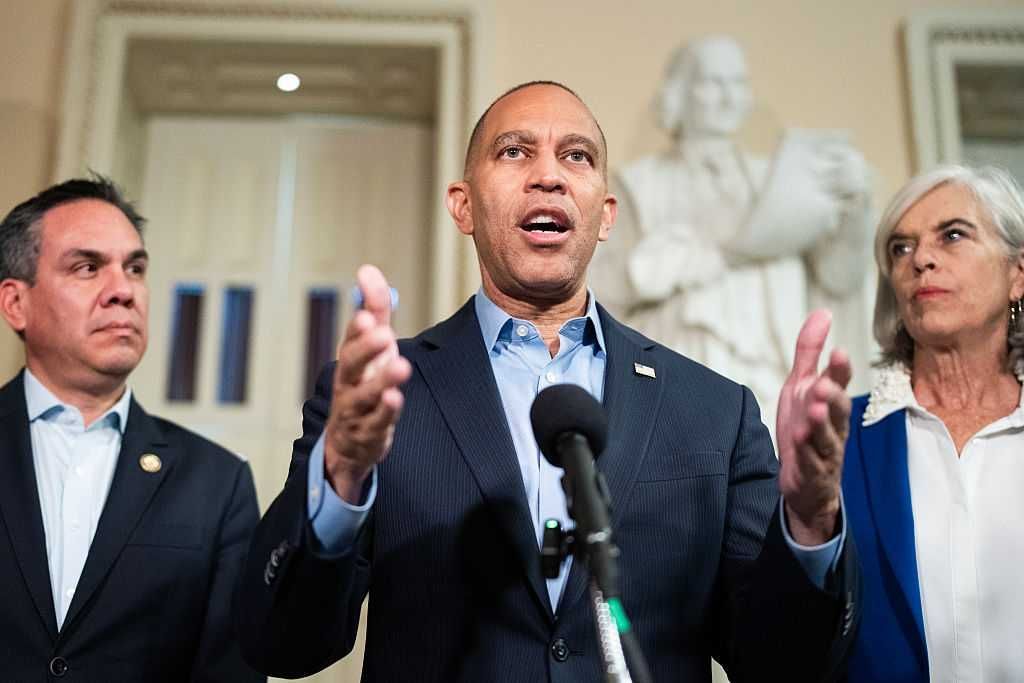


House Minority Leader Hakeem Jeffries (D-N.Y.) says Republicans have "done nothing to make life more affordable for the American people" and instead have "made life more expensive." That’s a remarkable accusation from a party that presided over a historic jump in consumer prices and continues to defend policies that add to the bills families pay.

With the November midterms approaching, Democrats want voters to blame Donald Trump for the cost of groceries, rent, power, and gasoline. They should first account for the prices Americans inherited when Trump returned to office — and for the costs imposed by Democrat-led states.

Americans did not forget what groceries and rent cost four years ago. Democrats should not expect them to forget who held power when those prices took off.

Start with inflation. The Federal Reserve aims for 2% annual inflation over time. Even when inflation slows, prices generally keep rising. A smaller annual increase does not reverse the larger increases that came before it.

According to the consumer price index, overall prices climbed about 21% during Joe Biden's presidency. They rose roughly another 5% between January 2025 and August 2026, the latest available monthly data. Inflation has not stopped: The August report put the 12-month rate at 3.4%. But the distinction between the rate of inflation and the price level explains why families still feel the squeeze from the Biden years.

Household essentials tell the story. The Bureau of Labor Statistics recorded increases of more than 20% in grocery prices and residential rents during Biden's term. Electricity costs rose by roughly 30%. Slower subsequent increases leave those earlier jumps in place.

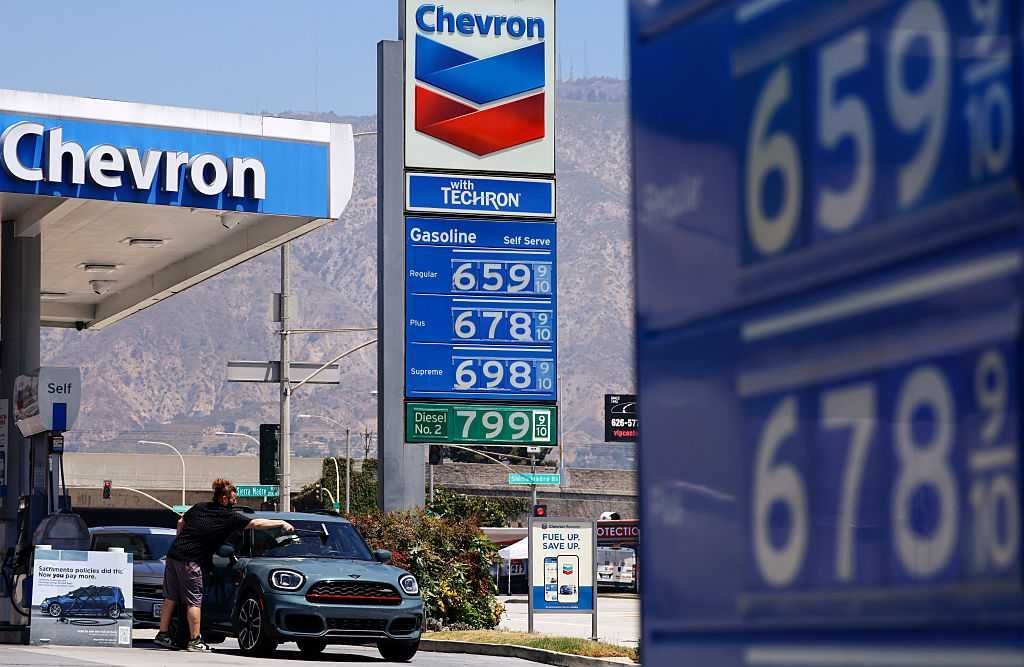
At the pump, the weekly national average hit $5.01 a gallon in June 2022, during Biden's term. It peaked at $4.50 so far in Trump's second term, amid disruptions to oil supplies due to the Iran war. Nominal term averages have run $3.46 under Biden and $3.43 so far under Trump, according to federal energy data.

Still, the household costs Democrats now denounce were already elevated when Biden left office. The party cannot credibly campaign as though American families began paying those bills in January 2025.

State policy makes the contradiction sharper. The Federation for American Immigration Reform, which favors stricter immigration enforcement, estimated in 2023 that illegal immigration imposed a net fiscal cost of $150.7 billion a year on federal, state and local taxpayers. The report raises a question Democrat officials cannot dismiss: Who pays for education, health care, and other public services as migration increases?

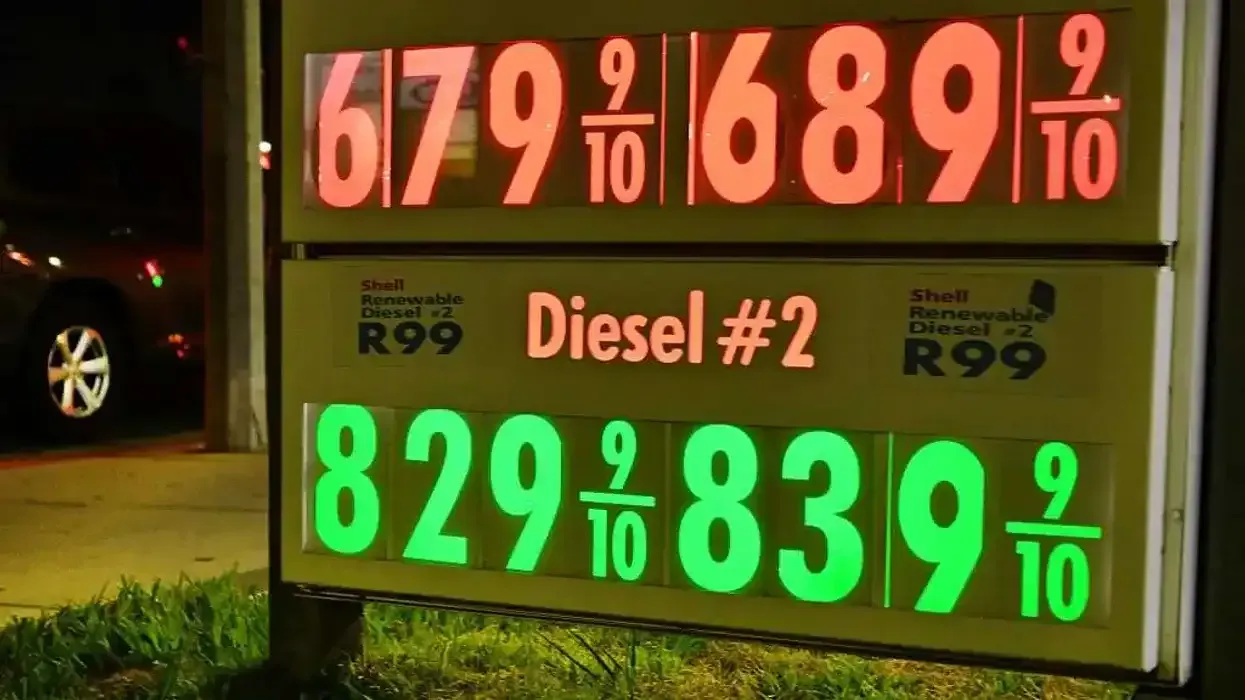
RELATED: The diesel panic cure could make the disease worse
Frederic J. BROWN/AFP/Getty Images

Housing supplies another pressure point. A September 2026 Brookings study estimated that the post-pandemic immigration surge raised rents in receiving metropolitan areas by 1.4% to 1.6%. Policymakers who expand immigration without making room for more housing should expect renters to notice.

Electricity offers an even clearer test of state choices. An analysis publicized by the American Energy Alliance found that rates rose 32.4% from 2014 to 2024 in states that backed the Democrat presidential nominee in 2020 and 2024, compared with 18.5% in Republican-voting states. States with mandatory renewable portfolio standards also saw larger increases than those without them. Voters should ask what those mandates cost.

When House lawmakers passed legislation requiring state utility regulators to consider shielding ratepayers from new data-center infrastructure costs, Senate Democrats blocked its advance. Families watching their power bills climb deserved a better result.

Taxes provide another point of comparison. Visual Capitalist's analysis estimated that a New Jersey resident would pay about $1.36 million in federal, state, and local taxes over a lifetime, equal to 48.2% of estimated earnings. Eight of the 10 highest-tax states in that ranking had Democrat governing trifectas in 2026. The concentration is striking.

RELATED: The kindness con: Fraudsters exploit America’s safety net
Aleksei-veprev/Getty Images

New Jersey, my home state, levies the nation's highest top corporate income tax rate, 11.5%. Burlington has announced plans to shift its headquarters to Philadelphia, and Samsung has announced a headquarters move to Texas. ExxonMobil moved its legal domicile to Texas. Lawmakers should consider what those departures say about the state's tax and regulatory climate.

The state's employment figures offer another warning. New Jersey's initial estimate of 25,600 jobs lost in July was subsequently revised to 21,900. Officials have reason to examine the burdens they put on employers.

Americans have also seen welcome gains. The Census Bureau reported that real median household income reached a record $87,460 in 2025, up 2.6% from 2024, while the official poverty rate fell to 10.2%. Median income for black households rose 4.8%.

Democrats are free to make their case that Republican policies have made life more expensive. Voters should require them to answer for their own record: the price surge under Biden, the tax burdens in Democrat-led states, the cost of energy mandates, and the fiscal consequences of immigration policy.

Americans did not forget what groceries and rent cost four years ago. Democrats should not expect them to forget who held power when those prices took off.
Inflation hits milestone not seen since 2023


As the United States navigates a fragile ceasefire in its conflict with Iran, the price of oil has remained volatile and high. Brent crude, the international benchmark, was trading at $104.21 per barrel at market close on Monday, nearly 57% higher than its pre-conflict price. Inflation has risen as a result and is in a territory it hasn’t been since 2023, according to an analysis by NBC News.

On Tuesday morning, the Bureau of Labor Statistics released its monthly Consumer Price Index update for April. It reported that inflation in April was 3.8%.

A vast majority of Americans don’t trust either party to fix the economy.

The bureau stated in a press release that the rise in energy costs is responsible “for over 40% of the monthly all-items increase.”

In its report on the April inflation numbers, NBC News noted that in Friday’s April jobs report, average hourly earnings rose by 3.6% over the past year. This marks the first time since 2023, during the Biden administration, that wages have not kept pace with inflation.

Despite the runaway inflation of the Biden years, Democrat congressional leaders pounced on the inflation news. House Budget Committee Ranking Member Brendan Boyle (D-Penn.) said in a statement, “From his tariff taxes to his disastrous war in Iran, President Trump is making life even harder for American families. Today’s inflation data confirms what everyone can see: Costs are out of control.”

Republicans, on the other hand, are focused on the growth in jobs and the economy in general and reminding voters of the Biden-era inflation. House Ways and Means Committee Chairman Jason Smith (R-Mo.) said, “While inflation has come down substantially since the 21% spike in prices seen when Democrats controlled all of Washington, American families are still looking for additional relief, and that is why Republicans acted to deliver the largest tax cuts in American history.”

Smith further highlighted the growth in GDP and hope that the new chairman of the Federal Reserve would be “a leader over monetary policy who understands that high interest rates have held back the true economic potential of our country.”

RELATED: The SAVE America Act won’t be enough to save the GOP from a midterm bloodbath

A consensus seems to be brewing among investment experts that unlike the broad-based inflation of the early part of the Biden presidency, this inflation could truly be transitory if energy prices come down.

“The report still showed only limited evidence of fully broad-based second-round inflation effects,” said Arielle Ingrassia, an investment specialist at Evelyn Partners, according to IFA magazine.

“That leaves the overall picture closer to an energy and transport shock than a full inflation spiral — at least for now.”

The inflation release Tuesday coincides with findings from a new CNN/SSRS poll that shows "roughly two-thirds of Americans say that Trump’s policies have worsened economic conditions in the country. And Trump’s approval rating stands at 30% on the economy, a career low,” according to CNN.

But Democrats do not fare well in this new polling either. A vast majority of Americans don’t trust either party to fix the economy.

As the nation heads into a midterm election being shaped by redistricting battles, Americans' perceived economic outlook will continue to be a determining factor for the control of both the House and Senate in November.

Like Blaze News? Bypass the censors, sign up for our newsletters, and get stories like this direct to your inbox. Sign up here!

ROOKE: Trump Could Be Leading GOP Off Same Cliff Biden Tossed Democrats Off

'Sustained conflict in Iran will prolong these burdens'

More YUGE economic news as inflation rate drops BIGLY


With the Trump administration celebrating a surprisingly strong jobs report release earlier this week, more good news has come to close the week.

On Friday, the Bureau of Labor Statistics released its January Consumer Price Index report, revealing some good news for the consumer.

According to the report, consumer prices rose 2.4% in January, marking a sharp decline from December's 2.7% rate.

CNN reported that this report was scheduled to publish on Wednesday but was two days late due to the partial federal government shutdown that ended last week.

According to the report, consumer prices rose 2.4% in January, marking a sharp decline from December's 2.7% rate.

RELATED: 'Golden Age of America is upon us!' Delayed January jobs report exceeds expectations

Photo by CHARLY TRIBALLEAU / AFP via Getty Images
Economists were surprised by the report, predicting a significant increase to the inflation rate, according to CNN.

Business Insider wrote that this was the lowest inflation rate since May 2025.

Not only was the January rate less than the November and December 2025 rate, it also shows a marked decline from four years ago.

In January 2022, one of the worst years for inflation during the Biden era, inflation was sitting at 7.48%, which was also among the slowest months of 2022, according to one source.

This unexpected turnaround in the inflation rate at the beginning of the new year will likely be taken into consideration by the Federal Reserve, which has maintained its higher interest rates in its effort to offset inflation.

Like Blaze News? Bypass the censors, sign up for our newsletters, and get stories like this direct to your inbox. Sign up here!

CNBC’s Rick Santelli Pours Cold Water On Narrative That Trump Tariffs Would Spike Inflation

'Some of that could also be associated with better economic data'

Low Inflation Numbers Refuse To Match The Media Narrative On Trump’s Economy

[rebelmouse-proxy-image https://thefederalist.com/wp-content/uploads/2025/06/Screenshot-2025-06-11-at-6.18.32 PM-1200x675.png crop_info="%7B%22image%22%3A%20%22https%3A//thefederalist.com/wp-content/uploads/2025/06/Screenshot-2025-06-11-at-6.18.32%5Cu202fPM-1200x675.png%22%7D" expand=1]Though the left-wing propaganda apparatus continues to prophesy doom, Trump’s tariffs appear to be having a negligible impact on inflation, with year-over-year inflation lows not seen since 2021. The stock market, which tanked following Trump’s Liberation Day announcement, has recovered and is close to the highest it’s been since Trump was inaugurated. The Consumer Price […]

Panic first, analyze never: Media flubs Trump’s economy


On April 2 — Liberation Day — Donald Trump did exactly what he had promised for over a year: He imposed a slate of reciprocal and punitive tariffs on America’s trading partners.

The left and corporate left-wing media erupted in predictable fashion, and the stock market plummeted. Before a single tariff was announced, doomsayers in the press predicted economic collapse. CNN warned the economy was “flashing yellow lights,” and the BBC claimed Trump’s move risked “economic turbulence — and voter backlash.” A former Biden economic adviser forecast disaster.

Confidence among working Americans remains high. And that confidence will continue driving this economy forward.

When first-quarter GDP numbers showed a 0.3% contraction, the media pounced. They blamed the tariffs — despite the fact that none had taken effect by March 31, the end of the quarter.

While liberal economists celebrated the downturn and declared a recession imminent, they failed to look at the numbers. A closer analysis shows the economy remains fundamentally strong.

The GDP dip came primarily from a 5.1% drop in federal government spending. In other words, a major cause of the decline was the one thing fiscal conservatives have long demanded: smaller government. Isn’t reducing government spending, or at least the growth of government spending, a good thing?

Meanwhile, the rest of the economy showed strength. A Harvard University/HarrisX poll released Monday found that 51% of registered voters believe the economy is "strong" for the first time in four years.

The numbers back up their belief. Nonfarm payrolls rose by a seasonally adjusted 177,000 in April. The unemployment rate held steady at 4.2%. The household survey — used to calculate the jobless rate — showed an even larger gain, with 436,000 more Americans reporting that they held jobs. All told, the economy added 556,000 jobs in the first three months of Trump’s second term.

That growth comes despite the Department of Government Efficiency cutting more than 120,000 federal jobs. Private-sector employment continues to expand even as Washington shrinks — a trend critics said was impossible.

RELATED: Debt spiral looms as Trump tests tariffs to tame rates

NiseriN via iStock/Getty Images

What about inflation? Didn’t the media insist tariffs would bring back the dreaded 1970s stagflation?

Instead, the Consumer Price Index in April came in at 2.3% — the lowest level since February 2021, just before “Bidenflation” took off. The drop came as prices fell for food, gas, used vehicles, and clothing.

Grocery prices alone dropped 0.4%, the sharpest decline since late 2020. Egg prices plummeted 12.7%, their biggest single-month fall since the Reagan era. In other words, the items working families care about — food, fuel, and clothing — are more affordable now than under Biden.

Meanwhile, Trump’s trade strategy is forcing results.

The United Kingdom quickly reached a trade deal. Other countries have accepted temporary “tariff holidays” in exchange for coming to the negotiating table. China and the United States agreed to a “tariff truce.” Canada slashed its U.S. tariff rate to nearly zero. According to Bloomberg, U.S. exports and manufacturing should surge in coming quarters.

Since Trump’s return to office in January, his critics have eagerly predicted economic doom. They cheered “transitory” inflation. They hyped “Bidenomics.” They got both wrong.

They’re wrong again.

Confidence among working Americans remains high. And that confidence will continue driving this economy forward — tariffs, tantrums, and all.

After Media Claimed Trump Was ‘Turbocharging’ Price Hikes, Inflation Hits 4-Year Low

The Consumer Price Index (CPI) report released Tuesday revealed that inflation rose just 3.4 percent year-over-year in April — the lowest annual increase since February 2021, when the Biden administration was in office. According to economist for the Heritage Foundation E.J. Antoni, food prices in April declined for the first time since November of 2020 […]