Senate Committee Holds Fauci In Contempt For Refusing To Answer For Covid Lies

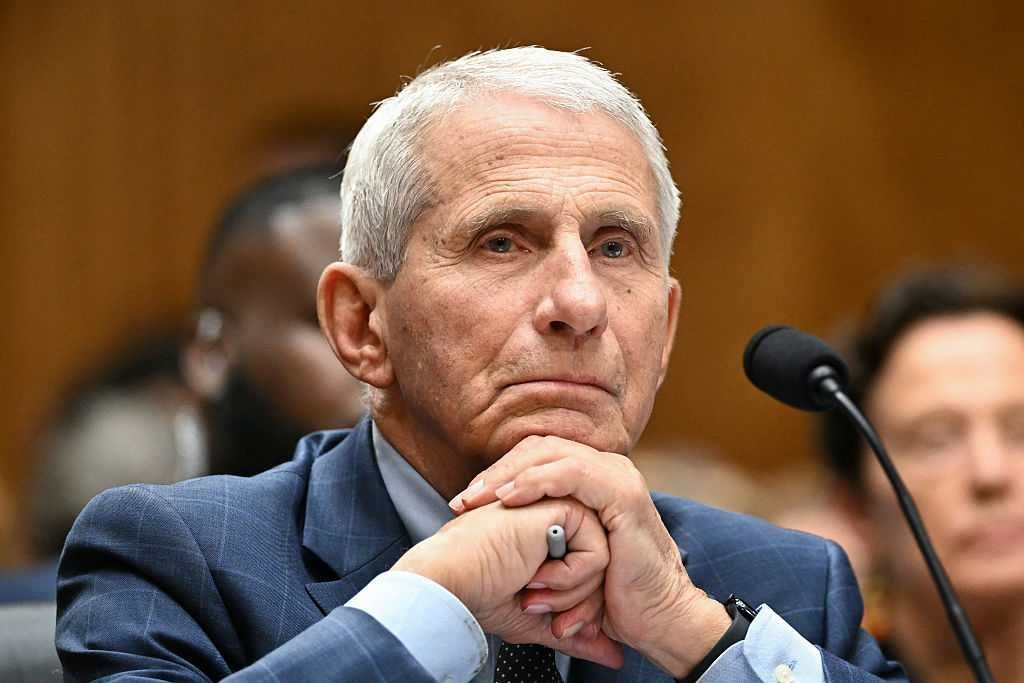
A Senate committee voted to hold former White House Covid czar Anthony Fauci in contempt of Congress on Thursday following his refusal to answer for his Covid lies and conduct throughout the lockdown period. “Holding a witness in contempt is a serious thing, and it should be rare,” Senate Homeland Security and Governmental Affairs Chair […]

The Biden autopen scandal has one big winner: Anthony Fauci


Anthony Fauci is probably going to skate. He should not. But nearly every institutional and political incentive now points toward that outcome.

Americans who watched Fauci invoke the Fifth Amendment more than 100 times before the Senate are understandably furious. They may also be headed for an epic letdown when the man they most want held accountable resumes his life in pompous peace.

Public frustration will rise when people realize that Fauci may leave Congress untouched after pleading the Fifth more than 100 times.

The first obstacle is the legal uncertainty surrounding Fauci’s autopenned pardon.

The pardon was signed by autopen, and substantial evidence raises questions about whether President Biden personally authorized it. A presidential pardon is an authority only the president may exercise.

In Fauci’s case, the written record includes an email from Biden chief of staff Jeff Zients on the final evening of the administration. Zients emailed: “I approve the use of the autopen for the execution of all of the following pardons.”

Biden later told the New York Times in an interview that he had approved broad categories of pardons rather than, in every instance, specific names.

That admission came from the same newspaper that had initially dismissed the Oversight Project’s autopen disclosures in an article headlined “How an Autopen Conspiracy Theory About Biden Went Viral.” Within months, the Times had moved from ridicule to damage control.

The basic facts are therefore established: Fauci’s pardon was executed by autopen, and serious questions remain about Biden’s awareness and authorization.

President Trump has called the autopen controversy the scandal of the century and declared the affected actions “VOID, VACANT, AND OF NO FURTHER FORCE OR EFFECT.” The Department of Justice, however, has behaved as though that declaration carries no legal consequence.

That gap between political assertion and prosecutorial action is decisive. Questioning a pardon’s validity in public is one thing. Charging someone whose defense rests on that pardon is another. So far, the Justice Department has shown no appetite for testing the issue in court.

Fauci’s Senate testimony exposed the contradiction at the center of his position. He repeatedly invoked the Fifth Amendment, arguing that Sen. Rand Paul (R-Ky.) was trying to lure him into statements that could support a perjury referral.

RELATED: The Biden tapes blow open the autopen scandal

Celal Gunes/Anadolu/Getty Images

In his opening statement, Fauci said: “The only conclusion I can reach is that the sole reason he is calling me before this committee is to get me to say something — anything — that could vindicate his repeated public pledges that I end up, in his words, ‘behind bars.’”

A witness may invoke the Fifth Amendment when he genuinely believes his answers could expose him to criminal liability. The privilege is not a general escape hatch from politically uncomfortable questioning.

Fauci’s plausible claim of criminal exposure rests, at least in part, on the uncertainty surrounding his pardon. But relying on that uncertainty means conceding that the pardon may not be beyond challenge.

If Fauci insists the pardon is unquestionably valid and no prosecution is possible, he weakens the basis for invoking the Fifth. If he claims a real risk of prosecution, he implicitly acknowledges that the pardon may not protect him.

The same cloud that threatens the pardon also strengthens his Fifth Amendment claim.

That sounds like vulnerability. In practice, it may protect him.

There is still no sign that the Justice Department plans to prosecute Fauci or anyone else in a case designed to test an autopen action. The department has not challenged a single autopenned pardon or commutation.

Worse, the Trump administration continues releasing offenders whose sentences Biden shortened by autopen. The executive branch is carrying out the very orders the president has publicly described as nullities.

For the Oversight Project, that contradiction is more than theoretical. It’s incredibly frustrating. Putting violent felons back on the street is difficult to reconcile with the claim that autopenned acts are void.

Could Congress hold Fauci in contempt for invoking the Fifth rather than answering questions? Possibly. Probably not.

Fauci would likely show enough basis to argue that Paul sought a criminal referral and that the uncertainty surrounding his pardon created a genuine risk of prosecution.

Any challenge would probably be litigated in federal court in Washington, D.C., a venue far friendlier to Fauci than many others. That venue alone improves his odds.

The political barriers are even greater. There are almost certainly not enough votes in the Senate to pursue contempt, both because of uncertainty over whether Fauci’s conduct crossed the legal line and because senators fear accusations of political weaponization.

Getting 60 votes to overcome a filibuster is a fantasy. Even clearing Paul’s committee, divided 8-7, may prove difficult. Senator James Lankford (R-Okla.) has already expressed some sympathy for Fauci’s position.

Paul has suggested another path: If the committee approves contempt on Thursday, he could refer the matter directly to the Justice Department or pursue a civil action.

RELATED: Two Americas, under Fauci, with liberty and justice for none

Chip Somodevilla/Getty Images

Fauci would immediately argue that a committee cannot exercise the contempt power of the full Senate. He would contend that without a vote of the whole chamber, there is no valid contempt finding to enforce.

The courts are likely to agree. Which leaves the public exactly where it began.

Congress has little chance of imposing consequences. The only meaningful route runs through the Justice Department: charge Fauci, force litigation over the pardon, and finally test whether Biden lawfully authorized it.

That would require the department to abandon the passivity it has displayed so far.

Public frustration will rise when people realize that Fauci may leave Congress untouched after pleading the Fifth more than 100 times.

The useful response is not another round of televised outrage. It is sustained pressure on the Justice Department to treat autopenned actions the way Trump himself described them: null and void.

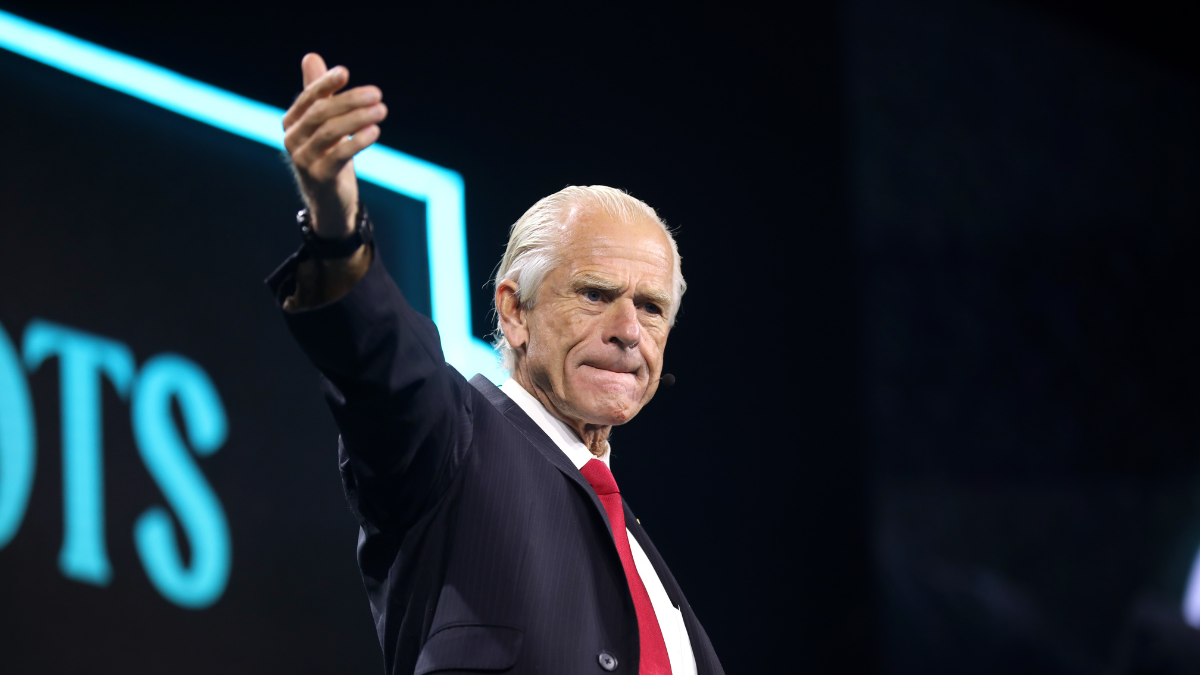
Peter Navarro Went To Prison For Less Than Fauci’s Contemptuous Refusal To Talk To Congress

The witness who appears and stonewalls needs an objectively valid excuse; Fauci's blanket Fifth is not one.

Supreme Court Tees Up Dismissal Of Democrat Lawfare Against Steve Bannon

The U.S. Supreme Court teed up a likely dismissal of Democrats’ lawfare against former Trump adviser Steve Bannon on Monday. In its newest order list, the high court vacated a May 2024 decision by the D.C. Circuit Court of Appeals that upheld a 2022 criminal conviction of Bannon. The conservative commentator was previously charged by […]

Clintons found to be in contempt of Congress — but Bannon-treatment far from certain


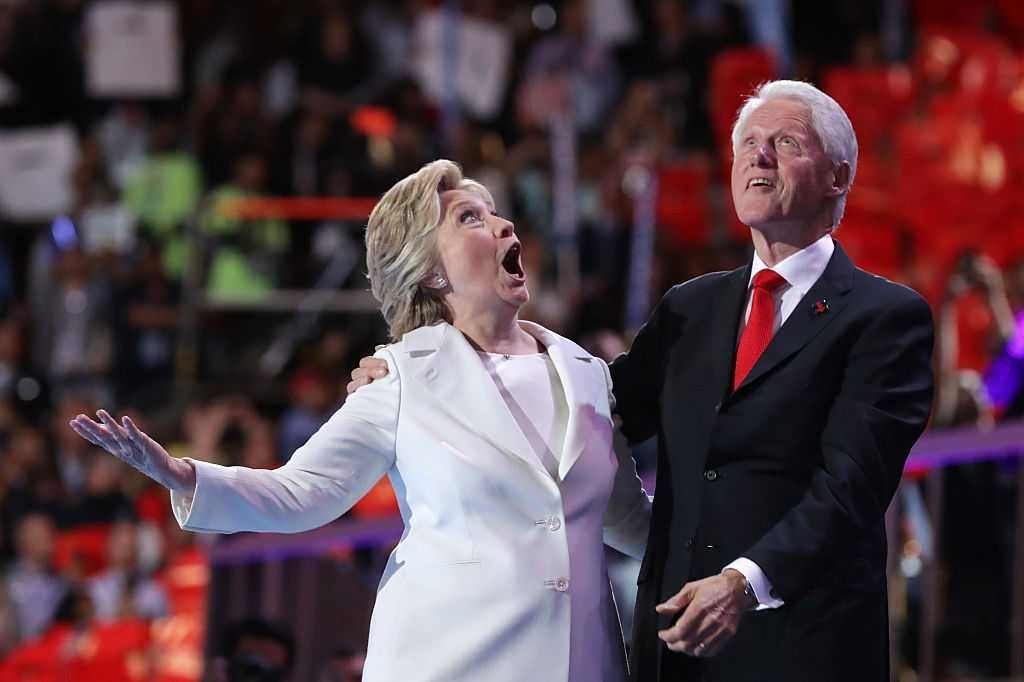
The House Oversight Committee issued deposition subpoenas on Aug. 5 to failed presidential candidate Hillary Clinton and former President Bill Clinton requiring their testimony "related to horrific crimes perpetrated by Jeffrey Epstein."

Evidently the Clintons didn't feel that they should be held to the same standard to which Democrats previously held President Donald Trump's former adviser Steve Bannon and current trade adviser Peter Navarro, who were both jailed for defying subpoenas issued by the Jan. 6 committee.

'The Clintons were legally required to appear and instead responded to our good-faith negotiations with defiance.'

After repeated warnings that the Clintons risked criminal exposure by failing to comply with the subpoenas, the committee advanced two resolutions on Wednesday recommending that the House of Representatives find them in contempt of Congress.

The resolution finding Hillary Clinton in contempt passed in a 28-15 vote. The three Democratic lawmakers who joined Republicans in supporting the resolution were Reps. Summer Lee (Pa.), Melanie Stansbury (N.M.), and Rashida Tlaib (Mich.).

The resolution finding Bill Clinton in contempt passed in a 34-8 vote with the help of Lee, Stansbury, Tlaib, and six other Democrats: Maxwell Frost (Fla.), Raja Krishnamoorthi (Ill.), Ayanna Pressley (Mass.), Stephen Lynch (Mass.), Emily Randall (Wash.), and Lateefah Simon (Calif.).

"By voting to hold the Clintons in contempt, the Committee sent a clear message: No one is above the law, and justice must be applied equally — regardless of position, pedigree, or prestige," Oversight Committee Chairman James Comer (R-Ky.) said in the wake of the votes. "The Clintons were legally required to appear and instead responded to our good-faith negotiations with defiance, delay, and obstruction."

RELATED: Ghislaine Maxwell scheduled to testify before House Oversight Committee

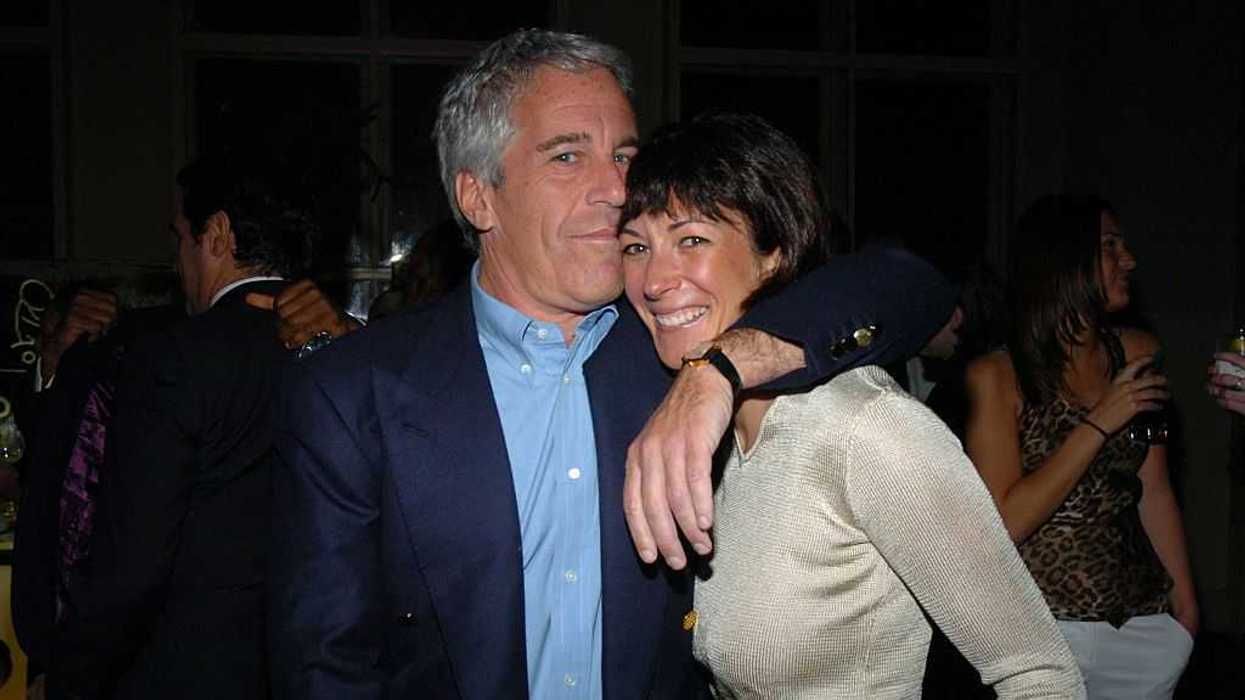
Jeffrey Epstein and Ghislaine Maxwell. Photo by Joe Schildhorn/Patrick McMullan via Getty Images.

The Clintons' lawyers, apparently aware that the other shoe was about to drop, proposed that Comer travel to New York for a conversation with Bill Clinton where "no official transcript would be recorded and other Members of Congress would be barred from participating," Comer indicated on Tuesday.

Comer noted both that the "Clintons' latest demands make clear they believe their last name entitles them to special treatment" and that the proposal for a transcript-free interview was unworkable because "Clinton has a documented history of parsing language to evade questions, responded falsely under oath, and was impeached and suspended from the practice of law as a result."

Angel Urena, deputy chief of staff to Bill Clinton, denied Comer's framing and stated hours ahead of the votes that "we have offered to help, we have helped, and to this very moment we are ready to help. But the Republicans REFUSE to say yes."

Urena suggested that the dealbreaker was ultimately lawmakers' alleged refusal to "keep their questions about the Epstein investigation to questions about Jeffrey Epstein."

House GOP leaders are reportedly not expected to vote on whether to refer the contempt findings to the Department of Justice for potential prosecution until lawmakers return in February. The Washington Post suggested that the delay will afford the Clintons time to talk their way out of hot water and into an arrangement with the committee.

Democrats have a history of evading consequence for defying congressional subpoenas.

Eric Holder, former President Barack Obama's attorney general, was held in contempt of Congress in a decisive 255-67 vote in 2012 for refusing to turn over documents related to the Fast and Furious scandal.

The Obama Justice Department rewarded Holder for keeping Obama's documents from the American people's elected representatives by refusing to prosecute.

In 2024, House Republicans voted to hold former Attorney General Merrick Garland in contempt of Congress for defying subpoenas for audio recordings of former President Joe Biden's interview with special counsel Robert Hur.

The Biden Department of Justice revealed on June 14, 2024, that it would not bother prosecuting the Democratic official.

House Republicans talked a big game in early 2024 about possible repercussions after Hunter Biden defied a congressional subpoena. Biden managed to get out unscathed as lawmakers dropped their proposed contempt resolution to give the pardoned felon's attorneys more time.

Republican allies have not been so lucky.

After the Democrat-controlled House voted 229-202 in 2021 to hold him in contempt of Congress, the Biden DOJ energetically prosecuted Steve Bannon, securing a conviction and recommending that he serve at least six months in prison and pay a $200,000 fine. He ultimately served four.

Navarro received a similar treatment and ended up serving a four-month prison sentence as well.

Like Blaze News? Bypass the censors, sign up for our newsletters, and get stories like this direct to your inbox. Sign up here!

Comer Says Clintons’ Tactics Avoiding Epstein Subpoenas Could Bring Contempt Charges

'Delayed, obstructed, and largely ignored the Committee staff’s efforts'

Democrat Lawfare Came For Me, And It Can Come For You Too

Why do I fight on? Because if I lose, every senior White House advisor will face the same Hobson’s Choice I did: honor the Constitution and risk prison, or bend the knee to partisan inquisitors and betray the republic.
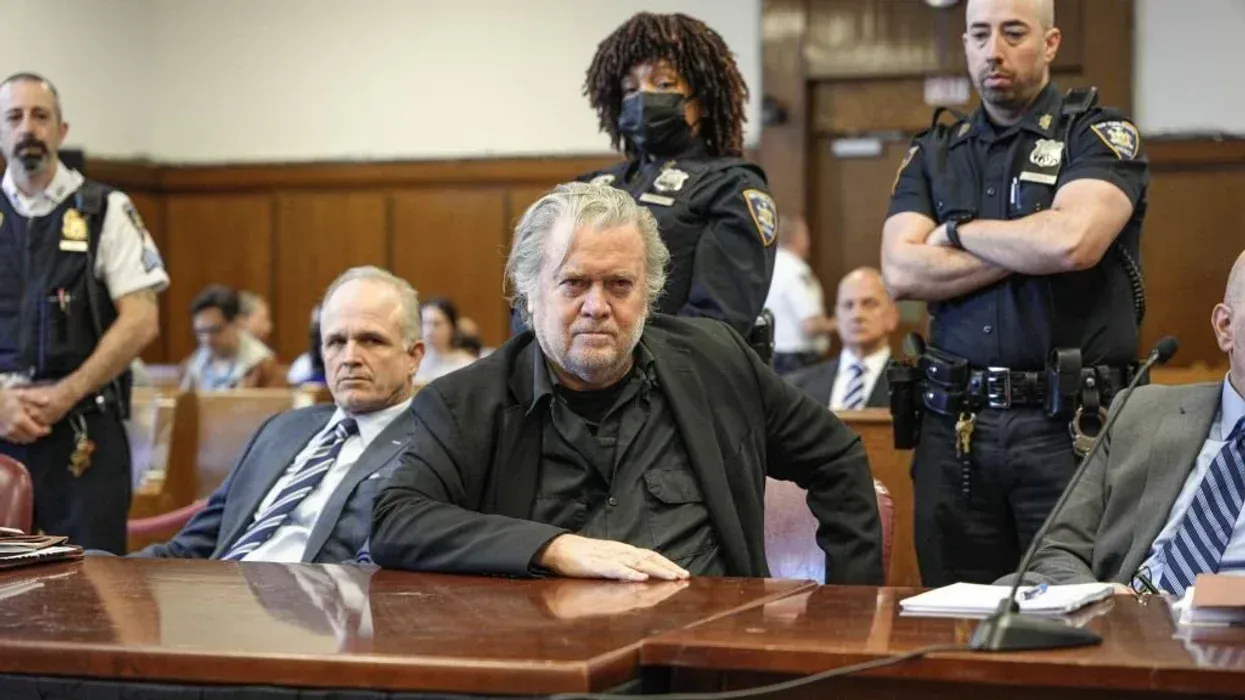
House Republicans to back Bannon with amicus briefs, underscore illegitimacy of Jan. 6 committee


House Republicans are finally throwing their weight behind Trump ally and "War Room" host Stephen K. Bannon and his emergency appeals to stay out of jail for defying the Jan. 6 committee's subpoenas.

House Speaker Mike Johnson (R-La.) and other House GOP leaders on the Bipartisan Legal Advisory Group successfully voted Tuesday to file a brief with the U.S. Court of Appeals for the District of Columbia in support of Bannon.

Rep. Barry Loudermilk (R-Ga.) will also be filing an amicus brief but instead with the U.S. Supreme Court as chair of the House Administration Subcommittee on Oversight in support of Bannon's emergency appeal.

The line of argumentation in the briefs may not only persuade the high court to spare Bannon from prison but could possibly also ramify for other American prisoners.

Loudermilk's committee is also reportedly crafting legislation aimed at nullifying the work of the Jan. 6 committee.

Christopher Bedford, senior editor for politics and Washington correspondent for Blaze Media, said, "It's great to see the work the committee is putting in here, and this sort of thing probably has more ability to spare Bannon prison time than the attempt to withdraw the subpoena (something that's only been done once — by the same committee that issued the subpoena, and before charges were brought)."

Background

Bannon was convicted in July 2022 of two charges of contempt of Congress for defying subpoenas from the Democrat-controlled House select committee tasked with investigating the Jan. 6 protests. He was sentenced to four months in prison.

While Carl Nichols, the Trump-nominated judge overseeing Bannon's case in Washington, D.C., initially paused his sentence while the populist appealed his conviction, a D.C. Circuit Court of Appeals panel later rejected Bannon's challenges, prompting partisan prosecutors to urge Nichols to send Bannon to prison.

Earlier this month, Bannon was ordered to report to prison by July 1. He had, however, two more arrows left in his quiver: an appeal to a full panel of the D.C. Court of Appeals or the U.S. Supreme Court.

The first arrow missed its mark.

On June 20, Biden and Obama judges on the U.S. Court of Appeals for the District of Columbia Circuit voted 2-1 against keeping Bannon out of jail while he exhausted his legal options.

Blaze News previously reported that Trump-nominated Judge Justin Walker, who cast the lone vote against denying Bannon's emergency motion, noted in his dissenting opinion that Bannon's key argument could potentially succeed before the Supreme Court.

An appeal to the high court

Bannon filed an appeal to the Supreme Court on Friday.

The filing underscored that the stakes were high and noted, "Now that a panel of the D.C. Circuit has said that Licavoli remains binding, there is no obstacle to future indictments of anyone and everyone who allegedly defaults on a congressional subpoena, even when they had good faith defenses like advice of counsel or executive privilege — defenses that Licavoli will bar them even from presenting to a jury."

In his defense, Bannon previously suggested he had not responded to the subpoenas on the basis of both advice of counsel and executive privilege.

"In the future, when the House or Senate and the Executive Branch are controlled by the same party, there is every reason to fear that former Executive Branch officials will face prison after declining to provide privileged materials to a committee, even where the position taken was based upon the advice of counsel in good faith and requested further negotiations," added the filing.

Bannon's attorney further argued that the Biden Department of Justice's recent decisions to ignore congressional subpoenas demonstrate "both the significance of the mens rea issue as a matter of law and also the illogic of preventing Mr. Bannon from even arguing to the jury that his reliance on advice of counsel undermined the government's case for 'willfulness.'"

The DOJ is set to file a brief with the Supreme Court Wednesday demanding the Trump critic's immediate jailing.

House Republicans act

Rep. Jim Banks (R-Ind.) leaned on Speaker Mike Johnson (R-La.) to spearhead a legal effort to support Bannon's emergency appeal.

Banks noted in a Monday letter to the speaker that "several factors separate the Committee's illegitimate and unenforceable subpoenas [to Bannon and Peter Navarro] from lawfully issued congressional subpoenas."

"As you know, the Committee is the first and only congressional committee in history composed on entirely partisan lines," continued Banks.

'The January 6 committee was, we think, wrongfully constituted. We think the work was tainted.'

Former House Speaker Nancy Pelosi's (Calif.) Jan. 6 committee rejected then-GOP Leader Kevin McCarthy's proposed committee members, prompting McCarthy to pull his members and boycott the panel. The committee ultimately had no GOP-appointed ranked minority member.

"Furthermore, the Committee repeatedly violated House Rules and its own charter, House Resolution 503, including provisions limiting its deposition authority," wrote Banks.

In addition to the likelihood of its illegitimacy, Banks noted that thanks to the work of Oversight Subcommittee Chairman Barry Loudermilk (R-Ga.), "We now know that the Committee deleted hundreds of records shortly before the 118th Congress and the start of the House Republican majority. This willful destruction of evidence violates House Rules, and because the improperly destroyed documents potentially included evidence of the Committee's misconduct, they could have assisted either Mr. Bannon's or Mr. Navarro's defenses during future appeals."

Banks underscored to Johnson that an amicus brief filed filed on behalf of the chamber in support of Bannon's appeal would have his full support.

Johnson confirmed on Fox News and CNN Tuesday night that the House was working on an amicus brief in support of Bannon's appeal.

"The January 6 committee was, we think, wrongfully constituted. We think the work was tainted. We think that they may have very well covered up evidence and maybe even more nefarious activities," said Johnson. "We will be expressing that to the court and I think it will help Steve Bannon in his appeal."

Johnson noted in a joint statement with Republican Reps. Steve Scalise (La.) and Tom Emmer (Minn.) Wednesday morning that the amicus brief will be "submitted after Bannon files a petition for rehearing en banc and will be in support of neither party."

"It will withdraw certain arguments made by the House earlier in the litigation about the organization of the Select Committee to Investigate the January 6 Attack on the U.S. Capitol during the prior Congress. House Republican Leadership continues to believe Speaker Pelosi abused her authority when organizing the Select Committee," added Johnson.

The Daily Caller reported that Loudermilk was planning to file an amicus brief with the Supreme Court Wednesday morning, emphasizing the Jan. 6 committee lacked the authority to conduct depositions under the House resolution that authorized it.

Loudermilk's office told the Caller that the brief indicated that the Jan. 6 committee held Bannon in contempt for "failing to appear for a deposition," which it was not able to conduct for lack of a ranking member to notify.

"While Nancy Pelosi and Liz Cheney’s two year inquisition may have entertained the media and kept numerous Democrat lawyers busy, it had very real world implications, which we see in the imprisonment of Peter Navarro and Steve Bannon," Loudermilk told the Caller.

"We're in uncharted constitutional waters here. Congress's ability to compel people to appear before it is long-established, but has been eroding since Eric Holder refused to enforce a subpoena against himself. The ability to moot a contempt charge after the fact is hard going, but the ability to convince the court the committee itself was illegitimate? That could be easier," Christopher Bedford told Blaze News.

Like Blaze News? Bypass the censors, sign up for our newsletters, and get stories like this direct to your inbox. Sign up here!