Holy cow, the climate crowd is full of bull
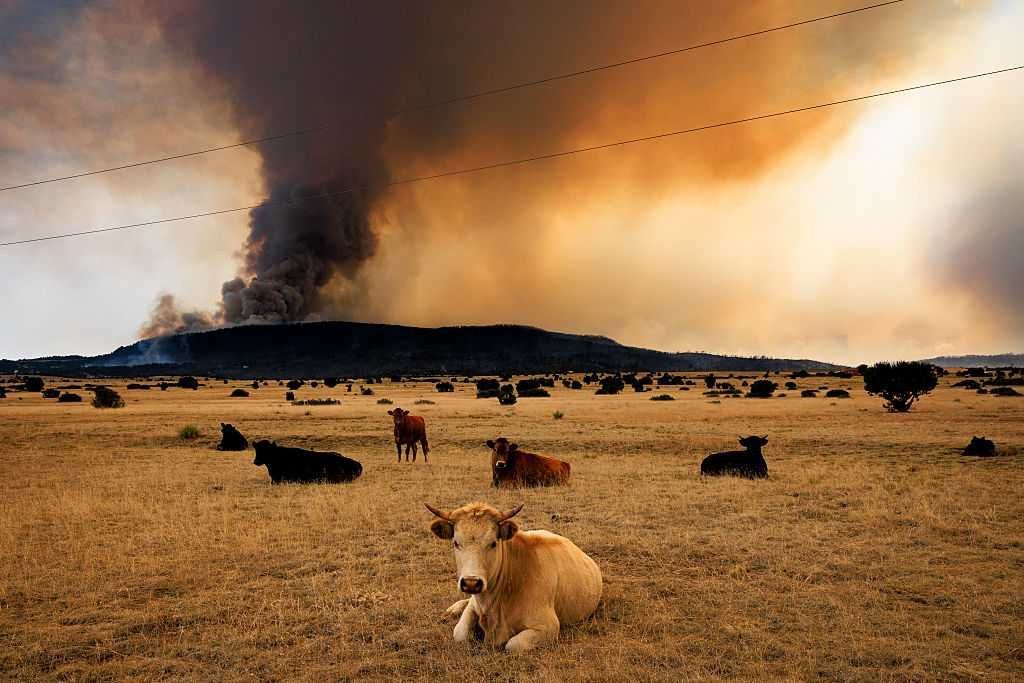


Wildfire smoke has again spread across large swaths of the United States, some of it settling into our Montana valley.

As I watch it drift across the landscape, I have questions.

Until climate activists learn proportion, humility, and a willingness to live under the rules they prescribe for everyone else, let the cows fart in their general direction.

For most of my adult life, I have heard that cattle are harming the climate. The public warning is often reduced to a crude slogan: Cow flatulence is destroying the planet.

Cattle actually release far more methane by belching than by farting. That distinction is easily missed by people who lecture ranchers about animals they have never raised.

Some of those lecturers also live on a scale few ranchers could imagine.

One billionaire owns a home in this region whose construction consumed enormous quantities of timber, stone, concrete, copper, fuel, heavy equipment, transportation, and energy. And that was before anyone heated, cooled, maintained, or traveled to it.

He is free to build it. His lectures about someone else’s cattle still deserve scrutiny.

This is not an argument against climate science. Cattle produce methane. Human activity affects the environment. Clean air, healthy soil, responsible forestry, and wise stewardship all deserve serious attention.

So do perspective, proportion, and credibility.

Our family partners with local ranchers to graze cattle on our property. They evaluate the grass, moisture, acreage, herd size, grazing time, and recovery period. They know which pasture can carry cattle and which one needs rest.

Responsible grazing reduces excess vegetation while improving grass for cattle and wildlife.

We have also logged portions of the property, removing unhealthy and overcrowded trees. We cannot prevent lightning or command the weather. Wildfires will happen. Thoughtful grazing, logging, and forest management can still reduce fuel and risk.

That is good old-fashioned stewardship.

Protecting land does not always mean leaving it untouched. Sometimes it means tending what has been entrusted to us. That principle ought to provide common ground rather than another excuse for a climate battle.

People with dirt under their fingernails rarely spend much time posting about sustainability. They are too busy practicing it. Their environmentalism is not a brand. It is a responsibility.

RELATED: How one lowered flag carried me home

Peter Rosenberger

The land corrects arrogance. Rain may not come. Winter may arrive early. One careless decision can damage a pasture for years.

Farmers and ranchers understand stewardship because their livelihoods, families, and futures depend on it. They have skin in the game.

Cattle do not recognize Christmas, birthdays, or weekends. They require attention every day.

Yet ranchers must stop that work to gather records, attend hearings, answer regulators, call attorneys, and explain livestock to people who have never raised an animal, repaired a fence in January, or waited anxiously for rain.

Every hour spent defending ranching is an hour not spent ranching.

The activist loses nothing by being wrong. The bureaucrat still gets paid. The rancher loses time, money, and sometimes the ability to pass the operation to the next generation.

The absurdity does more than insult the people producing our food. It interrupts them.

I watch smoke from fires whose damage might have been reduced through better stewardship. I watch other nations operate under standards American producers would never be allowed to ignore. Then I hear wealthy climate voices lambaste farmers and ranchers who must dip into thin profits to defend themselves against well-funded organizations that bear few consequences for bad policy.

Those critics do not wake before dawn to tend livestock or land.

A third-generation rancher will naturally hesitate to take livestock advice from someone lecturing on TikTok from Starbucks.

Agriculture has an environmental footprint, as does nearly everything required to sustain human life.

Yet when wildfires send smoke across a continent and major industrial nations emit pollution on a scale no Montana rancher could approach, the cow somehow remains a favorite villain.

Perhaps ranchers make convenient targets because they are nearby. They pay taxes, keep records, answer regulators, and obey the law. They are much easier to pressure than foreign governments or wealthy climate evangelists whose lifestyles make their sermons difficult to take seriously.

America’s ranchers may be easier to regulate than the Chinese Communist Party. That does not make them the greater threat.

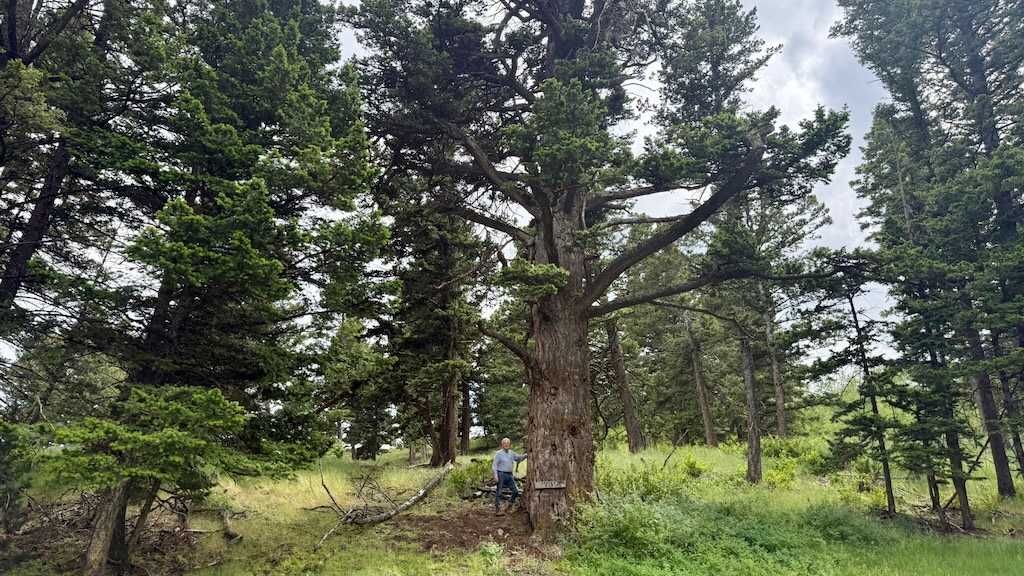
RELATED: Consider the lilies — and one old Montana fir
Peter Rosenberger

The double standard is not confined to policy. The people demanding sacrifice from everyone else often embody it.

None of this disproves climate science. It reveals something about conviction.

If you insist the theater is on fire while buying a penthouse above the stage, the audience may wonder whether you believe your own warning.

Hypocrisy destroys moral authority.

If the threat is global, apply the standards globally. If sacrifice is urgent, those demanding it should go first. If sustainability matters, listen to the people who have spent generations sustaining land, livestock, families, and communities.

Regulating American production out of existence does not make the world cleaner when the same goods are produced elsewhere under weaker standards and shipped back across an ocean.

That is outsourcing with a halo.

Ranchers are not asking to escape responsibility. They are asking not to be treated as environmental criminals by people who share neither their experience nor their consequences.

Perhaps, for once, we need more consistency and less cowbell.

Until climate activists learn proportion, humility, and a willingness to live under the rules they prescribe for everyone else, let the cows fart in their general direction.

Bill Gates reveals plan to save earth from farting cows


Bill Gates isn’t giving up on eradicating cow farts.

In a recent public appearance, Gates explained just how he plans to stop them.

“You know what happens with beef, my climate group Breakthrough Energy just announced, literally today, an investment in an Australian group called Rumin8, that helps cows not be so much a source of methane emissions,” Gates said.

“So, we have two paths to solving that, that’s 6% of global emissions are cows, who burp and fart methane to an extreme degree,” he continued to laughter from the crowd.

“You can either fix the cows to stop them from doing that, or you can make beef without the cow. And both of those you know will be pursued to see which one can lead to the best product in terms of taste, health, and cost,” he concluded.

Dave Rubin of “The Rubin Report,” who is himself on a form of the now-famous carnivore diet, isn’t pleased with Gates.

“It’s interesting to me that here’s the man who owns the largest amount of farmland in the United States, Bill Gates, who now wants to, as he said, do something to cows so that they either don’t burp or fart as much, or we’ll just get off meat all together,” Rubin says.

“Either way, I sense he’s going to profit a lot from one of those things,” he adds


Want more from Dave Rubin?

To enjoy more honest conversations, free speech, and big ideas with Dave Rubin, subscribe to BlazeTV — the largest multi-platform network of voices who love America, defend the Constitution, and live the American dream.

FACT CHECK: No, 80 Percent Of Texas’ ‘Cattle Grazing Land’ Was Not Destroyed By Recent Fires

Spokespeople for the Texas Farm Bureau and Texas Department of Agriculture said the claim is false in an email to Check Your Fact.

FACT CHECK: No, Cows In Italy Are Not Dying After Receiving The COVID-19 Vaccine

There are no credible news reports indicating Italy has vaccinated its cattle

Ireland considering killing 200,000 cows to fight climate change


Government officials in Ireland are considering a plan to kill 200,000 cows to combat climate change, according to reports.

There were multiple reports this week that the Irish government was contemplating a plan to cull 200,000 cows within three years to fight climate change. The Irish Mirror stated that "the cows would have to be 'culled' at a cost of €600,000 to taxpayers over the next three years to meet climate emissions targets."

The possible plan was detailed in an internal Department of Agriculture document that was unearthed in a freedom of information request.

The Irish Creamery Milk Suppliers Association immediately railed against the reported plan to kill 200,000 cows.

Pat McCormack – the president of the Irish Creamery Milk Suppliers Association – declared, "If there is to be a scheme, it needs to be a voluntary scheme. That’s absolutely critical because there’s no point in culling numbers from an individual who has borrowed on the back of a huge financial commitment on the back of achieving a certain target that’s taken from under him."

"We should be investing in an infrastructure that can deliver from a scientific perspective. And we know low emissions are better and we should be continuing to invest in further science and research because that’s absolutely critical as we move forward," McCormack said, according to the Irish Times.

McCormack claimed that Ireland's current dairy herd is at the same level that it was 30 years ago. The Irish Mirror reported, "Dairy cows rose 1.4 percent (22,800 head) to 1.6 million in 2022 but over the past decade have increased by around 40 percent."

After the report of the government contemplating the slaughter of tens of thousands of cows surfaced, the country's agriculture department issued a statement.

A spokesperson for the Department of Agriculture, Food and the Marine said, "The paper referred to was part of a deliberative process – it is one of a number of modeling documents considered by the Department of Agriculture, Food and the Marine and is not a final policy decision. As part of the normal work of Government Departments, various options for policy implementation are regularly considered."

Ireland's Environmental Protection Agency claimed that agriculture was responsible for 38% of greenhouse gas emissions in Ireland in 2021, far outpacing transportation at nearly 18%.

The Food Vision Dairy Group published a report last October calling for an "urgent need to address the negative environmental impacts associated with dairy expansion."

Shortly after the release of the report, Ireland's Minister for Agriculture ,Charlie McConalogue, publicly proposed that farmers reduce the number of dairy cows.

Experts say proposals to significantly reduce the levels of livestock present food security issues.

Brett Moline, spokesperson for the Wyoming Farm Bureau, told Cowboy State Daily, "It's going to make food expensive, and we still have a large part of the population that is food-insecure."

Moline warned that if the U.S. and U.K shut down food production then it will move to countries with questionable environmental regulations.

Like Blaze News? Bypass the censors, sign up for our newsletters, and get stories like this direct to your inbox. Sign up here!

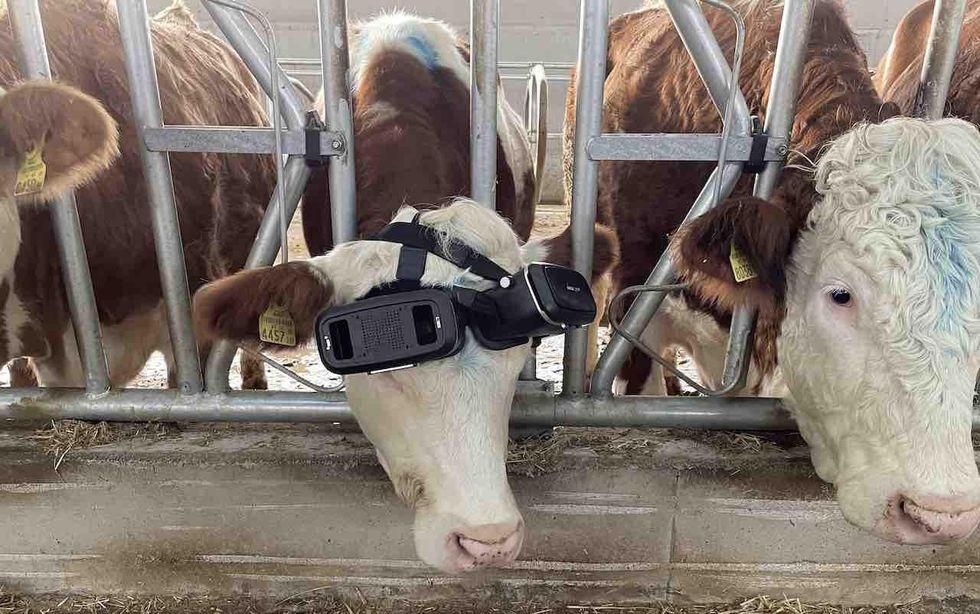
'The Mootrix'? Cows wear virtual reality goggles in winter to simulate sunny pastures. It reportedly makes them happier, boosts milk production.


Virtual reality technology apparently isn't solely for humans.

Turns out some folks got the nifty idea to outfit cows with virtual reality goggles in the winter in the hopes of boosting their milk production, the Sun reported.

Say what?

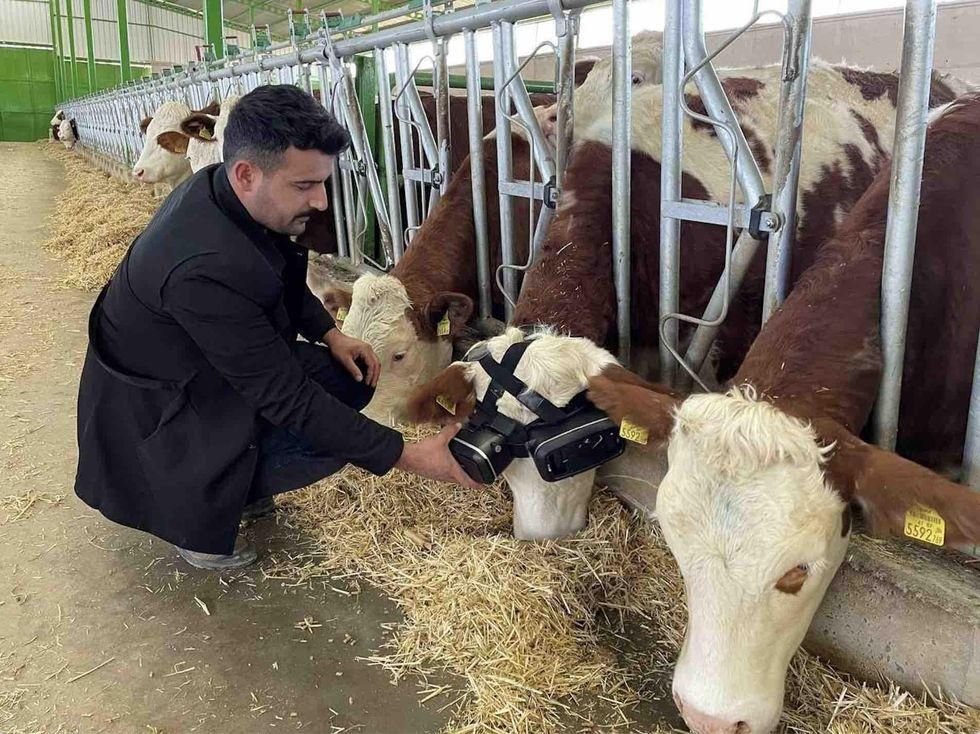
The goggles were developed with veterinarians and first tested on a farm in Moscow, the paper said, adding that cattle breeder Izzet Kocak put them on two cows in Aksaray, Turkey, and results have been favorable.

Photo by Zekeriya Karadavut/Anadolu Agency via Getty Images

Believe it or not, the cows' milk output has increased from 5.8 gallons to 7 gallons a day, the Sun said.

Instead of looking at a chilly indoor facility, the cows are "watching a green pasture, and it gives them an emotional boost. They are less stressed," Kocak told the paper.

Russia’s agriculture ministry said the system was developed based on the principle that cows perceive shades of red better than shades of blue and green, the Sun said.

“During the first test, experts recorded a decrease in anxiety," the ministry noted to the paper.

Indeed, while previously Kocak played classical music for his 180 animals, presumably as a mood booster, he's so happy with the virtual reality goggles that he plans to buy 10 more sets, the Sun said.

'The Mootrix'?

Images of one cow digging what's likely a sun-drenched pasture while hanging out with other cows indoors has captured the imagination of folks on social media, who are comparing the experiment to the sci-fi classic "The Matrix," the paper said.

As most of you know, "The Matrix" is the tale of the earth as we know it being nothing more than a simulation, while our real bodies are afloat in goo-filled pods as we generate energy for evil machines.

The main character Neo — played by Keanu Reeves — is located by "freed" humans inside the Matrix simulation and given a choice between taking a red pill to escape his pod and begin living in the real world or taking a blue pill to forget the whole thing.

“You take the short grass, the story ends, you wake up in the pasture and believe whatever you want to believe," one witty observer wrote in reference to the cows' VR experience, the Sun reported. "You take the long grass, you stay in wonderland, and I show you how deep the human hole goes.”

Another person offered the following quip, the paper said: “With the sequels The Mootrix Reuddered and The Mootrix Ruminations.”

Researchers potty train cows in order to fight climate change


By now, everyone knows how deadly cow farts are.

In hyperventilating report after panic-mongering exposé, climate alarmists have attempted to scare the world into fearing for their lives and heading to their fainting couches over that threat bovine flatulence poses to life as we know it.

But did you know that cows' piddle can be as bad as their toots?

True story — but according to researchers at the Research Institute for Farm Animal Biology, in Dummerstorf, Germany, there is a way to battle this cattle scourge, Radio New Zealand reported Tuesday:

Potty training.

What's that now?

According to the New York Post, "[t]he ammonia in cow urine is a known greenhouse gas as it produces nitrous oxide when released into the soil."

Some researchers believe that livestock farming is responsible for 10% of the world's greenhouse gases, the paper said.

Researchers at the German research institute, including Lindsay Matthews and Douglas Elliffe had a bright idea: Get the cows to use the john.

Matthews and Elliffe told RNZ that they have discovered that cows can be trained to use a toilet, of sorts, which could help ranchers cut down on water contamination and greenhouse gases.

The team was able to train 11 of 16 calves in the program to pee in a specific "MooLoo" area within a few weeks, Matthews claimed. This allowed researchers to capture the nitrogen in the urine before it got into the water or turned into nitrous oxide.

RNZ reported that the cows were put in a specific latrine pen that was painted a different color in order to set it apart from other pens. When the calves urinated in the MooLoo pen, they were given special food rewards.

If the cows had an "accident" and urinated outside the MooLoo, they were squirted with cold water.

"This is how some people train their children — they put them on the toilet, wait for them to pee, then reward them if they do it," Matthews told RNZ. "Turns out it works with calves too. In very short order, five or 10 urinations for some animals, they demonstrated they understood the connection between the desired behavior and the reward by going to the feeder as soon as they started urinating."

"Very quickly, within 15 to 20 urinations on average, the cows would self-initiate entry to the toilet," Matthews added. "This is very exciting because it means they were paying attention to their bladder getting fuller."

By the end of the potty training, the 11 of 16 calves who could be trained, Matthews said, were "doing three-quarters of their urinations in the toilet."

Virtue Signaling About Beef Is Not Going To Save The Planet

On this episode of The Federalist Radio Hour, founder and executive director of Power the Future Daniel Turner joins Senior Editor Chris Bedford to break down Read More