
The DSA’s history lesson has one big omission

I walked into my first DSA meeting looking for an answer to a very specific question: How do modern Marxists reckon with communism’s long history of atrocities?
In recent weeks, clips of Democratic Socialists of America leaders praising countries such as Cuba and China have gone viral. Other prominent socialists, including Hasan Piker, openly admire Lenin and Stalin and post pictures of themselves reading “What Is to Be Done?” while wearing Cartier.
Power is not only money or property. It is also the power to decide which history gets remembered and which gets reduced to a footnote.
Communist regimes killed tens of millions of people in the 20th century. So when I sat down for a DSA 101 lecture and was greeted as a comrade, I wanted to hear how the organization taught that history.
The answer was one of the more impressive acts of historical revisionism I have ever heard.
The DSA has built a coalition around oppression. Transgender people, racial minorities, immigrants, women, and people angry about the cost of health insurance are presented as members of classes exploited by a capitalist ruling order. In the room, confidence in the American dream was scarce. Resentment of the capitalist class was not.
That framework extends abroad. As the leader of my DSA 101 session put it, “A socialist approach is built on international solidarity and support. Socialists are internationalists.” Hence the fixation on Cuba, Venezuela, Gaza and the West Bank, and other places cast as victims of American power.
The problem is that several regimes the DSA treats sympathetically were devastated by Marxist rule itself.
Take the Soviet Union. During the Great Terror, roughly 700,000 people were executed. Millions more died through forced resettlement, the gulag, famine, and other state policies. One widely cited estimate puts the Soviet communist death toll at about 20 million.
Yet during the entire two-hour DSA course, the Soviet Union came up only once. The instructor praised it: “Socialists can be proud of our history. Some of the very first, most striking work [for feminist rights] occurred just after the October Revolution in the Soviet Union.”
That was it. The mass killing disappeared. Progressive feminism remained.
China received similar treatment. While discussing planned economies, the instructor praised the Chinese system for combining planning and markets in service of human need. Missing from that account was Mao Zedong’s rule, under which historians have estimated that as many as 70 million people died, many during famines ushered in through Marxist policies.
Cuba got the same reframing. The instructor blamed blockades, embargoes, and sanctions for depriving Cubans of “the chance to live in prosperity and dignity,” while praising the government for resisting America’s “oppressive” economic influence. Castro’s regime, according to historian R.J. Rummel, was responsible for as many as 141,000 deaths.
RELATED: Hasan Piker is the anti-Charlie Kirk
The pattern became hard to miss. Marxist countries were not presented as failures so much as unfinished projects. Their progressive achievements were foregrounded; their victims were backgrounded. When socialist systems failed, capitalism, American imperialism, or the political class usually entered the explanation.
“The general attitude of socialism, which goes back to Marx and Lenin,” the instructor said, “is that when we are assigning blame … [it] is with the political class.” He spoke at length about the Pentagon and American power as sources of death and destruction. The deaths caused by Marxist governments? Nothing to see there.
If you let your opponent talk long enough, he will often tell you his strategy. That’s why I went.
The DSA did not exactly deny the horrors of 20th-century communism. It did something more useful: It barely taught them. The history was filtered through a moral framework in which socialists remain the champions of the oppressed and capitalism remains the prime suspect.
“It is the intention of the DSA to take power and wealth away from the capitalist class and put it in the hands of the working class,” the instructor said.
Power is not only money or property. It is also the power to decide which history gets remembered and which gets reduced to a footnote.
If young people learn about communist regimes chiefly through their promised ideals and progressive “wins,” while the bodies disappear from the lesson plan, they are not being taught communism’s history. They are being taught how to forget it.
The DSA Is Fully Aware Of The Horrors Of Socialism, But They Don’t Care As Long As They Get Power
 No, Boris Sanchez, it won't matter if the DSA talks to a million survivors of socialism and communism. They know the history and the implications of that political ideology -- and it doesn't bother them.
Socialism’s favorite bait-and-switch
The Democratic Socialists of America are no longer hiding the ball.
In July, the organization published a manifesto calling on the United States to "establish public ownership of the largest corporations and essential industries to ensure democratic control and accountability to the people.”
Public ownership does not give power to the people. It gives power to the government — and asks the people to trust that government never to abuse it.
That is not a proposal for higher taxes, tighter regulation, or a larger welfare state. It is a demand to replace private ownership of America’s largest companies with government ownership.
The language is designed to sound appealing. Why should a handful of billionaires control enormous corporations while everyone else gets left behind? Why shouldn’t “the people” own those companies instead?
No more greedy executives collecting fortunes while workers earn far less. No need to nationalize every business — only the “essential” industries deemed too important to operate for profit or remain in private hands.
It sounds reasonable. It sounds as though power would finally be taken from wealthy corporations and returned to society.
But that is nearly how Fidel Castro sold communism to the Cuban people.
History shows that “ownership by the people” usually means control by the government. The public does not acquire power. Politicians and bureaucrats do.
Castro did not introduce himself as a communist promising state control over every part of Cuba’s economy. He said he was fighting corruption, inequality, and concentrated wealth. Private property and capitalism became the villains. The solution was to place the country’s most important industries under the control of “the people.”
The rhetoric sounded fair and humane. Wealthy owners would lose power, and ordinary Cubans would gain it.
The first part happened. The second did not.
RELATED: From helping hand to five-finger discount

Power was taken from private owners, but it never reached ordinary Cubans. It accumulated in the hands of the state. Today, Cubans live under political repression, chronic scarcity, and widespread poverty.
“Nothing belongs to you. It all belongs to the government,” Rosa Garcia, a survivor of Castro’s Cuba, recalled in an interview with Young Americans Against Socialism.
Garcia watched the transformation firsthand. She remembers Castro assuring Cubans that his revolution was not communist. Many believed him. Some hung signs on their doors reading, “This house is yours, Fidel.”
As government control expanded, private property rights disappeared. So did the ability to obtain goods, build wealth, or make basic economic choices without permission from the state.
When Garcia’s family later applied to leave Cuba, government officials came to their home and inventoried everything they owned to ensure they took nothing with them. Utensils, clothing, and household possessions all belonged to the government.
That is the reality behind the dreamy language of collective ownership. What supposedly belongs to everyone is controlled by the people who run the state.
Public ownership also carries enormous economic costs.
Private property gives people a reason to create, invest, innovate, and serve customers. Every smartphone, laptop, lifesaving medicine, digital platform, and other product we rely on exists because someone had the freedom to take a risk and the opportunity to profit from success.
Before Castro’s revolution, Cuba ranked among Latin America’s more prosperous countries. Today, it is one of the region’s poorest, with nearly 90% of its population living in severe poverty.
Take away private ownership, and you do more than redistribute wealth. You weaken the incentive to build businesses, develop technology, create jobs, and produce the prosperity those activities generate.
Supporters of democratic socialism will reasonably object that modern America is not revolutionary Cuba. The United States has stronger institutions, a different political culture, and constitutional protections Cuba did not preserve. Public ownership of one enterprise does not automatically produce a one-party communist state.
That distinction does not eliminate the underlying danger.
Nationalization begins with the easiest targets: highly profitable companies, billionaires accused of earning too much, and industries politicians label too important to remain privately owned.
RELATED: Who wants to eat a trillionaire?
Once society accepts the principle that government may replace private ownership whenever politicians decide an owner is too rich or a company is too important, no clear limiting principle remains.
Why stop with the largest corporations?
Every industry placed under public ownership gives government officials more authority to decide how resources are used, which services are available, and who receives them.
Cuba’s history shows how quickly control of a few “key industries” can become a broad assault on private property. America would be foolish to assume the same principle could be embraced here without the same temptation to expand it.
Public ownership does not give power to the people. It gives power to the government — and asks the people to trust that government never to abuse it.
Trump is continuing JFK’s war on communist subversion
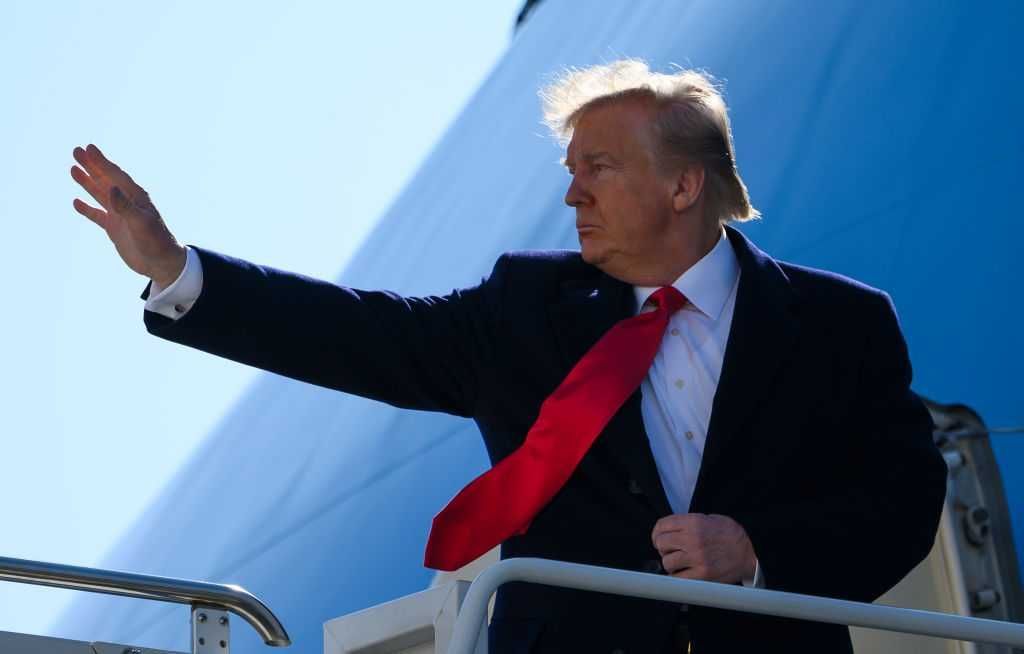
When President Trump reposted a video featuring President John F. Kennedy warning about subversion in America, he renewed focus on a threat we have long ignored at our peril.
Spotlighting JFK’s admonition is part of the administration’s all-out attack on foreign subversion — an effort that has no presidential precedent. Its designation of Antifa and certain Muslim Brotherhood chapters as terrorist organizations was a first. The revocation of visas for foreign subversives, if carried out on a larger scale, will be unmatched in scope.
Kennedy understood that peace through strength was broader than deploying military power or international diplomacy. But he never had the chance to deliver that warning.
During the July 16 Ministerial on the Resurgence of Political Terrorism, Secretary of State Marco Rubio, Treasury Secretary Scott Bessent, and other officials made clear that the Trump administration would use every tool of statecraft to dismantle the decades-old subversive networks operating in the United States.
This effort has also refocused attention on an older — but no less potent — enemy: communist subversion.
The State Department published a 100-page report “Cuba: The Capital of 21st-Century Communism,” detailing how Cuban communists have worked for decades to overthrow the United States. It names names, past and present.
Cuba, of course, brings us back to President Kennedy. Despite his failed effort to remove Fidel Castro’s communist regime, Kennedy frequently pointed out how communists abused constitutional protections and infiltrated U.S. institutions — the news media, labor unions, academia, and the government itself.
JFK’s words still apply today to surviving Soviet spin-offs like the Cuban regime, critical theory and critical race theory, cultural Marxism, and democratic socialism.
As a new senator, at the height of Wisconsin Republican Sen. Joseph McCarthy’s investigative hearings, Kennedy warned in successive speeches that the greatest foreign threat would rely on “the weapons of subversion, economic disintegration, and guerrilla warfare to accomplish our destruction, rather than the direct assault of an all-out war.”
Kennedy warned every possible audience — schoolteachers, university professors, community leaders, newspaper editors, women’s clubs, union leaders, military personnel, veterans, business groups, political fundraisers, civil liberties leaders, church groups, and the general public — about the communist threat right up to the last day of his life.
Kennedy recognized the danger posed by American traitors who sought, through subterfuge and collaboration with the foreign enemy, to corrode Americans’ belief in their country and the principles of their nation’s founding. He praised some American labor unions for ridding themselves of communist subversion.
Defending President Eisenhower’s counter-subversion approach in 1957, Kennedy nonetheless chided his fractured and squabbling Republican opponents. Republicans, he said, “found that their chief concern was with questions of disloyalty and subversion — not within the Federal Government but within the Republican Party.”
That was just three weeks to the day after Joe McCarthy’s death. JFK never publicly criticized McCarthy, who had been a welcome guest of his father at the Kennedy Compound on Cape Cod. “Half my people in Massachusetts look on McCarthy as a hero,” he once said.
RELATED: The socialists are coming for the Senate
Infiltration and subversion
Kennedy repeatedly warned of what he called “nonmilitary avenues of Soviet advance”: “I fear our emphasis on the dangers of missile attacks may cause us to forget. For their thrust is more subtle,” and “the task of opposing them more formidable.”
Among those threats were “economic and political penetration, intimidation, and subversion,” he said in 1958. “There is little value in rushing new billions in defense expenditures to fight total wars ... if we are unprepared to prevent continued Soviet advances through ... subversion and intimidation.”
As he was preparing his presidential run, Kennedy mused during a speech at a civil liberties conference that the public had been so subjected to subversive attacks that they no longer shared the civic principles that once united them.
On the campaign trail in 1960, Kennedy raised the topic of subversion even before audiences asked about it. As the Democratic nominee for president, Kennedy became more critical of the Eisenhower administration for focusing on massive military buildups at the expense of a predictable pattern of communist ideological conquest made easier by America’s weakness in counter-subversion:
In other words, there is every chance that the pattern of conquest of the communists will not be military action, but will be by subversion, by fear, by persuading the people of those countries and their leaders that the communist system represents the way of the future. I don’t believe the administration has recognized that danger. ... I don’t believe that our influence has increased as fast in recent years abroad as that of the communists.
In his last weeks of campaigning, Kennedy even called the communist threat more challenging than dealing with the Nazis. “I must say that the problems we will face in the next 10 years are far more complex than any that Franklin Roosevelt or Harry Truman faced, particularly in the field of foreign policy,” he said to supporters in Ohio. “What has happened in the last two years in the field of foreign policy indicates a whole technique of subversion and infiltration, which will be extremely hard to counter.”
That subversion, he continued, “will require a far great[er] subtlety, far more constant vigilance, far greater personnel, far greater foresight than we have ever shown before.”
Unaware of President Eisenhower’s plan for toppling the new Fidel Castro regime that he would inherit, Kennedy tore into U.S. unpreparedness that led to Cuba becoming “a base from which to carry communist infiltration and subversion throughout the Americas.”
Kennedy was alone in bringing up subversion during his fourth debate with Vice President Richard M. Nixon, which was striking since Nixon had become a national political figure while serving on the House Un-American Activities Committee.
What you can do
Kennedy hammered away at the threat of communist subversion in the first minutes of his presidency. In his inaugural address, he vowed “to oppose aggression or subversion anywhere in the Americas” — the same speech in which he said, “Ask not what your country can do for you — ask what you can do for your country.”
He warned in a 1961 emergency address to Congress that “nuclear weapons cannot prevent subversion.”
He and his brother, Attorney General Robert F. Kennedy, had no love for FBI Director J. Edgar Hoover, but they worked closely with him to investigate and disrupt communist infiltration of the civil rights movement. JFK, like Eisenhower before him and Lyndon Johnson and Nixon afterward, treated it properly as a counterintelligence problem.
On the day of his assassination in Dallas, President Kennedy was ready once again to warn about subversion. The president’s remarks as prepared read:
I want to discuss with you today the status of our strength and our society because this question clearly calls for the most responsible qualities of leadership and the most enlightened products of scholarship. For this nation’s strength and security are not easily or cheaply obtained, nor are they quickly and simply explained. There are many kinds of strength and no one kind will suffice. Overwhelming nuclear strength cannot stop a guerrilla war. Formal pacts of alliance cannot stop internal subversion.
Kennedy understood that peace through strength was broader than deploying military power or international diplomacy.
But he never had the chance to deliver that warning. More than six decades later, President Trump and his team have fortunately picked up where he left off, reviving a neglected part of Kennedy’s legacy. It’s time to follow President Kennedy’s lead and uproot domestic subversion in America once and for all.
Editor’s note: This article appeared originally at the American Mind.
State Department Report Reveals How Cuba Equipped The American Radical Left For 60 Years
 A clear-headed American foreign policy should focus on vindicating American interests and defeating Cuba’s revolutionary activities against us.
The cure for liking socialism? Visiting a socialist country
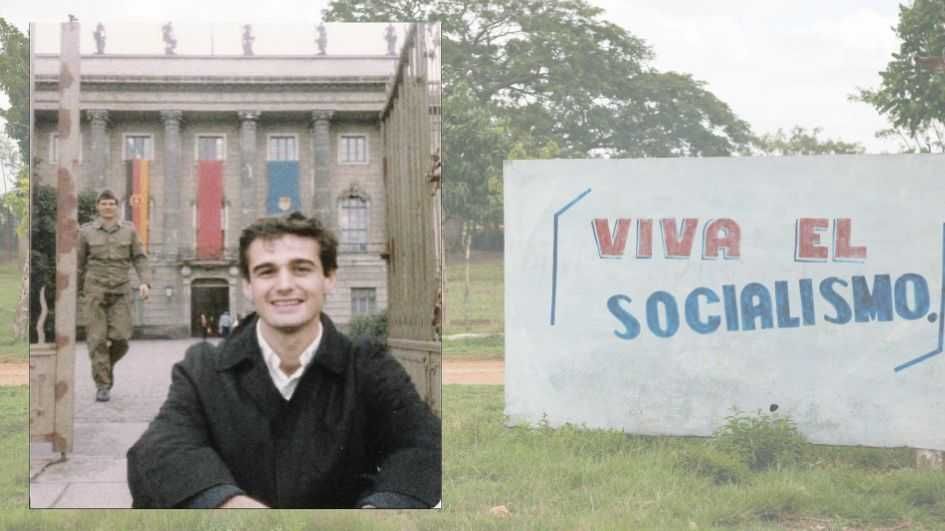
One of the reasons I am alarmed by the socialist/communist trends in my own country is that I visited such countries in my youth.
My first look at communism was at Checkpoint Charlie in West Berlin in 1984. There, you crossed into East Berlin (the communist side) through a barbed wire, land-mined, machine gun-guarded, no-man’s land.
The bite wound — on her hand — appeared serious enough to require an antiseptic. But where could they find that, late at night, in Havana?
People had died trying to cross it.
Once inside East Berlin, you immediately saw why. The city was lifeless, poor, and depressing. The people were ugly and not safe to interact with. The general misery was suffocating. It was a huge relief to get back to West Berlin.
In the following years, I had other experiences in the “democratic socialist” countries of Yugoslavia and Bulgaria, which were also chillingly prison-like and horrific.
After several decades of communism, all the normal people in these countries had escaped or died. Only the creeps, criminals, and mentally enfeebled remained.
I always believed that if Americans could see for themselves what “democratic socialism” looks like, they would be instantly dissuaded from supporting or advocating for it.
But as I’ve learned, that is not always the case.
Americans abroad
My favorite example is when an American friend (35) and her mother (61) visited Cuba in the 2010s. They were an adventurous duo and fairly seasoned travelers.
They were also very liberal. They both donated to NPR. They were both ardent fans of Rachel Maddow. And they would later suffer from severe cases of Trump derangement syndrome.
So what did they think of socialist Cuba? And its poverty, corruption, and lack of economic opportunity?
They loved it. They thought Cuba was great.
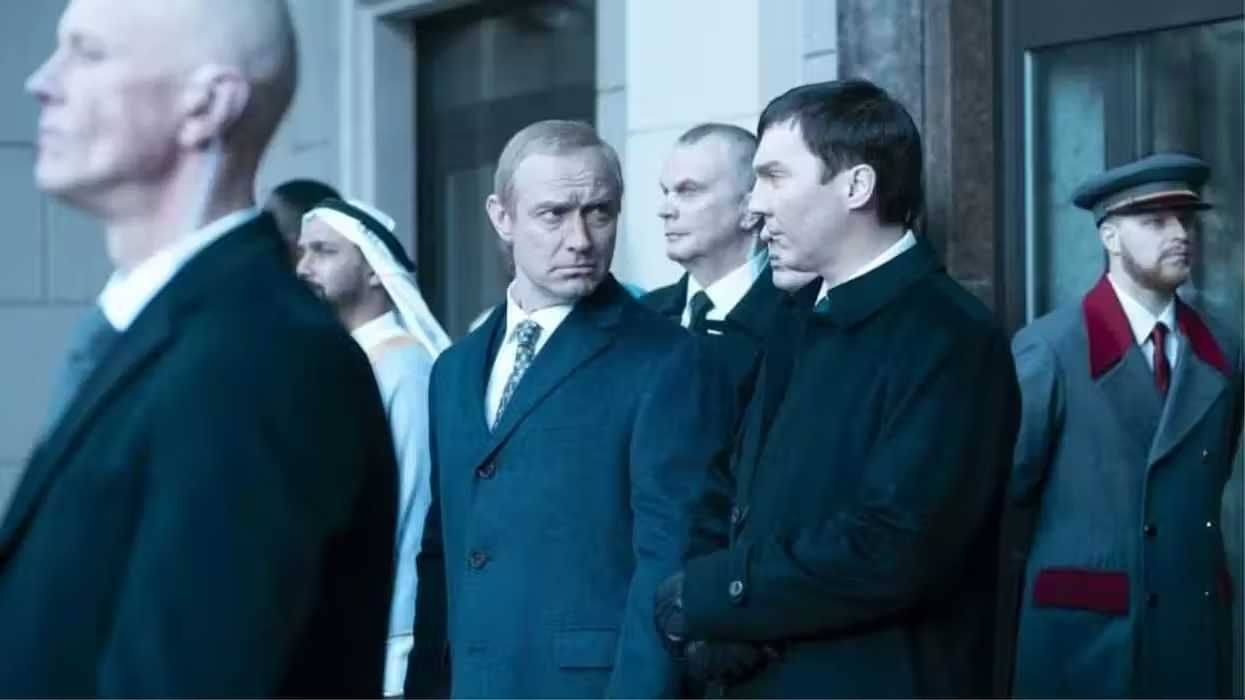
RELATED: Liberal critics hate 'The Wizard of the Kremlin' — that's how I knew it was worth a watch
Royalty among the peasants
Now, I have traveled to third-world countries myself, and I have been impressed by the resilience of the people. There is something romantic about such cultures, something satisfying about the simplicity and earthiness of their lives.
Part of the enjoyment of such places is that all standards are lowered. The locals are poor and uneducated. You are practically a philosopher-king among the peasants. You can relax and enjoy your superiority.
Havana moon
When my friend and her mother returned from Cuba, she told me about their trip: the great food, the picturesque street life. The two had gone to nightclubs and danced to incredible live music.
The locals fawned over them. A kindly Cuban woman invited them to her house for dinner. They bought peasant skirts, handmade hats, and local jewelry.
It was all very romantic. Everyone was so nice to them. The locals appreciated their interest in Cuban culture.
Straight from the horse’s mouth
They did have one problem though. The mother, while strolling along the promenade in Havana, was bitten by a horse.
The bite wound — on her hand — appeared serious enough to require an antiseptic. But where could they find that, late at night, in Havana?
No pharmacies were open. So they found a sympathetic bartender who doused the wound with vodka and wrapped it in a bar towel as best he could.
In the morning, it was worse. They had to find a doctor, which was not easy to do.
Finally, they found an English-speaking doctor, who was eager to help them once he found out the mother was married to a doctor in America.
He properly dressed the wound but mostly peppered the mother and daughter with questions about doctors in the USA. How much did they make? What kind of car did they drive? How big was their house?
The doctor hounded them for contact information. He was plotting his own escape. Fortunately, he had not escaped already and was there to help the mother with her horse-bitten hand.
Socialists love their socialism
I don’t mean to be critical of my friend, but this trip demonstrated why left-leaning liberals don’t see any problem with a socialist government.
To them, the slower pace of life is spiritually enriching. Not to mention the delicious food. And the soulful music.
If only Americans could be more like the Cubans. If only we weren’t such money-grubbing workaholics and could just relax and enjoy those sultry nights and the gorgeous Havana moon, which shone so bright in the sky (mostly because there was no electricity for street lights).
No, socialists love their socialism. Or rather their dream of socialism. I noticed that my friend was very happy to be back in the suburbs, to get back to her yoga class and her air-conditioned Suburu.
Trump DOJ files to strip Jamaican fraudster, Indian H-1B scammer, Haitian pervert, and 14 others of US citizenship
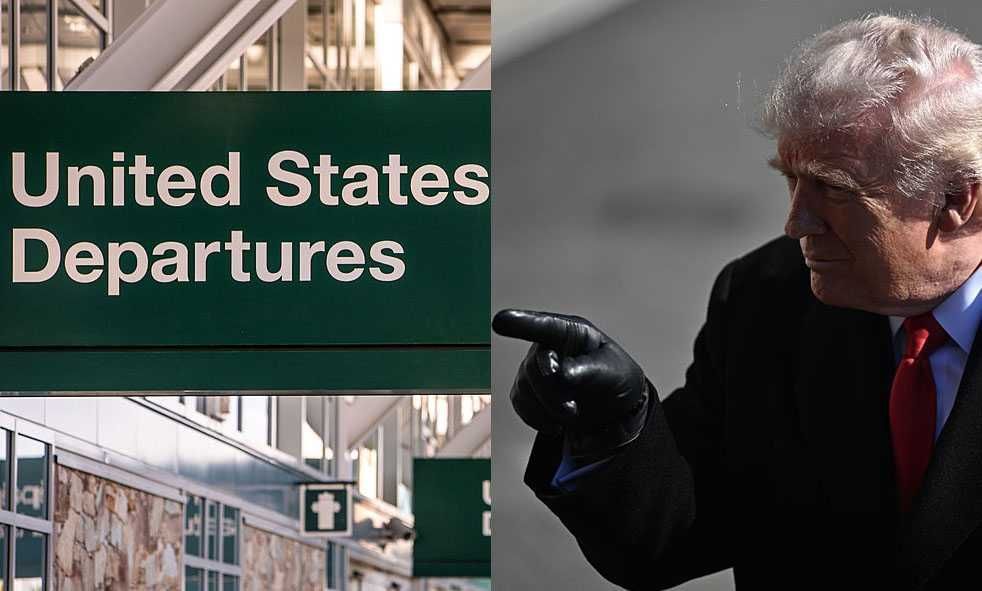
Federal officials filed a total of 305 denaturalization cases between 1990 and 2017 — an average of 11 per year. Like the first, the second Trump administration appears keen to make those previous numbers look like child's play.
The Trump Justice Department announced on Monday that it filed denaturalization actions in a handful of federal courts against 17 individuals accused of various crimes including child sex abuse and fraud.
'American citizenship is a privilege, and it must be earned honestly.'
Those now facing the possibility of having their U.S. citizenship revoked hail from various nations including China, Colombia, Congo, Cuba, Haiti, India, Jamaica, and Somalia.
"When criminal aliens exploit the naturalization process by breaking the law, there are consequences," acting Attorney General Todd Blanche said in a statement obtained by Blaze News.
"Criminal aliens are lying about their past crimes, including drug dealers, sexual predators, and fraudsters," continued Blanche. "Gaining U.S. citizenship is a privilege, and under the steadfast leadership of President Trump, this Department of Justice maintains a zero-tolerance policy for the abuse of this process."
Among those targeted under this leg of the administration's denaturalization campaign is 50-year-old Neeraj Sharma, a native of India who ran a staffing company in New Jersey, where he filed 11fraudulent H-1B visa petitions with U.S. Citizenship and Immigration Services.
Sharma, who became a U.S. citizen in late 2017, has been convicted of fraud and misuse of visas. The DOJ seeks to strip him of his citizenship for having allegedly "procured his naturalization by: (1) failing to disclose unlawful acts; (2) providing false testimony; and (3) concealment of a material fact and willful misrepresentation."
RELATED: The case for denaturalization

Foreigners who manage to naturalize can have their citizenship revoked in civil proceedings under Section 1451(a) of Title 8 of the U.S. Code if a court finds that the certificate of naturalization and citizenship order were either "illegally procured or were procured by concealment of a material fact or by willful misrepresentation."
To establish that an individual illegally procured citizenship, the government must show that "the naturalized citizen must have misrepresented or concealed some fact, the misrepresentation or concealment must have been willful, the fact must have been material, and the naturalized citizen must have procured citizenship as a result of the misrepresentation or concealment," according to the U.S. Supreme Court.
There are other grounds for denaturalization, including affiliation with an organization that is opposed to organized government or favors totalitarian forms of government; conviction of criminal contempt for refusing to testify before Congress on alleged "subversive activities"; and dishonorable discharge from the military, if naturalization was conditional on service in the military, reported the Congressional Research Service.
Jamaican native Talman Harris is also facing possible denaturalization. Harris was found guilty in 2016 of wire fraud and conspiring to commit securities fraud and wire fraud and sentenced to prison the following year for his role in a penny-stock fraud scheme that resulted in a $39 million loss to investors. This scheme took place over an eight-year period, including during Harris' naturalization proceedings.
The DOJ alleges that during the period in which Harris was pursuing naturalization, "he was statutorily required to demonstrate good moral character, he committed a crime involving moral turpitude, committed unlawful acts that adversely reflected on his moral character, and falsely testified about his crime."
Armando Medoza, a 39-year-old originally from Mexico, might also be sent packing for claiming during his naturalization application and interview that he had never committed a crime or offense for which he hadn't been arrested when in fact he had been receiving sexually explicit images of children for years — a crime to which he pleaded guilty years later.
Another pair of depraved individuals on the DOJ's denaturalization list are Jean Claude Alfred, a 68-year-old Haitian native convicted in 1996 of sexually abusing his minor daughter at the same time that he was pursuing naturalization, and Tahir Lekaj, a 43-year-old from Yugoslavia who was convicted of sexually abusing a young child the year before he applied to naturalize.
Abdikadir Ali Kadiye's days as an American citizen may also be numbered. The Somali native admitted to a U.S. Customs and Border Patrol agent that he had used two identities for admission to the country, according to the DOJ. After he was unable to secure immigration benefits under one name, Kadiye tried again, this time with some success.
"American citizenship is a privilege, and it must be earned honestly. If you come here, break our laws, and lie in your immigration proceedings, you forfeit that privilege," said Homeland Security Secretary Markwayne Mullin. "DHS will not stand idly by while Americans are harmed by criminals including sex offenders, perpetrators of fraud, and drug traffickers who have exploited our generosity and gamed our immigration system."
There have been signals in recent months that the Trump administration intends to file far more denaturalization actions in the coming months.
For instance, internal guidance reportedly issued to U.S. Citizenship and Immigration Services field offices obtained by the New York Times in December asked that they "supply Office of Immigration Litigation with 100-200 denaturalization cases per month" throughout the remainder of fiscal year 2026.
Like Blaze News? Bypass the censors, sign up for our newsletters, and get stories like this direct to your inbox. Sign up here!
Pro-China Rich Guy Neville Roy Singham Draws Growing Scrutiny Over Far-Left Activism
 Spending American-made money from Shanghai as a far-left activist, Singham supports a wide range of narrative-influencing operations.
 www.theblaze.com
 thefederalist.com
 www.theblaze.com