It's high time to unlock Americans’ phones

Can populism and optimism mix? These days, the contentious AI debate is fueling the false impression that the answer is no. But recent polling convincingly shows that there’s one important tech issue on which an overwhelming majority of Americans support an empowering, freedom-enhancing change: unlocking mobile phones.
In comparison to the titanic struggle over things like data centers, the simple act of requiring providers to let consumers take their cell phones with them — without penalties or fees — might, at first glance, seem like small ball. Take a moment to look at the numbers, however, and the truth is revealed.
In the shorter term, unlocking the nation’s phones unlocks potentially life-changing savings for most Americans. In the longer term, the move helps establish a crucial baseline for applying pro-freedom, pro-ownership device policy to the myriad next-gen devices — even more powerful than smartphones — soon to fill up our everyday lives.
The momentum for change isn’t confined to consumers crying out for relief.
Start with the polls. A startling nine in 10 consumers, regardless of partisan affiliation, support the right to take their phones with them when changing service producers. But the real stunner is why.
More than a mere preference (who wouldn’t default toward more choice?), consumers are highlighting a hidden pain point that hasn’t seemed to catch the eye of analysts without much to worry about at the kitchen table. Phone locking doesn’t just block customers — and today, who isn’t a smartphone customer? — from taking their phones with them. It blocks them from shopping freely for better, more affordable deals.
We’re not talking couch-change savings here. Switching plans can save thousands. In a household with just two phone lines, a savvy switch cashes out to as much as $1,200 per year, according to the Internet and Television Association.
And for most families, of course, two smartphones are table stakes. A Consumer Affairs report shows the typical household has an average of around 20 connected devices. Almost all children receive their own phones by age 15. Most Americans ages 18 to 29 live in a household with three or more phones. Consumer research from WhistleOut concludes a truer estimate of household cost savings from unlocking consumer phones is closer to $2,000 a year — and as high as $2,200.
Saving enough to save a life
Let’s pause to emphasize what that means in real-world terms. For average American households, $2,000 represents 2.5% of their annual budget — fully one-third of their monthly budget, roughly equal to their entire average housing cost per month. Meanwhile, fewer than half of U.S. households have the cash or savings to cover a $2,000 emergency expense, according to household economics and decision-making data from the Federal Reserve.
The savings unlocked by the simple regulatory act of unlocking smartphones aren’t chump change. They’re enough to change lives — or save them.
And it doesn’t stop there. Locked phones are a rip-off when it comes to resale value, dinging sellers 20% to 40% of their value compared to the same phone unlocked. That’s around $125 to $150 in lost value for the seller of a locked iPhone likely to sell today. If the seller can’t unlock the phone, he'll have to consider buying a new one earlier than desired, adding hundreds more to costs.
Calculating conservatively, the total cost phone locking imposed on American households pencils out to around $2,400 or higher — more than they pay monthly on average for housing and over twice their monthly outlay on transportation, according to Bureau of Labor Statistics surveys.
RELATED: Social media scams are up 700%. Here’s how to stay safe.

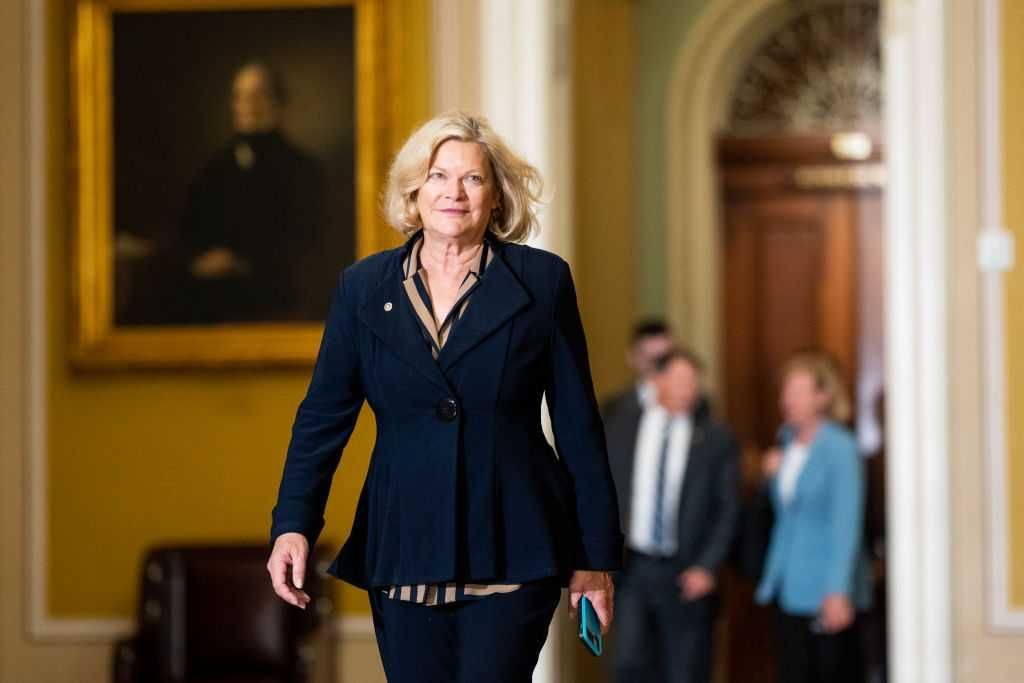
Not a pretty picture. And little excuse. The good news is that the momentum for change isn’t confined to consumers crying out for relief. Led by Sen. Cynthia Lummis (R-Wyo.), key senators are throwing their political weight behind the idea and asking the FCC to unlock our phones.
Although phone lock reform has been held back in the past by valid fraud concerns, as Lummis and her co-signers write in a recent letter to FCC Chairman Brendan Carr, they’re “confident … that the Commission will be able to appropriately balance those concerns by adopting a reasonable waiting period — e.g., 180 days – before a device must be unlocked. Such a period addresses concerns of fraud while still achieving the important objectives that unlocking delivers, including expanding consumer choice, preserving competition, and improving affordability.”
All in all, it’s a slam-dunk policy shift — the kind of low-hanging fruit that easily delivers outsized and long-overdue relief for millions.
Today our phones, tomorrow our bots?
But to bring us back to the bigger picture of transformative technological change in America, unlock reform is more than a one-and-done change. It’s a crucial marker laid down just in time to help set the tone for a freedom-forward, pro-ownership approach to the next-gen devices about to proliferate across American business and private life — drones, robots, the works. In all likelihood, these devices will fall under the purview of the Federal Trade Commission, not the FCC, but, taken together, the principled logic behind mobile unlocking and the FTC’s work preventing smart-home device bricking and forced ecosystem lock-in shows a clear and powerful synergy. Together, the commissions can and should advance a strategic populist policy of ensuring that producers’ software restrictions don’t limit consumers’ physical ownership rights.
At this critical juncture, unlocking the phones is the next step in tech policymaking that preserves American rights while saving Americans money. What could be more American than that?

 David Williams/Bloomberg via Getty Images
 Photo by PATRICK T. FALLON/AFP via Getty Images
 Bill Clark/CQ-Roll Call, Inc via Getty Images
 Tom Williams/CQ-Roll Call, Inc via Getty Images
 Smith never should have approved the subpoenas since they violated the congressional Republicans’ clearly established rights.
 www.theblaze.com