Democrats Protect SPLC By Trying To Censor Truth About ‘Very Fine People’ Hoax From Congressional Record
 SPLC's game plan became 'we're going to create the crisis, we're going to manufacture the crisis,' said Chairman Jim Jordan.
Veterans are speaking out against Democrat congressional candidate Ammar Campa-Najjar for using his military career to amplify his campaign.
Campa-Najjar allegedly referred to himself as a "Navy Officer" in his campaign materials, differing from his actual title of Navy Reserve officer. Because of this alleged discrepancy, Campa-Najjar's campaign has raised eyebrows, since Navy policy requires reservists running for office to accurately disclose their military status.
'Shame on Campa-Najjar and anyone who supported these cynical political stunts.'
The Navy later said officials will be "looking into" Campa-Najjar's campaign in light of the alleged violation of Pentagon policy.
“I supported Ammar in the past, but won’t again,” Elizabeth Perez-Rodriguez, a Navy combat veteran, told the New York Post.
RELATED: This scandal-ridden Democrat just got one step closer to being expelled from Congress
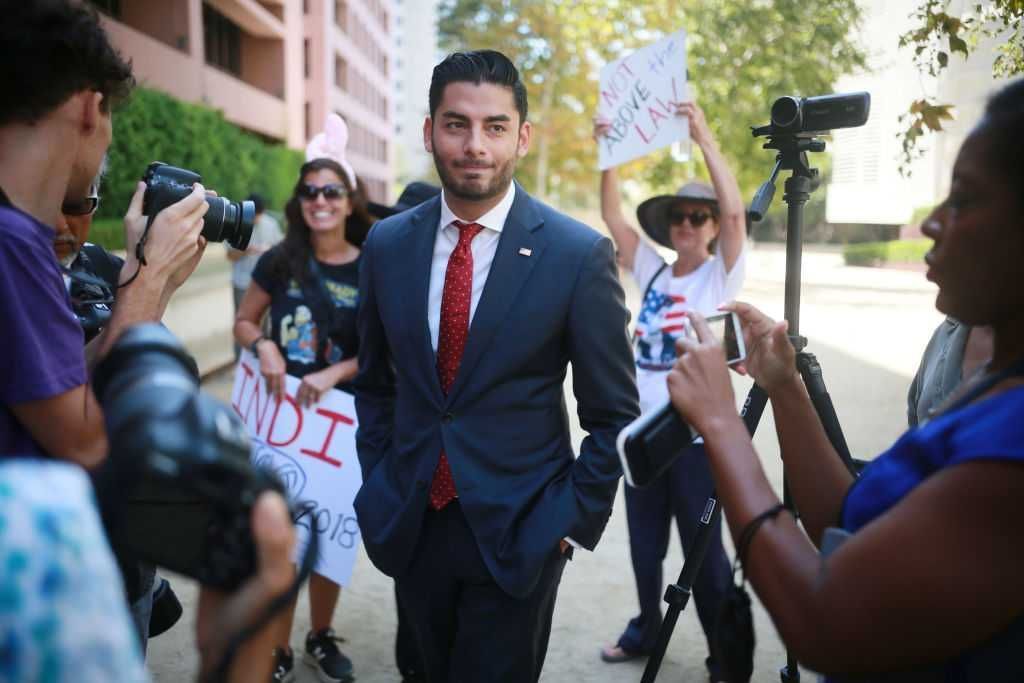
Campa-Najjar, who is notably dating billionaire heiress Rep. Sara Jacobs (D-Calif.), also caused uproar after staging photo opportunities for his campaign website. The photo that caught the most attention was from the Massachusetts National Cemetery, depicting Campa-Najjar near the grave of a Korean War veteran whom he reportedly had no connection to.
"As a combat veteran," Perez-Rodriguez continued, "I can’t stand when political candidates exploit the uniform for politics, and using a veteran’s grave site in your campaign is toxic and disrespectful.”
“Our national cemeteries are sacred ground — not political backdrops," Marine Corps combat veteran Brian Van Riper told the Post. "Using a service member’s grave site at a VA cemetery for political campaign photos is among the most disrespectful, distasteful, and cynical political ploys I’ve ever seen."
"All these allegations are damning and show a complete disregard for what military service and wearing the uniform should mean," Michael Malach, an Army combat veteran, told the Post. "Shame on Campa-Najjar and anyone who supported these cynical political stunts, especially using posed portraits at a deceased veteran’s grave to try and boost his campaign.”
Campa-Najjar's campaign website does list him as a U.S. Navy Reserve officer alongside a disclaimer saying, "Any references to his military rank, service, or photographs in uniform are for identification purposes only and do not imply endorsement by the Department of War or the Department of the Navy."
RELATED: Democrats’ latest victory in deep-red Mar-a-Lago district offers bleak midterm forecast
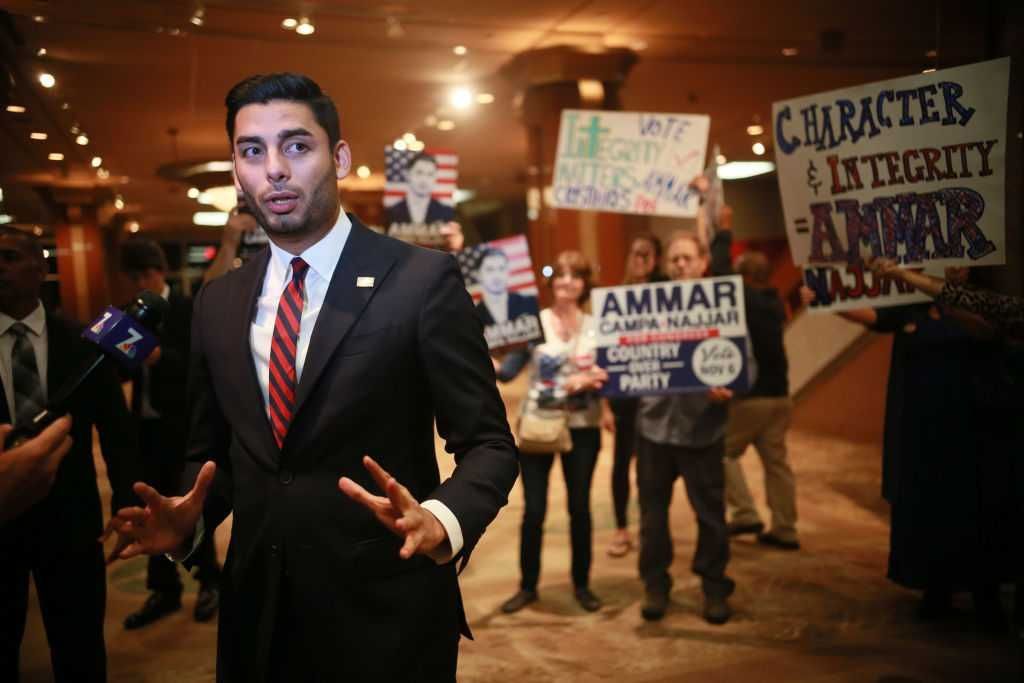
Campa-Najjar's campaign manager, Andi McNew, pushed back against the allegations, saying the cemetery photo was taken while "participating in an official Memorial Day event where he, alongside his unit, honored fallen service members.”
“At no point did the campaign engage in political activity at a VA cemetery, and any suggestion otherwise is a misrepresentation of both the facts and the applicable rules,” Andi McNew told the Post.
This is Campa-Najjar's third congressional campaign. He is now running for California's newly redrawn 48th District against incumbent Republican Rep. Darrell Issa.
Like Blaze News? Bypass the censors, sign up for our newsletters, and get stories like this direct to your inbox. Sign up here!
A new bill before Congress claims it will curb lawsuit abuse. It won’t. In reality, it will limit ordinary Americans’ access to civil courts.
The Protect Third Party Litigation Funding from Abuse Act, sponsored by Rep. Darrell Issa (R-Calif.), would force plaintiffs in “any civil action” to disclose “the identity of any person (other than counsel of record) that has a legal right to receive any payment or thing of value” from the case.
Third-party funding is not clogging courts. It expands access to justice.
Plaintiffs would need to provide that information to defendants and the court. Anyone with a functioning brain can see what will happen next: The names leak, activists and corporate PR shops pick targets, and the people financing the lawsuit get punished for it.
If that sounds like a blackmail scheme, it is. And it would be perfectly legal.
Third-party litigation funding works like this: An individual, company, or organization advances money to a plaintiff or law firm to cover the costs of a lawsuit. In exchange, the funder receives a share of any judgment or settlement. If the plaintiff loses, the funder gets nothing.
The arrangement exists for a reason. Lawsuits can be expensive. Complex cases require investigators, expert witnesses, depositions, document review, and months or years of legal work. Deep-pocketed defendants know they can bury a plaintiff under delays, discovery fights, and endless motions while the meter runs at hundreds (sometimes thousands) of dollars an hour.
Litigation funding helps level that field. It gives plaintiffs a fighting chance against defendants who can afford to grind them down.
Issa calls this “abuse” because hedge funds and speculators sometimes fund cases in hopes of a return. “We believe that if a third-party investor is financing a lawsuit in federal court, it should be disclosed rather than hidden from the world,” Issa said when he announced the bill.
That sounds reasonable only if you ignore what trials are for.
A civil trial asks three questions: Did the defendant do what the plaintiff alleges? Did the defendant’s actions cause harm? If so, what were the damages (if any)? The identity of a funder does not help a jury answer any of them. If anything, it distracts from the merits and invites a side show: the defendant arguing the plaintiff is a puppet and the case is illegitimate because someone with money helped pay the bills. That argument deserves no special protection.
What counts is what the defendant did or didn’t do and whether it hurt the plaintiff. Who finances the plaintiff’s lawyers doesn’t change the facts of the case.
RELATED: A one-way national divorce: Anarchy for them, coercion for us

A successful plaintiff also has the right to spend an award as he or she chooses, including paying debts and obligations incurred to bring the case. Issa’s bill would chill that option by scaring off funders through forced disclosure. The bill doesn’t touch defendants, who can hire every white-shoe law firm on the planet. It targets the side that usually needs help.
Issa’s bill also pretends it’s solving a crisis that doesn’t exist. The number of lawsuits filed each year in the United States, at both state and federal levels, has fallen by roughly one-third since 2012, according to Consumer Shield. Meanwhile fewer than 1% of state civil cases go to trial, and fewer than 2% of federal civil cases do. Most settle or get dismissed. Third-party funding is not clogging courts. It expands access to justice.
The bill also reaches far beyond any plausible federal interest. Federal cases account for only about 1.4% of civil litigation nationwide. States already have authority to regulate litigation funding — and some have. As of July 2025, seven states — Indiana, Kansas, Louisiana, Montana, Oklahoma, West Virginia, and Wisconsin — had regulations governing litigation funding, according to the Washington Legal Foundation. The fact that most states haven’t bothered tells you what lawmakers think: This isn’t a pressing problem.
The broader claim — that litigation funding drives frivolous suits — fails under scrutiny. A 2022 report from the U.S. Government Accountability Office found funders vet cases carefully and avoid interfering in litigation. They do that for a simple reason: They get paid only if the claim succeeds. The report put it plainly: “Funders select the most meritorious cases to fund because they only receive returns when claims are successful.”
Economic reality imposes its own discipline. Third-party funding does not “abuse” the system. It democratizes access to it.
Issa’s bill would do the opposite. By threatening people who finance lawsuits, it would tilt the playing field further toward big corporations and the ultra-wealthy — the parties most able to outspend and outlast everyone else.
Like it or not, civil suits help keep a free society free. They allow ordinary people to hold powerful actors accountable for harm. Restricting access to courts doesn’t stop abuse. It increases it — by giving the powerful more insulation from consequences. That’s the kind of “reform” Americans don’t need.
Popular entertainment has always shaped the public mind in ways politicians can only envy.
Percy Bysshe Shelley once called poets the “unacknowledged legislators of the world.” The idea surfaces memorably in the 1984 Best Picture winner “Amadeus,” where Emperor Joseph II appears more invested in micromanaging Vienna’s opera scene than governing his empire.
Modern technology has magnified that cultural power. Today, many young Americans absorb more of their moral instruction from Netflix than from teachers, pastors, or even parents.
Now Netflix wants to expand that influence dramatically by acquiring Warner Bros. Discovery, a media conglomerate that includes HBO, DC Studios, and franchises such as “Harry Potter” and “Game of Thrones.” The combined entity would control roughly a third of the streaming market and wield unprecedented cultural power.
Democrats understand that politics flows downstream from culture. Allowing Netflix to absorb Warner Bros. would give that worldview control over even more cultural territory.
The scale of the proposed merger raised concerns even for President Donald Trump, who warned last month that it “could be a problem” and confirmed his administration would take an active role in reviewing the deal.
Given the stakes, the question is not abstract. How does Netflix use the power it already holds?
Consider the company’s recent headline-grabbing film, “Queen of Coal,” described as the story of “a trans woman who dreams of working the coal mines” and must battle a town defined by “superstition and patriarchy.”
Inspiring stuff.
Or recall Netflix’s 2020 release of “Cuties,” a French film centered on 11-year-old girls twerking. The filmmakers claimed the movie criticized the sexualization of children. Perhaps that was their intent. Netflix’s marketing department missed the point entirely, replacing the original poster with one featuring preteen actresses in sexualized poses. Public outrage followed, and Netflix eventually apologized.
After George Floyd’s death in 2020, Netflix declared on social media, “To be silent is to be complicit. Black lives matter,” and then set about race-swapping characters across its catalog.
Zoom out further. A report by Concerned Women for America found that nearly half of Netflix’s children’s programming pushes LGBT themes.
Taken together, the pattern is unmistakable. Netflix uses its platform to advance a radical progressive agenda, and scrutiny only confirms it.
The company’s internal culture reinforces the point. Even by Big Tech standards, Netflix skews sharply left. In 2020, 98% of its political donations went to Democrats, compared with 84% at Apple and 77% at Facebook.
CEO Reed Hastings, Netflix’s co-founder and longtime chief executive, donated $7 million in 2024 to a pro-Kamala Harris super PAC and $2 million to California’s redistricting effort last year. In 2017, Hastings told fellow billionaire Peter Thiel that his support for Trump reflected such “catastrophically bad judgment” that it called into question Thiel’s fitness to remain on Facebook’s board.
Hastings has made clear that conservative ideas do not merely deserve debate. In his view, they disqualify those who hold them from serious consideration.
Then comes the revolving door between Netflix and Democratic power.
RELATED: Netflix wants a monopoly on your mind
In 2018, Netflix signed a deal with former President Barack Obama reportedly worth tens of millions of dollars. The results included a slate of progressive documentaries and an apocalypse thriller featuring the line, “Trust should not be doled out easily, especially to white people” — a sentiment both racist and badly written.
Susan Rice offers another example. After serving as Obama’s U.N. ambassador and national security adviser, she joined Netflix’s board during Trump’s first term, left to lead Biden’s Domestic Policy Council, and has now returned to the company.
Democrats understand that politics flows downstream from culture. Allowing Netflix to absorb Warner Bros. would give that worldview control over even more cultural territory.
President Trump has signaled that he understands what is at stake. He has warned that the $82.7 billion deal must undergo rigorous antitrust scrutiny.
As Rep. Darrell Issa (R-Calif.) noted, the merged company would exceed the 30% market-share threshold traditionally viewed as “presumptively problematic” under antitrust law.
But Trump’s concern goes deeper. As an entertainer himself, he grasps the importance of the arts. That understanding explains his hands-on approach to reforming the previously ultra-woke Kennedy Center. It explains his plan to commission 250 classical sculptures for a National Garden of American Heroes. It explains his appointment of Jon Voight, Mel Gibson, and Sylvester Stallone as special ambassadors to Hollywood.
And it explains why he should not allow Netflix to build a woke media monopoly capable of doing more long-term damage to the country than any single election cycle.
President Donald Trump and his administration have long been the targets of lawfare motivated by leftists, stretching back to his first term. Although Democrats have played semantic games to categorize these attacks as anything other than politically motivated, one lawmaker finally said the quiet part out loud.
Democratic Rep. Laura Friedman of California told town hall attendees Monday that she and her colleagues regularly gather in closed-door meetings dedicated to plotting legal attacks against Trump and his administration.
While this practice has become commonplace within the Democratic Party, congressional Republicans are doing what they can to put a stop to it.
"Every single week we have a litigation working group where a large group of us, and I'm talking there's maybe 75 members of the House, sit down every single week with the [attorneys general] to talk about legal strategy," Friedman said. "This is all going on every single week behind the scenes. It is nonstop."
Friedman quickly diluted the severity of her admission by mentioning additional and more common avenues politicians use to attack each other.
"It is nonstop introduction of bills and legislation, nonstop being on social media as much as we can without being throttled, without the, you know, crazy analytics, and doing all these things," Friedman said.
Friedman finally confirmed that Democrats are in fact coordinating behind closed doors to weaponize the justice system against their political opponents. While this practice has become commonplace within the Democratic Party, congressional Republicans are doing what they can to put a stop to it.
In light of Friedman's remarks, it's clear that these safeguards are more important than ever.
In recent weeks, numerous federal judges have blocked many of Trump's executive orders in an attempt to stifle his administration. Most notoriously, U.S. District Court Judge James Boasberg blocked the administration's deportations of illegal migrants from Venezuela despite their affiliation with the violent gang Tren de Aragua.
As a result, both House and Senate Republicans have introduced legislation to combat these rogue judges.
Republican Sen. Mike Lee of Utah introduced the Restraining Judicial Activists Act in late March, which would establish a district court with three judges to check rulings made against the executive branch. At the same time, Republican Rep. Darrell Issa of California introduced the No Rogue Rulings Act, which limits district judges' power of imposing nationwide injunctions. Issa's bill passed the House in early April and is now on its way to the Senate.
In light of Friedman's remarks, it's clear that these safeguards are more important than ever.
Like Blaze News? Bypass the censors, sign up for our newsletters, and get stories like this direct to your inbox. Sign up here!
As President Donald Trump grapples with more than a dozen injunctions, Republican lawmakers have targeted "rogue" activist judges with two new bills.
Rep. Darrell Issa (R-Calif.) introduced the No Rogue Rulings Act to restrict U.S. district judges' ability to issue broad injunctions. The bill passed the House Rules Committee on Tuesday in a 9-4 vote along party lines.
'700 District Court judges shouldn't each have nationwide veto power over a President's national security decisions.'
"The bill would allow a district court to issue a nationwide injunction in a case in which two separate states from two separate judicial circuits are parties — making clear the nationwide nature of the dispute. In such a case, the bill provides for the establishment of a panel of three randomly chosen judges to determine whether to issue a nationwide injunction. Such injunctions may be appealed directly to the Supreme Court," the proposed bill reads.
Since Trump's January inauguration, his administration has already been hit with 15 injunctions, stalling a wide range of initiatives such as the end of birthright citizenship, deportation flights, and the elimination of diversity, equity, and inclusion programs.
Issa told the New York Post that his proposed bill is "a constitutional solution to a national problem."
"Time and again, solitary judges have usurped congressional intent and confronted President Trump, rather than dispassionately interpreted the law," he stated.
New York Republican Reps. Claudia Tenney, Nick Langworthy, and Nick LaLota have co-sponsored the bill.
Tenney pointed out that 67% of all injunctions ever issued have been placed against Trump.
"I am supporting the No Rogue Rulings Act to stop radical judges from imposing nationwide injunctions on President Trump's agenda, which 77 million Americans voted for," she wrote in a post on X.
LaLota stated, "700 District Court judges shouldn't each have nationwide veto power over a President's national security decisions."
Rep. Bob Onder (R-Mo.) called the activist judges' actions "unconstitutional lawfare."
Meanwhile, Sen. Chuck Grassley (R-Iowa) on Monday introduced a similar measure, the Judicial Relief Clarification Act, which aims to "limit federal court orders to parties directly before the court — ending the practice of universal injunctions and clarifying the constitutional role of the judicial branch."
It would require parties to file a class-action lawsuit to receive nationwide injunctive relief.
Grassley stated, "For a number of years, but particularly in the last few months, we've increasingly seen sweeping orders from individual district judges that dictate national policy. Our Founders saw an important role for the judiciary, but the Constitution limits judges to exercising power over 'cases' or 'controversies.' Judges are not policymakers, and allowing them to assume this role is very dangerous."
On Tuesday, two House Judiciary Committee subcommittees held a joint hearing examining judicial overreach. Former Rep. Newt Gingrich (R-Ga.) and Paul Larkin, a senior legal research fellow with the Heritage Foundation, joined the hearing as witnesses.
Larkin told lawmakers, "The practice of issuing nationwide injunctions outside the confines of a certified nationwide class action is mistaken as a matter of law and unwise as a matter of policy."
"It is not the courts that are responsible for creating the laws; the courts are responsible for interpreting it as it applies, but they can only do so in the context of a case or controversy," he added. "Only the Congress can create a law. Any time a court enters a judgment that is tantamount to being a law, the judge has gone too far."
Gingrich called the judges' injunctions against the Trump administration "potentially a judicial coup d'état."
“The notion that unelected lawyers can micromanage the executive branch and override a commander in chief who received 77.3 million votes should trouble every American,” he stated.
Like Blaze News? Bypass the censors, sign up for our newsletters, and get stories like this direct to your inbox. Sign up here!
Under the leadership of Secretary of State Antony Blinken, the U.S. State Department has become fixated on controlling speech under the pretense of guarding against so-called "disinformation."
Fortunately, some of the apparent targets of the agency — reporters Gabe Kaminsky of the Washington Examiner and Matt Taibbi of the "Twitter Files," as well as some Republican lawmakers — have chosen to fight back, calling out the State Department for trying to censor Americans and right-leaning media outlets exercising their First Amendment rights in ways the government doesn't like.
Blaze News caught up with Kaminsky and others wrangled into this ongoing fight for free speech to learn what they have endured in the past and what they hope to accomplish going forward.
These days, it seems that all high-profile Democrats and their allies in the media are obsessed with this trend.
In connection with FEMA funding and the hurricanes that recently battered the Southeastern United States, Vice President Kamala Harris claimed in early October that "there's a lot of mis- and disinformation being pushed out there" by former President Donald Trump.
'Our First Amendment stands as a major block.'
CNN anchor Dana Bash dutifully followed Harris' lead and bragged in an X post that she had asked Harris "about dangerous misinformation coming in part from Donald Trump."
Back in 2022, Harris' running mate, vice presidential nominee Tim Walz (D), bizarrely asserted that "there's no guarantee to free speech on misinformation or hate speech, especially around our democracy."
Speaking at a World Economic Forum event in September, former Secretary of State John Kerry lamented that "if people go to only one source and the source they go to is sick and has an agenda and they're putting out disinformation, our First Amendment stands as a major block to the ability to be able to just hammer it out of existence."
Even with deadly forces of nature flooding a major swath of the U.S., tens of thousands of rapists and murderers from foreign countries stealing into the country, painfully high prices at the pump and in grocery stores, and the ever-present threat of nuclear war, the Democrats have apparently settled on "disinformation" as the most pressing problem facing America today.
The State Department never responded to the series of questions Blaze News submitted about the topic, so it remains unclear how the department defines "disinformation" or how it determines which information is branded "disinformation" and which is considered plain old information.
Despite this lack of clarity, back in 2016, under the Obama administration, the State Department created a subdivision entitled the General Engagement Center, which has as its mission "to recognize, understand, expose, and counter foreign state and non-state propaganda and disinformation efforts aimed at undermining or influencing the policies, security, or stability of the United States, its allies, and partner nations."
In short, the GEC was mainly established to root out "disinformation" propagandized by other countries in order to guard Americans against pernicious foreign influence.
Within just a few years, however, the GEC appears to have devolved into little more than a federal panopticon seeking out Americans and American media outlets that hold disfavored views and then censoring them by allegedly funding disinformation-related organizations, both foreign and domestic.
In January 2023, independent journalist Matt Taibbi famously initiated what became known as the "Twitter Files," a series of exposés revealing alleged ties between the social media platform now called X and various federal agencies.
The first installment of the Twitter Files focused mainly on 2020 — while Trump was still in office — and the increasing number of requests from federal agents and lawmakers to silence accounts over alleged disinformation about COVID-19. According to Taibbi's report, the State Department's General Engagement Center was among the first to flag supposedly "Russia-linked accounts" that promulgated COVID-related messages in various languages to spread disinformation to "a global audience."
By 2021, Joe Biden had been sworn into office, and the GEC then allegedly expanded its efforts to root out disinformation.
To that end, the GEC apparently partnered with the Global Disinformation Index, a London-based organization that ranks various media outlets based on the risk they pose of purveying disinformation. Because GDI is located overseas, the GEC could theoretically send money its way without running afoul of the GEC mission to address only "foreign state and non-state propaganda and disinformation efforts."
And since the GDI included many American outlets on its Dynamic Exclusion List, the GEC appears to have indirectly funded attacks on American media. Blaze Media was among the top 10 media outlets the GDI described as the "riskiest" for disseminating disinformation, as were the Daily Wire, the Federalist, RealClearPolitics, One America News, and the New York Post.
According to reports from Gabe Kaminsky of the Washington Examiner, between October 2021 and March 2022, the GEC gave the GDI a grant of $100,000.
The National Endowment for Democracy, a nonprofit heavily funded by the State Department, apparently gave the GDI an additional grant of more than $750,000, bringing the total given to the GDI by organizations within the State Department's purview to over $850,000.
Neither of those grants has been renewed, the New York Post reported.
'The State Department had numerous opportunities to respond to my reporting on it funding the Global Disinformation Index, but they declined to answer basic questions.'
Rather than engage in introspection after that information became public and assess whether the State Department had gone too far in seeking to silence free speech and the free press, in March 2023, the department apparently compiled a press guide so that agents could defend it against the reports from Taibbi, Kaminsky, and others.
The New York Post eventually got hold of the press guide and published screenshots of it in a damning report last month. All of the screenshots of the State Department's press guide shared by the Post except one is marked "U.S. Department of State" and "not for public release."
According to one screenshot, which appears to be a script for agents to follow in the event they are asked about the relationship between the GEC and the GDI, agents are encouraged to say that the GEC did not invest in the GDI "to blacklist conservative media outlets" but rather to analyze "disinformation efforts in East Asia and Europe."
"The GEC presented GDI with a scope of work to apply its disinformation risk measurement across a set of foreign countries and languages in East Asia and Europe," the script suggests that agents say, according to the screenshot. "GDI was able to expand its disinformation risk measurement across six new languages — Chinese, Japanese, Korean, Vietnamese, Russian and Ukrainian — enabling a more precise focus on [People's Republic of China] and Russian disinformation activities."
"The GEC's work with GDI was limited to counter-disinformation efforts in East Asia and Europe," another screenshot reiterates.
Should a State Department agent be asked whether the GDI ever created "a blacklist of American sites," the script suggests referring the inquirer "to GDI for questions on their activities."
Other screenshots of the press guide indicate that the State Department wanted to go on the offense, seemingly attacking the reporters who covered the relationship between the GEC and the GDI rather than defend the actions of the agency.
In a section entitled "Background for Briefer's Eyes Only," the press guide accuses Taibbi of misrepresenting the facts regarding federal influence over Twitter and Elon Musk of amplifying Taibbi's misrepresentations by retweeting his first Twitter Files thread.
"Elon Musk's retweet of Taibbi's thread insinuates that the [United States government], and the GEC in particular, pressured Twitter to close U.S. accounts of which the USG disapproved," one screenshot says. "The evidence offered for this claim is often missing, inferred, or presented out of context."
The text in the screenshot never explains in what way Taibbi failed to support his claims or offered evidence "out of context."
The State Department press guide also takes aim at Kaminsky, implying that he failed in his journalistic responsibilities by not asking for an interview with State Department officials, even as it admits that Kaminsky "sent questions repeatedly" to the State Department press office, the screenshot shows. The guide even acknowledges that the press office "responded to his requests."
Kaminsky, who reportedly sent the State Department press office nearly a dozen requests for comment between January and February 2023, gave the Post a different version of events. "The State Department had numerous opportunities to respond to my reporting on it funding the Global Disinformation Index, but they declined to answer basic questions," he said.
In a summary page of the press guide, the State Department reiterates the mission of the GEC, that it is geared toward combatting "foreign attempts to spread disinformation and propaganda globally" and that it "does not fund programs in the United States."
Another page of the guide insists that "the GEC does not and has never attempted to moderate content on social media," a screenshot reveals.
In a statement to Blaze News, Kaminsky called that assertion "false."
"That claim is untrue alone based on the GEC's involvement in the lead-up to the 2020 election with the Election Integrity Partnership, a collaboration between colleges, think tanks, social media platforms, and the U.S. government to thwart alleged falsehoods online," he said.
"It makes sense that the State Department — or any other agency — would craft public or non-public press guidance to determine how to respond to reporting that scrutinizes its activities and unearths wrongdoing," he continued.
"Investigative reporting by Taibbi, myself, and other journalists demonstrated that the GEC has been closely linked to efforts by activists to suppress domestic content on social media and also funded entities such as the Global Disinformation Index that aim to thwart U.S.-based voices that the British group disagrees with."
Matthew Peterson, editor in chief of Blaze News, one of the outlets disparaged by the GDI, is likewise incensed that the federal government has seemingly taken aim at its own law-abiding citizens:
The federal government now routinely uses our tax dollars to shape and censor political speech in America. In this case, we see the State Department engaged in an active war against journalists like Matt Taibbi and Gabe Kaminsky and elected officials like Jim Banks who dared to expose their unconstitutional activity. If America is to retain a republican form of government, federal officials cannot be allowed to attack and smear anyone who attempts to discover the truth about what they are up to.
The State Department, the Global Disinformation Index, the National Endowment for Democracy, and Taibbi did not respond to a request for comment.
In addition to Taibbi and Kaminsky, the State Department press guidance obtained by the Post also refers to members of Congress, including Sen. Chris Murphy (D-Conn.) and Rep. Jim Banks (R-Ind.).
Murphy, who has described himself as "one of the bipartisan creators" of the Global Engagement Center, appears to have been included in the press guidance because he issued his own tweet thread in February 2023, claiming that the accusations against the GEC in Taibbi's Twitter Files thread were "MADE UP OUT OF THIN AIR."
According to Murphy, the GEC never "improperly labeled" Twitter accounts as agents of "Russian propaganda."
"All the GEC did was was to note that bots and social media accounts that had previously been proven to be linked to foreign governments were now in the business of spreading anti-U.S. COVID misinformation. That's it," he wrote.
'The Putin regime and the Biden-Harris administration both hate free speech, and that’s why they targeted me.'
The reasons for including Rep. Banks in the State Department press guidance are less clear, especially since the key reference to him in the document appears to be a misquotation of a statement Banks gave to Kaminsky.
For an article published February 9, 2023, Banks told the Washington Examiner: "House Republicans will be hauling these bad actors before Congress, and I absolutely support legislation to ban federal funding of anti-free-speech groups."
However, the quotation attributed to Banks that appears in the State Department press guidance, according to a screenshot shared by the Post, looks markedly different: "The Republicans of the House of Representatives will bring these bad actors to justice to Congress, and I absolutely support the legislation banning federal funding for the fight against freedom of speech."
In a letter dated September 16, 2024, and addressed to Secretary of State Blinken, Banks indicated that the cause for the discrepancy is that the State Department cited "RIA FAN (Russia)" as the source for Banks' statement, not Kaminsky or the Washington Examiner.
The ultimate effect of the GEC's "intentional misquotation," Banks argued in the letter, was to give "the impression that [he] had been speaking with a Russian propaganda outlet."
"The State Department, in defense of its domestic so-called 'disinformation' operation, purposefully spread disinformation about a U.S. lawmaker," the letter continued. "This is a sloppy and hypocritical lie and it is typical of the Biden-Harris State Department’s repeated attacks on the First Amendment and Americans’ free speech rights."
Kaminsky is likewise troubled by the apparent misquotation of Banks, telling Blaze News that it raises "concerns about speech suppression."
"The State Department's decision to cite the Russian misquotation, which did not circulate among U.S.-based readers, was an apparent effort to unfairly link Banks to a foreign adversary. Some would call that disinformation. Ironic, no?"
In a statement to Blaze News, Rep. Banks called out Russia and the Biden-Harris administration as enemies of free speech.
"Russia sanctioned me for being an enemy of Vladimir Putin, and now the Biden State Department is falsely smearing me as a Russian propaganda booster," he said. "The Putin regime and the Biden-Harris administration both hate free speech, and that’s why they targeted me."
About a week after Banks issued the letter to Blinken, Rep. Darrell Issa (R-Calif.) wrote a letter of his own, claiming the GEC was beyond hope and demanding its outright dissolution.
"By smearing anyone who disagrees with it as a Russian stooge, this network conflates U.S. citizens with a U.S. adversary, as State Department talking points did to my colleague Representative Jim Banks and the award-winning journalists Gabe Kaminsky and Matt Taibbi in a scheming sleight of hand that ruled out of bounds political opinions and fact-based reporting it opposed but cannot refute," Issa said.
"Mr. Secretary: It is time for this failed entity to be held accountable. It is time to bring an end to the Global Engagement Center," his letter closed.
In a statement to Blaze News, Issa said:
The First Amendment rights of the American people are threatened not only by malign actors in the EU, U.K., or Brazil — but by our own State Department and specifically the Global Engagement Center. There truly is a Censorship Industrial Complex at home and abroad, and our opposition to it must be no less comprehensive. Congress can’t look away from this continuing scandal that grows worse with every revelation. We need to be committed and creative if we’re going to win the fight for free speech and a future without the GEC is a step in that right direction.
Issa may soon get his wish. A State Department appropriations bill that has already passed the House and that will soon be under consideration in the Senate seeks to strike funding for the GEC based on its alleged ties to American censorship.
Ever since Taibbi, Kaminsky, and others exposed the apparent attempts at the Global Engagement Center to censor Americans in defiance of the First Amendment, elected Republicans and some watchdog groups have taken action against it.
'One of the most egregious government operations to censor the American press in the history of the nation.'
Back in December, Republican Texas Attorney General Ken Paxton joined the Daily Wire and the Federalist in filing a lawsuit against the State Department for allegedly "actively intervening in the news-media market to render disfavored press outlets unprofitable" by sending taxpayer dollars to help fund the Global Disinformation Index and a similar group called NewsGuard.
The lawsuit further alleged that the GEC implemented "one of the most egregious government operations to censor the American press in the history of the nation."
In response to a request for comment, a spokesperson from NewsGuard told the Post that the lawsuit “inaccurately portrays” NewsGuard’s relationship with the State Department.
"NewsGuard does not offer any technology that censors or blocks any content, or that blocks ads on content,” the spokesperson continued. "Instead, we provide information — our assessments of sites — so that our clients can decide for themselves where to place their ads or which content to amplify, and each client decides for themselves how to use that data."
Following the bombshell report from the New York Post that made public the State Department's press guidance, a group identified as the Functional Government Initiative filed Freedom of Information Act requests in the hopes of uncovering further details about the agency's alleged attempts to malign Kaminsky, Taibbi, Banks, and others in defense of the GEC.
In its requests, the Functional Government Initiative also asked for certain communications involving Blinken and other top State Department officials dating all the way back to January 2023. The aim, FGI spokesperson Pete McGinnis told the Examiner, was to see "who was involved in the blacklisting efforts" and "just how high up the chain this memo was guiding their media strategy."
"The reporting on the Biden-Harris administration’s censorship clearly struck a nerve at the State Department."
Like Blaze News? Bypass the censors, sign up for our newsletters, and get stories like this direct to your inbox. Sign up here!


 www.theblaze.com