Today In Republicans Being Useless: Murkowski Tries (But Fails) To Sink Blanche Confirmation

The competition to see who the most shallow, feckless Republican in the U.S. Senate can be tight. But somehow, Alaska’s Lisa Murkowski always finds a way to come out on top. The Last Frontier State’s senior senator announced on Friday that she will be joining her pal Sen. Susan Collins, R-Maine, in opposing Todd Blanche’s […]

Anti-Trump Republican senator vows to fight Todd Blanche's confirmation — because of course she will


U.S. Sen. Lisa Murkowski of Alaska — a nominal Republican up for re-election in 2028 — appears desperate to undermine the MAGA agenda and prevent President Donald Trump from getting his ducks in a row.

Murkowski — who in recent months repeatedly voted against funding for U.S. Immigration and Customs Enforcement and Customs and Border Protection; voted to reign in Trump's war powers; voted to block Trump's tariffs; voted unsuccessfully to keep taxpayers on the hook for USAID and other foreign funding; voted against multiple Trump nominees, including Secretary of War Pete Hegseth and Under Secretary of the Navy Hung Cao; campaigned against the SAVE America Act; and complained with Democrats about ex-FBI Director James Comey's indictment — revealed Friday she will vote against Todd Blanche's confirmation for attorney general.

'She’s not good.'

With the continued absence of U.S. Sen. Mitch McConnell (R-Ky.), this effectively means that the fate of Blanche's confirmation could be decided by Bill Cassidy — a U.S. senator whose hopes of a third term Trump helped dash in Louisiana's May Republican primary.

Murkowski, who started the year with an approval rating of 37%, noted in a lengthy X post that she has had numerous "constructive meetings" with Blanche and credited him not only as being "decent and capable" but also as having "made several noteworthy decisions that will benefit our state and the nation."

The 69-year-old senator nevertheless vowed to "oppose his nomination."

It appears Murkowski is less opposed to the man and more opposed to the administration. After all, some of her complaints have to do with actions taken at the Justice Department prior to Blanche's April promotion to acting attorney general.

RELATED: Mitch McConnell releases new statement about his health status — but he's not yet returning to the Senate

Tom Williams/CQ-Roll Call, Inc/Getty Images

"The politicization — even weaponization — of the Department did not start with this administration but has accelerated during it," wrote Murkowski. "I take issue with the handling of the release of the Epstein files; the sweeping immunity protections granted to the president, his family, and their businesses; the statements that have been made to anti-abortion groups; and the repeated targeting of individuals ranging from former administration staff to sitting U.S. senators."

Murkowski also expressed skepticism about the scrapping of the $1.8 billion "anti-weaponization" fund that would have compensated MAGA victims of Democratic lawfare, noting that while it was taken off the table "because this nomination is pending and the Senate has leverage," there "is no telling what the future holds."

The senator said in conclusion that she does not have confidence that Blanche can "check the worst impulses of this administration."

There is no love lost between Trump and Murkowski.

"I'm against Murkowski," the president recently told Punchbowl News. "I do more for Alaska than any president in history. No president’s done for Alaska what I’ve done. She’s not good."

In June, Trump called the Alaskan U.S. senator "Trump deranged."

Murkowski is not, however, the only Republican lawmaker keen to torpedo Blanche's confirmation.

U.S. Sen. Susan Collins — the Maine Republican whose challenger in the midterms is a leftist reportedly married to his second cousin — complained that while Blanche is a "capable lawyer," he "has taken several actions that have further eroded the Department's independence."

Cassidy, a vociferous Trump critic and the remaining undecided Republican, has declined to indicate whether he'll support Blanche, reported The Hill.

The Senate is expected to vote Friday or sometime over the weekend to get the ball rolling on a final confirmation vote.

White House press secretary Karoline Leavitt told CNN in a statement, "Todd Blanche is exceptionally qualified and should be confirmed as the next attorney general of the United States so the administration can continue to keep America safe."

Like Blaze News? Bypass the censors, sign up for our newsletters, and get stories like this direct to your inbox. Sign up here!

Abortion by mail is putting women in grave danger


U.S. Senator Josh Hawley (R-Mo.) recently asked the Department of Justice to open a criminal investigation into the abortion group Plan C.

According to Hawley’s complaint, Plan C teaches Americans how to obtain chemical abortion drugs in violation of state law and advises users to conceal their activity through privacy-focused browsers, virtual private networks, and encrypted email.

Lawmakers are rewarding an industry that treats the isolation of women as empowerment and the removal of medical oversight as progress.

The complaint raises a larger question: How much risk is the abortion industry willing to impose on women and girls in pursuit of unrestricted access?

Recent cases have shown how easily men can obtain mifepristone online and use it to coerce or drug women. Yet the industry continues pressing to remove safeguards, minimize medical supervision, and treat mail-order abortion as ordinary consumer health care.

Congress, meanwhile, recently allowed taxpayer funding for Planned Parenthood to resume, despite sustained public opposition to federal support for the abortion provider.

That decision is especially troubling after the New York Times reported last year that Planned Parenthood was “in crisis.” The story described understaffed clinics, poor conditions, inadequate care, and botched procedures. Planned Parenthood has offered little public evidence that those problems have been corrected.

The pattern is difficult to ignore. Again and again, the abortion industry’s demand for fewer restrictions comes at the expense of basic standards of safety, medical care, and accountability.

Republican lawmakers should follow Hawley’s lead. Organizations that facilitate illegal access to abortion drugs or help users evade state safeguards should face scrutiny. Congress and the administration should also restore protections abandoned in recent years.

Chemical abortion offers the clearest example of what deregulation has produced.

During the COVID-19 pandemic, the Biden administration removed the long-standing in-person dispensing requirement for mifepristone. Women and girls may now obtain the drug through online providers without first seeing a doctor.

That convenience carries serious risks.

RELATED: ‘Like an Amazon shopping experience’: New investigation uncovers mail-order abortion for teens

YouTube/AAPLOG Pro-Life Medical Experts

Mifepristone can produce dangerous complications when used later in pregnancy or by women with certain medical conditions. It cannot treat an ectopic pregnancy, which may become life-threatening without prompt diagnosis. An online questionnaire cannot perform an ultrasound, conduct a physical examination, or reliably detect coercion.

Many online providers do not require proof that a patient has received an ultrasound or an in-person medical evaluation.

My colleague Dr. Christina Francis, a board-certified obstetrician-gynecologist, recently tested one such system. She told an online abortion provider that she was 13 years old and had a history of ectopic pregnancies, cesarean sections, an intrauterine device, and other serious complications.

Any one of those disclosures should have prompted further screening. Her stated age alone should have raised immediate concerns about abuse, consent, and parental involvement.

Instead, the provider accepted her payment and mailed the drugs.

Women and girls have a right to understand what can go wrong before they are left to experience the consequences alone.

The mail-order system has also enabled horrifying acts of coercion and abuse.

An Army captain was convicted after impregnating a subordinate and giving her mifepristone without her consent. A Texas attorney repeatedly slipped abortion drugs into his wife’s drinks. In Louisiana, a young man used his girlfriend’s information to order mifepristone and then isolated and pressured her into taking it. An Ohio doctor forced the drug down his girlfriend’s throat.

Those are just the cases that became public. How many other women have suffered in silence? How many have lost pregnancies without knowing that a partner drugged them? How many were pressured into abortions while isolated from family, doctors, or anyone positioned to recognize the abuse?

Mail-order abortion removes the very people most likely to detect coercion: physicians, nurses, clinic staff, parents, and trusted family members.

It also leaves women to manage bleeding, pain, fear, and possible medical emergencies without direct supervision.

Research cited by pro-life advocates indicates that many women report feeling pressured into abortions they did not want or that conflicted with their values. Whatever the precise scale, coercion is a real and documented danger. Policies should make it easier to detect, not easier to conceal.

RELATED: Takeaways from the latest Supreme Court abortion intervention

Tasos Katopodis/Getty Images

Yet prioritizing access over safety increasingly appears to be a feature rather than a bug of the abortion industry’s model.

Plan C says it seeks to “transform access to abortion in the U.S. by normalizing the self-directed option of abortion pills by mail.” That mission statement emphasizes access and normalization. It says nothing about medical screening, coercion, abuse, or the risks of taking the drugs without an examination.

A website that teaches users to order abortion drugs secretly and evade state laws does not merely serve women seeking abortions. It may also serve abusers looking for a discreet way to obtain drugs they can use against women.

The beneficiaries are obvious: organizations that sell or distribute the pills and men willing to use them as instruments of coercion.

Lawmakers have tolerated this system for too long. They have permitted the weakening of medical safeguards, restored funding to Planned Parenthood, and resisted efforts to require in-person care for chemical abortion.

They are rewarding an industry that treats the isolation of women as empowerment and the removal of medical oversight as progress.

Hawley and a growing coalition of pro-life groups are right to demand accountability.

Congress and the Justice Department should investigate organizations that knowingly help users violate state law. Federal regulators should restore meaningful medical safeguards for mifepristone. Lawmakers should also ensure that minors, abuse victims, and women with dangerous medical conditions are not abandoned to an online form and a package in the mail.

Women and girls deserve better than an abortion system built around secrecy, isolation, and plausible deniability.

Dueling Court Orders Create ‘Men’s Prison Within A Women’s Federal Prison’

Male inmates claiming to be females are seeking full integration with women.

The Biden autopen scandal has one big winner: Anthony Fauci


Anthony Fauci is probably going to skate. He should not. But nearly every institutional and political incentive now points toward that outcome.

Americans who watched Fauci invoke the Fifth Amendment more than 100 times before the Senate are understandably furious. They may also be headed for an epic letdown when the man they most want held accountable resumes his life in pompous peace.

Public frustration will rise when people realize that Fauci may leave Congress untouched after pleading the Fifth more than 100 times.

The first obstacle is the legal uncertainty surrounding Fauci’s autopenned pardon.

The pardon was signed by autopen, and substantial evidence raises questions about whether President Biden personally authorized it. A presidential pardon is an authority only the president may exercise.

In Fauci’s case, the written record includes an email from Biden chief of staff Jeff Zients on the final evening of the administration. Zients emailed: “I approve the use of the autopen for the execution of all of the following pardons.”

Biden later told the New York Times in an interview that he had approved broad categories of pardons rather than, in every instance, specific names.

That admission came from the same newspaper that had initially dismissed the Oversight Project’s autopen disclosures in an article headlined “How an Autopen Conspiracy Theory About Biden Went Viral.” Within months, the Times had moved from ridicule to damage control.

The basic facts are therefore established: Fauci’s pardon was executed by autopen, and serious questions remain about Biden’s awareness and authorization.

President Trump has called the autopen controversy the scandal of the century and declared the affected actions “VOID, VACANT, AND OF NO FURTHER FORCE OR EFFECT.” The Department of Justice, however, has behaved as though that declaration carries no legal consequence.

That gap between political assertion and prosecutorial action is decisive. Questioning a pardon’s validity in public is one thing. Charging someone whose defense rests on that pardon is another. So far, the Justice Department has shown no appetite for testing the issue in court.

Fauci’s Senate testimony exposed the contradiction at the center of his position. He repeatedly invoked the Fifth Amendment, arguing that Sen. Rand Paul (R-Ky.) was trying to lure him into statements that could support a perjury referral.

RELATED: The Biden tapes blow open the autopen scandal

Celal Gunes/Anadolu/Getty Images

In his opening statement, Fauci said: “The only conclusion I can reach is that the sole reason he is calling me before this committee is to get me to say something — anything — that could vindicate his repeated public pledges that I end up, in his words, ‘behind bars.’”

A witness may invoke the Fifth Amendment when he genuinely believes his answers could expose him to criminal liability. The privilege is not a general escape hatch from politically uncomfortable questioning.

Fauci’s plausible claim of criminal exposure rests, at least in part, on the uncertainty surrounding his pardon. But relying on that uncertainty means conceding that the pardon may not be beyond challenge.

If Fauci insists the pardon is unquestionably valid and no prosecution is possible, he weakens the basis for invoking the Fifth. If he claims a real risk of prosecution, he implicitly acknowledges that the pardon may not protect him.

The same cloud that threatens the pardon also strengthens his Fifth Amendment claim.

That sounds like vulnerability. In practice, it may protect him.

There is still no sign that the Justice Department plans to prosecute Fauci or anyone else in a case designed to test an autopen action. The department has not challenged a single autopenned pardon or commutation.

Worse, the Trump administration continues releasing offenders whose sentences Biden shortened by autopen. The executive branch is carrying out the very orders the president has publicly described as nullities.

For the Oversight Project, that contradiction is more than theoretical. It’s incredibly frustrating. Putting violent felons back on the street is difficult to reconcile with the claim that autopenned acts are void.

Could Congress hold Fauci in contempt for invoking the Fifth rather than answering questions? Possibly. Probably not.

Fauci would likely show enough basis to argue that Paul sought a criminal referral and that the uncertainty surrounding his pardon created a genuine risk of prosecution.

Any challenge would probably be litigated in federal court in Washington, D.C., a venue far friendlier to Fauci than many others. That venue alone improves his odds.

The political barriers are even greater. There are almost certainly not enough votes in the Senate to pursue contempt, both because of uncertainty over whether Fauci’s conduct crossed the legal line and because senators fear accusations of political weaponization.

Getting 60 votes to overcome a filibuster is a fantasy. Even clearing Paul’s committee, divided 8-7, may prove difficult. Senator James Lankford (R-Okla.) has already expressed some sympathy for Fauci’s position.

Paul has suggested another path: If the committee approves contempt on Thursday, he could refer the matter directly to the Justice Department or pursue a civil action.

RELATED: Two Americas, under Fauci, with liberty and justice for none

Chip Somodevilla/Getty Images

Fauci would immediately argue that a committee cannot exercise the contempt power of the full Senate. He would contend that without a vote of the whole chamber, there is no valid contempt finding to enforce.

The courts are likely to agree. Which leaves the public exactly where it began.

Congress has little chance of imposing consequences. The only meaningful route runs through the Justice Department: charge Fauci, force litigation over the pardon, and finally test whether Biden lawfully authorized it.

That would require the department to abandon the passivity it has displayed so far.

Public frustration will rise when people realize that Fauci may leave Congress untouched after pleading the Fifth more than 100 times.

The useful response is not another round of televised outrage. It is sustained pressure on the Justice Department to treat autopenned actions the way Trump himself described them: null and void.

Senate Advances Todd Blanche Nomination for Attorney General

Blanche advanced out of committee, but there are more Senate Republicans whose support is unclear to confirm him in a floor vote.

Federal court SLAPS down New York and hands victory to Trump and ICE


A federal court issued a preliminary ruling that blocked New York officials from banning federal immigration agents from wearing masks and other coverings.

Democratic New York Gov. Kathy Hochul signed the Face Covering and Identification Acts in May in order to rein in ICE operations in the state.

'We stand firm in our belief that masked agents do not make New York safer, and our offices are reviewing all legal options at this time.'

The Department of Justice sued against the order and argued that it violated the "sovereign function" of the United States.

Linda Fang of the New York State Attorney General's office argued that the law did not contradict any law issued by the federal government.

"When the federal government has not spoken, it can be subject to general rules that impact its function," Fang said.

U.S. District Judge Mae D'Agostino sided with the government in the ruling Monday.

"The United States has demonstrated a likelihood that it will succeed on its claim that the Face Covering and Identification Acts directly regulate federal officers in violation of the Supremacy Clause," D'Agostino wrote.

However, D'Agostino allowed New York to continue banning cooperation agreements between local governments and ICE.

The judge described the ban as the "appropriate means of furthering New York's legitimate interests in protecting public welfare and choosing how state and local resources are expended."

New York Attorney General Letitia James and Gov. Hochul released a joint statement about the ruling.

"As we have said from the start, New York’s ban on 287(g) agreements is legal and will keep our communities safe. Local law enforcement should be focused on local matters, and New York taxpayers should not have to foot the bill for any collaboration with ICE," the joint statement reads.

"While the court enjoined enforcement of New York's mask ban, we stand firm in our belief that masked agents do not make New York safer, and our offices are reviewing all legal options at this time," they added.

RELATED: Trump is reportedly FURIOUS at Jeanine Pirro — and may fire her

Democratic New York state Sen. Patricia Fahy said officials were likely to appeal the decision.

"We always knew there was a constitutional debate on this," said Fahy. "But either way, we know that the push from us, along with others, has been effective in sending the message that this was totally outrageous — the actions of ICE."

Like Blaze News? Bypass the censors, sign up for our newsletters, and get stories like this direct to your inbox. Sign up here!

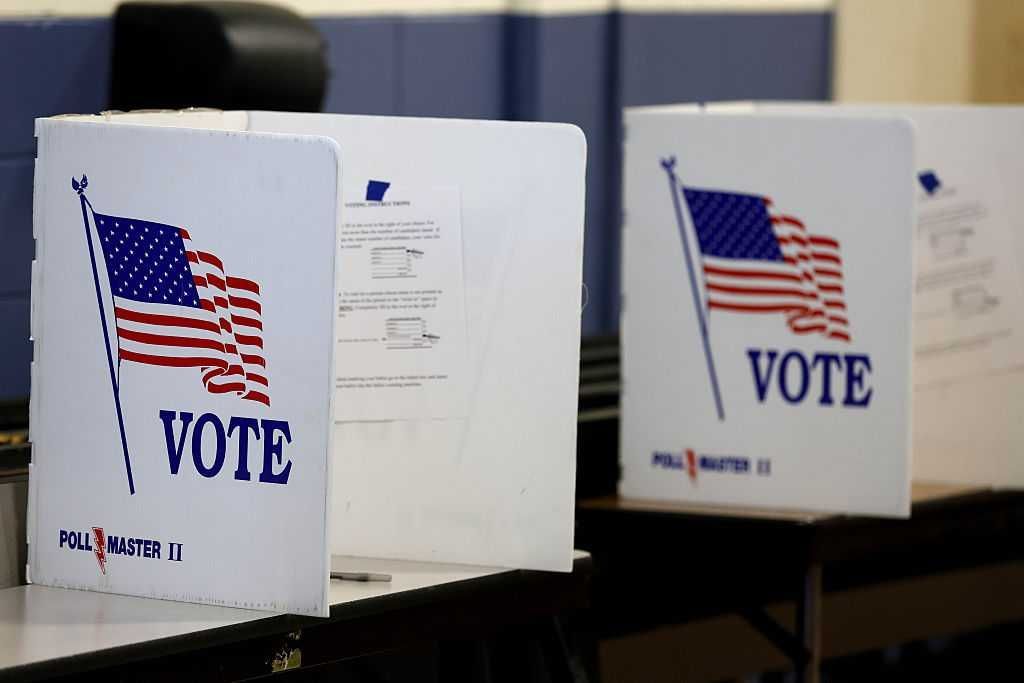
Democrat governor DEFIES DOJ investigation into noncitizen voting — DOJ vows to press on


The Department of Justice has announced an investigation into noncitizen voting in New Jersey, but the state's Democratic governor is resisting the probe.

New Jersey Gov. Mikie Sherrill (D) admitted on July 21 that about 6,600 noncitizens had been mistakenly registered to vote, and of those, about 400 cast votes.

'NJ has a legal duty to keep ineligible voters off its rolls ... DOJ will get this information through all legal means!'

She blamed the wrongful registrations on a "software error," though the company working with the Motor Vehicle Commission countered that all the information it transmits "must still be validated and adjudicated by the Division of Elections."

The Department of Justice responded by demanding that the governor hand over a list of those voters, but Sherrill has rejected the order.

"Today, I informed [Assistant Attorney General Harmeet Dhillon] that New Jersey will not provide the personal information of thousands of New Jersey residents. The request had no legal basis, and I will always protect New Jerseyans' personally identifiable information," Sherrill wrote on social media Tuesday.

She posted her letter response, which claimed that the request violated federal laws, including the Privacy Act.

On Wednesday, Dhillon fired back.

"Gov. Sherrill’s refusal to cooperate with federal law enforcement does nothing to protect law-abiding NJ voters," she responded on social media. "NJ has a legal duty to keep ineligible voters off its rolls, & our request is grounded in that legal authority. DOJ will get this information through all legal means!"

Sherrill had accused the Trump administration of weaponizing the government when asked if she would comply with the demand from the Justice Department.

"As I have said, I am not in the habit of turning over private, identifying information of the citizens of New Jersey," said the governor to a reporter. "This federal government is weaponizing the government against individuals that disagree with them. They weaponized my private data against me in my election, and so I am working to protect people and their private data here in New Jersey."

RELATED: ICE drops fiery response to Democratic governor suing to block new detention center

Sherrill previously said the 400 noncitizens who voted were scattered across the state and were a mix of Republicans, Democrats, and unaffiliated.

She also said they were immediately taken off of the voter rolls as soon as her administration discovered the error, which she claims was made under her predecessor.

Like Blaze News? Bypass the censors, sign up for our newsletters, and get stories like this direct to your inbox. Sign up here!

New Audio Shows Biden’s Senility Started Long Before He Became President

The recordings come compliments of the Oversight Project, a government watchdog that fought for more than two years to bring them to the public.