One crash, one derailment — and Congress still can’t follow the data
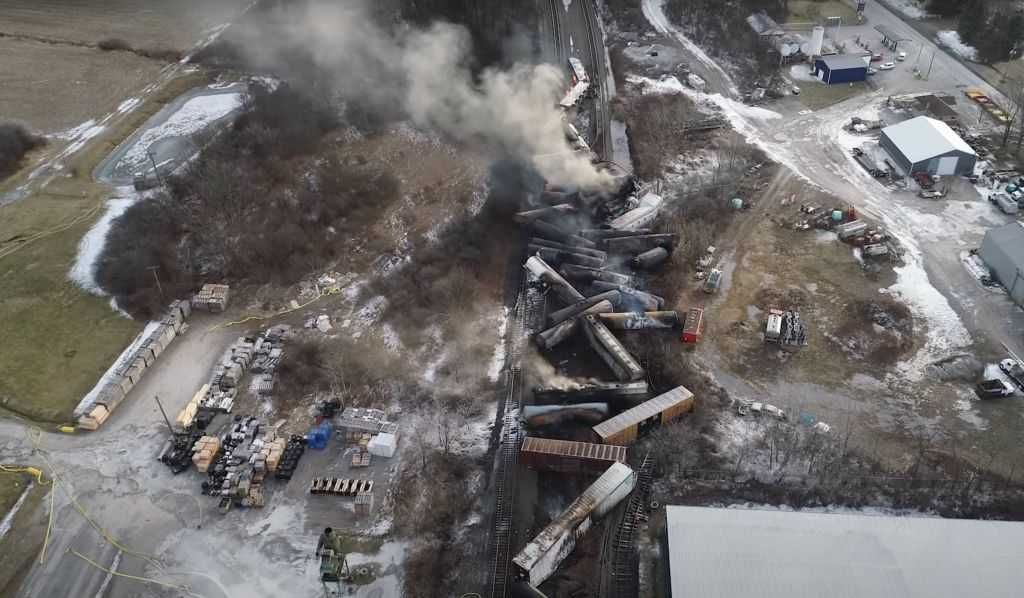


After a midair collision and a train derailment, Congress faces a simple test: Will it follow the evidence?

In aviation, the Senate’s ROTOR Act would mandate improved aircraft surveillance technology after last year’s deadly midair collision involving a military helicopter and a passenger jet. Yet earlier this month, the House failed to advance the bill after Pentagon opposition — sidelining broader use of Automatic Dependent Surveillance-Broadcast, a system that likely would have prevented that tragedy.

Rail risks being locked into prescriptive labor mandates, while aviation safety is undermined by incomplete adoption of proven technology. Neither sector is getting what it needs.

At the same time, a group of senators reintroduced the Railway Safety Act, branding it “data-driven” while again pushing minimum crew mandates — despite no empirical evidence that larger crews reduce accident rates — in response to the 2023 East Palestine derailment.

The impulse is understandable. When tragedy strikes, Washington acts. But acting quickly is not the same as acting on evidence.

If safety is truly the goal, Congress needs to ask a harder question: What actually reduces risk?

The data point in a clear direction. Human error dominates transportation accidents. And the most consistent safety gains in modern transport have come not from adding more people into systems but from improving system design, automation, and structured safety management.

Human error is the core problem

In 2024, roughly 40,000 Americans died in motor vehicle crashes — far outpacing most developed countries on a per-capita basis, according to the National Highway Traffic Safety Administration.

By contrast, aviation and rail — sectors that have embraced automation and safety management systems — post dramatically lower fatality rates. Commercial aviation in developed countries now experiences fatal accidents at rates below 0.1 per million departures. Federal Railroad Administration data show train accident rates have fallen 33% since 2005, with derailments down significantly and human-factor incidents continuing to decline.

The lesson is straightforward: When systems are designed to reduce human error, safety improves.

RELATED: Female Black Hawk pilot didn't follow orders before horrific crash: Report
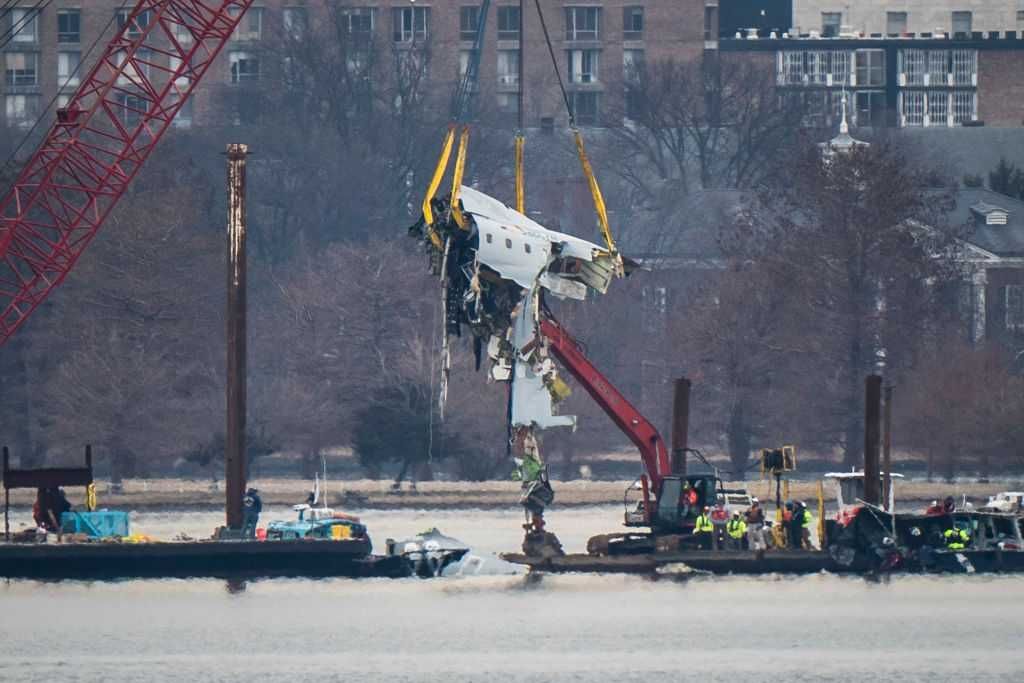
Photo by Jabin Botsford/The Washington Post via Getty Images

Automation works — with caveats

Fully autonomous and semi-autonomous vehicle systems have posted lower crash rates in controlled environments. These results require continued scrutiny and larger data sets, but the direction is clear: Reducing reliance on human reaction time reduces collisions.

The same logic applies in aviation and rail.

Automation now governs the vast majority of routine commercial flight operations. Positive train control has sharply reduced train-on-train collisions and overspeed derailments.

Consider last year’s midair collision. Broader, uninterrupted use of ADS-B In and Out would have provided precise real-time traffic awareness to pilots and controllers. The technology exists to prevent exactly this type of conflict, a point highlighted in the BlazeTV documentary “Countdown to the Next Aviation Disaster,” which presaged the January 2025 Reagan National Airport tragedy. Yet expanded deployment has failed to advance despite bipartisan Senate support.

In rail, meanwhile, some lawmakers are moving in the opposite direction — toward mandates for more personnel.

Symbolic safety vs. structural safety

The East Palestine derailment stemmed from a mechanical failure — an overheated bearing — not a shortage of crew members. There were three crew members on board.

Adding personnel would not have prevented a bearing from overheating. Predictive maintenance systems, sensor networks, and better data integration are the tools designed to catch precisely that kind of failure.

Yet the RSA would codify minimum crew requirements across freight rail operations, regardless of route, cargo type, or level of automation.

This isn’t primarily about risk analysis. It reflects political incentives.

Organized interests exert concentrated influence. Diffuse beneficiaries — consumers, shippers, taxpayers — do not.

Labor interests can organize to protect jobs. The Pentagon can block safety rules it opposes. But the public — which wants safer transportation — is too diffuse to mobilize around specific, technical policy choices. The result is a grab bag of special-interest “safety” measures rather than coherent, risk-targeted reform.

RELATED: Trucks destroy roads, but railroads — yes, rail! — can save taxpayers billions
Photo by Brandon Bell/Getty Images

Focus on what works

Freight railroads in the United States are privately funded and capital intensive, investing billions annually in track upgrades, advanced detection systems, and predictive maintenance. Rail remains one of the safest ways to move goods over land because sustained technological improvement compounds over time.

By contrast, the Federal Aviation Administration — a government-run system — has struggled to modernize needed surveillance and air-traffic technologies at speed and at scale. In civil aviation, the FAA has deployed ADS-B across controlled airspace, dramatically improving traffic surveillance and situational awareness. But gaps remain where some defense aviation actors are not required to fully transmit or receive ADS-B data.

Rail now risks being locked into prescriptive labor mandates, while aviation safety is undermined by incomplete adoption of proven collision-avoidance technology. Neither sector is getting the policy it needs.

As Congress considers the RSA, lawmakers should prioritize provisions that directly reduce accident probability. Decades of transportation data point to a consistent lesson: Safety improves when systems are engineered to anticipate and correct human limitations — not when policymakers assume more humans automatically mean more safety. One-size-fits-all crew mandates don’t meet that test.

Nor should Washington abandon expansion of ADS-B and other proven collision-avoidance technologies. The system exists to prevent the very type of tragedy we witnessed. It shouldn’t take another collision for Congress to act.

The evidence isn’t ambiguous. Technology-driven risk reduction works. Symbolic mandates do not. If lawmakers are serious about safety, they need to focus on what demonstrably prevents accidents — and have the discipline to follow the data.
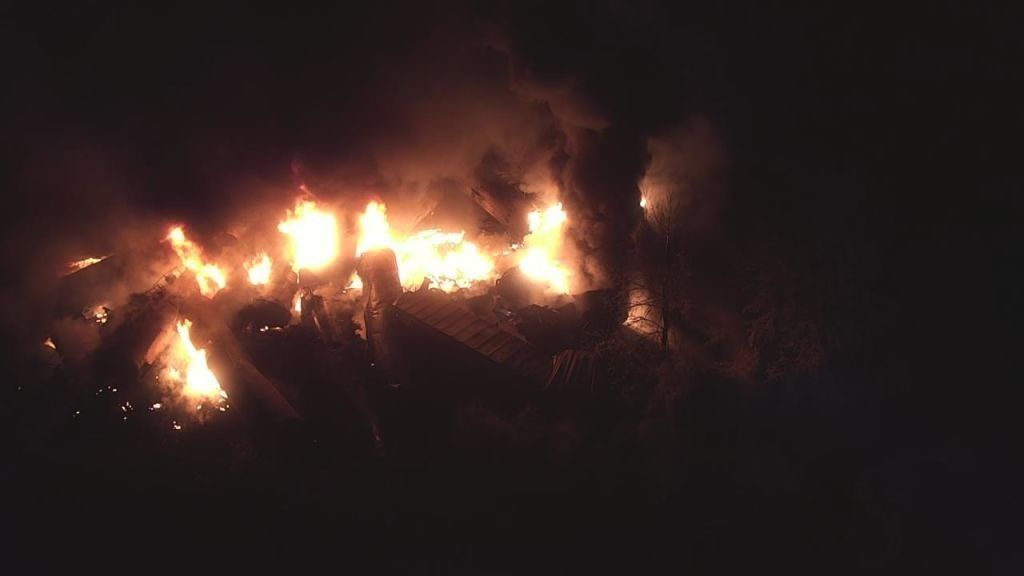
East Palestine not forgotten: Vance confirms Trump admin will study fallout of nightmarish train disaster


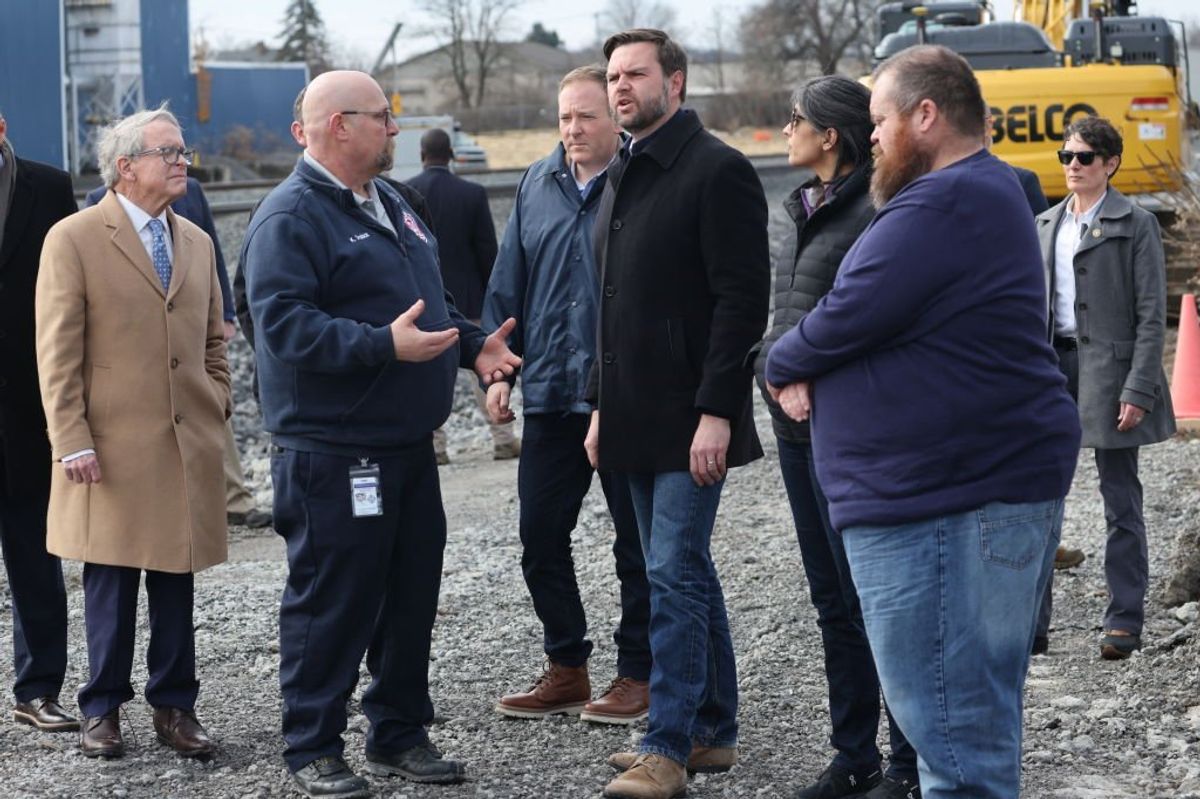
Vice President JD Vance visited East Palestine, Ohio, on the second anniversary of the Feb. 3, 2023, Norfolk Southern train disaster, which darkened the sky over the village with hazardous chemicals, poisoned the surrounding environment, and threatened the health of nearby residents.

"President Trump just wanted to deliver a message that this community will not be forgotten, will not be left behind, and we are in it for the long haul in East Palestine," Vance told locals in the village's firehouse.

Vance confirmed Thursday that the Trump administration is returning in search of answers and results.

Vance joined the Department of Health and Human Services Secretary Robert F. Kennedy Jr. and National Institutes of Health Director Jay Bhattacharya Thursday in announcing a five-year, $10 million research initiative to "assess and address" the health fallout from the derailment.

According to HHS, this multi-disciplinary series of studies will seek to understand the health impacts of chemical exposures on short- and long-term health outcomes, "including relevant biological markers of risk"; monitor the community's health in order to take preventative measures and support their health care decisions; and connect community members with relevant experts and officials in order to properly address their health concerns.

'We basically nuked a town with chemicals so we could get a railroad open.'

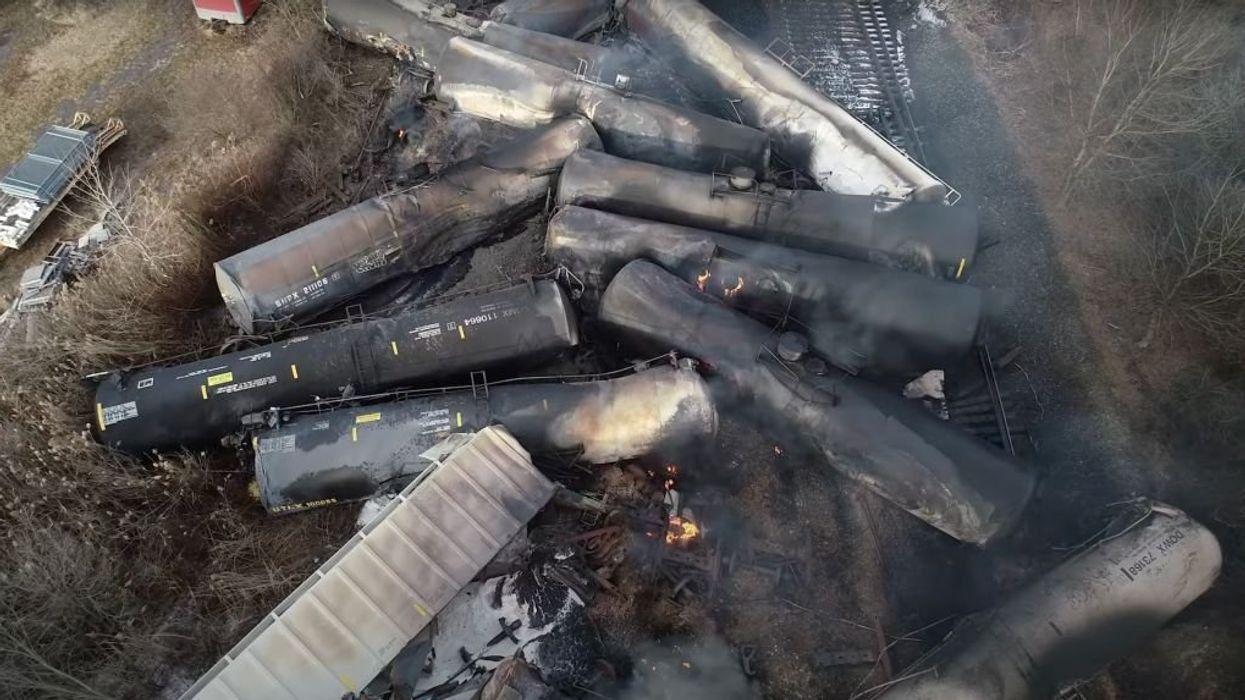
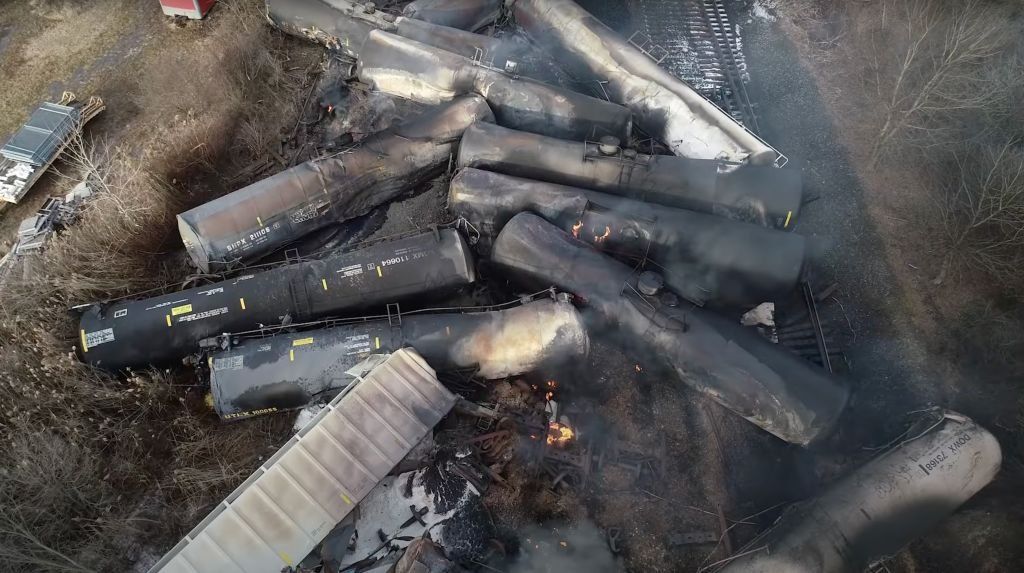
When the Norfolk Southern freight train consisting of 141 packed cars, nine empty cars, and three locomotives derailed in East Palestine in early 2023 due to a failed wheel bearing, 38 cars, 11 containing hazardous materials — including vinyl chloride, benzene residue, hydrogen chloride, ethylene glycol monobutyl ether, ethylhexyl acrylate, and isobutylene — went off the tracks.

RELATED: Who is bankrolling the anti-MAHA movement?

Photo by US Environmental Protection Agency / Handout/Anadolu Agency via Getty Images

For fear that the fires engulfing the wreckage might trigger a "catastrophic tanker failure," railroad emergency crews conducted a vent and burn of five tanks of vinyl chloride, producing hydrogen chloride and phosgene gas — the latter of which was used to kill soldiers en masse in World War I.

The resulting columns of smoke that drifted over the village, which forced 2,000 residents to flee their homes, formed what the National Transportation Safety Board called a toxic "mushroom cloud."

After the controlled burn and amid reports of thousands of dead fish and dying livestock, hazardous materials specialist Silverio Caggiano told WKBN-TV, "We basically nuked a town with chemicals so we could get a railroad open."

The NTSB indicated in a June 2024 report that the decision to execute the controlled burn "was based on incomplete and misleading information provided by Norfolk Southern officials and contractors. The vent and burn was not necessary to prevent a tank car failure."

Not only was the decision misguided; it was ruinous.

Thousands of local creatures were killed, nearby waters were heavily contaminated, and possibly cancer-causing airborne toxins were sent into the air across multiple states well beyond.

Blaze News previously reported that the Environmental Protection Agency's preliminary data in 2023 found that "concentrations for nine of the approximately 50 chemicals measured were relatively high in comparison to the levels considered safe for lifetime exposure."

"Overall, if ambient levels persisted for these chemicals, they could pose health concerns, either individually (e.g., acrolein, a known respiratory irritant) or cumulatively. Thus, subsequent, spatiotemporal analysis was pertinent," added the report.

RELATED: JD Vance joined liberal Twitter knockoff Bluesky. Things went off the rails REALLY fast.

Photo by JIM WATSON/AFP via Getty Images
East Palestinians reported various health issues in the wake of the derailment, including headaches, gastrointestinal illness, and respiratory and skin irritations.

Owing to the nature of the chemicals and the duration of their exposure, many in East Palestine feared that there could also be long-term health impacts, especially on mothers and children.

The vice president said in a video shared to social media on Thursday that despite significant concerns from those in the area impacted by the derailment, the Biden administration "refused to do anything to actually study the effects of these long-term exposures on the people of East Palestine. Well, now we have a new president and a great new secretary of health and human services."

'Once again, this administration is showing the American people what true leadership looks like.'

"The people of East Palestine have a right to clear, science-backed answers about the impact on their health," said Kennedy.

— (@)

The National Institute of Environmental Health Sciences indicated that it will distribute the committed $10 million in tranches of $2 million a year over the next five years for one to three awards. Experts have until July 21 to submit research proposals in hopes of securing funding.

NIH Director Jay Bhattacharya teased the initiative last month, telling Fox News' host Bret Baier he was looking forward to addressing "the health questions and the health needs of the American people with excellent, gold-standard research."

The initiative was celebrated by Ohio Gov. Mike DeWine (R), Republican Sens. Bernie Moreno and Jon Husted, and Republican Reps. Mike Rulli and Dave Joyce.

"This funding will enable the people of East Palestine to have the peace of mind that comes from knowing that any potential for long-term health effects will be studied by the scientists at the National Institutes of Health," said DeWine. "I thank President Trump, Vice President Vance, and Secretary Kennedy for their commitment now and into the future."

"Once again, this administration is showing the American people what true leadership looks like — putting Americans first," said Rulli.

Like Blaze News? Bypass the censors, sign up for our newsletters, and get stories like this direct to your inbox. Sign up here!

Vance returns to site of catastrophic East Palestine derailment, vows to complete cleanup


Vice President JD Vance visited East Palestine, Ohio, on the second anniversary of the Feb. 3, 2023, Norfolk Southern train derailment, which blackened the sky over the village with hazardous chemicals, threatened the health of nearby residents, and poisoned the surrounding environment.

Vance stressed that the people of East Palestine have not been forgotten, signaling a desire to ensure a proper cleanup of the area in his home state.

The derailment

A Norfolk Southern freight train with 141 packed cars, nine empty cars, and three locomotives derailed in East Palestine on Feb. 3, 2023. Thirty-eight cars, 11 containing hazardous materials — including vinyl chloride, benzene residue, hydrogen chloride, ethylene glycol monobutyl ether, ethylhexyl acrylate, and isobutylene — ultimately went off the tracks as the result of a failed wheel bearing.

Fearing that the initial fires engulfing the wreckage might cause a "catastrophic tanker failure," emergency crews for the railroad — which spent over $1.5 million lobbying in Washington, D.C., just last year and hundreds of millions more going back to 1990 — conducted a vent and burn of five tanks of vinyl chloride, darkening the sky with what the National Transportation Safety Board called a toxic "mushroom cloud."

'This community will not be forgotten.'

Blaze News previously reported that burning vinyl chloride, as the accident-prone railroad did with some of the over 877,000 pounds contained in its derailed cars, produced hydrogen chloride and phosgene gas, the latter of which was used to massacre troops in World War I.

The NTSB revealed last June that the decision to execute the controlled burn, which forced 2,000 residents to flee their homes, killed thousands of local creatures, heavily contaminated nearby waters, and sent possibly cancer-causing airborne toxins into the air across multiple states well beyond the accident week, "was based on incomplete and misleading information provided by Norfolk Southern officials and contractors. The vent and burn was not necessary to prevent a tank car failure."

Vance on the ground

Two years after highlighting the environmental damage in East Palestine and demanding that its residents cannot be forgotten, Vance returned, underscoring that the village was not and would not be forgotten.

"I talked to the president about this visit a couple days ago. The president loves this community. Of course, he visited it personally," Vance told a crowd in the village's firehouse. "President Trump just wanted to deliver a message that this community will not be forgotten, will not be left behind, and we are in it for the long haul in East Palestine."

Vance indicated that the "environmental cleanup has to get done," calling it a "tragedy and a shame" that the Biden administration dropped the ball.

The vice president also signaled an interest in helping rejuvenate the local economy, stating, "We are committed not just to finishing the environmental side of the cleanup but hopefully seeing East Palestine built back better and stronger and more prosperous than it was before the disaster happened in the first place."

EPA Administrator Lee Zeldin indicated that Vance's office told him immediately after his confirmation that his first order of business was East Palestine and that the cleanup effort is now the EPA's highest priority.

Litigation

In the meantime, locals are looking for accountability by way of litigation.

A new lawsuit involving 744 current and former residents of East Palestine that was recently filed against Norfolk Southern and agencies at all levels of government alleges that seven people including a 1-week-old baby died in the aftermath of the railroad wreck, reported KDKA-TV.

The lawsuit reportedly also claims that Norfolk Southern — already on the hook for a $600 million class-action settlement approved in September, an over $310 million settlement with the federal government, and a settlement with East Palestine that was announced on Jan. 27 — fumbled the cleanup efforts, while government agencies failed to properly warn residents about health risks.

The Associated Press indicated that at least another nine lawsuits have been filed in recent days by individuals and businesses, claiming that Norfolk Southern's greed was responsible for the derailment and suggesting that the $600 million settlement is insufficient to compensate the victims or to prompt the railroad to change its behavior.

While a railroad spokeswoman Heather Garcia declined to comment on the lawsuits, she told the Associated Press, "We've made significant progress, and we aren't done."

Like Blaze News? Bypass the censors, sign up for our newsletters, and get stories like this direct to your inbox. Sign up here!

NTSB confirms it was 'unnecessary' to create a toxic 'mushroom cloud' over East Palestine


A Norfolk Southern freight train with 141 loaded cars, nine empty cars, and three locomotives was making its way through Ohio the evening of Feb. 3, 2023, when disaster struck.

Thirty-eight cars, 11 of which contained hazardous materials — including vinyl chloride, benzene residue, hydrogen chloride, ethylene glycol monobutyl ether, ethylhexyl acrylate, and isobutylene — went off the tracks in the town of East Palestine. The worst, however, had yet to come.

The flames that apparently first showed beneath the train soon transformed part of the pile of derailed cars into an inferno.

'We basically nuked a town with chemicals.'

Days into the fires, Norfolk Southern emergency crews, under the supervision of purported experts and first responders, started their own blaze.

Citing the need to avoid a "catastrophic tanker failure," the railway conducted a vent and burn of five tanks of vinyl chloride, darkening the sky above East Palestine with what the National Transportation Safety Board called a toxic "mushroom cloud."

Silverio Caggiano, a hazardous materials specialist, told WKBN, "We basically nuked a town with chemicals so we could get a railroad open."

Local creatures died off in the thousands. Nearby water was poisoned. Residents had to flee their homes.

Apparently it was all for nothing.

The NTSB announced Tuesday that the decision by the local incident commander on Feb. 6 to execute the controlled burn "was based on incomplete and misleading information provided by Norfolk Southern officials and contractors. The vent and burn was not necessary to prevent a tank car failure."

While the Federal Railroad Administration maintains that a vent and burn procedure should be the last resort, the NTSB indicated the railway "rejected three other removal methods and began planning for a vent and burn shortly after the derailment."

According to an abstract for the NTSB's final report, the "observed downward temperature trend in tank car OCPX80370 indicates that polymerization was not occurring within the tank car, contrary to the representation by Norfolk Southern Railway and its contractors."

Polymerization similarly did not occur in the tank cars containing vinyl chloride monomer — which "remained in a stabilized environment until the vent and burn" — meaning their alarmist defense of blowing up the trains was unfounded.

The safety board claimed the railway withheld information from Oxy Vinyls, the company that made the vinyl chloride, as well as information indicating the tank cars were cooling after the derailment, reported the Associated Press.

Jennifer Homendy, the chair of the NTSB, indicated that investigators were told by a Norfolk Southern contractor that it did not keep records of temperature changes on the tank cars containing vinyl chloride.

'We found through text messages through one of their employees, who provided that information in later interviews, that they did keep those records," said the NTSB chair. "It took about two months before the team received those texts and the emails."

Temperature readings were highly relevant when making the decision to execute a controlled burn.

In a statement Tuesday, Norfolk Southern once again defended its decision, claiming it carefully considered all alternatives.

It also alleged that it and its contractors "received conflicting information from Oxy Vinyls' personnel as to whether polymerization was or could be occurring. And Oxy Vinyls' safety data sheet was clear that polymerization was possible in the circumstances observed at the derailment."

Contrary to the railroad's suggestion, Oxy Vinyls experts reportedly testified at previous NTSB hearings that they were certain at the time that polymerization wasn't happening.

At the NTSB's hearing Tuesday, Homendy also accused Norfolk Southern — which has spent nearly $100 million greasing the hands of politicians in Washington, D.C., since 1990 — of tripping up the investigation and abusing its status as a party to the investigation,

"Norfolk Southern’s abuse of the party process was unprecedented and reprehensible," said Homendy.

The railroad apparently dragged its feet when providing investigators with critical information. At other times, Homendy suggested that Norfolk Southern did not even bother providing requested information.

The NTSB also stressed in its report that Norfolk Southern's delayed provision of consistent information to emergency responders "needlessly increased the time emergency responders spent near the derailment pileup and delayed the evacuation order, resulting in unnecessary and increased exposure of emergency responders and the public to postderailment hazards."

The release of the board's findings comes one month after a federal judge approved Norfolk Southern's $600 million class action settlement addressing class-action claims within a 20-mile radius of the derailment and personal injury claims within 10 miles of the derailment.

Like Blaze News? Bypass the censors, sign up for our newsletters, and get stories like this direct to your inbox. Sign up here!

Pete Buttigieg, Worst Transportation Secretary Ever, Hints He Won’t Run For Office Again

Mayor Pete’s ideal for presidential work ethic is the geezer who has napped his way through office? Exhausting.