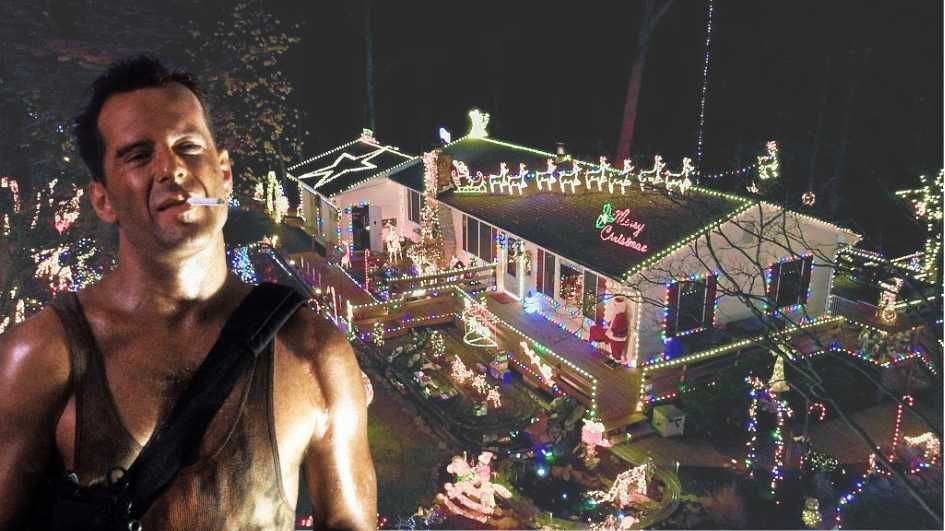
The real villains aren’t in the movies. They’re looting America’s welfare system.


Somali pirates. Dead people “billing” taxpayers. Foreign terror networks thriving on Medicaid scams. Hackers stealing identities to collect benefits.

That lineup sounds like an over-the-top Hollywood heist movie. Americans now read versions of it on the front page.

Americans should treat this caper as a wake-up call. Elected leaders should treat it as an emergency.

Federal prosecutors charged 78 Somali immigrants with allegedly stealing more than $1 billion from taxpayers. National outlets noticed, including the see-no-immigrant-evil New York Times. Prosecutors also say suspected Medicaid fraud in Minnesota may top $9 billion, with new allegations and evidence surfacing by the day.

Hollywood can’t compete with numbers like that. In “Die Hard,” the crooks chased $640 million. Danny Ocean’s crew in “Ocean’s 11” made off with a mere $160 million. Minnesota’s real-life scammers allegedly went after far more, and they exploited programs meant to help the vulnerable.

Americans should treat this caper as a wake-up call. Elected leaders should treat it as an emergency: Prosecute the thieves, close the loopholes, and change the incentives that let fraudsters treat public benefits like an ATM.

For perspective, the fraud under investigation approaches the size of Somalia’s entire government budget and equals roughly 12% of Somalia’s economy, based on recent estimates. Minnesota’s Somali population equals about 0.5% of Somalia’s population and about 2.5% of the Twin Cities metro. Yet prosecutors say a small number of people allegedly moved sums that rival major industries back home.

Worse, investigators say some stolen money went overseas. In the Feeding Our Future case and related investigations, federal prosecutors have alleged that some proceeds flowed to al-Shabaab, a terrorist group the United States has targeted for years. If those allegations hold, taxpayers didn’t just fund fraud. They helped bankroll an enemy.

Minnesota’s scandal also exposes a national contradiction. Washington wages war abroad, welcomes refugees at home, and writes checks through the same federal programs that criminals can exploit — while the national debt nears $39 trillion.

Minnesota’s political class added its own layer of absurdity. Rep. Ilhan Omar (D) built a profitable career calling America racist. Minneapolis Mayor Jacob Frey (D) delivered his re-election victory speech in Somali just days before the scope of these cases made headlines. Symbolic gestures came easy. Basic oversight did not.

Gov. Tim Walz (D) still owes voters answers. Did incompetence drive this disaster, or did indifference do the work? Homeland Security Secretary Kristi Noem argues both played a role. Reports now suggest state employees blew the whistle years ago about lax controls and sloppy management. Voters heard little of it when elections still hung in the balance.

RELATED: Trump has the chance to end the welfare free-for-all Minnesota exposed

Photo by: Michael Siluk/UCG/Universal Images Group via Getty Images

Walz reportedly knew about major fraud risks as early as 2020. His administration later resumed funding after recipients sued, accusing the state of racism. The Walz administration also handed an “outstanding refugee award” in 2021 to a woman now charged in connection with fraud — facts that undercut today’s alibis.

Federal investigators deserve credit. The Departments of Justice and Treasury have pursued these cases aggressively. House Oversight Chairman James Comer (R-Ky.) has opened another congressional probe. Prosecutions matter, but prevention matters more.

A new law President Trump signed this summer aims to make fraud more difficult to pull off. It requires states to recheck eligibility for able-bodied adults on Medicaid every six months instead of annually. For the first time, it also forces states to absorb more of the cost when they let fraud run rampant.

Those reforms should move quickly from paper to practice. States, red and blue, should implement them immediately. Fraudsters thrive on delay, confusion, and political excuses.

Taxpayer fraud deserves full prosecution. Political leaders who enable it deserve accountability too — whether they turned a blind eye, ignored whistleblowers, or refused to enforce the law. Every state in the Union should move now, or Minnesota’s scandal will spread.

Is 'Die Hard' a Christmas movie? And other questions about the true meaning of Christmas films.


"What is a Christmas movie?”

This is probably a question you’ve heard before in passing. Most of us instinctively have a good idea of what one is, but more than likely, that understanding is rather inexplicable, abstract, or trapped in the minutiae.

Only by leaning into my Christian faith did I begin to see these films and the unique glow that turns a regular film into a Christmas film.

We all know the tropes of Christmas movies — Santa Claus, joy to the world, peace and goodwill toward men, white snow on a warm Christmas morning, jingle bells, presents under the tree, hot chocolate and eggnog, sugar plums, figgy pudding, Nativity scenes, et cetera.

For most people, Christmas is a feeling and an idea as much as it is a day on the calendar. However, trying to put the abstract into words is challenging. In my capacity as a film reviewer, amateur filmmaker, and member of the Music City Film Critics Association, I have spent more than three years talking with friends and puzzling over the question for fun. For the most part, this debate was a lively intellectual exercise between my philosopher and cinephile friends and me; I can recall one particularly fun session of debate with my girlfriend as we discussed the Aristotelian implications of the definition of Christmas movies.

As it will become clear in this text, though, the answer to the question, “What is a Christmas movie?” is surprisingly hard to narrow down and answer definitively.

This was a problem I set out to try to formally solve in late 2024, during a rare moment of adult life when I had the time to sit down for three months and binge-watch out-of-season Christmas movies, while attending to a lengthy family hospice situation. As strange as it felt spending the month of October bingeing on Christmas movies, it was enlightening. Surveying films between the years 1935 and 2024, one sees a number of patterns and tropes fly by, evolving with the culture year by year.

Subsequently I partnered with my good friends at the evangelical ministry Geeks Under Grace to put my ideas to paper, publishing 10 weekly articles on the subject between November and December 2024. But even as I was penning those first essays, I struggled to find the right words; I didn’t have an answer in mind from the outset, merely a series of arguments and anecdotes. I would need to find my thesis in the act of writing this book.

There aren’t enough books written about Christmas films as a genre. If there are many, they are buried under an ocean of histories for specific films, best-of collections, or works written by obscure academics.

It’s easy enough to find resources on the production history of "It’s a Wonderful Life" but less so about the subgenre that flows out of it. Much has been said about the great entries in the subgenre: how "Miracle on 34th Street" became the first financially successful Christmas movie in 1947; how "It’s a Wonderful Life" and "A Christmas Story" were popularized via television broadcasts; how "Mister Magoo’s Christmas Carol" became the first animated Christmas special specifically released for television in 1962; how 2003’s "Elf" is the last Christmas film to be considered a blockbuster.

There is less said about what connects these data points.

One of the few experts on the subject I found was Scottish scholar Tom Christie, who has published multiple books on the history of Christmas films in the past decade through Extremis Publishing, including "The Golden Age of Christmas Movies: Festive Cinema of the 1940s and '50s" and "A Totally Bodacious Nineties Christmas: Festive Cinema of the 1990s." The rest of the insight I found was buried in individual articles and YouTube essays, to which I owe a tremendous debt for helping me shape the greater picture. They helped me break through my writer’s block and made the connections I needed to complete the project.

However, the seeds of insight I found in my reading turned me away from the films themselves.

From first principles, there can be no understanding of Christmas movies without first understanding Christmas. And there is no understanding of Christmas without understanding religion, society, secularism, consumerism, and the nature of what American society considers “normal.” It was only through this that the seed blossomed into what I think is the best achievable conception of a Christmas film, and only by leaning into my Christian faith did I begin to see these films and the unique glow that turns a regular film into a Christmas film.

I apologize to any secular readers who may have picked up this book imagining it would be relatively areligious, but I must beg their pardon in the necessity to discuss these issues through the lens of theology. I’m a practicing Christian, and I cannot help but think of life through the lens of a high-church Protestant. However, Christmas is a Christian holiday (at least tacitly), and I don’t think it’s possible to completely excise Jesus from the day bearing his name — at least not without turning the holiday into a parody of itself.

Christianity teaches us that Jesus Christ, the second person of the Trinity, became flesh and walked among us. He was both fully God and fully man and became the hinge of history. He was a paradox, described in His Nativity by the apologist C.S. Lewis, “Once in our world, a stable had something in it that was bigger than our whole world.”

The idea that a God so seemingly wrathful, distant, and lawful would be so humble as to allow Himself to be born as a fleshy human baby to a peasant woman in the backwater of the Roman Empire is strange. But this is the event Christmas celebrates — a contradiction and a miracle; the fullness of history fulfilled in humility; the logos breaching into the world; a quiet resistance manifesting against the evils of this rebelling silent planet.

Reflecting on this and the modern reality of Christmas, an idea began to unfold slowly in my mind. The realization came to me that Christmas movies are not defined so easily but are defined by a connection to the supernatural. They are downstream of something greater, containing within them a small drop of the divine-like spring water filtering into a mighty river.

That water may no longer be clear and crisp, or even drinkable, but its flowing is evidence of a source.

Christmas movies are utterly unique in modern film due to the way we interact with them. They are a subgenre unto themselves, intertextually linked with other Christmas movies and the holiday itself, but it is that very intangible glow that makes them unique. They contain an essence of what Lewis once described, in his book "The Problem of Pain," as “the numinous”:

Those who have not met this term may be introduced to it by the following device. Suppose you were told there was a tiger in the next room: you would know that you were in danger and would probably feel fear. But if you were told, “There is a ghost in the next room,” and believed it, you would feel, indeed, what is often called fear, but of a different kind. It is not based on the knowledge of danger, for no one is primarily afraid of what a ghost may do to him, but of the mere fact that it is a ghost. It is “uncanny” rather than dangerous, and the special kind of fear it excites may be called dread. With the uncanny one has reached the fringes of the numinous.

This is not to call Christmas movies dreadful but that they contain within them a sense of the supernatural, what we might call “awe.” Connecting with that awe is downstream of the supernatural source that created it. Christmas movies grab that stream like a third rail and feel electrified by it.

It may seem like a bit of a leap to say that mean-spirited and cynical movies like "Christmas Vacation" or "Bad Santa" are in some way a reflection of God’s divinity, but as we will come to see, the thing that sets Christmas films apart from other films is an embrace of the supernatural essence of Christmas.

A Christmas movie always contains an element of hope that warps cynicism and pain of its story toward an ideal.

A Christmas movie glows with Christmas spirit.

A phrase like “the true meaning of Christmas” does this too, alluding to some unspoken notion that culture agrees upon, that Christmas is meaningful because it changes people. It scratches upon something divine while remaining achingly human and unspecific.

That thing is not entirely limited to the faithful, as secular people enjoy Christmas too. Muslims, Jews, Buddhists, and atheists all celebrate Christmas in equal measure. And while I wouldn’t say they celebrate in the same manner as I do at the communion rail on Christmas morning, they are communing with something beyond the superficial layers of cheap plastic junk that Christmas would be if it were merely another day in December.

This book is the result of many months of thought and reflection, brought into the world by the good graces of my friends and colleagues who helped me write it, host it, critique it, and bring the original articles to fruition, here expanded to a thematically rounded 12 chapters. Each chapter has been revised to reflect the conclusions I discovered in the very act of writing the book. One often finds his destination only by setting out on an unknown journey!

So let us start by asking the most immediate and controversial question and then let our understanding unfold: Is "Die Hard" a Christmas movie?

From there, we will discuss Christmas as a secular phenomenon; explore Christmas movies as a subgenre; the role religion, consumerism, normality, and nostalgia play in Christmas cinema; and close on the incarnational implications of Christmas films.

What is a Christmas movie?

Let’s find out!

The above essay was adapted from the book "Is 'Die Hard' a Christmas movie? And Other Questions About the True Meaning of Christmas Films," which is available here.
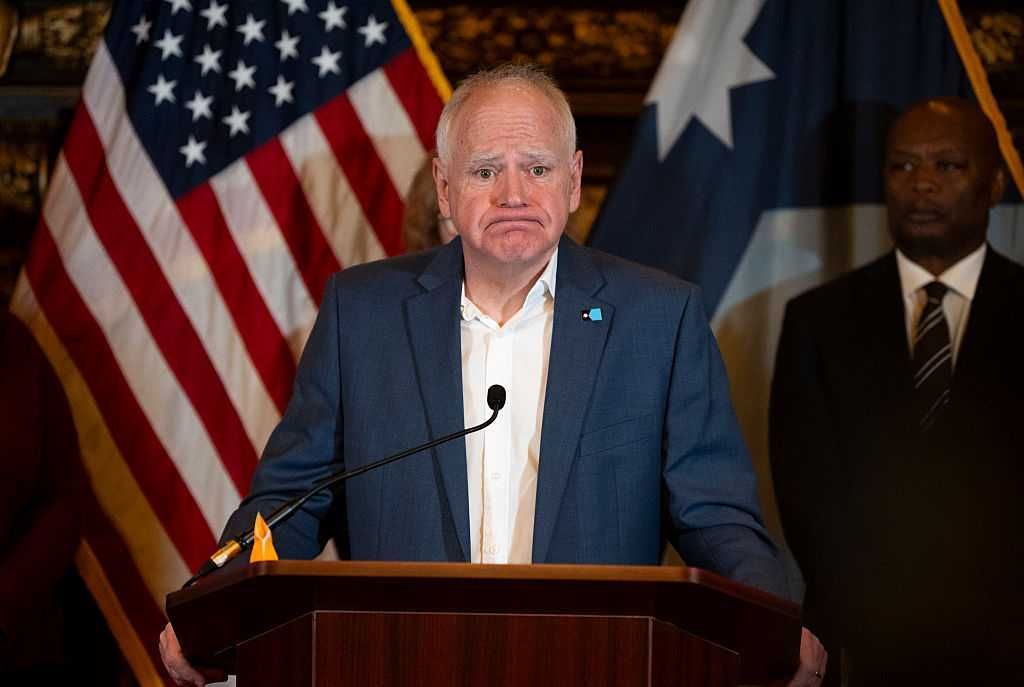

'G20' offers wonky wish fulfillment for Kamala Harris die-hards


Last spring's "Civil War" treated audiences to the spectacle of America finally quelling a MAGA-coded revolt that had split it in two.

The movie's Trump-like villain played on fears that the defeated president's comeback bid — at the time building momentum — might actually work. His cowardly, ignominious death at the end offered reassurance that we would soon witness Donald J. Trump's permanent exit from the political scene.

'She’s the Mamala of all Mamalas,' gushes Daily Beast film critic Nick Schager.

Who knew that a scant few months later, reality would hew so literally to fantasy? Unlike his fictional counterpart, of course, Trump survived — and he did so with a stirring display of courage that arguably clinched his victory that November.

Too soon?

By now, the country has more or less accepted Trump 2.0. Yes, there is still a "resistance," but it lacks energy and focus; all but the most recalcitrant Democrats have started to turn their gaze inward.

Under the circumstances, a movie featuring a Kamala Harris-like president kicking butt and saving the world might be considered in poor taste. In fact, Harris' campaign was such a disaster that one would expect Amazon Prime to shelve the movie entirely, just as any cinematic depictions of skyscrapers toppling were pulled following 9/11.

Nevertheless, "G20" persists in trying to entertain a weary nation.

Alternate timeline

"G20" began production in January 2024, six months before Harris became the official Democratic candidate. Still, one can't help but sense a certain confident political prognostication in the setup. If so, the filmmakers were widely off the mark, and now the film must be enjoyed as a bittersweet, Quentin Tarantino-esque exercise in alternate history: What if Orange Hitler had been taken out?

The critics seem to have taken the bait. “She’s the Mamala of all Mamalas,” gushes Daily Beast film critic Nick Schager.

“[Viola Davis is] Kamala Harris via John McClane, John Wick, Rambo, and Harrison Ford’s 'Air Force One' leader. … Part 'Die Hard,' part wish-fulfillment saga for a post-2024 present that didn’t come to pass, it’s a fantasy of feminist and U.S. might that’s chockablock with implausibilities.”

'Die Hard' at a policy summit

"G20" follows President Danielle Sutton attempting to solve world hunger in third-world countries through an ambitious digital currency project. Due to her perceived weakness in diplomatic skills and a rowdy partying daughter running around embarrassing her, Sutton is struggling to get her plans taken seriously.

Attempting to sell the plan at the annual G20 Summit, she finds the event attacked by terrorists looking to enrich themselves through a global cryptocurrency pump-and-dump scheme. Having escaped the attack, Sutton is now locked in the building as the last hope to save the global economy by using her latent skills as a former soldier to fight back and sneak through the massive compound.

In other words, what we have here is indeed another version of Bruce Willis' John McClane. Not a problem in itself; many perfectly decent movies have emerged from the basic premise: "Under Siege," "Speed," "The Rock," "Run Hide Fight," as well as the rah-rah pro-Obama actioner "White House Down" — to which this film feels eerily similar.

But like all movies in the genre, what it does with the setup is what sets "G20" apart, especially given that it wears its politics on its sleeve.

Wonk this way

Star Viola Davis ("Woman King," "Suicide Squad") has downplayed any overt comparison to Harris in her interviews, stressing that we never find out which party her character belongs to. She's been content to note with some melancholy that, “I do not think it’s a suspension of disbelief to imagine someone who looks like me as the president,” while stating that she just wants the film “to reach people.”

And yet her president Sutton parallels Kamala Harris to such an extent — from her fashion and haircut to the criticisms she endures — that it's impossible not to make the comparison. And while it’s a modestly entertaining actioner, the end product feels distracting and flawed.

For an action flick, it spends too much of its precious screen time dialoguing about the global monetary system and the perceived weakness of the dollar. As RogerEbert.com's Daniel Roberts puts it, “the script is so issues-based that it strangles the film’s mood.”

Wonkiness aside, at its core "G20" is the story of a strong woman of color triumphing over misogyny and racism to earn her place as the most powerful leader in the world. She’s doubted by everybody from the U.K. prime minister to the press, but slowly earns their respect until even her rebellious daughter is calling her a “badass.”

Pure heroine

By the end of the movie, President Sutton can do no wrong. While we're never told her approval rating, we can only imagine she's putting up first-term Obama numbers. And so "G20" offers an escapist fantasy for anyone traumatized by Trump's relentless efforts to make good on his promises.

Remember the old protest sign — "If Hillary won we'd be at brunch right now"? It still holds true. Imagine if the media-generated cult of Kamala had had actual popular support. Instead of immigration and tariffs, our table talk would mostly concern the failure of Republicans to take the first black woman president seriously.

Another round of mimosas! Come to think of it, "G20" may be the scariest horror movie you've seen in years.

‘Die Hard’ Is An Anti-Christmas Movie

[rebelmouse-proxy-image https://thefederalist.com/wp-content/uploads/2023/12/Screenshot-2023-12-19-at-6.50.14 AM-1200x675.png crop_info="%7B%22image%22%3A%20%22https%3A//thefederalist.com/wp-content/uploads/2023/12/Screenshot-2023-12-19-at-6.50.14%5Cu202fAM-1200x675.png%22%7D" expand=1]'Die Hard' embodies the most cynical, and often truthful, view of what Christmas has come to mean in modern America.

The Definitive Answer To ‘Is Die Hard A Christmas Movie?’

Here's a whole lotta (surprisingly interesting!) trivia about one of the more ludicrous pop culture debates of our time.

‘Rick And Morty’ Contemplates Religion And The Religious Following Of ‘Die Hard’ In Latest Episode

For someone who hates religion, Rick does a great job of creating a system of belief that explains things about higher consciousness.

VIDEO: 'Die Hard' director settles the argument, says his film was definitely a Christmas movie — an anti-authority, anti-capitalism Christmas movie


Movie director John McTiernan has answered the question that has plagued so many for more than 30 years: Is "Die Hard" a Christmas movie?

According to McTiernan, who directed the film, the answer is yes.

But it didn't start out that way. It "turned into a Christmas movie" — an anti-capitalism Christmas movie.

What's this now?

For decades now, Americans have debated whether the Bruce Willis action flick "Die Hard" is a Christmas movie.

The film's genre — a summer action blockbuster with lots of violence, blood, and cursing — has led people to rule it out of the holiday film list. The story's timing and location — Christmas Eve during an office Christmas party in downtown Los Angeles — has given ammo to the "it's a Christmas movie, dadgummit" crowd.

Polls have been taken on the question — but have yielded inconsistent results.

One of the movie's screenwriters, Steven de Souza, tweeted in 2017 that it is a Christmas movie.

However, Willis, the star of the movie, offered a different take in 2018 when he declared, "'Die Hard' is not a Christmas movie. It's a god damn Bruce Willis movie."

Image source: AFI YouTube screenshot

Now the question appears to be settled.

McTiernan said in a video last week that his movie is definitely a Christmas movie — an anti-capitalism Christmas movie that preached against authoritarians.

It's that anti-capitalism, anti-authority streak that, to McTiernan, turned "Die Hard" into a Christmas movie.

What did McTiernan say?

In a "Behind the Scene" video posted by the American Film Institute, McTiernan explained how "Die Hard" became the so-called Christmas classic it is.

Based on McTiernan's description, when the script was first written, it closely followed the book it was based on, "Nothing Lasts Forever," the Daily Wire reported. It featured left-wing terrorists who were brought to heel by "the stern face of authority" — and McTiernan didn't like that.

"'Die Hard' was a terrorist movie," McTiernan said, before explaining how it changed.

"[Producer] Joel [Silver] sent me the script three, four times," the director said. "And it was about these horrible leftist terrorists that come into the sort of Valhalla of capitalism, Los Angeles, and they bring their guns and their evil ways and they shoot up people just celebrating Christmas — terrible people, awful. And it was really about the stern face of authority stepping into put things right again, you know?"

"And I kept saying to Joel, I don't want to make that movie," McTiernan added.

What he wanted to make was a movie that had a message similar what the saw in the Pottersville scenes in "It's a Wonderful Life," which, he said, "is what happens when the evil banker gets to do what he wants in the community without George ... getting in the way to stop him."

"It's the clearest demonstration and criticism of runaway, unregulated cowboy capitalism that's ever been done in an American movie," he added.

So he got Silver to change the script and make the bad guys unfettered capitalist terrorists who were stopped by a "working class hero."

And McTiernan, in order to best get across his anti-capitalism message — à la "It's a Wonderful Life" — he felt the best vehicle was style of film reminiscent of a Christmas movie.

"I went to Joel. And I said, 'OK, if you want me to make this terrorist movie, I want to make it where the hero in the first scene when the limo driver apologizes that he's never been in a limo before. The hero says it's alright. I've never ridden in a limo before,'" he recalled, adding, "OK, working class hero."

According to McTiernan, Silver was on board making "Die Hard" into an anti-capitalist film.

"Joel understood what I meant. And he said OK," he shared, adding that people working on the movie came to "catch on" to just what they were trying to create: "This was a movie where the hero was a real human being, and the people of authority — all of the important folks — were all portrayed as kind of foolish."

"Everybody, as they came to work on the movie, began to get ... this idea of this movie as an escapee," McTiernan said, reflecting on how the content was no long under control of the man and instead in the control of the creators. "And there was a joy in it. Because we ... had changed the content. And that is how 'Die Hard' became — we hadn't intended it to be a Christmas movie — but the joy that came from it is what turned it into a Christmas movie. And that's really the best I can tell you about it."

Then he offered a Christmas wish for his viewers:

My hope at Christmas this year is that you will all remember that authoritarians are low-status, angry men who have gone to rich people and said, "If you give us power, we'll make sure nobody takes your stuff." And that's the essence of authoritarianism , that's always been the essence of it — and their obsessions with guns and boots and uniforms and squad cars and all that stuff and all those things you amass with power meant to scare us, meant to shut us up so we don't kick them to the side of the road and decent people of the world get on with building a future.

Merry Christmas, and I hope we have a better year.

Content warning: Rough language

Behind the Scene: Director John McTiernan on making the Christmas classic DIE HARD www.youtube.com

(H/T: HotAir)