Newsom Pulls Lamest Stunt For Sympathy Since Biden’s Stutter
'Spare me your fake fucking outrage'
Last week, Arizona State University’s provost sent faculty another familiar message ahead of the spring semester: Ensure all digital course materials meet accessibility standards. After 25 years teaching philosophy at ASU, I’m well aware of the institution’s growth and its long-standing commitment to accessibility. That commitment, in itself, is not controversial.
But recent data should give universities serious pause.
A society can medicalize despair, bureaucratize despair, and accommodate despair. None of that answers the question despair is asking.
Two reports — one from the Harvard Crimson and another from the Atlantic — put numbers to what many faculty have observed for years. At Harvard, 21% of undergraduates received disability accommodations in 2024, up from roughly 3% a decade earlier. The Crimson notes that Harvard is now aligned with a national average hovering around 20%.
The Atlantic goes further, describing what it calls an “age of accommodation” at elite schools. At Brown and Harvard, more than 20% of students are registered as disabled. At Amherst, the figure reaches 34%. The most common accommodation, professors report, is extra time on exams.
To be clear, accommodations for genuine physical disabilities are not in dispute. A wheelchair ramp is not a moral scandal. A student with a real impairment should not be excluded from education. That principle remains sound.
What has changed is the nature of disability itself.
Both articles describe a shift away from visible, physical impairments toward diagnoses that are invisible, elastic, and difficult to distinguish from ordinary hardship in a competitive academic environment. ADHD, anxiety, and depression now dominate accommodation requests, treated as qualifying disabilities under the Americans with Disabilities Act framework. The Crimson ties much of this surge to the COVID era, quoting one professor who described the pandemic as a “mass disabling event.”
That explanation may be partly true. Many students are not gaming the system; they are shaped by it. But even granting that, the trend raises three problems universities can no longer dodge.
First is fairness. When extra time becomes widespread — especially among high-performing, well-resourced students — faculty are right to wonder whether accommodations are providing access or advantage.
The Crimson acknowledges faculty suspicion that accommodations are used to “eke out advantages.” The Atlantic warns that a system designed to level the playing field can begin to distort the very meaning of fairness.
Second is standards. If a significant share of students receive individualized modifications — extra time, deadline extensions, alternate testing environments — then faculty must ask an uncomfortable question administrators prefer to avoid: Is the course still the same course?
Exams exist to measure knowledge and skill under shared constraints. Remove those constraints for many students, and results no longer mean the same thing. At best, the system becomes two-track. At worst, rigor is quietly redefined as cruelty and education collapses into credentialing.
Third — and most important — is meaning.
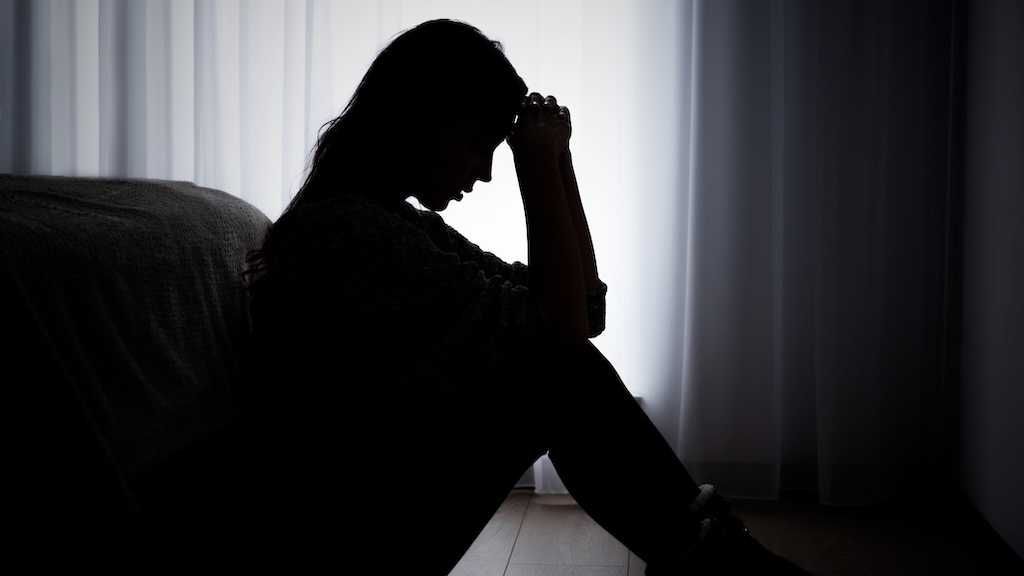
If vast numbers of young adults now pass through education labeled as anxious and depressed, and if that diagnosis becomes the gateway to academic survival, we should ask what kind of culture we have built. What account of life, purpose, and human flourishing are students receiving in K-12 and college?
For years, students have been immersed in a worldview that frames them primarily as victims — of structures, systems, identities, and histories beyond their control. They are told meaning is socially constructed, morality is relative, and human beings are little more than biological accidents shaped by power. Hardship, in this framework, becomes pathology. Suffering becomes injustice. Endurance becomes oppression.
At that point, anxiety and depression cease to be merely medical categories. They become rational responses to a life stripped of purpose.
Here the philosopher cannot remain silent. A society can medicalize despair, bureaucratize despair, and accommodate despair. None of that answers the question despair is asking.
Have we taught students how to face difficulty? To endure frustration? To pursue excellence despite pain? Or have we trained them to interpret hardship as harm — and then rewarded that interpretation with institutional permission slips?
The philosopher Westley (disguised as the Dread Pirate Roberts) said, “Life is pain, highness. Anyone who says differently is selling something.” But there is suffering, and there is suffering well to attain what is good. We stopped teaching this, and the young adults are experiencing the consequences.
RELATED: Christian students are pushing back — and universities are cracking
Universities love to talk about “student success.” But education is not merely success. It is formation. And formation requires truth: truth about what a human being is, what suffering is for, what excellence demands, and what life ultimately aims at.
When universities exile God, moral realism, and any shared account of human purpose, they should not be surprised when students seek refuge in medicalized identities that turn pain into paperwork.
This crisis is not simply about abuse of accommodations or even about mental health statistics. It is about whether higher education can still tell students the truth: that limits are not always oppression, that hardship is not always injustice, that discipline precedes freedom, and that meaning is discovered, not administered.
If universities cannot say why education aims at the highest good, then they should not be shocked when students conclude it means nothing — and despair follows.
It is time to return education to what it was meant to be: the formation of souls ordered toward wisdom and virtue.
Police in Albuquerque, New Mexico, told Blaze News that a male was suspected of having committed a string of crimes Monday morning.
Police said Michael Salas broke into a home, led police on a car chase, and then fled on foot before arriving at an apartment on the southeast side of the city, KRQE-TV reported.
'Please don't touch me. Please get out of my house.'
Suddenly, Salas barged into the unit — and encountered wheelchair-bound Anthony Nichogi, who was in the residence with his young son, the station said.
Nichogi's wife had left the front door unlocked when she departed, KRQE said, adding that Salas burst inside only a minute later.
"I was in fear for my life and my son," Nichogi told the station, adding that Salas "reached for me, and I told him, 'Please don't touch me. Please get out of my house.'"
KRQE said Salas has a long rap sheet full of burglary arrests and convictions.

Burglaries are nothing new for Nichogi, who told the station his neighborhood has suffered many of them — and he was prepared: "You know, I have video footage of all the five years' worth of incidents, and I'm expecting it."
Nichogi repeatedly told Salas to get out, KRQE said, adding that he soon motored on his electric wheelchair to the bedroom to get mace.
But it wouldn't be so easy.
"I turned my chair around, and as I went into the bedroom to go unlock it and retrieve it, he followed me into the bedroom," Nichogi explained to the station.
With that, Nichogi opted for a more powerful means of self-defense. He instead grabbed his gun, KRQE said.
And that wasn't all.
Describing what happened next as a rush of adrenaline, Nichogi told the station he performed a rare physical feat: He got up from his wheelchair and commanded Salas to leave.
Indeed, video shows a clearly unnerved Salas putting up his hands and retreating to the front door as Nichogi points a gun at him and walks after him, even following Salas out of the apartment.
"I never expected to have to defend my home like that," Nichogi added to KRQE. "This is a first for me."
The medical condition that necessitates his wheelchair use is not clear.
RELATED: 'The Left is completely out of control': New Mexico GOP headquarters torched in 'horrific attack'
Police told the station that officers had been following Salas after deploying a GPS dart on his car and then pursued him on foot.
Police added to KRQE that Salas was found on a roof next door and arrested.
According to jail information police provided to Blaze News, Salas on Wednesday remained incarcerated in Bernalillo County's Metropolitan Detention Center on no bail. Salas, 40, was charged with aggravated burglary with a deadly weapon, burglary, reckless driving, and resisting, evading, or obstructing an officer. He also has a warrant for burglary from an automobile.
Police told KRQE that Salas had an accomplice with him — Christina Herrera — who is facing a residential burglary charge.
Like Blaze News? Bypass the censors, sign up for our newsletters, and get stories like this direct to your inbox. Sign up here!



 freebeacon.com
 thefederalist.com
 www.theblaze.com
 www.theblaze.com
 thefederalist.com
 www.theblaze.com