Netflix didn’t lose to Trump. It lost to math.


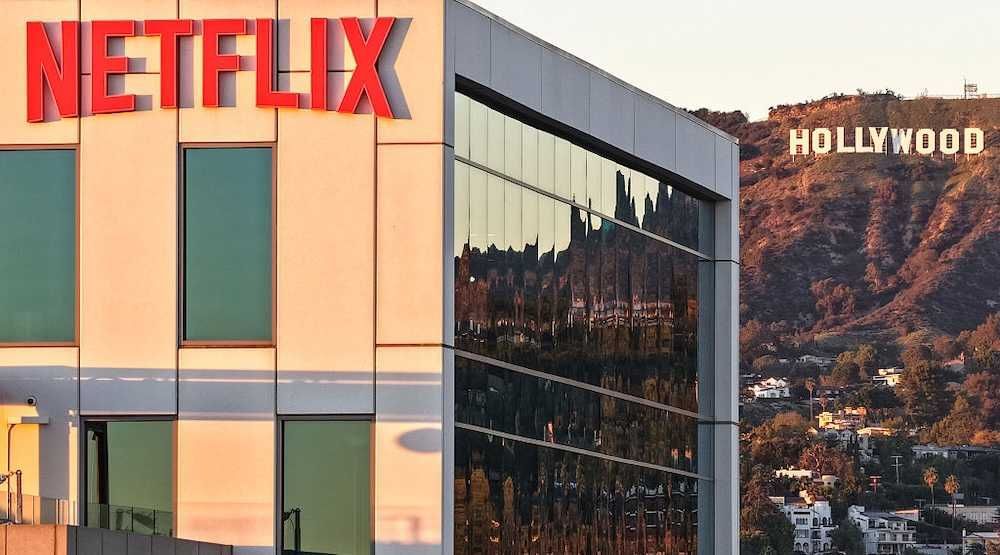
After months of public back-and-forth, Netflix’s bid for Warner Bros. Discovery is dead. Paramount won. The company on February 26 said it had completed its purchase, and Federal Communications Commission Chairman Brendan Carr said regulators would approve it “pretty quickly.”

Some observers blamed Netflix’s loss on the Trump administration. Senator Elizabeth Warren (D-Mass.) labeled the Paramount deal a “disaster,” and allies implied that administration officials leaned on Netflix to stand down.

Netflix profits when audiences stay home. Theaters, restaurants, and the broader ecosystem built around going out don’t.

That’s revisionist history. Netflix lost for two reasons: Paramount offered more money, and Republicans have grown far less willing to wave through consolidation by mega-firms that already squeeze consumers and tilt the culture war leftward.

Paramount outbid Netflix

Start with the obvious. Netflix offered a little over $27 per share. Paramount offered $31 per share — roughly $111 billion in total value.

Netflix couldn’t match that price. Paramount could. Netflix walked.

That’s math, not corporate intrigue.

Why Washington had concerns

Money explains why Netflix lost. Politics explains why so few people in Washington felt inclined to rescue it.

Carr said Netflix’s bid raised “a lot of concerns.” President Donald Trump signaled skepticism. So did many congressional Republicans. They saw a company that already dominates streaming trying to turn itself into the dominant media conglomerate — and they saw the costs landing on consumers, creators, and competitors.

Consumers would have taken the hit first. As Rep. Darrell Issa (R-Calif.) noted during merger hearings, Netflix’s expansion has marched alongside higher prices. Subscribers pay more, then sit through more ads. The company pushes customers toward “cheaper” tiers that still interrupt programming people already bought access to watch.

Filmmakers would have taken the hit next. Director James Cameron warned that the sale would be “disastrous for the theatrical motion picture business.” Netflix profits when audiences stay home. Theaters, restaurants, and the broader ecosystem built around going out don’t.

RELATED: CNN’s biggest nightmare is one step closer to finally coming true
Photo by Andrew Harnik/Getty Images

Then comes culture. Paramount’s programming spans the spectrum. Nobody confuses it with a conservative company, but nobody defaults to treating it as a progressive messaging machine either. Its catalog ranges from right-coded “Yellowstone” to newer, openly left-wing “Star Trek” entries, with plenty of mainstream fare between.

Netflix plays a different game. Its board includes former Obama administration official Susan Rice. Critics on the right point to its content tilt, including an Oversight Project analysis that found left-leaning programming outnumbered right-leaning programming by a wide margin. Even Netflix’s CEO recently tried to walk back a 2020-era post supporting Black Lives Matter, a retreat that looked less like conviction than belated damage control.

Monopoly defeated

For years, conservatives answered complaints about corporate media with a libertarian shrug: Let the market decide. That posture collapsed once the market stopped functioning like a market. A handful of firms now gatekeep distribution, advertising, and cultural prestige. Consumer choice matters less when one company controls the pipes.

Netflix seemed to miss that shift. It still spoke like the scrappy upstart that crushed Blockbuster, not like the biggest player trying to swallow a legacy studio and reshape the entire ecosystem on its terms.

Netflix will survive. It will keep producing content, and it will keep pushing its worldview in much of that content. It just won’t do it with control over Warner Bros. Discovery — or over the broader media landscape.
Trump is right: Netflix’s merger would create a woke media monster


Popular entertainment has always shaped the public mind in ways politicians can only envy.

Percy Bysshe Shelley once called poets the “unacknowledged legislators of the world.” The idea surfaces memorably in the 1984 Best Picture winner “Amadeus,” where Emperor Joseph II appears more invested in micromanaging Vienna’s opera scene than governing his empire.

Modern technology has magnified that cultural power. Today, many young Americans absorb more of their moral instruction from Netflix than from teachers, pastors, or even parents.

Now Netflix wants to expand that influence dramatically by acquiring Warner Bros. Discovery, a media conglomerate that includes HBO, DC Studios, and franchises such as “Harry Potter” and “Game of Thrones.” The combined entity would control roughly a third of the streaming market and wield unprecedented cultural power.

Democrats understand that politics flows downstream from culture. Allowing Netflix to absorb Warner Bros. would give that worldview control over even more cultural territory.

The scale of the proposed merger raised concerns even for President Donald Trump, who warned last month that it “could be a problem” and confirmed his administration would take an active role in reviewing the deal.

Given the stakes, the question is not abstract. How does Netflix use the power it already holds?

Consider the company’s recent headline-grabbing film, “Queen of Coal,” described as the story of “a trans woman who dreams of working the coal mines” and must battle a town defined by “superstition and patriarchy.”

Inspiring stuff.

Or recall Netflix’s 2020 release of “Cuties,” a French film centered on 11-year-old girls twerking. The filmmakers claimed the movie criticized the sexualization of children. Perhaps that was their intent. Netflix’s marketing department missed the point entirely, replacing the original poster with one featuring preteen actresses in sexualized poses. Public outrage followed, and Netflix eventually apologized.

After George Floyd’s death in 2020, Netflix declared on social media, “To be silent is to be complicit. Black lives matter,” and then set about race-swapping characters across its catalog.

Zoom out further. A report by Concerned Women for America found that nearly half of Netflix’s children’s programming pushes LGBT themes.

Taken together, the pattern is unmistakable. Netflix uses its platform to advance a radical progressive agenda, and scrutiny only confirms it.

The company’s internal culture reinforces the point. Even by Big Tech standards, Netflix skews sharply left. In 2020, 98% of its political donations went to Democrats, compared with 84% at Apple and 77% at Facebook.

CEO Reed Hastings, Netflix’s co-founder and longtime chief executive, donated $7 million in 2024 to a pro-Kamala Harris super PAC and $2 million to California’s redistricting effort last year. In 2017, Hastings told fellow billionaire Peter Thiel that his support for Trump reflected such “catastrophically bad judgment” that it called into question Thiel’s fitness to remain on Facebook’s board.

Hastings has made clear that conservative ideas do not merely deserve debate. In his view, they disqualify those who hold them from serious consideration.

Then comes the revolving door between Netflix and Democratic power.

RELATED: Netflix wants a monopoly on your mind

Photo by Mario Tama/Getty Images

In 2018, Netflix signed a deal with former President Barack Obama reportedly worth tens of millions of dollars. The results included a slate of progressive documentaries and an apocalypse thriller featuring the line, “Trust should not be doled out easily, especially to white people” — a sentiment both racist and badly written.

Susan Rice offers another example. After serving as Obama’s U.N. ambassador and national security adviser, she joined Netflix’s board during Trump’s first term, left to lead Biden’s Domestic Policy Council, and has now returned to the company.

Democrats understand that politics flows downstream from culture. Allowing Netflix to absorb Warner Bros. would give that worldview control over even more cultural territory.

President Trump has signaled that he understands what is at stake. He has warned that the $82.7 billion deal must undergo rigorous antitrust scrutiny.

As Rep. Darrell Issa (R-Calif.) noted, the merged company would exceed the 30% market-share threshold traditionally viewed as “presumptively problematic” under antitrust law.

But Trump’s concern goes deeper. As an entertainer himself, he grasps the importance of the arts. That understanding explains his hands-on approach to reforming the previously ultra-woke Kennedy Center. It explains his plan to commission 250 classical sculptures for a National Garden of American Heroes. It explains his appointment of Jon Voight, Mel Gibson, and Sylvester Stallone as special ambassadors to Hollywood.

And it explains why he should not allow Netflix to build a woke media monopoly capable of doing more long-term damage to the country than any single election cycle.

Netflix buys Warner Bros. and HBO — here's what it'll control


Netflix announced a massive deal to acquire Warner Bros. Discovery Inc., a company that controls huge entities like HBO and CNN.

Which networks Netflix will control, however, is a bit complicated.

Warner Bros. put itself up for sale last month, and as Blaze News reported, was simultaneously being eyed for acquisition by Amazon.

'Our mission has always been to entertain the world.'

Netflix has seemingly won the battle though, with a cash and stock transaction valued at $27.75 per share for Warner Bros. Discovery, totaling approximately $82.7 billion, which equates to an equity value of $72 billion after debt, according to CNN and Netflix.

The deal is expected to close in Q3 2026, which will give WBD a chance to conclude the separation of its company, which has huge implications in terms of which channels Netflix takes control of.

Split decision

In June 2025, WBD decided to split itself into two companies, WBD Global Networks and WBD Streaming & Studios. The split is expected to take effect in summer 2026, after which Netflix will take over the Streaming & Studios company.

RELATED: Netflix features trans teen kissing scene in kids' cartoon — but it's not the only one

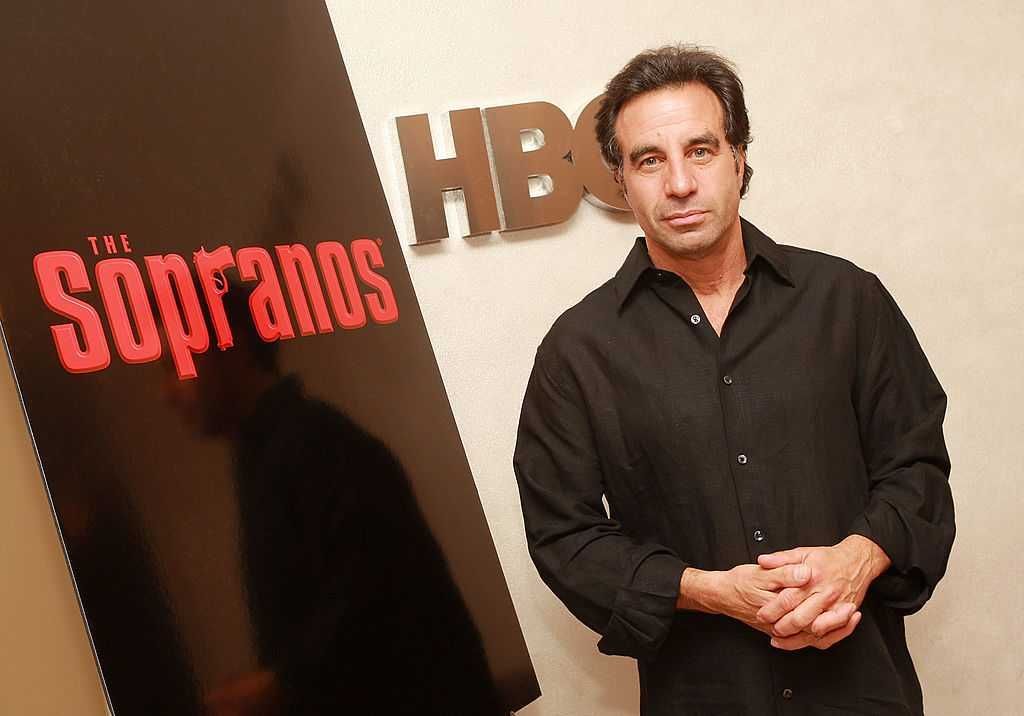
NEW YORK - JUNE 10, 2007: Actor Ray Abruzzo attends an HBO screening of the series finale of 'The Sopranos.' (Photo by Evan Agostini/Getty Images)
This means Netflix will gain Warner Bros Pictures/Television/Games, HBO, streaming service HBO Max, TNT Sports (international), and studio New Line Cinema.

The acquisition also comes with the rights to some of the most highly sought after shows around, such as "Friends," "Game of Thrones," "The Sopranos," "The Big Bang Theory," and those in the DC Comic Universe. As well movies like the "Harry Potter" franchise will move to Netflix.

CNN not included

There were questions as to what it would mean for CNN should WBD be acquired by a different platform, but the news network will fall under WBD Global Networks and not move to Netflix.

The same goes for networks like HGTV, Discovery, TBS, the Cartoon Network, TNT Sports (U.S.), along with the rights to the NHL, NCAA, and Olympics in terms of sports.

RELATED: Elon Musk claims to have canceled Netflix subscription over Charlie Kirk mockery and transgender indoctrination

Photo Illustration by Thomas Fuller/SOPA Images/LightRocket via Getty Images
Shareholder service

Ted Sarandos, co-CEO of Netflix said, "Our mission has always been to entertain the world."

He added that the combination of Warner Bros.' library and Netflix's catalogue will "give audiences more of what they love and help define the next century of storytelling."

Greg Peters, the other co-CEO of Netflix, said the acquisition will "accelerate" their business for decides.

"With our global reach and proven business model, we can introduce a broader audience to the worlds they create — giving our members more options, attracting more fans to our best-in-class streaming service, strengthening the entire entertainment industry and creating more value for shareholders."

Warner Bros. Discovery CEO David Zaslav added that the sale to Netflix will "ensure people everywhere will continue to enjoy the world's most resonant stories for generations to come."

Like Blaze News? Bypass the censors, sign up for our newsletters, and get stories like this direct to your inbox. Sign up here!

'They’ll leave themselves': Warner Bros. exec endorses ignoring employees who don't follow DEI initiatives


Warner Bros. Discovery's chief diversity officer supported and endorsed the idea of ignoring employees for at least 30 days if they don't support diversity initiatives and to leave them behind in the hopes that they leave a company on their own.

During a digital roundtable titled "The Future of DEI in Corporate America," Warner Bros. Discovery's chief global diversity, equity, and inclusion officer, Asif Sadiq, discussed the methodology of dealing with employees who don't fall in line with the diversity, equity, and inclusion framework.

Sadiq was joined by industry leaders in the DEI space, including Megan Hogan, global head of talent and chief diversity officer for Goldman Sachs.

In a segment of the discussion, Hogan laid out her strategy to deal with those who have resisted DEI efforts in the workplace.

"One of the things that came up was the frustration of having to work with or persuade the most powerful person in your ecosystem that the work is worth it, and they should reveal themselves more, they should take a bigger role, whatever it is. And we came up with this strategy: Find your people, and ignore the person you cannot persuade."

"You know exactly who they are," she continued.

Hogan then floated the method of ignoring an employee for an entire month until they get the unspoken message.

"If you can’t bring yourself to [ignore them] because of your professional orientation, give it 30 days. Ignore them for 30 days. Don’t take the bait, don’t send them the clip, don’t send them the newsletter, don’t send them the [pitch] deck. Just focus on the people who are willing to do the work. The new arrivals to the work, the new leaders who are preparing to be better allies, to be more vulnerable, to communicate better, and find your people even outside of your organization who can help you fine-tune, who can help you make sure you’re not reading the situation wrong, and let you know that you’re not alone."

"30 days. You can do it," she added.

Sadiq then chimed in, agreeing with Hogan's method and adding that if companies are able to change workplace culture to be more DEI-focused, then employees who don't like it would simply leave.

"Even beyond leaders, there’s always those few people you’ll never change," the diversity officer began.

"You’ll never convince them. You can try up until the end of eternity, and it will still not happen. We waste so much energy doing that sometimes, as individuals, whether you’re in a leadership position or in a team and so on," he went on.

"Focus on the ones who want to change, because that way you start changing culture, and if you change culture, often those people who don’t want to come around will start saying 'this place isn’t the way it used to be' and they’ll leave themselves, which is great."

Warner Bros. Discovery Chief DEI Officer Dr. Asif Sadiq promotes not working with, ignoring and discriminating against employees who do not support the DEI agenda.
— (@)

The online event took place through the Aspen Institute, an elite left-wing think tank with strong sentiments surrounding diversity.

The group sought to answer questions surrounding how to handle "DEI programs in the current socio-political climate," while dealing with employee expectations and external pressures surrounding DEI.

In addition, the Warner Bros. Discovery executive also stated that it was a great time to double down on DEI initiatives.

"Rather than focusing on those things you can’t impact or can’t change, focusing on those things you can impact and you can change is so important. Even when we’re trying to look at, potentially, what sort of programs, things we’re doing, I think it’s a great opportunity to double down our efforts on things. To do an audit of what’s worked, what hasn’t worked, where do we put more effort into, where do we reduce effort."

Like Blaze News? Bypass the censors, sign up for our newsletters, and get stories like this direct to your inbox. Sign up here!

PlayStation to delete already-purchased Discovery shows from user libraries with no refunds


Sony PlayStation will delete more than 1,200 video titles under the Discovery banner, meaning users who purchased digital access to the products will no longer be able to view them. The media company has made no mention of refunds, either.

PlayStation announced on its website that due to "content licensing arrangements," shows from the Discovery network will no longer be available after 2023.

"As of 31 December 2023, due to our content licensing arrangements with content providers, you will no longer be able to watch any of your previously purchased Discovery content and the content will be removed from your video library. We sincerely thank you for your continued support. Thank you," the company note read.

Then, the entertainment company detailed a massive of list of fleeing content which included shows like “MythBusters” and “Deadliest Catch."

No refunds were mentioned and none have been discussed by the company. The New York Times noted that Sony did not respond to request for comment regarding the issue, while outlets Nerdist and Forbes plainly noted that there will be "no refunds."

"PlayStation will delete users’ purchased tv shows with no refunds" Nerdist wrote, while Forbes noted, "PlayStation store to lose more than 1,200 purchasable titles - with no refunds."

If the PlayStation Network terms of service and user agreement is any indicator, it certainly appears that users should not expect reimbursement. The agreement noted that content is provided on a "revocable" basis.

"All Content provided through [PlayStation Network) is licensed on a non-exclusive and revocable basis to you for your personal, private, non-transferable, non-commercial, limited use."

Further in the agreement, the company stated that as the user, "you bear all responsibility for ensuring that you have the capabilities to view Video Content in the appropriate format, or at all."

Warner Bros. Discovery, which owns Discovery's content, has reportedly been working to add more subscribers to its own streaming services Max and Discovery+. According to the New York Times, this could be the reason behind the content pull.

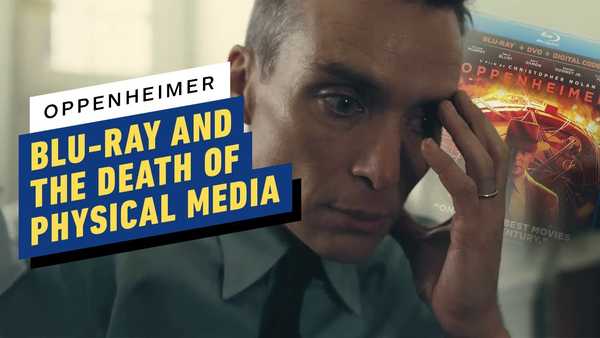
Director Christopher Nolan ("The Dark Knight," "Oppenheimer") recently criticized digital media for this very reason in an interview with IGN. Nolan explained that access to digital products often relies on the status of a distributor's relationship with the platform providing access to the media.

"If you buy a [DVD], you buy a Blu-Ray, it's on your shelf, it's yours. No company is going to break into your house and take it from you, repossess it; you know it's yours and and you own it," Nolan explained. "That's never really the case with any form of digital distribution. You're relying on the continued health of the supplier, the company who's supplying."


PlayStation has not yet responded to questions for comment regarding possible refunds, reimbursements, or user agreements.

This article will be updated with any relevant responses from PlayStation.

Like Blaze News? Bypass the censors, sign up for our newsletters, and get stories like this direct to your inbox. Sign up here!

Kentucky man finds a fortune in Civil War-era gold coins beneath his corn field: 'Unf***ing real'


A Kentucky farmer digging in his corn field struck gold earlier this year.
Had he found a solitary mid-19th century coin, he might be looking at a discovery worth $100,000 at auction. Instead, he found over 700 gold coins from the Civil War era.

The farmer, whose name and location have not yet been disclosed, can be seen in a short video posted to YouTube last month breathlessly surveying the find, saying, "This is the most insane thing ever."

Panning his camera quickly across the muddy discovery, he notes, "Those are all $1 gold coins. $20 gold coins. $10 gold coins. And look: I'm still digging them out."

The prospective multi-millionaire adds, "This is unf***ing real."

The National Post reported that the treasure, which has been dubbed "the Great Kentucky Hoard," contains 18 $20 Gold Liberty coins minted in 1863, one of which previously fetched nearly $100,000 at auction.

According to Professional Coin Grading Services, the 1863 $20 Gold Liberty coin weighs 33.4 grams, was designed by James Barton Longacre, and comprises 90% gold and 10% copper.

The Kentucky treasure also included over 600 gold dollar coins dating from 1850 to 1862, along with several silver coins.

Since the horde consists of Union currency, it is suspected that the former owners in the originally neutral state may have had dealings with the North or, at the very least, cause to hide their bullion from Confederate raiders.

The Numismatic Guaranty Company, the world's largest third-party coin grading service, indicated that this "cache of rare Civil War-era coins unearthed in the Bluegrass State includes finest-known 1863 Double Eagles as well as several interesting varieties and errors."

Jeff Garrett, a rare coin dealer and lead expert in American coinage, told the NGC, "While I’m always excited when someone calls asking for advice about a rare coin discovery, the opportunity to handle the Great Kentucky Hoard is one of the highlights of my career."

"The importance of this discovery cannot be overstated, as the stunning number of over 700 gold dollars represents a virtual time capsule of Civil War-era coinage, including coins from the elusive Dahlonega Mint," added Garrett. "Finding one Mint condition 1863 Double Eagle would be an important numismatic event. Finding nearly a roll of superb examples is hard to comprehend."

GovMint, a rare coin retailer, has been selected to auction the hoard to collectors.

Bill Gale, the president of GovMint, said, "This extraordinary opportunity allows us to share these historic coins with collectors and enthusiasts, ensuring their preservation and appreciation for generations to come."

The Great Kentucky Hoard Unearthing! youtu.be

Like Blaze News? Bypass the censors, sign up for our newsletters, and get stories like this direct to your inbox. Sign up here!

Scientists make groundbreaking discovery of low-frequency gravitational waves that create ripples in the fabric of space-time, proving Einstein correct 100 years later


Scientists made a groundbreaking discovery of low-frequency gravitational waves that are likely from supermassive black holes that create ripples in the fabric of space-time.

In 1915, Albert Einstein published his General Theory of Relativity, in which he determined that the intense gravity of extremely massive objects warps the fabric of space-time. If these gargantuan objects collide with each other, then gravitational waves would be sent into the universe.

Gravitational waves were first discovered in 2015 by the Laser Interferometer Gravitational-Wave Observatory.

The LIGO defines gravitational waves as "ripples in space-time caused by some of the most violent and energetic processes in the universe.

"The strongest gravitational waves are produced by cataclysmic events such as colliding black holes, supernovae (massive stars exploding at the end of their lifetimes), and colliding neutron stars," the LIGO explains. "Other gravitational waves are predicted to be caused by the rotation of neutron stars that are not perfect spheres, and possibly even the remnants of gravitational radiation created by the Big Bang."

On Wednesday, scientists announced that they had finally discovered these elusive low-frequency gravitational waves – which likely confirms Einstein's theory made over 100 years ago. The discovery was made after 15 years of data collection.

Scientists from the North American Nanohertz Observatory for Gravitational Waves announced in a news release:

The groundbreaking discovery was made by scientists with the North American Nanohertz Observatory for Gravitational Waves (NANOGrav) who closely observed stars called pulsars that act as celestial metronomes. The newly detected gravitational waves — ripples in the fabric of space-time — are by far the most powerful ever measured: They carry roughly a million times as much energy as the one-off bursts of gravitational waves from black hole and neutron star mergers detected by experiments such as LIGO and Virgo.

"These are by far the most powerful gravitational waves known to exist," said Maura McLaughlin – the codirector of the NANOgrav Physics Frontiers Center. "Detecting such gargantuan gravitational waves requires a similarly massive detector, and patience."

NEW Discovery of Gravitational Waves | NSF's Discovery Files www.youtube.com

"It's like a choir, with all these supermassive black hole pairs chiming in at different frequencies,” said NANOGrav scientist Chiara Mingarelli. "This is the first-ever evidence for the gravitational wave background. We’ve opened a new window of observation on the universe."

Scientists describe the low-gravitational waves as making a low-pitched "hum."

"Now that we have evidence for gravitational waves, the next step is to use our observations to study the sources producing this hum," said Sarah Vigeland of the University of Wisconsin-Milwaukee, chair of the NANOGrav detection working group.

Scientists believe the source of the low-gravitational waves is supermassive black holes crashing into each other in a death spiral.

"Those black holes are truly colossal, containing billions of suns’ worth of mass," NANOGrav explained. "Nearly all galaxies, including our own Milky Way, have at least one of the behemoths at their core. When two galaxies merge, their supermassive black holes can meet up and begin orbiting one another. Over time, their orbits tighten as gas and stars pass between the black holes and steal energy."

Luke Zoltan Kelley, a theoretical astrophysicist at Northwestern University and NANOGrav, said it is possible that the low-gravitational waves could also be created by cosmic strings, dark matter, and primordial black holes that formed soon after the Big Bang.

Gravitational waves create a 'cosmic symphony' that scientists are tuning into www.youtube.com

The scientists were able to find the low-gravitational waves by data collected from 67 pulsars, basically turning these pulsars into a galaxy-wide telescope.

"They closely observed pulsars, the ultra-dense remnants of massive stars that went supernova," NANOGrav said. "Pulsars act like stellar lighthouses, shooting beams of radio waves from their magnetic poles. As the pulsars rapidly spin (sometimes hundreds of times a second), those beams sweep across the sky, appearing from our vantage point on Earth as rhythmic pulses of radio waves."

"The pulses arrive on Earth like a perfectly timed metronome," the statement read. "The timing is so precise that when Jocelyn Bell measured the first pulsar radio waves in 1967, astronomers thought they might be signals from an alien civilization."

Over the 15 years of analysis, the collision of massive cosmic bodies may have disrupted the arrival of the signals from the pulsars.

"And if that pulse is a little bit late or a little bit early, then we may be able to attribute that to a gravitational wave passing through," said Jeff Hazboun, an astrophysicist at Oregon State University and a member of the NANOGrav team.

"As a gravitational wave passes between us and a pulsar, it throws off the radio wave timing," according to Phys.org. "That’s because, as Albert Einstein predicted, gravitational waves stretch and compress space as they ripple through the cosmos, changing how far the radio waves have to travel."

NPR said, "What they found is a pattern of deviations from the expected pulsar beam arrival timings that suggests gravitational waves are jiggling space-time as though it's a vast serving of Jell-O."

Popular Mechanics noted, "And here’s the key: light travels through space at a finite speed. The flashes from a pulsar at a certain distance from Earth will always hit Earth at the same intervals, because it will always take the light the same amount of time to travel from there to here. But if there’s suddenly, say, more space between the pulsar and Earth, it will take the light longer to travel from there to here, and the clock-like timing will be thrown off."

Mingarelli declared, "What’s next is everything. This is just the beginning."

Like Blaze News? Bypass the censors, sign up for our newsletters, and get stories like this direct to your inbox. Sign up here!

Major Discovery of Loud Gravitational Vibrations Across The Entire Universe www.youtube.com