Tennessee Needs To Keep Kids Off Phones During The Entire School Day
 From the time school begins until the dismissal bell rings, students' cell phones should be out of sight, out of mind.
A recent Fortune magazine article made waves with a grim admission: After more than $30 billion spent flooding classrooms with laptops and tablets, standardized scores keep sliding. Worse, neuroscientists now link more classroom screen time to lower performance. The device meant to modernize learning may be helping to unmake it.
Schools rushed into a technological revolution without asking the most basic question: What does this do to a child’s mind? Many teachers saw the answer firsthand and in real time. Administrators and “experts” ignored them because the fad sounded like “progress.”
A concerted push to remove screens from classrooms needs to begin now. Put the devices where they belong: limited tools, not the center of learning.
I taught history and civics in Florida public schools as the laptop trend took hold. Computers had sat in classrooms since my own childhood, but they played a supporting role. A few desktops in the back helped with research. A computer lab handled bigger projects. Most learning still happened on paper with books, notes, and conversation.
Then the Chromebook arrived: cheap, durable, limited, and perfect for one thing — living inside a web browser. Suddenly a district could put a machine not just in every room but in the hands of every student.
Public-school administrators love buzzwords. “Technological literacy” sounds noble, as if every ninth grader is training for Silicon Valley while working on their grammar assignment. Google did not just sell discounted laptops. It supplied a full ecosystem: Docs, Sheets, Slides, Classroom. The whole apparatus of schooling migrated into Alphabet’s software suite. Few people in the system asked why a private company wanted to become the operating system of childhood.
The laptop push also fit the religion of metrics. District offices love anything that produces dashboards, timestamps, and “engagement” graphs. A worksheet completed on paper frustrates the spreadsheet priesthood. A worksheet completed on a Chromebook generates data. The device did not just enter the classroom; it entered the managerial imagination, where metrics matter more than minds.
Once laptops became ubiquitous, the problems announced themselves. The deeper the integration, the harder it became to control.
Cheating became routine. Students searched answers in seconds. The larger problem went beyond quizzes. Googling replaced thinking. Kids refused to read because they assumed a quick search and a copy-paste counted as “learning.” Wikipedia became the default authority. Students stopped vetting anything because they treated the first search result as truth. Even writing shifted. Instead of building an argument, students stitched together paragraphs from the internet and hoped the teacher felt too tired to fight.
RELATED: The world changed, and now we homeschool
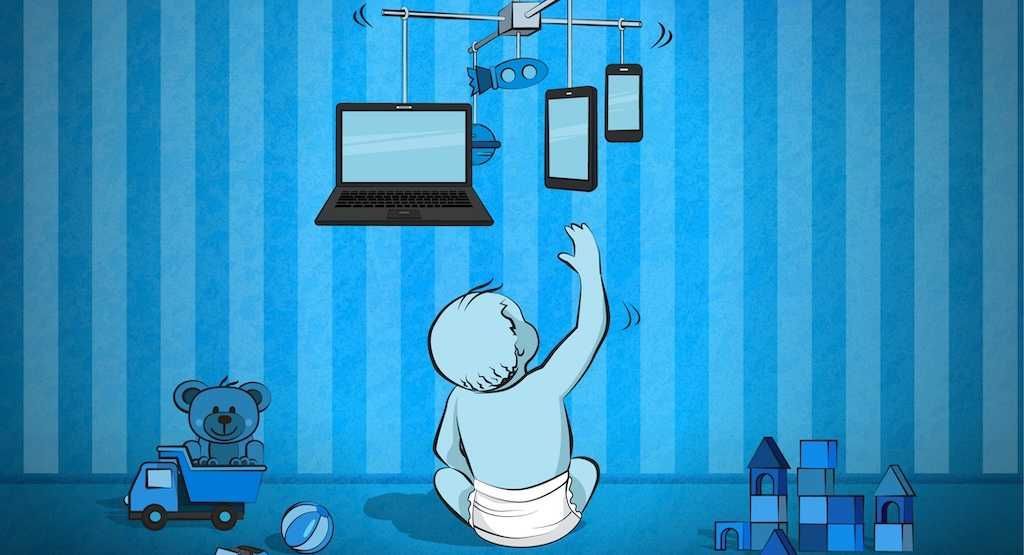
Schools tried parental controls. Teenagers treated those controls as a challenge. When thousands of bored adolescents share a building, they collaborate. A new filter went up; within days, kids found a workaround. Soon the screens again showed games, movies, even pornography — during class, in plain view, behind a pretense of “work.”
Students used shared Google docs as a covert messaging system. They gossiped, bullied, and planned actual crimes while keeping a document open to look studious. My school eventually held assemblies to remind students that everything typed into a document leaves a record and that bragging about criminal activity or sexual escapades can end up as evidence.
All of that raised another issue: privacy and capture. Google did not subsidize devices and software out of corporate charity. By making Google search and Google apps the center of a child’s information life, the system trained dependency. Google finds the truth. Google organizes the truth. Google presents the truth. A student’s education happens inside a Google ghetto. Pretend the company is not collecting that data if you want, but the incentives cut the other way.
Screens also fed the attention crisis. Administrators told teachers to stop showing videos longer than three minutes without pausing to explain because students could not stay focused. The device that was supposed to expand horizons kept shrinking attention spans. Teachers began competing with the entire internet for a child’s attention, and no lesson plan can win that contest for long.
The system made escape difficult. Florida went all-in on Chromebooks and tied them to everything. Standardized tests moved entirely onto laptops. “Test prep” software got woven into daily coursework. Students with accommodations or limited English got pushed toward the device as a universal crutch. Denying a Chromebook got treated as denying an education. Teachers who resisted risked discipline.
I reached a point where my students mattered more than compliance. I rebuilt my classroom around paper, books, and discussion. Students used Chromebooks only for mandated testing and accommodations we could not meet otherwise.
The shift showed results fast. Students engaged more. Distraction dropped. Discipline improved. More assignments got finished. Grades rose.
Then COVID-19 struck.
RELATED: America’s new lost generation is looking for home — and finding the wrong ones

Remote learning turned the screen into the classroom itself. Even Florida, which resisted lockdown hysteria, shifted much of schooling online. Learning fell off a cliff. The lockdowns devastated achievement, but the damage did not end when students returned in person. After COVID, it became nearly impossible to pry students, parents, and administrators away from screen-based schooling. Digital integration became mandatory. No exceptions.
Now the corporate press arrives to play cleanup. Reporters discover the failure well after the money has been spent, the infrastructure has hardened, and a generation has been trained to treat a browser as a brain.
Public education is stuffed with managerial drones who chase consensus and trends while ignoring what helps students. The bureaucracy will keep this program alive through sheer inertia even as evidence piles up. Parents and lawmakers need to force a reset: paper-based instruction as the default, screens as a tightly limited accommodation, and tests that reward reading and writing instead of clicking. Districts should stop outsourcing childhood to Big Tech, stop laundering ideology through “digital citizenship,” and start treating attention as a scarce resource worth defending.
A concerted push to remove screens from classrooms needs to begin now. Start with elementary grades. Bring back books. Bring back handwriting. Bring back sustained attention. Put the devices where they belong: limited tools, not the center of learning.
Kids learn slower, but they learn for real.
In “Politics,” Aristotle explains that political rule comes in three basic forms: rule of one, rule of the few, and rule of the many. Each form has a healthy and a degenerate expression. Monarchy and tyranny describe rule by one. Aristocracy and oligarchy describe rule by the few. Polity and democracy describe rule by the many.
What separates the good from the bad in each category is not structure but motive. A king governs for the common good. A tyrant governs for himself.
Despite the millennia that separate us from Aristotle, the philosopher’s portrait of tyranny feels uncomfortably contemporary.
Aristotle does more than classify regimes. He explains, in cold and unsentimental terms, how tyrants preserve power once they seize it. His warnings, written more than 2,000 years ago, read less like ancient theory and more like a field manual.
The tyrant begins by eliminating rivals. He fears competition, especially from men of spirit and competence. Anyone admired for virtue, courage, or leadership poses a danger because excellence inspires imitation. Such men are removed through exile, execution, or disgrace.
Next the tyrant attacks institutions that allow citizens to form bonds. Aristotle lists common meals, clubs, educational gatherings, literary societies, and discussion groups. Any shared practice that fosters trust, loyalty, or independent thought threatens despotic rule. Organization creates solidarity, and solidarity creates resistance.
The tyrant also forces citizens to live publicly. Privacy breeds conspiracy. Public life enables surveillance. Aristotle describes rulers who compel their subjects to remain visible so that dissent never escapes notice. Long before Bentham’s panopticon, Aristotle understood that constant observation disciplines behavior.
Surveillance alone does not suffice. Tyrants cultivate networks of informers to uncover thoughts that cannot be seen. Citizens learn to treat one another as potential threats. Suspicion replaces trust. Speech becomes guarded. Silence becomes safety.
Aristotle could not have imagined digital surveillance, but he would have recognized its function. Technology merely perfects a strategy the ancients already understood.
Social bonds must then be weakened. The tyrant sows discord between neighbors, friends, and families. These relationships form the first line of resistance to centralized power. When trust dissolves at the most intimate level, organized opposition becomes nearly impossible.
Poverty also serves the tyrant. Aristotle observes that despots deliberately exhaust their populations with endless labor. The goal is not productivity but distraction. Citizens too busy to rest or reflect lack the energy to conspire.
He cites the construction of the Egyptian pyramids as an example of forced labor designed less to achieve a purpose than to consume a people’s strength. The task glorifies the ruler while leaving the population depleted.
War further strengthens despotism. Constant external threat convinces citizens that they need a strong ruler to survive. Crisis suspends normal limits. Emergency justifies control. Under perpetual conflict, organization becomes treason.
Aristotle claims that tyranny, the degenerated rule of one, borrows from the worst features of democracy. Despots empower groups unlikely to organize independently against them. He mentions women and slaves not as moral judgments but as political calculations within the ancient world.
The logic remains familiar. Tyrants elevate those dependent on the regime and hostile to existing social hierarchies. Dependence fosters loyalty. Resentment supplies enforcement.
Flattery plays a crucial role. Tyrants surround themselves with sycophants who inflate their ego and confirm their righteousness. Men willing to abase themselves rise quickly. Men of honor refuse to flatter and therefore remain dangerous.
Flattery becomes a sorting mechanism. Those who value dignity exclude themselves. Those who crave favor advance.
Aristotle adds that tyrants prefer foreigners to citizens. Citizens possess memory, tradition, and moral expectation. They know how things once were and how they ought to be. Foreigners lack these attachments, and they are happy to flatter the ruler who elevated them.
This arrangement benefits both sides. The tyrant gains enforcers without local allegiance. The foreigner gains status, wealth, and protection. Without the ruler, he has nothing.
RELATED: Do you want Caesar? Because this is how you get Caesar.

Despite the millennia that separate us from Aristotle, his description of tyranny feels uncomfortably contemporary. Surveillance now operates through algorithms and cellphone cameras rather than forcing everyone to live at the city gates, but the purpose remains unchanged. Security replaces liberty. Total observation replaces trust.
Our institutions remove ambitious and virtuous individuals while elevating compliant managerial drones. Debt binds the population to endless labor. Work consumes life without building independence. Citizens remain busy, anxious, poor, and isolated.
Cultural and political authorities weaken family, denigrate religion, and discourage independent association. Community dissolves into administration. Loyalty transfers from neighbors to systems.
Ruling classes increasingly rely on populations with little connection to national history or tradition. These groups have no reason to defend inherited norms and every incentive to please those who grant them status.
Some details differ but the formula for tyranny does not. Aristotle understood tyranny because he understood human nature. His analysis endures because the same impulses govern power in every age.
There is nothing new under the sun.
Braxton Danker, 2, was beaten to death on Mother's Day in 2018. His killer, 32-year-old Khristian Tyler Martzall, was accused of treating him like a "punching bag."
Despite the gravity of the situation and the urgency of ensuring that justice was properly meted out — Martzall was ultimately convicted of second-degree manslaughter and let off with time served — the judge presiding over the case didn't seem capable of taking her eyes off of her phone.
The Oklahoman obtained security videos from the Chandler courtroom, which appear to show Lincoln County District Judge Traci Soderstrom perusing Facebook, searching for a GIF, and texting as the trial unfolded, including when the victim's convict mother wept bitterly on the stand.
According to the Oklahoman, Soderstrom, 50, stressed to the jury at the outset of the trial that they must power down their electronic devices or at the very least place them in airplane mode.
"This will allow you to concentrate on the evidence without interruption," instructed Soderstrom.
Soderstrom was apparently immune to distractions or averse to her own advice, because courtroom footage, taken by the ceiling camera that was above her, shows her repeatedly picking up and interacting with her phone during opening statements and testimonies.
District Attorney Adam Panter told the Oklahoman that upon reviewing the footage, he determined the judge had "spent hours of the trial on her cell phone both texting and scrolling through social media."
"It is both shocking and disappointing," said Panter. "Jurors are banned from using cell phones in the courtroom during trials because we expect them to give their full time and attention to the evidence being presented. I would expect and hope the Court would hold itself to the same standard required of the jurors, regardless of the type of case."
According to Panter, the judge subsequently had the camera moved rather than address her behavior.
Defense attorney Velia Lopez, whose client ended up walking out of court rather than catching a first-degree murder conviction as prosecutors had hoped, suggested the distracted judge had done a great job.
"So if she was or was not on the phone, I did not see it," said Lopez.
While the Oklahoma Court of Criminal Appeals has never before had to deal with a judge mindlessly texting during a trial, the Oklahoman indicated it could throw out a criminal conviction if "a judge loses control of the trial by being absent from the bench during proceedings."
The Code of Judicial Conduct, to which Oklahoma judges are bound, further states, "A judge shall act at all times in a manner that promotes public confidence in the independence, integrity and impartiality of the judiciary," reported the New York Post.
The Associated Press indicated that the Oklahoma Council on Judicial Complaints is investigating Soderstrom.
Taylor Henderson, director on the council, stated that since such misconduct investigations are secret under the law, she could not confirm whether one was under way. However, Sgt. Aaron Bennett of the county sheriff's office declined to give the courtroom footage to the Associated Press, citing its use by the Council on Judicial Complaints.
Soderstrom was elected to her seat last November and sworn in on January 9. Her term ends in 2027.
Her scandal comes just weeks after a suspected killer's murder conviction was overturned because the former Oklahoma County judge who presided over his trial, Tim Henderson, was found to have had an affair with one of the prosecutors assigned the case.
During murder trial, Oklahoma judge repeatedly uses cell phone to text and scroll Facebook youtu.be
Like Blaze News? Bypass the censors, sign up for our newsletters, and get stories like this direct to your inbox. Sign up here!

 For a generation raised to be safe rather than strong, the thought of children can be terrifying.
 Perhaps students will discover the lost arts of doodling, passing notes, planning outings with friends, and reading actual books from the school library.
 www.theblaze.com
 www.theblaze.com