Pro-Trans Doctors Lied To Keep Federal Money Flowing For Puberty Blockers
 The NIH awarded millions of dollars in grants for studies seemingly designed to reach a particular conclusion pushing cross-sex hormones.
The timing couldn’t be better.
Just as an Anthropic safety researcher resigned over the company’s irresponsible behavior and another researcher warned that AI developers are creating systems with a 10% chance of killing all humans in the next decade, Dr. Ezekiel Emanuel is enthusiastically lobbying our medical system to entrust AI to become our primary physicians.
Now, as a physician who has practiced internal medicine for nearly 30 years, I appreciate Emanuel’s enthusiasm. I really do. But he is simply wrong.
When it comes to our best and worst moments in life, we will always want another person with us.
Let’s begin with his recent essay in the Journal of the American Medical Association, the flagship journal of internal medicine. Citing “studies” showing AI-only medical care is likely to be better than physician-alone or AI-physician hybrid care, Emanuel identifies five AI-superior areas: eliciting medically relevant information; establishing a differential diagnosis; specifying diagnostic testing; prescribing guideline-concordant treatment; managing chronic diseases.
But the devil is in the details.
First, none of the studies Emanuel cites meets the gold standard: a randomized, double-blind, multicenter, placebo-controlled trial with hard clinical end points. Instead, he relies largely on small observational studies, simulated clinical cases, and meta-analyses. Each has limitations that complicate any attempt to draw definitive clinical conclusions.
If anything, these studies raise more questions than answers. This is no problem if Emanuel’s assertion is that we need to perform more studies. However, when he repurposes his JAMA articles into a jaunty Atlantic Monthly essay, he insists that cautious medical minds are “ignor[ing] available evidence and could hold untold numbers of Americans back from better health.”
My question to Emanuel is, in light of his low-quality studies, what sound, available evidence?
Second, Emanuel seems enamored with algorithms. Established clinical pathways can provide valuable, evidence-based guidance for evaluating symptoms, treating disease, and determining the standard of care. But experienced physicians know that clinical judgment cannot be reduced to an algorithm.
Our patients and their problems are not simply algorithmic. Every day, physicians encounter complexities and confounders, curveballs, and exceptions. We need more than book knowledge and flowcharts. Open-mindedness, intuition, and common sense — all of which are born of experience.
Emanuel strikes me as one of the rationalists that stirred up philosopher Michael Oakeshott’s ire. The rationalists are those who worship at the altar of technical knowledge (knowledge of experts that can be written in a book), yet blithely dismiss indispensable practical knowledge (knowledge gained by life and experience). It seems good in theory, but it all falls apart in practice.
RELATED: You can medicate despair. You can’t manufacture meaning.
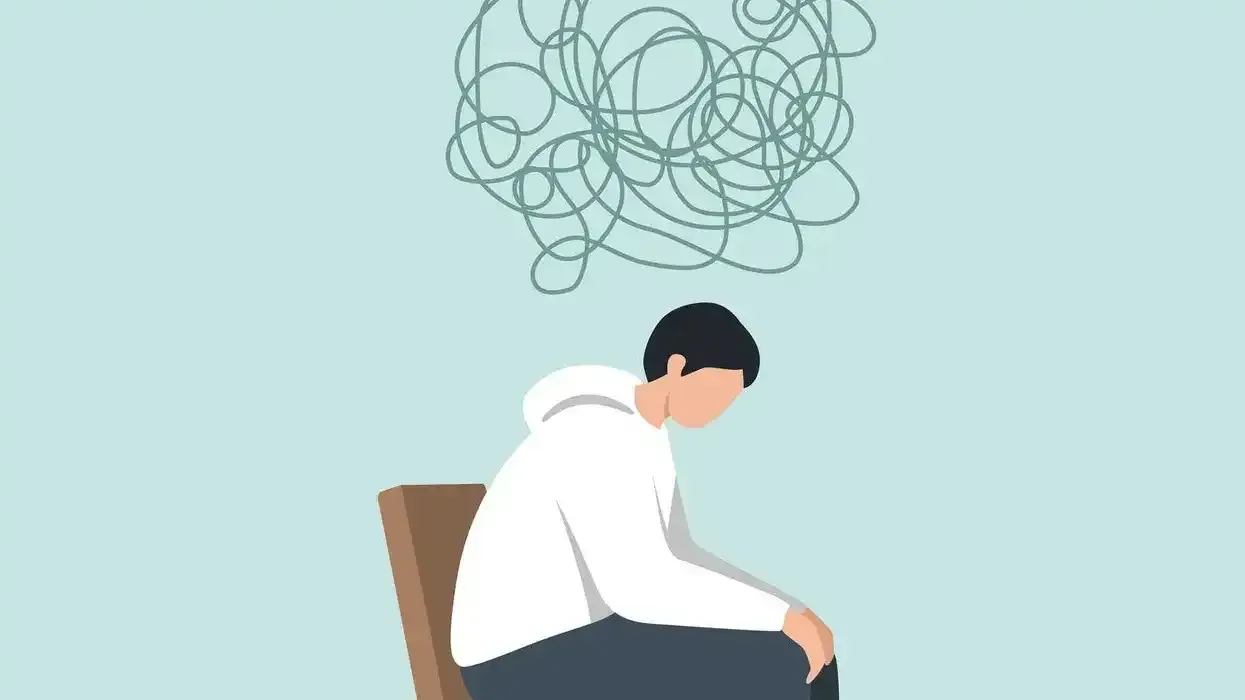
Third, Emanuel has great confidence in consensus statements and practice guidelines. These are recommended diagnostic paths or treatment plans offered by august bodies of medical deliberation or the best available evidence. Sadly, most of this evidence is moderate to weak at best.
As Abba Eban once observed, “A consensus means that everyone agrees to say collectively what no one believes individually.” While AI draws from an immense fund of knowledge, physicians (while using AI) can add wisdom that asserts purifying qualifiers such as “it depends” or “up to a point.”
If Emanuel’s further criticism is that human beings are hampered by their propensity for error, is it not error-laden human knowledge that informs artificial intelligence? Inadvertently and ironically, the muddled human condition is baked into artificial intelligence.
Finally, Emanuel seemingly forgets about the human touch. Surely, as a capable oncologist, he recalls moments when he pushed away from the computer, took off his glasses, leaned forward, and truly engaged with the patient. At that moment of profound and unfettered intentionality, the luminous wonder of the physician-patient relationship came vibrantly alive.
Are we to be convinced that this relationship doesn’t matter? That it is simply an expendable byproduct in a life’s journey through sickness and health? The iconic 19th-century godfather of medicine, Dr. William Osler, would be aghast at such an assertion. “The good doctor treats the disease,” he once insisted. ‘The great doctor treats the patient who has the disease.”
RELATED: Now they’re saying the AIs built ‘secret civilizations’ — the truth is far worse

Perhaps the studies will come. Perhaps, at some point, artificial intelligence will demonstrably outperform physicians (or even physicians aided by AI), and we who practice will need to bow to our computerized overlords as they, like C-3PO, dispense medical wisdom with their soothing metallic voices and remarkable programmed empathy.
But I’m not convinced.
There is a story of a man openly weeping in a massive crowd upon hearing of the death of President Franklin Roosevelt in 1945. A nearby reporter approached him and asked if he personally knew the president. “No, I didn’t know President Roosevelt,” he answered. “But he knew me.”
When it comes to our best and worst moments in life, we will always want another person with us. Someone who can help us, who cares about us, and who knows us.
Artificial intelligence is a wondrous tool, but it doesn’t know us. Find a good physician who does.
When the Walter Reed scandal erupted in 2007, the officers under fire were more than names in a newspaper to me. I knew many of them. I saw their frustration and outrage as they scrambled to address failures some were only then discovering.
My wife, Gracie, and I were at Walter Reed frequently. A bilateral amputee herself, she had been invited to sing and spend time with wounded warriors, particularly women returning from Iraq and Afghanistan with amputations. The military was struggling to care for troops with devastating injuries, many caused by improvised explosive devices.
We cannot turn the page simply because the people responsible do not want us to read it.
Knowing people working there helped me understand the strain. Knowing more wounded were coming helped me understand why the failures could not wait.
The Washington Post exposed serious problems in outpatient conditions and care, including mold, vermin, bureaucratic delays, and wounded soldiers falling through administrative cracks. The reporting was painful for people I knew. It was also necessary.
I discussed the scandal with my father, a retired Navy captain. The military, he explained, survives by folding painful lessons into its policies, procedures, and institutional memory so others do not have to learn them at the same cost.
That is what an after-action review is for: What happened? Why did it happen? What changes now?
The lesson must outlive the embarrassment.
When our leaders and the media lie, conceal, or confidently tell us something that later proves false, they do the heavy lifting for our enemies. How do we defend the country together when we cannot trust the people describing the danger?
Consider the assurances about President Biden’s capacity. In February 2024, press secretary Karine Jean-Pierre said, “He is sharp. He is on top of things.” In March, MSNBC’s Joe Scarborough went much further, calling the sitting president “the best Biden ever” intellectually and analytically.
Then came the June debate and Biden’s withdrawal from the race in July.
The debate did not establish a medical diagnosis. It did demand an explanation from people who had spent months assuring the public that concerns about Biden’s capacity were misplaced.
In May 2025, Scarborough finally said, “I was obviously wrong.” He explained that his confidence came from extended personal encounters with Biden. Then he added that he was not sure what lesson to take from the episode.
That’s precisely the problem.
What evidence did he discount? What did he see that persuaded him? What did others see that contradicted it? What will he do differently next time?
RELATED: Gavin Newsom invoked Nietzsche. I thought of ‘Blazing Saddles.’

Those questions belong not only to Scarborough but to every politician, aide, reporter, editor, broadcaster, and institution that gave the public confident assurances. An after-action review cannot end with “I was wrong” any more than it can end with “I meant well.”
The next people relying on you need to know what changed.
The border demands the same accounting. In September 2022, Vice President Kamala Harris said, “The border is secure.” In October 2023, Homeland Security Secretary Alejandro Mayorkas testified that more than 600,000 known “gotaways” had evaded apprehension during that fiscal year.
What did “secure” mean? More important, what evidence would have caused the administration to abandon that description sooner?
An honest accounting must distinguish between what officials got wrong and what they knowingly concealed. That requires records, testimony, names, timelines, and decisions. Citizens should not have to settle for whichever explanation best protects a party, an administration, or a network.
We may expect politicians to lie. That does not excuse them. Nor does it relieve journalists of the obligation to test what politicians say rather than repeat it.
Over 40 years of caregiving, I have had plenty of doctors get things wrong. I understand the reluctance to offer a mea culpa. But I take their advice home and live with the consequences. If we are going to continue together, I need to know how the next decision will be better.
RELATED: The fourth bus of the Apocalypse

That was the obligation at Walter Reed. The next wounded soldier needed the previous failure corrected whether anyone responsible felt sorry or not.
“Mistakes were made” leaves the authors conveniently absent. “Turn the page” asks the public to move on while the questions remain unanswered.
We cannot turn the page simply because the people responsible do not want us to read it.
Our enemies benefit from failures we refuse to examine. If those responsible will not come clean, voters should elect people willing to use lawful investigations, public hearings, compelled testimony, and the release of records to establish what happened. Where evidence establishes crimes, pursue prosecution.
But a hearing cannot become the place where accountability goes to die.
The Constitution provides authority. The law provides tools. Voters must supply people willing to use them.
This election, ask candidates whose records they will demand, which decisions they will examine, and whether their own allies will have to answer questions under oath. Anyone can promise to investigate an opponent. The test comes when the evidence reaches a friend.
I owe my preferred candidates and broadcasters that same scrutiny. Excusing them would preserve the very failure I want corrected.
We can disagree on policy and still defend this country shoulder to shoulder. But we cannot make truth optional. Calls for unity ring hollow when the people asking for trust refuse to account for how they broke it.
Our children will inherit whatever we excuse.
The story of Lindsay Clancy and the alleged murder of her three children is undeniably heartbreaking. While the jury is still out on what her fate will be, BlazeTV host Allie Beth Stuckey believes it’s important to recognize that she was managing her postpartum depression with 13 different medications prescribed by six different doctors.
One of the drugs Clancy was on was an SSRI, which adjusts a person’s level of serotonin.
In an interview Stuckey conducted last year with board certified psychiatrist Josef Witt-Doerring, he argued that “one of the problems with all of these drugs, all of these so-called antidepressants, SSRIs, is that studies show that the premise they are based on is actually unsupported by evidence.”
“There was a major 2022 review in molecular psychiatry that found no solid evidence that people with depression have lower serotonin levels. And this doctor that I had on my show points out that there is still no blood test. There’s no brain scan that can objectively diagnose depression,” Stuckey explains, noting that it’s simply a "symptom checklist.”
“And so, if you are putting someone on something that is affecting their serotonin, which is an important hormone in mood regulation, but that was never the problem in the first place, you’re just giving them the side effects. You’re just giving them the cons and none of the pros from emotional regulation,” she continues.
While many people claim that SSRIs have changed their lives, Stuckey points out that it’s possible that having your “emotional response” blunted and your “spectrum of emotions” shortened could bring you back “from the brink of dark depression.”
“It doesn’t treat their depression. It doesn’t ever get to the underlying cause, but it is possible that an SSRI can have that effect, but it can also have all of these other effects, especially if the root cause is never addressed,” she explains.
And psychiatric medication is increasingly common, with 17% of Americans taking them.
“Millions unknowingly are at risk of drug-induced brain damage while being told that their drugs are safe. According to this doctor, Witt-Doerring, patients who stop psychiatric drugs even gradually can suffer protracted withdrawal that feels like permanent brain damage,” Stuckey says.
“It can cause neurotoxicity. It can also trigger a condition called tardive dysphoria that includes apathy, dissociation, chronic fatigue, agitation. He notes that multiple people have taken their life because the symptoms from this can be so extreme, it can drive people to suicide,” she continues.
Another doctor Stuckey interviewed, Dr. Adam Urato, “warned of the many dangers of being prescribed SSRIs, specifically during pregnancy, but it also applies to that postpartum period.”
Urato, chief of maternal fetal medicine at MetroWest Medical Center, “has called for stronger FDA warnings for SSRIs, especially for pregnant mothers.”
While women are told that SSRIs won’t affect the baby, cause complications, or affect the breast milk, Urato has claimed that is “not accurate.”
“He has highlighted how SSRIs are actually pushed on mothers both before pregnancy, during pregnancy, and after, even though they can alter things like your own brain function, but also fetal brain development,” Stuckey explains.
“And so, all of this plays into the defense’s argument that says that, ‘Look, this was beyond her control. Someone dropped the ball here. It wasn’t her. She was trying to get the help that she wanted,’” she says. “That’s what they’re arguing.”
To enjoy more of Allie’s upbeat and in-depth coverage of culture, news, and theology from a Christian, conservative perspective, subscribe to BlazeTV — the largest multi-platform network of voices who love America, defend the Constitution, and live the American dream.
 Doctors are prescribing hormonal birth control to women as the fix-all solution due to various incentives.
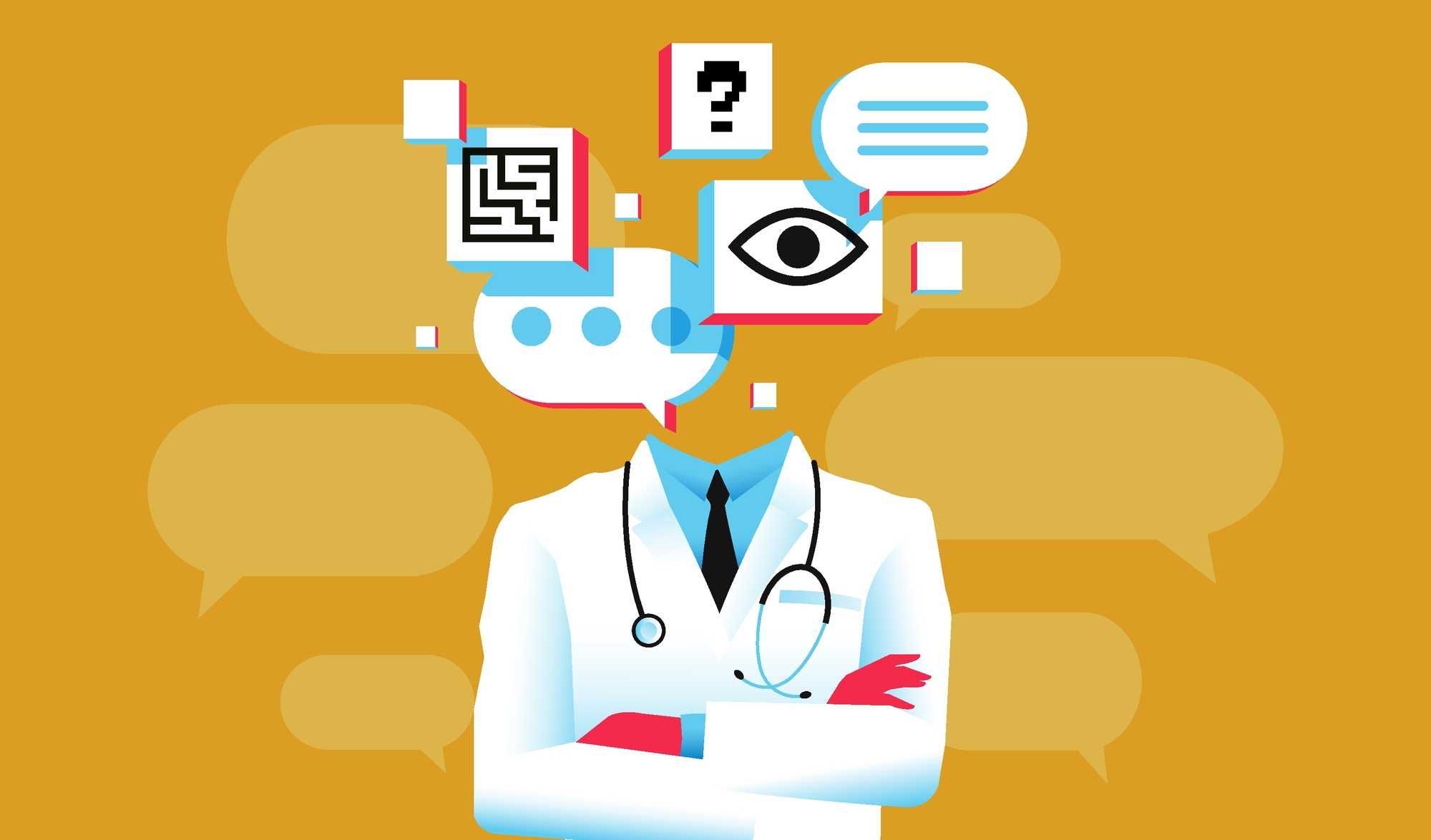
 If America wants universal healthcare, it must confront the gratuitous waste of medical resources by the doctors entrusted to steward them.
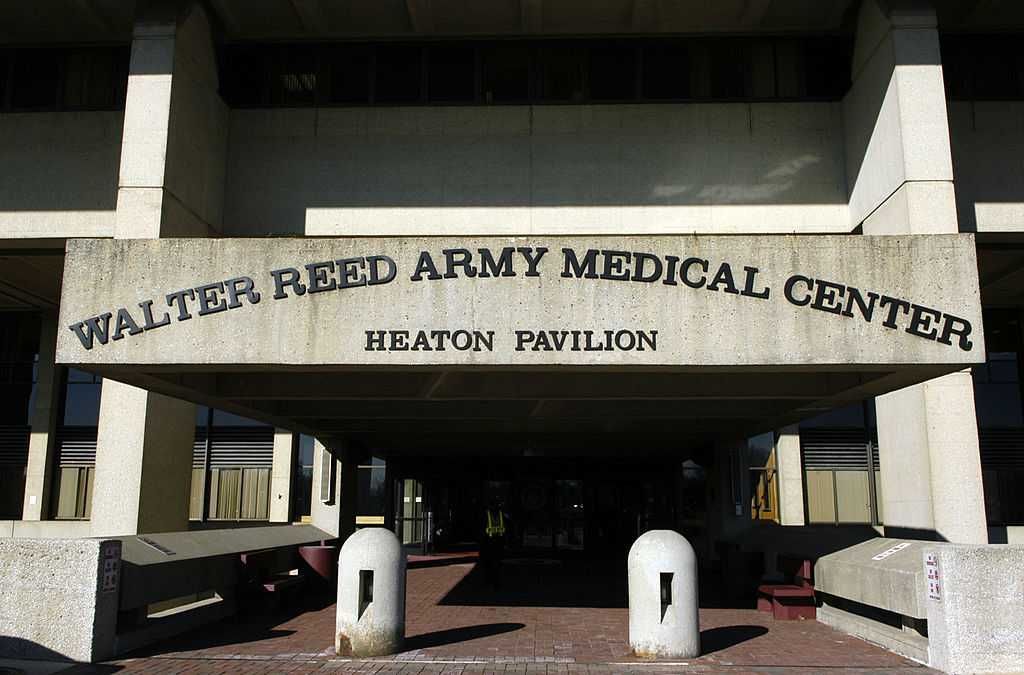
 The government is looking for your input to decide whether the medical elite should continue to decide what your health care looks like.
 The social taboo against questioning how disillusioned men presented themselves may have helped keep child abuse unreported.
 Kennedy’s new educational program could change the course of America’s health crisis, one medical student at a time.
 Insurance companies reviewing the gender mutilation landscape can see nothing but hefty checks written to plaintiffs and their attorneys.
 www.theblaze.com
 thefederalist.com
 thefederalist.com