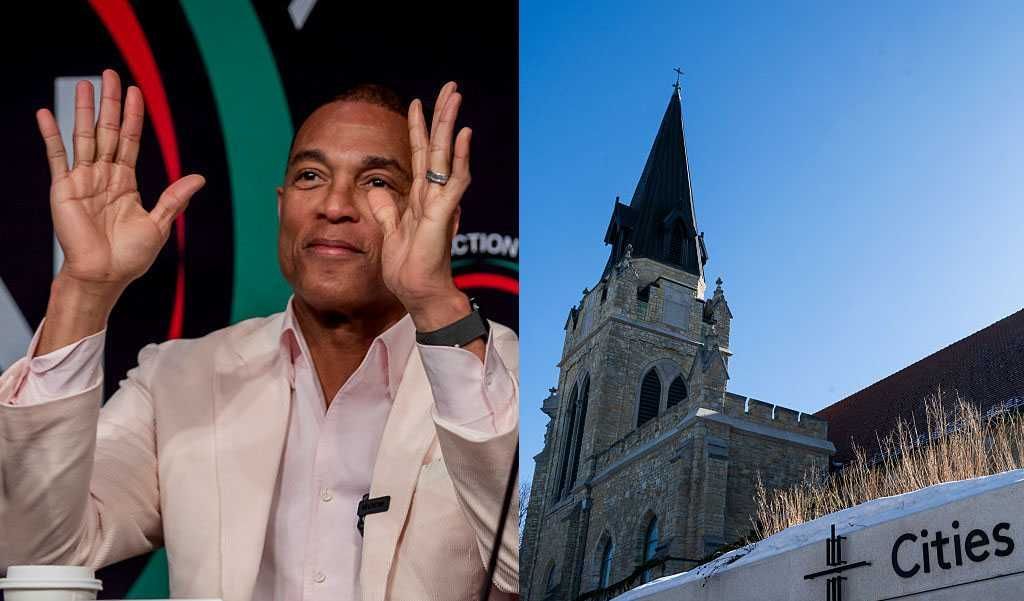
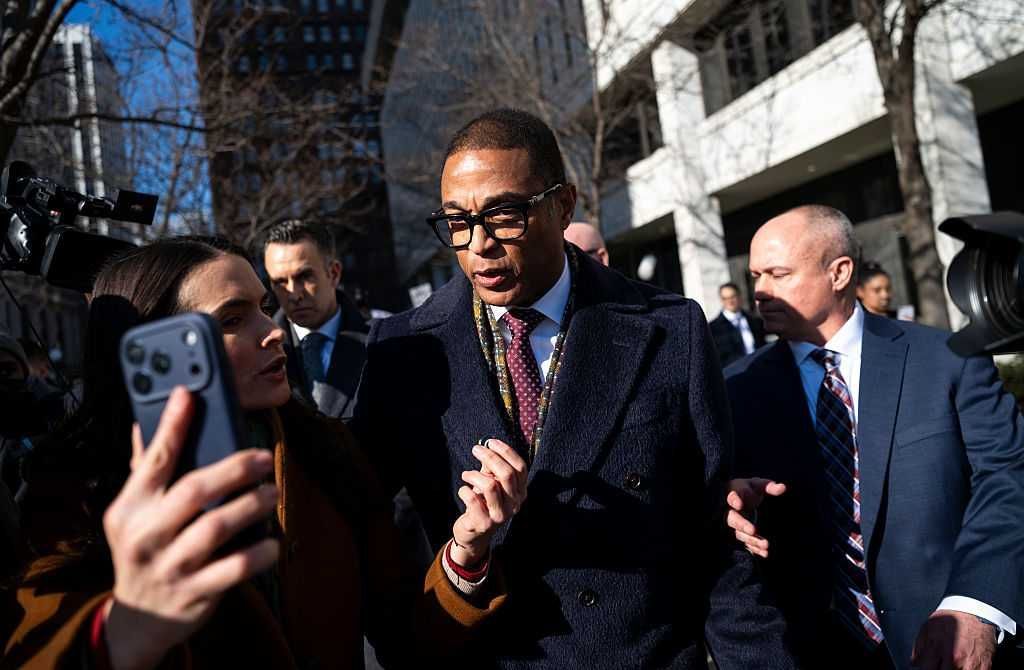
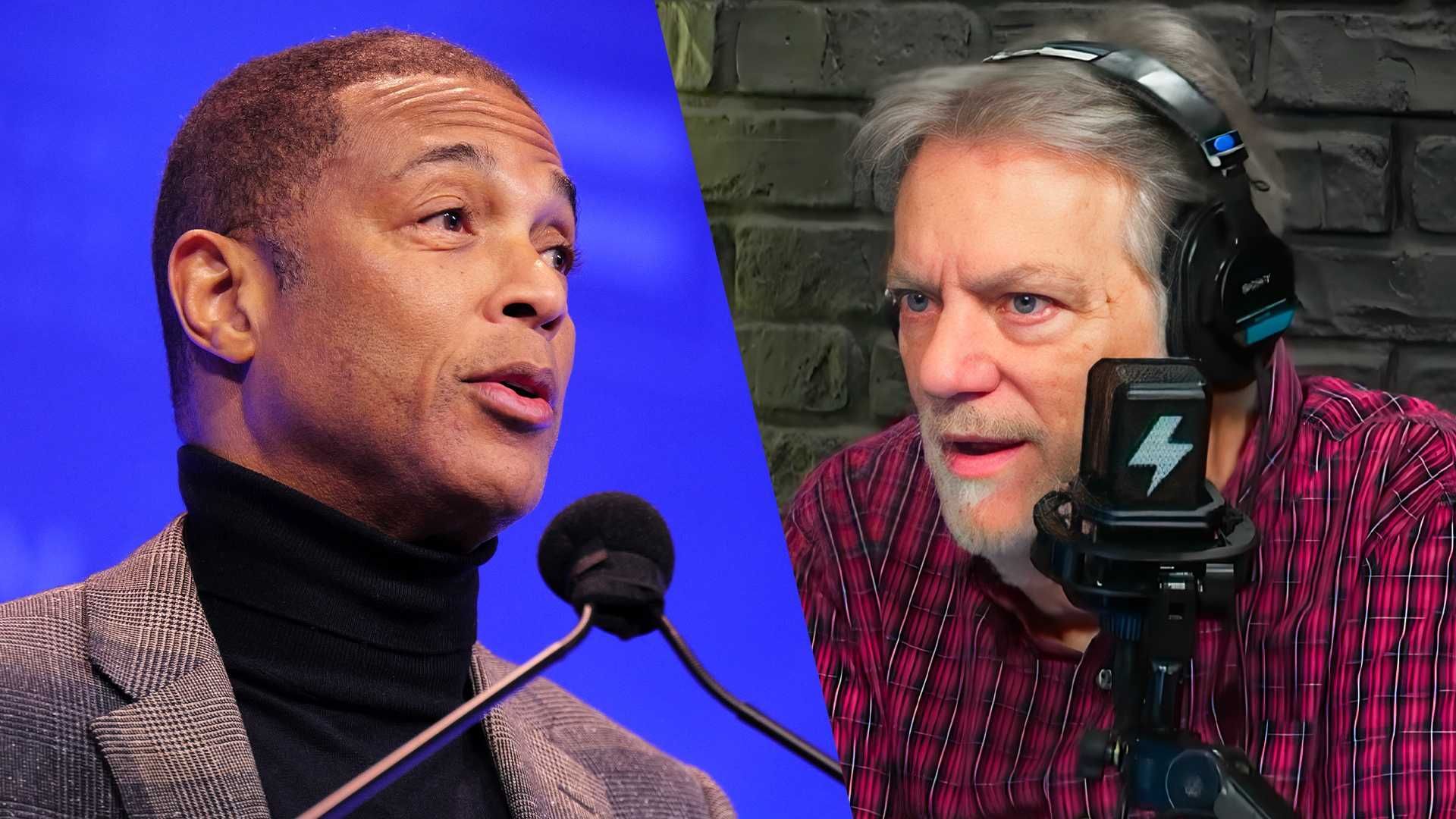
Don Lemon enters plea following January arrest in connection with Minnesota church disruption


After former CNN anchor Don Lemon allegedly joined a group of protesters who stormed a church in St. Paul, Minnesota, during a service last month, he finally appeared for his arraignment on Friday.

The incident allegedly involving Lemon and several other protesters occurred on January 18. Lemon was arrested on January 29 and released the following day, according to a CNN report.

Lemon is charged with conspiring to violate someone's constitutional rights and violating the FACE Act.

Lemon, as expected, pleaded not guilty to the two charges brought against him. Lemon is charged with conspiring to violate someone's constitutional rights and violating the FACE Act.

Lemon has reportedly hired former Minnesota federal prosecutor Joseph H. Thompson to represent him.

RELATED: Don Lemon ARRESTED over apparent involvement in church invasion; Jim Acosta whines

Photo by Stephen Maturen/Getty Images

Upon his release from custody late last month, Lemon said, "I have spent my entire career covering the news — I will not stop now. In fact, there is no more important time than right now, this very moment, for a free and independent media that shines a light on the truth and holds those in power accountable."

Like Blaze News? Bypass the censors, sign up for our newsletters, and get stories like this direct to your inbox. Sign up here!

Deace: The Pam Bondi Show needs to be canceled


I know you thought the Super Bowl halftime show brought to you by a double-digit-IQ reprobate was bad, but Pam Bondi appeared before Congress this week and said "hold my beer."

She’s playing the Republican base for suckers with her constant night-at-the-improv act. That future gig as a Fox News contributor ain’t gonna happen all by itself.

The memes cataloguing her jackassery simply won’t stop despite Trump’s mightiest efforts to bail her out. I mean, how do you explain away "don’t worry about the Epstein rape island because have you considered where the Dow is?"

Yikes.

The midterms called and said the blue wave is a-coming! We’ve clearly come a long way from "lock her up," but in exactly the wrong direction. The message is highly radicalized, but the perception increasingly seems to be that we are not delivering on it and perhaps we never intended to.

A lot of politics is perception. That’s just the plain reality of it. It’s why one of my Ten Commandments of political warfare is "never attack what you aren’t prepared to kill." So if, for example, we pull out of Minneapolis right now and declare victory but Tim Walz, Don Lemon, and Ilhan Omar pay no discernable cost, what has actually been gained?

In fact, the right will have managed to disappoint both sides of its political coalition. First the establishment thought the optics were too violent, and now the base thinks the optics are too cowardly. Then add to that mix elitist talk about the Dow papering over the need to expose the perpetrators of global sex crimes, and prepare for a dire electoral judgment day.

You can personally admire the president and everything he has done for this country (and I do) but still remember that Trump lost about 40 House seats in the 2018 midterms. What about this time? You have to live in the world of actual realities and outcomes. So when the pollster calls you about the current direction of the country and your personal situation includes homes that you still can’t sell and schools that are still trying to trans your kids, you are going to need your affinity for Trump to be doing a lot more heavy lifting than whatever Pam Bondi is bringing to the table on his behalf.

When the base starts to ask why protecting Howard Lutnick is more important than protecting base voters, Houston, we have a problem. But perhaps I’m wrong. Let he who has not brought his family to Epstein Island cast the first stone!

Given that the attorney general is arguably the most important position in the executive branch other than president, I wish I had more to analyze for you than the level of stupid now before us. What would we have said if Hillary Clinton tried something like what Bondi just did before Congress? I don't know that I have ever seen a figure on the right being more justifiably and savagely ridiculed by her own side.

RELATED: A Texas political shock Republicans can’t ignore

Photo by PATRICK T. FALLON/AFP via Getty Images

Does everyone understand what a self-own it was for Bondi to try to own the libs by accusing Rep. Jamie Raskin (D-Md.) of being a crooked inside trader? Because what position in the federal government is uniquely equipped and empowered to find out if Raskin should be punished for abusing his position within the United States Congress? Could it be Attorney General Bedazzler Bondi herself? Good grief.

She’s playing the Republican base for suckers with her constant night-at-the-improv act. That future gig as a Fox News contributor ain’t gonna happen all by itself, is it, Pam?

Meanwhile, and maybe I’m weird this way, I just want to win. And by that I don’t mean something as trite as the final score of a football game. No, winning means saving America for our children to live safe and free. The existential stakes of our current political moment fall nothing short of that.

The cold truth is that Pam Bondi at this point is clearly an embarrassing impediment to that goal. She's not only not helping us win, but I've got a set of binders right here and they all say it's more likely that she'll be the reason we lose.

Mobs don’t get a veto over worship


America has always protected lawful protest. It has never protected persecution. Some communities now blur that line on purpose, and anyone who cares about civil rights, religious freedom, or the rule of law should be alarmed.

Most recently, agitators stormed Cities Church in Saint Paul, near Minneapolis, during a worship service to protest U.S. Immigration and Customs Enforcement raids around the Twin Cities. Federal authorities, including the Department of Justice, are investigating the incident under civil rights laws that protect religious exercise at places of worship. Several people, including journalists present, have been arrested or charged in connection with the disruption.

You don’t need to agree with the worshippers in Minnesota or California to defend their rights. Civil liberties mean nothing if they apply only to causes we like.

This wasn’t an isolated incident. Peaceful worshippers have faced unlawful harassment before.

Last year, in March and September, Christian and Jewish worshippers in Southern California gathered peacefully to pray, sing, and express deeply held religious beliefs about Israel and the Jewish people. They came to worship. A coordinated campaign of intimidation met them instead: blocked entrances, screaming mobs, bullhorns blaring sirens, graphic signs aimed at children, physical assaults, and targeted harassment designed to make worship impossible.

First Liberty Institute filed a detailed federal complaint describing how the disruptors planned and coordinated these attacks and then celebrated them afterward. They registered for church events under fake names, infiltrated the Mission Church, screamed accusations of “genocide” and “Nazism” at Jewish and Christian worshippers, and resisted removal. Outside, others blocked exits and forced families — including children and seniors — to run a narrow gauntlet just to reach their cars.

At another interfaith service, agitators surrounded vehicles, jumped on worshippers’ hoods, laid dolls in driveways while calling Jewish guests “baby-killers,” and blared sirens for hours to drown out prayer and preaching.

That conduct is flatly illegal. It is also a transparent attempt to cloak intimidation in the First Amendment.

The First Amendment does not authorize people to physically interfere with worship, intimidate attendees, or use force and coercion to silence beliefs they despise. Congress recognized that principle when it passed the Freedom of Access to Clinic Entrances Act. Sen. Orrin Hatch (R-Utah) made sure the law would protect religious exercise at places of worship from exactly this kind of obstruction. When mobs block entrances, assault worshippers, or deliberately prevent services from being heard, they break the law.

RELATED: When worship is interrupted, neutrality is no longer an option

Photo by Stephen Maturen/Getty Images

These incidents also reveal something darker: the targets and the motive.

The worshippers were Christians and Jews united by shared religious convictions about Israel. For Jewish attendees, support for Israel is not a political slogan; it is woven into faith, daily prayer, and identity. For Christian congregations, support for the Jewish people flows from sincerely held theological beliefs. Targeting those beliefs through harassment and violence is religious discrimination.

History shows where this road can lead. When officials tolerate intimidation against one disfavored group, it spreads. Our complaint documents a surge in anti-Semitic attacks nationwide since Oct. 7, 2023, along with a widening hostility toward anyone who publicly stands in solidarity with Jews. Persecution works the same way every time: isolate the target, then punish anyone who refuses to abandon the target.

The aftermath should chill every American. The complaint alleges that organizers vowed to continue, posted videos on public Code Pink channels boasting about their actions, and shared images of worshippers online to expose them to further harassment. Churches canceled events. Interfaith groups struggled to find safe venues. Ordinary people began to fear worship in their own communities.

The Free Exercise Clause means little if mobs can intimidate Americans into silence inside their own sanctuaries.

RELATED: A protest doesn’t become lawful because Don Lemon livestreams it

Photo by Mario Tama/Getty Images

On Monday, victims of this harassment will testify before President Trump’s Religious Liberty Commission. The commission plans to issue a detailed plan to protect religious liberty in coordination with the 250th anniversary of the Declaration of Independence.

You don’t need to agree with the worshippers in Minnesota or California to defend their rights. Civil liberties mean nothing if they apply only to causes we like. The moment we excuse intimidation because we sympathize with a protest’s message, we abandon equal freedom under the law.

Courts now have an opportunity — and an obligation — to draw a firm line. Peaceful protest belongs at a respectful distance, not inside sanctuaries. Reasonable debate belongs in the public square, not enforced through threats, coercion, and attempts at injury. If mobs get to decide who may worship freely, no one is safe.

Don Lemon’s First Amendment claim would excuse any criminal stunt


Fake constitutionalism is increasingly becoming a problem in America. There is a marked tendency among public officials, political commentators, and media figures to invoke bogus constitutional principles or bogus interpretations of genuine constitutional principles. They do this mainly to shift blame to their political opponents or to shield the otherwise unacceptable behavior of their political allies.

Fake constitutionalism undermines constitutional government by spreading misconceptions about what our Constitution means.

The First Amendment certainly protects a reporter’s right to publish information. But it does not protect unlawful activity in pursuit of information.

Regrettably the First Amendment has become one of the most fruitful areas in which fake constitutionalism thrives. It is now commonplace for Americans — even constitutional lawyers — to make inflated claims about the protections afforded by the First Amendment, extending its scope far beyond the safeguards America’s founders had in mind when they debated and wrote this essential provision of our Constitution.

The most recent case in point is the misplaced outrage over the supposed violations of the First Amendment involved in the arrest of Don Lemon.

Lemon, formerly of CNN, was taken into custody on Jan. 30 for his part in disrupting a service at Cities Church in St. Paul, Minnesota. Lemon accompanied and filmed protesters who stormed the service to express their disapproval of Immigration and Customs Enforcement operations in Minneapolis. (An elder of the church is reportedly an ICE agent.) The Department of Justice has charged a number of the disruptors, including Lemon, with violating the FACE Act and conspiracy to deprive others of their civil rights — in this case, their right to gather and worship God in peace in their own church.

In his statement to the media, Lemon’s lawyer, Abbe Lowell, characterized his client’s arrest and the filing of federal charges against Lemon as an “unprecedented attack on the First Amendment.”

“Don has been a journalist for 30 years,” Lowell continued, “and his constitutionally protected work in Minneapolis was no different than what he has always done. The First Amendment exists to protect journalists whose role it is to shine light on the truth and hold those in power accountable.” Arguments to this effect have also been made by countless journalists and commentators incensed by the idea that a journalist might be held to account for his unlawful behavior.

Contrary to Lowell, the First Amendment does not afford any protection to journalism as an activity or to journalists as a class. Instead it protects certain more narrowly defined activities, namely speech and publication. This is evident from the language the framers of the amendment chose to express their meaning: “Congress shall make no law ... abridging the freedom of speech, or of the press.”

RELATED: Unsealed indictment against Don Lemon cites his own comments on livestream from ‘takeover’ at church

Photo by Arturo Holmes/Getty Images

The scope of the First Amendment’s protection is also indicated by the early controversies over its meaning, most notably the debates over the Sedition Act of 1798. Celebrated American statesmen and jurists like Thomas Jefferson and James Madison condemned the act, while others of equal stature, such as Alexander Hamilton and Supreme Court Justice James Iredell, defended it.

The argument concerned the extent to which the government could punish certain kinds of publications. No one at the time, however, suggested that the First Amendment protected otherwise unlawful acts done in the pursuit of publishing information.

The narrow — and reasonable — original understanding of the First Amendment is also evident in the works of the great early American legal commentators such as Justice Joseph Story. In his celebrated “Commentaries on the Constitution of the United States,” Story wrote:

It is plain ... that the language of [the First Amendment] imports no more, than that every man shall have a right to speak, write, and print his opinions upon any subject whatever, without any prior restraint, so always, that he does not injure any other person in his rights, person, or property, or reputation; and so always, that he does not thereby disturb the public peace.

As Story’s remarks make clear, even the right to speak and publish is limited by certain principles necessary to a just public order and the protection of other essential rights. Even more to the present purpose is Story’s argument that the First Amendment protects only the right to speak and publish — that is, rights that belong to every man, not just to journalists.

Rejecting this traditional understanding of the First Amendment and accepting the Abbe Lowell version would lead to ridiculous and unacceptable consequences. It would mean that professional journalists must be treated as a privileged class and must be allowed to break the law in the pursuit of a story.

But practically nobody thinks this should be the case, and it is certainly not how the law operates in its ordinary course.

If a reporter is speeding at 100 miles per hour through a town to get to the scene of an important story, he will be stopped by the police and charged with violating the speed limit and reckless driving. If this reporter were to cause an accident and kill someone, he would be charged with negligent homicide or manslaughter — and the fact that he committed the crime in connection with his desire to engage in activities that the First Amendment protects would be totally irrelevant to his defense.

The First Amendment certainly protects a reporter’s right to publish information. It does not, however, protect unlawful activity undertaken in pursuit of information, which is often protected by principles of privacy and ownership recognized in law.

Lemon and the protesters are guilty of the same misconduct, and the First Amendment is of no help to either.

It is undoubtedly a news event when a potential candidate for public office meets with advisers at his home to decide whether to launch a campaign. But this would not give someone like Don Lemon the right to barge into the home over the objections of those who live there and “cover” the event. He would be guilty of trespassing or home invasion and liable to legal punishment.

This example points to the inadequacy of the arguments made by those who have condemned the disruption of the church service but claimed that Lemon, as a journalist, should not be among those charged.

Such defenders seem to think that the other disruptors did something unlawful but that Lemon was merely there to report on the event. But his relevant actions were the same as those of the others involved. They came into the church uninvited during a service at which the worshipers had been peacefully conducting their own business — and in fact exercising a constitutional right clearly stated in the First Amendment. This disruption, of which Lemon was a part, prevented the congregants from carrying on the activities they had a right to pursue.

Charging the other protesters but not Lemon would treat him as a member of a privileged class that has a right to break the law.

This would introduce an unacceptable incoherence into our constitutional law. To the extent that the protesters wanted to make a political point, they also held views protected by the First Amendment. They erred, however, in choosing an unlawful method by which to make their complaints heard — just as Lemon erred in the method by which he tried to get his story.

Lemon and the protesters are guilty of the same misconduct, and the First Amendment is of no help to either.

Suppose a case in which the legal and constitutional issues are the same, but the actors’ political identities are different. Suppose, for example, a chapter of the Ku Klux Klan, outraged by federal civil rights enforcement, decides to disrupt the service at a predominantly African-American church, of which a federal civil rights lawyer is a member.

Suppose further that the Klan brings along a sympathetic reporter and storms the church, shouting insults, while the reporter films the whole shameful episode. Would any decent American think this action was a legitimate form of First Amendment-protected “protest”? Or that the reporter who tagged along should be immune to the charges that would properly be filed against the other participants?

Of course not.

RELATED: When worship is interrupted, neutrality is no longer an option

Photo by Stephen Maturen/Getty Images

Recall further Justice Story’s observation that the First Amendment’s protection of the right to speak and publish belongs to “every man.” This is a key principle affirmed by the Supreme Court in modern times. The great liberal Justice William Brennan, on more than one occasion, remarked that the First Amendment protects all Americans equally, not just the members of the professional, credentialed press. A blogger or a concerned citizen who circulates a newsletter has all the same First Amendment rights as someone who works for the New York Times or CNN.

This point is essential to further clarifying the unacceptable consequences that would result if we accepted the First Amendment defense of Don Lemon’s role in the Minnesota church disruption.

Because the amendment protects all Americans, and not only professional journalists, defending Lemon’s conduct as an activity protected by the First Amendment would mean that everybody could break the law and then claim to be engaged in “reporting.” Any concerned citizen with a recording device or a pad of paper could walk into a neighbor’s home, a local church, or, for that matter, the offices of CNN and then claim First Amendment immunity for disrupting the lives of other Americans pursuing legitimate activities.

No sensible person would embrace such a chaotic standard, which is certainly not required by the First Amendment.

Justice Story observed in his account of the First Amendment that “the exercise of a right is essentially different from an abuse of it. The one is no legitimate inference from the other.”

Story continued, “Common sense here promulgates the broad doctrine: so exercise your freedom, as not to infringe the rights of others, or the public peace and safety.” This is the way the founders thought about the rights they enshrined in the Constitution, and it is the only way to think about them that is consistent with a decent public order in which the rights of all are safe.

Editor’s note: A version of this article appeared originally at the American Mind.

Two more leftist agitators who allegedly invaded Minnesota Christian church arrested, Bondi says


Two more individuals have been arrested in connection with the church-storming incident that occurred at Cities Church in Saint Paul, Minnesota, in January.

A mob of roughly 30 to 40 left-leaning agitators, joined by former CNN anchor Don Lemon, interrupted a Sunday service at the Christian church on January 18. The activists, who assembled to protest against federal immigration enforcement activities, attempted to drown out the worshipping Christians and targeted the church because they claimed one of its pastors was involved with Immigration and Customs Enforcement.

‘If you riot in a place of worship, we WILL find you.’

The groups behind the demonstration included Racial Justice Network, Black Lives Matter Minnesota, and BLM Twin Cities.

Attorney General Pam Bondi announced the first arrests on January 22. Homeland Security Investigation and FBI agents arrested Racial Justice Network founder Nekima Levy Armstrong. Bondi claimed Armstrong played “a key role in organizing the coordinated attack.” Chauntyll Louisa Allen, who leads BLM Twin Cities, was also apprehended the same day.

On Friday, Bondi revealed that federal authorities had arrested Lemon, independent journalist Georgia Fort, and two others who allegedly participated in the attack, including Trahern Jeen Crews and Jamael Lydell Lundy.

RELATED: Don Lemon remains defiant after being released over church takeover arrest: 'I will not stop ever!'

Photo by Stephen Maturen/Getty Images

Bondi announced two more arrests on Monday.

“If you riot in a place of worship, we WILL find you,” Bondi wrote in a post on X. “We have made two more arrests in connection with the coordinated attack on Cities Church in St. Paul, Minnesota: Ian Davis Austin and Jerome Deangelo Richardson.”

The indictment accused Austin of standing “with other agitators in and around the main aisles in the church to intimidate the church members and obstruct and interfere with their freedom of movement,” the Daily Signal reported. He was also accused of approaching the pastor “in a menacing manner” and berating him with questions.

Sarah Gad, Austin’s attorney, did not respond to a request for comment from the Associated Press.

RELATED: Unsealed indictment against Don Lemon cites his own comments on livestream from 'takeover' at church

Don Lemon. Photo by Mario Tama/Getty Images

Richardson is a 21-year-old Temple University student who claimed he assisted Lemon during his visit to Minnesota by “helping with logistics and connecting him with local contacts to report on ICE-led Minnesota Operation Surge.”

“As a consequence of this support, I am now being targeted by the Trump administration,” he wrote in a post on social media.

He asked for supporters to donate to his legal defense on GoFundMe, requesting $16,000. He has already raised nearly $13,000 as of Monday afternoon. According to his donation page, Richardson turned himself in to authorities at the federal courthouse in Philadelphia on Monday.

Bondi did not reveal the charges against Austin and Richardson; however, the other individuals who were previously arrested are accused of violating the Freedom of Access to Clinics Entrances Act and the Ku Klux Klan Act of 1871. Penalties for violating these acts can include fines and prison time.

Nine individuals have been charged in connection with the church invasion.

Like Blaze News? Bypass the censors, sign up for our newsletters, and get stories like this direct to your inbox. Sign up here!
Sara Gonzales slams Don Lemon after arrest: ‘Nobody is above the law’


Don Lemon made it clear when he was an anchor on CNN that “nobody is above the law,” but he likely wasn’t considering that neither is he.

“Don, you should have listened to your own warnings,” BlazeTV host Sara Gonzales says on “Sara Gonzales Unfiltered.” Lemon was arrested by federal agents over his alleged role in the anti-ICE church protest in Minnesota.

Now, she explains that Don “is playing the victim.”

“It’s all very dramatic,” Gonzales says, reading a statement from Lemon’s lawyer, which claimed, “Don has been a journalist for 30 years, and his constitutionally protected work in Minneapolis was no different than what he has always done.”


“A little odd, considering most of his career he sat behind a desk and turned his nose up at everyone. So, I’d say it’s a little different,” Gonzales says.

Don’s lawyer’s statement continues, “The First Amendment exists to protect journalists whose role it is to shine light on the truth and hold those in power accountable. There is no more important time for people like Don to be doing this work.”

“There seems to be so many people, including Don’s lawyer, who doesn’t understand what the First Amendment is,” Gonzales comments.

“What do you think you were doing storming a damn church and terrorizing congregants in the church? Like, are they secretly in power? Do they hold any power?” she asks.

“No, of course not,” she answers herself. “They’re just trying to worship at their church. So, thank you for pointing out once again that this is not a case of First Amendment rights. Now, clearly, they’ve both demonstrated — Don and his lawyer — that they have no clue what the First Amendment is.”

Gonzales notes that Lemon appears to believe that “freedom of the press” is the same thing as “freedom of speech.”

“Maybe, Don, go talk to your friends over at the Committee to Protect Journalists, who literally gives legal advice. They give legal advice. Let me give you some of their quick tips and recommendations,” she says.

“When covering demonstrations, protests, and campaign or political events, make sure you know in advance what restrictions are in place regarding the public’s right to access, and whether there are any curfew or other restrictions in place,” reads the first bullet written by the Committee to Protect Journalists.

“Do not trespass on private property to gather news; do not cross police lines at crime scenes; comply with location restrictions and barriers, absent exigent circumstances,” another bullet reads.

“Maintain neutrality when covering events. For example, do not join crowd chants or wear clothing with slogans related to the events you are covering,” a third point explains.

“You don’t fan the flames or join in on the fun,” Gonzales says. “Does that sound like what Don Lemon did?”

Want more from Sara Gonzales?

To enjoy more of Sara's no-holds-barred takes on news and culture, subscribe to BlazeTV — the largest multi-platform network of voices who love America, defend the Constitution, and live the American dream.

Don Lemon Apologists Are Gaslighting America About The Grand Jury Indictment

Efforts to denigrate the grand jury’s indictment of Lemon are greatly flawed.