Jailed Venezuelan kingpin praises Trump; drops bombshell about the narco regime


Once upon a time, retired three-star Venezuelan General Hugo Carvajal Barrios was one of the most powerful men within the Caracas socialist regime. Now, he’s writing letters to President Trump and the American people from his jail cell, which he landed in after voluntarily pleading guilty in the U.S. to a narco-terrorism conspiracy.

And while many politicians, including Senator Rand Paul (R-Ky.), are criticizing President Trump for actions taken against Venezuelan narco-terrorists, BlazeTV host Sara Gonzales is in full support of Trump — alongside Barrios.

Gonzales points out that Paul is “going out and giving these little, like, press junkets where he’s telling people, like, ‘Well, these guys weren’t armed. You need to prove that they’re armed first.’”


“You know what they’re armed with, Rand? Drugs that they’re bringing into our country to kill Americans with,” Gonzales says, adding, “That’s what they’re armed with.”

And in his letter, Barrios confirms Gonzales’ sentiment.

“I see the need to address the American people about the reality of what the Venezuelan regime truly is — and why President Trump’s policies are not only correct, but absolutely necessary to the United States’ national security,” Barrios began in his letter.

“I personally witnessed how Hugo Chavez’s government became a criminal organization that is now run by Nicolas Maduro, Diosdado Cabello, and other senior regime officials. The purpose of this organization, now known as the Cartel of the Suns, is to weaponize drugs against the United States,” he continued.

“The drugs that reached your cities through new routes were not accidents of corruption nor just the work of independent traffickers; they were deliberate policies coordinated by the Venezuelan regime against the United States,” he added.

Barrios went on to claim that the plan has “been successfully executed with help from FARC, ELN, Cuban operatives, and Hezbollah.”

“The regime has provided weapons, passports, and impunity for these terrorist organizations to operate freely from Venezuela against the United States. The regime I served is not merely hostile — it is at war with you, using drugs, gangs, espionage, and even your own democratic processes as weapons,” he wrote.

Barrios added, “I absolutely support President Trump’s policy towards Venezuela, because it is in self-defense and he is acting based on the truth.”

“He’s already been sentenced. He’s serving time in federal prison. And he’s like, ‘I just want to make this right within my soul.’ So I’m going to explain all of this to you,” Gonzales says.

“It probably makes a whole hell of a lot of sense why the Trump administration is going so hard on Venezuela regardless of whether they’re armed with guns. … Innocent Americans are dying, and they don’t have to, because of the Venezuelan government.”

“We need to do something about that,” she adds.

Want more from Sara Gonzales?

To enjoy more of Sara's no-holds-barred takes on news and culture, subscribe to BlazeTV — the largest multi-platform network of voices who love America, defend the Constitution, and live the American dream.

Turns out that Hegseth’s ‘kill them all’ line was another media invention


Under his authority as commander in chief, the president can blow up pretty much anybody on Earth whom he deems a national security threat. He does not need permission from Congress, the media, or a panel of self-appointed commentators. The missile strikes on drug-running vessels operated by a designated terrorist group are lawful, routine, and predictable. What made the episode explosive was that it enraged exactly the faction that always reacts this way: the political left.

Impeachment is the only real consequence available to the administration’s critics, and after two failed efforts, that prospect does not keep President Trump awake at night. Republican control of the House makes even a symbolic attempt unlikely.

It is time to put a moratorium on the online laws-of-armed-conflict ‘experts’ who materialize whenever a strike hits a target they sympathize with.

So the disloyal opposition defaults to its remaining weapon: information warfare. Media outlets, activist networks, and hostile bureaucrats have been carpet-bombing the information space with false claims designed to sow dissension among the ranks and mislead the public.

The country needs a president who can act decisively in defense of national security, without media gatekeepers, rogue judges, or partisan lawmakers running armchair military campaigns from the sidelines. The “Seditious Six” tried to undermine the president’s authority and cast doubt on lawful orders. The Washington Post attempted to turn that fiction into fact by quoting anonymous sources with unverifiable claims.

The central allegation is that Secretary of War Pete Hegseth issued an order to “kill everybody” on the vessel. The Post framed it this way: “Defense Secretary Pete Hegseth gave a spoken directive, according to two people with direct knowledge of the operation. ‘The order was to kill everybody.’”

The headline amplified the accusation: “Hegseth order on first Caribbean boat strike, officials say: Kill them all.”

A “spoken directive” means no record. The quote is a paraphrase. Nothing indicates that the source actually heard the Hegseth say those words. This is an anonymous, secondhand characterization of an alleged statement — precisely the sort of raw material the Post loves to inflate into scandal.

Even if the words had been spoken, the context would determine legality. If a commander asks, “How big a bomb do we drop on the enemy location?” and the answer is, “Use one big enough to kill everybody,” that exchange would not be criminal. It is a description of the force required to neutralize a hostile asset.

If these anonymous sources truly believed the secretary issued an illegal order, they were obligated to report it through the chain of command. Their silence speaks louder than any paraphrase. The most plausible explanation is that someone misunderstood — or deliberately distorted — an aggressive statement by Hegseth and nothing more.

The United States targets terrorists. The implication behind the Post’s story is that survivors remained after the first strike and that either the secretary or JSOC ordered a second engagement to kill them. No evidence supports that claim. No one outside the direct participants knows what the surveillance picture showed or what tactical conditions existed immediately after the first blast.

RELATED: White House names names in new ‘media bias tracker’ in wake of ‘seditious’ Democrat video

Photo by Chip Somodevilla/Getty Images

President Trump stated publicly that Hegseth told him no order was given to kill survivors. The fact that U.S. forces recovered two survivors from the submersible drug vessel undercuts the Post’s narrative even more. Pete Hegseth is far more credible than Alex Horton and the newsroom that elevated this rumor.

— (@)

It is time to put a moratorium on the online laws-of-armed-conflict “experts” who materialize whenever a strike hits a target they sympathize with. They insist that the presence of wounded combatants instantly transforms a hostile platform into a protected site and that destroying the vessel itself becomes a war crime. Even the New York Times — no friend of the administration — punctured that claim:

According to five U.S. officials … Mr. Hegseth’s directive did not specifically address what should happen if a first missile failed to accomplish all of those things … and his order was not a response to surveillance footage showing that at least two people on the boat survived the first blast.

The mobs demanding Hegseth’s scalp will be disappointed. The voters who supported this administration expected firm action against terrorist cartels and open-ocean drug networks. Another hostile vessel was reduced to an oil slick, and most Americans see that as a success.

Biden Admin Prosecuted Leader of Venezuelan Drug Cartel That Mainstream Media Now Say 'Doesn't Exist'

Establishment news outlets like CNN, the Associated Press, and the New York Times have embraced a new narrative about Venezuela’s Cartel de los Soles: It doesn't actually exist. Unmentioned in the coverage is the Biden administration's 2023 extradition of a former Venezuelan spy chief whose "leadership of the Cártel de Los Soles inflicted immeasurable pain and suffering" on Venezuelans and Americans, as the Department of Justice put it at the time.

The post Biden Admin Prosecuted Leader of Venezuelan Drug Cartel That Mainstream Media Now Say 'Doesn't Exist' appeared first on .

‘Narcosatanism’: The dark faith driving cartel horrors — ex-fed agent gives bone-chilling testimony


Everyone knows the deep-seated corruption and evil that characterize the Mexican drug cartels. But how many know just how sinister these narco syndicates truly get?

Dave Franke does. As a former Mexican federal agent who spent years conducting high-risk investigations into the country's most violent drug cartels, he’s experienced firsthand the level of evil some of these criminal networks stoop to.

On a recent episode of “The Glenn Beck Podcast,” Franke exposed a brand of cartel so dark and nefarious that it warrants its own name: “narcosatanism.”

When Franke first started investigating cartels, he saw the typical brutality — beheadings, gunfights, torched vehicles, and targeted assassinations. But the longer he was in the field, the more exposure he got to the cartel’s dark religious underbelly.

Once he started raiding prisons and cartel lairs, Franke realized that the Santa Muerte cult — syncretic folk devotion to a female skeletal "Saint Death" figure that blends Catholic saints with indigenous death worship to justify ritualistic brutality — fuels the spiritual core of many cartels.

“We'd go in [prisons], and we'd inspect all of [the cartels’] blocks for contraband and come out with Santa Muerte carvings on clothing, drawings, on shirts, on paper, etched into wood tables — just everywhere,” says Franke, calling Santa Muerte worship “100% evil,” as the “saint” supposedly gives people permission to torture and kill in the most barbaric ways imaginable.

For example, Franke knew of a case where a cartel gang had a defibrillator, used to bring victims back to life for the explicit purpose of torturing and killing them again. In another case, a cartel recorded itself removing a victim’s face while he was still alive.

“There's evil that exists in every country, but in Mexico it's just over the top,” Franke tells Glenn.

It’s a place where “everyone's trying to one-up each other because they want to impress or send a message, not just to the government and the normal people, but to their enemies. … So you always get someone trying to invent something.”

How does someone not only stomach such unmitigated barbarity but willingly continue to enter the fray?

Franke says it’s his faith that keeps him grounded.

“I have a strong faith in Jesus, but I also have a strong faith that no one's going to send me anywhere one minute before my maker wants me there,” he says.

To hear more, including his warning about what the Mexican cartels are doing here in the United States, watch the full interview above.

Want more from Glenn Beck?

To enjoy more of Glenn’s masterful storytelling, thought-provoking analysis, and uncanny ability to make sense of the chaos, subscribe to BlazeTV — the largest multi-platform network of voices who love America, defend the Constitution, and live the American dream.

Idiot Media Ignore 40 Years Of History To Pretend Trump Attacks On Cartels Are Unprecedented

Right or wrong, Trump isn’t doing anything new with these choices, which are all well within the range of long-established political norms.

'Illegal drug dealer': Trump accuses Colombian president of doing worse than nothing about drug cartels


While most eyes have been directed either overseas or toward other domestic scandals, President Trump has continued to crack down on drug cartels and their supporters in the Western Hemisphere.

The latest crackdown focuses on Colombia's president and his alleged connection with drug smugglers and producers.

'The purpose of this drug production is the sale of massive amounts of product into the United States, causing death, destruction, and havoc.'

In a Sunday Truth Social post, Trump delivered a harsh message about far-left Colombian President Gustavo Petro.

"President Gustavo Petro, of Colombia, is an illegal drug leader strongly encouraging the massive production of drugs, in big and small fields, all over Colombia. It has become the biggest business in Colombia, by far, and Petro does nothing to stop it, despite large scale payments and subsidies from the USA that are nothing more than a long term rip off of America," the post reads.

RELATED: 'We will stop you cold': Trump announces successful strike against 'narcoterrorist' vessel

Photo by Alex Wong/Getty Images

Trump went on to announce the end of subsidies to the country: "AS OF TODAY, THESE PAYMENTS, OR ANY OTHER FORM OF PAYMENT, OR SUBSIDIES, WILL NO LONGER BE MADE TO COLOMBIA. The purpose of this drug production is the sale of massive amounts of product into the United States, causing death, destruction, and havoc.

"Petro, a low rated and very unpopular leader, with a fresh mouth toward America, better close up these killing fields immediately, or the United States will close them up for him, and it won’t be done nicely," Trump's post concluded.

This announcement comes days after the administration's most recent announcement of a strike against another alleged cartel vessel. Secretary of War Pete Hegseth posted the video of the strike, saying that "these cartels are the Al Qaeda of the Western Hemisphere."

The Friday strike, according to Secretary Hegseth, was a "lethal kinetic strike on a vessel affiliated with Ejército de Liberación Nacional."

Rep. Carlos Gimenez (R-Fla.) signaled his support for Trump's message in a social media post: "As the representative of the largest population of Colombian-Americans in the USA, we support the end of aid to the Gustavo Petro regime and we will continue to work closely with all the opposition leaders who will soon rescue the country with A FIRM HAND AND A BIG HEART!"

Gimenez, a Cuban-American, called out the "pathetic pacts" between Colombia and the "narcoterrorists and the dictatorships" in Cuba, Venezuela, and Nicaragua.

Likewise, Sen. Ashley Moody (R-Fla.) showed her support for the announcement on X.

Thanking President Trump, she continued: "The USA cannot continue to be the lifeblood of these criminal cartels at the expense of the wellbeing of our people."

Blaze News reached out to the White House for comment.

Like Blaze News? Bypass the censors, sign up for our newsletters, and get stories like this direct to your inbox. Sign up here!

A war on Venezuela would be a war on reality


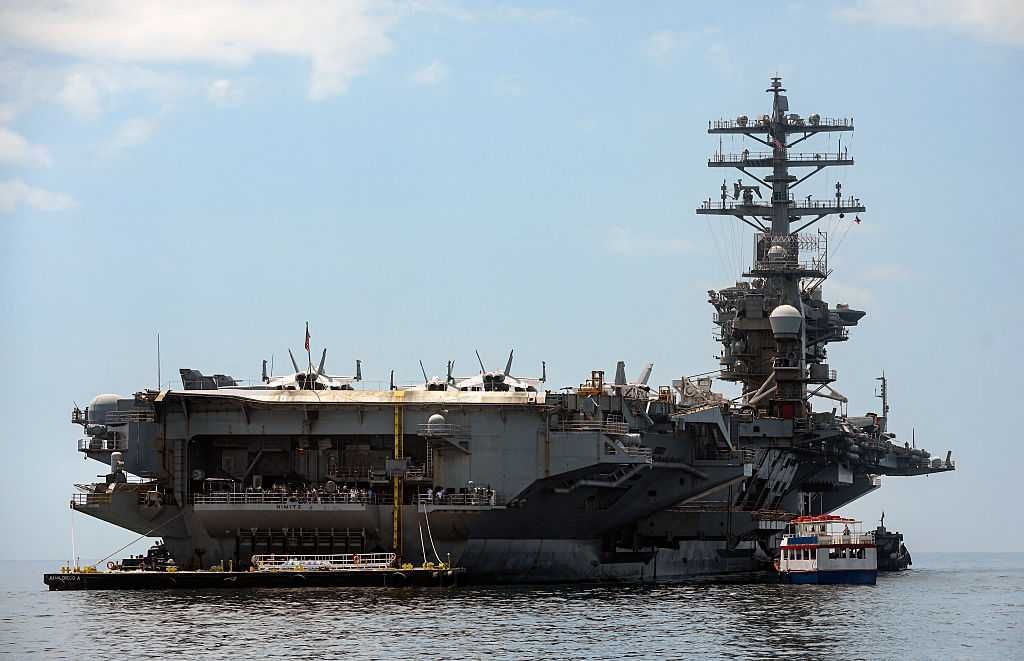
The drums of war are echoing across the Caribbean. U.S. warships patrol the southern sea lanes, and squadrons of F-35s wait on standby in Puerto Rico. Strike lists are reportedly being drafted in Washington. The question is not whether the United States can act but whether it should. And more importantly: Who is the real enemy?

All signs point to Venezuela, long a fixation of neoconservatives who see regime change as a cure-all. For years, some in the Republican Party have argued that Venezuela sits at the center of Latin America’s drug trade and that military action is overdue.

A legitimate campaign to combat drug cartels must not morph into another regime-change crusade.

That narrative is convenient — but false. Venezuela is not a cartel state, and this is not a war on drugs.

A tale of two narco-states

In September, the Trump administration made two moves that reshaped the regional map. It added Venezuela to its annual list of major drug-transit and production countries and, for the first time since 1996, decertified Colombia as a U.S. partner in the war on drugs.

That decision was deliberate. It acknowledged what U.S. policymakers have long avoided saying: Colombia, not Venezuela, is the true narco-state.

Colombia remains the world’s leading producer of cocaine. From Pablo Escobar’s Medellín empire to the FARC’s narco-financing, traffickers and insurgents have repeatedly seized control of state institutions and vast territories. At their height, these groups ruled nearly half the country. Decades of U.S. intervention under “Plan Colombia” have failed to stem coca cultivation, which remains near record highs.

Venezuela, by contrast, has never been a major coca producer. Its role is mostly as a minor transit corridor for Colombian cocaine en route to global markets. Corruption is real — particularly within elements of the military, where networks of officers known as the “Cartel of the Suns” have profited from trafficking. But those are rogue actors, not the state itself.

Unlike Colombia, Venezuela has never seen cartels seize entire provinces or build autonomous zones. The country’s economic collapse has weakened state control, but it hasn’t transformed Venezuela into another Sinaloa or Medellín.

Regime-change fever returns

Despite this, Washington appears to be edging toward confrontation. Naval buildups and targeted strikes on Venezuelan vessels look increasingly like the opening moves of a regime-change operation.

The danger is familiar. Once again, the United States risks being drawn into a war that cannot be won — one that drains resources, destabilizes the region, and achieves nothing for the American people. The echoes of Iraq and Afghanistan are unmistakable. Those conflicts cost thousands of American lives and trillions of dollars, only to end in retreat and disillusionment.

Americans have every reason to demand a serious, coordinated strategy against the cartels that flood our communities with cocaine and fentanyl. But targeting Venezuela misreads the map. Only a fraction of the hemisphere’s narcotics pass through Venezuelan territory — and the country produces no fentanyl at all.

If Washington wants to dismantle the cartels, it must focus on the coca fields of Colombia and the trafficking corridors of Mexico, not Caracas.

RELATED: Oops! The man they call a ‘threat to democracy’ just made peace again

Photo by Hu Yousong/Xinhua via Getty Images

No exit

A U.S. invasion of Venezuela would be a disaster. The Maduro regime has already begun arming civilians. Guerrilla groups operate in both urban and jungle terrain. The population is hostile, the geography unforgiving, and the odds of a prolonged insurgency high.

The opposition, eager for power, would have every incentive to let American soldiers do its fighting — then disavow the costs.

A war would not remain confined to Venezuelan borders. It would destabilize Colombia, Ecuador, and Brazil, and unleash a wave of migrants heading north. The fall of Saddam Hussein set off migration patterns that reshaped Europe for a generation. A conflict in Venezuela could do the same to the United States.

Limited airstrikes would achieve little beyond satisfying the egos of Washington’s most hawkish voices. A full-scale invasion would create a power vacuum ripe for chaos.

The real test

President Trump faces a critical test of restraint. Interventionists inside his own administration will press for action. He must resist them. A legitimate campaign to combat drug cartels must not morph into another regime-change crusade.

America has paid dearly for those mistakes before. It should not make them again.