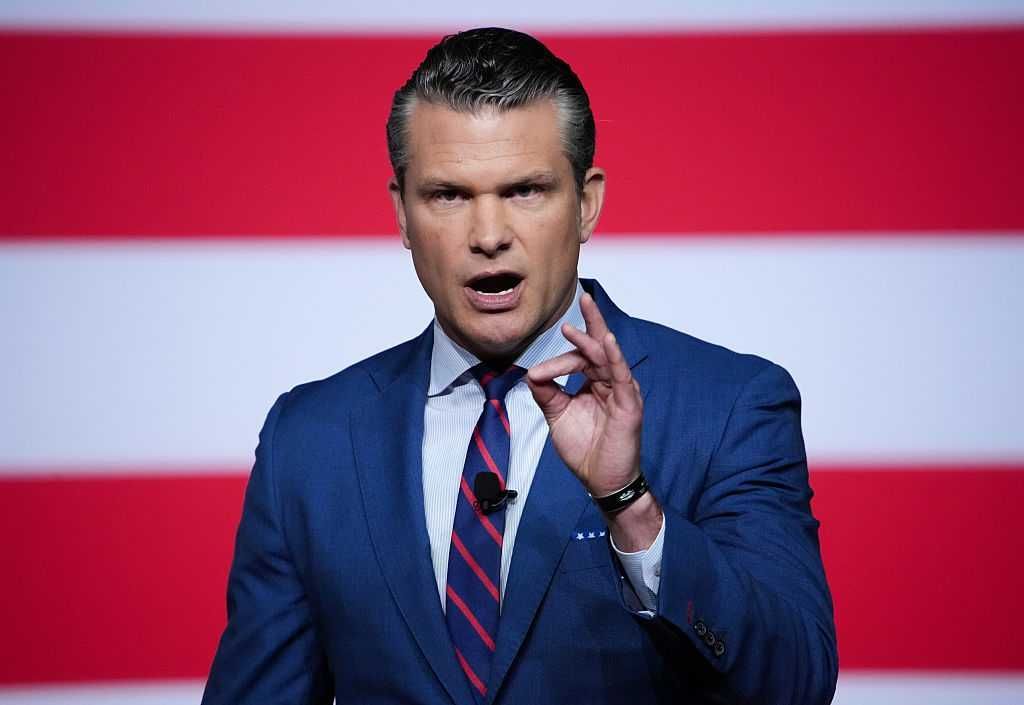
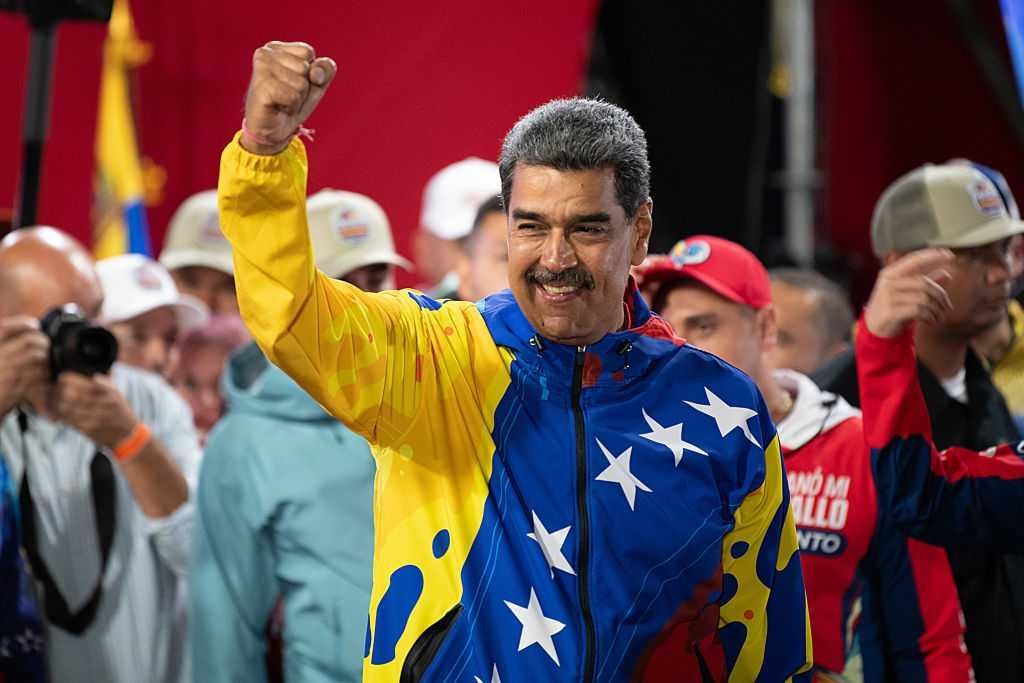
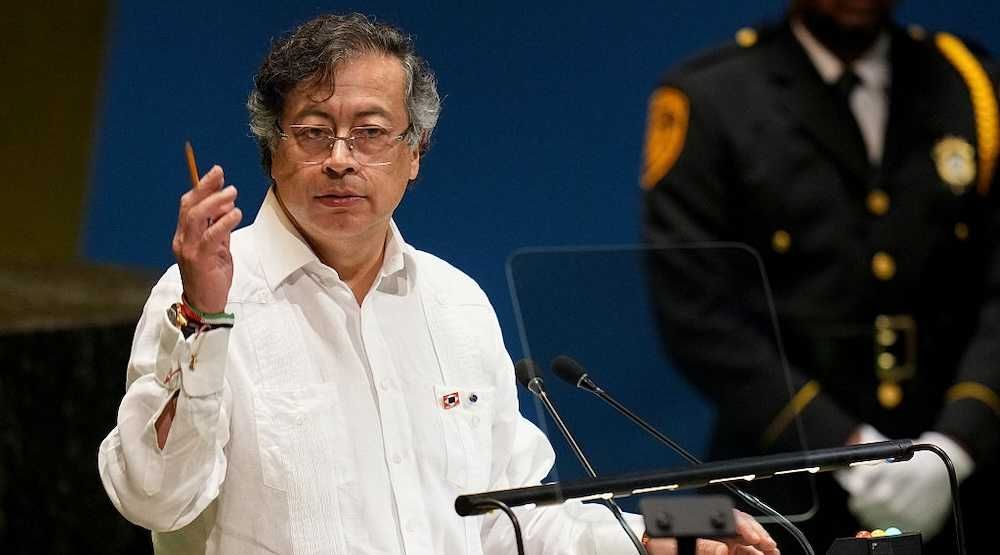
Democrat Rep Whose Trump Impeachment Flopped Now Seeks To Impeach Hegseth Over Drug Boat Strikes
'Congress must impeach him'
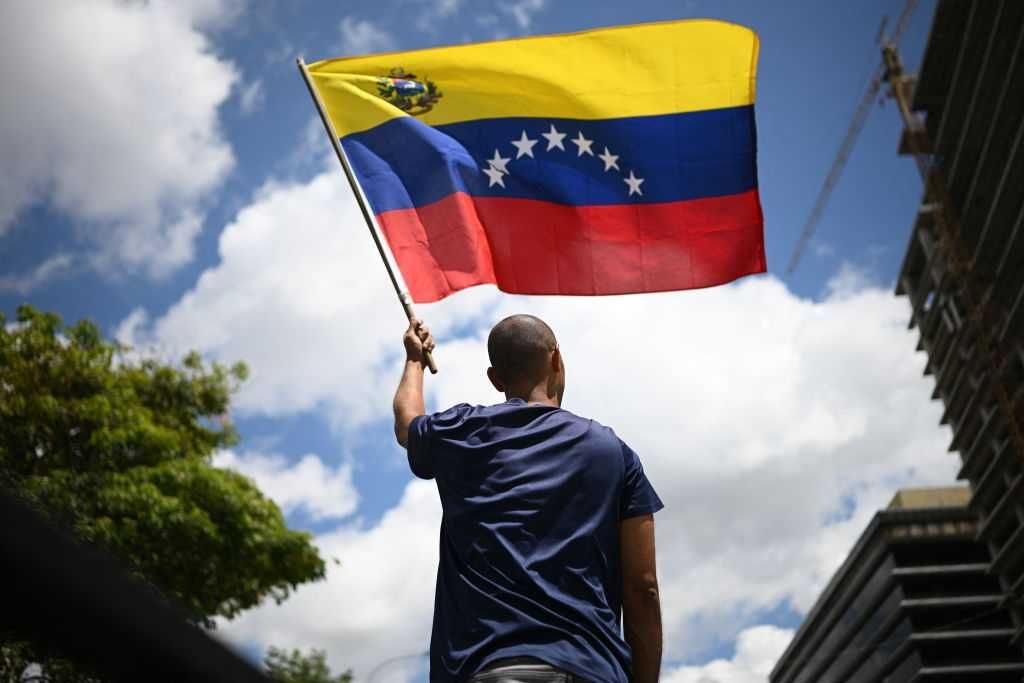
The Trump administration's crackdown on illegal drug smuggling has reportedly prompted an economic collapse of one Venezuelan city.
Güiria, a port city dependent on the smuggling of illicit narcotics and other contraband, is facing economic challenges following the Trump administration's strikes on suspected drug trafficking boats.
'Everything is practically dead.'
The administration has launched numerous strikes in the Caribbean Sea in waters close to Venezuela in an effort to end the trafficking of drugs into the U.S.
"As we've said from the beginning, and in every statement, these highly effective strikes are specifically intended to be 'lethal, kinetic strikes,'" Secretary of War Pete Hegseth stated. "The declared intent is to stop lethal drugs, destroy narco-boats, and kill the narco-terrorists who are poisoning the American people. Every trafficker we kill is affiliated with a Designated Terrorist Organization."
"Our current operations in the Caribbean are lawful under both U.S. and international law, with all actions in compliance with the law of armed conflict — and approved by the best military and civilian lawyers, up and down the chain of command," Hegseth added.
Several Güiria residents claim the strikes have brought their town's economy to a standstill, according to a Friday report from Reuters.
RELATED: Trump confirms call with Maduro after report of alleged regime-change ultimatum

The news outlet noted that Güiria "survives mostly on maritime smuggling of contraband, including drugs," and it is also "partly sustained by informal trade in food and other goods with Trinidad and Tobago."
"There was only movement in stores recently because of government bonus payments; otherwise, there's no money circulating," a food store clerk told Reuters.
"No boats of any kind are leaving for Trinidad and Tobago any more — not migrants, not people buying goods there to sell here, and certainly not those taking Venezuelan products to sell there, which was another way to make money. Everything is practically dead," she stated.

The residents also reported an increase in the number of security personnel in the town since mid-September.
"They pass through the same areas many times, at all hours. Before, they weren't so persistent; now they're everywhere all the time," a community leader told Reuters, referring to the security personnel.
"They're all organized by the government — civilians and police go together supervising the streets," another individual told the news outlet. "Everything seems calm except for the increased surveillance in the town."
President Donald Trump has reportedly presented Venezuelan dictator Nicolas Maduro with an ultimatum to relinquish control and flee the country.
Like Blaze News? Bypass the censors, sign up for our newsletters, and get stories like this direct to your inbox. Sign up here!
President Donald Trump has finally named the enemy: Mexican drug cartels. Declaring them unlawful combatants and recognizing a “non-international armed conflict” marks one of the most consequential national security shifts in modern history.
For decades, Washington treated cartel violence as a crime — a problem for prosecutors, not generals. Indictments were filed, assets seized, and sanctions imposed. But the cartels fought a different kind of war, one that combined terror, intelligence, and territorial control. Calling it “crime” guaranteed defeat.
We refused to define the cartels as belligerents — and fought the wrong fight.
According to the Armed Conflict Location and Event Data Project, Mexico ranks among the world’s most violent conflict zones — behind only Palestine, Myanmar, and Syria. It is also the second-most dangerous country for civilians. Those numbers are not from a failed state overseas. They come from our southern border, where cartel wars spill into American communities daily.
For decades, federal authorities insisted on using a law-enforcement lens. Agencies operated under Title 21, Title 50, and limited “detect and monitor” authorities. They punished crimes but never broke campaigns. The narrow scope bred strategic blindness. While U.S. prosecutors filed indictments and built cases, cartels corrupted institutions, coerced populations, and built empires.
As the Marine Corps teaches: How you define the environment determines how you operate in it. We refused to define the cartels as belligerents — and fought the wrong fight.
By every operational measure, cartels are hybrid threats. They control territory, command loyalty through terror, and run parallel governments. They tax, adjudicate, and even “protect” local populations. Their power rests on corruption and espionage: bribing officials, infiltrating agencies, and compromising law enforcement through human networks that resemble intelligence tradecraft.
Cartels operate across land, air, maritime, subterranean, cyber, and electromagnetic domains. They deploy drones, tunnels, jammers, and encrypted systems. They are multi-domain actors running hybrid campaigns.
Cartels don’t just smuggle — they destabilize. Mass migration has become a weapon of war: overwhelming institutions, hiding operatives, and masking foreign infiltration. Millions of illegal entrants from more than 170 nations have crossed under cartel supervision. The intent is not just profit. It’s demographic disruption.
Under federal law, terrorism includes violence intended “to intimidate or coerce a civilian population” or “influence government policy.” By that definition, Sinaloa and Jalisco New Generation qualify as terrorist organizations.
At the Texas Public Policy Foundation, I have testified before the Texas legislature and the U.S. Congress, warning that Mexico’s cartel conflict meets the Geneva Convention’s definition of a “non-international armed conflict.”
I described cartels as hybrid insurgents — foreign terrorist organizations that combine paramilitary violence, illicit economies, and political corruption to dominate populations. In March 2025 testimony, I stated plainly:
Mexico today is more accurately described as a state where governance has collapsed in key regions and foreign terrorist organizations dominate political and economic life, much like Afghanistan.
The president’s declaration confirms what many of us have argued for years: This is not a border problem — it is a war of sovereignty.
Cartel operations now span 65 countries. Chinese networks provide chemical precursors and launder money. Hezbollah and Iranian agents exploit the same smuggling corridors. Russia and Venezuela supply logistics and protection. Europol has confirmed joint cartel-European production of methamphetamine and cocaine. This is global insurgency — hybrid warfare waged through proxies.
The Western Hemisphere’s stability now hangs on whether the United States accepts that this is a war, not a criminal nuisance.
America has seen this pattern before. In Afghanistan, we failed not because we lacked strength but because we enabled corruption. We funded partners already captured by our enemies. The special inspector general for Afghanistan reconstruction documented how U.S. aid sustained the very system it sought to reform.
The parallels with Mexico and Venezuela are striking. Elements of their governments shelter cartels through impunity and contracts. Continuing to fund or legitimize such partners would repeat the Afghan mistake — this time on our own doorstep.
Trump’s declaration resets U.S. strategy. Recognizing cartels as unlawful combatants unlocks interagency coordination — treasury targeting financial networks, the IRS auditing tax-exempt fronts, and the Justice Department prosecuting to the “maximum extent permissible by law.” It is a full-spectrum approach that finally matches the enemy’s scale.
RELATED: Latin American leaders react to report that Trump will use US military against cartels

The new framework clarifies rules of engagement and intelligence sharing. We can now strike at the networks themselves, not just their accountants.
The cartels serve as convenient cutouts for America’s adversaries. China supplies chemicals, Iran and Hezbollah move cargo, Russia and Venezuela launder proceeds. These regimes use cartels as proxy forces — deniable, flexible, and brutal. The Western Hemisphere’s stability now hangs on whether the United States accepts that this is a war, not a criminal nuisance.
With this declaration, Trump restores the Reagan principle: peace through strength. As Secretary of War Pete Hegseth put it last week, “Our number-one job is to be strong so that we can prevent war in the first place.” Matching threats with capabilities sends a message not just to cartels, but to the nations behind them: Challenge us, and you will lose.
To borrow Hegseth’s phrasing: “Should our enemies choose foolishly to test us, they will be crushed by the violence, precision, and ferocity of the War Department. In other words, to our enemies: FAFO.”
The war has been declared. The only question now is whether America has the will to win it. State legislatures, Congress, and the public must rally behind this strategy. Half-measures have failed. The moment demands unity, clarity, and resolve.
America is under attack. The commander in chief has drawn the line. Now the nation must stand behind it — and fight to victory.
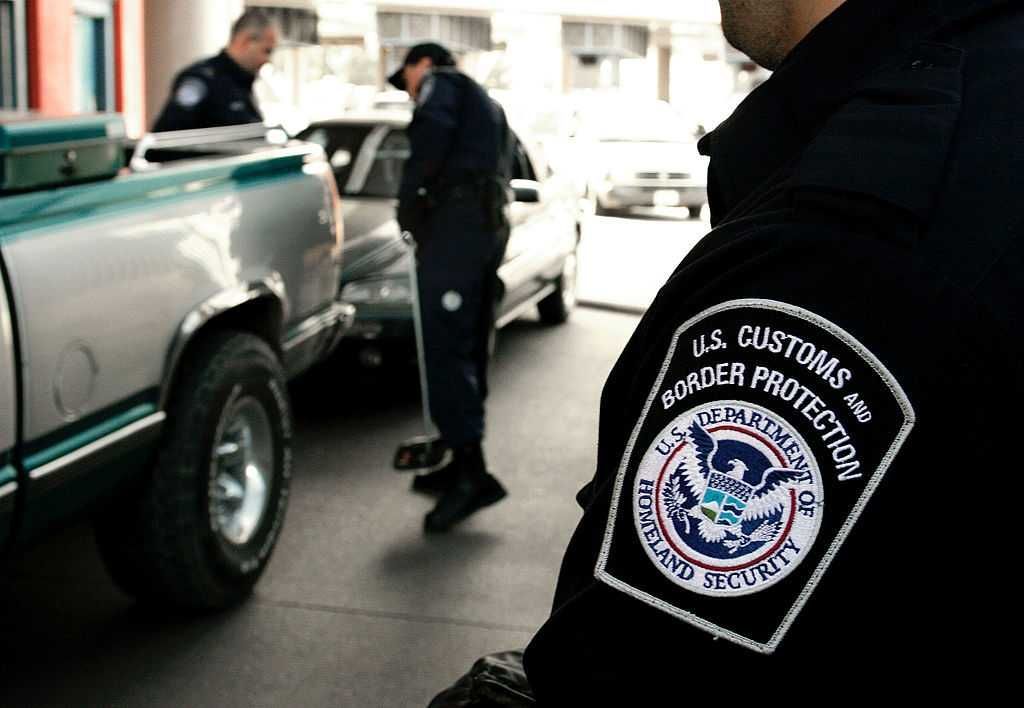
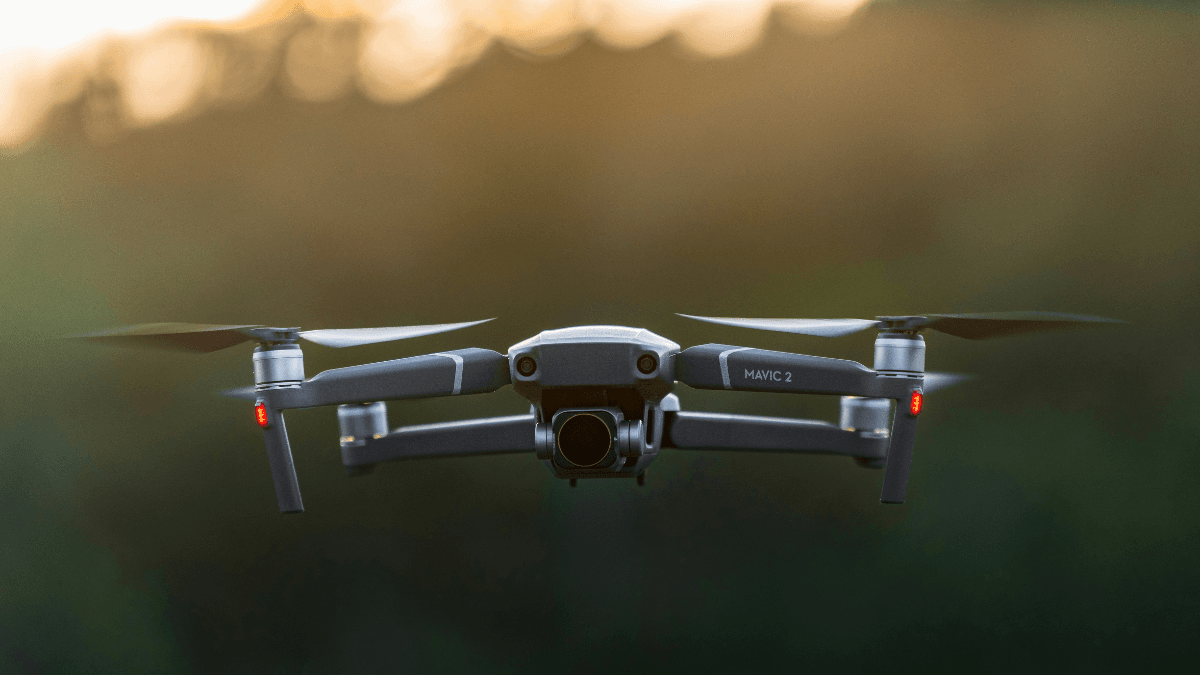
Air Force General Gregory Guillot told the Senate Armed Services Committee on Thursday that there are “over 1,000” drone incursions per month at the southern border, the New York Post reported.
Guillot, the commander of North American Defense Command, called the uptick in drone encounters “alarming.”
“The number of incursions was something that was alarming to me as I took command last month,” he told senators on Thursday.
When asked how many drones are flying into United States airspace near the southern border, he replied that no one knows precisely.
“I don’t know the actual number. I don’t think anybody does, but it’s in the thousands,” Guillot continued.
He claimed that the United States Customs and Border Protection would “put the number at thousands” over approximately a one-month period.
“Probably have over 1,000 a month,” he declared.
Senators asked Guillot whether the incursions over the southern border presented a defense threat, and he responded, “They alarm me.”
“I haven’t seen any of them manifest in a threat to the level of national defense, but I see the potential only growing,” he said.
According to Guillot, most of the unmanned drones flying near the southern border are operated by “spotters” who are “trying to find gaps” to sneak past law enforcement agents.
“There’s a smaller number [of drones] that are probably moving narcotics across the border,” Guillot remarked.
He also noted that some of the drone activity at the southern border is the federal government attempting to monitor illegal activity.
During the hearing, Guillot addressed the influx of Chinese nationals illegally crossing into the United States, stating that it is “a big concern” of his.
“What concerns me most about specifically the Chinese migrants is, one, that they’re so centralized and in one location across on the border. And, two, is — while many may be political refugees and other explanations — the ability for counter intelligence to hide in plain sight in those numbers,” Guillot told the committee.
He also explained that he is concerned that the waves of migrants coming over the border “seem to be coordinated and command and controlled using social media.” Mexican cartels are using social media to “drive the migrants to areas where [Border Patrol agents] might not be,” he added.
CBP officials have noted that the cartels are using small drones to track the locations of Border Patrol agents in an effort to sneak their smuggling operations past law enforcement, the Post reported.
Last year, Rio Grande Valley Sector Chief Patrol Agent Gloria Chavez informed the House Oversight Committee that more than 10,000 drone incursions and 25,000 drone sightings were reported over one year.
“We have made great progress in countering the threat of small, unmanned platforms,” Chavez stated. “However, the adversaries have 17 times the number of drones, twice the amount of flight hours, and unlimited funding to grow their operations.”
Like Blaze News? Bypass the censors, sign up for our newsletters, and get stories like this direct to your inbox. Sign up here!
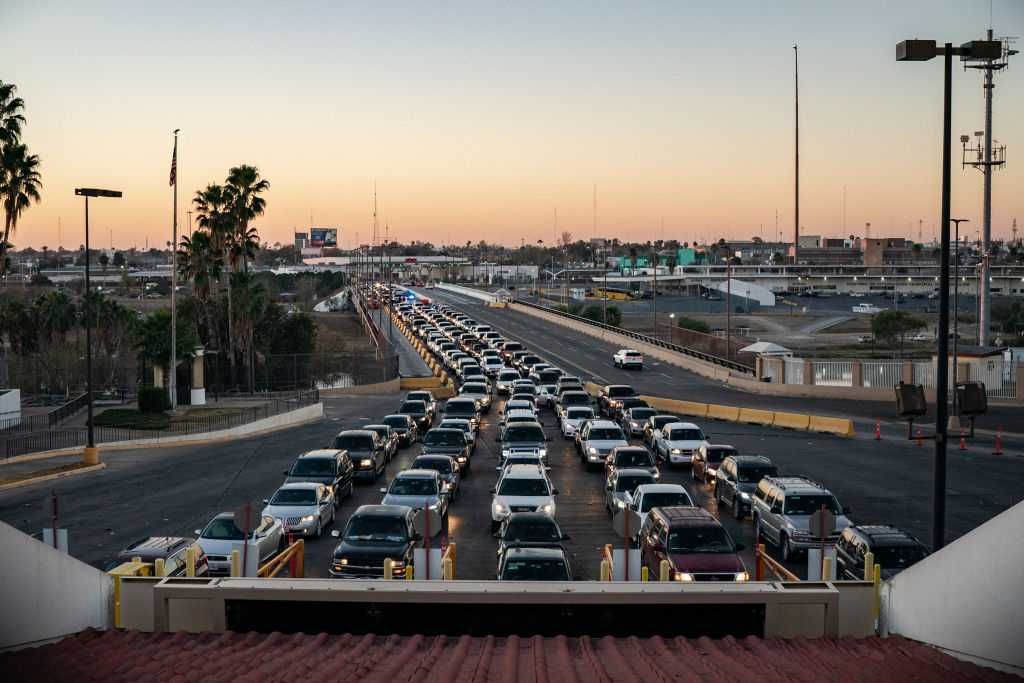
Last week, U.S. Customs and Border Protection announced the largest methamphetamine bust at the Del Rio port of entry. Officers seized $11.9 million of narcotics found inside a semi-trailer truck.
\u201c#ICYMI, see below:\u201d— CBP South Texas (@CBP South Texas) 1662937956
On Labor Day at the Del Rio International Bridge, a Customs and Border Protection officer requested a second inspection for a truck hauling diesel tank reservoir containers. Authorities conducted a non-intrusive inspection of the vehicle using a sniffer dog to detect any potential drugs.
The secondary inspection uncovered 320 packages containing 1,337 pounds of alleged methamphetamine. Customs and Border Protection estimated a street value of $11.9 million for the drugs.
“This is a massive seizure of methamphetamine, it is largest in the history of the port, and it reflects the steadfast commitment of our officers to the CBP border security mission and their effective application of technology, training, and experience,” said port director Liliana Flores.
U.S. Immigration and Customs Enforcement-Homeland Security Investigations special agents are currently examining the narcotics and looking into the seizure.
Last week’s recording-breaking bust far surpassed all methamphetamine seizures at the port of entry in the 2021 fiscal year. From October 2020 to September 2021, the Del Rio sector reported conducting 79 searches that resulted in the confiscation of 255 pounds of meth.
On Thursday, Customs and Border Protection announced the search for five criminals operating in the Del Rio area as part of the "Se Busca Información" campaign. The campaign was launched in 2016 by the U.S. Border Patrol and the government of Mexico to crack down on human smugglers and drug traffickers. CBP reported that photographs of the five individuals had been placed on billboards and posters in the area.
“Human smugglers work for opportunistic criminal organizations who have no regard for human life,” said chief patrol agent Jason Owens of the Del Rio Sector. “Through this initiative, community members on both sides of the border provide us information about those who put at risk the lives of vulnerable families and children.”
The Del Rio Sector covers 53,063 square miles of Texas and primarily includes farm and ranch land. CBP referred to the sector as a “major staging area” for narcotics and human smuggling operations.
What would you call a situation where tens of thousands of young males pour over our border, orchestrated by the most violent cartels and smugglers in the world? How would you refer to high-speed car chases and bailouts across our border continuing on for at least 200 miles beyond the border? It sure looks like an invasion to ordinary Americans. But what do you call it when our own Department of Homeland Security is orchestrating such chaos, lawlessness, and trans-national travel during a pandemic at the same time officials are entreating Americans to obey COVID fascism? A sadistic undermining of the very foundation of this country, indeed.
"Illegal immigrants from 59 different countries have crossed the border illegally in our area – the Del Rio Sector," warned Uvalde, Texas, Mayor Don McLaughlin in an exclusive interview with TheBlaze. "These illegal immigrants are from China, South America, Venezuela, Cuba, and the Middle East and Africa, just to name a few."
Uvalde is a small town of 17,000 inhabitants, and it is now overrun by illegal immigrants and an international cartel smuggling operation. Uvalde is 40-60 miles from the border, but it might as well be right at the border given how the smuggling corridors come right up to this town.
"In our city and county, we are averaging 6-8 car chases a week," said McLaughlin in describing how the border crisis strains the area's small law enforcement operation, which is already stressed from the logistics of the pandemic and the recent weather-driven energy crisis.
"These human smugglers have no regard from human life – they have led our officers on chases through our town at speeds exceeding 100 mph. In two instances, our local law enforcement officers have been shot at. It's not unusual to find weapons in these cars when they are caught. In Kinney County, which borders us, the chases are exceeding 20 a week. In these chases they are finding illegal immigrants that have previously been deported and have criminal records for sexual assault, murder, and drug trafficking."
The Biden administration has ended Trump's pandemic response policy, which, pursuant to Title 42, required Customs and Border Protection to immediately turn away illegal aliens who show up at the border. The new policy openly invites illegal aliens to come in, which has created an entire cottage industry for the smugglers and the drug cartels. While the smugglers can present illegal aliens who don't have criminal records openly at the border, they still have to sneak in those with criminal records through gaps in the border wall, which leads to dangerous high-speed chases that result in what are known to border officials as "bailouts." Often the smuggler will drive off the road and crash, with the occupants bailing out and running in every direction.
The more agents have to deal with those coming in directly, the less manpower they have to apprehend the dangerous "runners" who usually have criminal records. This is particularly a problem during the pandemic, when more personnel are now required to deal with the social distancing logistics of the mass flow across the border.
The fact that the border wall was stopped midway through construction has actually been a boon to the smugglers, because they are able to use the newly created access roads to gain entry into the interior but are not completely blocked because of the gaps, as reported by the Washington Times from Cochise County Sheriff Mark Dannels. This has enabled the high-speed chases and bailouts to penetrate deep into Texas, as far as Jackson County on the eastern coast, which is some 200 miles from the border.
"We're on the travel corridor," said Jackson County Sheriff A.J. Louderback in an interview with TheBlaze. "We've had an uptick in stolen three-ton pickups; we're having the bailouts coming through."
Louderback placed the blame squarely on the shoulders of the Biden administration. "This is a comprehensive, multi-pronged strategy to disable and dismantle every facet of our immigration system," said the veteran rural sheriff. "This is a concerted effort to alter all of immigration laws through policy change. It's an absolute nightmare. I don't think there is a single place in the INA that has not been violated. It's obvious to me that they've been working on this for quite some time. We went from a secure border to an unsecure border in a matter of days."
Sheriff Dannels told me that in southeast Arizona, in some of the most rugged terrain at the border, the cartels now have roads they can use to navigate an area that was previously extremely hard to traverse. "By ending the wall construction with the roads exposed, they have become nothing but cartel roads," said Dannels to me. Here is a picture of the access roads built behind the wall in Cochise County.
Cochise County Sheriff's Department
According to Dannels, apprehensions in his remote county went from 300-500 a year ago to 2,500 in December. The suspension of the border wall mid-construction in his county has been a boon for the cartels. "We went 24 months without illicit drugs, and now we're catching more than 500 pounds," said Sheriff Dannels. "12 people were injured in car crashes, and there have been two deaths. Some of the coyotes [human smugglers] are now shooting at my deputies. It's insane how nobody sat down with local law enforcement to discuss the ramifications of not completing the construction that was already under way."
The bailouts are often risky for the migrants as well. In California earlier this week, 13 of them were killed when their car caught fire during a high-speed incursion at a breach in the border fence, which the Biden administration refuses to repair.
Mark Lamb, sheriff of Pinal County, Arizona, is seeing the same problem on the western side of the border. "We're 60 miles off the border, and we've had 45 pursuits and have assisted in another 80 with other agencies," the Arizona sheriff told TheBlaze. "We had one bailout where they had 11 people who bailed into the desert and left us with a 16-year-old Guatemalan girl in the car. ICE doesn't even have space for these people, and they are let go right into our communities. Talk about a kick in the teeth. When you do this, it sends a message to criminals that they can do whatever they want because we are no longer for the rule of law."
Not only is Lamb prohibited from holding these people, he wouldn't even have the jail space anyway. "We get 20-30 a day right now. I could fill my entire jail within a week."
The cartels are sending 2,000 children over the border each week this month, and there are now at least 8,000 minors in custody, approaching a record. The Biden administration is openly bragging about estimates of 117,000 minors on the way. With that comes a massive pipeline of transnational gang recruitments inside our country and in every major city.
It's a lose-lose for everyone. Americans are stuck with the expenses and social effects, as well as the narcotics and increased gang activity. At a time when the lockdowns are tempting so many Americans to turn to drugs, the Biden border invitation is creating a lucrative market for the drug cartels in human smuggling as well as drug smuggling. And in the irony of all ironies, the COVID lockdown policies that are inducing the circuitous drug cycle exacerbated by the border policies are suddenly being relaxed when it comes to illegal aliens.
As for the illegal aliens themselves, Mayor McLaughlin observes that there is nothing humanitarian about chaotic open borders.
"We as a country act as though we are helping these illegal immigrants as we release them into our country. We talk about slave labor and sex trafficking all the time, but these illegal immigrants end up working day jobs where they are picked up in neighborhood street corners where they stand around waiting for work, are paid subpar wages, and if hurt, are dropped off back without getting taken care of. The women are forced into the sex trade to survive and take care of their families. We are not helping these people or our country. We are only setting them up to fail."