How George Soros And Democrat Dark Money Infiltrated America’s Reddest Red State
 The effort to end the conservative majority in the Wyoming House is backed by a well-funded left-wing network.
Just weeks ahead of the midterm election, a federal judge appointed by former President Joe Biden took aim at the federal law barring foreigners from voting in American elections, characterizing it as "unconstitutional."
Chelsea Cox is a Jamaican national who came to the United States on a tourist visa in 1999. According to the Justice Department, Cox — who never bothered going home after her visa expired and presently has no legal status in the country — used a fraudulent U.S. Virgin Islands birth certificate to obtain a Florida driver's license in April 2000.
'Leftist judges are trying to invalidate the federal law prohibiting noncitizen voting.'
Cox was charged in the Southern District of Florida last October for allegedly using her false identity to vote unlawfully in the 2020 election. Citing Cox's voter history, the Justice Department alleged that the Jamaican also voted in the general elections in 2012, 2016, and 2018.
Federal law — 18 U.S.C. § 611 — prohibits any foreign national from voting "in any election held solely or in part for the purpose of electing a candidate for the office of President, Vice President, Presidential elector, Member of the Senate, Member of the House of Representatives, Delegate from the District of Columbia, or Resident Commissioner" unless he or she permanently resided in the U.S. prior to turning 16, has citizen parents, and/or reasonably believed at the time of voting that he or she was a citizen.
The Jamaican's attorney argued that the states, not Congress, alone "can establish the qualifications of electors for federal elections" and that as such, Section 611 is "facially unconstitutional."
RELATED: Trump administration revokes visas for HISTORIC number of noncitizens
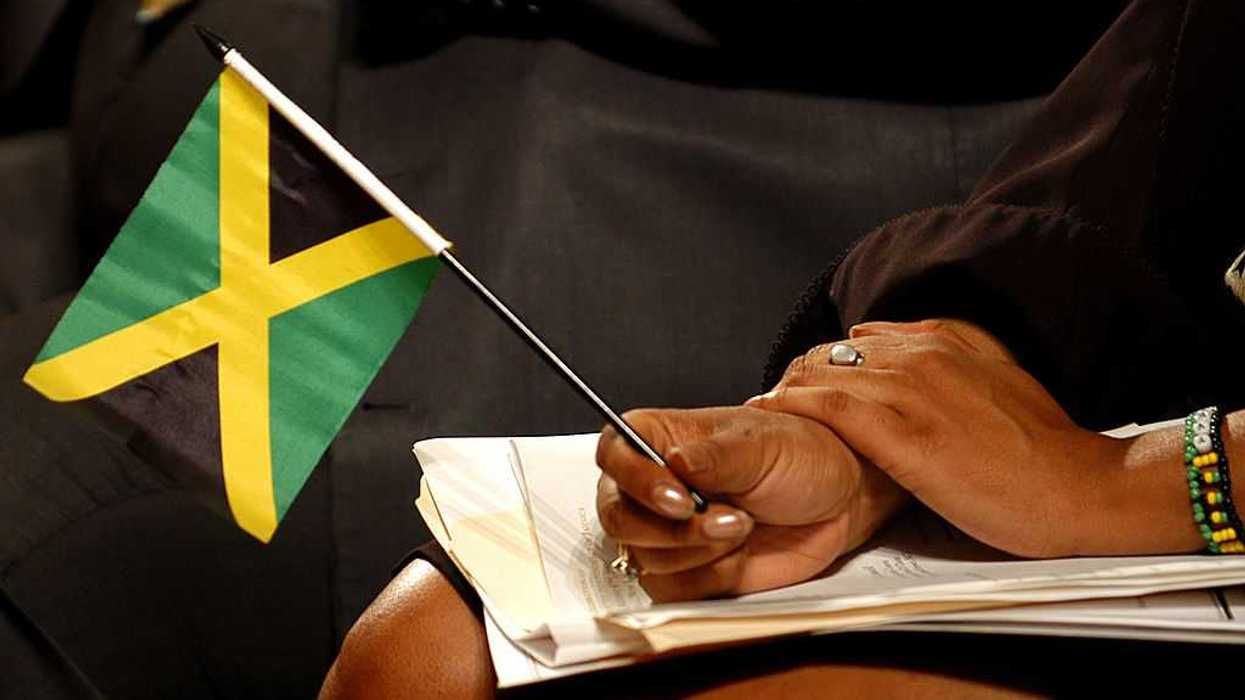
U.S. District Judge David Leibowitz, the Biden-appointed nephew of billionaire car magnate Norman Braman, embraced the defense's argument and dismissed the case on Thursday, stating that "the text, structure, and original public meaning of the Constitution show that Congress does not have the constitutional power to enact this statute."
Leibowitz rejected the government's arguments that the law can be "'sustained on the basis of Congress' broad authority over immigration and foreign affairs,' which empowers Congress to legislate against '[f]oreign interference in elections,'" claiming that while such authority is "broad indeed,"
the Court finds no reason to conclude that an exercise of Congress’s “plenary powers” over immigration and foreign affairs would override the “foundational constitutional constraints” set out in the Voter Qualification Clauses.
While the Miami-based Biden judge said that "one can assume that the Defendant committed every element of the crime established by Section 611," he concluded ultimately that "Chelsea Cox cannot be prosecuted for an alleged violation of an unconstitutional statute."
Leibowitz did, however, note that Florida can "prohibit and punish the exact conduct Defendant Cox allegedly engaged in here," and that this case does not address whether the Trump administration can deport Cox.
Blaze News did not immediately receive a response from Florida Attorney General James Uthmeier's office.
Bruce Udolf, an attorney for the Jamaican, told NBC News that his client was "ecstatic" over the ruling.
"We were gratified by the court’s ruling and would hope that the government would not take this matter further as far as deportation is concerned," said Udolf. "This person has lived peacefully and responsibly in this country for 30 years, and she is in very ill health and desperately needs a medical attention that would not otherwise be available to her in Jamaica."
The Biden judge's ruling was condemned by those keen to see only Americans voting in American elections.
James Percival, general counsel for the U.S. Department of Homeland Security, said of Leibowitz's ruling, "A Biden appointed judge in Florida says that federal bans on noncitizen voting are unconstitutional. The thing that never happens is now 'constitutionally protected activity!'"
"First leftist senators blocked the SAVE America Act, insisting that 'noncitizens don’t vote.' Now leftist judges are trying to invalidate the federal law prohibiting noncitizen voting," wrote Utah Sen. Mike Lee (R). "If you find this unacceptable, vote for Republicans in November."
The government has appealed the ruling to the U.S. Court of Appeals for the 11th Circuit.
Like Blaze News? Bypass the censors, sign up for our newsletters, and get stories like this direct to your inbox. Sign up here!
As voting day approaches quickly, BlazeTV host Steve Deace believes Republicans are making a critical mistake: focusing too much on what they're for and not enough on who they're running against.
Laying out what he calls a political survival strategy, Deace urges GOP candidates at every level to embrace far more aggressive campaign messaging.
“The biggest strength we have is who we’re running against,” Deace explains, noting that this “is what the strategic plan should be.”
“I’m looking at what’s been used against me in the past and done so successfully and can I emulate it in a way that doesn’t violate my own worldview?” he says, “And in this case, the answer is yes. We’re not going to bear false witness.”
“We don’t have to, like they do calling us Nazis, but we’re just going to say they’re anti-American communists. We’re going to try to drive turnout down,” he adds.
While he admits that may sound “cynical,” he doesn’t care.
“I like my way of winning better than your way of losing,” he says.
“Drive down turnout. This is what they did in 2022. Drive down normie turnout because ... basically every normie voter is going to just assume they’re voting against us. Our margins with normies are like minus 30 or something,” he continues.
Deace says that the Republican Party needs to assume that these “normies” will be “voting against us.”
“Drive down as much of that normie vote as you can,” he explains. “Make the environment as negative and toxic as you can.”
This strategy is one of survival, and Deace concludes it with three parts: “Drive down normie turnout, heighten the negative messaging on who our opponents really are, and try to heal the fractures within our coalition as best we can by what people are actually united against, rather than trying to message to them things they’re never going to be united for.”
To enjoy more of Steve's take on national politics, Christian worldview, and principled conservatism with a snarky twist, subscribe to BlazeTV — the largest multi-platform network of voices who love America, defend the Constitution, and live the American dream.
Just months after lawmakers claimed they had a spending deal in place, Congress is once again racing toward a potential government shutdown.
Facing a September 30 deadline, legislators are scrambling to pass yet another continuing resolution rather than a full budget — and BlazeTV host Pat Gray is sick of the never-ending dysfunction.
“Congress is working on a stop-gap spending bill that would get us to December,” executive producer Keith Malinak comments.
“They’re talking about just getting to December,” BlazeTV host Pat Gray adds. “This is all so unacceptable. And then we wonder why Republicans are in danger of losing their majority, because they can’t get anything done.”
“Pass a budget for the love of heaven so we don’t have to go through this every month. But they won’t. And they don’t. And we don’t expect it anymore. We expect this continual fight on the continuing resolution,” he continues.
“It’s insane. This is no way to run the largest economy on earth,” he adds.
And with a government this dysfunctional, it’s no wonder that Polymarket is predicting a Democrat sweep of the House and Senate.
It predicts a 51% chance of Democrats winning both the House and Senate and a 36% chance of Republicans winning the Senate and losing the House.
“They’re not always right,” Jeff Fisher comments.
“I’m with Jeffy,” Keith Malinak adds.
To enjoy more of Pat's biting analysis and signature wit as he restores common sense to a senseless world, subscribe to BlazeTV — the largest multi-platform network of voices who love America, defend the Constitution, and live the American dream.
Michigan Democrats are finding themselves in a bit of an uncomfortable spot after Senate candidate Abdul El-Sayed’s ties to far-left activist and streamer Hasan Piker are becoming a growing issue in the general election campaign.
At a recent campaign event for El-Sayed, Rep. Debbie Dingell (D-Mich.) pleaded with reporters to stop focusing on Piker and instead discuss El-Sayed’s candidacy, insisting Republicans were using the controversy to divide Democrats.
“I’m done,” Dingell said. “This election is about what’s going to happen when we elect Abdul to the United States Senate.”
“So don’t any reporter ask me again about Hasan Piker; it’s not what November is about,” she continued.
“Republicans are trying to make it, they’re trying to divide us, and we got to stop letting them try to divide us. I don’t agree with Hasan Piker on a lot of stuff, and I really don’t agree with him on some of the woman things he said,” she added.
“Nice try,” executive producer Keith Malinak says on “Pat Gray Unleashed.” “No, he’s yours. Own him.”
“He got El-Sayed through the primary, and now they want to disown him for the general. No,” Malinak continues, “No, he’s yours.”
“Also, you got in bed with the DSA,” BlazeTV host Pat Gray chimes in. “You got in bed with Hasan Piker. I’m sorry. We’re not the ones dividing you. You did this to yourself.”
“This is the best thing that’s ever happened to Republicans,” he adds.
To enjoy more of Pat's biting analysis and signature wit as he restores common sense to a senseless world, subscribe to BlazeTV — the largest multi-platform network of voices who love America, defend the Constitution, and live the American dream.
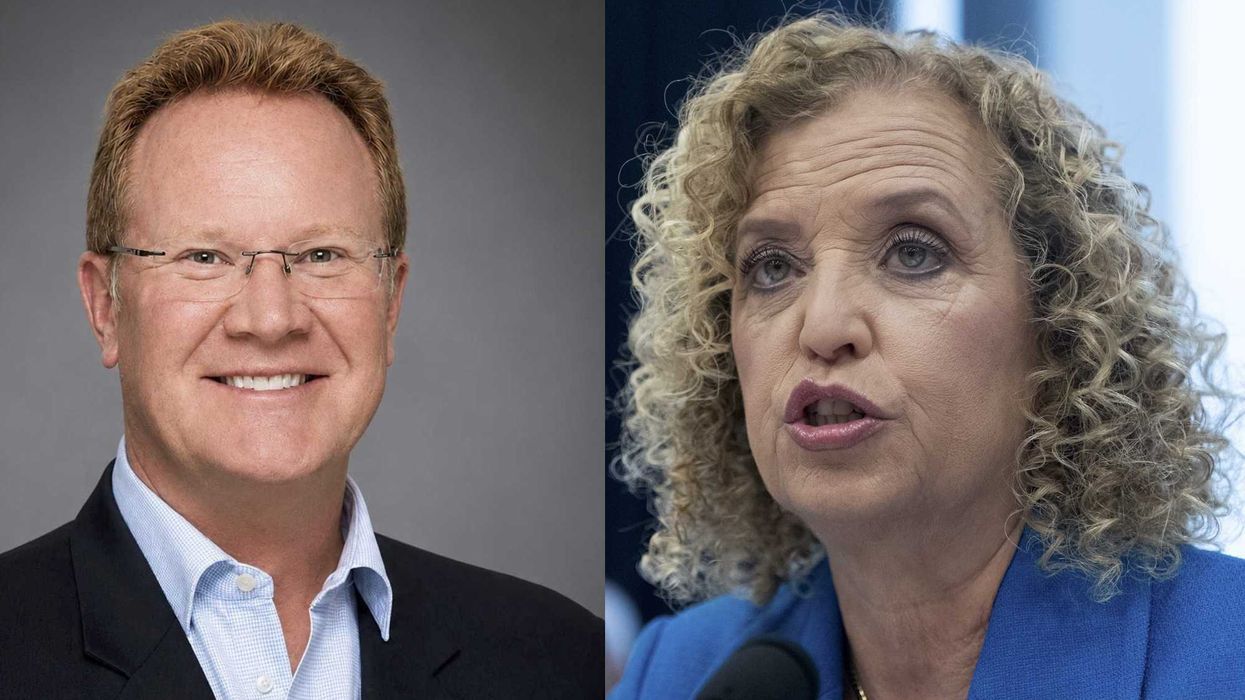
Longtime Democratic leader Debbie Wasserman Schultz was declared the victor in the controversial primary race for Florida's 20th Congressional District.
The former chairwoman of the Democratic National Committee announced that she would run in the 20th District after she was redistricted out of her previous seat.
'The voters of this district deserve a representative who shares their daily life and will fight for them — not another outsider who parachuted into the race when it became convenient.'
The issue was immediately contentious to the Democrats who wanted to see the historically black district be represented by a black person.
"Our party cannot credibly denounce the dismantling of black political power by Republicans while treating one of Florida's few remaining majority-black districts as a political opportunity for an incumbent seeking a safer seat," read an official statement from nearly all DNC members in Florida from May.
Despite the furor, Wasserman Schultz easily won the primary Tuesday and will go on to face Florida Republican Brent Andersen in the general election for the seat.
Andersen emphasized the outrage in a statement to Blaze News after her victory.
"I live in this district with my family. Debbie Wasserman Schultz does not. She is a career Washington politician who only decided to run here after redistricting made her old seat more competitive," Andersen said in the statement.
"For decades, District 20 has been represented by people who actually live among the communities they serve," he added. "The voters of this district deserve a representative who shares their daily life and will fight for them — not another outsider who parachuted into the race when it became convenient. That’s the choice they will have in November."
Andersen describes himself as a conservative businessman and a dedicated community servant on his website.
RELATED: Harry Reid torches the 'worthless' DNC and incinerates Debbie Wasserman Schultz
CNN noted that Schultz was the only white candidate to run in the primary against four other Democrats.
Schultz was also blamed by some top Democrats for the devastating loss in 2016 to President Donald Trump.
Like Blaze News? Bypass the censors, sign up for our newsletters, and get stories like this direct to your inbox. Sign up here!
Wisconsin Democrats have a new front-runner for the “most psychotic Democrat,” and BlazeTV host Sara Gonzales is sounding the alarm.
“There’s a lot of competition. I get it. But I just would like to introduce you to a new player. Her name is Francesca Hong,” Gonzales begins.
Hong is a self-described democratic socialist who is running for governor in Wisconsin. And she “could win,” Gonzales says, pointing out that she’s “taking charge at 94.3%” in the Democrat primary.
“Now, I mentioned this woman is like a crackpot psycho crazy person. The reason that I say that … because she apparently is a psycho by like the Norman Bates definition,” she adds, before playing a clip from an interview with Hong.
“I think a lot of my insecurities and my struggles with mental health really came from a sense of never really feeling like I belonged. There was a deep shame and fear that I didn’t want to be Korean, and I think that’s where a lot of the mental health struggle started,” Hong recalled.
“I deeply wanted to be American, and I felt shame that my parents sacrificed so much to be here and that wasn’t who I wanted to be,” she added.
Hong went on to explain that “isolation and loneliness led into a lot of despair and depression,” leaving her hospitalized her senior year of high school. Hong explained that she was diagnosed as bipolar.
“She’s also admitted to taking SSRIs and overdosing on lithium,” Gonzales says.
“I feel like that should be pretty disqualifying to say, ‘I should run as governor,’” she adds.
Despite formerly being a restaurant owner and chef, Hong has called tipping “racist” and also lamented serving others on holidays like Valentine's day.
“If that wasn’t bad enough, she also hates Christmas,” Gonzales says.
In a 2019 post on X, Hong wrote: “IT bro who was working on ‘our’ computer remotely changed the background theme to snow and Christmas trees. I feel slightly attacked…”
But that’s not all, as in a now-deleted 2020 post on X, she wrote: “Cancel Thanksgiving. Should have done this in 1621. If it takes a worldwide pandemic for us to realize we should stop celebrating colonialism and the original superspreader event that killed Indegenous [sic] folx and women so be it.”
Even CNN’s Kaitlan Collins asked Hong about her past take on Thanksgiving, to which Hong responded, “I always think my hospitality background in owning a restaurant ... to share conversation and build community is always a good thing, but Thanksgiving is also a time that’s incredibly painful for many people in our communities.”
Hong has also posted that she supports “defunding the police as a first step towards abolishing the police.”
And shockingly, it gets worse.
“I guess she wants to get away with calling for the assassination of President Trump, because she openly called for it on a Zoom call,” Gonzales says, before playing yet another damaging clip of Hong.
“In the restaurant industry, when we’re out of something, we say it’s 86’ed. And I’d say it’s about f**king time we 86 Trump. He represents the utter failure of our government to keep us safe from threats, both viral and systemic,” Hong said.
However, there is good news.
“People seem to be waking up to how much of an actual psycho she is. So much so that Republicans are now narrowly favored to win the general. 52% Republican, 48% Democrat,” Gonzales says.
“I will just say in closing,” she adds, “candidates like Francesca Hong are tearing the Democrat Party apart.”
To enjoy more of Sara's no-holds-barred takes on news and culture, subscribe to BlazeTV — the largest multi-platform network of voices who love America, defend the Constitution, and live the American dream.
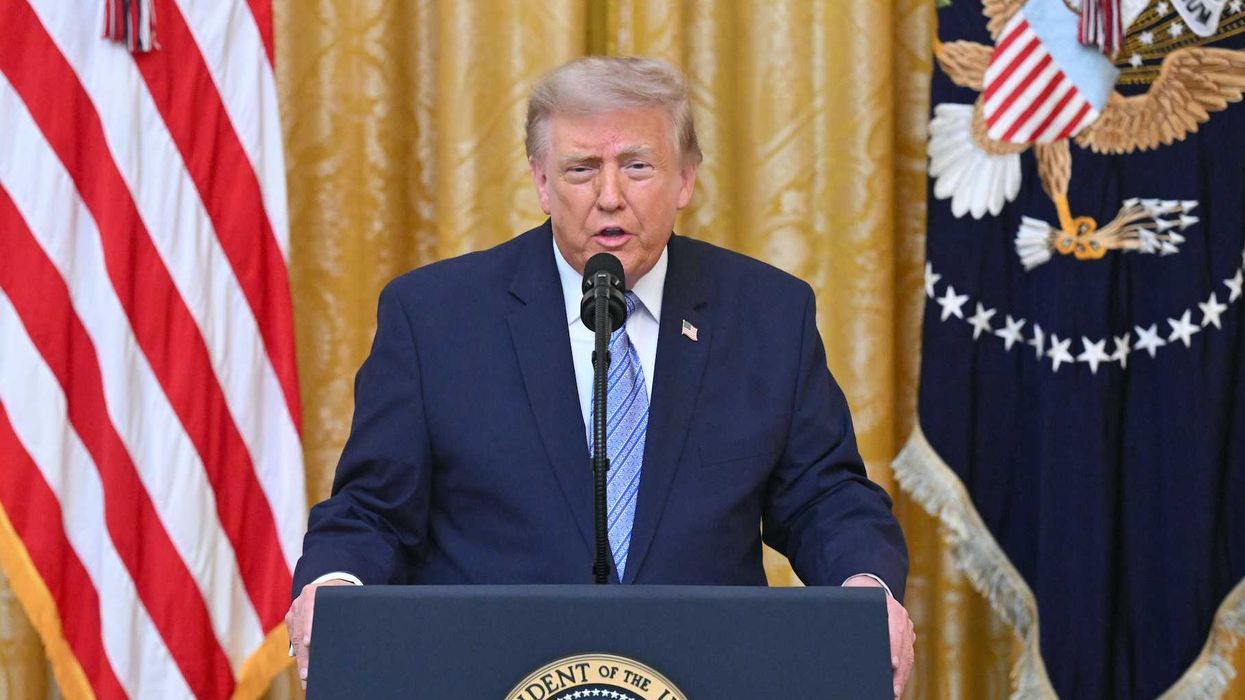
President Donald Trump told the nation from the White House Thursday that the Chinese government has interfered with American elections and gained access to "sensitive" voter data of tens of millions of Americans.
Trump also accused deep-state bad actors of "deliberately massag[ing]" his daily briefings and even of attempting to run a "shadow government" during his first term to keep the information about "China's election meddling" from him, other lawmakers, the media, and the American public.
Trump reiterated his demand that Congress pass the SAVE America act, and accused Democrats of stalling on the bill because it would keep them from cheating in elections.
The president said evidence of his claims are available for review at the White House website.
"The documents ... show that over a period of years, starting during the 2020 election cycle, the People’s Republic of China carried out what is believed to be the largest compromise of election data in history — resulting in China’s illicit acquisition of 220 million U.S. voter files," said the president.
He said the information China collected included "names, addresses, phone numbers, political party preferences, and other sensitive data that would be needed to register to vote and engage in other nefarious activities, which is exactly what was happening."
Trump then said the White House Government Transparency Task Force had gathered evidence that the "deep state" had worked to cover up the Chinese acquisition of U.S. voter data.
"U.S. spy agencies began learning about the compromise of voter registration files in 2020 when they discovered that tens of millions of voter data ... in 18 states have been bought, stolen, or hacked by China. Yet those responsible for sounding the alarm instead kept the information secret and hidden," he said.
He also claimed, citing a CIA document, that during his first term, China sought to influence major American business leaders and persuade them "to turn against the president of the United States." Trump further claimed China tried to buy off seemingly anti-Trump American journalists with "large sums of money" to write even more "negative articles about him."
He even claimed China tried to create bogus ballots in the 2020 election.
"Raw intelligence obtained by the FBI in 2020, yet buried by rogue bureaucrats, stated that China's activities even included an attempt to manufacture illegal ballots for Joe Biden," he added.
He went on to allege that officials had found as many as 287,000 non-citizens were found registered to vote nationwide.
The president also claimed that classified material that was supposed to be destroyed in "burn bags" was never actually destroyed, and he called on the FBI and the DOJ to investigate and to "prosecute those responsible for any crimes."
Trump reiterated his demand that Congress pass the SAVE America Act and accused Democrats of stalling on the bill because it would keep them from cheating in elections.
"The only reason you wouldn't [pass it] is you want to cheat because your policies are so bad and your candidates are so pathetic that you can't get away or can't get elected any other way," Trump claimed.
The SAVE America Act would require voters to show proof of citizenship to register to vote in elections and require a photo identification to cast a ballot. Left-wing critics of the proposal say it would disadvantage minorities and other Democratic demographics.
The president completed his address by calling on all Americans to pick up a phone and call their representatives to ask for the SAVE America Act to be passed.
RELATED: Trump team slams 'b***h' Democrat for floating bizarre conspiracy theory on housing bill delay
.@POTUS: Newly declassified documents show that over a period of years starting during the 2020 election cycle, the People’s Republic of China carried out what is believed to be the largest compromise of election data in history — resulting in China’s illicit acquisition of 220… pic.twitter.com/S6qudP0QoP
— Rapid Response 47 (@RapidResponse47) July 17, 2026
Sen. Bernie Moreno (R-Ohio) said he was briefed on the president's speech before the address and described it as possibly the "most important Oval Office address since the Cuban Missile Crisis."
He added, "The time for complacency with China is over."
Like Blaze News? Bypass the censors, sign up for our newsletters, and get stories like this direct to your inbox. Sign up here!
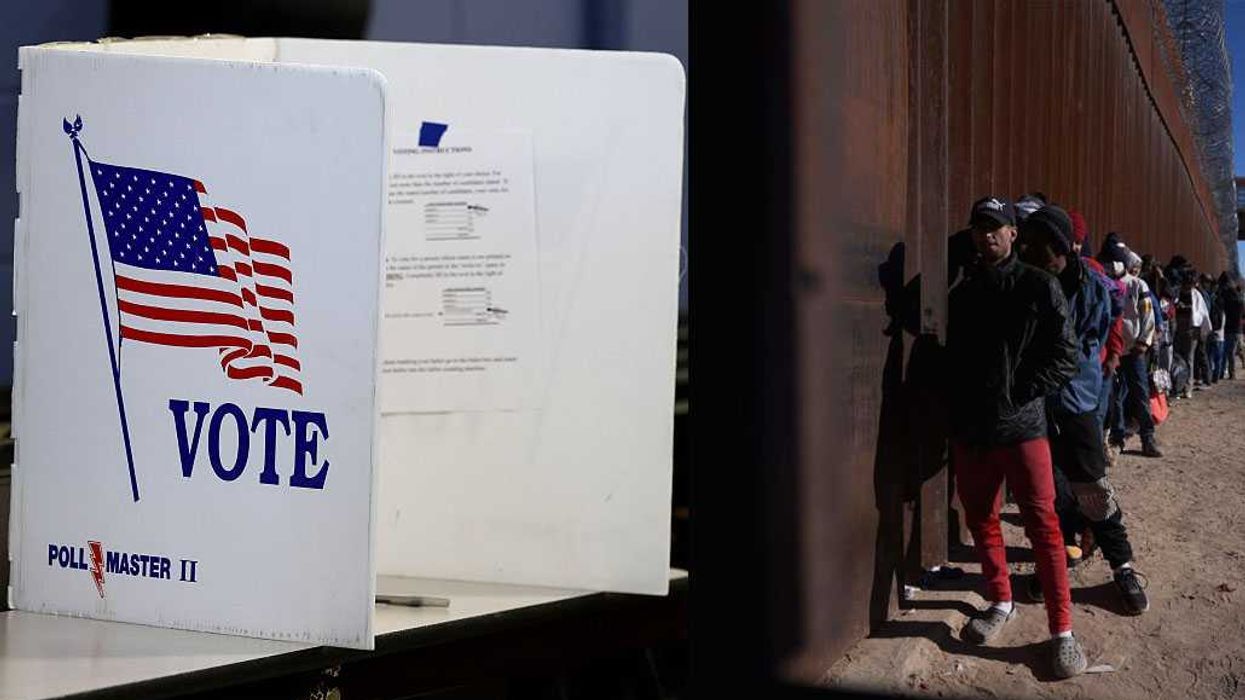

 Americans overwhelmingly believe congressional seats should be distributed solely based on the number of U.S. citizens in each state.
 A proposed amendment in Virginia is presented as protecting ‘reproductive freedom’ but goes much further than the ballot language suggests.


 www.theblaze.com
 thefederalist.com
 www.theblaze.com