GOP Bill Aims To Bring Back Common Sense To Election Day And Mail-In Ballots
 The bill, introduced by two Florida Republicans, follows this summer's feckless 5-4 Supreme Court ruling that kept the chaos in place.
As New Yorkers head to the polls Tuesday, incumbent Democratic Rep. Adriano Espaillat is fighting to retain his party’s nomination against a Mamdani-backed challenger.
The 71-year-old was first elected to Congress in the 2016 election, representing a district that encompasses northern Manhattan and a section of the west Bronx.
'I forget to get napkins. So I just wiped my hand on the American flag behind me.'
“I'm the first undocumented, formerly undocumented member of Congress. I'm the first Dominican American member of Congress in a city that has a million Dominican Americans,” Espaillat said.
Despite his membership in the Congressional Progressive Caucus and classification as one of the most liberal House members, he doesn't seem to have been adequately radical enough for Mayor Zohran Mamdani and his fellow democratic socialists.
Darializa Avila Chevalier, a community organizer and the daughter of Dominican immigrants, is challenging Espaillat for the seat.
Avila Chevalier is positioning herself as a further-left alternative to Espaillat, claiming on her website that she has received endorsements from Mamdani, the New York City Democratic Socialists of America, and former House “Squad” member Jamaal Bowman.
Espaillat, by contrast, has the support of establishment New York Democrats such as House Minority Leader Hakeem Jeffries and Gov. Kathy Hochul.
“I am someone who has been organizing for over 14 years in our community, and I have to ask: Have things gotten better in our community under our current leadership?” Avila Chevalier said last week in a primary debate.
In a recent interview, the 32-year-old stood by her belief that “all deportations are wrong,” even for those convicted of violating American criminal law, calling it “double jeopardy.”
Avila Chevalier is also behind a plethora of tweets from a since-deleted X account that featured statements such as: "It means ending policing full stop. Period. No more police at all ever,” “I forget to get napkins. So I just wiped my hand on the American flag behind me,” and one calling the Democratic National Committee a "big fraudulent white nasty status quo bitch."
"I have grown considerably since in the years since these tweets, and I am focused on our community and our community’s future," she said about the deleted social media account.
Avila Chevalier has narrowed the polls leading up to the election. According to the New York Times, recent polling shows Avila Chevalier with a lead as high as four points and Espaillat with a lead as high as eight points.
Bettors on Polymarket seem to have confidence in Espaillat, placing him at a 66% chance of winning, compared to Avila Chevalier’s 37%.
This primary standoff represents just the latest battle between the Democratic “mainstream” and the rising socialist sect of the party. As of 2025, there were 250 democratic socialists in elected office, compared to just 35 in 2017.
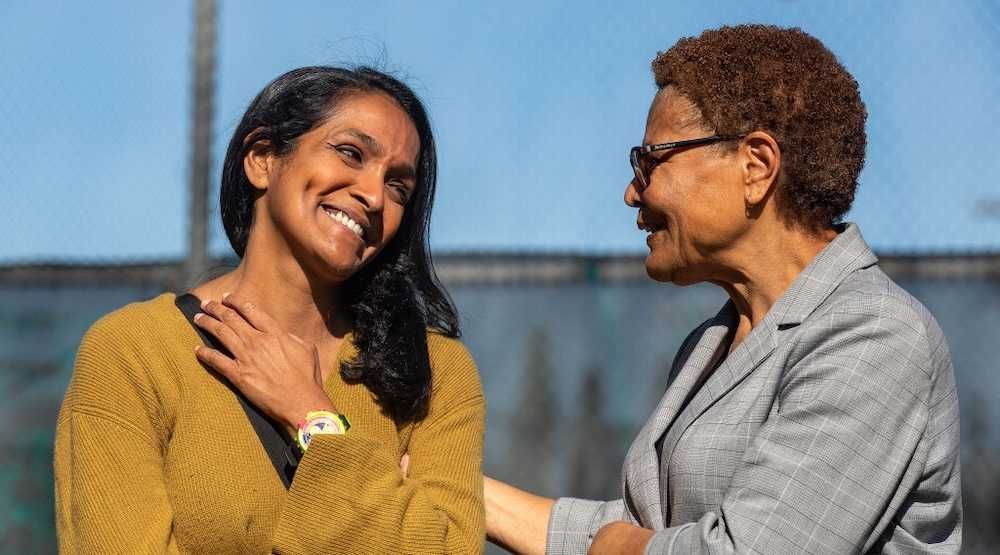
These offices are not exclusively low-level either. Janeese Lewis George, who just secured the Democratic nomination for D.C. mayor, is a democratic socialist, both New York City Mayor Mamdani and Seattle Mayor Katie Wilson are democratic socialists, and Los Angeles City Councilmember Nithya Raman, who just advanced to the general election for her city’s mayoral race, is a DSA member as well.
Espaillat, as a seasoned politician, has gone after Avila Chevalier for her lack of governmental experience: “This is not a PhD program. This is government. And you need experience.”
Avila Chevalier has focused much of the debate on Israel and American aid to the country. During a debate, she attacked Espaillat for receiving money from AIPAC and “voting to send our tax dollars to a country that is enacting a genocide.”
However, Espaillat has swung back, highlighting Avila Chevalier’s attendance at a controversial pro-Palestinian rally in Times Square on Oct. 8, 2023, one day after the Hamas-led attack on Israel.
"In Congress, she'll take on corporate greed, bad landlords, and D.C.'s broken political system," Mamdani said in support of Avila Chevalier's candidacy.
Like Blaze News? Bypass the censors, sign up for our newsletters, and get stories like this direct to your inbox. Sign up here!
“Accuracy comes before speed.” That was California Secretary of State Shirley Weber’s message to voters in a press release issued two days after officials began counting ballots from June’s primary. In the same release, she reminded voters that the count could continue for up to 30 days after Election Day.
Weber argued that California is “taking the time to do this work correctly” to protect voters’ rights and ensure election integrity.
After 2022, 2024, and this year’s primary, the problem no longer looks like a glitch. It looks like a pattern created by poor policy choices.
She is right about one thing: Accuracy matters.
Every lawful ballot should be counted. Every voter should be confident that election officials will get the count right.
But a week after Election Day, California was still processing 1.4 million ballots under a system that routinely extends vote counting for days and sometimes weeks after voters cast their ballots.
That raises a question California’s leaders seem increasingly unwilling to answer: Why are voters repeatedly told they must choose between accurate elections and timely results?
This is not the first time California has found itself in this mess.
In 2022, several California congressional races remained unresolved long after Election Day while control of the U.S. House hung in limbo. Two years later, California took 38 days to certify its election results. Now in 2026, Californians are again waiting weeks after Election Day for final results.
The details change. The outcome does not. Californians keep waiting.
So why does this keep happening?
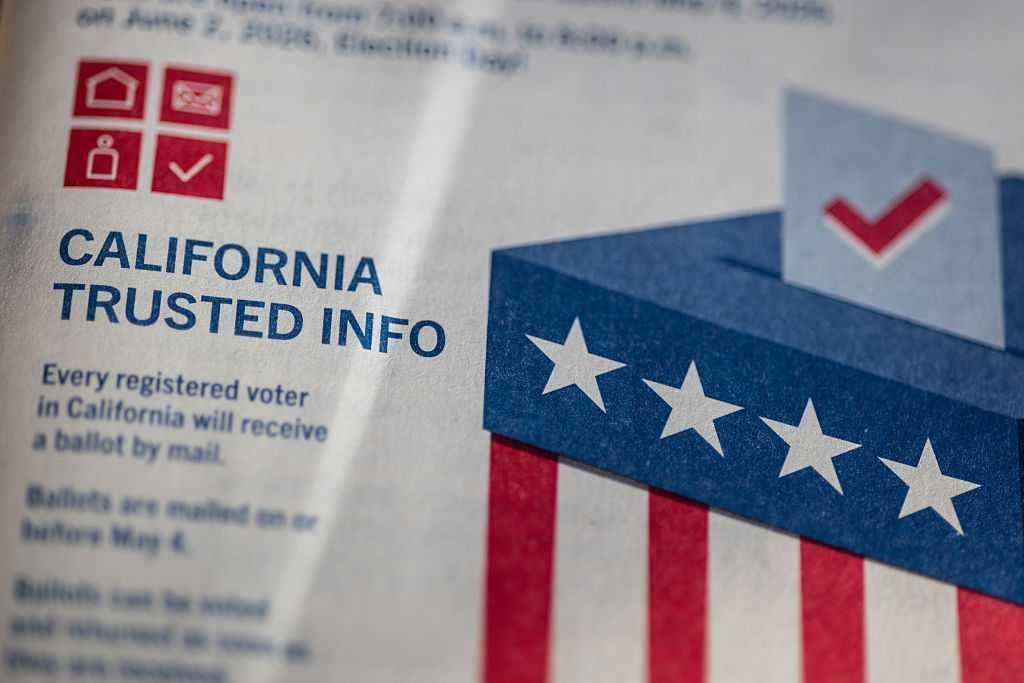
The answer starts with California election law. According to CalMatters, the delay is due in part to policies California adopted to make voting easier after the COVID-19 pandemic: Every registered voter receives a mail ballot, and ballots remain valid as long as they are postmarked by Election Day and arrive at county elections offices within seven days.
Election law expert Hans von Spakovsky has argued that California’s slow vote count is not an isolated incident or unexpected complication. It is the way the state’s election system is designed.
RELATED: ‘Fraudster’s paradise’: Feds plan to file election fraud charges in California
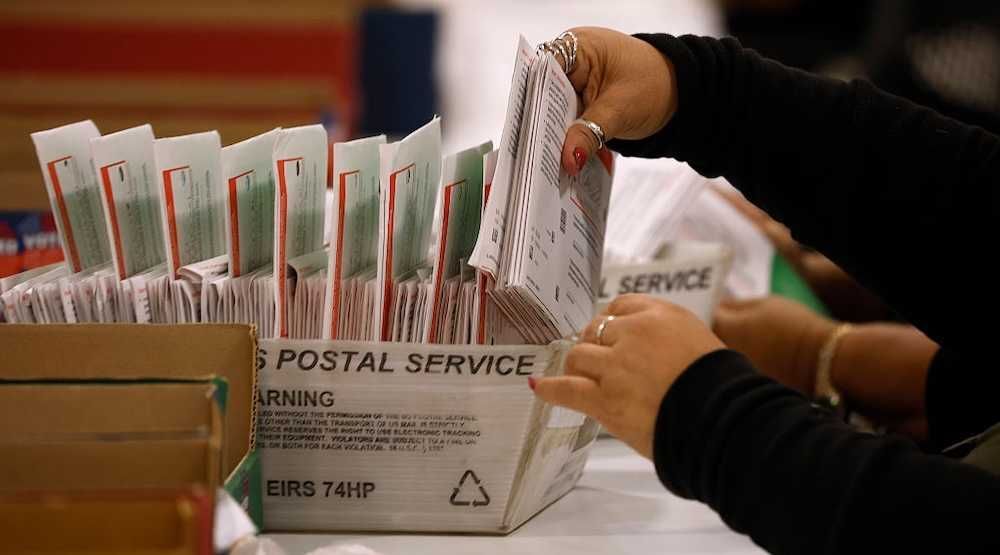
In other words, California is not experiencing an unexpected delay. It is experiencing the predictable results of the laws it chose.
Gov. Gavin Newsom (D) helped cement those policies in 2021 when he signed AB 37, making universal vote by mail permanent. His office promoted the law as “landmark elections legislation” that would expand vote by mail and strengthen election integrity.
Yet, Californians are now being sold the idea that waiting days or weeks for election results is simply the reality of modern elections.
It is not. It is the reality of California elections.
Timely results are part of election integrity. The longer ballots remain uncounted, the longer election officials must maintain secure chains of custody, verification systems, and storage. Delay does not automatically mean fraud. But delay does create more opportunities for confusion, suspicion, and avoidable controversy.
If California leaders want faster results, they should examine the policies that slow them down.
Instead, voters are told these delays are the unavoidable cost of administering elections in a large state. That explanation falls apart under scrutiny.
Look at Florida. The 2000 presidential election exposed serious weaknesses in that state’s election system. Legislators responded by reforming the state’s election administration and ballot-processing procedures.
Today, Florida is one of the fastest states in the country to report election results.
Florida allows election officials to begin processing mail ballots before Election Day, giving counties a head start on verification. The state also requires most mail ballots to be received by Election Day rather than days afterward. Voters whose signatures are missing or do not match generally have a much shorter window to fix those problems than California voters do.
Florida proves that accuracy and speed are not mutually exclusive.
California has chosen a different approach.
This is about more than administrative efficiency. In five months, Californians will return to the polls for the midterm election. Voters deserve confidence that the results will be accurate. They also deserve confidence that those results will arrive on time.
RELATED: Homeless people on Skid Row claim they were paid to vote — and not for Spencer Pratt
Lawmakers should examine whether ballots should continue arriving after Election Day and still be counted. They should review whether lengthy ballot-curing timelines help voters or simply extend uncertainty. Election officials should also receive every opportunity to process ballots before Election Day so results can be reported faster once polls close.
Most important, California leaders should stop pretending accuracy and speed are enemies. Florida proves they are not.
Weber says accuracy comes before speed. California voters should ask why they cannot have both.
After 2022, 2024, and this year’s primary, the problem no longer looks like a glitch. It looks like a pattern created by poor policy choices.
California built an election process that can take a month after Election Day to resolve.
Voters should stop accepting that as normal.
 Of the three political opinions issued by SCOTUS on Monday, the Trump v. Slaughter case will have the greatest effect.
 Von Spakovsky said that Barrett’s 'unfortunate' opinion 'makes it even more important that the U.S. Senate pass the SAVE Act.'
 In a blow to the integrity of U.S. elections, the Supreme Court upheld state laws permitting election officials to accept postmarked ballots after Election Day on Monday. The ruling was 5-4, with Chief Justice John Roberts and Justice Amy Coney Barrett joining the court’s liberal justices in the majority. The dispute in Watson v. RNC […]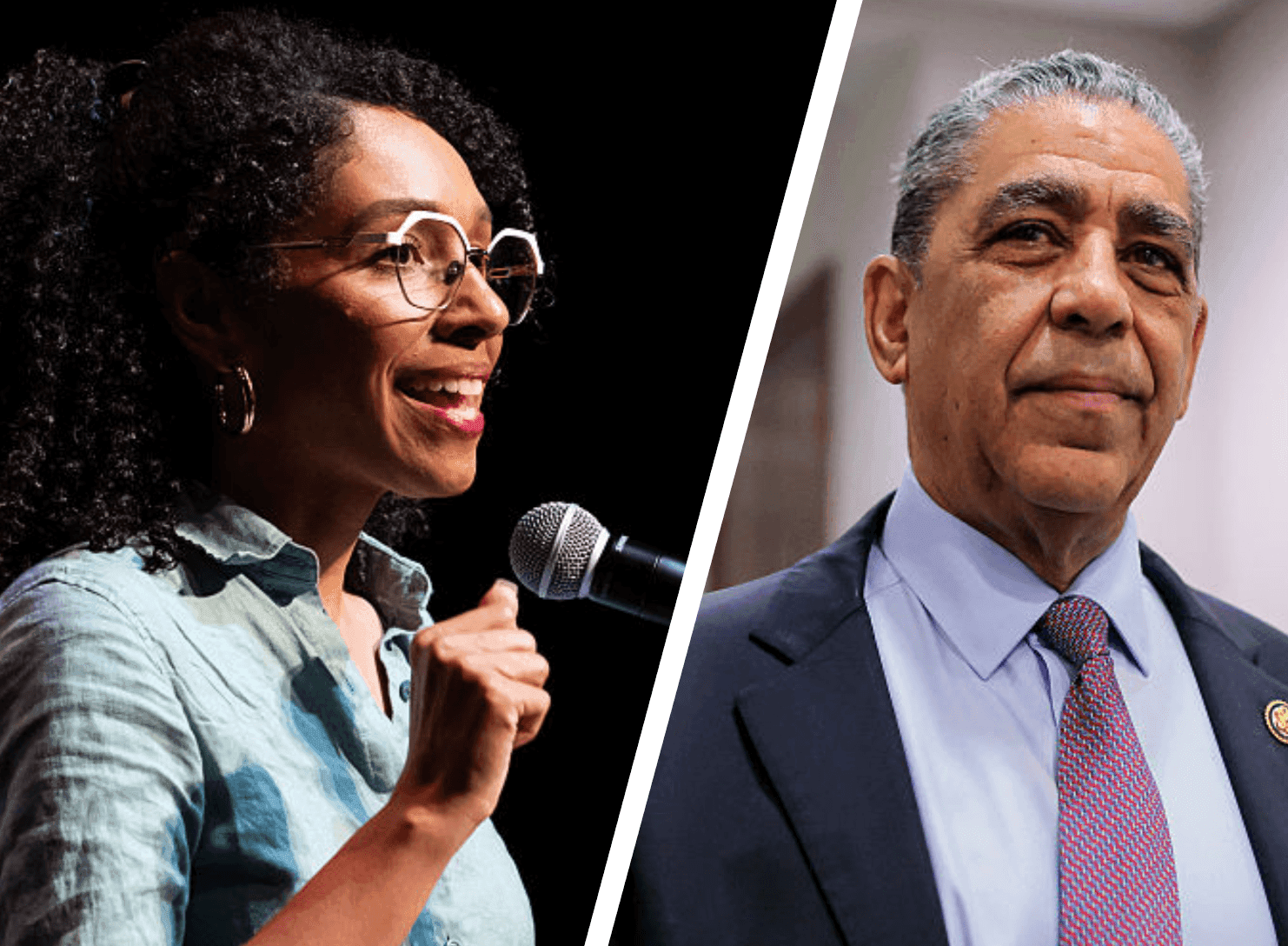
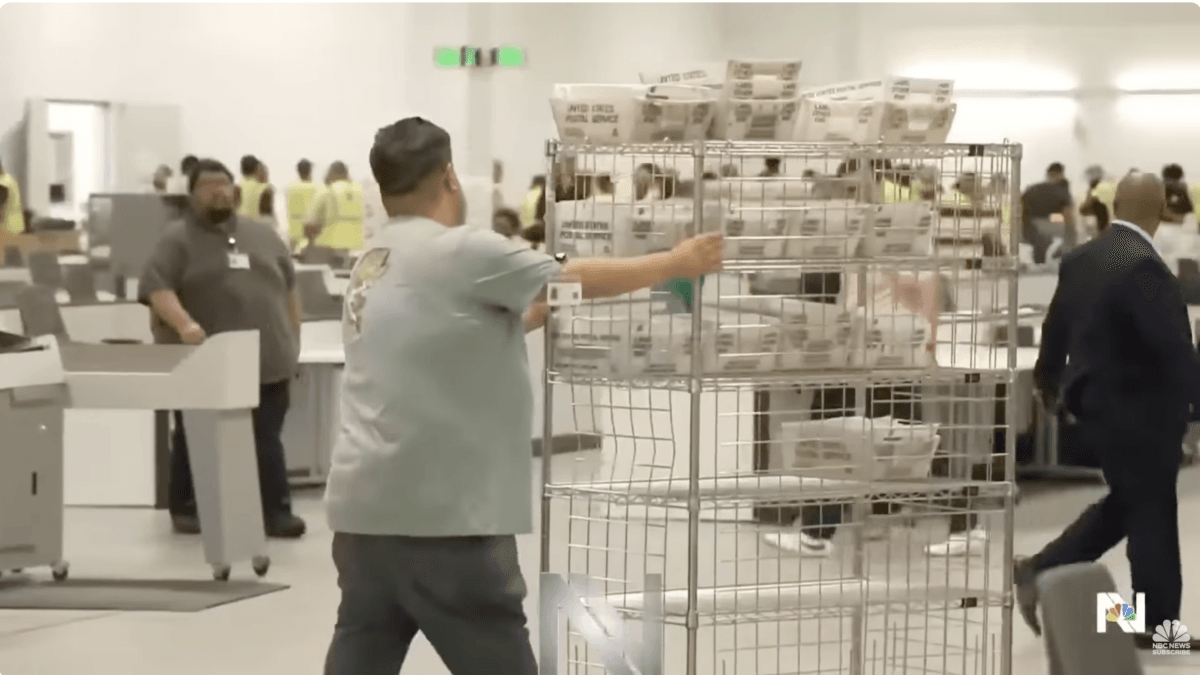 A looming U.S. Supreme Court ruling could end the seemingly endless Election Day of California and other blue and red states.
 Virginia Democrats have accidentally made a case against the months-long 'election season' they prize. What if SCOTUS took them up on it?
 The Supreme Court needed to explain what the definition of an 'election' is, so that Democrats could understand.
 'The attorney general's own lawyer completely undercut the public stance of the current attorney general.'
 www.theblaze.com
 thefederalist.com
 www.theblaze.com