Pope Leo Embraces Liberation Theology By Calling Health Itself A ‘Universal Right’

Pope Leo said that Pope Francis affirmed health is 'a universal right which means that access to health care services cannot be a privilege.'
We must resist a culture that redefines death as dignity


Just weeks after New York legalized physician-assisted suicide, a tragic case out of Canada should stop Americans cold.

Kiano Vafaeian died under Canada’s Medical Assistance in Dying program. He was 26. Reporting suggests his family was not notified beforehand. After a severe car accident at 17 derailed his plans, he struggled with physical and mental health challenges. He also lived with Type 1 diabetes and lost vision in one eye.

Will we measure human worth by convenience, health, and achievement? Or will we defend human dignity from conception to natural death?

His family is devastated. His mother told reporters, “We never thought there would be a chance that any doctor would approve a 22- or 23-year-old at that time for MAID because of diabetes or blindness.” But one did.

And the system isn’t slowing down. Canada is on track to surpass 100,000 assisted-suicide deaths before the program reaches its 10-year anniversary — a staggering number for what was sold as a narrow policy for the terminally ill.

The left calls this “compassion.” But once a society treats life as conditional, moral boundaries blur fast.

Kiano’s mother issued a warning every lawmaker should hear: “We don't want to see any other family member suffer, or any country introduce a piece of legislation that kills their disabled or vulnerable without appropriate proper treatment plans that could save their lives.”

None of this should surprise us. A culture that treats abortion as the solution to inconvenience will eventually treat death the same way. The pro-life movement has warned for decades that when a society declares life disposable before birth, it becomes easier to declare it disposable after birth too.

Once suffering — even ordinary suffering — becomes the test of whether life is worth living, the list of “acceptable” deaths expands. The disabled. The depressed. The chronically ill. The elderly. Canada is already living that logic, and the United States is starting to flirt with it.

But life and hope don’t come from despair. They come from courage — the kind displayed by mothers like Kiano’s who refuse to let hardship write their children’s endings.

That courage still shows up every day. Last month, on the first day of the Lenten 40 Days for Life campaign, the first baby saved was on Long Island, New York. A mother arrived at an abortion facility intending to take abortion pills. After encountering volunteers peacefully praying outside, she chose life.

That decision points to a truth pro-lifers see constantly: Hope outweighs despair.

RELATED: The winning message is the one pro-lifers keep avoiding

Graeme Sloan/Bloomberg via Getty Images

History is full of people born into hardship who built families, communities, and civilizations. Our ancestors endured wars, poverty, disease, and loss — and still understood that life was not the problem to be solved.

Today, our culture sells a darker story. It tells young people suffering makes life meaningless. It tells women children are burdens. It tells the sick and elderly their worth depends on productivity and independence. It teaches people to fear dependence more than they fear death.

If difficulty becomes the standard for deciding who deserves to live — or even be born — eventually no one qualifies.

The West is already sliding into what sociologists call a “demographic winter”: collapsing birth rates, shrinking populations, and cultural exhaustion feeding a doom spiral. A civilization that stops believing life is a gift stops creating it — and starts finding reasons to end it.

That’s why assisted suicide isn’t just an end-of-life policy debate. It’s a civilizational question. Will we measure human worth by convenience, health, and achievement? Or will we defend human dignity from conception to natural death?

We cannot let Canada’s hopeless logic take root here. Nationally — and in every state — we must fight for life at every stage. We should work for fewer families grieving like Kiano’s and more families celebrating.

When life becomes conditional, no life is safe. When life is received as a gift, even in the hardest moments, hope wins.

After Massive Loss To USA, Entire Canadian National Hockey Team To Be Euthanized For Being ‘Sad’

Following reports of being “sad” after their massive Olympic loss to the United States of America, the entire Canadian national hockey team is set to be euthanized, according to a joint statement from the country’s Ministry of Suicide and Ministry of Hockey. “Hey, look, I’m sorry, but, a loss like this is tough to handle, […]

Canadian Doc ‘Coached’ 26-Year-Old To Qualify For State-Sponsored Suicide, Says Family

Vafaeian's family is now pushing for the reversal of the MAID provision that qualifies individuals whose deaths are not 'reasonably foreseeable.'

A Soulless Argument

Dr. David Barash begins this book by commenting that he did not put "his heart and soul" into it because he does not believe there is any such thing as a "soul." After reading it, I can only assume he has serious doubts about the philosophical category of "substance" too, as he has also put very little of that into it. The jacket commendations are laudatory: a "wise, scientific philosopher… deftly disposes of dualism" (Richard Dawkins); an argument written with "clarity and wit" that "shows how appreciating our actual lives is the ultimate uplifting value" (Steven Pinker); "Superb read, erudite and stimulating" (Robert Sapolsky); a book that is "sharp, deeply informed, and often darkly entertaining" (Paul Bloom); "brilliant, ground-breaking, magisterial … the best analysis and demolition of the topic I ever encountered" (Michael Shermer). The reality, however, is far different.

The post A Soulless Argument appeared first on .

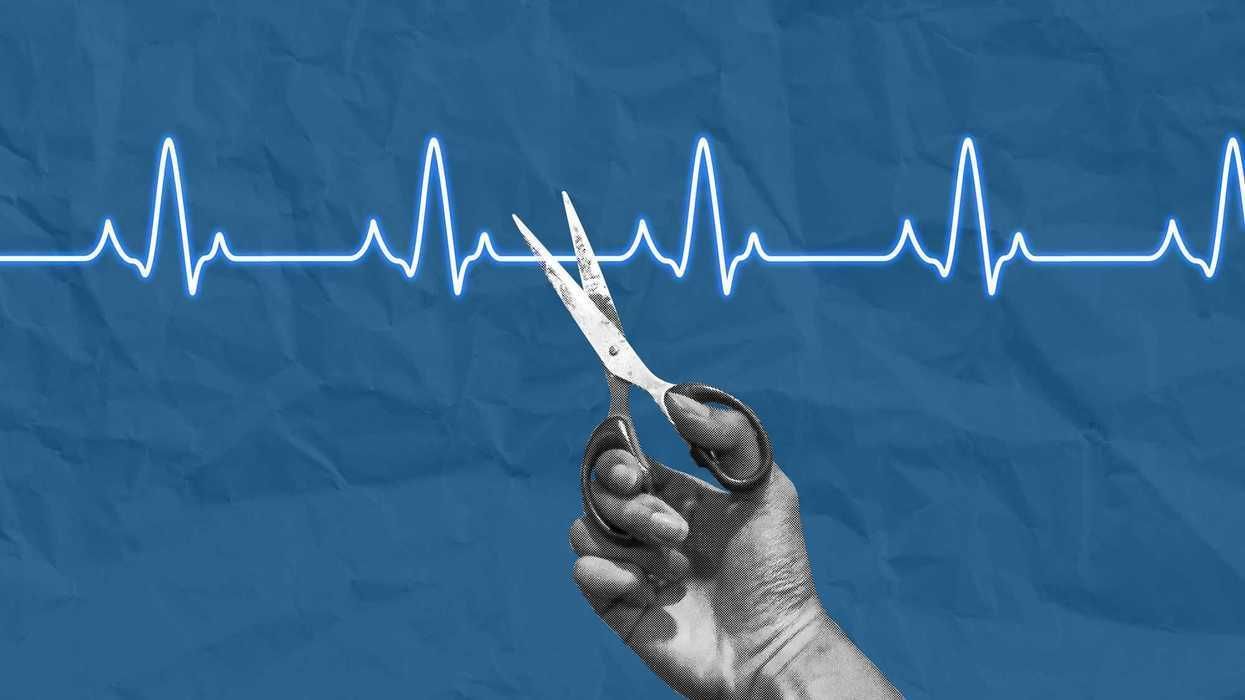
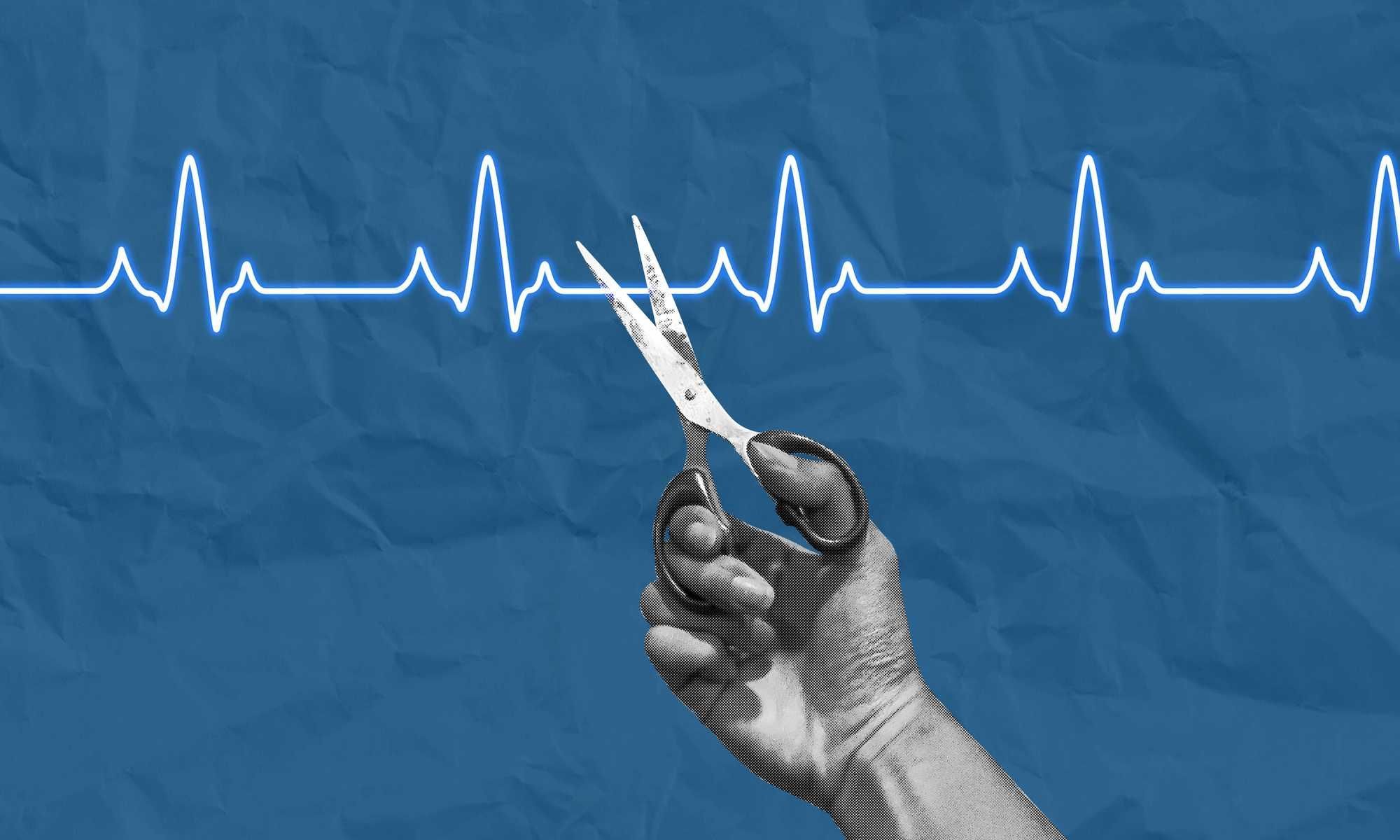
State-Sanctioned Suicide Is The 4th Leading Cause Of Death In Canada

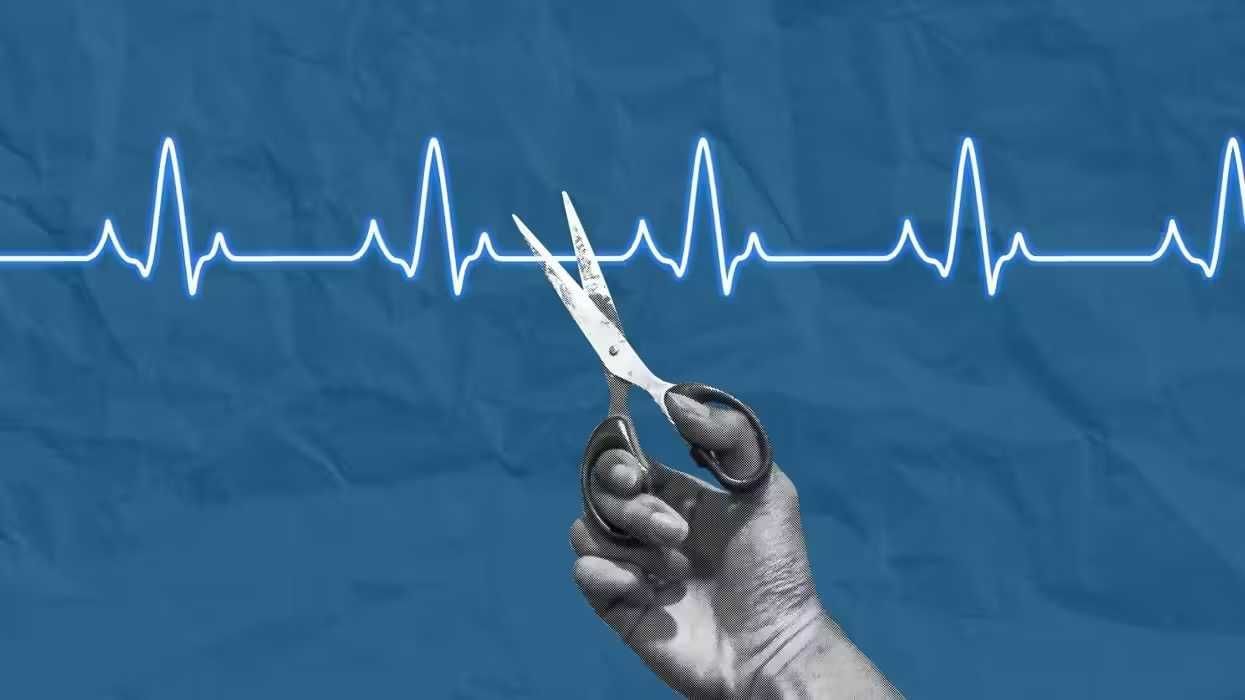
'The doctors who advocate for it call it compassion, but ethical doctors are healers, not killers.'

The country that mocks America’s ‘culture of death’ has embraced one of its own


Canada loves to lecture America about compassion. Every time a shooting makes the headlines, Canadian commentators cannot wait to discuss how the United States has a “culture of death” because we refuse to regulate guns the way enlightened nations supposedly do.

But north of our border, a very different crisis is unfolding — one that is harder to moralize because it exposes a deeper cultural failure.

A society that no longer recognizes the value of life will not long defend freedom, dignity, or moral order.

The Canadian government is not only permitting death, but it’s also administering, expanding, and redefining it as “medical care.” Medical assistance in dying is no longer a rare, tragic exception. It has become one of the country’s leading causes of death, offered to people whose problems are treatable, whose conditions are survivable, and whose value should never have been in question.

In Canada, MAID is now responsible for nearly 5% of all deaths — 1 out of every 20 citizens. And this is happening in a country that claims the moral high ground over American gun violence. Canada now records more deaths per capita from doctors administering lethal drugs than America records from firearms. Their number is 37.9 deaths per 100,000 people. Ours is 13.7. Yet we are the country supposedly drowning in a “culture of death.”

No lecture from abroad can paper over this fact: Canada has built a system where eliminating suffering increasingly means eliminating the sufferer.

Choosing death over care

One example of what Canada now calls “compassion” is the case of Jolene Bond, a woman suffering from a painful but treatable thyroid condition that causes dangerously high calcium levels, bone deterioration, soft-tissue damage, nausea, and unrelenting pain. Her condition is severe, but it is not terminal. Surgery could help her. And in a functioning medical system, she would have it.

But Jolene lives under socialized medicine. The specialists she needs are either unavailable, overrun with patients, or blocked behind bureaucratic requirements she cannot meet. She cannot get a referral. She cannot get an appointment. She cannot reach the doctor in another province who is qualified to perform the operation. Every pathway to treatment is jammed by paperwork, shortages, and waitlists that stretch into the horizon and beyond.

Yet the Canadian government had something else ready for her — something immediate.

They offered her MAID.

Not help, not relief, not a doctor willing to drive across a provincial line and simply examine her. Instead, Canada offered Jolene a state-approved death. A lethal injection is easier to obtain than a medical referral. Killing her would be easier than treating her. And the system calls that compassion.

Bureaucracy replaces medicine

Jolene’s story is not an outlier. It is the logical outcome of a system that cannot keep its promises. When the machinery of socialized medicine breaks down, the state simply replaces care with a final, irreversible “solution.” A bureaucratic checkbox becomes the last decision of a person’s life.

Canada insists its process is rigorous, humane, and safeguarded. Yet the bureaucracy now reviewing Jolene’s case is not asking how she can receive treatment; it is asking whether she has enough signatures to qualify for a lethal injection. And the debate among Canadian officials is not how to preserve life, but whether she has met the paperwork threshold to end it.

This is the dark inversion that always emerges when the state claims the power to decide when life is no longer worth living. Bureaucracy replaces conscience. Eligibility criteria replace compassion. A panel of physicians replaces the family gathered at a bedside. And eventually, the “right” to die becomes an expectation — especially for those who are poor, elderly, or alone.

RELATED: ‘Stone-cold communism’: Canadian government seizes hospice center when staff refuses to allow euthanasia

Photo by Graham Hughes/NurPhoto via Getty Images

The logical end of a broken system

We ignore this lesson at our own peril. Canada’s health care system is collapsing under demographic pressure, uncontrolled migration, and the unavoidable math of government-run medicine.

When the system breaks, someone must bear the cost. MAID has become the release valve.

The ideology behind this system is already drifting south. In American medical journals and bioethics conferences, you will hear this same rhetoric. The argument is always dressed in compassion. But underneath, it reduces the value of human life to a calculation: Are you useful? Are you affordable? Are you too much of a burden?

The West was built on a conviction that every human life has inherent value. That truth gave us hospitals before it gave us universities. It gave us charity before it gave us science. It is written into the Declaration of Independence.

Canada’s MAID program reveals what happens when a country lets that foundation erode. Life becomes negotiable, and suffering becomes a justification for elimination.

A society that no longer recognizes the value of life will not long defend freedom, dignity, or moral order. If compassion becomes indistinguishable from convenience, and if medicine becomes indistinguishable from euthanasia, the West will have abandoned the very principles that built it. That is the lesson from our northern neighbor — a warning, not a blueprint.

Pritzker Signs Law Welcoming State-Sanctioned Suicide To Illinois

State-sanctioned euthanasia not only pressures patients to choose suicide, but also inevitably ends in health care systems forcing suicide on patients.

Husband of woman failed by Canadian health care system thanks Glenn Beck for intervening: 'You've opened up a lot of doors'


Blaze Media co-founder Glenn Beck and his team, now working in conjunction with elements of the Trump administration, are in the process of rescuing a Canadian woman failed by her country's socialist health care system and led into thinking the only remedy for her painful living-nightmare might be state-facilitated suicide.

The day after Canadian state media did its apparent best to frame the American intervention as "political posturing" and a "distraction from the real issues," the Saskatchewan woman's husband expressed his profound gratitude to Beck for his efforts to help Jolene Van Alstine.

'If it was me, I think I would have had a gun to my head long ago.'

Miles Sundeen, speaking on Thursday to Beck in what became a tear-filled episode of "The Glenn Beck Program," said at the outset, "First of all, I just wanted to say thank you so much. Apparently you're a very popular guy. You've opened up a lot of doors."

"It's been a long and very arduous journey. It's been over eight years now that Jolene has been very ill. We've gone through very tough times trying to get help through our health care system; long, long wait times both to see specialists, to get a diagnosis initially, and then, of course, to wait times for surgeries as well," said Sundeen. "The problem is, of course, as this disease continues to devastate her body, it becomes worse and worse as time goes on."

Van Alstine has a rare parathyroid disease called normocalcemic primary hyperparathyroidism, which causes nausea and vomiting and draws calcium from the bones into the blood, resulting in extreme bone pain, weakened bone density, and fractures. According to Sundeen, Van Alstine's immobilization by the disease has also resulted in other conditions, namely diverticulitis and osteoporosis, not to mention "mental damage."

While she has undergone multiple surgeries in hopes of addressing the disease, she still requires a specialized procedure to remove her overactive parathyroid gland.

The trouble is that there is presently no surgeon in her province able to perform the operation. While she could potentially receive the surgery elsewhere in Canada, Van Alstine has indicated that she must first obtain a referral but cannot secure one as none of the endocrinologists in her region are accepting new patients.

RELATED: Glenn Beck works to save pain-racked Canadian woman left at euthanasia dead end by broken socialist health care system

L: Alla Gnidenko/Getty Images; R: Blaze Media

Sundeen suggested that the endocrinologists and specialists aren't necessarily to blame, noting that the Canadian health care system is "just absolutely overwhelmed."

While Sundeen suggested that mismanagement is the system's top problem, he noted that the system has also been "completely devastated" by underfunding and the huge influx of immigrants into the country.

According to the 2021 census, 23% of people living in Canada were foreign-born and 2.5% — over 924,000 — were nonpermanent residents. A government report released on Nov. 26 indicated that the 2021 census actually missed 38% of nonpermanent residents in that count. The top three national origins of the immigrants flooding into Canada under the Trudeau Liberal regime were India, Philippines, and China. Pakistan and Iran also made the top-10 list of national origins.

The sudden surge in demand on citizen resources helped strain a system that was already set for a reckoning with a graying population.

The apparent failure of the health care system is especially frustrating for Sundeen, who told Beck that "with this surgery, the parathyroid symptoms will disappear."

"She can get back to an almost-normal life as far as the parathyroid hormone goes," added Sundeen.

'We'll get it done.'

After years of pain and little evidence that her nation's strained health care system will get around to helping her, Van Alstine started the process of joining the tens of thousands of other Canadians who'll be killed under the government's Medical Assistance in Dying euthanasia program, which has in recent years become one of the top five causes of death in Canada.

George Carson, a MAID approval doctor, confirmed this week that he assessed Van Alstine and provided her with his approval.

Sundeen stressed to Beck, however, that "she wants to live."

"But when your life is absolutely stolen from you — stolen from you for eight years, and you suffer so much pain, depression, and anxiety — I love her with all my heart," said Sundeen.

"She's a strong girl. If it was me, I think I would have had a gun to my head long ago."

— (@)

Beck emphasized to Sundeen that neither he nor his wife was alone.

"We'll find a way to make this happen if it is at all possible. We pray for you. There are millions of people who are praying for you now, and we'll do everything we can," added Beck.

Beck indicated that he has been in contact with elements of the Trump administration, and there appears to be some movement on getting Van Alstine help in America.

He noted that a "very high-level administrative official just called and said, 'Let's save her life. We'll get it done.'"

Beck has personally volunteered to fly her down, put her up, and set her up to meet some doctors.

Visibly moved by his conversation with Sundeen and fighting back tears, Beck noted that he hopes to be able to call him back with some "good news."

Like Blaze News? Bypass the censors, sign up for our newsletters, and get stories like this direct to your inbox. Sign up here!