‘Don’t be evil’ may be dead, but ‘don’t be Frankenstein’ is alive



Some still remember when Google defined itself by a simple motto: “Don’t be evil.” When Google reorganized under Alphabet in 2015, the new parent company adopted the somehow less confidence-inspiring, “Do the right thing.” Another phrase with a lower bar also made the rounds — “to organize the world’s information” — but rest assured, that was never the motto. It was simply ... uh ... the mission statement.

Anyway ...

The AI doomers’ strange brand of apocalypticism is: Let’s create an evil god so we can save the world from it.

It took until this week for some of the most powerful voices in tech policy to circle back explicitly to a prime directive: Avoid hellacious acts. For that, thank the AI doomers, whose strange brand of apocalypticism — let’s create an evil god so we can save the world from it — finally breached technology insider-dom and splashed across the political timeline.

The high-stakes soap opera has, as usual, deeper currents than the news feed can convey. But the key development is that the White House and its allies moved at warp speed to establish a few basic touchstones that take us back to the good old days of not being evil.

Trump has received most of the attention for memeing his stern-looking self above the caption “Americanism, Not Effective Altruism!” But his vice president captured the matter in a single line that’s tough to beat. “If you’re building Frankenstein,” he said, “stop!"

Note the emphasis. Trying to build an evil god — for instance, one with a statistically nonzero chance of wiping out the human race — is fortunately still considered axiomatically evil. But JD Vance’s reference underscores that trying to build a "new man," even with the best of intentions, is also evil.

According to the doomers, the best way to save the world from evils they might create is for the rest of us to give them some form of planetary governing control. Vance endorsed a more commonsense approach: The best way to spare the world from evils you’re responsible for is to ... not do them in the first place.

RELATED: Silicon Valley is building a god in its own image

Gremlin/Getty Images

The vice president may, like every one of his predecessors in living memory, carry a pronounced partisan identity. But his folksy-clever line echoes in anti-doomer rhetoric now blaring from the industry’s rooftops. Microsoft, of all places, recently published its own rulebook for what not to build. On X, Microsoft AI CEO Mustafa Suleyman promoted the new “Humanist AI Code of Conduct,” which insists AI “is not conscious and should not be designed to imitate consciousness. It should,” Microsoft avows, “be engineered to avoid representing as though it has feelings, subjective preferences, or intrinsic motivation.”

Microsoft also flatly states: “We reject the pursuit of legal personhood, or the idea that models might deserve welfare, or be entitled to rights.” No Frankensteins here!

Or rather, no Frankenstein’s monsters — which means no Dr. Frankensteins running amok in the lab.

At Palantir, outspoken CTO Shyam Sankar made a similar point in a 2025 interview. “I think the secularists in Silicon Valley are filling the God-shaped hole in their heart with AGI,” Sankar said.

“The people who have religion are the most skeptical” of the doomers’ build-a-god-and-save-the-world-from-it thesis — which, yes, does itself resemble an inverted religion. For “the people who are kind of transhumanists,” Sankar concluded, “it becomes what they wish were true.”

Even Nvidia’s Jensen Huang, not known for Bible-thumping, recently struck an economic note with more than a whiff of spirituality.

“If we’re not confident about the safety of the products, like all companies ... if you build a product or a service and you’re not confident in its functionality, capability, or safety, then don’t release it,” he said. "And so that’s a very obvious thing to do. You pace yourself until you are confident you’re releasing something that the market would appreciate. The market forces are already there. We don’t need any new laws. We don’t need new regulations.”

RELATED: Poll: Most think AI could do this to humanity — but don't agree on what to do about it

da-kuk/Getty Images

Translation: Hear a little voice in your head, or more likely, your heart? Whispering, “No, this product is bad”? Don’t take it to market.

Turns out, you can just not do things!

Of course, Huang’s logic is a bit deceptive. We would like to believe the market will punish bad people for taking bad things to market, but that is not always how it works. As we speak, present-day Dr. Frankensteins are transplanting human brain organoids into mice engineered to lack most of their cerebral cortex, allowing the human tissue to occupy much of the vacant space and wire into the animals’ nervous systems.

No, doctors! Bad! Evil! Don’t!

Except they are. In the end, it matters that people examine their own hearts for evil before looking elsewhere and pointing fingers. But spiritual insistence alone will not keep society on the rails. It is not enough to scowl at our mad doctors, however good their intentions, as their creations erode the boundaries around our sacred human bodies and being — supercomputers or no.
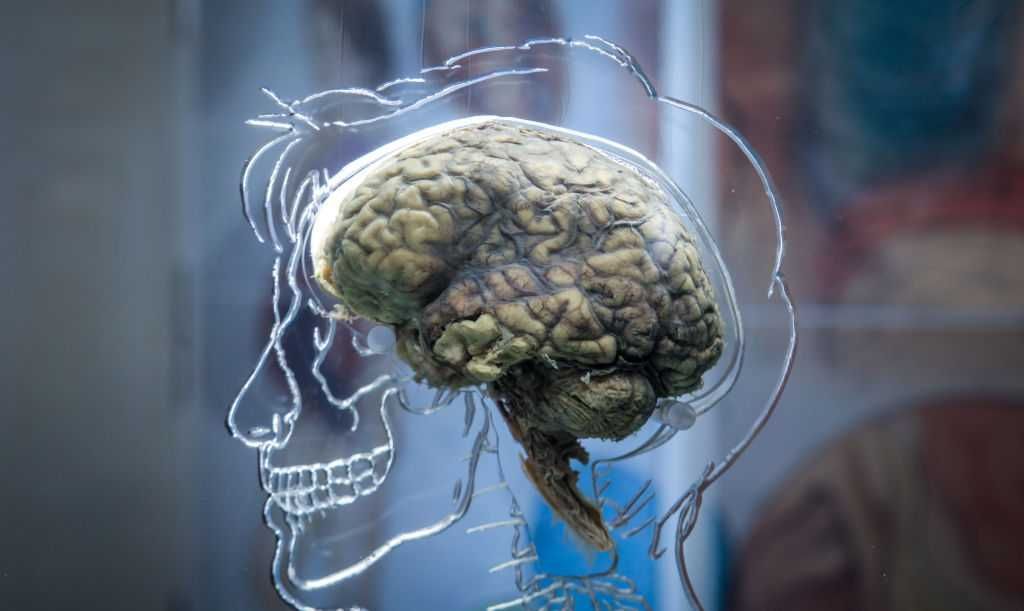
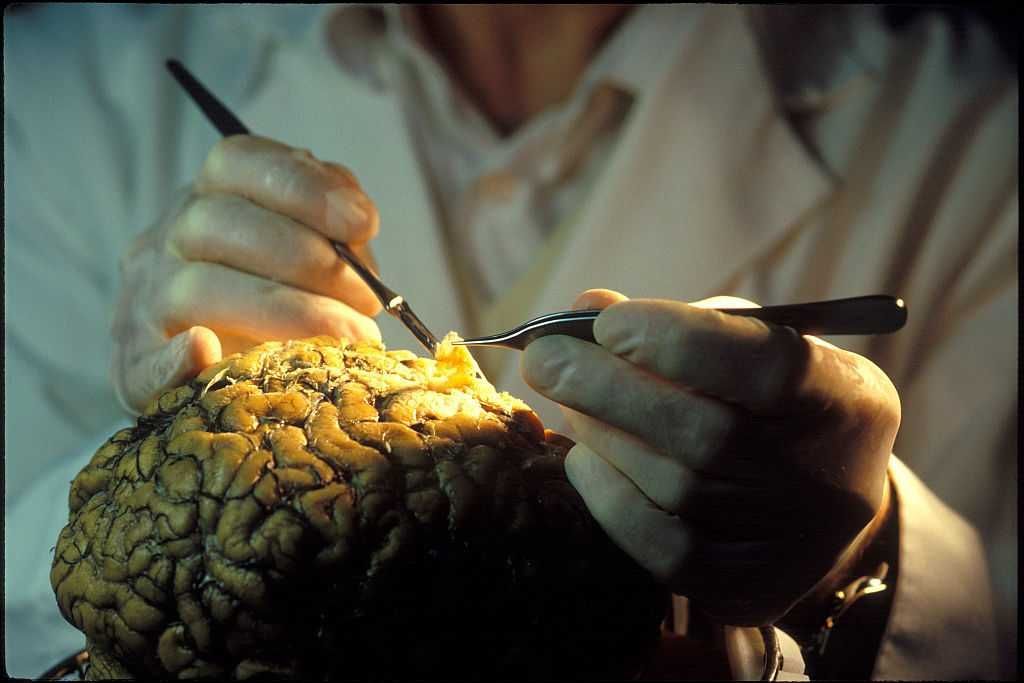
Disembodied human brains kept 'alive' for drug testing by controversial American startup


Several years ago, a team of researchers obtained numerous pig brains from a slaughterhouse and revived them off-site for experimentation purposes. That team has since moved up the food chain. Now it obtains human donors' brains, restores their functions, and uses them to test experimental drugs.

Bexorg, a Connecticut-based biotech startup spun out of Yale University, boasts about having created a "platform that leverages the untouched potential of nature's most complex and enduring mystery: the human brain."

'It’s a remarkable brain bank.'

Whereas other researchers might be limited to experimenting on lab-grown, human pseudo-brains or cell cultures, the team at Bexorg meddles with "full mature, intact, and isolated brains for days on end" with the stated aim of advancing brain disease therapies.

Unlike the company's slick pitch, the reality appears to be something of a horror show. After all, the over 700 brains that have been subjected to experimentation at Bexorg so far were apparently far from inert.

Bexorg takes human brains from their newly deceased donors' bodies, places them in what are effectively vats, and feeds them liters of blood substitute and other fluids that provide oxygen from an artificial lung and carry away waste to a fake kidney. The tubes that carry the sustaining fluids are connected to blood vessels in the brain via four plastic ports.

RELATED:Famed neuroscientist claims he's disproven free will — but his peers say he failed miserably

RDB/Dukas/Universal Images Group/Getty Images


According to the peer-reviewed academic journal Science, the company's proprietary life-support system BrainEx keeps the disembodied brains alive and preserves their key functions so that they can metabolize experimental drugs and react to other stimuli.

After roughly 24 hours in a state of drugged limbo, donors' brains are cut up into hundreds of pieces for further study.

Although the brains are alive and reactive for the benefit of "drug discovery," Bexorg CEO Zvonimir Vrselja has stated that "higher-level brain functions are not restored."

According to a 2019 study in which Vrselja and other members of what became the Bexorg team used their technology to revive pig brains obtained from a food processing facility, "The observed restoration of molecular and cellular processes following 4h of global anoxia/ischemia should not be extrapolated to signify resurgence of normal brain function. Indeed, quite the opposite: at no point did we observe the kind of organized global electrical activity associated with awareness, perception, or other higher-order brain functions."

To ensure against the re-emergence of consciousness among the subjects of their "wet-lab" experiments, researchers suppress the human brains' electrical activity with anesthetics, specifically the drug propofol.

Propofol apparently causes brain activity to become unstable until the brain loses consciousness.

"The brains are already almost devoid of the coordinated neural firing necessary even for minimal consciousness," Brenand Parent, a bioethicist from New York University Langone Health who sits on Bexorg's board, told Science.

Despite the company's reassurances and use of multiple measures to block neuronal activity, some have raised serious ethical concerns about Bexorg's technology, which initially developed with the help of funding through the National Institutes of Health BRAIN Initiative. A source familiar told Blaze News that the company is not presently receiving NIH funding.

"This is brand-new, and there's no kind of institutional oversight," Yale bioethicist Stephen Latham told ScienceAlert in 2019 regarding the earlier experiments on pig brains.

"This is not animal research, because the brain comes to the researchers from an already dead animal," continued Latham. "But if consciousness were somehow induced in the brain, we don't have ethics committees … that are constituted to even think about how to do the kinds of trade-offs you do when you do research on human subjects or on animals."

Vrselja claimed in a December 2025 study published in the Alzheimer's Association's journal, Alzheimer's and Dementia, that the 5-year-old startup's "perfusion‐based postmortem brain model can recapitulate the complexity of the brain at the cellular and systems level."

The December study claimed further that "utilizing human disease brains as a preclinical model promises to substantially increase the probability of success in developing new therapies for AD."

Bexorg did not respond to a request for comment from Blaze News.

Bruna Bellaver, a research assistant professor of psychiatry at the University of Pittsburgh, told Science that BrainEx is "a huge step up from mouse models."

Bruce Car, the chief science officer at Biohaven, one of Bexorg's collaborators, has used roughly 130 of the Bexorg-sustained brains to test drugs. Car told Science that one of the drugs, the intended use of which is to prevent toxic proteins from building up in the brain, didn't perform as desired in a mouse, but worked in the disembodied human brains at a lower-than-expected dose. This apparently saved Biohaven a year of development.

"It’s a remarkable brain bank," said MIT neuroscientist Li-Huei Tsai, who instead uses pseudo-brains grown from human stem cells.

Like Blaze News? Bypass the censors, sign up for our newsletters, and get stories like this direct to your inbox. Sign up here!

Pentagon makes horrifying admission about its funding of Chinese gain-of-function experiments


The year millions of people were killed worldwide by a virus likely engineered in the Wuhan Institute of Virology, Chinese scientists in Beijing began toying with a more deadly coronavirus variant called GX_P2V that killed humanized mice 100% of the time, largely with late-stage brain infections. While not formally linked, the study referenced parallel work executed by Wuhan Institute of Virology scientist Dr. Shi Zhengli.

In March, Chinese researchers at the Hebei Medical University revealed they had created a mutant version of the virus vesicular stomaitis, known to infect cattle, by giving it a protein from the Ebola virus. The hamster test subjects infected with the recombinant virus suffered weight loss, ulcerated eyes, inflammation, multi-organ failure, and then all died.

Apparently, the Pentagon has no idea to what extent it has bankrolled these kinds of potentially ruinous experiments in communist China.

The Department of Defense Office of Inspector General released a partially redacted report Tuesday detailing the results of its efforts to track down the money the Pentagon has invested helping the communist Chinese enhance deadly pathogens.

The report made clear it was referring to gain-of-function experiments, referencing a definition published in the journal Frontiers in Bioengineering and Biotechnology, which states, "The term 'gain-of-function' means 'to enhance a function by genetic manipulation' or 'to add a new function' and applies to much research involving genetic recombination and genetic manipulation."

The DOD Office of Inspector General sought specifically to track the amount of federal funds given either directly or indirectly by the Pentagon to:

  • the communist regime itself;
  • the Wuhan Institute of Virology and other organizations administered by the Chinese Academy of Sciences;
  • Peter Daszak's scandal-plagued and debarred EcoHealth Alliance, whose gain-of-function subcontractor was among the likely patients zero;
  • the Chinese Academy of Military Medical Sciences; and
  • any other related lab in the Asian nation.

Of special concern was whether and where funds were spent on "research or experiments that could have reasonably resulted in the enhancement of any coronavirus, influenza, Nipah, Ebola, or other pathogen of pandemic potential or chimeric versions of such a virus or pathogen."

The conclusions of the report were damning.

The Pentagon has admitted that it has no idea to what extent it has funded the creation of deadly viruses in an adversarial nation it has identified as its "top pacing challenge" — a country whose overall biorisk management score is less than stellar.

The report noted at the outset that Army officials had identified 12 relevant research programs and that for "seven awards, a prime awardee provided funds to a subawardee or contracting research organization in China or other foreign countries for research related to potential enhancement of pathogens of pandemic potential."

The Inspector General's Office could also account for over $54 million given to EcoHealth Alliance for 13 projects executed from 2014 through 2023 but suggested that none of this funding went to China or its affiliates for gain-of-function research.

After accounting for the top of the Pentagon funding iceberg, the report indicated what lies below the surface is wholly "unknown."

Why is the answer to this question not 'zero dollars'?

Citing "significant challenges in searching for awards" due to "limitations in the DOD's systems used to track contracts and grants," the Inspector General's Office concluded, "The full extent of DOD funds provided to Chinese research laboratories or other foreign countries for research related to enhancement of pathogens of pandemic potential is unknown."

The report noted that when it came to funding Chinese gain-of-function experiments, the DOD neither used "a budget line item or any other consistent indicator, such as assistant listing codes, that makes databases of grants, contracts, and other transaction agreements easily searchable or reviewable" nor tracked "funding at the level of detail necessary" to make accurate determinations.

Apparently, the Government Accountability Office reached a comparable conclusion in a 2022 report.

Similarly troubling was the Office of the Inspector General's admission that found it impossible "to identify a single source that encompasses all pathogens of pandemic potential." In other words, the Pentagon does not appear to have an accessible authoritative list detailing just how many deadly diseases it has funded the creation of in China.

Despite the acknowledgement the Pentagon hasn't tracked its spending on the manufacture of killer viruses in China, DOD officials reassured the Inspector General's Office that "DOD organizations did not actively participate in or knowingly fund research or experiments that could have reasonably resulted in the enhancement of pathogens of pandemic potential from 2014 through 2023."

The report was not well received.

Molecular biologist Dr. Richard H. Ebright of Rutgers University wrote, "Your tax dollars on fire."

Stanford University epidemiologist Dr. Jay Bhattacharya tweeted, "The Biden DOD has lost track of how much money it has given to Chinese laboratories for 'enhancing' pathogens. Why is the answer to this question not 'zero dollars'?"

"Deadly coverup. Deadly incompetence," wrote Blaze News editor in chief Matthew Peterson. "What's the difference? But this 'I dunno' may as well translate as: we (YOU) paid for the creation of covid."

Blaze News columnist Auron MacIntyre responded, "US agencies can track and censor your social media posts about the pandemic but can't track how much they spent to manufacture it."

"It wasn't the Pangolin," wrote Mike Benz, executive director of the Foundation for Freedom Online. "It was the Pentagon."

Like Blaze News? Bypass the censors, sign up for our newsletters, and get stories like this direct to your inbox. Sign up here!

Lancet busts myths about Nazi medicine; reveals German medical establishment convinced itself it was following the science


The Lancet, the world's highest-impact academic journal, has released an expansive and damning report concerning the "history of Nazi medicine and its central role in the so-called Final Solution."

In addition to highlighting various ethical lessons for health professionals today, the report published Wednesday by the Lancet Commission on Medicine, Nazism, and the Holocaust busts various myths, including the notion that there were only a handful of extreme Nazi doctors and scientists. Rather, over half of German doctors were Nazis, and many were complicit in the inhumanities for which the Third Reich is infamous.

What's more: The German medical establishment apparently convinced itself that in committing inhumane and murderous research, it was following the science — science thought settled and championed by so-called experts and activists, not just in Germany but throughout the Western world.

In the early 20th century, Nazis inflicted nightmarish experiments and acts of violence on Jews, gypsies, political prisoners, prisoners of war, the disabled, the mentally ill, and others and ultimately went on to systematically slaughter millions. The report makes clear that health professionals played a critical role in "formulating, supporting, and implementing inhumane and often genocidal policies."

"The political objective of improving the biological quality of a given population motivated research programmes, and science provided legitimisation for social policy, medical interventions, and public health interventions," said the report. "Biology and medicine provided concepts that were used to interpret contemporary social and political problems and to develop policies in response."

Not only were "science, medicine, and public health ... used to justify and implement persecutory policies and eventually state-sanctioned mass murder and genocide," but health practitioners willingly took part throughout all stages of the bloodletting.

For instance, German doctors reportedly helped prepare legislation for forced sterilization, which was performed on between 310,000 and 350,000 victims deemed "genetically inferior." Another 230,000 people with mental disabilities deemed unworthy of living were exterminated under programs that have recently been resurrected in modified forms in countries such as Canada. Health professionals offered their "killing expertise" to the death camps, where millions were massacred. Doctors routinely performed forced experiments on dead and living victims.

It was not SS special units or soldiers who conducted the child murder program, Aktion T4, the T4 special campaign against Jews, Aktion Brandt, and other such medical slaughter campaigns, but rather willing doctors and nurses.

"Few health professionals openly refused to collaborate in any of these activities, those who did not collaborate were rarely sanctioned," said the report.

Another pervasive myth the commission flagged was that Nazi medicine was pseudoscience and regarded as such by civilized nations; that it was somehow divorced from internationally accepted standards, norms, and practices.

"The Nazi regime in Germany and its alliance with medicine did not arise in a vacuum: German medical scientists were part of international networks exploring and promoting eugenics and developing medical rationales for racist beliefs and practices in many nations. These international networks lent an air of legitimacy to German scientists, who pushed the tenets of medical racism and eugenics to their extremes and contributed to the scientific legitimisation of the virulently antisemitic and racist policies of the Nazi regime," said the report.

Racist eugenics was especially popular throughout the Anglosphere. The founder of Planned Parenthood, Margaret Sanger; the founder of Canada's health care system, Tommy Douglas; and one of the founding fathers of British socialism, George Bernard Shaw, were among the many Western intellectuals gung-ho for eugenics.

Not only were some of the initiatives unleashed in Germany widely supported abroad, they were also practiced abroad. Forced sterilization was, for instance, legalized in Indiana in 1907, then spread to other American states. The U.S. Supreme Court declared sterilization laws constitutional in Buck v. Bell, ultimately paving the way for the sterilization of at least 64,000 handicapped Americans.

In effect, the Nazis took monstrous ideas pervasive throughout the international medical establishment, coupled them with their particular statist agenda, and took them to extremes, effectively exposing those ideas for what they were and those who held them elsewhere for what they were really asking for.

The commission recognized that significant dangers remain inherent in modern medicine, including the willingness to dehumanize patients and temptations to "abandon basic values for ideological and opportunistic reasons."

Glossing over recent controversies, the commission noted, "Contemporary health professionals might rarely or never face similarly challenging situations, but given wars, political radicalisation, pandemics and natural disasters globally, many will encounter circumstances that challenge their consciences and ethical principles. Many health professionals will also feel pressure — from the state, an employer, a superior, or others — to compromise the safety and wellbeing of their patients."

While critical of parallels drawn between Nazi- and pandemic-era medical establishments, the commission nevertheless concluded, "Courage, resistance, and resilience are necessary to prevent and counteract potential abuses of trust, power, and authority in health care. ... Health professional practice and the pursuit of scientific knowledge should occur within a framework that prioritises individuals' human rights."

Like Blaze News? Bypass the censors, sign up for our newsletters, and get stories like this direct to your inbox. Sign up here!

After Probe, Pennsylvania Lawmakers Must Not Let Pitt Bury Its Barbaric Experiments On Babies

Outside of a few prominent figures, criticism at the state level has been relatively sparse, and Mihalek’s silence is particularly deafening.

Is Grafting Dead Babies’ Skulls Onto Lab Rats Any Better Than Child Sacrifice?

The horrors of experimentation on aborted babies are too easily purged from our thoughts, but they should stoke our national conscience.