Blame bias, not Bezos, for the Washington Post’s downfall
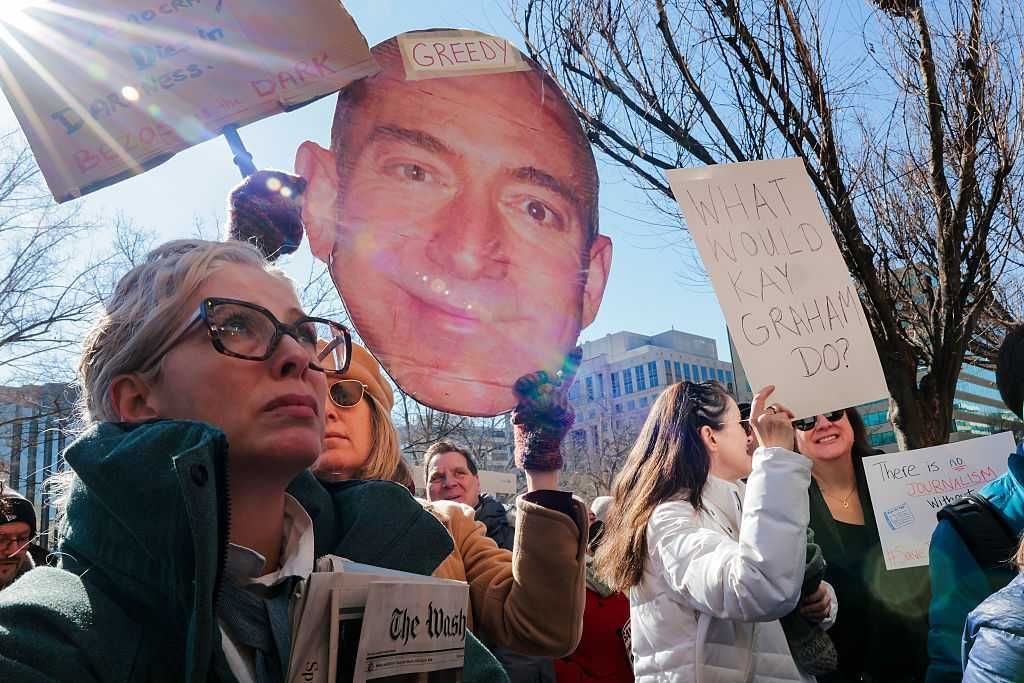


The Washington Post just laid off more than 300 employees — roughly 30% of its newsroom — cutting back sports, local coverage, international reporting, and books. The paper has shed staff before, including a reduction in 2025 and voluntary buyouts, as losses piled up. Reports put the Post’s losses at $177 million over the past two years, with annual deficits topping $100 million since 2023.

Predictably, fired staffers and their allies blame owner Jeff Bezos for refusing to write blank checks indefinitely. They want the world’s fourth-richest man to underwrite their failing business model forever.

Downsizing isn’t a tragedy. It’s a market verdict.

But that’s not the story. The Post didn’t collapse because Bezos got cheap. It collapsed because its newsroom got ideological — and readers stopped trusting it.

The Post built its modern reputation on tough reporting and institutional seriousness. Then its editors and writers started injecting personal politics into straight news, smuggling advocacy into headlines, and treating dissent as moral failure. That approach earned applause inside the Beltway, but it bled credibility outside it. Readers left. Subscribers disappeared. Revenue followed.

Immigration coverage captures the pattern.

In 2018, the Post ran a story headlined “How Trump is changing the face of legal immigration.” The piece claimed an 81% drop in arrivals from Muslim-majority countries and a 12% overall decline in legal immigration, framing the change as a deliberate demographic overhaul. The story leaned on cherry-picked State Department numbers that covered only part of the admissions system while ignoring other federal data. The paper dressed activism up as analysis and called it news.

That same year, the Post published “U.S. is denying passports to Americans along the border, throwing their citizenship into question,” implying a broad campaign of anti-Hispanic discrimination. The story suggested “hundreds, possibly thousands” faced baseless fraud accusations tied to midwife-assisted births.

The piece ignored the long history of documented fraud in those cases and left readers with a clear impression: The Trump administration targeted Hispanics. In fact, denial rates actually fell under Trump — from 35.9% in 2015 to 25.8% in 2018. The Post later appended an editor’s note acknowledging errors challenged by the State Department. That kind of walk-back never repairs the original damage.

In 2024, the habit remained. The Post accused Republicans of “misleading ads” about the border while soft-pedaling the scale and timing of the Biden-era surge. It scolded language choices, such as “illegals” and “harsher,” framed enforcement as cruelty, and applied different standards depending on which party spoke.

This isn’t just an immigration problem. It’s a newsroom culture problem.

RELATED: Bernie Sanders gets obliterated online for dragging Melania into left-wing criticism of WaPo layoffs
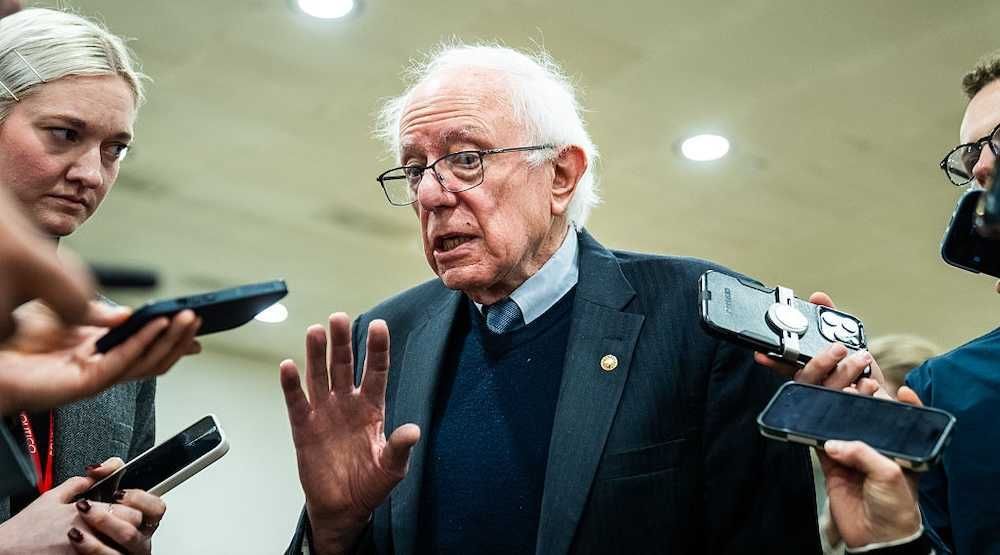
Photo by Demetrius Freeman/The Washington Post via Getty Images

The Post’s rush to judgment during the Nicholas Sandmann incident in 2019 showed how quickly narrative can replace verification. The paper treated a Kentucky teenager as a national symbol of Trump-era racism based on a misleading clip, then watched the fuller video upend the story. The Post paid an undisclosed settlement. The reputational hit lingered.

That pattern — moral certainty first, facts later — has infected much of corporate media. CNN, the New York Times, and their peers keep hemorrhaging trust because they keep selling ideology as “objective” reporting. They blur the line between news and opinion, then act shocked when audiences treat them as partisan actors.

That distortion carries consequences beyond subscriptions. When media outlets portray immigration enforcement as inherently malicious and frame routine operations as persecution, they turn policy disagreement into moral panic. They train audiences to view law enforcement as an occupying force. That mindset fuels the kind of street-level provocation that turns tense encounters into tragedy.

Journalism carries a sacred obligation: Tell the truth plainly, verify before amplifying, and separate reporting from activism. Too many at the Post treated that obligation as optional. The audience noticed. Circulation reportedly plummeted to about 97,000 daily in 2025. Financial losses followed.

Downsizing isn’t a tragedy. It’s a market verdict.

If the Washington Post wants to survive, it must rediscover objectivity — or keep shrinking until only its own employees bother to read it.
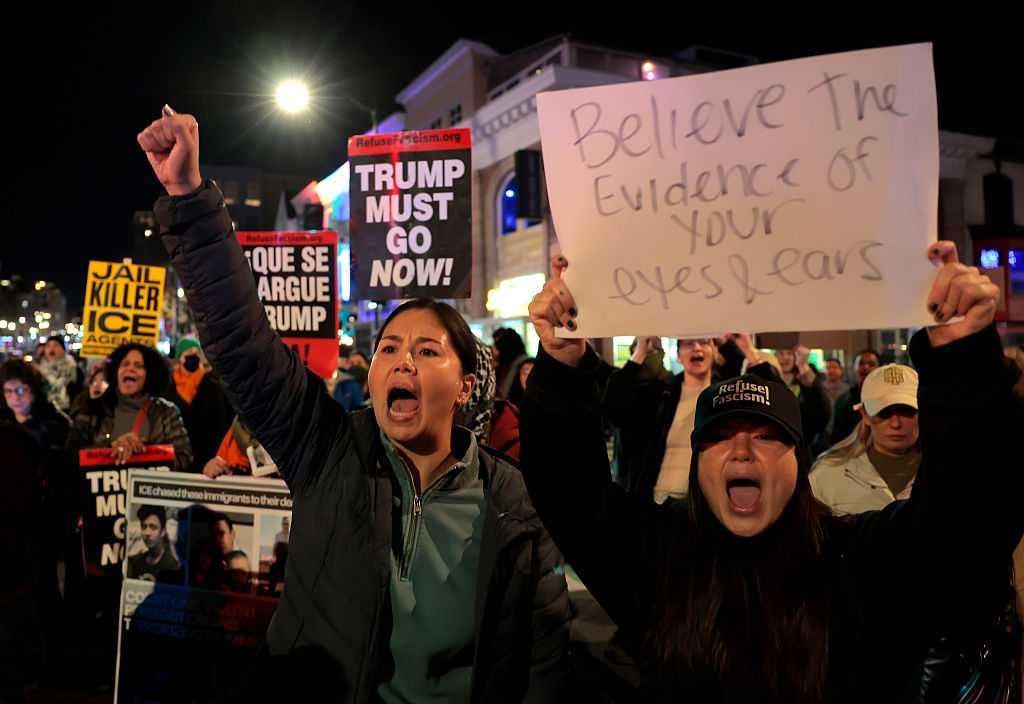

Americans aren’t arguing any more — we’re speaking different languages


A few days ago, I found myself in a text exchange about two women killed by agents of the state.

One was Renée Nicole Good, a 37-year-old activist mother shot last week by an ICE agent in Minneapolis. The other was Ashli Babbitt, a 36-year-old U.S. Air Force veteran shot by a Capitol Police lieutenant inside the Speaker’s Lobby on January 6, 2021.

Are words being used to think — or to show whose side someone is on?

I asked what I thought was a simple moral question: Does the state ever have the moral right to kill an unarmed person who poses no immediate lethal threat?

I did not try to provoke. I did not claim the cases were the same. I said plainly that the facts, motives, and political contexts differed. My own answer was no. The purpose was not to merge the stories, but to test whether the same moral rule applied in both cases.

I was asking my friend to reason with me.

The response was not an argument. It came as a rush of narrative detail, moral verdicts, and firm insistence that the question itself was illegitimate. “Not comparable.” “Straw man.” The stories did not clarify the rule. They aimed to shut down the conversation.

But what struck me most was not the emotion. It was the disconnect.

I asked about a principle. I received a story. I tested a rule. I got a verdict. We used the same words — justice, murder, authority — but those words did very different work.

The exchange failed not because of tone or ideology. It failed because we spoke different civic languages. More troubling, we no longer agree on what civic language is for.

More than a failure of civility

For years, we have blamed polarization and tribalism. We shout past one another. We retreat into bubbles. All of that is true. But the deeper problem runs deeper than disagreement.

We no longer share a civic vocabulary shaped by common expectations about clarity, restraint, and universality.

We still speak words that are recognizably English. But we use the same words to reach very different ends.

One civic language treats words as tools for reasoning. Call it “principled” or “rule-based.” Questions test limits and consistency. Moral claims aim at rules that apply beyond one case. Disagreement is normal. When someone asks, “What rule applies here?” the question is not an attack. It is the point.

This language shapes law, constitutional argument, philosophy, and journalism at its best. Words like “justified” or “legitimate” refer to standards that others can test and challenge. If a claim fails under scrutiny, it loses force.

The other civic language works differently. Call it “narrative” or “moral-emergency” language. Here, words signal alignment more than reasoning. Stories carry moral weight on their own. Urgency overrides abstraction. Questions feel like invalidation. Consistency tests sound like hostility.

RELATED: The day the media taught me it’s always wrong to be right

treety via iStock/Getty Images

In this mode, terms drift. “Murder” no longer means unlawful killing. It means moral outrage. “Straw man” stops meaning logical distortion and starts meaning emotional offense. “Not comparable” does not mean analytically distinct. It means do not apply your framework here.

Neither language is dishonest. That is the danger. Each serves a different purpose. The breakdown comes when speakers assume they are having the same kind of conversation.

The principled speaker hears evasion: “You didn’t answer my question.” The moral-emergency speaker hears bad faith: “You don’t care.”

Both walk away convinced the other is unreasonable.

Moral certainty over moral reasoning

Social media did not create this divide, but it rewards one language and punishes the other. Platforms favor speed over reflection, story over rule, accusation over inquiry. Moral certainty spreads faster than moral reasoning. Over time, abstraction starts to feel cruel and questions feel aggressive.

That is why so many political arguments stall at the same point. Facts do not resolve them because facts are not the dispute. The real question is whether rule-testing is even allowed. Once someone frames an issue as a moral emergency, universality itself looks suspect.

A simple test helps. Is this person using words to reason toward a general rule, or to signal moral alignment in a crisis?

Put more simply: Are words being used to think — or to show whose side someone is on?

RELATED: I don’t need your civil war

Photo by Tom Williams/CQ-Roll Call Inc. via Getty Images
Once you see this, many conversations make sense. You understand why certain questions trigger anger. You see why consistency tests go unanswered. You recognize when dialogue cannot move forward, no matter how careful you sound.

This does not mean outrage is always wrong. It does not mean people should stop caring. It does mean we need better civic literacy about how language works. Sometimes restraint is a virtue. Walking away is not cowardice. Declining to argue is not surrender.

What cannot work is trying to make a principled argument within a moral-emergency frame.

America’s founders understood this. They designed institutions to slow decisions, force deliberation, and channel arguments into forms governed by rules rather than passion.

If we fail to see that we now speak different civic languages, we will lose the ability to talk calmly about the ideas and ideals that should bind us together. The alternative is full adoption of moral-emergency language — where persuasion gives way to force.

Too many Americans have already chosen that path.

Truth is whatever Hillary says today


If you’ve spent any time in politics, you know progressives contradict themselves so often that exposing their double-talk could keep conservative commentators busy for several lifetimes.

At first, young conservatives may find it thrilling to point out those blunders and imagine that the liberal across from them will be persuaded. But here’s the hard lesson: Only people with integrity change their minds when they find contradictions in their own thinking.

The goal isn’t to win the argument but lose your integrity. It’s to speak truth with courage and charity.

Progressives don’t stumble into incoherence by accident. They wield it like a smokescreen. The confusion keeps conscientious conservatives chasing their own tails. Conservatives, by temperament, want coherence, so they expect others to want it, too. But the record shows otherwise.

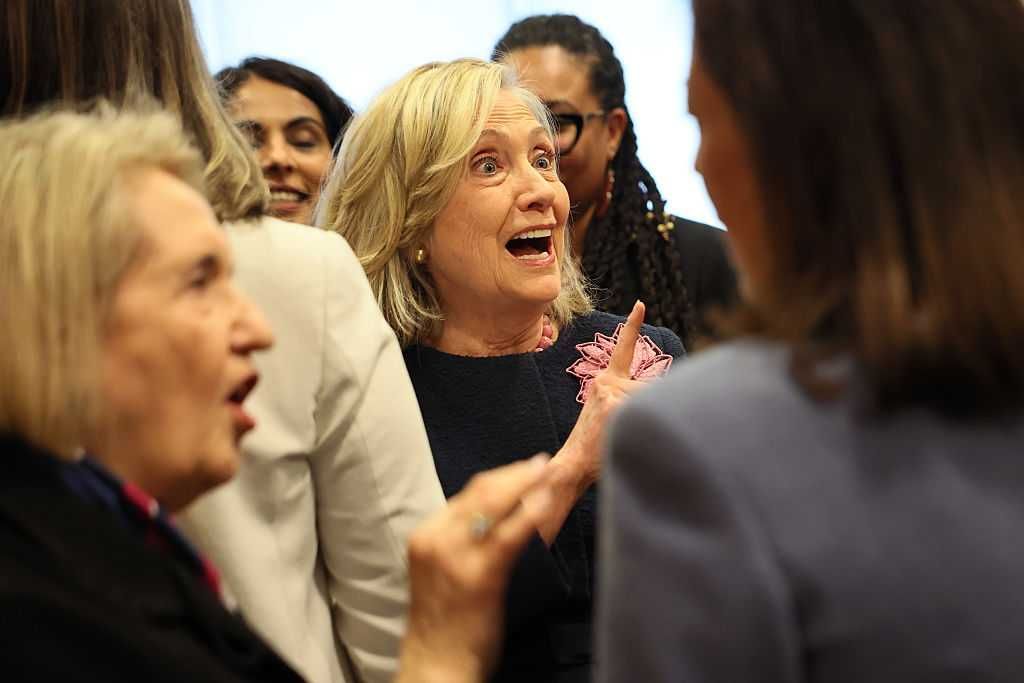
Take Hillary Clinton. Last week on MSNBC’s “Morning Joe,” she urged Americans to stop finger-pointing — before immediately blaming Republicans for the country’s problems. A Yale degree didn’t inoculate her against incoherence. As Charlie Kirk once observed at Cambridge, high IQ is no guarantee of wisdom. Clinton didn’t notice the contradiction, and even if she did, it wouldn’t matter. She is paid handsomely to talk, and truth never slows her down.

Moments later in the same appearance, she called for a return to “truth-based reality,” insisting that facts and evidence must matter again. This from the same woman who affirms that a man can become a woman. Truth wasn’t invited to that party. Now, she tells us it must rule the day.

The effect is dizzying, and that is the point.

What should concern us isn’t simply the logic game. It’s the condition of her soul. What happens to a soul shaped for decades by falsehood and injustice?

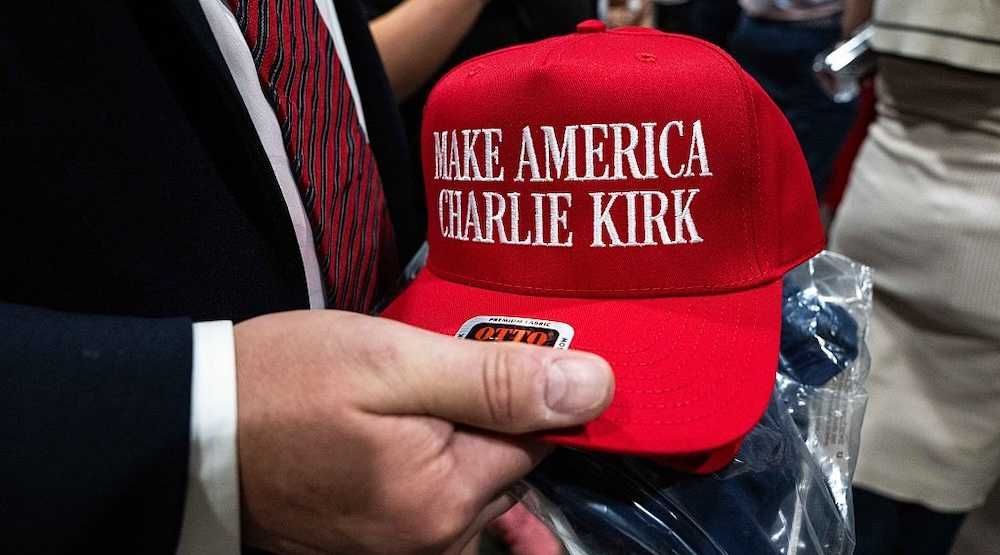
Clinton also revealed her deepest fear. She does not fear God. She fears the people of God — especially white, male Christians. She said so on national television just weeks after Kirk was assassinated by a trans-supporting terrorist who bought into rhetoric spewed by politicians like her. And yet, here she is again, pouring fuel on the fire.

The irony didn’t stop there. She wondered aloud how today’s politics could be “so contrary to the founding principles and values this country was built on.” This from the same politician who treats the Constitution as a “living document” to be reshaped whenever it confounds her political prejudices. She wasn’t concerned with founding principles when Donald Trump was banned from Twitter or prosecuted by the Biden Justice Department.

But pointing out contradictions only goes so far. The deeper warning is this: Hillary Clinton is what happens when you spend a lifetime saying whatever advances your career. She is willing to contradict herself publicly — and attack Christians — for money and applause. My own university, Arizona State, paid her $500,000 to host the Clinton Global Initiative.

Socrates put it best: The true philosopher, the lover of the good, doesn’t chase political power, money, or fame. He wants only this — that when he leaves this life, his soul is not defiled by injustice.

RELATED: Charlie Kirk thrived on truth and virtue over grievance-mongering

Photo by Jon Putman/Anadolu via Getty Images
That’s the lesson for young conservatives. Exposing contradictions is fine. It can even be fun. But don’t forget what matters more: Never let your soul become like Hillary Clinton’s.

G.K. Chesterton once wrote that the modern mind cuts down the signposts and then complains no one knows the way home. That is the progressive project in our time: Deny first principles, denounce those who keep them, and demand the comforts those principles once secured.

So take this counsel seriously:

  • Guard your soul more than your timeline. Social media glory is cheap; a clean conscience is priceless.
  • Pursue coherence because it is true, not because it is clever. Wit is garnish; truth is the meal.
  • Fear God more than fashion. Today’s trends are tomorrow’s embarrassments; the fear of the Lord endures.

The goal isn’t to win the argument but lose your integrity. It’s to speak truth with courage and charity, to resist compromise with evil for the sake of applause, and to leave this world with a soul unstained by injustice.

That victory is higher than anything Hillary Clinton will ever claim — and it is the only victory that lasts.

California’s Record Of Felonies, Feces, And Failure Should Kill Newsom’s Political Career But It Won’t

In a sane world, DeSantis' beatdown of Newsom and Democrats' extremist agenda would end the California governor's prospects for higher office.

Next time someone cries about 'climate change,' put them to shame with THESE historical facts


If there’s one thing the left and the right can agree on, it’s that the string of disasters occurring recently across the globe is tragic.

Between the Maui fires, the hurricane in Florida, the earthquake in Morocco, and the flooding in Libya, far too many people have lost their lives.

However, the left and right clash when it comes to the origins of these catastrophes.

“The goofballs on the left are screaming, ‘See? Climate change! Climate change!’” mocks Pat Gray.

“But you know what?” he continues. “Natural disasters are not new.”

The truth is, “fewer people die from them now than ever before in world history.”

And if you don’t believe us, here are the numbers to prove it:

  • “Four million people died in China in floods” in 1931.
  • “Two million [died] in the 1887 Yellow River flood” in China.
  • In “1976, 655,000 Chinese people died in the Tangshan earthquake.”
  • “500,000 died from an earthquake in 1970 in Bangladesh.”
  • 9,500 people died as a result of “the eastern United States heat wave of 1901.”
  • “The French heat wave ... killed 41,000 people in 1911.”
  • “5,000+ died in a North American heat wave" in 1936.
  • “100,000 people died in a landslide in 1786” in China.

“These natural disasters go on and on and on,” says Pat, “and you can break it down by century, by decade.”


Want more from Pat Gray?

To enjoy more of Pat's biting analysis and signature wit as he restores common sense to a senseless world, subscribe to BlazeTV — the largest multi-platform network of voices who love America, defend the Constitution and live the American dream.

Why Gen Z Should Pursue Truth Instead Of ‘Self-Discovery’

Instead of seeking out what is real, college students let government and elite institutions validate our main character syndrome.
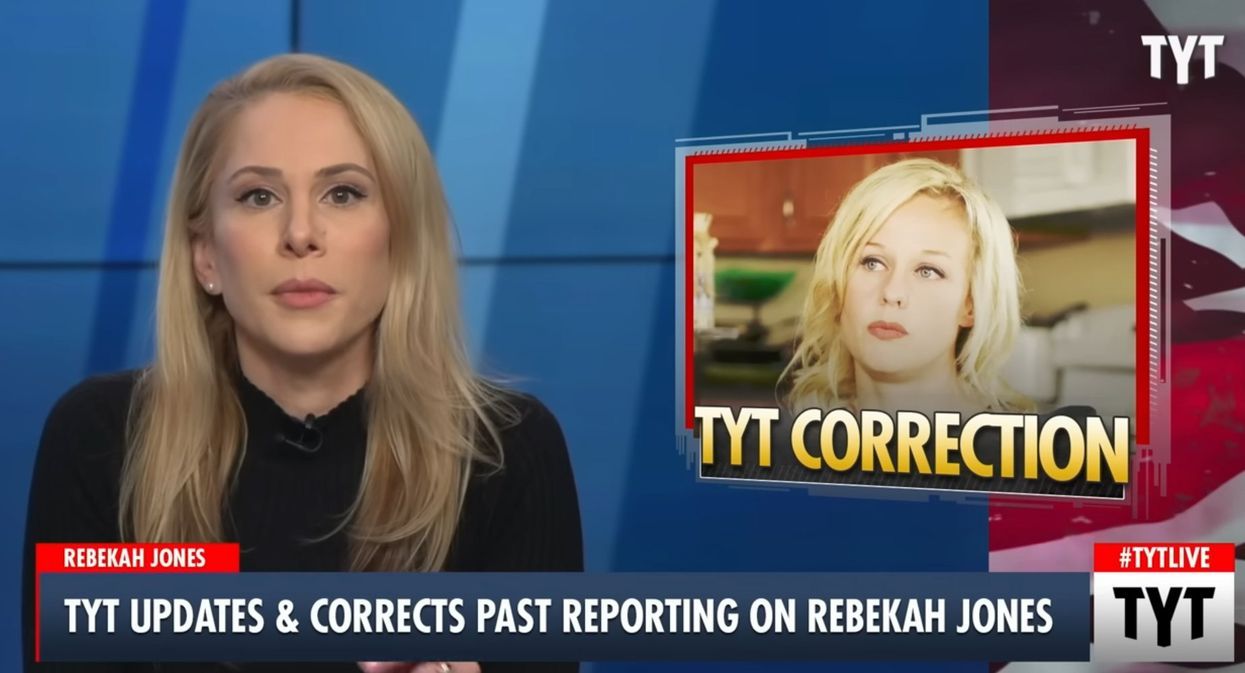

Liberal 'Young Turks' host apologizes for repeatedly amplifying Democratic activist's lies: 'I screwed up royally'


Leftist script-reader Ana Kasparian of "The Young Turks" apologized Wednesday for parroting multiple false claims made by a disgraced critic of Florida Gov. Ron DeSantis.

For having been fooled and in turn fooling her audience for years, Kasparian said, "I should've done my due diligence. I failed to do so. By failing to do so, I feel like I misled the audience into thinking that Rebekah Jones is some sort of hero."

What did she get wrong?

Rebekah Jones, the woman who lost a congressional race in a landslide to Rep. Matt Gaetz (R-Fla.) last year and who has up until recently enjoyed Kasparian's support, is a former Florida Department of Health data analyst who was fired for insubordination, having intentionally crashed the state's COVID dashboard.

Around the time of her dismissal, Jones accused the DeSantis administration of fudging its coronavirus data — a claim later determined to have been false by Florida Inspector General Michael J. Bennett.

"Based upon an analysis of the available evidence, the alleged conduct, as described by the complainant, did not occur," concluded the inspector's report.

Police later executed a search warrant on Jones' Tallahassee house after a data breach involving the theft of 19,000 employees' personal information was linked to the disgraced former data analyst's home IP address.

The National Review noted that while DeSantis had nothing to do with the warrant or its execution, Jones accused the governor of targeting her with his "gestapo." Furthermore, she suggested that police pointed weapons at her children, which bodycam footage later proved to have also been false.

Despite indications that Jones had a loose relationship with the truth, liberal media outlets, including Kasparian's, continued to give her the benefit of the doubt.

Last week, Jones' 13-year-old son was arrested after allegedly threatening to shoot up his school.

Officials in Santa Rosa county indicated that Jones' son had made threats online in February that he would shoot up Holley Navarre Middle School and stab students who angered him, reported the Pensacola News Journal.

According to investigators, the teen wrote:

  • "I want to shoot up the school";
  • "Okay so it’s been like 3-4 weeks since I got on my new antidepressants and they aren’t working but they’re suppose to by now so I have no hope in getting better so why not kill the losers at school";
  • "I’m getting a wrath and natural selection shirt so maybe but I don’t think many ppl know what the columbine shooters look like"; and
  • "If I get a gun I’m gonna shoot up hnms lol.:
These threats resulted in a digital threats of terrorism charge.
Santa Rosa Sheriff’s Office spokeswoman Jillian Durkin indicated that following a vacation to Mississippi, Jones turned her son in.

However, Jones later took to Twitter, claiming her son had been "taken on the gov's orders."

"There is no freedom here," wrote Jones. "Only retaliatory rule by a fascist who wishes to be king."

\u201cMy family is not safe. My son has been taken on the gov's orders, and I've had to send my husband and daughter out of state for their safety.\n\nTHIS is the reality of living in DeSantis' Florida.\n\nThere is no freedom here. Only retaliatory rule by a fascist who wishes to be king\u201d
— Rebekah Jones (@Rebekah Jones) 1680741734

Jones insinuated that her son's arrest was politically motivated and that he was targeted because his mother was "a legally-protected whistleblower."

The Democratic activist and failed congressional candidate also accused police of kidnapping her son.

Here is footage allegedly showing Jones waiting with her son at the sheriff's office:

\u201cVideo of the arrest after Rebekah Jones\u2019 son was caught threatening to shoot up a middle school\n\nhttps://t.co/9T6SbspQhQ\u201d
— Facts Nordau (@Facts Nordau) 1680882685

Partisan blindness

Kasparian admitted Wednesday that Jones' latest string of lies gave her pause, prompting her to re-evaluate the other claims she repeated on her show.

Not only did "The Young Turks" host call into doubt Jones' self-description as a whistleblower but the accusations she leveled in 2020 against DeSantis regarding COVID death numbers, the details pertaining to the alleged raid, and the arrest of her son as well.

"Part of the reason why I screwed up is because I had all these biases, of course, against Ron DeSantis," she added. "And I don’t really feel bad about that because I think Ron DeSantis has done some pretty terrible things in the state of Florida, but it becomes a problem when that bias blinds you to what the facts of various stories happen to be."

"We bought this. I bought this. We reported exactly what she said," said Kasparian. "And now I have some degree of regret for doing that."

While admitting some accountability, she suggested the "mainstream media" was especially deserving of blame.

"If they're not doing their due diligence, if they're allowing their personal biases to stand in the way of actual, factual reporting, well, that's unfortunately going to trickle into the way independent news sources cover these stories as well," said Kasparian.

In her apology, Kasparian said, "I want to correct all of those errors that we had previously reported. And I want to be clear that out of everyone who works on the main show, the only person who should be held responsible for that is me. I’m the executive producer of the show and I screwed up royally."

Mediaite reported that Kasparian and "The Young Turks" weren't alone in celebrating Jones and amplifying her lies. MSNBC, CNN, the Washington Post, and the Miami Herald also peddled her narrative.

TYT Correction: Update on Rebekah Jones Story youtu.be

Like Blaze News? Bypass the censors, sign up for our newsletters, and get stories like this direct to your inbox. Sign up here!

Emotional college student tells Crowder to 'shut the f*** up'


The first short is from the "Change My Mind" episode in which Steven Crowder got into a heated exchange about white male privilege and rape with a male student. The student perceived Crowder to have taken the position of protecting rapists, so Crowder set the record straight. Video below.

In the second short, a female cop is seen struggling to detain a male suspect until two male citizens step in to assist. Crowder explained why he believes women are not fit for policing.


Download the podcast here.


Want more from Steven Crowder?

To enjoy more of Steven’s uncensored late-night comedy that’s actually funny, join Mug Club — the only place for all of Crowder uncensored and on demand.