New Trump Admin Stats Prove Good Guys With Guns Save Lives
 The federal government consistently downplays evidence that armed, law-abiding citizens can stop public mass-casualty attacks.
An American may have helped facilitate a mass murder at a school in Canada earlier this year committed by a teenage adult man pretending to be a woman.
On Feb. 10, Jesse Van Rootselaar, an 18-year-old trans-identifying man, murdered his mother and half-brother, then traveled to a secondary school in Tumbler Ridge, British Columbia, where he proceeded to injure 25 people and murder a 39-year-old female teacher, three 12-year-old girls, and two boys, ages 12 and 13, before taking his own life.
'I know I can like, save lives I guess but idk.'
Now it seems Van Rootselaar plotted the massacre with the help of a radical from Washington state. James Cody Bryant, a 30-year-old Bellingham resident, was arrested on Tuesday and charged with conspiracy to murder persons in a foreign country.
"The Tumbler Ridge Secondary School shooting was a horrific tragedy for that small community and for all of Canada. Indeed, here in the Pacific Northwest we felt the pain of those families devastated by this violence," acting U.S. Attorney Neil Floyd said in a statement. "It is even more profoundly disturbing to learn that a resident of Western Washington had a role in the attack and took steps — providing counsel, technical advice, and money to the shooter planning such a tragedy."
The FBI noted that the duo first met online on the chat service Omegle before it was shut down in 2023.
The criminal complaint alleges that Bryant began conspiring to murder innocents with the Canadian-based trans radical in August 2025; "agreed to record J.V.R.’s livestream of the planned murders and post it over the internet for the public to view"; ensured that the livestream "look[ed] solid"; and even provided the shooter with tactical advice on how best to execute the massacre.
The FBI obtained Discord messages that allegedly show Bryant and Van Rootselaar discussing optimal ways of maximizing carnage.
RELATED: 'Our results shocked us': HHS report confirms your darkest suspicions about trans ideology
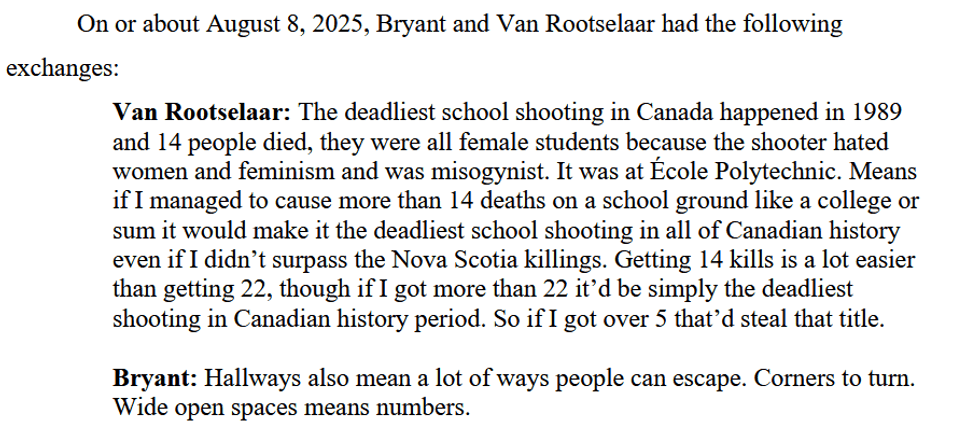
In early August 2025, the shooter allegedly discussed previous Canadian mass shootings, noting, "Getting 14 kills is a lot easier than getting 22, though if I got more than 22 it'd be simply the deadliest shooting in Canadian history period."
After Van Rootselaar articulated his desire to best previous school shooting kill counts, Bryant allegedly responded, "Hallways also mean a lot of ways people can escape. Corners to turn. Wide open spaces mean numbers."
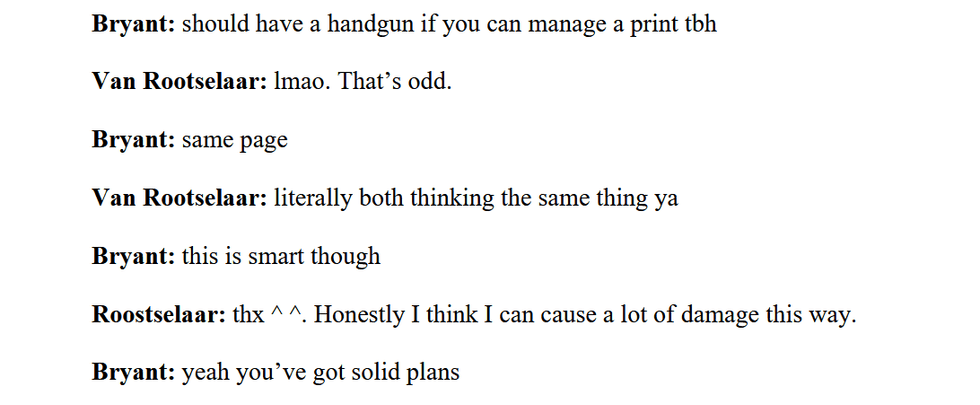
In addition to discussing places where the shooter could play "hide and seek" with the greatest number of potential victims, Bryant advised the trans radical on which weapons to use, prosecutors alleged in the complaint.
Bryant allegedly told the shooter in an Aug. 26 message, "[You] should have a handgun if you can manage a print tbh," then allegedly added, "You've got solid plans."
A modified handgun and a long gun were recovered at the scene of the massacre, according to the Royal Canadian Mounted Police.
In December, Bryant allegedly told Van Rootselaar that he "definitely would" have fans after committing the murders and suggested further that people would "probably" be mad if the shooter were romanticized after the planned massacre.
Prosecutors further alleged that Bryant provided Van Rootselaar with financial support "to purchase items for use during the attack, including the shoes Van Rootselaar intended to wear, a lighter Van Rootselaar would use to ignite an explosive device, and stickers to decorate the firearms Van Rootselaar would use to commit the murders, and discussed possibly sending the shooter a 3D-printed firearm kit and related gear.
The shooter shared an image on Discord in August 2025 showing a sticker depicting the trans flag superimposed on the planet Saturn that he had apparently put on the receiver of a shotgun. Bryant allegedly said of the picture, "Love the stickers. [] stickers would be so funny to be seen in photos of the incident."
Bryant and Van Rootselaar also allegedly discussed whether the livestream of the attack should contain an audio feed.
After the shooter expressed concern about about how his voice might sound while slaughtering innocents, Bryant allegedly suggested silence, stating, "No lasting evidence of your voice, just a pretty girl gunning ppl down."
When the topic of alerting the relevant authorities to the murder plot came up, Bryant allegedly emphasized on multiple occasions that he would not "snitch," allegedly stating in one instance, "I could. I don’t want to honestly. I know I can like, save lives I guess but idk."
Despite allegedly egging on Van Rootselaar for months and failing to alert authorities, Bryant apparently had a change of heart just weeks ahead of the shooting.
On Jan. 4, the American allegedly told the shooter, "I truly hope you reconsider today. I wish there were any other path for you, you shouldn’t have to do something like this. I wish I knew what I could say or do to change your mind."
Despite this alleged attempt to dissuade the shooter from acting on his bloodlust, Bryant allegedly made clear that he was ready to lend his support on the day of the massacre.
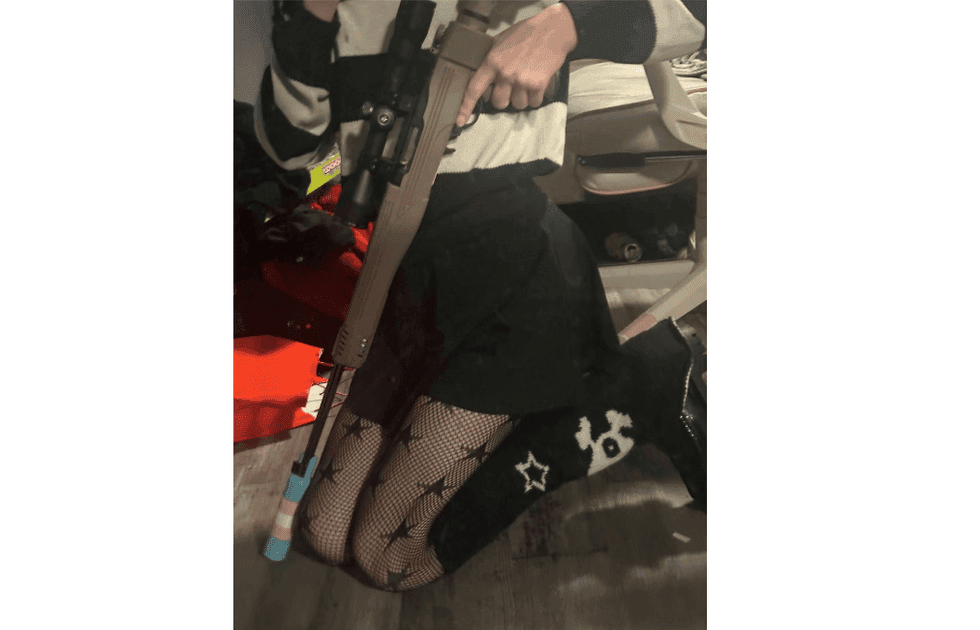
According to prosecutors, Van Rootselaar allegedly sent Bryant photos of himself prepared for the attack. In one photo, the shooter is dressed in women's clothing and the boots that Bryant allegedly bought for him and armed with a rifle that appears to be equipped with a suppressor painted in the colors of the trans-radical flag.
Van Rootselaar began masquerading as a woman roughly six years ago, and Wikipedia, the liberal media, and the Justice Department continue to falsely refer to him as a female.
During the shooting, Bryant allegedly confirmed that he was watching the feed — which U.S. Attorney Floyd indicated had been terminated by Twitch after approximately 20 seconds — and even allegedly counseled Van Rootselaar on how to start the vehicle that Van Rootselaar drove to Tumbler Ridge Secondary School.
If convicted, Bryant could be thrown in prison for the rest of his life.
When asked on Tuesday whether Bryant might be sent to Canada to face prosecution, Floyd noted that the alleged crimes were committed in the U.S. and that the "penalties may be higher" in America.
"On behalf of the FBI, I want to express heartfelt sympathy for the victims of this tragedy and their loved ones," said W. Mike Herrington, special agent in charge of the FBI Seattle field office. "No investigation can undo the fear and suffering caused by the horrific events of this February or bring these individuals back to their families, school, or community. We mourn with you."
Elija Rain, acting commanding officer of the British Columbua RCMP, said in a statement, "Today’s arrest and charge announcement by the FBI reflects the months of investigative effort, cooperation, and coordination between our two agencies"
The RCMP apparently contacted the U.S. Department of Homeland Security after receiving information from one of the online platforms used by the shooter.
"I would like to thank the FBI Seattle and the United States Attorney's Office for the Western District of Washington for their partnership, professionalism, and commitment throughout this complex investigation," continued Rain. "Their cooperation and expertise have been invaluable in advancing the work across jurisdictions and ensuring that all available evidence could be thoroughly examined."
Like Blaze News? Bypass the censors, sign up for our newsletters, and get stories like this direct to your inbox. Sign up here!
When the FBI raided the Virginia home of ex-CIA official David Rush in May, agents found nearly 300 gold bars, each weighing a kilogram; 35 luxury watches; €104,795; and roughly $2 million in U.S. currency.
This apparently stolen treasure was only the tip of the iceberg.
'His self-serving actions threatened to erode public confidence in the intelligence services.'
Rush pleaded guilty on Tuesday to using his senior executive-level position within the CIA to create fake classified programs so that he could divert and fraudulently obtain roughly $193,590,400 in taxpayer funds.
"By his own admission, David Rush defrauded the government of hundreds of millions of dollars, and then misused those funds for extravagant purchases," stated FBI Director Kash Patel. "Rush betrayed his oath, his co-workers, and the American people, and he will now face justice for his actions."
According to a statement of facts dated Tuesday and signed by Rush, Rush secured a senior role at a federal agency on the basis of false claims about his military background and education.
Sources previously told the New York Times that Rush worked for the CIA, and Attorney General Todd Blanche confirmed on Tuesday that it was the spy agency that had referred the matter to the FBI following an internal investigation identifying potential crimes.
Contrary to what he told CIA colleagues and contractors, Rush never served as a pilot in the U.S. military, and he held neither a bachelor's degree from a large public research university based in South Carolina nor a doctoral degree from a private research university in New York, the DOJ said.
RELATED: DOJ report details Biden admin's apparent conspiracy against parents who dared to defend their kids
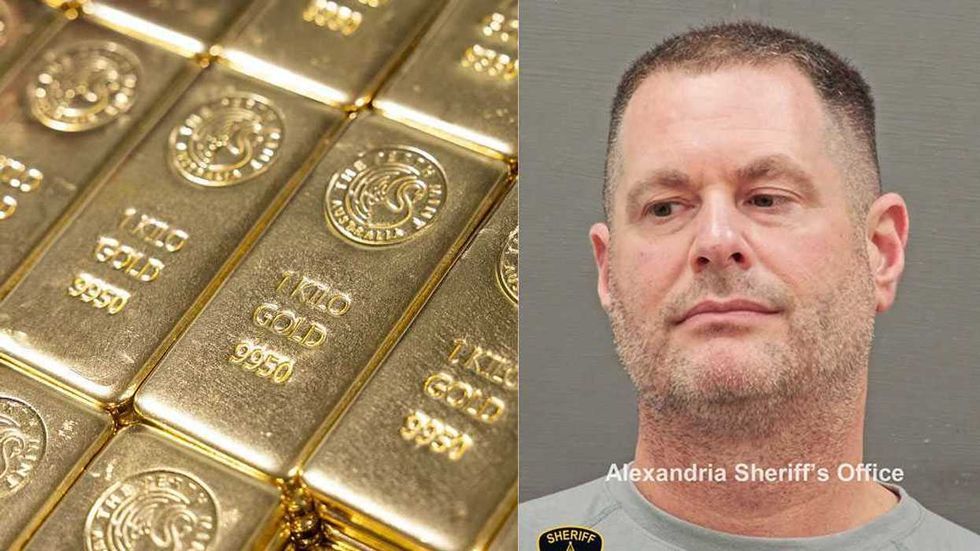
The federal position that Rush occupied on account of such misrepresentations provided him with the authority to approve multimillion-dollar expenditures for various programs.
Rush admitted to creating a "highly classified program to justify the acquisition of luxury real estate, which he then intended to resell for personal profit," according to the statement of facts. Since access to his fake program was restricted to "specifically authorized individuals with the appropriate security clearance and need to know," Rush was for a time able to operate in the shadows.
He also created "separate purported sensitive government activity" to justify the acquisition of hundreds of gold bars.
The affidavit originally filed in support of a criminal complaint and arrest warrant for Rush stated that FBI agents seized "approximately 303 gold bars" from his residence. That number has been adjusted to 298 gold bars.
Neither the Department of Justice nor the CIA immediately responded to Blaze News' requests for comment.
"Although the real estate and gold acquisitions involved different transactions and intermediaries, they were executions of the same overarching scheme — RUSH created false classified authorities, directed and approved the associated expenditures, caused contractors and subcontractors to carry out the transactions, and thereafter exercised possession or control over the acquired assets," said the document.
Rush didn't just acquire gold bars and the luxury residential properties in Palm Beach and Hobe Sound, Florida, at America's expense. Prosecutors noted in court documents that over $38.65 million was seized from the bank account linked to the holding company that Rush created as part of his scheme, and over $2.1 million in American cash was seized from his house.
Per the terms of his plea agreement, Rush has agreed to forfeit the gold bars, the cash found at his home, the luxury residential properties he fraudulently obtained in Palm Beach and Hobe Sound, two 2026 BMW Alpina vehicles — at least one of which is valued at around $172,000 — and at least 30 luxury watches, including a Rolex Oyster Perpetual Sea-Dweller 4000.
"Our Intelligence Community must have the trust of the American people to operate effectively in a Nation committed to transparency and the rule of law," stated Assistant Attorney General for National Security John Eisenberg. "Rush repeatedly betrayed that trust. He defrauded the United States out of approximately $194 million in real estate, jewelry, and other valuable property, including 298 gold bars. Worse, his self-serving actions threatened to erode public confidence in the intelligence services that must strive in secret to keep America safe."
Rush, who pleaded guilty to a single count of wire fraud, is scheduled to be sentenced on Jan. 28, 2027. He faces a maximum of 20 years in prison.
While Rush has pleaded guilty, the DOJ noted that its investigation is continuing and that Director of National Intelligence Jay Clayton has asked for the intelligence community's inspector general to launch a separate investigation.
Like Blaze News? Bypass the censors, sign up for our newsletters, and get stories like this direct to your inbox. Sign up here!
On May 13, 2026, CIA senior operations officer James Erdman III appeared under subpoena before the Senate Homeland Security and Governmental Affairs Committee. He was testifying despite his agency's objections.
Erdman had recently led an investigation for Director of National Intelligence Tulsi Gabbard’s “Director’s Initiatives Group” into COVID-19 origins, anomalous health incidents, and UFOs. What he told the senators was explosive.
‘We just want to clear the air. We did not take back documents.’
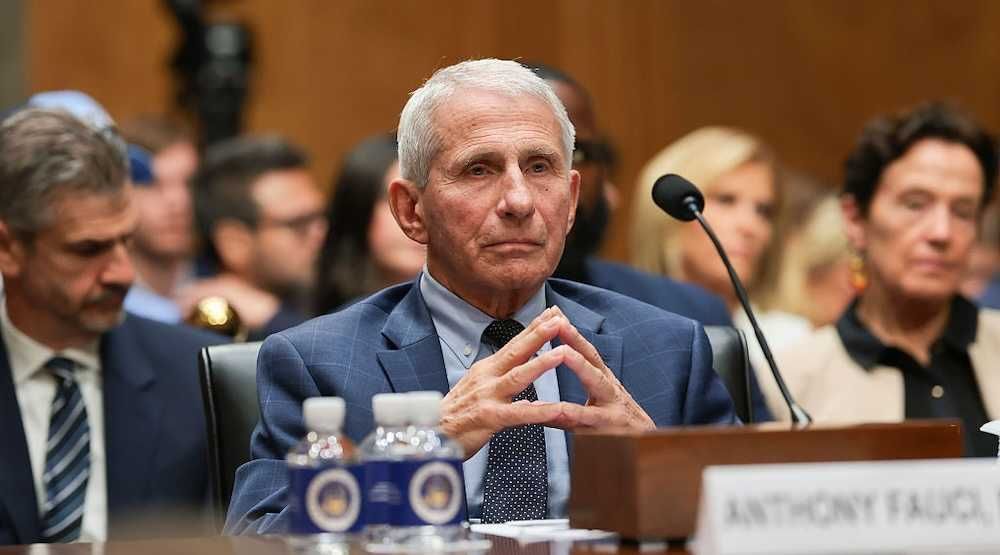
"Dr. Fauci's role in the cover-up was intentional," Erdman testified. He said Fauci had steered the intelligence community's COVID-origins analysis by supplying “a conflicted list of curated subject matter experts,” several of whom co-wrote the paper dismissing the lab-leak theory.
Inside the CIA, Erdman said, six of the seven technical experts involved in a COVID relook favored a lab-leak conclusion. Management changed the assessment anyway in what he called a "middle-of-the-night anonymous rewrite."
Then came the allegation that set House members on fire.
"The CIA illegally monitored the computer and phone usage of DIG personnel, their investigations, and contact with whistleblowers," Erdman said. "When the DIG ceased operations, the CIA took back 40 boxes of JFK and MK-Ultra files being processed for declassification by DNI Gabbard."
Senator Ron Johnson (R-Wis.) read aloud a statement the CIA had just released calling the hearing "dishonest political theater." Then he turned to Erdman. "I have years and years and years of built-up frustration of agencies like the CIA, Department of Justice, the FBI, HHS, snubbing our oversight, giving us the big middle finger," Johnson said.
Rep. Anna Paulina Luna (R-Fla.), chairwoman of the House declassification task force, called the episode “an internal coup.” She and Rep. Eric Burlison (R-Mo.) took to social media demanding that the files be returned. Within a day, the CIA invited them to headquarters.
On May 14, Burlison and Luna stood before the Memorial Wall at CIA headquarters in Langley, Virginia, its 141 stars carved into white marble for officers who died in the line of duty.
They had surrendered their phones. No aides were allowed, no notepads, no recording devices. If anyone later disputed what was said, there would be no way to prove it.
They were led up an elevator to the top floor and through narrow, winding hallways. Burlison was struck by how ordinary it felt: a sterile cubicle farm straight out of a “Dilbert” cartoon.
The meeting was supposed to be with CIA Director John Ratcliffe. Instead, they were met by the agency's archivist, a woman in her late 50s who oversaw two football fields' worth of paper files.
Ratcliffe, they were told, was “out of pocket.” They later learned he was in Cuba.
“We just want to clear the air,” the archivist began. “We did not take back documents.”
In the CIA's telling, when President Trump ordered the JFK records released, Gabbard's team showed up unannounced and demanded them. The CIA objected to the files leaving in the team's personal cars and insisted on moving them in its own secure vans.
About 300 boxes were handed over, the CIA said, while 42 were at another location being processed. When those were ready, according to the agency, it notified the DNI's office.
Burlison saw the irony. The CIA was telling the office that oversees it that it could not be trusted with the files.
“You do recognize that there's a point of friction between the CIA and the ODNI,” he told them, “and there's a reason ODNI came in without informing you that they were coming? There’s clearly a level of mistrust between the two organizations.”
They acknowledged it. They also agreed that the CIA spokesperson’s public attacks were unacceptable.
“The way they conducted themselves in the meeting was almost like they were a kid caught doing something wrong,” Burlison told me afterward, "and were profusely apologetic, and desperately trying to figure out, 'How do we de-escalate the situation?'"
Burlison left without a clear answer about what was in those 42 boxes or whether the CIA had pulled them before Gabbard's team could review them. The CIA also said there were 11 more boxes the DNI would never be allowed to see because they contained tradecraft secrets.
He wasn't interested in de-escalating.
Two and a half months later, Luna told me the CIA had located the files and placed them in line for declassification.
But it took a whistleblower defying his own agency, a Senate subpoena, and two members of Congress walking into Langley to get there.
If the task force doesn't survive November, who will make that walk next time?
Editor’s note: This article is excerpted from “Book of Secrets: Congress Tries to Find the Truth About the Deep State,” by Kent Heckenlively (Permuted Press).
Defense attorneys for the autistic J6 pipe bomb suspect have claimed in a new court filing that FBI agents "coerced" him into confessing after he mentally short-circuited during their lengthy interrogation.
On Dec. 4, 2025, Brian Cole — a 31-year-old Virginia man "requiring support" on account of a level-1 Autism Spectrum Disorder diagnosis, according to his attorneys — was arrested and interviewed by federal agents, having been accused of planting pipe bombs at the headquarters of the Republican National Committee and the Democratic National Committee on Jan. 5, 2021.
'How am I supposed to explain that I'm innocent?'
Cole was initially charged with interstate transportation of explosives and with malicious attempt to use explosives. A superseding indictment filed on Wednesday further charges Cole with two felony counts of attempting to use a weapon of mass destruction and two felony counts of committing an act of terrorism while armed.
According to court documents, the FBI identified Cole as a suspect partly on the basis of his alleged purchases of "multiple items consistent with the components that were used to manufacture the pipe bombs placed at the RNC and DNC," including five nine-volt battery connectors, multiple endcaps, two white kitchen timers, 14-gauge electrical wire, and steel wool.
These alleged purchases took place months and in some cases years ahead of the incident, as the FBI affidavit acknowledges.
The FBI further alleged that Cole "purchased equipment that would facilitate the manufacturing of a pipe bomb"; that cellphone data places him in the area around the time the bombs were supposedly planted; and that his Nissan Sentra was observed driving past a license plate reader near where the devices were ultimately found.
John Shoreman, one of Cole's defense attorneys, noted just weeks after the arrest that the suspect — who has pleaded not guilty in the case — is an autistic, "mild-mannered man" who lived with his mother and "whose life is run by strict routine."
RELATED: 'We have compromised the FBI': Pokemon lovers boast of shocking hack on federal website
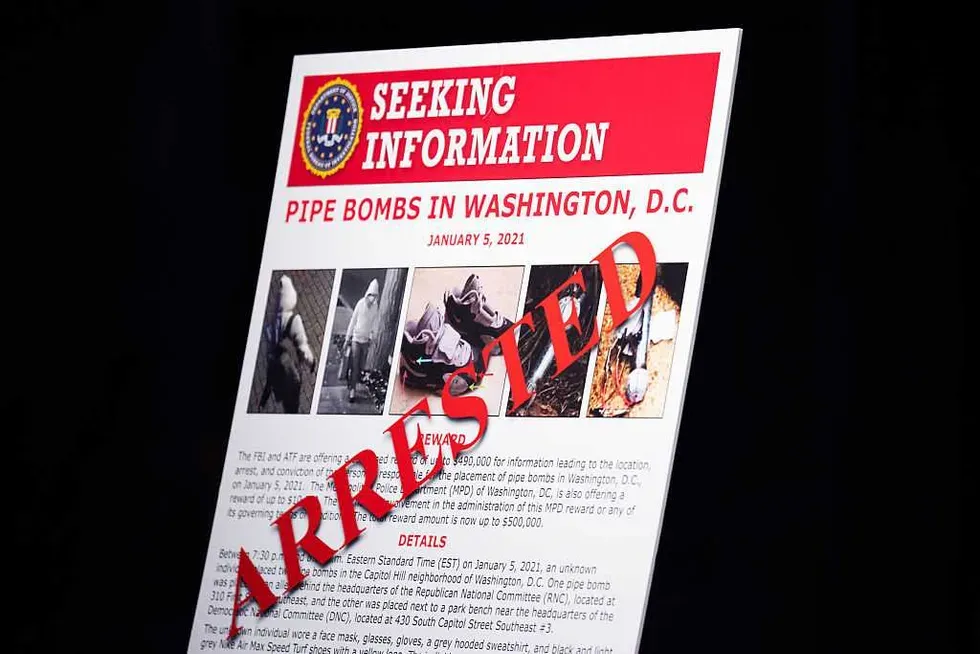
Shoreman, responding to prosecutors' claim that Cole confessed to planting bombs, told NPR in January, "Whether or not that post-arrest interview [on Dec. 4] constitutes a confession — a lawful confession — is something that we will need to visit at a later stage in this case."
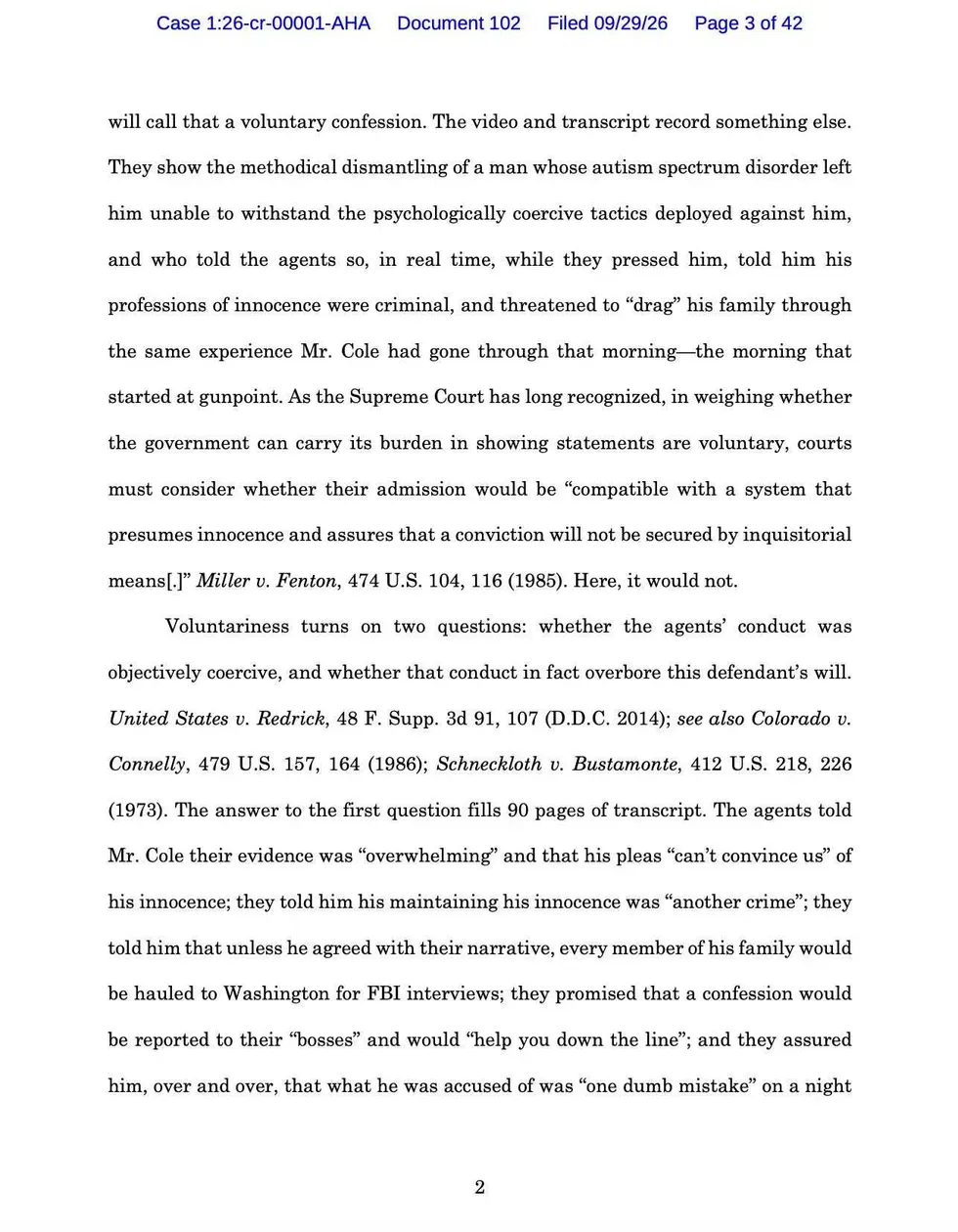
Cole's attorneys filed a motion on Tuesday requesting the suppression of statements that Cole made to the FBI during his interrogation on Dec. 4, arguing that their client had not provided law enforcement with "a voluntary confession."
According to the defense, the video and transcript of Cole's interrogation:
show the methodical dismantling of a man whose autism spectrum disorder left him unable to withstand the psychologically coercive tactics deployed against him, and who told the agents so, in real time, while they pressed him, told him his professions of innocence were criminal, and threatened to “drag” his family through the same experience Mr. Cole had gone through that morning — the morning that started at gunpoint.
The defense characterized the events of Dec. 4, 2025, as discombobulating for Cole, starting with his arrest at gunpoint, his isolation in an interview room with a pair of special agents, and his alleged instruction by the FBI agents prior to Mirandization that he would benefit in the long run from being "forthright with us."
The defense indicated that Cole was utterly bewildered by the accusation that he was involved in the pipe bomb plot.
Citing the transcript, the defense claims Cole initially responded: "Whoa, wait a minute. Wait a minute. ... This, this is a misunderstanding. Please tell me. Please tell me. Please, please, please tell me."
Cole allegedly also stated, "Please tell me this is a misunderstanding," another five times, begged to be given time to process the information, then repeatedly stated, "Oh, my God."
According to the defense's motion, Cole "underscored his deteriorating mental state to the agents dozens of times" and began to physically manifest signs of mental distress, including gagging and experiencing chills that prompted one agent to wrap him in a blanket.
Over the course of his apparent breakdown, Cole repeatedly referred to his mental challenges, repeatedly denied the accusations, and repeatedly stated, "How am I supposed to explain that I'm innocent?" according to the filing.
After the FBI agents allegedly made numerous threats and assertions of "infallible certainty" about evidence supposedly implicating Cole, the suspect began "stimming," then broke, claimed his attorneys.
Cole's attorneys defined stimming as "the self-regulating repetition characteristic of an autistic person in acute physical and emotional distress." According to the defense, Cole manifested this stimming behavior when he allegedly chanted, "I didn't, I didn't, I didn't," then said to himself, "Do whatever you can to clear your name. You can get out of this."
After Cole allegedly short-circuited, the agents supposedly gave him an off-ramp, asking him to identify a suspect in surveillance footage. The filing, citing the transcript, summarizes the exchange Cole allegedly had with the agents that resulted in Cole identifying the suspect as himself:
“Do you recognize that person?” “No.” “Have you watched this video before?” “No.” (Tr. at 92.) Only then did the agents remind him what a denial would cost: “lying to federal agents is breaking the law. That’s another crime. ... So more lies just makes it worse, okay? ... No, look at me. Do you understand that?” (Id.) Seconds later, repeating the question drew the opposite answer. “So, is this individual you?” (Pause.) “Yes.”
The defense claimed in the filing that Cole's identification of the suspect as himself after repeated denials "was not the product of the video; Mr. Cole had just denied recognizing himself in it. It was the product of the threat — the agents turned 'No' into 'Yes' by telling him that 'No' was itself a crime."
Following Cole's apparent admission that he was the suspect on-screen, he allegedly began "repeating the agents' own script back to them."
Furthermore, the FBI agents, having apparently recognized that Cole is close with his family and sensitive about their perception of him, allegedly threatened to "drag them all here" and subject them to a similar ordeal unless he told them "the truth," according to the filing.
After reviewing audio of Cole's interrogation and related documents, Richard Leo, a professor of law and psychology at the University of San Francisco, said in a Sept. 24 report filed by the defense that Cole's Dec. 4 interrogation:
involved the use of psychological interrogation techniques, methods, and strategies that have been shown by social science research to increase the risk of eliciting false and unreliable statements, admissions and/or confessions (i.e., situational risk factors). These included: Reid-based guilt-presumptive interrogation; false and exaggerated evidence ploys; minimization and maximization; and implied (if not explicit) promises of leniency and implied threats.
In light of Leo's conclusion and the recordings that prompted it, the defense argued that Cole's statements to the FBI were "involuntary under the totality of the circumstances" and that his interrogation was "objectively coercive."
Cole's attorneys did not respond to requests for comment by deadline.
A Justice Department spokesperson told Blaze News that the department "intends to respond to the defense’s motion in a filing with the Court" and "does not comment on pending litigation." The U.S. Attorney's Office for the District of Columbia told Blaze News, "We will respond to the motion in our filing with the court."
Rep. Thomas Massie (R-Ky.) demanded on Wednesday that FBI Director Kash Patel resign over Cole's case, stating what Patel and former FBI Deputy Director Dan Bongino "have done to this autistic black man is inexcusable."
Like Blaze News? Bypass the censors, sign up for our newsletters, and get stories like this direct to your inbox. Sign up here!
 Mohamud allegedly described himself as '100% sure' and '100% commited [sic]' to carrying out the attack and 'dying for the sake of Allah only.'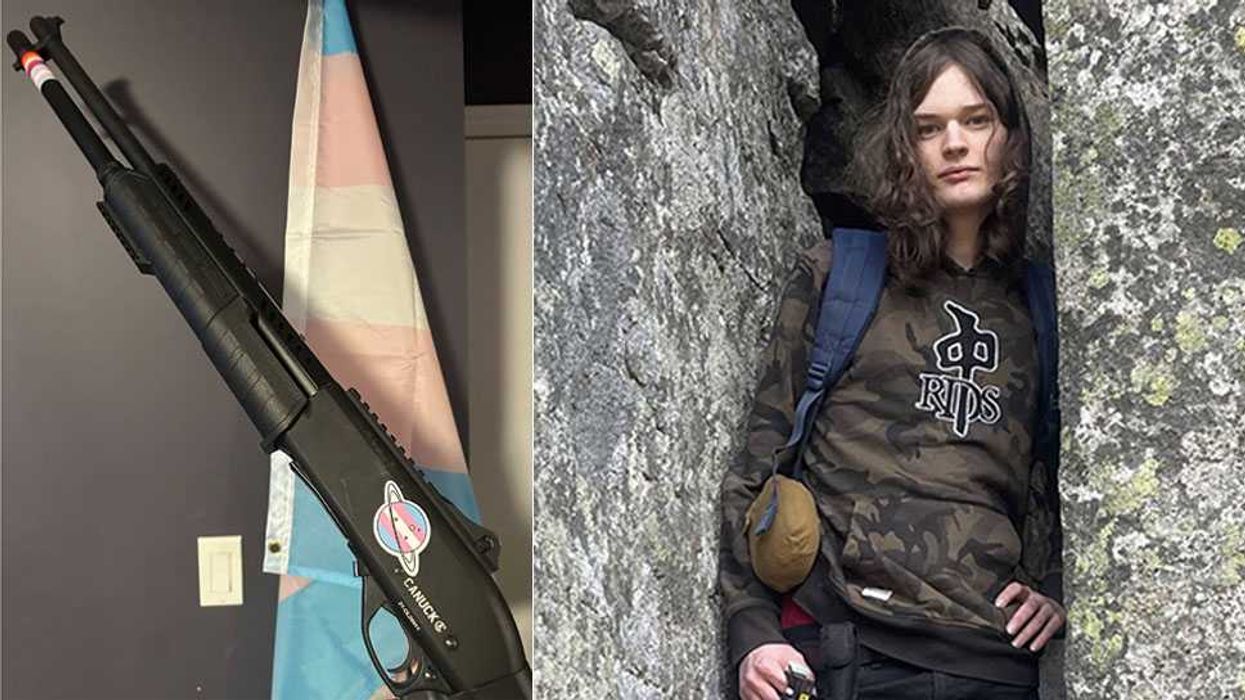

 All Americans will bear the brunt of elected officials' failure to justly punish Jack Smith and others who weaponized the federal government against conservatives.
 'The Garland Memorandum was the product of pressure by senior leadership to ... bring federal pressure to bear on parents.'
 El-Sayed has his own string of controversies to grapple with.
 Conservatives have yet to build the institutions, infrastructure, and legal capacity needed to counter lawfare before it destroys more lives.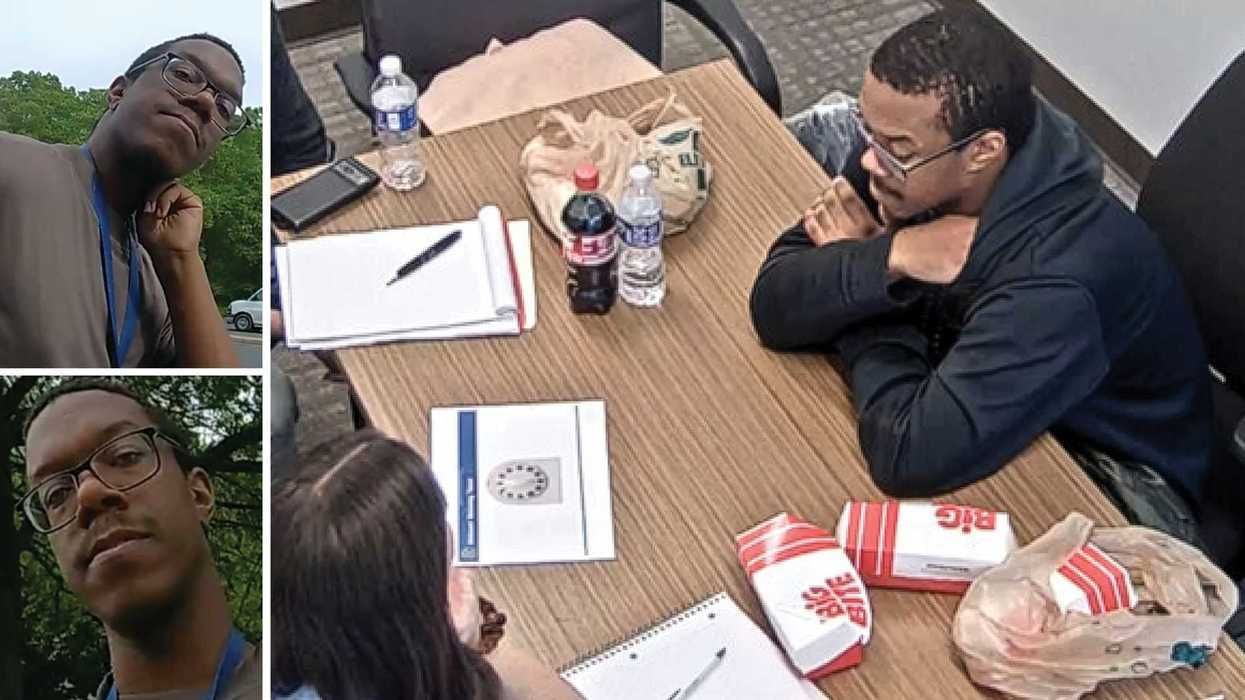
 www.theblaze.com
 thefederalist.com
 www.theblaze.com