Flock doesn’t care if you’re innocent
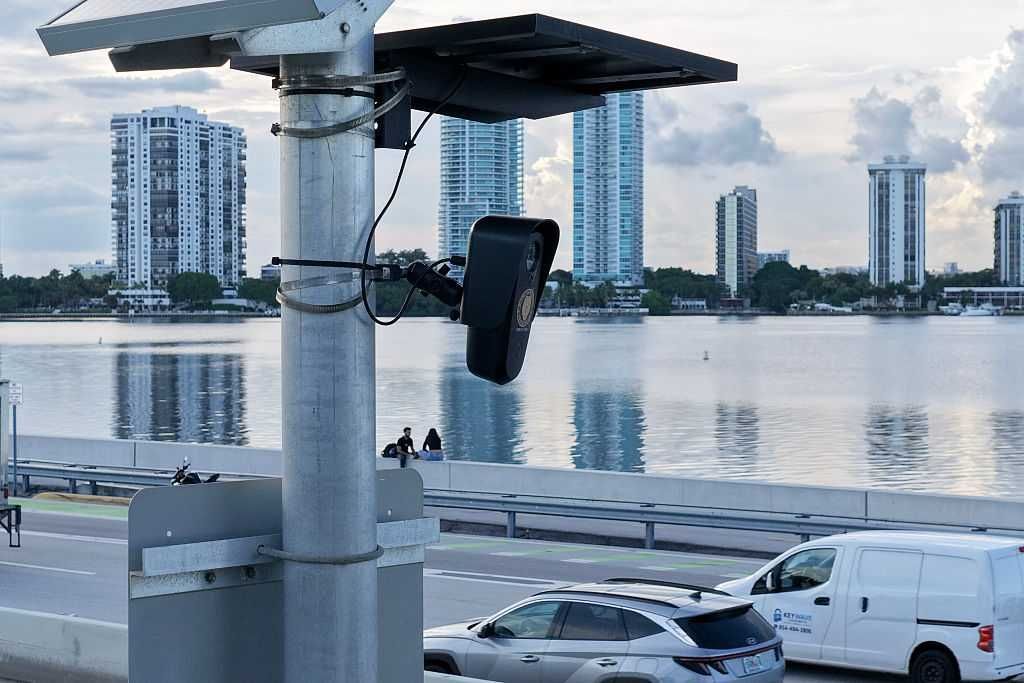


Cities and states are moving quickly in response to concerns about governments’ expanding use of public surveillance cameras, automated license plate readers, audio detection devices, and similar tools. That is healthy. The country needs a serious debate over when crime prevention becomes pervasive surveillance.

Flock Safety says its AI-assisted network includes more than 120,000 cameras in 49 states and processes some 20 billion license plates each month, along with other vehicle characteristics. Public resistance has grown just as quickly.

The debate is overdue. Voters should decide how much surveillance they are willing to tolerate before the cameras decide for them.

On Monday, the Douglas, Massachusetts, Police Department announced it was discontinuing Flock cameras and immediately deactivated its monitoring accounts, citing a “divisive atmosphere” around the technology, Boston 25 News reported.

Other communities have restricted, suspended, or removed the cameras in Arizona, Florida, Kentucky, Massachusetts, and Wisconsin. Similar fights are under way in Louisiana, Michigan, Minnesota, and New York.

Congress has joined the fight. “Flock cameras are emerging as a rare area of bipartisan agreement on Capitol Hill,” Axios reports. Rep. Tim Burchett (R-Tenn.) and two other House Republicans introduced a bill last month to bar the federal government from buying Flock cameras or similar technology.

Flock emphasizes that its customers own the data, control access, and choose whom to share it with. Those customers are governments. That places responsibility where it belongs: on public officials who deploy the systems, and ultimately on voters who elect them.

Critics are right to worry that mass license-plate collection can become a surveillance system for people who have not been accused of any crime. AI dramatically expands what authorities can infer from otherwise ordinary observations by making huge quantities of location data searchable, sortable, and easy to combine.

Promises about retention limits deserve skepticism. Americans have already seen the National Security Agency spy on the American people under programs justified in the name of national security. The problem is not that every surveillance tool will be abused. It is that centralized databases make abuse much easier when safeguards fail.

RELATED: Cities are kicking out Flock. The surveillance might be here to stay.

Scharfsinn86/Getty Images

Recent cases give the public reason to be wary. Officers or other government personnel have faced allegations or charges involving misuse of camera systems in Texas, Missouri, Wisconsin, Florida, Georgia, and Kentucky. Some cases involved thousands of searches for personal purposes. The Institute for Justice has found 170 cases involving alleged misuse of automated license plate reader data and related systems.

The legal question is not simple. In principle, a camera that records a license plate visible on a public road resembles an officer observing the same plate while walking a beat. Police plainly may watch public places. Courts have long held that people generally have less privacy in public than at home, although the Supreme Court has recognized some limits when technology allows government to reconstruct a person’s movements in extraordinary detail.

That distinction is crucial. The constitutional permission to observe something in public does not automatically justify collecting every observation, storing it, cross-referencing it, and making years of movement searchable at the touch of a button. Scale can change the character of a government power.

Nor does constitutionality settle whether a policy is wise. States and local communities are entitled to decide that the risks outweigh the benefits. Voters should force officials to say clearly what information will be collected, how long it will be kept, who may search it, and for what purpose.

RELATED: When did we agree to be watched?
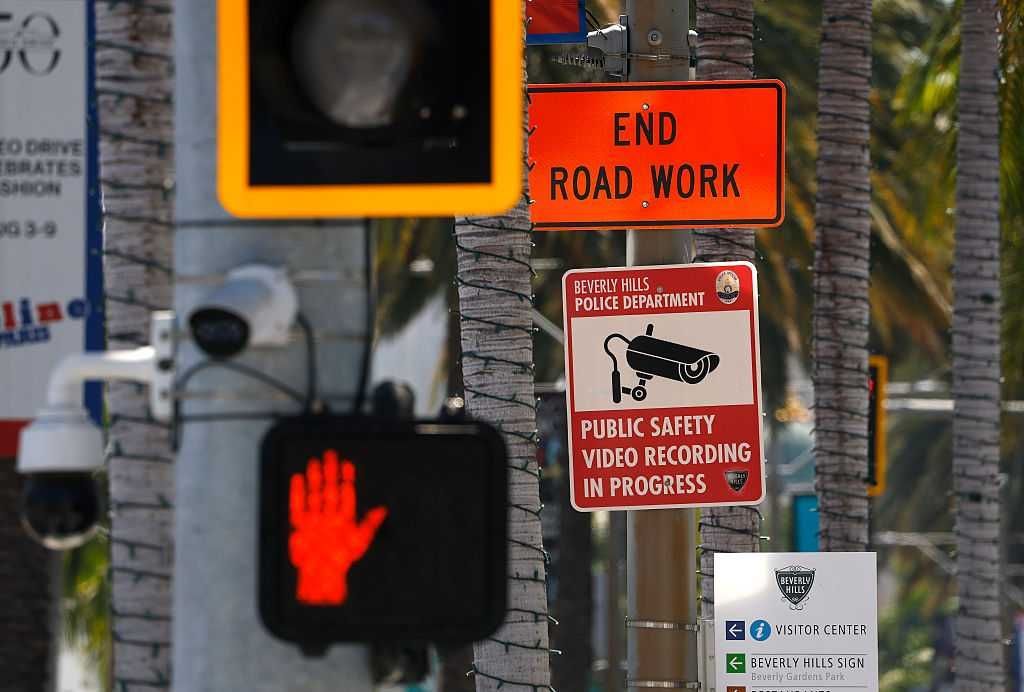
Justin Sullivan/Getty Images

My preference is stricter: Government personnel should not be able to search historical surveillance data without a warrant signed by a judge and tied to a specific suspected crime. Ideally, access would be limited to serious crimes rather than routine traffic enforcement. These systems should not become automated revenue machines.

That approach would preserve a useful investigative tool while protecting the ordinary citizen’s ability to travel public roads without creating a government dossier of his movements.

The backlash against Flock cameras is not irrational fear of technology. It is citizens recognizing that a power capable of helping police catch criminals is also capable of tracking the innocent.

That debate is overdue. Voters should decide how much surveillance they are willing to tolerate before the cameras decide for them.
The left has found its next Trump villain


As the saying goes, “if you’re catching flak, you’re over the target.” That line has followed President Trump for years, and it now fits Attorney General Todd Blanche.

Before joining the administration, Blanche spent years as one of Trump’s defense attorneys as the former president faced civil suits and criminal prosecutions brought by deranged accusers, state officials, and the federal government itself.

Blanche will be judged by whether he stays within the law. He should be. But he should not be expected to govern as though the election never happened.

Blanche then served as deputy attorney general for more than a year. After Pam Bondi’s dismissal in April, he became acting attorney general and was confirmed by the Senate on August 8, 50-49, with two Republicans voting against him.

He had already made himself a target.

In June 2025, following a Trump executive order, Blanche issued guidance narrowing enforcement of the Foreign Corrupt Practices Act and directing prosecutors to focus on cases tied to U.S. interests and national security, including competition with China.

He has also pushed for prosecution of former FBI Director James Comey over his infamous “8647” Instagram post, prioritized the arrest of illegal immigrants with criminal records, and defended aggressive federal enforcement during Operation Metro Surge in Minnesota.

Once Blanche became attorney general, reporters pressed him to promise “independence” from the president. He refused to perform the ritual.

RELATED: Enough with the Justice Department ‘independence’ myth

Al Drago/Bloomberg/Getty Images

That refusal triggered the familiar argument that Republican attorneys general must prove their distance from Republican presidents before they can be treated as legitimate. Democrat attorneys general rarely face the same presumption.

The pattern has continued. Blanche’s support for allowing certain nonviolent felons to petition for restoration of gun rights brought the label “Trump goon” from the left. His refusal to embrace the media’s preferred definition of “independence” led to accusations that he was attacking the department itself. ABC’s coverage of his handling of Epstein-related questions turned moral compromise by association into another dishonest line of attack.

The common thread is not that every Blanche decision is beyond criticism. It is that vigorous service to Trump is itself somehow disqualifying.

That standard reflects the old arrangement Republicans were expected to accept: Democrats and the media set the norms, Republicans prove their respectability by obeying them, and any serious use of lawful power is presumed corrupt unless the left approves.

Blanche does not appear interested in that arrangement.

In his time at the Justice Department, Blanche has shown a willingness to use the department’s lawful authority in pursuit of the administration’s agenda without apologizing for the fact that the president won an election and appointed him to do exactly that.

RELATED: The Justice Department finally has a grown-up in charge

Alex Wong/Getty Images

That’s why the attacks will only intensify.

Other Trump officials draw plenty of criticism, but Blanche is increasingly being treated like Vice President JD Vance, War Secretary Pete Hegseth, or Trump himself: not merely as an opponent, but as someone whose refusal to play by the old rules is seen as a threat.

The left insists it fears politicized justice. What it appears to fear more is a Republican attorney general who will not accept a one-way definition of restraint.

Blanche will be judged by whether he stays within the law. He should be. But he should not be expected to govern as though the election never happened.

That is the real fight: whether a Republican administration is allowed to use lawful power without first asking permission from the people who opposed it.

The path to America-first AI


America’s AI debate is a hot mess. Policymakers, technologists, investors, and activists cannot agree on the destination, the strategy, the acceptable costs, or even what “winning” the artificial intelligence race means.

That confusion shuts ordinary Americans out of a debate that will shape their jobs, businesses, institutions, and way of life. Yet an America-first AI regime cannot be designed only by Washington policymakers, Silicon Valley moguls, or a priesthood of engineers. It must serve the people who build businesses, sign paychecks, raise families, and sustain the country.

America’s technological order should be built around productive citizens rather than a handful of companies pursuing a woo-woo race to turn the planet into a cyber-utopia.

My Independence Day forecast looks more accurate now than it did when I wrote it: No single political authority controls America’s technological future, and no shared moral authority guides it. We still have the Declaration, the Constitution, federalism, and one another. Almost everything else remains unsettled.

The Kimi shock

Since July 4, factional warfare among the AI elite has intensified after the release of Kimi, a Chinese open-source model that reportedly outperformed leading American closed-source systems on important benchmarks.

Kimi did not emerge from an isolated Chinese laboratory. Its engineers trained it by distilling capabilities from American proprietary models — the very systems OpenAI, Anthropic, and their allies argue must remain closed to preserve America’s lead.

The result presents a serious problem. America has poured immense financial, scientific, and political capital into closed frontier labs. If Chinese developers can cheaply reproduce much of their practical value, Washington faces a nightmarish choice: either cede global AI leadership and control to Beijing or allow the pursuit of AI dominance to transform our form of government into something we may not recognize as “American.”

America’s historic model combines private innovation, free markets, and strategic federal investment. That model has supported both prosperity and national power. But if massive collaboration between government and closed-source hyperscalers cannot sustain an AI edge, Americans deserve a debate about what comes next — not a panic-driven transfer of more power and money to the same institutions.

How can America face the future if its greatest strategic advantage has become a liability? Without public agreement on what should replace the old model — or even what kind of country a “refounded” United States should be — what can we do next?

RELATED: The question of the AI age: How much humanism is too much?

Moor Studio/iStock/Getty Images

Three rival factions

Right now, among the AI elite, three factions have emerged in response to this problem.

The first faction argues that Kimi changes less than it appears. Chinese engineers did not surpass American frontier models across the board; they optimized around the most expensive benchmarks and competed where open systems could win. Closed labs can adjust, Washington can revise its strategy, and American dominance can survive.

That may be partly right. Frontier labs still possess enormous resources, talent, and political support. They will not disappear simply because open models become more useful.

The second faction believes such economic and political concerns will soon become obsolete. Its members expect recursively self-improving artificial superintelligence to transform or absorb human civilization. Their task, as they see it, is to accelerate the transition and ensure that it occurs under acceptable management. If done right, we would enter a new age that would be pleasurable beyond comprehension.

The test of an America-first AI policy is whether advanced technology strengthens the constitutional nation and the people who give it life.

The left-coded version appears in Effective Altruism. The right-coded version insists that America, not China, must command the coming superintelligence. Both treat maximum acceleration as a moral imperative. From that perspective, open-source AI is dangerous because it disperses capability, slows the drive toward a single frontier breakthrough, and weakens the control of the institutions leading the race.

The third faction rejects the bargain behind closed-source supremacy. Its argument is that hyperscalers are frightening Americans into financing their rise as private governors of technological progress. The companies gain ungodly wealth and authority; Washington gains the hope of planetary AI dominance; citizens inherit the cost and the risk.

Kimi strengthens that argument because it competed by optimizing for what businesses actually need: efficient computing, useful workflows, enterprise deployment, and practical web applications. Open models can undercut closed systems precisely where American economic life is strongest — decentralized experimentation by workers, entrepreneurs, and firms.

This faction therefore urges America to embrace and encourage domestic open-source AI. The point is not that every model must be public or that frontier capabilities require no safeguards. It is that America’s technological order should be built around productive citizens rather than a handful of companies pursuing a woo-woo race to turn the planet into a cyber-utopia.

RELATED: America needs an artificial intelligence coalition, not an AI fortress

Burcu Demir/iStock/Getty Images

The real America-first path

Of the three positions, the third offers the clearest route to America-first AI because it begins with the right political subject: the American people. Technology should enlarge their capacity to create, compete, govern themselves, and live well. They should not be treated as raw material for a government-corporate project aimed at controlling the future.

The first faction is also correct that closed frontier labs will remain part of the system. Some Americans genuinely want to invest heavily in the most powerful possible models. The federal government also believes its military, financial, and geopolitical position may depend on sovereign access to frontier AI.

That belief creates the greatest danger.

Washington may conclude that preserving its global dominance requires technological control beyond civilian resistance. If officials decide they must choose between the survival of the federal regime and the survival of America’s constitutional order, “national security” will become the justification for hoarding data, compute, models, and authority on a scale the country has never seen.

China would then win without beating America at the frontier. By flooding the world with useful, inexpensive, business-friendly open models, Beijing could tempt Washington into becoming more centralized, secretive, and coercive — less recognizably American.

America should refuse that trap. It should protect genuinely dangerous capabilities, preserve a competitive frontier sector, and make room for open models that empower American businesses and citizens. The test of an America-first AI policy is not whether it produces the most powerful machine at any cost. The test is whether advanced technology strengthens the constitutional nation and the people who give it life.

If our AI strategy requires America to stop being America, China has already won.

Todd Blanche Is Finally Punishing ‘Sanctuary’ Cities For Getting Americans Killed

Civil lawsuits against state and local governments, as well as criminal convictions for leftist terrorists, are much-needed steps.
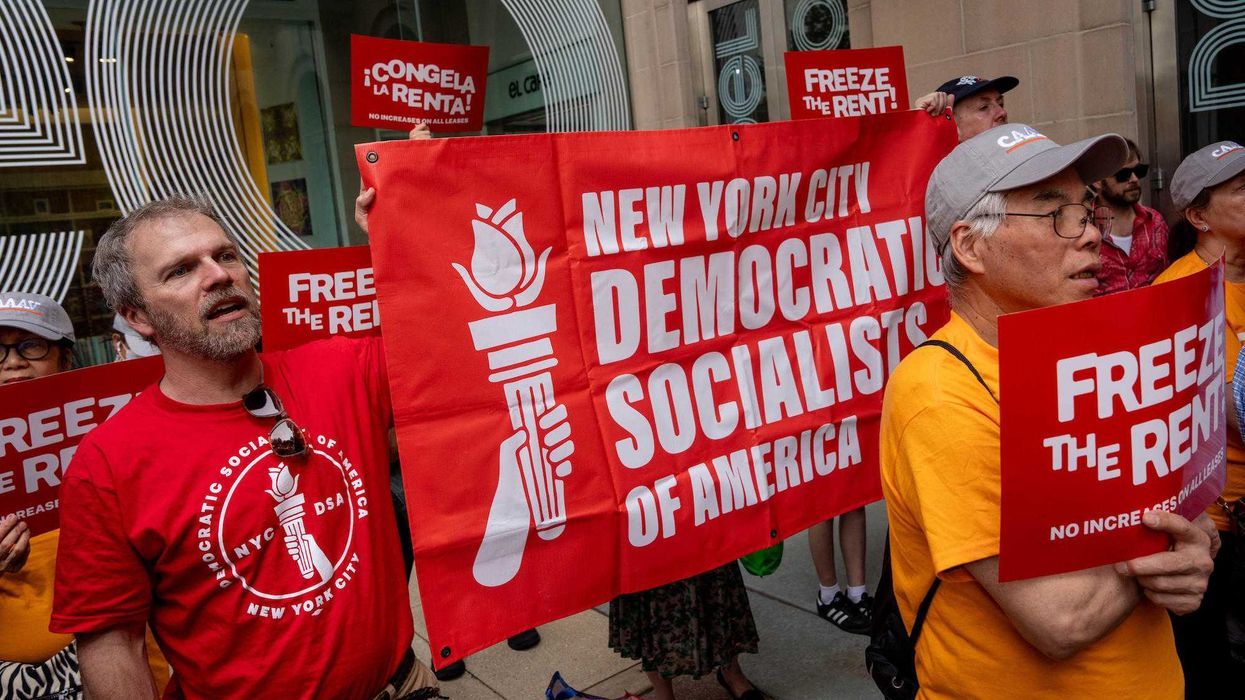
Democratic Socialists of America will seek to RADICALLY upend the federal government in reported platform update


The socialist movement that is making inroads into the Democratic Party will reportedly release far-left extremist goals that would completely remake the federal government.

The Democratic Socialists of America has been behind the success of extremists like Rep. Alexandria Ocasio-Cortez (D-N.Y.), other members of "the Squad" in Congress, and New York City Mayor Zohran Mamdani (D).

The once-fringe group has gained prominence in recent weeks after several DSA-endorsed candidates defeated centrist establishment Democrats.

The DSA is working on updating its platform to reportedly include the elimination of the U.S. Senate as well as the Department of Defense, according to a Fox News report.

Even further, the new platform would advocate for Congress to choose a new executive branch and judiciary that would be subordinate to Congress.

The new platform would also call for full amnesty for all illegal aliens in the U.S. The current DSA platform calls for all deportations to end, for zero restrictions on travel between countries, and full voting rights for noncitizens.

The once-fringe group has gained prominence in recent weeks after several DSA-endorsed candidates defeated establishment Democrats in elections in New York City and other locations.

Darializa Avila Chevalier is running for New York's 13th Congressional District after advocating for the abolition of borders, police, and prisons. She also posted, "F**k Kamala Harris" and expressed her deep disdain for the Democratic Party leadership. Chevalier has since said she has "grown considerably" since those posts on social media.

Claire Valdez won the primary for New York's 7th Congressional District and ran on demilitarizing the border, amnesty for illegal aliens, and ramping up the "Green New Deal" of global warming regulations.

Melat Kiros is running for Colorado's 1st Congressional District and has said she wants to abolish U.S. Immigration and Customs Enforcement and also expressed anti-Israel sentiments.

RELATED: 'They're animals': Trump UNLOADS on 'godless Communists' taking over the Democratic Party

Despite recent victories by the DSA, some centrist Democrats have formed an alliance to push back and empower the faction of the party that is not socialist and defends the free market.

The DSA has since revoked its endorsement for Ocasio-Cortez because she has not been virulently anti-Israel enough for its tastes.

Like Blaze News? Bypass the censors, sign up for our newsletters, and get stories like this direct to your inbox. Sign up here!

No slaughter for the CIA's DEI office — yet


President Trump won the 2024 election promising to gut Biden-era DEI across the federal government, calling it "illegal and immoral." The CIA and the Office of the Director of National Intelligence tried to do exactly that — moving to fire 19 career officers who had spent their time on diversity, equity, and inclusion assignments instead of actual intelligence work.

Two Democrat-appointed judges said not so fast.

'As long as the employee subject to termination chooses to pursue reassignment, the agencies must attempt to reassign her.'

The 4th U.S. Circuit Court of Appeals ruled 2-1 Thursday that the CIA and ODNI have to let the 19 DEI-linked officers appeal their firings and, in some cases, apply for reassignment before they can be shown the door, the Washington Times reported.

The panel found the agencies skipped procedural steps required for a reduction in force — a technicality that's now kept the firings frozen for well over a year, according to Bloomberg Government.

Writing for the majority, Biden-appointee Judge Nicole Berner — joined by Obama-appointee Judge Stephanie Thacker — ruled the officers had enough of a claim to their jobs to sue in the first place.

Berner wrote: "As long as the employee subject to termination chooses to pursue reassignment, the agencies must attempt to reassign her."

RELATED: 'BIG WIN': Trump calls SCOTUS 'Slaughter' ruling the greatest increase of presidential power in 100 years

Graeme Sloan/Bloomberg/Getty Images

In a blistering dissent, Judge Paul Niemeyer, a George H.W. Bush appointee, argued that Congress gave intelligence directors "unfettered discretion" to fire employees precisely so courts couldn't micromanage personnel decisions at agencies handling national security.

He called the injunction unlawful and urged the Supreme Court to step in, calling it a serious separation-of-powers problem: judges telling the CIA how to run its own house.

The ruling lands days after the Supreme Court handed Trump a win affirming his broad authority to fire employees, with a separate case providing a narrow carve-out for officials like Federal Reserve board members.

Like Blaze News? Bypass the censors, sign up for our newsletters, and get stories like this direct to your inbox. Sign up here!

Trump 2.0 puts religious liberty back on offense


One underreported achievement of President Trump’s first administration was the support the Justice Department provided to religious-liberty litigants.

During those years, the federal government filed statements of interest and friend-of-the-court briefs defending conscience rights at a pace unmatched by either of Trump’s immediate predecessors. Cases involving memorial crosses, conscience protections, ministerial autonomy, and the rights of religious schools all reflected a broader shift in posture from the Obama administration.

Constitutional guarantees are only as durable as the institutions willing to enforce them.

The federal government no longer treated religion merely as a tolerated private exercise. It treated religious liberty as a constitutional good worthy of affirmative protection.

That shift has only strengthened under Trump 47.

At the time, critics dismissed many of the administration’s actions as symbolic or temporary. What looked then like a change in tone now appears to have been the beginning of an institutional realignment.

The Justice Department’s recently released report from the Task Force to Eradicate Anti-Christian Bias suggests that the second Trump administration intends not merely to defend religious liberty episodically, but to embed those protections throughout the administrative state.

The point is not simply the report’s conclusions, significant as they are. The point is the scope of the undertaking.

Drawing participation from 17 federal agencies, the report catalogs hundreds of pages of examples in which religious Americans — Christians in particular — faced adverse treatment from the federal government because of their views on life, sexuality, education, parental rights, and medical conscience. The report and its 1,200 footnotes present reams of evidence to support its central argument: During the Biden years, religious exercise was often treated less as a constitutional guarantee than as an obstacle to the ideological objectives of a political machine.

A major development of Trump’s second administration has therefore been the construction of infrastructure around religious liberty itself. The White House Faith Office, the Religious Liberty Commission, agency faith liaisons, and now the Task Force to Eliminate Anti-Christian Bias all reflect an effort to institutionalize protections that previously depended too heavily on presidential discretion.

This development is especially visible inside the Justice Department. During the first Trump administration, Attorney General Jeff Sessions issued welcome guidance for federal prosecutors handling religious-liberty matters and established the Place to Worship Initiative to address violence and discrimination directed at houses of worship.

RELATED: Trump’s Justice Department is shining a light on woke universities — finally

Angela Lewis/Bloomberg/Getty Images

The current report builds on that framework. Rather than focusing only on isolated incidents, it argues that anti-Christian bias — and therefore hostility to religious liberty — became embedded in regulatory enforcement itself, especially when religious convictions conflicted with prevailing doctrines on sexuality, gender identity, or pro-life Christian opposition to the progressive sacrament of abortion.

The report points, for example, to enforcement disparities under the FACE Act. Pro-life activists received aggressive federal scrutiny, while attacks against churches and pregnancy resource centers received comparatively limited attention. Even when political pressure left the Biden administration little choice, its enforcement of the FACE Act against actual vandals went only as far as necessary to stem rising public complaint.

The report goes further, identifying conflicts involving military chaplains, foster-care providers, health care workers, religious schools, and federal employees who sought accommodation for sincerely held religious beliefs.

Whether one agrees with every characterization in the report is almost beside the point. The broader constitutional question remains unavoidable: Can government remain neutral toward religion while treating orthodox religious belief as presumptively discriminatory?

Historically, the answer has been no.

Religious liberty in the American tradition has never meant mere freedom of inward belief. The founders protected religious exercise because they understood that belief inevitably shapes action: education, charity, worship, speech, commerce, and public participation. The First Amendment restrains government not because religion is politically useful, but because conscience stands beyond the state’s authority.

That understanding has often been obscured in recent decades by a truncated vision of religious freedom — one that permits worship inside sanctuary walls while treating religious conviction outside those walls as suspect. Many of the conflicts cataloged in the Justice Department report arise from that narrowing impulse. The fight is no longer over whether Americans may privately believe traditional religious teachings, even explicitly Christian ones. The fight is whether they may live according to them publicly.

Judging by this report and other promising signs, the latest version of the Trump administration recognizes this reality more clearly than any administration in modern memory.

Critics argue that these initiatives privilege Christianity or collapse the distinction between church and state. But that has always been their schtick. Trump’s direct confrontation and dismissive rhetoric have exposed many modern assumptions about the “separation of church and state” as political slogans rather than constitutional arguments.

RELATED: 5 countries where Christians face brutal persecution — and how you can help

EMMY IBU/AFP/Getty Images

The more important legal question is whether religious Americans — Christians and all people of faith — may participate fully in public life without surrendering core convictions as the price of admission. This report focuses on bias against a majoritarian religion. But imagine the damage if the state focused its ire on minority faiths. Religious liberty belongs to all Americans.

The administration’s trajectory is unmistakable. The president’s Religious Liberty Commission has been assigned with developing long-term recommendations for protecting religious exercise across education, health care, public funding, parental rights, and federal policy. The Justice Department report, which will continue to expand into 2027, serves as both justification and road map for that effort.

Critics will insist these measures are unnecessary because religious believers already possess constitutional protections. Only a cynic could look at the mountain of evidence in the Justice Department report and claim nothing happened. Those constitutional protections existed during the last administration, too, but we now know that officials chose political ideology over the foundational principles of the First Amendment.

Constitutional guarantees are only as durable as the institutions willing to enforce them.

The most important question, then, is not whether Trump personally embodies religious devotion. He plainly does not fit conventional expectations of religious statesmanship. The more consequential question is whether his administration understands the structural importance of religious liberty within the constitutional order.

Increasingly, the answer appears to be yes.

For religious Americans, Christians in particular, who spent much of the last decade defending themselves against the coercive power of administrative agencies, that distinction matters a great deal.

Democrat melts down after Secretary Doug Burgum drops bombshell about NGOs during committee hearing


Democrats had a meltdown during a committee hearing while grilling Secretary of the Interior Doug Burgum on all of the programs he is attempting to shut down.

And no one was ready for his answer.

'We found organizations that were receiving grants from Interior where 80 to 100% of the revenue of that NGO was a grant from the federal government.'

In a Monday House Committee Hearing, Rep. Rosa DeLauro (D-Conn.) asked for clarification on Burgum's proposed "complete elimination" of some programs in the Fish and Wildlife Service, including some state and tribal wildlife grants.

Burgum replied with a shocking statistic about where some "nongovernmental organizations" get their money.

RELATED: Revamped National Parks program prioritizes Americans and ensures foreigners 'contribute their fair share'

Heather Diehl/Getty Images

"There was a review done of the grants," he said.

"And that is an area where there's been substantial review. We found organizations that were receiving grants from Interior where 80 to 100% of the revenue of that NGO was a grant from the federal government."

"And yet those organizations, we were the sole source of their revenue, but they would have a CEO making $650,000 and four $400,000 lobbyists," Burgum continued.

DeLauro stammered in reply: "It would be very interesting because we can't get any information. We may agree with you. Give us the reasons why all of these grants are cut, the organizations are cut. ... We just can't take your word."

Like Blaze News? Bypass the censors, sign up for our newsletters, and get stories like this direct to your inbox. Sign up here!