No more free ride for federal grant hogs
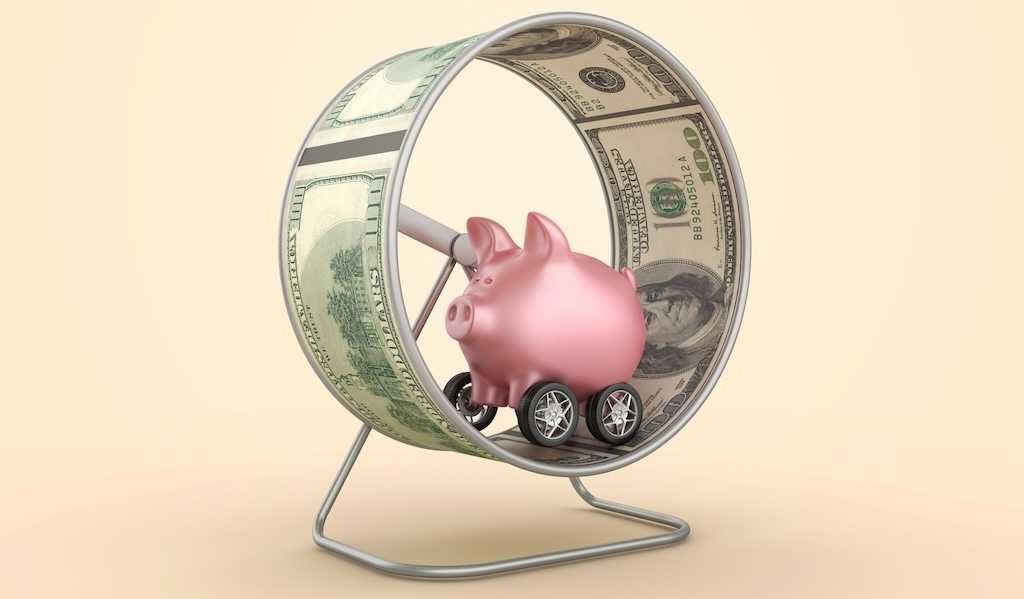
Washington has an old joke: Nothing is more permanent than a temporary government program.
Look past the quip and a pattern emerges. Programs created to address specific problems rarely disappear when those problems recede. They develop constituencies, build bureaucracies, and acquire defenders. Programs meant to die are kept alive through zombie funding long after their original purpose has faded.
Federal grants are not entitlements. Recipients should earn and re-earn them through demonstrated performance.
Milton Friedman spent decades explaining why. In “Free to Choose,” he distilled the point into a simple insight: When you spend your own money on yourself, you care about cost and value. When you spend someone else’s money on someone else — which is precisely what federal grantmaking entails — neither cost nor value receives the same scrutiny it would if the money were your own.
That is the system the Trump administration is now trying to change through a sweeping overhaul of federal grant regulations developed by the Office of Management and Budget. The core idea is simple enough that it should not require federal rulemaking to defend: Public money should produce public results. If it does not, the money should not continue automatically.
Washington has often operated on the opposite assumption. Grants get awarded. Organizations build staffs around them. Those staffs lobby to preserve them. Programs that fail rarely disappear cleanly; they are restructured, rebranded, and refunded. The constituency for any particular line of spending is loud and organized. The constituency for cutting it is diffuse and quiet. That is not a bug. It is a feature that benefits insiders and leaves taxpayers with the bill.
The proposed reforms rest on a simple principle: Federal funding should be earned continuously, not granted automatically. Stronger reporting requirements would force grantees to demonstrate results rather than document activity. Expanded use of the Treasury Department’s Do Not Pay system would help prevent improper payments before funds go out — a meaningful safeguard given that the OMB reported roughly $236 billion in improper payments government-wide in the 2023 fiscal year. Enhanced transparency rules would make it easier for taxpayers to see where federal dollars go and what they produce.
The goal is to shift federal grantmaking from routine renewal to ongoing performance review.
The proposal also takes on something Washington rarely discusses honestly: grantee capture. When a nonprofit receives most of its revenue from federal grants, it no longer operates as a purely independent civic institution. It functions as a publicly funded contractor with a development office. Taxpayers deserve to know when groups presenting themselves as independent advocates also depend heavily on federal money.
RELATED: ‘Pigs at the trough’: Spencer Pratt and Bill Maher come together to blast California ‘socialists’
One provision deserves special support: ensuring that faith-based organizations can compete for grants on equal terms with secular ones. Charitable-choice provisions dating to the 1996 welfare reform law, executive-branch guidance under President Bush, and Executive Order 14332 signed by President Trump in 2025 already prohibit religious discrimination in many grant competitions.
But law on paper and law in practice often diverge. The federal government should judge applicants on their ability to deliver results — not on whether they pray before staff meetings.
Critics will argue that these reforms could be used to disadvantage political opponents. Some of that criticism will land. Implementation will matter enormously, and the effort’s credibility will depend on whether agencies apply performance metrics consistently and transparently across programs.
But the underlying principle should command broad support: Federal grants are not entitlements. Recipients should earn and re-earn them through demonstrated performance. Any serious steward of public resources should embrace that standard.
Friedman understood that bad incentive structures produce bad outcomes regardless of the intentions of the people operating within them. The federal grant system has tolerated weak incentives for too long. Large flows of public money require constant oversight. Without it, mistakes, waste, and fraud become predictable.
After decades of promises to eliminate waste, fraud, and abuse, the Trump administration’s reforms represent something Washington too rarely attempts: real change.
Every dollar the federal government spends was earned by someone outside Washington. Taxpayers deserve to know it was used well.
 Massie’s voters didn’t really change all that much, but he did, and they noticed.
 Hegseth outlined four top objectives for the National Defense Strategy, saying the 'so-called bipartisan consensus...is really just a euphemism for disastrous foreign policy.'
 Every single Senate Democrat who wasn't hospitalized and two Never-Trump Republicans voted to keep PBS's and NPR's grotesque and absurd content flowing.
 Lawmakers of all parties keep thinking that some magic bullet will solve all of the country’s fiscal problems. It won’t.
 Fiscal conservatives on Capitol Hill are right to raise concerns about the rising federal debt and unsustainable deficit spending. But voting no is not enough.
 The Trump rescissions package should provide an opportunity to begin to reduce the continued, disastrous growth of the federal budget.
 Returning noncitizen children and noncitizen parents to their countries could save taxpayers hundreds of billions, especially in state budgets.
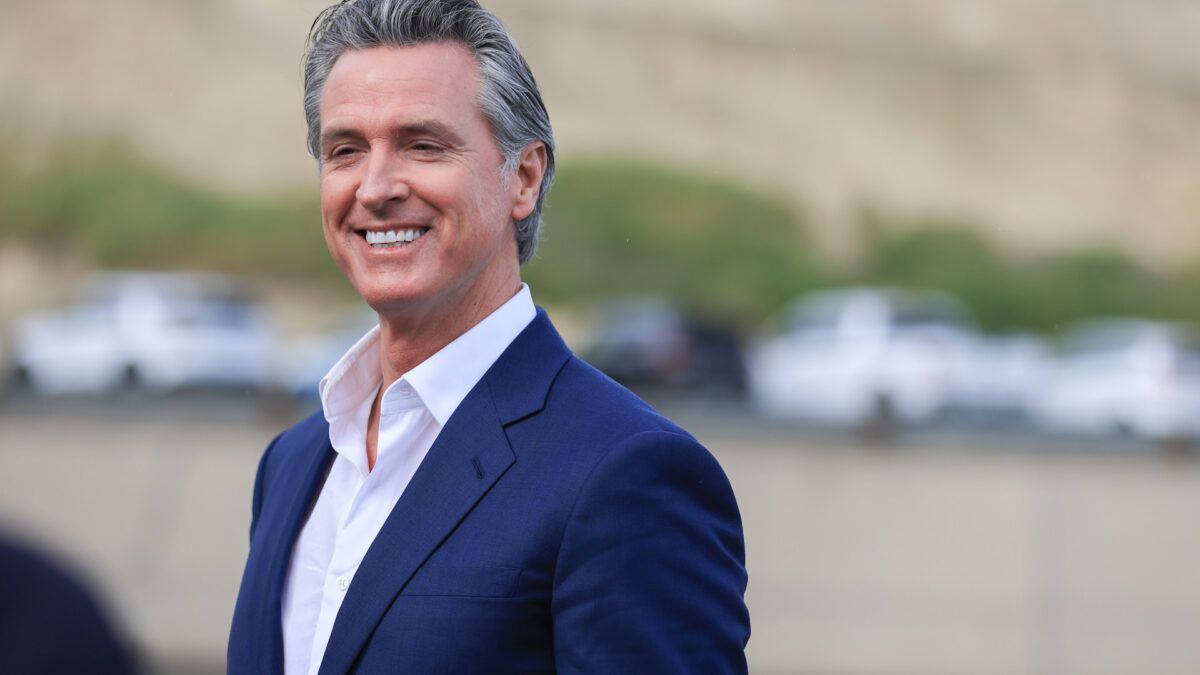 To cut federal spending, Republicans should join Gov. Gavin Newsom, D-Calif., in reforming Medicaid and saving federal dollars.
 www.theblaze.com
 www.theblaze.com
 thefederalist.com
 www.theblaze.com
 www.theblaze.com