Meet the 25-year-old building a Christian alternative to Hollywood
Most of today’s Gen Zers are criticized for the same list of bad traits: laziness, lack of discipline, social awkwardness, no sense of purpose. So it’s a rare thrill to meet someone like Mary Bowen, who not only defies each of these traits, but lays waste to each and every one of them.
Alongside her parents and nine younger siblings, Mary, just 25 years old, has spent the last 12 years building a vertically integrated independent movie studio — Industrious Family Films — which specializes in wholesome family entertainment for Christian viewers.
'Most of what’s coming out is really — it's base. And we're made for more than that.'
In that time, she has produced seven feature films and nearly 20 additional productions. Her studio has recently launched its own subscription-based streaming platform. And now, Mary is directing the studio's most ambitious project yet: "Fabiola," a historical drama set during the final persecutions of Christians in the Roman Empire.
I recently had the opportunity to sit down with Mary and discuss her unique upbringing, the growth of Industrious Family Films, and how she and her family approach filmmaking against the backdrop of today’s increasingly hollow entertainment culture.
Faye Root: Could you start by telling a little about yourself, your background, and what you do?
Mary Bowen: I’m the oldest of 10 children, and we are all homeschooled. Growing up, we actually didn't watch any movies. We’d gotten rid of the TV, DVDs, and VHSs. No Saturday morning cartoons or anything. That really gave us an opportunity to grow up without screens. We did a lot of animals, gardening, some instruments.
But in 2012, for the first time in about four or five years, we watched a movie — a film made by a homeschool group in Connecticut. And it inspired us to work on making movies and populating the industry with Christian films that anybody can sit down and watch.
And of course, we watch movies now. But having that break really gave us this “aha” moment because it was not a normal Hollywood mainstream film. So that's kind of where our love of filmmaking came from.
FR: What’s it like working with your family on your films? Does everybody have an area of expertise?
MB: Many hands make light work for sure. And yes, we all can do it, but we all do have our little areas of expertise.
I'm the creative director, so I'm in charge of camera angles, and I run the camera. I do the costumes, sets, props, editing — the visual stuff. And then my sister kind of runs the show as far as organizing schedules, getting people where they need to be, making sure everything's streamlined.
My dad does a lot with set decorating and construction, and then my brothers help do that. I have one brother who's “the tech,” so if something's not working, he gets it to work. And then another brother who really does everything. He's especially good at lights.
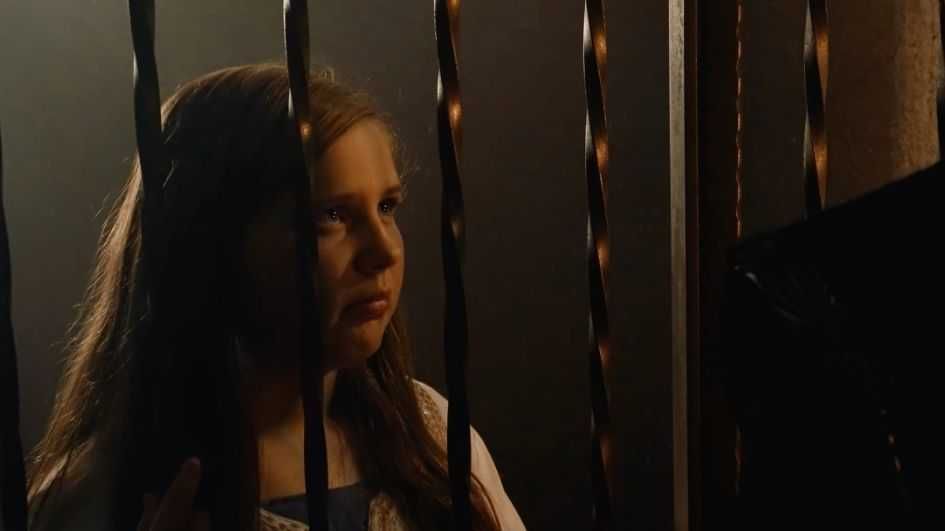
FR: Your lighting in the "Fabiola" scenes was excellent.
Yeah, we spent two weeks just working on lighting for that — the prison scene. I was really glad with the way it turned out. My brother and my mom did most of that, and then my sister and I stood in as the actors because we were getting all the lighting set up before [the actors] got there.
My mom and dad help a lot with everything. Especially my mom. She's definitely an assistant director in a sense. She’s also really good at makeup. Some of my brothers can do makeup too, though. And then my sisters, they help with everything.
FR: Can you talk more about your mom and dad and how they influenced your path in life?
MB: They are adventurers in their own sense. We live on a homestead. A dream of my mom's was to live in a yurt, and they did it. They bought a 30-foot yurt, and that's what they live in. All 12 of us were in there at one point.
My dad’s a manager at a tire shop. My mom’s always been a homeschool mom. She has seven students in school right now. Three of us are graduated. My youngest brother is five.
They've definitely encouraged any reasonable whim or hobby we've ever wanted to do and helped us along the way. But they were hands-off enough that we were able to try things. And ruin things. I've ruined sewing machines. I've ruined cameras. Eventually your mind adjusts, and you think, “My mom and dad bought a $300 camera, and I dropped it.” That generosity … as you grow, you get more of an understanding and respect.
FR: Making a film is such a complicated challenge when compared to most other art forms. But rather than emphasize the need for film school, for instance, I’ve heard you speak about the importance of the deeper skills needed to undertake such an endeavor — hard work, stick-to-itiveness, etc. Could you speak more about that?
MB: Yeah, I think even that came out of just the fact that we were gardening and taking care of animals and things at home. You learn responsibility at a young age.
For example, we had a milk cow, and I was at 10 or 11 when it was my job to take care of the milk cow in the morning — my sister and I. And now, looking back at my younger brothers and sisters who are that age, that's actually a lot to expect of a kid! But it's so doable if they're given the opportunity.
And this translates to film, where yes, it’s super complicated. But you can do it if you're given the tools and allowed to make mistakes. Your first project doesn't have to be perfect. Things can happen — just like the cow can get out. But it's not the end of the world.
So I translate that to film where, actually, if you stick to it, even if it's hard to do, if you see it through, you have a sense of accomplishment. It's surprising that you can even do it at a young age. We made our first movie when I was 14.
But that’s the biggest challenge for some people is seeing a project to the end. That's where a lot of discouragement comes from. It’s hard, and you get in the thick of it, and it's like, “This is a mess, and I don't want to ever do this again!” But then you complete it, and you show it, and you have a party, and then you're like, “Oh, this is so addictive.”
FR: What do you think of the mainstream films coming out of Hollywood today?
MB: I don't watch a whole lot of movies that come out right away. Most of what’s coming out is really — it's base. And we're made for more than that. We're made to love beauty and to aspire to nobleness. And we need to provide that for each other, actually. We need to give that to each other so that we can all be good and wholesome people and pleasing to God.
And when you're constantly being given base entertainment, society slowly declines. And so I don't consume a lot of modern films.
Angel Studios has really filled a hole for a lot of Christian families who don't watch mainstream movies. And that’s great because they're missing a part of our culture not having the experience of going to the theater, getting popcorn. Going to see a movie is like going to a baseball game — everyone should experience it. Having a pagan society creating entertainment has made it so we can’t just go enjoy a film.
Pure Flix — they don't do theatrical runs — but the same thing. I really hope that our studio can be as big as those names just to help populate more films that people can go watch without worrying about covering their eyes.
FR: You’ve said that when making your films, you try to follow the moral censorship regulations, which were pretty universally followed in Hollywood in the 1930s to 1960s.
MB: Yes. The fact that we don't even have a decency code for what we show each other today shows how bad our society has sunk. In some senses, a code like this would need to be updated because it's missing things that should be a problem now that weren't a problem then. It would be interesting if some group would get together and make one.
But yes, there are even little things, which don't seem like they're as big of an issue now. For instance, it was very rare to show two people in a bed together, whether they were married in the film or not.
But these guidelines were important. And it wasn’t only about promiscuity or modesty issues. In the storytelling, good vs. evil had to be resolved. Evil always had to be presented as evil. It had to be overcome by good; it couldn’t just be left with loose ends. The bad guys couldn’t get away.
Just the fact that moral censorship regulations existed in Hollywood at one point is actually kind of amazing — whereas now, I mean, Steven Spielberg just made a movie where he said you will question the existence of God.
We almost need a parallel society — and we've talked about this: actually having parallel entertainment. Likening it to "Fabiola," those early Christians almost had to live underground and have a parallel society. And history repeats itself. Things have gotten so base, so disgusting, so low.
FR: Can you tell me about your streaming platform?
It started as a subscription-based app, and all of our films were there. Unfortunately, we found that the phone thing wasn't clicking with our audience. So then we transitioned to a streaming service more like Pure Flix, and it has taken off really well. It's been one of the most successful things we’ve done, so we're really excited about it.
We’ve also got other filmmakers with films of a similar quality as ours, and they're able to put their films on our streaming service, so we can share them with new audiences.
It’s just $24 a year, and there are around 40 films available.
RELATED: 'The Faithful’ puts focus on Bible’s female figures
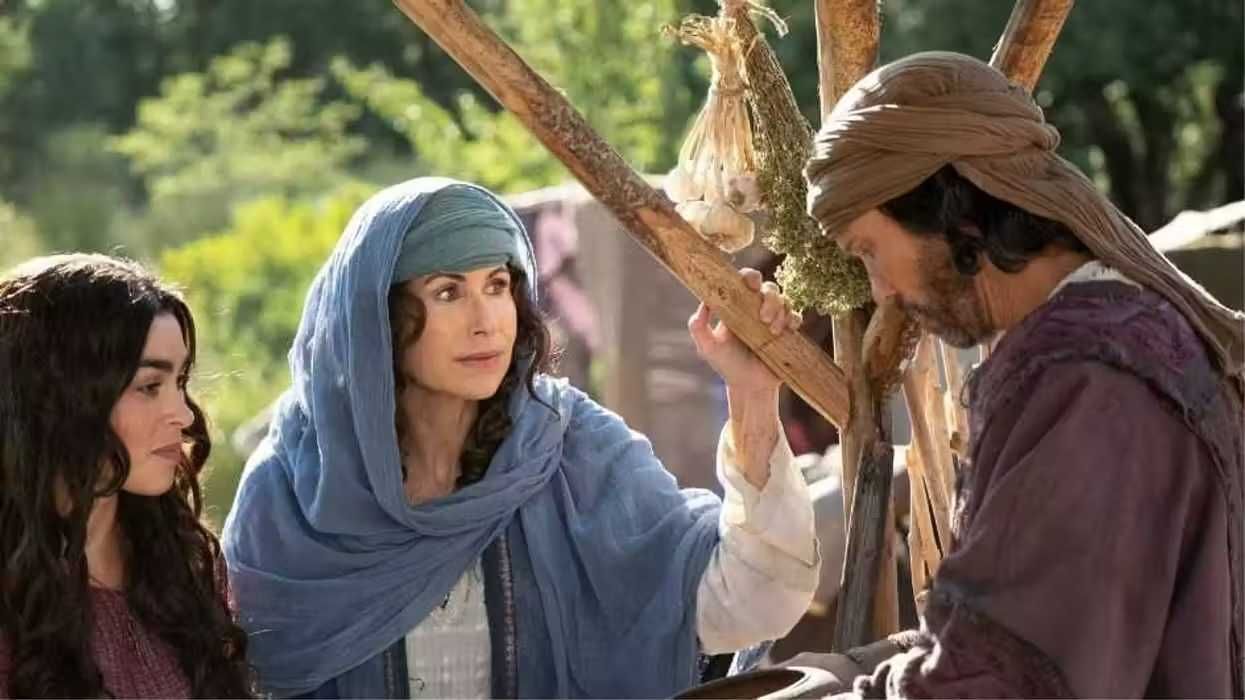
FR: Could you tell us a little more about "Fabiola" and what inspired you to make it?
MB: So the story is set during the last Christian persecution, and Fabiola is a pagan Roman noblewoman — kind of a philosophical pagan. But when her dad dies, she has to wrangle with this thought of, “Do I believe in an afterlife? What is the point of existence?” She’s trying to answer these questions that didn't really come up before, and in her search, she gathers around her many smart, content people who she later learns are Christians.
And they are executed. Persecuted and martyred. And she has to decide whether she’s going to continue to play this happy pagan or she’s going to take the stand and become a Christian — even though it might cost her her life. Several well-beloved Catholic saints like St. Sebastian and St. Agnes are portrayed and weaved into the story as well.
It’s based on a novel we read [in school], and when I read it, I thought, “When we’re ready to make an epic, this is going to be our dream project.” And so here we are working on it. We’ve filmedthree scenes so far. Two will be in the end film. We’re working on completing our fundraising this year. Then we'll be filming in 2027 and set to release in the fall of 2028.
FR: What advice would you give to homeschoolers — or any young person — who’s looking to build a business of their own?
MB: I would say just do it. Get started. Just start it, and you'll figure it out as you go along. But definitely don't wait for a better time or a better situation or a better opportunity. If you have an idea and it's a dream, get started right away. Don't be scared.
I run into that even just among people my own age. Some people are like, “I want to go to film school and then I'll start making movies.” I made my first movie on an iPad. Just do it. With what you’ve got. Do it right now.
Industrious Family Films is currently fundraising for "Fabiola" to meet its production cost goal of $1.25 million. If you would like to support the film, you may contribute by heading to the official film website.
This interview has been edited for brevity and clarity.
 www.theblaze.com
 www.theblaze.com