Robert Mueller deserves credit for one thing: He stopped short
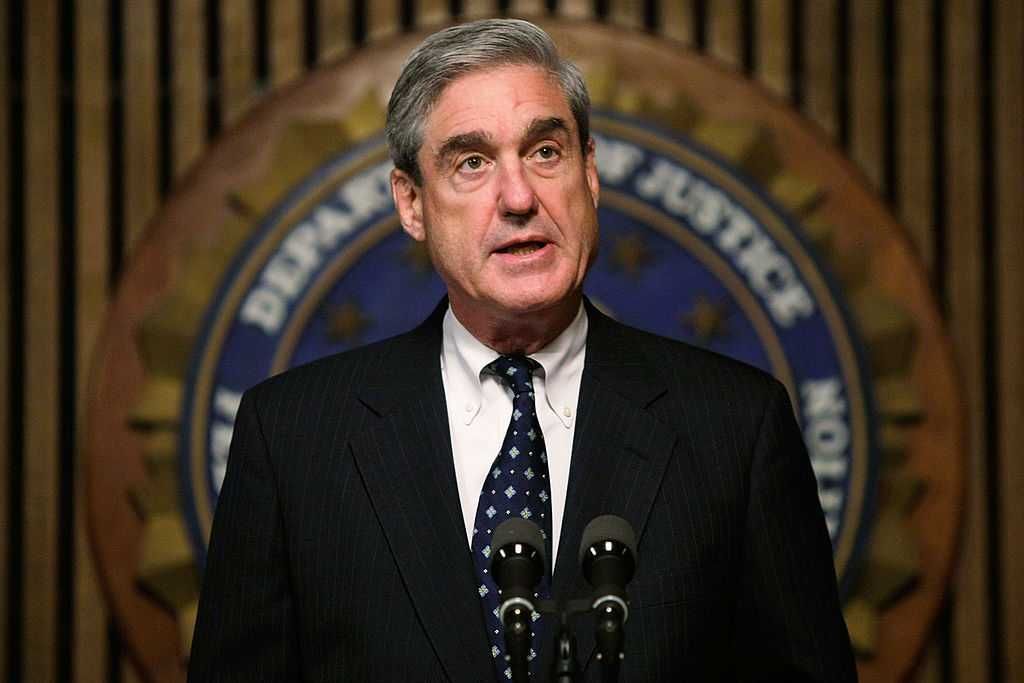
The recently departed Robert Mueller, best known as the Russiagate special counsel, maintained his honor under circumstances far more fraught than the New York Times would like to admit.
To the Times, Mueller was a near-extinct liberal Republican, a straight-arrow institutionalist who resisted Donald Trump’s tawdry politics while avoiding the thuggish legacy of J. Edgar Hoover. That portrait distorts both men. It also misses the real point: Mueller’s conduct during Russiagate, whatever its flaws, looks more honorable when set against the corruption surrounding him.
With all the corruption swirling around him, Mueller himself held the line, even as age and decline had plainly weakened him.
The Times’ swipe at Hoover was as gratuitous as it was ignorant. Hoover had long passed his prime by the 1970s, but beginning in 1924, he transformed a bureau riddled with corruption into a professional law-enforcement agency that promoted rigorous investigative standards around the world. Of Hoover’s successors, only Mueller approached that level of competence while avoiding Hoover’s late-life degeneration.
What the Times missed about Mueller was his stubborn rectitude in finishing the Russiagate investigation without yielding to the partisan pressure for indictment.
Trump, in his usual blunt fashion, responded to Mueller’s death with satisfaction rather than acknowledging him as an honest prosecutor who refused to sign on to a ruinous partisan prosecution.
That refusal matters. The larger Russiagate story is not that Mueller pursued Trump too aggressively. It is that Russiagate itself was one of the most dishonest political dirty tricks in our country’s wild history.
What Russiagate was — and wasn’t
Only Mueller’s refusal to indict saved the country from the further disgrace of charging a president based on a fiction manufactured by Hillary Clinton’s campaign and abetted by corrupt actors in the FBI and CIA, including James Comey and John Brennan.
Properly understood, the special counsel investigation was the capstone of that long corruption. Had Mueller’s deputies, working with Deputy Attorney General Rod Rosenstein, indicted Trump, as many of them plainly wished to do, the damage would have been irreparable.
For that reason, Mueller’s resistance to the demands of his own partisan aides deserves recognition, not contempt. As his legacy hardens into historical judgment, we should examine the Russiagate investigation for what it was and what it was not.
When Trump fired FBI Director James Comey in May 2017, Mueller was quickly named special counsel. But Comey’s Russiagate inquiry had begun as a counterintelligence investigation, which required no identified crime. Comey privately told Trump that he was not a subject of the investigation as a foreign agent. Publicly, however, Comey let suspicion fester while refusing to clarify that point. Trump’s dealings with Russia were already constrained by the posturing of both Comey and President Obama.
Then came Rosenstein. Urged on by the unctuous Comey, Rosenstein violated the governing regulation by appointing Mueller without first identifying a predicate crime. Only later did Rosenstein and Mueller’s team realize they needed one. So Mueller’s deputies settled on a theory that Trump may have obstructed justice by firing Comey.
That theory never held up. Comey served at the pleasure of the president and could be fired for any reason or no reason at all. Even the crime eventually offered to justify the special counsel’s existence failed as a legal foundation.
So the Mueller inquiry rested on a faulty premise from the start. It was not the first dirty trick played on Trump. It was the last.
RELATED: The case against Clinton, Brennan, and Comey is stronger than ever
Media malpractice
Have readers learned any of this from the New York Times, the Washington Post, or the self-justifying book later written by Mueller’s deputies? Hardly. Those institutions covered up the illegality while sermonizing about their virtue and Trump’s supposed criminality.
Step backward in time, and the prior outrage appears: the FISA surveillance of the Trump campaign, and later the presidency, approved in October 2016 on the phony strength of the Steele dossier. Andrew McCabe admitted under oath that the dossier formed the basis for the FISA application. That document rested on the cartoonish fable that Trump aide Carter Page had been offered billions tied to an oil interest by Russia’s Igor Sechin in exchange for influencing the Republican platform. The tale was fiction, filtered through suspected Russian operative Igor Danchenko.
That surveillance was not a good-faith mistake. It was a vicious political trick carried out by McCabe and Comey, who had no plausible reason to believe the Carter Page story was true.
Before that came the Crossfire Hurricane investigation, opened on July 31, 2016. Its predicate was equally rotten. Joseph Mifsud, a mysterious professor later treated as Russian-connected, told young Trump aide George Papadopoulos that Russia had “dirt” on Hillary Clinton in the form of emails. Then Alexander Downer, the former Australian ambassador, drew Papadopoulos into a conversation and extracted the statement needed to move the allegation into official channels.
But Mifsud was no Russian cutout. He was tied to Western intelligence circles, including Claire Smith, a British official involved in spy vetting. So Crossfire Hurricane itself appears to have been launched not by genuine Russian infiltration but by the oily maneuvering of intelligence allies tied to Comey and Brennan through the Five Eyes network.
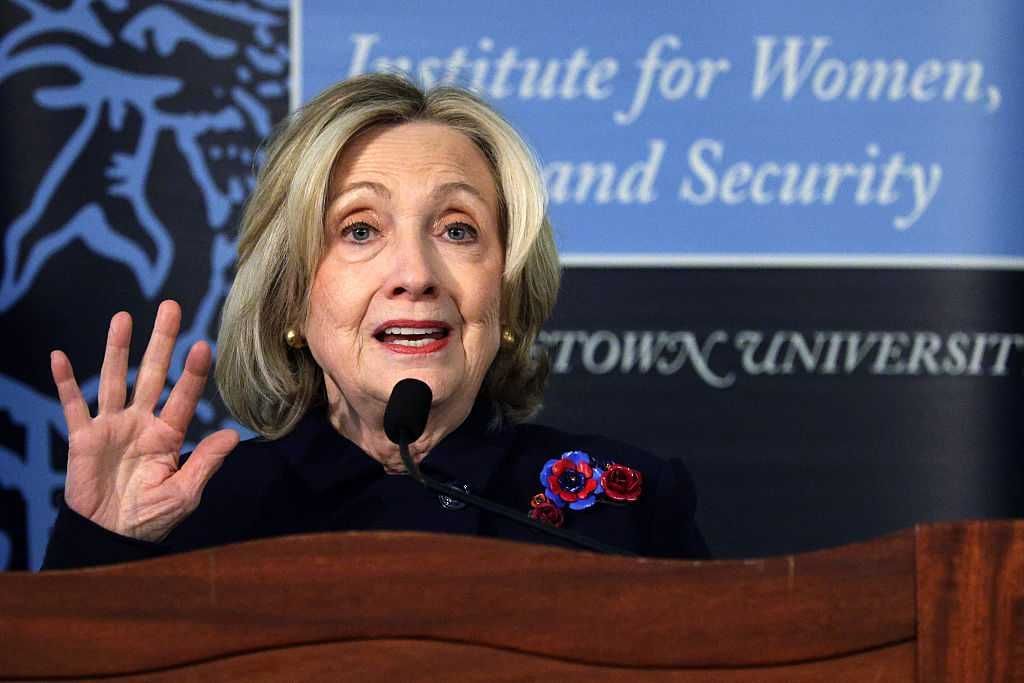
And beneath all of it sat the mother of the dirty tricks: Hillary Clinton’s decision to blame Russia for the exposure of internal Democrat emails showing how the DNC had worked against Bernie Sanders. To sustain that narrative, Clinton’s campaign hired Christopher Steele to produce the false dossier alleging Trump-Russia collusion. That was the seed crystal of the entire hoax. It survived only because crooked Hillary had dirty birds running the FBI and CIA.
RELATED:The media’s ‘war on misinformation’ loses all credibility
Concealing the truth
Once you see that, the real scandal comes into focus. If the Steele dossier triggered Crossfire Hurricane, which led to the false FISA surveillance, which in turn helped justify Mueller’s appointment, then any honest special counsel investigation should have started with the dossier itself. An honest inquiry would have examined whether Clinton, Steele, Steele’s sources, Comey, and Brennan conspired to manufacture the false collusion narrative that became Russiagate.
Instead, Mueller’s deputies chose to ignore the dossier. Their excuse was almost comic: The dossier was too false and unreliable to investigate! But false collusion was the heart of the scandal. Investigating that fraud should have been central, not optional.
They concealed other truths as well. They continued to describe Mifsud as Russian-connected while omitting his far more troubling ties to Western intelligence circles. They kept from the public the extent to which the original predicates for the whole affair were contrived.
Then came the final abuse. Professional ethics require prosecutors to put up or shut up. If they decline to prosecute, they do not defame the subject by insinuating guilt they cannot prove. Mueller’s deputies ignored that rule. In the Mueller report and their later book, they dwelled at length on how Trump may have almost obstructed justice and why they could not “exonerate” him, even though exoneration is not a prosecutor’s task.
In short, Mueller’s deputies concealed the corrupted predicates of the earlier investigations while compounding the damage with their own slanted and misleading account.
Yet with all that corruption swirling around him, Mueller himself held the line, even as age and decline had plainly weakened him. He did not stop his deputies from smearing Trump, and that failure matters. But he remained the thin blue line that prevented one of the ugliest abuses of prosecutorial power in modern American history.
Robert Mueller should be remembered not as the anti-Trump hero or anti-conservative that the New York Times described, but as a conscientious man who kept his footing amid corrupt company.
 Photo by Gilbert Carrasquillo/FilmMagic
 Prosecutors claim Trump 'orchestrated a criminal scheme to corrupt' the 2016 election. But the perpetrators of the real conspiracy skated.
 Speaker Mike Johnson cast the tie vote to defeat an amendment requiring the feds to obtain a warrant to surveil Americans.
 The whole point of Section 702 is to spy on Americans. Why would the intelligence community want to reform it?
 A whopping 193 Republicans voted to advance the bill and thus the rogue security state.
 The hysteria on Capitol Hill over Russian nukes in space was a cheap ploy to ram through Ukraine aid and kill FISA reform.
 The FBI needs a complete overhaul.
 The special counsel's report provides the summary Americans need to understand the breadth of the malfeasance.
 The New York Times' preemptive strike is one part chutzpah and two parts mendacity.
 www.theblaze.com
 www.theblaze.com
 thefederalist.com