If voters don’t feel relief, the economy isn’t fixed


The concerns of many Americans about their economic well-being may be at the highest level since the Great Depression. Politico recently reported that 46% of Americans say their cost of living is the worst that they can remember, including over one-third of Trump voters. Nothing better exemplifies this than the many “30-somethings” who are unable to purchase a home.

Financial anxieties center around affordability, which is the proxy for evaluating whether the economy is meeting the public’s needs. Affordability is the degree to which households can responsibly pay for essential goods and services.

In the end, the nation’s affordability dilemma is about the confidence people have in the country’s economic future.

Gregg Ip, an economic commentator for the Wall Street Journal, says that affordability cannot be measured solely by economic data, but must also account for perceptions of financial security.

President Trump opined that concerns about affordability are a “hoax” created by Democrats for political purposes. Most Americans would disagree. While the runaway inflation of the Biden presidency has moderated, widespread concerns about affordability persist. According to a recent Politico poll, nearly half of the nation found the cost of their groceries, health care, utilities, and housing to be unaffordable. About half of the respondents said food costs are difficult to manage, and more than a quarter skipped medical appointments because of the cost.

In the 2026 midterm elections, it will be incumbent upon Republicans and Democrats to make an affordability agenda “job one.” These agendas should be the yardstick voters use to cast their vote for members of Congress and state officials.

The U.S. affordability crisis is multidimensional, requiring a dual-track strategy that combines structural reforms with immediate and affordable relief for the most vulnerable citizens. Each party’s affordability agenda should demonstrate when households will realize cost-of-living relief, avoid another round of inflation, provide market incentives for innovation, supply expansion and productivity gains, demonstrate distributional fairness, and stress choice over federal mandates.

Restoring an affordable economy will require that failed federal policies be reversed and the president and Congress focus on fixing long-term root causes.

To make goods and services more affordable, public policies should aim at increasing private-sector housing construction, modernizing domestic energy regulations, expanding production, encouraging competition in the health care insurance market, avoiding deficit spending that can rekindle inflation, rolling back regulations that increase consumer and business expenses, and devolving social and educational programs to the states to tailor taxpayer-friendly solutions to local challenges.

The nation’s affordability dilemma is not only about the price of goods and services. It concerns the relationship between costs, income, and the perception of financial security. In the end, it is about the confidence people have in the country’s economic future.

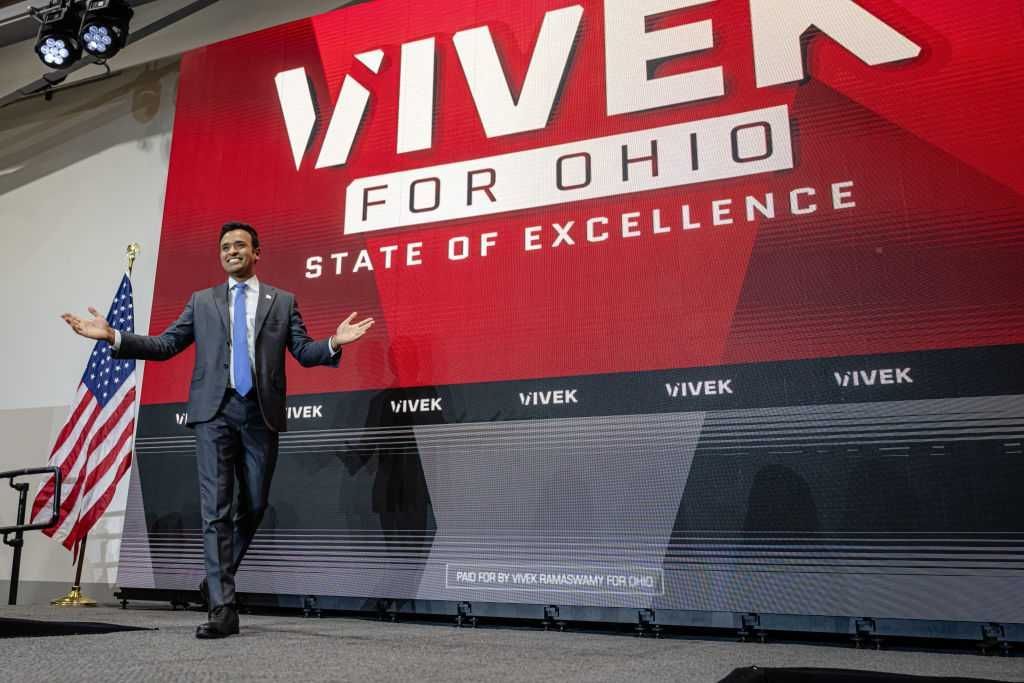
RELATED: All I want for Christmas is for Vivek Ramaswamy to stop embarrassing the GOP

Photo by Jon Cherry/Getty Images

When households and businesses feel “squeezed,” they lose faith that public or private institutions are protecting their interests. A September 2025 poll conducted by the Pew Research Center found that just 17% of Americans trusted the federal government to do the “right thing” most of the time. Similarly, the July 2025 Gallup survey reported that less than 30% of Americans had confidence in U.S. institutions.

The major impediments to addressing the high cost of living are deep ideological divides over causes and solutions. Progressives emphasize government mandates and regulations, subsidies, and deficit spending. Conservatives stress fiscal restraint and market-driven solutions. Adopting common-sense economic reforms requires compromise and the rejection of left and right extremism driven by grievances and rage.

There is no more important issue for voters than which candidates and parties will boldly tackle the affordability challenge. Success will be influenced by policies that encourage business investment and innovation and workers keeping more of their income.

Editor’s note: This article was originally published by RealClearPolitics and made available via RealClearWire.
If conservatives will not defend capitalism, who will?


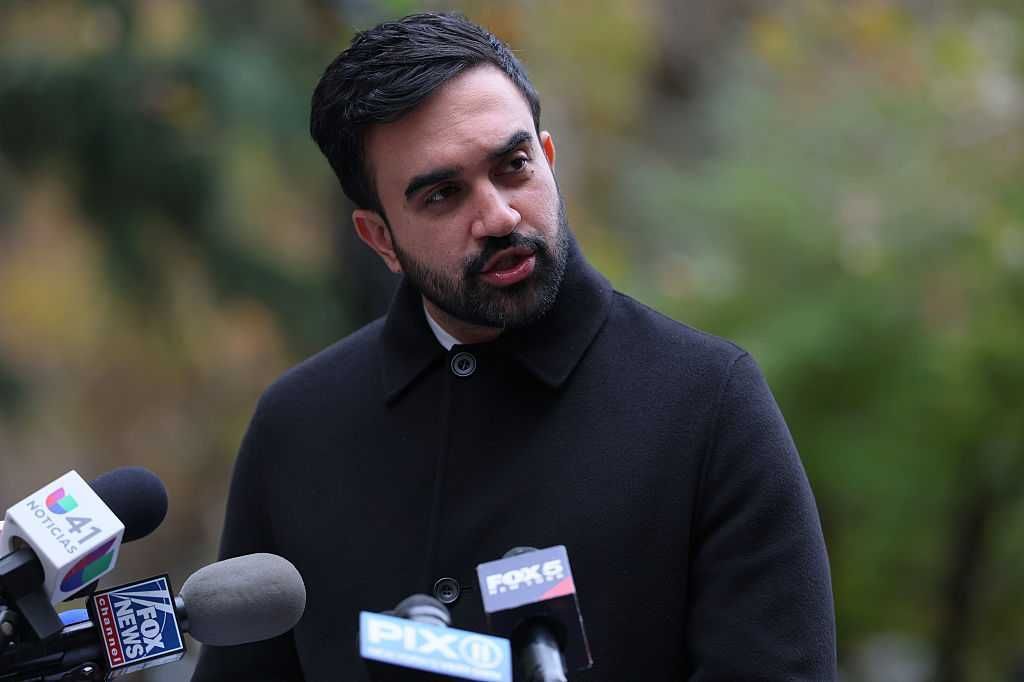
In the aftermath of Zohran Mamdani’s electoral victory earlier this month, it became clear that socialism is a greater threat on the left than ever before. It is also clear that the GOP could no longer coast along by proclaiming, “Vote for us because he’s a socialist,” assuming that people would forever have a knee-jerk reaction to that word.

One issue that defined New York’s mayoral race — and increasingly politics throughout the country — is affordability. For millions of Americans, affording rent, groceries, health care, and a home seem further out of reach than ever before. The issue has been winked at by politicians across the spectrum for years around election time with precious little results to show for it.

Explaining to voters why they are wrong — or even worse, outright dismissing their concerns — has never worked politically, and that is not going to change now.

We have largely reached a point where this can no longer be avoided: We are now seeing regular releases of ever-worsening economic figures. The median age for all U.S. home buyers is 59 — a staggering statistic by itself, made even worse by the fact that it is up from just 28 back in 1991.

And it is not just that people are getting priced out of home ownership — rents have gone up astronomically over the past decade, leading us to a situation in which the American consumer is clearly struggling to get by. From credit card debt at record highs with seriously delinquent accounts hitting 12%, the highest since 2012, to auto repos matching 2009 levels, it is pretty clear that the consumer is maxed out.

Looking around at how conservative pundits spent the last few weeks talking though, you would not know it at all. You would be forgiven if you thought they had just come off a huge electoral victory. Conservatism simply cannot reduce itself to being the worst caricature of cold elitism that turns a blind eye to the very real economic struggles many in the country are facing.

Ben Shapiro kicked things off after suggesting to young people that they simply should not live in places like New York City, criticizing the idea that someone would deserve to live where they grew up and where job opportunities are heavily concentrated.

That same week, Donald Trump opened a rift within his own base — a rare sight for sure — in an interview with Laura Ingraham over the issue of H-1B visas. When she pushed him on his stance, saying that we have “plenty of talented people here,” he interrupted with, “No you don’t, no you don’t.” Instead of focusing on how to make American workers more competitive through better education or training, the message heard by many was that Americans were not up for the job.

Worst of all may have been Dinesh D’Souza, who felt the need to weigh in on Vivek Ramaswamy’s meritocratic education reform by essentially race-baiting, saying: “How ironic it will be if a brown American like Vivek actually helps to fix education and raise the prospects of white kids, while all the professional whiteys on X continue their idle boasting.” Whatever the merits of education reform, mocking struggling Americans — especially through whatever “professional whiteys” is supposed to mean — is not doing anyone any favors.

With approaches like these from the right, who needs the left anymore? It took Ramaswamy’s opponent in the Ohio gubernatorial race, Amy Acton, all of 24 hours to put together an ad saying that Ramaswamy thinks “Ohioans are lazy and mediocre. He’s wrong.” It practically wrote itself.

Arguments like these from conservatives do more damage to the defense of capitalism than attacks from socialists ever could and are totally disconnected from what free markets actually are. Capitalism has delivered more prosperity than any system in human history, and it is not even close — but it did not get there by running on the platform of saying, “You’re too poor to live where you grew up, our country isn’t talented, move aside.”

New York City is famous throughout the world because it is the city where generation after generation of people who wanted to work hard could go and make something of themselves. Nobody I have seen on the right is asking for a luxury life handed to them on a silver spoon while they sit on the couch. They are frustrated by the fact that the world seems to be increasingly out of reach for them.

The only person in the GOP who seems to be able to see this, I’m horrified to say, appears to be Rep. Marjorie Taylor Greene (Ga.), who spent the last few weeks getting attacked for acknowledging that many “young adults are barely making it” and accusing Trump’s allies of gaslighting Americans about the cost of living. On Saturday, she posted on X: “My heart is with Americans who struggle to afford life in America today.”

To her credit, she has been consistent in prioritizing cost-of-living issues — something that has become far too rare in the GOP since Donald Trump took office. She has taken the lead in warning that health insurance premiums would double for millions of Americans — including her own adult children — when enhanced Affordable Care Act subsidies expire, while Republican leadership has largely sidestepped the problem.

RELATED: Mamdani sells socialism — and Republicans peddle the Temu version

Photo by Michael M. Santiago/Getty Images

We on the right have long embraced a tougher-love approach that certainly includes prioritizing a strong work ethic, and nobody needs to give that up. But that is not the issue here at all — Ben Shapiro’s comments are not directed at people who do not want to work; they are directed at and felt by those who do work and still cannot afford many basic things that previous generations took for granted.

Explaining to voters why they are wrong — or even worse, outright dismissing their concerns — has never worked politically, and that is not going to change now. Support for capitalism has now fallen to 54% overall, with Democrats preferring socialism 66% to 42%.

Peter Thiel’s now-viral email from 2020 captures exactly what is underlying this shift:

From the perspective of a broken generational compact ... when one has too much student debt or if housing is too unaffordable, then one will have negative capital for a long time ... if one has no stake in the capitalist system, then one may well turn against it.

He was right then, and he is right now. The only thing left to be seen is whether the right will wake up to that reality before it is too late.

If this month’s performance is any indication, I am not holding my breath.

Editor’s note: This article was originally published by RealClearPolitics and made available via RealClearWire.
Illegal labor isn’t farming’s future. It’s Big Ag’s crutch.


I’m a strong supporter of President Trump. I respect his drive to secure our borders, restore national sovereignty, and bring real vitality back to the American economy.

But the Department of Homeland Security’s latest move — limiting workplace enforcement and putting a stop to Immigration and Customs Enforcement raids on agricultural employers — cuts against the very heart of the America First agenda. It protects the same corporate giants that are bleeding rural communities dry.

If DHS and USDA want to fix agriculture, they need to stop hiding behind the word ‘farmer’ when they’re really talking about corporate middlemen.

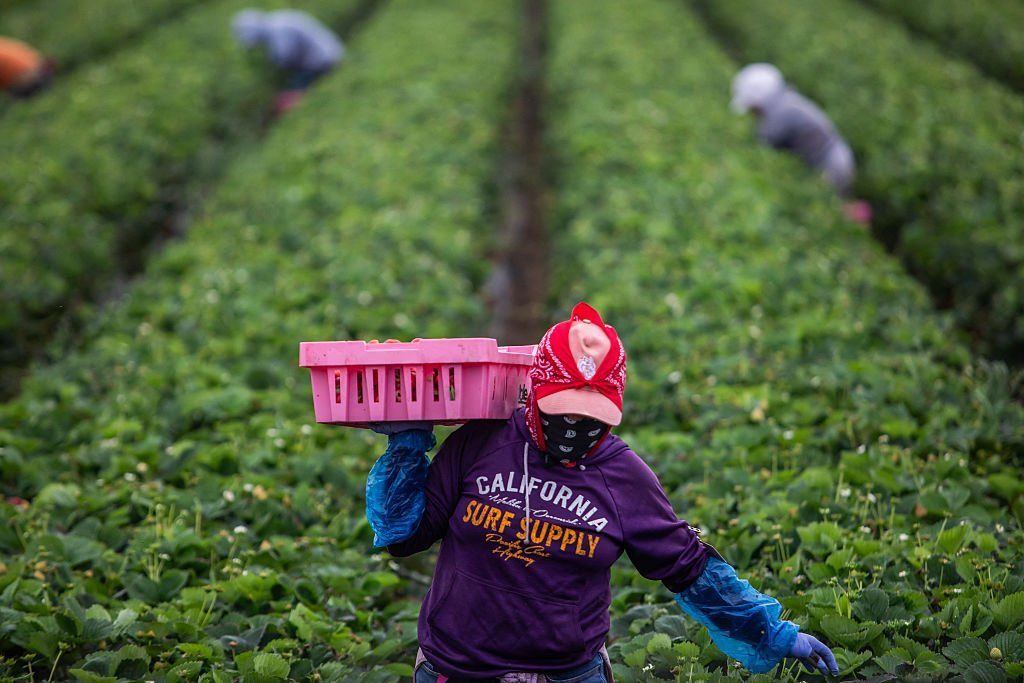
Let’s not kid ourselves: This policy isn’t about helping “farmers.” It’s a gift to foreign-owned industrial agriculture giants like JBS and other multinationals that built their business models on cheap labor, government handouts, and total control over every link in the supply chain.

These are the corporations responsible for wiping out independent family farms across the country.

The Biden administration let Big Ag off the hook. Is Trump really about to follow suit?

Hiring legally and thriving

You don’t need to hire illegal workers to run a successful farm or ranch. In fact, some of the best in the business don’t.

Look at White Oak Pastures in Bluffton, Georgia. Or Polyface Farm in Swoope, Virginia. Or Meriwether Farms out in Wyoming. These aren’t fantasy models. They’re real, thriving operations built on legal labor, strong local roots, and, when needed, carefully managed visa programs.

They don’t rely on mass illegal labor. They don’t need to.

What they do is create real jobs. They pay honest wages. They bring life back to rural towns.

Will Harris is the biggest employer in Bluffton — not because he cuts corners on labor, but because he heals the land, strengthens his community, and delivers food independence.

This is what Trump’s golden age of American farming should look like: self-reliance, real prosperity, and pride in a job well done.

A free pass for Big Ag

With this new policy, DHS basically gave corporate amnesty to the likes of Tyson, Smithfield, JBS, Cargill — you name it. These are companies that depend on cheap, illegal labor to keep their bloated, centralized model afloat.

We’ve been down this road before. Remember Ronald Reagan’s 1986 amnesty? Legalization now, enforcement later — except “later” never came.

And now, we’re repeating the same mistake.

This policy protects a broken system built on:

  • Top-down corporate control
  • Massive consolidation
  • Debt traps and labor abuse
  • De facto open borders
  • Slave-wage labor
  • Legal loopholes for billion-dollar companies

What we’re left with is what journalist Christopher Leonard called “chickenization” — a corporate takeover of the food system that treats farmers like serfs and workers like machines.

The U.S. Department of Agriculture’s loyalty to these monopolies has already hollowed out towns, forced families off their land, and turned our food supply into a global pipeline where cartel-linked produce replaces homegrown independence.

This doesn’t serve America. It serves the bottom lines of a few mega-firms that like open borders and look the other way on enforcement.

And whether it admits it or not, this is how the United Nations’ Sustainable Development Goals get implemented — quietly, through broken farms, outsourced jobs, and illegal hires.

RELATED: Trump orders ICE to ramp up deportations in Dem-controlled cities following MAGA backlash over selective pause on raids


Photo by Tasos Katopodis/Getty Images

This isn’t just about agriculture. It’s about national security.

A nation that can’t feed itself without breaking its own laws isn’t sovereign. And one that lets multinationals run roughshod over the heartland while outsourcing production to places run by cartels is heading for trouble.

We can do better

If DHS and USDA want to fix agriculture, they need to stop hiding behind the word “farmer” when they’re really talking about corporate middlemen.

Trump has a chance to change course — one that truly puts Americans first. That means backing the producers who follow the law, hiring citizens or legal workers, and building food systems that support independence, not dependence.

Independent farmers and ranchers are ready to help. They’ve already shown what works: strong property rights, legal labor, fair water access, and a commitment to community.

This isn’t some policy wish list. It’s already happening.

And it’s winning.

Let’s not give our food, our land, or our future back to the monopolies that wrecked the past.

Can America survive another four years of Bidenomics?


While the Biden administration claims it has everything under control, inflation continues to rise, housing prices are insane, and the government just keeps spending.

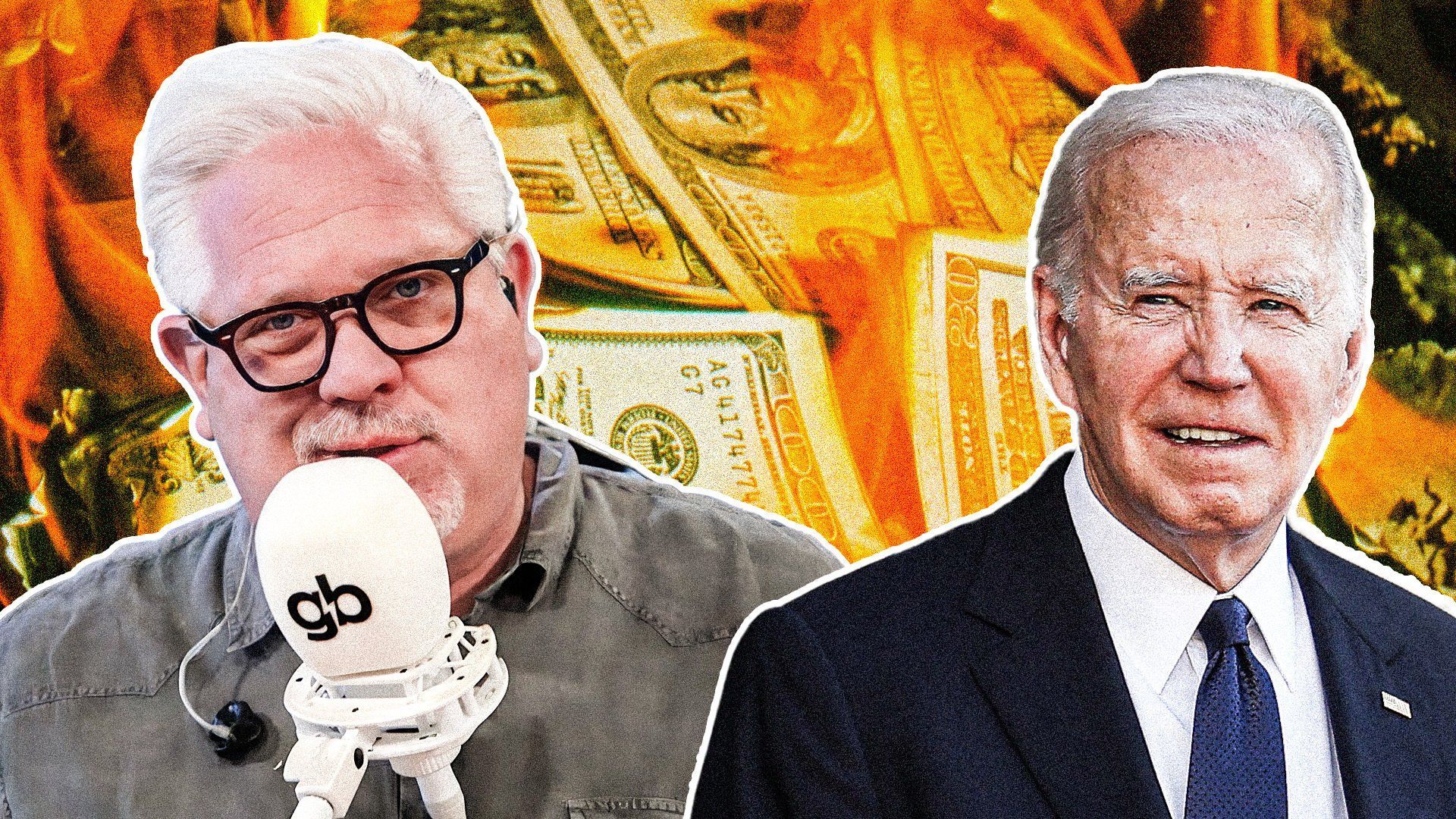
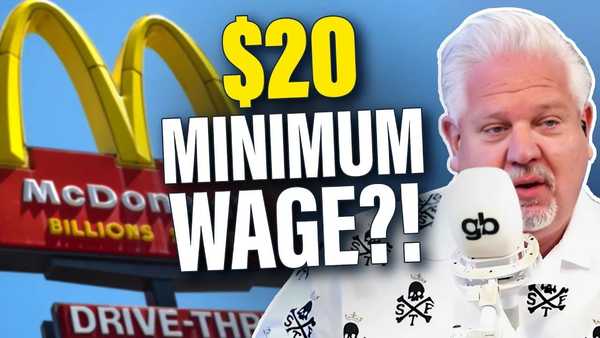
“The United States government is printing one trillion dollars every 100 days,” Glenn Beck says, adding, “Just put that in your pipe and smoke it for a minute.”

And the American people are suffering, despite attempts at raising wages to deal with inflation — like they’ve done in California.

“$20 minimum wage for fast-food workers,” Glenn says, adding, “Kind of putting people out of business. First of all, McDonald’s, Wendy’s, Burger King, hiked prices to offset the higher cost. Who would have seen that coming?”

“How many times does it take before people understand basic economics? The price of the goods or service goes up when it costs the company that is providing those goods or services, when it costs them more to get that to you, they raise the price. That’s the way business works,” Glenn explains.

“This is what every business is going through right now,” he adds.

The economy is so disastrous under Biden, that Glenn believes if he wins the 2024 election, it will be a sign of something far more ominous than just rising prices.

“I will be absolutely convinced that this is a fraudulent election if for the first time in history, the economy doesn’t play a major role,” he says. “Can America survive another four years? Can you survive another four years going down this road? Can you afford it?”

As the prices continue to go up, the chances Americans have at owning basic necessities will continue to go down.

“You’re not able to buy a house, you’re not able to get a loan on anything that is reasonable, and it is only going to get much, much, worse,” Glenn warns.


Want more from Glenn Beck?

To enjoy more of Glenn’s masterful storytelling, thought-provoking analysis, and uncanny ability to make sense of the chaos, subscribe to BlazeTV — the largest multi-platform network of voices who love America, defend the Constitution, and live the American dream.

Middle-Class Americans Don’t Care What Paul Krugman’s Charts Say About Inflation

Paul Krugman cares little about these price variations, making him an economist seemingly unconcerned about the details of his own finances.
Historically High Food Prices Will Only Worsen If A Democrat Wins The White House

Food will become even more unaffordable if a Democrat wins the White House this November, due to destructive climate policies, a report warns.

Cattle crisis as production plummets to decades-low level, rancher warns: 'Biden policies hurting America's cattlemen,' consumers going to pay the price


As production of cattle has plummeted to its lowest levels in decades, a rancher is warning that Americans are "going to pay the price" for the beef supply hitting a crisis point.

"This is a bad situation for America's cattle farmers and America because we're producing 1 billion pounds less beef than we were in this country, just a year ago," John Boyd, Jr. – president of the National Black Farmers Association – said during a Thursday interview on "Fox & Friends First."

Boyd has been farming and producing beef for 41 years, and he stressed, "I'm telling you, this is a time when we should be investing in America's cattle, and we're not doing it."

"We're not investing in America's beef and cattle farmers, and Biden policies are hurting America's cattlemen, such as myself," he continued. "They should be invested in America's cattle farmers and making sure that we have the tools needed to stay on the farm."

Boyd noted that there were empty stalls last week at a "very good" cattle market near his home in Blackstone, Virginia. He blamed the alarming situation on American ranchers "not producing the beef that we used to."

Boyd warned that the lack of production will cause price spikes.

"Americans are going to pay the price at their local grocery stores," he stated.

"We already are seeing such a steep, hike and beef in this country," Boyd said. "And it's because we're not supporting these cattlemen such as myself… the Biden administration, isn't paying attention [to] this national crisis. This is a national crisis for America's cattlemen, and this administration has turned a blind and a deaf ear to something that needs immediate attention."

USDA’s biannual Cattle Inventory Report showed that the country's cattle herd totaled 87.2 million head as of Jan. 1, 2024. This figure is down roughly 2% from last year's crop, and the lowest herd size in 73 years.

Fox Business reported, "Agricultural economists say persistent drought over the last three years, along with high input costs and inflation are putting pressure on both consumers and farmers."

American Farm Bureau Federation Economist Bernt Nelson told the Southern Farm Network, "The combination of higher input prices and drought drove farmers and ranchers to market more cattle, and not just more cattle but more female cattle that are responsible for replacing the beef herd. Now, we’re looking at a beef herd of about 28.2 million head. Amongst that we have a calf crop that is 33.6 million. Now this is down two percent, but it’s the smallest calf crop since 1948. That’s in 76 years."

Nelson said the current pipeline for beef supplies is "strong," but cautioned "as that supply begins to dry up, that’s when we are going to see beef supplies start to get tighter and tighter, and this could lead to the record prices that I think are going to occur in 2024 and 2025."

Beef sold for an average of $5 per pound last year, according to the U.S. Bureau of Labor Statistics.

Like Blaze News? Circumvent the censors, sign up for our newsletters, and get stories like this direct to your inbox. Sign up here!