Retired cop wins $835K from Tennessee county after being jailed for 37 days over Charlie Kirk meme
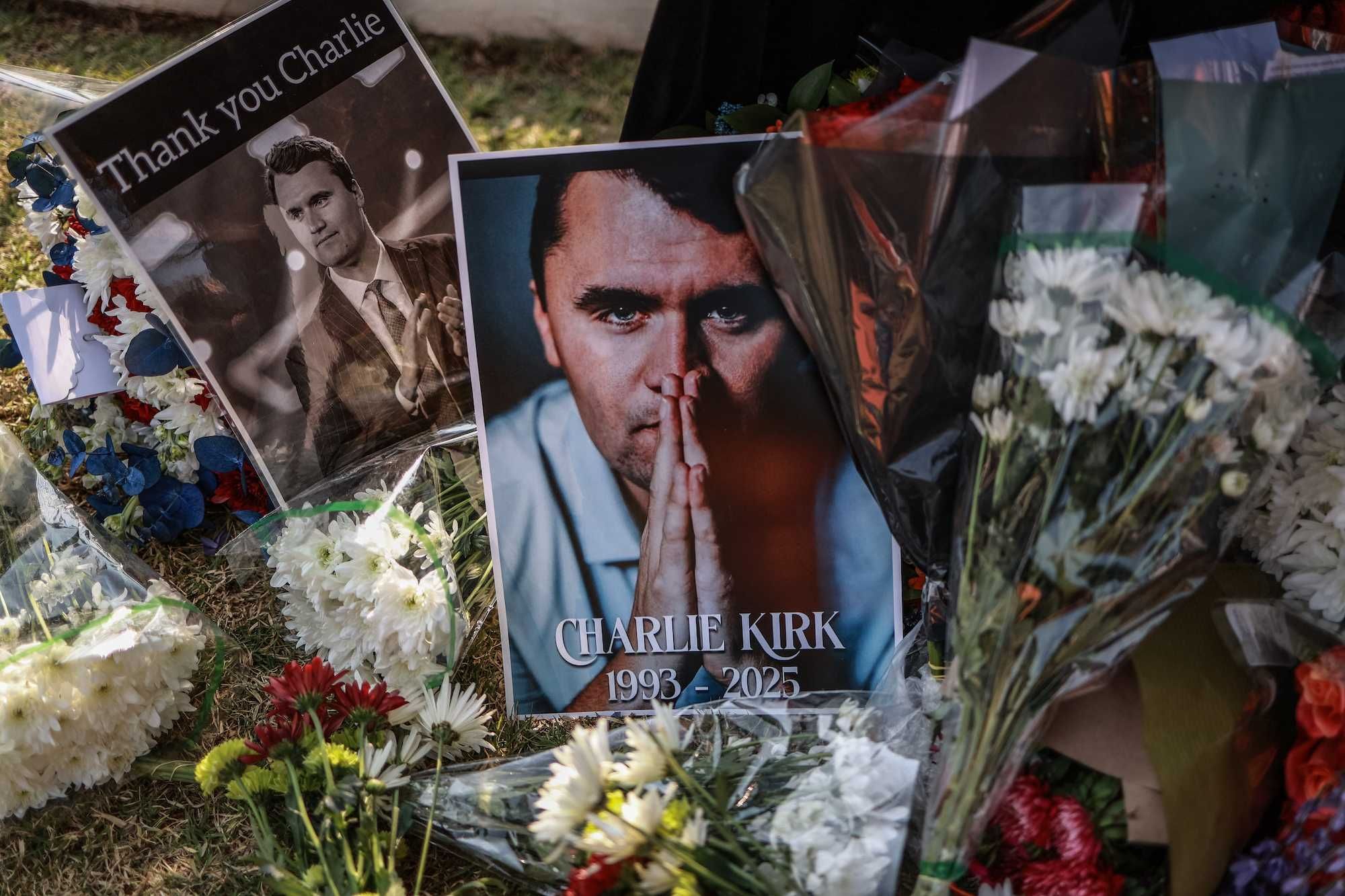


A retired police officer said he missed his wedding anniversary and the birth of his granddaughter because he was in jail for refusing to take down a meme from Facebook about the death of Charlie Kirk.

Larry Bushart, 61, received $835,000 in a settlement on Wednesday after suing Perry County Sheriff Nick Weems over the incident.

'Respect the First Amendment today, or be prepared to pay the price tomorrow.'

Bushart posted several memes after Kirk was shot and killed in Sept. 2025. One of the memes quoted President Donald Trump on a separate shooting case where he said, "We have to get over it."

While Weems admitted that some of Bushart's posts were protected by free speech rights, he claimed that this particular post had caused people to fear the possibility of political violence.

The meme referenced the president's comments about a shooting at Perry High School in Iowa, but the sheriff said it made people believe Weems was calling for a shooting at Perry County High School in Tennessee.

"This has everything to do with a guy coming onto a Perry County page posting this picture leading people in our community to believe that there was a hypothetical Perry County High School shooting that caused fear in our community — and we done something about it," Weems said to WTVF-TV in Oct. 2025.

When Bushart was arrested, he was informed about the threat to a school.

"At a school?" Bushart responded. "I play on Facebook. I threatened no one."

The sheriff admitted that the police knew Bushart was referring to a different school but added that the public did not know that.

Weems put Bushart in jail, and a local judge set his bail at $2 million.

After 37 days, the felony charge was dropped and Bushart was set free.

Bushart also said he lost his post-retirement job while in jail.

"I am pleased my First Amendment rights have been vindicated," Bushart said after the settlement was reached. "The people's freedom to participate in civil discourse is crucial to a healthy democracy. I am looking forward to moving on and spending time with my family."

RELATED: Beto O'Rourke blames 'powerful memes' and Democratic incompetence for 'incredible performance' of Trump among Mexican-Americans

Cary Davis, an attorney for the Foundation for Individual Rights and Expression, praised the ruling as a warning to other government officials. FIRE represented Bushart in the case.

"It's in times of turmoil and heightened tensions that our national commitment to free speech is tested the most," Davis said.

"When government officials fail that test, the Constitution exists to hold them accountable," Davis added. "Our hope is that Larry's settlement sends a message to law enforcement across the country: Respect the First Amendment today, or be prepared to pay the price tomorrow."

Like Blaze News? Bypass the censors, sign up for our newsletters, and get stories like this direct to your inbox. Sign up here!
Ivy League Ideological Monoculture Is Useless To The U.S. Military

But the left would rather sacrifice the academy than reverse track.
Universities treated free speech as expendable in 2025


The fight over free expression in American higher education reached a troubling milestone in 2025. According to data from the Foundation for Individual Rights and Expression, efforts to censor speech on college campuses hit record highs across multiple fronts — and most succeeded.

Let’s start with the raw numbers. In 2025, FIRE’s Scholars Under Fire, Students Under Fire, and Campus Deplatforming databases collectively tracked:

  • 525 attempts to sanction scholars for their speech, more than one a day, with 460 of them resulting in punishment.
  • 273 attempts to punish students for expression, more than five a week, with 176 of these attempts succeeding.
  • 160 attempts to deplatform speakers, about three each week, with 99 of them succeeding.

That’s 958 censorship attempts in total, nearly three per day on campuses across the country. For comparison, FIRE’s next-highest total was 477 two years ago.

The 525 scholar sanction attempts are the highest ever recorded in FIRE’s database, which spans 2000 to the present. Even when a large-scale incident at the U.S. Naval Academy is treated as just a single entry, the 2025 total still breaks records.

The common denominator across these censorship campaigns is not ideology — it’s intolerance.

Twenty-nine scholars were fired, including 18 who were terminated since September for social media comments about Charlie Kirk’s assassination.

Student sanction attempts also hit a new high, and deplatforming efforts — our records date back to 1998 — rank third all-time, behind 2023 and 2024.

The problem is actually worse because FIRE’s data undercounts the true scale of campus censorship. Why? The data relies on publicly available information, and an unknown number of incidents, especially those that may involve quiet administrative pressure, never make the public record.

Then there’s the chilling effect.

Scholars are self-censoring. Students are staying silent. Speakers are being disinvited or shouted down. And administrators, eager to appease the loudest voices, are launching investigations and handing out suspensions and dismissals with questionable regard for academic freedom, due process, or free speech.

RELATED: Liberals’ twisted views on Charlie Kirk assassination, censorship captured by a damning poll

Deagreez via iStock/Getty Images

Some critics argue that the total number of incidents is small compared to the roughly 4,000 colleges in the country. But this argument collapses under scrutiny.

While there are technically thousands of institutions labeled as “colleges” or “universities,” roughly 600 of them educate about 80% of undergraduates enrolled at not-for-profit four-year schools. Many of the rest of these “colleges” and “universities” are highly specialized or vocational programs. This includes a number of beauty academies, truck-driving schools, and similar institutions — in other words, campuses that aren’t at the heart of the free-speech debate.

These censorship campaigns aren’t coming from only one side of the political spectrum. FIRE’s data shows, for instance, that liberal students are punished for pro-Palestinian activism, conservative faculty are targeted for controversial opinions on gender or race, and speaking events featuring all points of view are targeted for cancellation.

The two most targeted student groups on campus? Students for Justice in Palestine and Turning Point USA. If that doesn’t make this point clear, nothing will.

The common denominator across these censorship campaigns is not ideology — it’s intolerance.

RELATED: Teenager sues high school after tribute to Charlie Kirk was called vandalism

rudall30 via iStock/Getty Images

So where do we go from here?

We need courage: from faculty, from students, and especially from administrators. It’s easy to defend speech when it’s popular. It’s harder when the ideas are offensive or inconvenient. But that’s when it matters most.

Even more urgently, higher education needs a cultural reset. Universities must recommit to the idea that exposure to ideas and speech that one dislikes or finds offensive is not “violence.” That principle is essential for democracy, not just for universities.

This year’s record number of campus censorship attempts should be a wake-up call for campus administrators. For decades, many allowed a culture of censorship to fester, dismissing concerns as overblown, isolated, or a politically motivated myth. Now, with governors, state legislatures, members of Congress, and even the White House moving aggressively to police campus expression, some administrators are finally pushing back. But this pushback from administrators doesn’t seem principled. Instead, it seems more like an attempt to shield their institutions from outside political interference.

That’s not leadership. It’s damage control. And it’s what got higher education into this mess in the first place.

If university leaders want to reclaim their role as stewards of free inquiry, they cannot act just when governmental pressure threatens their autonomy. They also need to be steadfast when internal intolerance threatens their mission. A true commitment to academic freedom means defending expression even when it is unpopular or offensive. That is the price of intellectual integrity in a free society.

Editor’s note: This article was originally published by RealClearPolitics and made available via RealClearWire.

9th Circuit Protects Professor’s First Amendment Right To Make Fun Of Land Acknowledgments

The U.S. Court of Appeals for the 9th Circuit ruled Friday that the University of Washington is not allowed to punish a professor for making fun of the “land acknowledgments” they tried to force on their staff. The win at the circuit level comes after the district court sided with the school. “A public university […]

‘Free Speech’ Group Forces Taxpayer-Funded Texas University To Feature Trans Sex Shows

A judge is forcing Texas A&M University to host explicit drag shows on campus after the Foundation for Individual Rights and Expression sued.

Judge Tosses ‘Objectively Outrageous’ Charge Against Arizona Mom Arrested For Speaking At City Meeting

An Arizona judge dismissed the criminal case brought against a state resident who was for speaking at a public meeting.