Minnesota AG Keith Ellison tries curing narrative about links to $250 million fraud scheme
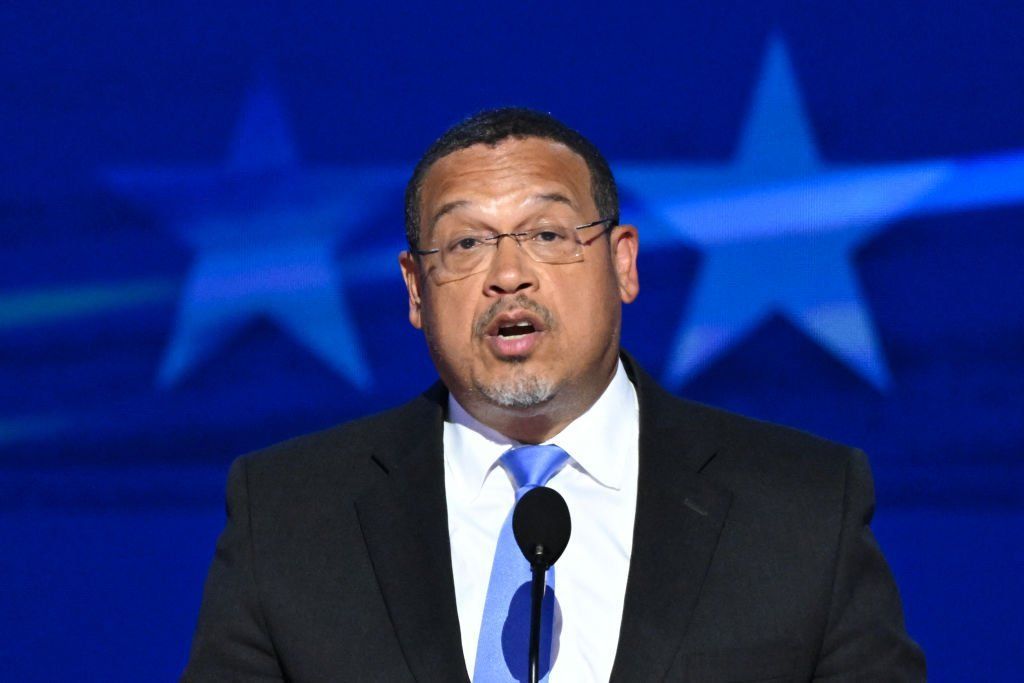


In December 2021, Minnesota Attorney General Keith Ellison (D) met with multiple individuals linked to a $250 million COVID-19 fraud scheme that centered on stealing taxpayer funds intended to feed hungry children. After the meeting, he and his son Jeremiah, a member of the Minneapolis City Council, received campaign donations from multiple individuals connected to the fraud scheme.

Audio from the meeting, which came up during a recent court hearing, has prompted questions about Ellison's links to the fraudsters, and in turn, an effort on his part to cure the narrative.

Background

The Department of Justice announced criminal charges in September 2022 against dozens of individuals linked to a $250 million fraud scheme that exploited a federally funded child nutrition program. Former Attorney General Merrick Garland indicated at the time that it was the "largest pandemic relief scheme charged to date."

The New York Post noted that of the 70 people charged in connection to the scheme, the Justice Department has so far secured 44 convictions or guilty pleas. Two of the fraudsters, Aimee Bock and Salim Said, were convicted by a federal jury last month.

During the pandemic, the U.S. Department of Agriculture dropped some of the standard requirements for participation in the Federal Child Nutrition Program. For-profit restaurants could now participate in the program, and off-site food distribution to kids outside of educational programs was permitted.

Bock, Said, and scores of other bad actors in Minnesota rushed to exploit the loosened rules.

According to the Justice Department, Feeding Our Future, a nonprofit organization that was already a sponsor participating in the nutrition program, opened 250 program sites throughout the state of Minnesota to "receive and launder the proceeds of their fraudulent scheme."

The nonprofit, run by Bock, went from disbursing roughly $3.4 million in federal funds in 2019 to nearly $200 million in 2021.

'I'm not here because I think it's gonna help my re-election.'

Feeding Our Future employees recruited various individuals and entities to open sites under the program that falsely claimed to be serving meals to thousands of kids daily.

Bock and Said, then-owner of Safari Restaurant, apparently created fake meal counts on the basis of fake attendance rosters replete with the names and ages of kids who were supposedly fed at taxpayers' expense.

The fraudsters used the proceeds of their scam to buy luxury vehicles, fund international travel, and buy real estate. The fraudsters not only bought property in Minnesota, Ohio, and Kentucky but in Kenya and Turkey, as well.

The meeting

The Minnesota Star Tribune reported that Ellison met with people connected to the Feeding Our Future case on Dec. 11, 2021. Audio of the meeting, which took place one month before the FBI raided the nonprofit and the fraud case was publicized, was caught on tape.

The group that met with Ellison, which partly consisted of individuals under FBI investigation, reportedly complain in the recording published by the Center of the American Experiment that they were being targeted by state agencies and that this unwanted attention was fueled in part by racial animus.

During the meeting, the group vowed to throw its financial and political weight behind Ellison, who was then running for re-election, if he would — in the words of Abshir Omar, a Feeding Our Future consultant — be a "true and steadfast partner to fight for basic justice."

Ellison expressed sympathy for the group — at that point already embroiled in litigation with the state — and indicated he would take their concerns to his staff, state agencies, and potentially the governor, reported the Tribune.

On the tape, Ellison can apparently be heard telling the group, "I'm not here because I think it's gonna help my re-election."

In the days that followed, individuals who attended the meeting, along with their family members and others connected to the Feeding Our Future case, dumped over $20,000 into the campaigns of Ellison and his son Jeremiah.

'I did nothing for them and took nothing from them.'

Among the many donors linked to the case who made maximum donations to Jeremiah Ellison were:

  • Salim Said, an individual reportedly present at the meeting who ran the fraud scheme with Bock;
  • Ikram Mohamed, a Feeding Our Future consultant present at the meeting facing multiple criminal charges in the case;
  • Gandi Yusuf Mohamed, another defendant accused of fraudulently receiving and laundering over $1.1 million in nutrition program funds who also donated $2,500 to Keith Ellison's campaign;
  • Abdinasir Mahamed Abshir, who pleaded guilty to wire fraud;
  • Abdulkadir Nur Salah, who pleaded guilty to wire fraud;
  • Mukhtar Mohamed Shariff, sentenced to nearly 20 years in prison for defrauding the U.S. government of $46 million; and
  • Khalid Omar, director of the Dar Al-Farooq mosque, one of the sites where fraudsters falsely claimed to have distributed 18.8 million meals.

Brian Evans, a spokesman for the Democratic AG, told the Tribune, "Nothing improper happened whatsoever."

Republican lawmakers don't appear entirely convinced of the innocence act.

Minnesota House Republican Floor Leader Rep. Harry Niska stated earlier this month, "It's disturbing to learn that Attorney General Ellison met with and offered verbal support to criminal defendants at the heart of the largest pandemic fraud scam in the country. He was even offered campaign contributions in this meeting, which he later accepted."

"Earlier this session, Democrats voted to block legislation that would give taxpayers more transparency into the operations of the AG's office," continued Niska. "This incident underscores the need for that legislation and raises questions about why Democrats blocked it in the first place."

"Minnesotans just heard their attorney general offering support to individuals who were orchestrating the largest pandemic-related fraud scheme in the nation," said state Rep. Kristin Robbins, chair of the Minnesota House Fraud Prevention and State Agency Oversight Committee. "This demands additional scrutiny, as (the) attorney general's duty is to defend state agencies and provide rigorous oversight of Minnesota businesses and charities."

Additional scrutiny might provide answers to the questions the Tribune raised in a 2022 report about Ellison's failure to flush out the fraudulent activity sooner. The report noted:

If Ellison's office had used its investigative power to pull bank records, it could have found that the alleged conspirators paid at least $524,579 in bribes and laundered $3.2 million in program funds between July 2020 and March 2021, prior to the FBI's involvement.

The narrative curation

In an op-ed Monday, Ellison insisted that his meeting with suspected fraudsters ahead of an FBI raid "was routine" and that he "made no promises" when they asked for help.

The Democratic AG did his best to downplay the meeting, writing, "If you read nothing else in this piece, here's what you need to know: I took a meeting in good faith with people I didn't know and some turned out to have done bad things. I did nothing for them and took nothing from them."

Ellison curiously omitted any mention of the campaign donations that poured in after the meeting. He alternatively suggested that when the "scammers" suggested that they would contribute to his campaign if he helped them, he "shut that down immediately."

The op-ed is carefully worded.

For instance, Ellison does not claim that the fraud scandal had not taken shape until after his meeting but rather that it had not taken "shape in earnest" until the following month. He also does not assert that the FBI did not share anything about their investigation prior to January 2022 but that it wasn't until January that the FBI "shared with my staff attorneys anything about the size of their investigation or the individuals they were targeting."

This carefully chosen language conveys that he went into the meeting blind about the nature of those in the room with him — even though his office stated in September 2022: "Minnesota Attorney General Keith Ellison and his office have been deeply involved for two years in holding Feeding Our Future accountable."

"As for the meeting — if I had had any way of knowing beforehand who those people were and what they'd done, I never would have agreed to it," wrote Ellison. "But I'm not going to stop meeting with folks in good faith because a few bad people tried — and failed — to run their scheme on me."

Evans, Ellison's spokesman, suggested to the New York Post that the FBI was partly responsible for the Democratic AG meeting with the fraudsters.

"The FBI shared almost no information with other state officials about its investigation, including the targets of the investigation," said Evans.

The spokesman noted further that "the campaign has no intention of keeping contributions from anyone indicted in the Feeding Our Future fraud scheme."

Like Blaze News? Bypass the censors, sign up for our newsletters, and get stories like this direct to your inbox. Sign up here!
Cori Bush's husband accused of stuffing his pockets with taxpayer cash intended for struggling businesses


Before Cori Bush's Democrat voters denied her a third term in Congress, the former Squad member and Black Lives Matter activist talked a big game about fighting corruption. It turns out her household may have been a good place to start.

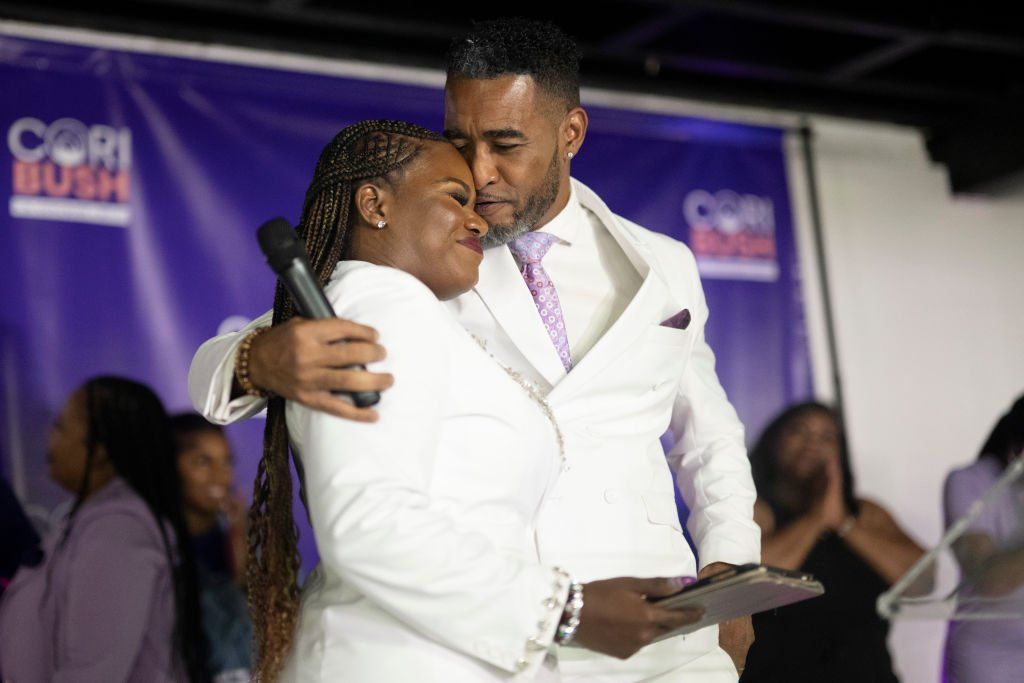
The former Missouri congresswoman's husband, Cortney Merritts, was charged Thursday with two counts of wire fraud for allegedly filing bogus applications with the Small Business Administration in order to fill his pockets with cash intended for struggling businesses.

According to the federal indictment, from July 2020 to April 2021, Merritts allegedly "devised, intended to devise, and participated in a scheme and artifice to obtain money and property, in connection with [the Small Business Administration's Economic Injury Disaster Loans program] and [Paycheck Protection Program] funds, by means of materially false and fraudulent pretenses, representations, and promises, with the intent to defraud and with the knowledge of the scheme's fraudulent nature."

Over this period, Merritts allegedly collected over tens of thousands of dollars in taxpayer funds "for his own benefit and enjoyment."

The Department of Justice indicated that the alleged scheme started in earnest when Merritts received a $8,500 EIDL loan from the Small Business Administration on July 7, 2020, for a moving business he ran called Vetted Couriers. Bush's husband allegedly claimed in his application for the loan that he had six employees and made $32,000 in gross revenue between January 2019 and January 2020.

'We look forward to litigating this case in the courtroom.'

The next day, Merritts allegedly filed another application for an EIDL loan in the name of a sole proprietorship called "Cortney Merritts." This time, he claimed to have a business that employed 10 people and made $53,000 in gross revenue the previous year. Merritts apparently even asked for a $10,000 advance on the loan. This application was rejected because the SBA indicated it was virtually identical to Merritts' previous submission.

According to the indictment, Bush's husband — evidently undeterred by the SBA growing wise to his efforts — tried hitting the government up for more cash in April 2021, applying for a PPP loan in the name of his sole proprietorship.

The indictment alleged that in his application, Merritts falsely claimed that he created the business in 2020 and that it generated $128,000 in gross income that year. He ended up with with a $20,832 PPP loan, which was ultimately forgiven by the SBA because Bush's husband allegedly stated he spent the money on payroll costs for his supposed 10 employees.

An attorney for Bush's husband said he plans to plead not guilty, reported the Washington Post.

"We look forward to litigating this case in the courtroom," said attorney Justin Gelfand.

While Bush was not mentioned in the indictment, she has previously faced accusations of misusing federal and campaign funds — in some cases for Merritts' benefit.

The "defund the police" Democrat used her congressional campaign budget to blow $812,000 on suspicious private security services and paid over $150,000 to her husband, reported the Washington Free Beacon. Bush continued paying her husband $5,000 in campaign funds monthly for "security services" even after the DOJ launched an investigation into her expenditures.

A complaint filed against Bush alleged that despite receiving hundreds of thousands of dollars from her for security services, Merritts had not bothered to acquire private security licenses in the St. Louis or Washington, D.C., regions. The complaint was ultimately dismissed by the Office of Congressional Ethics.

Like Blaze News? Bypass the censors, sign up for our newsletters, and get stories like this direct to your inbox. Sign up here!
Disgraced Democratic mega-donor Sam Bankman-Fried agrees to flip on Tom Brady and other celebrity FTX promoters


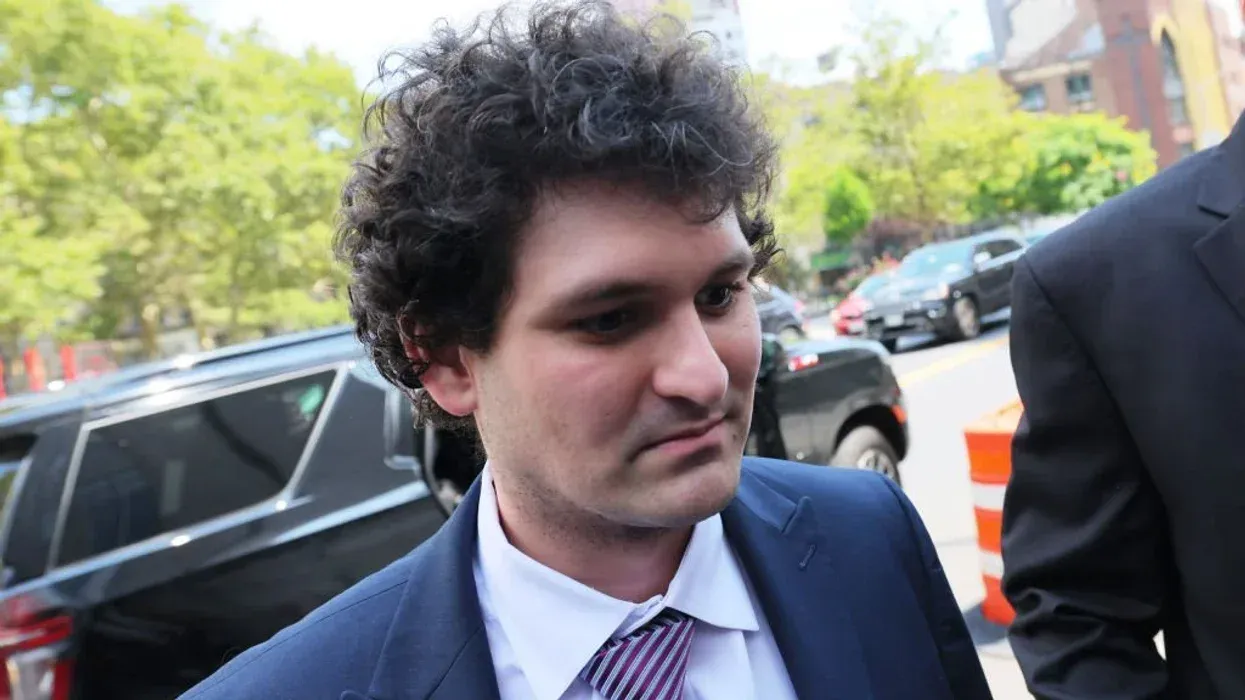
Middle-aged NFL legend Tom Brady recently hinted at the possibility that he might stage a Michael Jordan-style comeback. He just might have to in order to stay whole thanks to disgraced Democratic mega-donor Sam Bankman-Fried's latest act of betrayal.

Bankman-Fried, the convicted fraudster whose mom figures is too autistic for prison, has apparently agreed to cooperate with the group of cryptocurrency users suing various FTX influencers, including Brady and his ex-wife.

Background

Blaze News previously reported that Tom Brady and his former spouse, Gisele Bündchen, were named in a class-action lawsuit filed in Miami's Southern District of Florida federal court in November 2022, along with former NBA star Shaquille O'Neal, Golden State Warriors basketballer Stephen Curry, Los Angeles Angels baseballer Shohei Ohtani, "Shark Tank's" Kevin O'Leary, and "Seinfeld" cocreator Larry David.

The class-action complaint launched months after the collapse of the crypto exchange company FTX alleges that Brady and the other brand ambassadors were responsible for "misrepresentations and omissions" in the advertisements in which they told acquaintances to unwittingly throw their money away into "the FTX Ponzi scheme."

Brady and Bündchen each took an equity stake in FTX as part of a 2021 ambassadorial partnership. While Brady became a brand ambassador, Bündchen took on the role of FTX's environmental and social initiatives advisor. The former couple appeared in a series of FTX commercials.

Curry similarly got into bed with the ill-fated company, signing on to a "long-term partnership" with FTX in September 2021 in exchange for a now-worthless equity stake. In one advertisement, Curry said, "With FTX, I have everything I need to buy, sell, and trade crypto safely."

Larry David was featured in a Super Bowl commercial for FTX where he played a number of characters rejecting historically consequential ideas, such as the light bulb. The advertisement ultimately showed David reject FTX, then suggested, "Don't be like Larry."

This FTX Super Bowl ad with Larry David ran FTX $1.13B\n\nthe irony of it\u2026 an arrest scene, Larry David saying he doesn\u2019t believe in Crypto, a ton of foreshadowing as @SBF_FTX is on trial\u2026 \n\nThe \u201cdon\u2019t be be like Larry David\u201d line after FTX lost billions of customer funds lol
— (@)

While O'Neal managed to avoid being served in the lawsuit for several months, last April he became the last of the celebrities to be served a legal notice.

No honor among FTX alumni

An April 19 court filing indicates the plaintiffs in the case have reached a settlement with Bankman-Fried, who was sentenced to 25 years in prison last month for his orchestration of multiple fraudulent schemes and ordered to pay $11 billion in forfeiture, reported Cointelegraph.

The fraudster will cooperate with the investors, and, in exchange, they will drop their civil liabilities against him.

The filing states, "[Bankman-Fried] has knowledge and other information that Class Representatives and Class Counsel believe will be valuable to Class Representatives' cases against other defendants in the FTX MDL [multidistrict litigation], particularly relating to the underlying actions and their connection to Miami, Florida, where FTX's U.S. headquarters were based, as well as each MDL Defendants' knowledge of and assistance with the actions and connections to other states in which jurisdictions over those Defendants is asserted."

Should the court approve the deal, Bankman-Fried would fork over non-privileged documents concerning his assets and his investment in the AI start-up Anthropic, proof of a negative net worth, and documents about the FTX brand ambassadors, reported the Daily Mail.

The Democratic mega-donor also apparently agreed to surrender any information he has about venture capital firms that invested in FTX as well as any accountants or lawyers who worked with the defunct crypto exchange.

CoinDesk reported that the fraudster's former friends and codefendants Caroline Ellison, Nishad Singh, and Gary Wang, have — along with FTX lawyer Dan Friedberg — made similar settlement agreements with the class-action plaintiff's attorneys.

A number of middling talents who promoted FTX, including Jaspreet Singh, Tom Nash, Jeremy Lefebvre, and Graham Stephan, have apparently also settled, as has Jacksonville Jaguars quarterback Trevor Lawrence.

While flipping on his former celebrity boosters, Bankman-Fried appears to be trying to dodge accountability for his crimes. Earlier this month, the former multibillionaire appealed his fraud convictions and prison sentence.

Like Blaze News? Bypass the censors, sign up for our newsletters, and get stories like this direct to your inbox. Sign up here!
Sam Bankman-Fried's mom suggests he's too autistic for prison in bid to spare him from accountability


A U.S. District Court in Manhattan will hand down a sentence on March 28 for convicted fraudster Sam Bankman-Fried. While the Democratic mega-donor faces up to 110 years behind bars, Stanford Law professor Barbara Fried told the court in a filing Tuesday that her fraudster son is too delicate for prison.

Barbara Fried — sued in September along with her husband, Joseph Bankman, for allegedly enriching herself with money that her son stole from customers — painted Sam Bankman-Fried as a misunderstood autist in a bid to have him serve no more than 6.5 years.

A federal jury determined in October that Sam Bankman-Fried stole $8 billion from FTX customers to blow largely on Democratic candidates, leftist causes, real estate purchases, investments in other companies, and other pet causes. He also reportedly gave his parents tens of millions of dollars and gifted them a $16.4 million property in the Bahamas.

Bankman-Fried was ultimately convicted of two counts of wire fraud conspiracy; two counts of wire fraud; one count of conspiracy to commit money laundering; conspiracy to commit commodities fraud; and conspiracy to commit securities fraud.

In the filing, Barbara Fried, a liberal who ran a donor network for Democratic candidates, suggested her 32-year-old son is a victim of public ridicule now that his "eccentricities" are no longer charming now that he's a poor criminal, reported the New York Post.

"The broader public was charmed by many of his eccentricities — or at least pretended to be — while he was on top of the world. The moment he fell, the same public became merciless, ridiculing his awkward traits and verbal style, taking them as a sign of duplicity or worse, and portraying him as a freak with evil intentions," wrote Fried.

"The media's weapon of choice is words," continued the fraudster's wealthy mother. "The same cannot be said for prisons."

Fried insinuated that her Adderall-dependent son has some form of autism, which might make life difficult for him in the slammer.

"[Bankman-Fried] has a number of mannerisms that are associated with high-functioning people with ASD," wrote Fried, referencing Autism Spectrum Disorder. "He's bad at responding to social cues in 'normal' ways, uncomfortable looking people in the eye, uncomfortable with outward shows of emotion."

"It may be that some of the inmates will come to appreciate Sam once they get to know him. But miscommunication in that environment is dangerous, and Sam's traits greatly increase the likelihood of its occurring," she added.

Marc Mukasey, the lawyer overseeing the fraudster's sentencing, cited Fried's letter and others as indications of the former billionaire's "neurodiversity."

"He can be perceived as abrupt, dismissive, evasive, detached, or uncaring," said the filing.

Despite Sam Bankman-Fried's track record of ruining various lives and livelihoods, the fraudster's father, Stanford Law School professor Joseph Bankman wrote, "Nothing he has done can justify putting him at risk."

Miriam Baer, vice dean at Brooklyn Law School, told the Times that even if Judge Lewis A. Kaplan does not throw the Democratic mega-donor away for a century, he "could still give a very serious sentence given how young Mr. Bankman-Fried is — say, a 30- or 35-year sentence."

Like Blaze News? Bypass the censors, sign up for our newsletters, and get stories like this direct to your inbox. Sign up here!
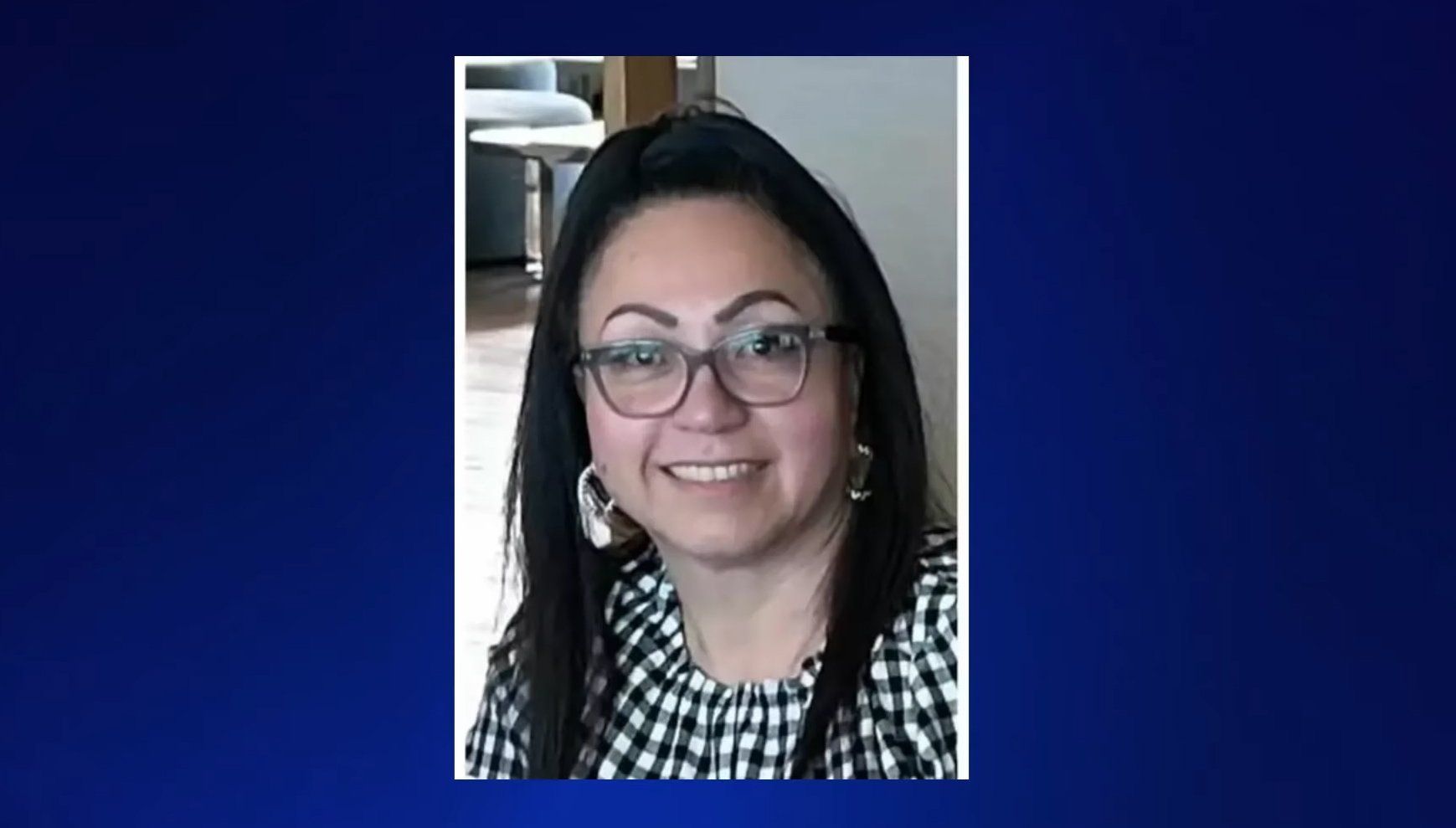
Texas woman who allegedly stole $103 million from Army got to retire with full benefits


A 57-year-old San Antonio woman allegedly stole over $103 million from from the U.S. Army by regularly drawing funds via a fake children's development entity that she controlled. Janet Yamanaka Mello reportedly blew the funds on herself, buying 80 high-end vehicles, 100 head of cattle, 31 homes, and various luxury items.

Although Mello was indicted last month and slapped with 10 charges related to the alleged fraud scheme, she was permitted to retire with full benefits from the Army.

The con

Mello, a native of Guam, worked as a civilian Army employee at Joint Base San Antonio-Fort Sam Houston where she supposedly helped administer the 4-H initiative via the Army's Child and Youth Services Division, according to court documents.

Sidelong to her work for the Army, she created a shell company called Child Health and Youth Lifelong Development in 2016. She included CHYLD in her 2017 personal tax forms, indicating she earned a profit of $483 on a revenue of $2,152 for training consultations, reported the San Antonio Express-News.

Court documents indicate that Mello "used her knowledge of funding procedures and her ability to approve the distribution of funds to various entities to direct funds from CYS program fund accounts to be paid to CHYLD, an entity MELLO formed and controlled. Without disclosing the fact that she owned and controlled CHYLD, MELLO approved the payment of government funds to CHYLD."

The Defense Finance and Accounting Service reportedly sent over 40 payments to Mello's outfit over the course of the alleged scam. Mello allegedly spread the ill-gotten gains through various bank accounts she controlled, failing to report any of this income on her tax returns for tax years 2017 through 2022.

While Mello claimed that CHYLD provided 4-H services to military personnel and their families, the Department of Justice indicated the company did not provide any services. Instead, Mello has been accused of using over $103 million on "high-end retail goods, jewelry, luxury automobiles, air travel, and high-end real estate throughout the country."

ArmyTimes reported that Mello's purchases included a roughly $3.1 million, eight-bedroom, 55-car garage 58-acre estate in Maryland as well as a $1.1 million home in San Antonio.

Mello allegedly managed to buy a fleet of vehicles, including a 1967 Chevrolet Camaro SS, a '66 Chevrolet Chevelle SS, a '66 Ford Mustang, a '54 Chevrolet Corvette, a 1935 Plymouth Sedan, and various cars that usually run upward of $100,000 to $200,000.

Extra to cars and mansions, Mello allegedly bought various luxury condos, spent $24.3 million on "retail," took trips around the globe, and purchased 100 head of cattle.

Caught

The Express-News indicated that upon noticing a discrepancy between Mello's multimillionaire lifestyle and what would otherwise be affordable on her under $130,000 annual salary, the IRS began digging. The agency soon launched a criminal probe in concert with Army investigators, resulting in her December indictment.

Mello was arrested in December and charged with five counts of mail fraud, four counts of engaging in a monetary transaction over $10,000 using criminally derived proceeds, and one count of aggravated identity theft, according to the DOJ.

Mello was charged with identity theft because Mello allegedly forged her supervisor's digital signature, reported the Express-News. She also appears to have invented a "financial analyst/reimbursable coordinator" named Kathy Johnson to lend greater credibility to the alleged fraud scheme.

The alleged con-woman faces a maximum of 20 years in prison for each fraud charge, up to 10 years in prison for each spending statute charge, and a mandatory minimum of two years in prison for the identity theft charge.

Cushy retirement, notwithstanding

Despite allegedly ripping off the Army and squandering taxpayer money for her own amusement, Mello was allowed to retire with full benefits.

A spokeswoman for the Army's Installation Management Command told the Express-News that Mello was permitted to retire during the investigation into her alleged fraud scheme.

"The command has no authority to impact Ms. Mello's retirement," said the spokeswoman. "In accordance with 5 U.S. Code Section 8312, an individual may be denied an annuity or retired pay on the basis of the service of the individual, if the individual is convicted of treason, rebellion or insurrection, or other similar offenses. There is no similar statutory authority for denying retired pay based on a conviction of other offenses."

Albert Flores defended Mello's decision to retire and collect additional benefits from the taxpayer, claiming, "She earned it."

"I don't see how one thing is related to the other," added Flores.

Although Mello pleaded not guilty in December, her lawyer indicated Mello has blown and or possessed the stolen assets.

"We expect a large portion of the assets will be recovered," said Flores. "In other words, a lot of the money was spent on tangible assets that the government can (recoup) — real estate, cash, vehicles, properties, things of that nature. We're being very cooperative in anything we can to turn that over."

The DOJ is now working to seize 31 parcels of land Mello acquired in various states along with cash and 78 personal cars, trucks, and motorcycles.

The U.S. District Court for the Western District of Texas reportedly is awaiting a decision on whether the alleged fraudster will strike a plea deal or go to trial.

Like Blaze News? Bypass the censors, sign up for our newsletters, and get stories like this direct to your inbox. Sign up here!
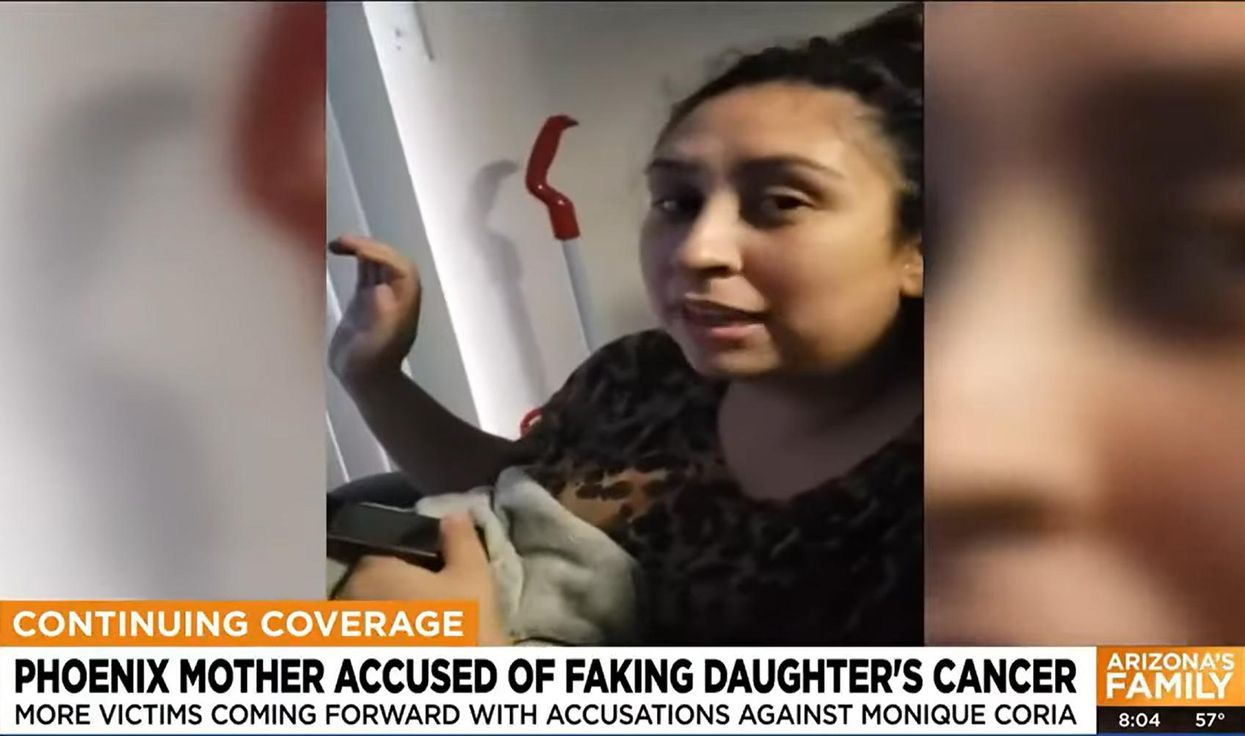
Mother accused of faking baby's brain cancer to bilk donors for thousands of dollars, spending cash on luxury items for herself


Monique Alexis Coria took in tens of thousands of dollars from empathetic donors who figured their money was going toward a good cause: medical treatments for a 1-year-old child allegedly diagnosed with oligodendroglioma, a rare brain tumor with a reported 70% five-year survival rate.

Donors later discovered that it was the mother's mindset that was sick, not her daughter's brain.

The cancerous lie

KOLD reported that Phoenix Children's hospital staff alerted police on Oct. 5 to possible fraud committed by Coria and her husband.

Court paperwork indicated that the couple had repeatedly brought their 1-year-old daughter in for "unnecessary medical procedures," claiming she had brain cancer. They took pictures of their daughter in the emergency room to lend credibility to the claims they made online.

The staff who notified the police said Coria and her husband had started a GoFundMe, advancing the lie about their child's invented malady and claiming they "needed money to pay for the medical bills."

Coria also harvested sympathy on TikTok, posting about the child and her fake condition.

Chris Sullivan, whose daughter died of brain cancer, runs the Instagram group Fight Like Our Kids. Sullivan told KNXV that Coria had reached out to him, asking for support.

Sullivan showed KNXV screenshots of images from Coria, which read, "Natalia's tumor grew. We found out today. We need so much support right now."

"She preyed on a group of individuals ... who don't want you to feel alone, don't want you to go through this alone," said Sullivan.

One donor, Katherine Penna, works for a pharmacy. Penna said she researched the medications Coria claimed her child needed, checking where it was in stock, "what the cost would be, sending her coupons."

Another alleged fraud victim, Ashley Jimenez, said she was scammed out of hundreds of dollars.

Jimenez, whose own father had been battling cancer, told KCOP that she had spent months planning a fundraiser for Coria and her child. Jimenez held a "Tacos for Cancer" event for baby Natalia at the San Gabriel Valley Airport in El Monte, California, on June 4. The event had multiple sponsors and was subtitled, "Nobody fights alone."

"So many people came together that day with open hearts and open minds, and we were manipulated," said Jimenez.

According to court documents, the Phoenix Children's hospital staff explained to police that the child "has never been diagnosed with brain cancer and does not have brain cancer."

The initial report by hospital staff noted that the parents had made over $13,000 on the GoFundMe before it was terminated.

Coria had also accepted an untold sum in donations from various other money-sharing apps, such as Zelle, Cashapp, and LinkTree.

Coria has been banned from GoFundMe, and some of her donors have been refunded.

Treating the real malignancies

After the tip from hospital staff, Department of Child Safety officials accompanied police during a Oct. 13 visit to Coria's apartment.

Coria quickly changed her tune about her baby's supposed brain cancer, saying instead that Natalia had seizures, for which she needed and took medication.

Coria told police that a friend started the GoFundMe on her behalf. Facing scrutiny, Coria changed her story again, claiming that her husband had started the campaign because they needed rent and gas money.

The husband clarified that his wife had made the account under his name and claimed he "believed Coria" that their daughter had brain cancer, despite not having seen any paperwork attesting to that diagnosis.

According to KOLD, Coria later admitted that her husband was unaware that their daughter wasn't sick.

Court documents revealed that Coria admitted that she was "fully aware" that the baby didn't have cancer and "it was a fraudulent way to ask for money." She had claimed otherwise on Tiktok because she was "in a bad place."

That "bad place" was well funded.

According to police, Coria noted that she and her husband bilked donors for $11,000, $4,000 of which they spent on rent and gas.

Investigators revealed that Coria spent some of the donation money on luxury items such as a Gucci wallet and a $600 blow-dryer because "they had their other expenses covered with the donation money." Extra to designer fashion, court documents indicated that the couple blew the money on "rent, clothes, food, a vehicle, toys, TV, and medication."

Chris Sullivan, one of Coria's alleged fraud victims, suggested the couple's cash grab was "probably more in the range of 30,000 to 40,000 dollars over the course of a few months."

On Oct. 17, the couple was arrested. Coria was charged with fraudulent schemes and artifices, a class 2 felony.

The county attorney sent the case back to the police in April, requesting more evidence. While the Tolleson Police Department has yet to resubmit the case, AZFamily indicated that may soon change and that Coria is also under investigation for a separate fraud scheme.

Serial scammers

One of Coria's alleged victims, Angel Quihuis, told AZFamily that he had moved the couple into his home because they had been living in a motel. While Quihuis' guests, the couple reportedly scammed him three times.

The first time, Coria said she was a Live Nation employee and sold Quihuis tickets to meet the musician Pitbull in 2021. Quihuis took his entire family to the venue, only to find that the tickets were not valid. "It was one of the biggest embarrassments ever, dude."

Coria reportedly also used the ticket scam on another friend, Karissa Sanchez, taking her $300 for tickets that never came.

Sanchez said, "From me alone, [Coria took] probably $450-$500 ... With other people — all my coworkers, family friends? Probably a good $6,000 dollars."

The second time, Coria took Quihuis' deposit for his dream dog, an English bulldog. Quihuis never got the dog.

The scammer had also allegedly taken Autumn Franco for $1,500, after guaranteeing him two French bulldog puppies.

The third time, Coria allegedly ripped Quihuis off for a Disneyland trip that never happened.

It was not until $3,000 went missing that Quihuis, who had mistaken the couple for friends, kicked them out.

Quihuis told AZFamily that upon learning of Coria's arrest, it "did put a grin on my face knowing justice was finally served."

Man scammed 3 times by Phoenix mother accused of faking child's brain cancer youtu.be

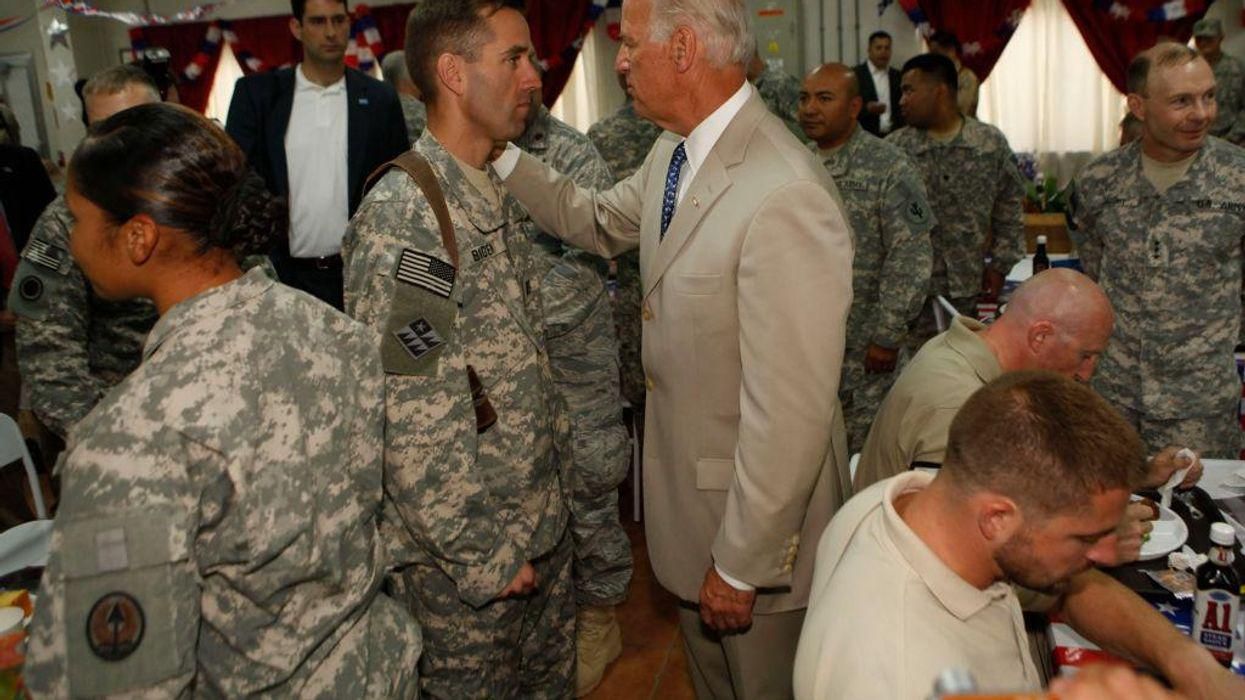
The Beau Biden Foundation took in millions of dollars in donations while spending just thousands on philanthropy in 2020


The Beau Biden Foundation spent less than $750,000 in 2020 on its purported mission despite raking in nearly $4 million in donations the same year.

The New York Post reported that the Delaware-based charity, which was started in honor of President Joe Biden’s late son, received an infusion of $1.8 million from the Biden Foundation — started by Joe and Jill Biden — prior to that organization ending operations before Joe became president.

The Beau Biden Foundation also received more than $200,000 in charitable donations from entities that are tied to a top political donor of the president.

Reportedly, the charity spent just over $500,000, in 2020, towards its stated purpose of protecting children from abuse, according to tax filings.

The charity spent an almost equivalent amount that year in paying six-figure salaries of longtime Biden associates who hold executive-level jobs at the Beau Biden Foundation. This includes Patricia Day Lewis, who served as Delaware deputy attorney general during Beau Biden’s tenure as the state of Delaware’s Attorney General. Lewis currently runs the non-profit and, as of 2020, receives an annual salary of over $150,000.

Joshua Alcorn, a Democratic operative with a long resume who has also worked as a consultant on campaigns for both Joe and Beau Biden, served as the COO of the non-profit, in 2020, and received $131,437 in compensation. He has since left this role.

Hunter Biden, the middle-aged trouble child of the Biden family, also previously served on the board of the Beau Biden Foundation.

Currently, Hallie Biden, with whom Hunter had a prolonged affair after the death of his brother, is the only member of the Biden family serving on the board.

The board also features former FBI director Louis Freeh.

CharityWatch, a watchdog group, stated that non-profits that receive its highest ratings generally spend at least 75 percent of their annual budget on their charitable giving programs. The Beau Biden Foundation, in this case, only dedicated 58 percent of its spending to its mission.

Laurie Styron, the executive director of CharityWatch, said, “A 58 percent ratio does not reflect a high level of financial efficiency.”

The non-profit said that following the 2021 inauguration of Joe Biden, in a bid to increase transparency, it would no longer take money from lobbyists or foreign donors and would release the names of its major contributors.

Currently, the Beau Biden Foundation conducts virtual and in-person workshops for adults starting at $500 a session and holds sessions for children focusing on topics like bullying and internet safety.