Trump's FTC gets a big win, but the job is far from over


Hours before trial was set to begin last month, the Federal Trade Commission and five state attorneys general settled their antitrust case against Zillow and Redfin. While this was a major success, and the FTC should be proud, there is still more to be done.

More than 30% of American households rent. For most of them, the search begins and often ends inside one company's ecosystem, which is a major violation of antitrust principles and laws.

The solution does not actually touch the cost of rent for average people.

To be clear, the government was able to achieve much. In a $100 million deal, Zillow had paid Redfin to shut down its multifamily rental-advertising business, transfer its customers and salesforce, and stay out of the market for as long as nine years. That deal is now dead. Instead, Redfin will have to restart its former business within six months and display Zillow's listings under a partnership that will continue through at least 2030.

This remedy is superior to potential alternatives, such as a fine, which often does not actually solve the problem. Gigantic monopolies can usually absorb these fines and continue to violate antitrust law. Requiring actual change goes a long way toward solving the problem.

This was, to be clear, a rather easy antitrust case. The Zillow-Redfin deal was a blatant violation of the core principles of antitrust. The companies literally signed an agreement not to compete, with a nine-figure bribe thrown in.

The FTC was also not alone in its demands against Zillow and Redfin. Virginia, Connecticut, New York, Washington, and Arizona all joined in. After securing the required changes, FTC Chairman Andrew Ferguson hailed the result as a critical part of the Trump administration's housing agenda.

This last framing, however, is a problematic framing for supporters of antitrust. The issue only dealt with property managers as it concerned postings for renting. The solution does not actually touch the cost of rent for average people. Essentially, a housing-advertising case is being sold as a housing-affordability case.

Consider what the settlement leaves standing.

Zillow still operates Zillow Rentals, Trulia, and HotPads. Restoring Redfin is a major success, but eliminating the deal does not solve the issue because there is so much more to do.

Even worse, Zillow’s dominance extends beyond rental listings into the homebuying transaction itself through alleged "tying" tactics. In ongoing class action antitrust litigation against Zillow, plaintiffs allege that Zillow leverages its monopoly over buyer leads to force real estate agents into steering clients toward Zillow Home Loans. By tying access to critical consumer leads to whether an agent pressures clients to use Zillow’s lending arm, the platform squeezes independent lenders out of the market and deprives buyers of competitive mortgage rates.

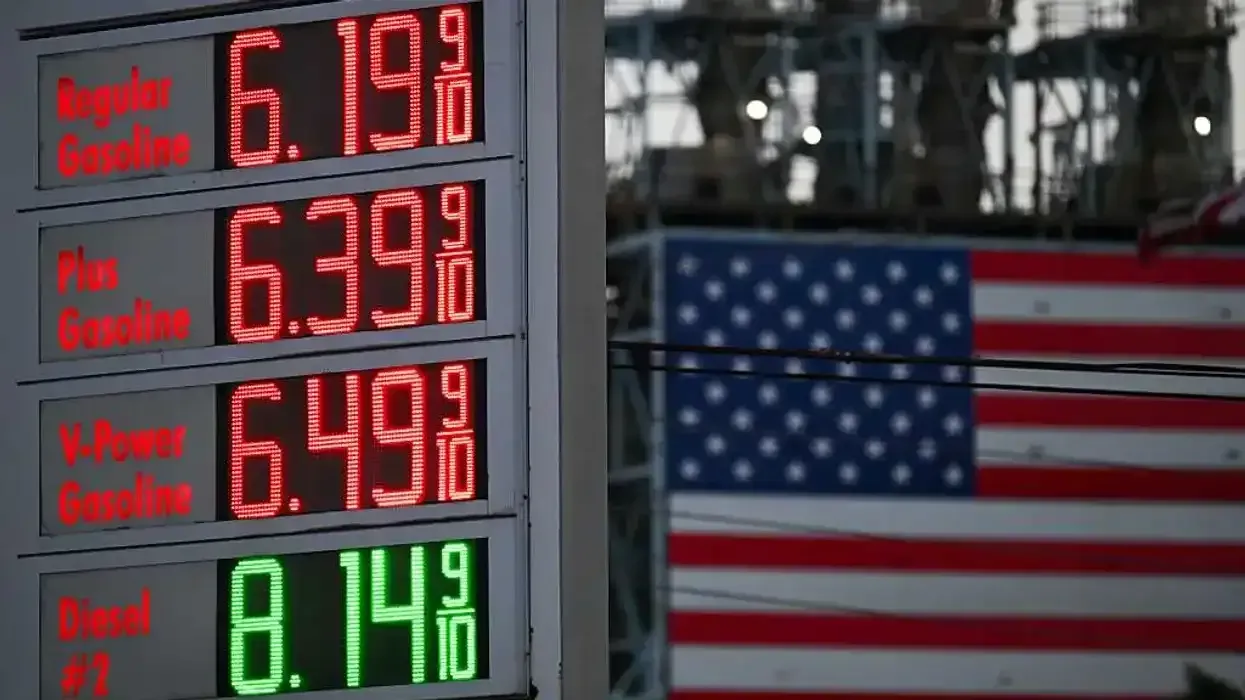
RELATED: The GOP can’t blame Biden forever for pain at the pump
Patrick T. Fallon/AFP/Getty Images

Then there is Redfin itself, which is owned by Rocket Companies. Rocket Companies also owns Mr. Cooper, one of the country's largest mortgage servicers, another potential antitrust violation. This sketchy alliance has already raised the ire of some in Congress.

This is not to say that the FTC was wrong to make this settlement. It’s only to say that the job is not yet finished.

Because yes, renters may eventually pay a little less than they do now, as the trickle-down effect occurs. But that would take a long time and is the most indirect way possible to lower rent or limit increases.

There are three ways the federal government can build on its success.

First, use its 6(b) (of the FTC Act) authority to study the rental listing market as a whole: the pricing, exclusivity arrangements, syndication terms, and leverage, including illegal tying mechanisms between lead generation and home financing.

Second, the agency should make clear that trading preferential access for exclusivity should not be automatically safe simply because no money changed hands. What Zillow and Redfin did would have been illegal even if Zillow had not bribed Redfin.

Finally, Congress and state regulators should pay attention to what unfolds, particularly as 2030 gets closer. Zillow and Redfin are going to use the next four years to figure out how they can legally reconstruct their partnership; it is up to elected officials and regulators to keep them from being successful.

The FTC started off strong, but still has a long way to go. Over the next few years, it is critical that the agency turn its sights toward anti-competitive tying and finish the fight for housing affordability.

Is your car reading your texts? Only the auto industry knows for sure


Your car may know more about you than you realize.

A series of federal lawsuits involving Honda, Toyota, Volkswagen, General Motors, and Ford alleged that vehicle infotainment systems downloaded and permanently stored private text messages and call logs from phones connected to the car.

For some users, GM collected precise location information as often as every three seconds.

The cases were dismissed. But not because a court established that the technology couldn't do what the plaintiffs claimed.

Disappearing data

In the GM case, for example, the district court said the plaintiffs had not alleged sufficient injury under Washington's privacy law. It also noted that they had not alleged GM itself reviewed, used, or even had the ability to retrieve the data stored in the vehicle.

So the case did not establish that GM was secretly reading drivers’ texts. But neither did the dismissal answer the underlying technological question. The plaintiffs alleged that the infotainment system itself automatically downloaded and stored text messages and call logs from connected phones, and the court did not rule that this collection wasn’t happening.

That uncertainty is part of what makes modern connected cars so difficult for consumers to understand. Your phone talks to your car. Your car talks to manufacturer servers. Companion apps talk to still more companies.

Figuring out exactly what information is moving — and where it ends up — can be surprisingly difficult.

A new study from researchers at Northeastern University and Consumer Reports gives us a better idea.

Researchers tested 21 late-model vehicles and 30 companion smartphone apps. Nineteen of the 21 vehicles contacted at least one outside third party over Wi-Fi. The recipients included some of the biggest technology companies in the world.

The phone apps created even more connections.

Seven of the 30 apps transmitted sensitive identifiers such as VINs, email addresses, phone numbers, or precise location to companies associated with advertising and analytics. Researchers also found that pairing a manufacturer's app with the vehicle could substantially increase the number of outside companies receiving data.

And then we get to insurance.

Driver's dossier

General Motors provides one of the clearest documented examples of what can happen once driving data leaves the car.

GM offered a feature called OnStar Smart Driver that let customers monitor their driving habits.

According to the Federal Trade Commission, GM and OnStar were also collecting precise location and driving-behavior information from millions of vehicles and selling that information to third parties, including consumer-reporting agencies.

The data could get remarkably specific.

The FTC said it included hard braking, speeding, and late-night driving. For some users, GM collected precise location information as often as every three seconds.

Consumer-reporting agencies including LexisNexis and Verisk then used GM driving data to compile reports on individual drivers. The FTC says insurance companies used those reports to set rates and, in some cases, deny coverage.

We aren't talking about targeted ads or some mysterious data broker knowing which coffee shop you visit. We're talking about directly influencing what you pay for car insurance.

One consumer complained to GM that when he signed up, he understood that OnStar would track him. He had not understood that the information could be passed along to a third party and affect his insurance bill.

GM has since shut down Smart Driver and ended its telematics relationships with LexisNexis and Verisk. The company said it discontinued the program following customer feedback.

The FTC didn't stop there. In January, it finalized an order requiring GM to obtain affirmative consent before collecting or sharing certain connected-vehicle data and barring the company for five years from sharing covered geolocation and driver-behavior information with consumer-reporting agencies.

RELATED: 6 modern car technologies that make driving worse

Bill Pugliano/Getty Images

Behind the screens

That's harder to answer than you might expect.

The Northeastern researchers built a Faraday enclosure at Consumer Reports' Connecticut test facility to block cellular signals and isolate the Wi-Fi traffic coming from the vehicles. They then watched where the cars and their companion apps tried to connect.

While they could identify many of the companies receiving traffic, they couldn't always see what was inside it; much of the communication was encrypted.

That is not evidence that every transmission contained sensitive personal information. It does mean even researchers specifically studying the problem sometimes can't tell exactly what information is moving between a modern car and the companies it contacts.

For the owner, there is even less visibility.

You buy the car. You download the app. You agree to the terms. Maybe you activate remote start, navigation, emergency assistance, or one of the dozens of other connected features now built into new vehicles.

Most people aren't thinking about the advertising and analytics companies behind the screen.

Why would they be?

Connected works both ways

None of this means connected-car technology is inherently bad.

Emergency assistance needs to know where your vehicle is. Navigation requires location. An app that lets you start the car remotely obviously has to communicate with it.

But there is a big difference between collecting information necessary to provide a feature and allowing that information to begin circulating through an ecosystem the owner barely knows exists.

And consumers shouldn't have to become privacy lawyers to discover the difference.

Before activating connected services, I would want to know some fairly basic things.

What is the car collecting?

Who gets it?

Can they sell or share it?

Can I turn the collection off?

And could any of this wind up in a consumer report used to make decisions about me?

For years, the connected car was sold as safer, smarter, and more convenient, and maybe it is. Just remember: The connection works both ways.

When your desperation becomes part of the price


Prices once reflected the product and the market. Increasingly, they can also reflect what a company knows — or thinks it knows — about you.

Surveillance pricing uses personal data, behavioral tracking, and algorithms to estimate what a consumer may be willing to pay. If the system can infer that you are in a hurry, financially stressed, or unlikely to walk away, your vulnerability can become part of the calculation.

Companies watch us. We deserve tools to watch them back and make exploitation costly.

Websites, apps, and data brokers can collect or infer information from searches, purchases, location, browsing history, and even mouse movements. Combined, those signals can build a detailed profile of what you want and how price-sensitive you may be.

The Federal Trade Commission began investigating this market in 2024, issuing orders to eight companies. Its initial findings showed that intermediaries serving at least 250 clients could use granular data to tailor prices, discounts, and product offers. The FTC cautioned that its published examples were “hypothetical.”

Surveillance pricing differs from ordinary dynamic pricing, in which prices move with inventory, time, or demand. Surveillance pricing is personal: the price, discount, financing term, or product placement can vary according to a consumer profile or group. The change may be subtle — a withheld discount, a costlier product ranked first, or a different financing offer.

The idea is older than the AI boom

In 2012, a Wall Street Journal investigation found that Staples.com displayed different prices after estimating customers’ locations. Shoppers near an OfficeMax or Office Depot were more likely to receive discounts; those farther away could see higher prices for the same item.

In 2015, ProPublica found that the Princeton Review offered the same online tutoring package for $6,600 to $8,400 depending on ZIP code. Residents of heavily Asian ZIP codes were 1.8 times as likely to receive the higher price, even in lower-income areas.

The company said the pricing reflected regional business conditions rather than race. Regardless, the outcome shows how supposedly neutral data can produce serious demographic disparities.

RELATED: Seattle votes to ban grocery ‘surveillance pricing.’ Your data shouldn’t set your food bill.

urbazon/Getty Images

Orbitz also experimented with showing Mac users pricier hotel options first after finding they were more likely to book luxury rooms. It did not charge Mac and PC users different prices for the same room, but the lesson was clear: Even device type can become a signal about what a customer may spend.

More recently, a 2025 Consumer Reports investigation found that Instacart’s AI-enabled pricing experiments offered different prices for identical groceries at the same stores and times. About three-quarters of tested products varied, with some differences reaching 23%. The investigation did not show that personal profiles determined who received which price, and Instacart later ended the program. But the experiment showed just how easy it was to target basic needs.

Your urgency can become valuable data

The troubling question is what happens when individualized pricing meets urgency.

A search for an emergency plumber at 2 a.m., last-minute airfare after a family crisis, or a baby thermometer at midnight may signal that waiting is not an option. Searches for eviction help, payday loans, or emergency medical care can reveal pressure without a company ever seeing a pay stub or medical record.

Economist Benjamin Shiller showed why such information could be valuable. In a 2020 economic model using browsing data to estimate willingness to pay for Netflix, personalized pricing increased simulated profits by 12.99%, versus roughly 0.25% using demographics alone. It was a model, not proof of a retailer secretly charging desperate consumers more, but it showed the commercial value of behavioral data.

Data brokers have long packaged financial vulnerability. A 2013 Senate investigation found categories such as “Rural and Barely Making It,” “Retiring on Empty” and “Credit Crunched.” The report warned that such lists could appeal to sellers of high-cost loans looking for people who need quick cash.

RELATED: Welcome to the new traffic stop, where it’s your word against AI’s

VCG/VCG/Getty Images

The balance of power shifts

Two people can see different prices, discounts, products, or financing offers on the same website and each assume everyone else received the same thing. Algorithms do not need a field labeled race, age, sex, or income to make sensitive inferences; ZIP code, device type, location, and shopping behavior can act as proxies.

Targeted pricing is not inherently abusive. It could reward loyal customers or offer discounts to families under pressure. The problem is secrecy: Sellers can know far more about buyers than buyers know about the offer in front of them.

That imbalance can turn personal data into a tool for extracting the highest price a consumer will accept. It also weakens comparison shopping when prices quietly change according to profiles the shopper cannot see.

Transparency is the minimum

Companies should disclose when personal data or AI materially shapes a price or offer and identify the categories of information involved. Regulators have a role, but entrepreneurs can also build independent tools that compare prices across accounts, devices, and locations.

Companies watch us. We need better tools to watch them back.

When a company knows you are desperate, that desperation should never become a hidden advantage it can use against you.

Apple News Offers Users ‘Personalized’ Voting Guide Filled With Leftist Sources

Apple has a history of promoting left-wing news sources while almost completely ignoring right-leaning ones.

Suddenly The Radical Pro-Trans Medical Organization WPATH Tells A Court That It’s Just Guessing

Regulators are using WPATH standards as a set of absolutely certain and inflexible scientific rules at the exact moment that WPATH is shrugging and calling the whole thing a highly debatable guess.

White House: Loss Of ‘High Trust’ Society Requires Congress To Institute Harsher Penalties For Fraud

Welfare programs were created in a 'high trust' America that no longer exists.

John Roberts Again Undermines SCOTUS Legitimacy With Irreconcilable Slaughter And Cook Opinions

In one ruling, SCOTUS affirmed the president's power to fire independent agency officials. On the same day, it invented a fourth branch of government to protect the Fed.

Here Are The Key Takeaways From SCOTUS’ Monday Decisions

Of the three political opinions issued by SCOTUS on Monday, the Trump v. Slaughter case will have the greatest effect.

It's high time to unlock Americans’ phones


Can populism and optimism mix? These days, the contentious AI debate is fueling the false impression that the answer is no. But recent polling convincingly shows that there’s one important tech issue on which an overwhelming majority of Americans support an empowering, freedom-enhancing change: unlocking mobile phones.

In comparison to the titanic struggle over things like data centers, the simple act of requiring providers to let consumers take their cell phones with them — without penalties or fees — might, at first glance, seem like small ball. Take a moment to look at the numbers, however, and the truth is revealed.

In the shorter term, unlocking the nation’s phones unlocks potentially life-changing savings for most Americans. In the longer term, the move helps establish a crucial baseline for applying pro-freedom, pro-ownership device policy to the myriad next-gen devices — even more powerful than smartphones — soon to fill up our everyday lives.

The momentum for change isn’t confined to consumers crying out for relief.

Start with the polls. A startling nine in 10 consumers, regardless of partisan affiliation, support the right to take their phones with them when changing service producers. But the real stunner is why.

More than a mere preference (who wouldn’t default toward more choice?), consumers are highlighting a hidden pain point that hasn’t seemed to catch the eye of analysts without much to worry about at the kitchen table. Phone locking doesn’t just block customers — and today, who isn’t a smartphone customer? — from taking their phones with them. It blocks them from shopping freely for better, more affordable deals.

We’re not talking couch-change savings here. Switching plans can save thousands. In a household with just two phone lines, a savvy switch cashes out to as much as $1,200 per year, according to the Internet and Television Association.

And for most families, of course, two smartphones are table stakes. A Consumer Affairs report shows the typical household has an average of around 20 connected devices. Almost all children receive their own phones by age 15. Most Americans ages 18 to 29 live in a household with three or more phones. Consumer research from WhistleOut concludes a truer estimate of household cost savings from unlocking consumer phones is closer to $2,000 a year — and as high as $2,200.

Saving enough to save a life

Let’s pause to emphasize what that means in real-world terms. For average American households, $2,000 represents 2.5% of their annual budget — fully one-third of their monthly budget, roughly equal to their entire average housing cost per month. Meanwhile, fewer than half of U.S. households have the cash or savings to cover a $2,000 emergency expense, according to household economics and decision-making data from the Federal Reserve.

The savings unlocked by the simple regulatory act of unlocking smartphones aren’t chump change. They’re enough to change lives — or save them.

And it doesn’t stop there. Locked phones are a rip-off when it comes to resale value, dinging sellers 20% to 40% of their value compared to the same phone unlocked. That’s around $125 to $150 in lost value for the seller of a locked iPhone likely to sell today. If the seller can’t unlock the phone, he'll have to consider buying a new one earlier than desired, adding hundreds more to costs.

Calculating conservatively, the total cost phone locking imposed on American households pencils out to around $2,400 or higher — more than they pay monthly on average for housing and over twice their monthly outlay on transportation, according to Bureau of Labor Statistics surveys.

RELATED: Social media scams are up 700%. Here’s how to stay safe.

Media Trading Ltd/Getty Images

Not a pretty picture. And little excuse. The good news is that the momentum for change isn’t confined to consumers crying out for relief. Led by Sen. Cynthia Lummis (R-Wyo.), key senators are throwing their political weight behind the idea and asking the FCC to unlock our phones.

Although phone lock reform has been held back in the past by valid fraud concerns, as Lummis and her co-signers write in a recent letter to FCC Chairman Brendan Carr, they’re “confident … that the Commission will be able to appropriately balance those concerns by adopting a reasonable waiting period — e.g., 180 days – before a device must be unlocked. Such a period addresses concerns of fraud while still achieving the important objectives that unlocking delivers, including expanding consumer choice, preserving competition, and improving affordability.”

All in all, it’s a slam-dunk policy shift — the kind of low-hanging fruit that easily delivers outsized and long-overdue relief for millions.

Today our phones, tomorrow our bots?

But to bring us back to the bigger picture of transformative technological change in America, unlock reform is more than a one-and-done change. It’s a crucial marker laid down just in time to help set the tone for a freedom-forward, pro-ownership approach to the next-gen devices about to proliferate across American business and private life — drones, robots, the works. In all likelihood, these devices will fall under the purview of the Federal Trade Commission, not the FCC, but, taken together, the principled logic behind mobile unlocking and the FTC’s work preventing smart-home device bricking and forced ecosystem lock-in shows a clear and powerful synergy. Together, the commissions can and should advance a strategic populist policy of ensuring that producers’ software restrictions don’t limit consumers’ physical ownership rights.

At this critical juncture, unlocking the phones is the next step in tech policymaking that preserves American rights while saving Americans money. What could be more American than that?

FTC Tells ‘Woke’ Christian School To Rethink Speech-Freezing Code Of Conduct

Parents who spoke to The Federalist allege the policy is meant to silence critics of the private school and its theological direction.