Trump OKs dyed-diesel tax break, helping farmers and truckers save BIGLY



President Donald Trump has taken a major step to shield American truckers and farmers from the high cost of fuel.

On Monday, Trump signed an executive order allowing them to use dyed diesel without paying a federal penalty.

'The president listened to farmers and responded.'

Dyed diesel is a tax-exempt fuel that is intended for off-road use, customarily in farming, manufacturing, construction equipment, and trains. Although identical to standard diesel, it is dyed with Solvent Red 164 so that law enforcement can distinguish it from taxable on-road diesel.

Federal law prohibits the use or holding of dyed diesel unless utilized or held for nontaxable purposes. Each violation carries the penalty of a $1,000 fine or $10 for each gallon of the fuel involved — whichever is greater.

In his order, Trump noted that the agricultural and farming industries have been "particularly hard hit" by restricted global diesel supply and the correlated rising prices. While the White House primarily blamed the Russia-Ukraine war for the recent supply squeeze, the Iran conflict and issues over the Strait of Hormuz have also restricted supply and driven up prices.

Recognizing the need in these industries for "temporary relief," Trump directed Treasury Secretary Scott Bessent "to use his authority to defer certain diesel fuel tax payment obligations and to provide penalty relief to the extent permitted by law." The Internal Revenue Service will hold off on fines for highway use of dyed diesel until Dec. 31, 2026.

RELATED: First New York wants you to drive less. Then it wants to tax every mile.

The president also directed Agriculture Secretary Brooke Rollins and Department of Transportation Secretary Sean Duffy to facilitate the implementation of this policy. For his part, Duffy will work with the states and various organizations to optimize access to dyed diesel. Rollins, meanwhile, will work to ensure that farmers can get their hands on fuel in high-demand areas.

The White House claimed in a fact sheet that "this action will put money directly back in the pockets of American farmers, truckers, and workers, for example saving truckers over $100 per refill."

Vice President JD Vance stated, "Another example of President Trump acting quickly to tackle an urgent issue. In this administration, we’re fighting every day to help hard working Americans, especially our farmers."

Trump's order was well received among various farmer groups, lawmakers, and governors.

Iowa Republican gubernatorial candidate Zach Lahn, who claimed to have advised on the EO, said that it "will provide immediate relief and much-needed savings for farmers in Iowa and all over America."

Zippy Duvall, the president of the American Farm Bureau Federation, thanked the president "for recognizing that what happens at the fuel pump directly affects what happens on the farm and therefore at dinner tables across America."

"The federal highway diesel tax is currently more than 24 cents per gallon, so it’s a big deal to farmers to be able to use tax-exempt diesel more broadly to get their harvest to market," added Duvall.

American Soybean Association President Dave Walton similarly praised Trump's policy and noted, "ASA is encouraged by the administration’s continued focus on agricultural affordability."

While Trump's order concerns federal regulations regarding the use of dyed diesel, numerous states have laws on the books concerning its use.

Republican Governors Bill Lee of Tennessee, Tate Reeves of Mississippi, and Kim Reynolds of Iowa are among the governors who rushed to announce that they will order the suspension of their respective states' penalties for on-road dyed diesel use.

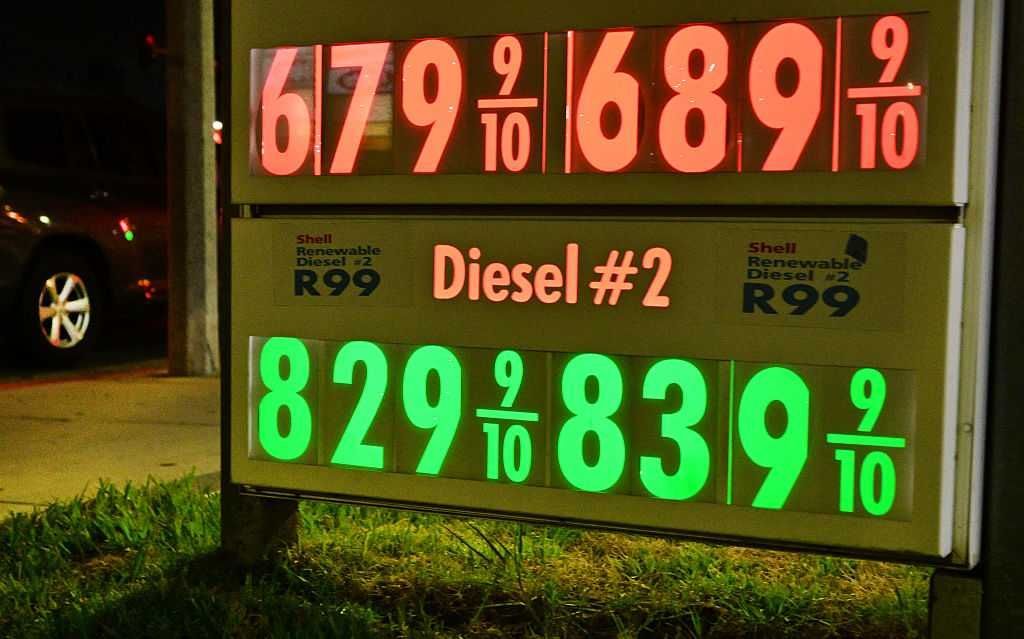
Overall, average fuel prices fell last week in 48 states yet remain high. The national average price of gasoline stands at $4.30 per gallon — $1.22 per gallon higher than this time last year. The national average price of diesel stands at around $6.31 per gallon, according to the price-tracking service GasBuddy.

Like Blaze News? Bypass the censors, sign up for our newsletters, and get stories like this direct to your inbox. Sign up here!
The diesel panic cure could make the disease worse


Diesel prices are at all-time highs, and panic has set in. Several Republican senators from Midwest farm states in competitive midterm races are calling on the administration to ban diesel exports. Even President Trump expressed support for the proposal. Lawmakers desperately want to curb the pain felt at the pump and throughout the agricultural industry. It’s understandable. But the knee-jerk reaction to “do something” by banning diesel exports is ill advised and would quickly backfire.

Logic might dictate that preventing all diesel from leaving our borders will allow it to fulfill our needs first. It just doesn’t work that way. Petroleum is a global market.

The only way to curtail a diesel surplus would be to cut back on crude altogether, a move that would be economically devastating.

The U.S. fuel network is not set up to distribute gas throughout our country. Nearly 55% of the nation’s refining occurs along the Gulf Coast, producing more than enough diesel for the region. But much of the surplus must be exported, as there are very few avenues to ship it to other domestic markets, like the East and West Coasts, where it is needed. Both those areas rely on imports to satisfy their diesel and other gasoline demands.

The U.S. has too few pipelines and cargo capabilities to transport energy to these locations. And storage is not an option; there is only so much space.

Refineries cannot flip a switch to produce only the diesel needed at a given time. Processing a barrel of crude oil produces certain proportions of gasoline and other distillates (like diesel and jet fuel); refiners are limited in their ability to adjust those proportions.

The only way to curtail a diesel surplus would be to cut back on crude altogether, a move that would be economically devastating.

At a time when we are already experiencing significant gasoline shortages and steep prices, constricting our supply further would only continue to inflate prices. Voters still rate the economy and affordability as their top concern; higher conventional gas prices would increase financial strain on household budgets.

U.S. diesel exports represent roughly 20% of global supply, which means they put downward pressure on global prices. Removing that portion would push those prices up, and the regions that depend on diesel imports — like the East and West Coasts — will face higher prices.

A ban on diesel and other refined products has been proposed before and soundly rejected. The Biden administration broached the topic in late 2021 but ultimately decided against it. Several analyses concluded that the action would adversely impact the country.

RELATED: The one loophole in Trump’s tariff policy

Jeff Swensen/Getty Images

A 2022 American Council for Capital Formation study predicted that such a ban would shut down roughly 1.3 million barrels a day of refining capacity. More than two-thirds of U.S. consumers would see price increases of roughly $0.15/gallon for gas and $0.45/gallon for diesel, and GDP would drop by $44 billion the following year.

McKinsey & Company similarly calculated bad news for U.S. consumers. A ban may initially provide relief for Gulf Coast and Midwest customers, but it wouldn’t last. Import-reliant regions, such as our coasts, would experience diesel price spikes due to global prices inflating by at least $0.60 per gallon.

Unfortunately, until there is a durable resolution to the geopolitical conflicts and disruptions abroad that would restore a steadier flow of resources, there is not a quick remedy that can bring energy costs down. Since energy markets and refinery operations are globally interconnected, a rash course of action has ripple effects felt across supply chain networks, some of which touch parts of our own country.

Lawmakers should focus on long-lasting solutions at home that will provide better insulation and protection from outside forces beyond our control.

  • Make federal land leasing more predictable and feasible for petroleum exploration and development.
  • Streamline permitting to facilitate and hasten building energy infrastructure like refineries for processing fuel and pipelines to transport it across the country.
  • Create a regulatory environment that fosters investment in the essential energy sources that run our economy.

A durable fix requires resisting the temptation of quick, politically satisfying moves and instead doubling down on policies that expand supply, modernize infrastructure, and strengthen the resilience of our energy system.

Banning diesel exports would raise prices for most Americans, destabilize global markets, and weaken the very regions already under strain. Rather than constricting flows in a tightly interconnected network, lawmakers should pursue reforms that unlock investment, improve distribution, and ensure that the U.S. can reliably meet its own needs.

The path to lower prices runs through growth and modernization — not restriction.

Editor’s note: This article was originally published by RealClearEnergy and made available via RealClearWire.

The Iran War Threatens To Pull The Plug On American Farming’s Life Support

America’s energy-dependent food supply is highly vulnerable to a global spike in oil prices and to many other potential disruptions.

Prescribed Burns Are The Only Way For California To Avoid Another Catastrophic Fire

The solution to California's wildfires, as many fire experts argue, lies in a simple, time-tested practice: prescribed burns.

UN’s ‘Green’ Plans Will Widen The Energy Gap, Keeping The World’s Poor In Squalor

Green energy policies hold back the developing world, creating a gulf in energy consumption between the West and nations such as Kenya.

The truth about fossil fuels & why the oil industry has 'to keep quiet,' according to a geology expert


Is America running out of oil? Dr. Tim Clarey, director of research at the Institute for Creation Research, gives Pat Gray his theory, while Gray gives his.

“It’s a renewable goo that comes from the earth,” Gray says, while Clarey disagrees.

“In some ways, it is still forming. So, in that way, it’s renewable. But there is a limited amount, of course, to anything,” Clarey explains, adding that though the oil fields “produce more than they should,” they “can only fill the reservoirs very, very slowly.”

“So, if you deplete an oil field, it may take several hundred years for that to fill back up,” he adds.

While the safety of the environment has come into question when drilling for oil, Clarey says the oil companies are not actually to be blamed for leaks.

“They blame the oil companies for leaks, but it’s really natural oil coming out of the ground,” adding that another common belief is that oil is “millions and millions of years old.”

“It’d be gone, it would be decomposed, although the conventional geologists try to argue that oil can get somehow magically pasteurized,” Clarey says.

“When I worked for Chevron, they told me that [oil] was 150 million years old in Wyoming, just sitting there waiting for us to tap into. And when you think about it, that makes no sense at all,” he continues.

Clarey explains that if you were to leave oil in your shed out back for 20 years, it would eventually degrade.

However, modern geologists aren’t taught to think about this.

“The problem is geologists aren’t taught to think that through,” Clarey says. “They throw the numbers out there like they mean something.”

Gray is shocked that no one in the oil industry is speaking out about this.

“They have to keep quiet,” Clarey confirms.


]

Want more from Pat Gray?

To enjoy more of Pat's biting analysis and signature wit as he restores common sense to a senseless world, subscribe to BlazeTV — the largest multi-platform network of voices who love America, defend the Constitution and live the American dream.

My Family Can’t Afford To Recycle Thanks To Democrats’ Obsession With ‘Environmental Justice’

Times are tough, and the Biden administration's obsession with radical green energy policies is making them tougher.
Egypt and Israel are increasing oil exports to Europe to compensate for the EU's embargo on Russian fuel products


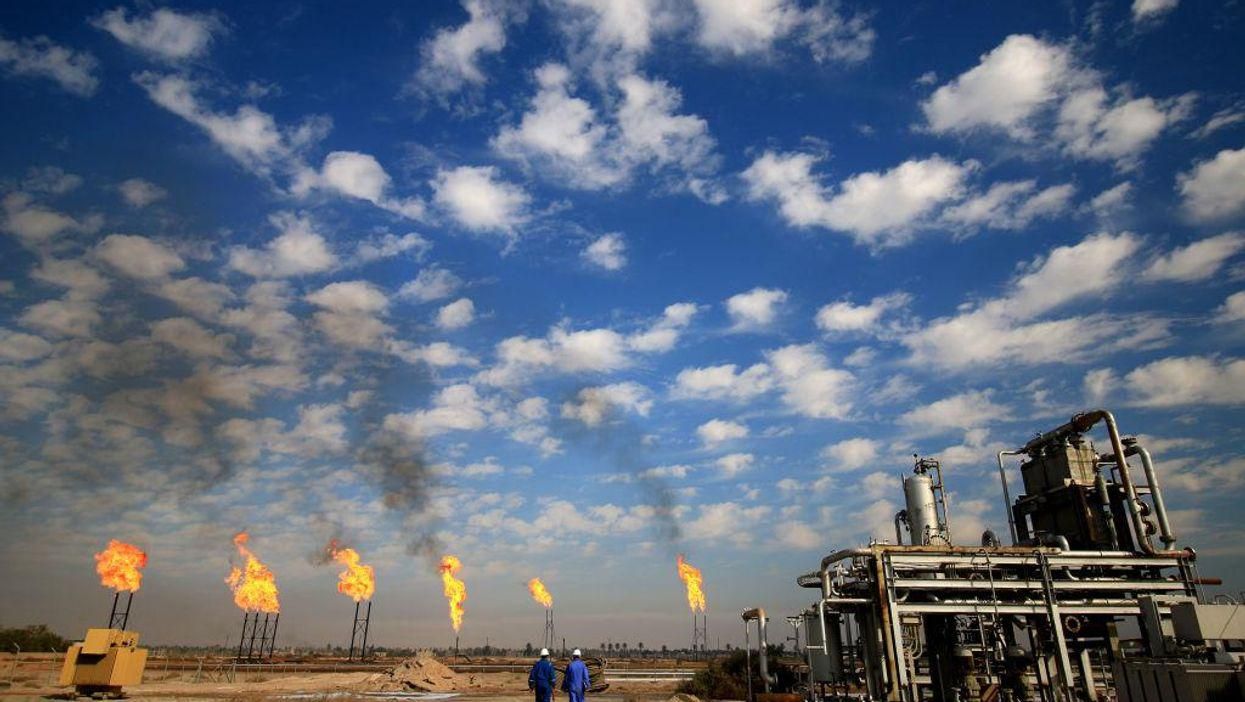
On Wednesday, the countries of Egypt and Israel penned a deal with the European Union to increase liquid natural gas sales to EU member states that are hoping to reduce their dependency on petroleum-based fuel products from Russia.

The deal, which was finalized in a ritzy Egyptian hotel, will require Israel to send gas to Egypt for it to be liquified and then shipped to EU member states, according to European Commission chief Ursula von der Leyen, ABC News reported.

“What a special moment,” von der Leyen proclaimed in a joint press conference alongside representatives of the Egyptian and Israeli governments. “I very warmly welcome the signing of this historic agreement.”

It is not currently clear how much gas will be imported by EU member states from either Egypt or Israel.

Von der Leyen indicated that this new agreement is part of Europe’s ongoing efforts to diversify energy sources away from Russian imports. It highlights an active attempt by the EU to import hydrocarbons from what is labeled “other trustworthy suppliers.”

Von der Leyen indicated that Israel and Egypt are ideal suppliers because of their good relations with EU member states and since both countries discovered large supplies of natural gas off shore.

This new deal will also help Egypt and Israel increase their gas production and drilling explorations in their territorial waters.

During a separate press conference with Egyptian President Abdel Fattah el-Sissi, von der Leyen said, “It is known that the Russian war against Ukraine has exposed our European dependency on Russian fossil fuels, and we want to get rid of this dependency.”

In 2021, the EU imported roughly 40% of its gas from Russia and has had immense difficulty imposing sanctions on Russian fuel imports since Russian President Vladimir Putin initiated his country’s invasion of Ukraine.

Israeli Energy Minister Karin Elharrar said the new arrangement was a result of Russia’s invasion of Ukraine, which resulted in a widespread European energy crisis. She said that the agreement also highlights the increasing cooperation and further strengthening of relations between Egypt and Israel, two nations that used to be enemies.

Elharrar said, “This is a statement to those who see in our region only negative forces such as division and conflict. This (memorandum of understanding) shows us that we are paving a new path of partnership, solidarity, and sustainability.”

Egypt’s Petroleum Minister Tarek el-Molla said that the deal is “an important milestone” for cooperation between the three parties.