Illinois wants to track every mile its drivers drive — is your state next?


The next big fight over your car isn’t about gas prices, emissions, or electric vehicles. It’s about something bigger: who controls the road — and how much control they have over you while you’re on it.

What’s happening in Illinois should get drivers’ attentions. Lawmakers are advancing the Road Usage Charge Act, introduced by state Rep. Ram Villivalam (D), as a pilot program to study a mileage-based tax. On paper, it sounds routine. In reality, it’s the first step toward replacing the gas tax with a system that charges you for every mile you drive.

History shows that once a system like this exists, it rarely stays limited to its original purpose.

For decades, drivers have paid for roads through fuel taxes. You fill up, you pay your share. It’s simple, predictable, and largely invisible. But as more drivers move into electric vehicles and high-efficiency cars, gas tax revenue is declining. States like Illinois, which rely heavily on that revenue, are looking for alternatives.

Instead of cutting spending or rethinking how funds are used, they’re moving toward a system that expands oversight.

Double trouble

Illinois drivers are already paying for the road — heavily. Under Gov. JB Pritzker (D), the state doubled its gas tax in 2019, making it one of the highest in the country. Add tolls, registration fees, and local taxes, and drivers are already funding the system at a premium. Now comes the next step: charging not for fuel, but for movement itself.

A mileage-based tax — often called a vehicle miles traveled tax — sounds straightforward. Drive more, pay more. But the details matter. Some proposals rely on annual odometer reporting. Others involve installing tracking devices or using connected vehicle data.

This is where it stops being just a tax policy.

Once a system is in place to measure how far you drive, it can also measure when you drive, where you go, and how often you travel. Even groups like the American Civil Liberties Union have raised concerns about the risks that come with collecting that kind of data. And history shows that once a system like this exists, it rarely stays limited to its original purpose.

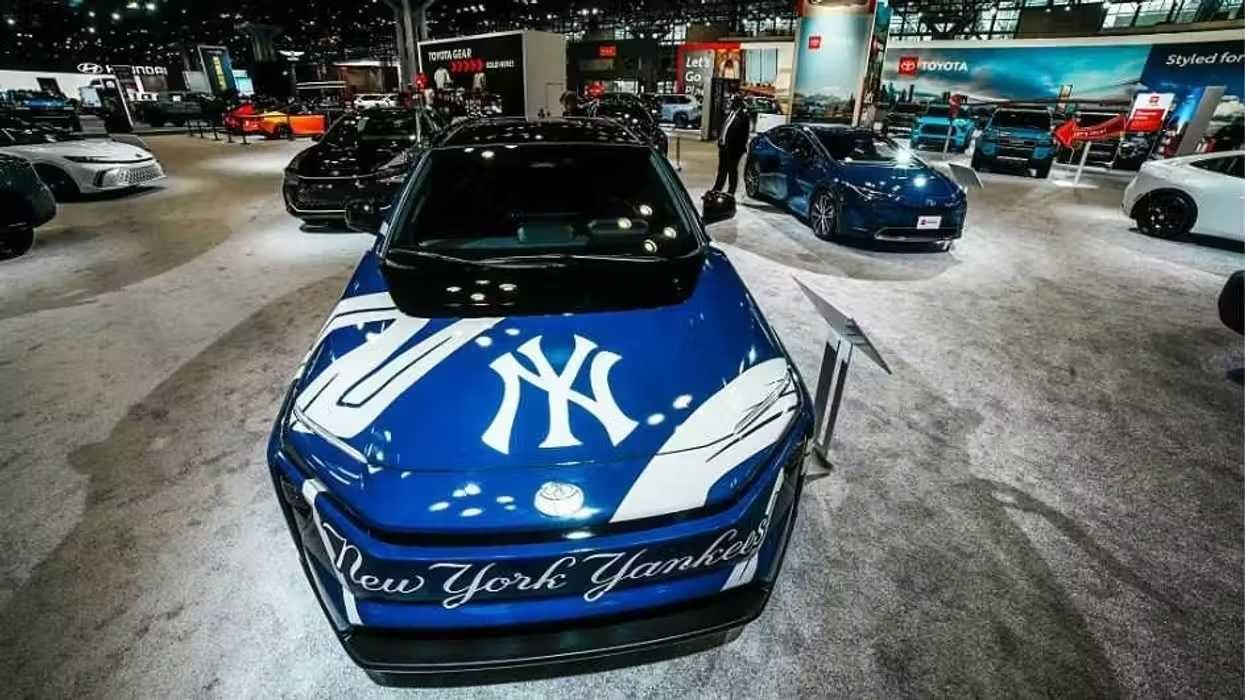
RELATED: FIRST LOOK New York International Auto Show: Cool cars, but drivers still face sticker shock
VIEW Press/Getty Images

Miles to go

Supporters argue this is about fairness. If electric vehicle owners aren’t paying gas taxes, they should still contribute to road funding. On its face, that argument makes sense. But this proposal doesn’t just target EVs. It applies to everyone — including drivers already paying high fuel taxes every time they fill up.

The result could be double taxation.

There’s also the cost of running the system itself. A mileage-based tax isn’t free to administer. It requires new technology, enforcement mechanisms, and ongoing oversight. Those costs don’t disappear — they get passed on to drivers, adding another layer of expense before you even get to the per-mile charge.

Before any of that happens, there’s a more basic question: Where is the current money going? States already collect billions through gas taxes, tolls, and vehicle fees. Before asking drivers to pay more — or pay differently — there should be clear accountability for how those funds are being used.

That question rarely gets answered.

What tends to grow instead is the system itself — more programs, more layers, more cost.

I spy

Illinois has already seen pushback on similar proposals. A 2019 effort was shelved after public backlash. Drivers understood what was at stake: not just higher costs, but more oversight and less control.

At its core, this is about how driving is changing. Driving in America has always meant a certain level of independence — the ability to go where you want, when you want, without someone tracking the details. A mileage-based system, especially one tied to data collection, begins to change that, turning driving into something that’s measured, recorded, and managed.

That’s a fundamental shift.

A better way

To be clear, declining gas tax revenue is a real issue. As vehicles become more efficient and electric adoption grows, states will need to adapt. But there are simpler ways to do it. If EVs aren’t contributing equally, adjust registration fees. Create transparent, targeted solutions. Keep the system straightforward and limited.

What’s being proposed goes further. It builds a framework that could apply to every driver, not just the segment creating the revenue gap. And once that framework exists, it won’t stay narrow — these systems tend to expand over time.

Illinois may be calling this a pilot program. But other states are watching closely.

Drivers should be asking a basic question: Is paying for the road one thing — and being tracked to use it something else entirely?

Because once the system is in place, it won’t be easy to roll back.

Understanding gas tax hikes — and how your state is affected


As 2026 begins, fuel taxes are shifting across the country — and many drivers won’t notice until they fill up. Some states are adjusting rates by a cent or less, while others are imposing major increases or overhauling how fuel is taxed altogether. Much of it is happening quietly through automatic systems that rarely make headlines.

Fuel taxes rarely dominate headlines, but they remain one of the most direct ways government policy intersects with everyday life. Unlike income or property taxes, fuel taxes are paid in small increments, embedded into a necessity for most Americans. That makes them politically sensitive, economically significant, and easy to overlook — until prices jump.

The broader question is whether fuel taxes remain a sustainable way to fund transportation in an era of increasing vehicle efficiency.

Over the past year, more than a dozen states adjusted their fuel tax systems. Some increased rates to shore up transportation budgets strained by inflation and aging infrastructure. Others reduced taxes to ease costs for consumers and commercial operators. As 2026 begins, another wave of changes is rolling out, driven largely by automatic formulas rather than new legislative votes.

The result is a patchwork of increases, decreases, pauses, and structural overhauls that reflect broader debates about infrastructure, accountability, and the future of road funding.

Small changes — for now

Several states are seeing modest adjustments as of January 1. Florida, Georgia, Minnesota, and North Carolina are implementing small increases of about 1 cent or less per gallon. New York, Utah, and Vermont are seeing slight decreases, also under a penny.

These changes are not the product of last-minute political deals. Instead, they stem from automatic adjustment mechanisms written into state law, often tied to inflation, fuel prices, or construction costs.

Nebraska, Pennsylvania, and West Virginia also allow automatic adjustments, but their fuel tax rates remain unchanged at the start of 2026. That stability does not mean those states are immune from future increases — only that the formulas did not trigger a change this cycle.

Automatic adjustments are becoming more common because they provide predictable revenue without forcing lawmakers to cast politically risky votes. Critics argue they reduce accountability and disconnect tax increases from voter oversight. Supporters counter that they keep transportation funding aligned with real-world costs, especially as materials and labor become more expensive.

While these small changes may barely register for individual drivers, larger shifts in several states deserve closer attention.

Michigan’s major overhaul

Michigan is implementing the most significant fuel tax change taking effect this year. Governor Gretchen Whitmer (D) signed a nearly $2 billion transportation funding package into law that fundamentally changes how fuel is taxed in the state.

Currently, Michigan drivers pay a 31-cent-per-gallon state excise tax on fuel, along with a 6% state sales tax on gasoline and diesel. The problem with that structure is where the money goes. Much of the sales tax revenue flows into the state’s general fund rather than being dedicated to roads and bridges.

Under the new law, the sales tax on fuel is eliminated and replaced with a higher fuel excise tax. The goal is to ensure that all fuel tax revenue is dedicated to transportation projects, aligning with Michigan’s constitutional requirement that fuel taxes be used for infrastructure.

The tradeoff is cost. As of January 1, the fuel excise tax jumps from 31 cents to 52.4 cents per gallon. For drivers, that represents a substantial increase at the pump, even as state leaders argue the new system is more transparent and constitutionally sound.

Supporters say the change corrects a long-standing mismatch between how fuel is taxed and how the money is spent. Critics counter that drivers are still paying significantly more, regardless of how the tax is labeled, at a time when vehicle ownership costs are already rising.

RELATED: America First energy policy is paying off at the pump

New Jersey’s variable approach

New Jersey is also raising fuel taxes under a law passed in 2024 that allows annual increases through 2029 to meet transportation funding targets. The state uses a layered tax structure that combines a petroleum products gross receipts tax with a fixed motor fuels excise tax.

As of January 1, the petroleum tax on gasoline rises by 4.2 cents, from 34.4 cents to 38.6 cents per gallon. When combined with the fixed 10.5-cent motor fuels tax, the total state gasoline tax reaches 49.1 cents per gallon. Diesel taxes rise by the same amount on the petroleum side, bringing the total diesel tax to 56.1 cents per gallon when paired with its fixed excise tax.

New Jersey’s approach reflects a broader trend toward variable fuel taxes designed to stabilize transportation funding. By tying part of the tax to revenue targets or fuel prices, the state aims to avoid sudden funding shortfalls. The downside, particularly for commuters and commercial operators, is reduced predictability at the pump.

Oregon hits pause

Oregon tells a different story. A scheduled 6-cent gas tax increase set to take effect January 1 has been put on hold.

Lawmakers approved the increase during a special session, raising the gas tax from 40 cents to 46 cents per gallon as part of a broader transportation funding package. After Governor Tina Kotek (D) signed the bill into law, opponents launched a statewide petition drive to delay the increase until voters could weigh in.

Organizers gathered nearly 200,000 signatures — enough to force the state to pause the tax hike until the November 2026 election. As a result, the gas tax increase is suspended, along with planned hikes to passenger vehicle registration and title fees. Other elements of the transportation package will still move forward, including a change that applies the motor vehicle fuel tax to diesel.

Oregon’s situation highlights the growing tension between legislative action and direct democracy when it comes to fuel taxes. Even when increases are framed as infrastructure investments, fuel costs remain politically sensitive, and voters are increasingly willing to push back.

The rise of automatic fuel taxes

Behind these headline changes lies a complex web of automatic adjustment systems that now shape fuel taxes in roughly half the country. According to the National Conference of State Legislatures, 25 states use some form of variable fuel tax rate.

These systems vary widely. Some states set fuel taxes as a percentage of the wholesale price. Others combine a flat excise tax with a price-based component. Many tie adjustments to inflation, using measures such as the Consumer Price Index or highway construction cost indexes.

Timing also varies. Indiana updates its fuel sales tax monthly. Vermont adjusts quarterly. Nebraska recalculates every six months. Several states, including Alabama and Rhode Island, make changes every two years.

Annual updates are the most common and occur in states such as California, Florida, Georgia, Michigan, Minnesota, New Jersey, New York, North Carolina, Pennsylvania, and Washington.

For policymakers, these mechanisms offer a way to keep transportation funding solvent without reopening contentious debates year after year. For drivers, they can feel like stealth tax increases — predictable, recurring, and largely disconnected from economic conditions at the household level.

Are fuel taxes still sustainable?

The broader question is whether fuel taxes remain a sustainable way to fund transportation in an era of increasing vehicle efficiency. As cars travel farther on less fuel, states collect less revenue per mile driven, even as infrastructure costs continue to rise.

That gap is driving experimentation with mileage-based user fees, higher registration costs, and targeted fees for specific vehicle types. Despite those efforts, fuel taxes remain the backbone of transportation funding — and recent changes suggest states are not ready to let go of them.

For consumers, the short-term impact is straightforward. In some states, filling up will cost a bit more. In others, it may cost slightly less or stay the same. Over time, however, the cumulative effect of these policies reaches far beyond individual drivers, influencing shipping costs, retail prices, and household budgets.

Fuel taxes may be collected a few cents at a time, but they represent billions of dollars and fundamental choices about how roads are built, maintained, and paid for. As 2026 begins, drivers would be wise to pay attention. What looks like a small adjustment today often signals a much larger shift tomorrow.

Biden Taps Economist Who Bemoaned Gas Prices 'Too Damn Low'

High gas prices have been a nightmare for President Joe Biden. But they are a dream come true for a progressive economist whom the president tapped for a top White House post.

The post Biden Taps Economist Who Bemoaned Gas Prices 'Too Damn Low' appeared first on Washington Free Beacon.

Biden Calls Gas Tax Holiday a ‘Big Help.’ Obama Called It a ‘Gimmick.’

President Joe Biden has called on Congress to hit the brakes and provide "big help" to Americans through a federal gas tax holiday for the next three months. But some Democrats have expressed the move is merely grasping for an advantage in an election year.

The post Biden Calls Gas Tax Holiday a ‘Big Help.’ Obama Called It a ‘Gimmick.’ appeared first on Washington Free Beacon.

Illinois Democrats Fine Gas Stations That Don’t Post Misleading Signs

The Democrat-controlled Illinois legislature is requiring grocery stores and gas stations to post signs that give lawmakers credit for suspending the state's annual gas-tax increase. In reality, lawmakers just put off the tax hike until after this year's midterms.

The post Illinois Democrats Fine Gas Stations That Don’t Post Misleading Signs appeared first on Washington Free Beacon.

Biden Pushes For Gas Tax Holiday Despite Rocky Future In Congress

'It will provide families some immediate relief'

Luxury and corporate jets to receive special exemptions from European Union aviation fuel tax


The European Union (EU) is currently working on a plan to impose an EU-wide minimum tax rate on fuels necessary for aviation in the pursuit of combating climate change. However, the proposed tax policy has special carve-outs for luxury private jets.

The Irish Times reported that executive jets would escape plans to tax polluting aviation fuels according to the draft proposal that was presented by the European Commission.

Reportedly, the European Commission plans to strictly enforce a new minimum tax rate on “aviation fuels, as it seeks to meet more ambitious targets to fight climate change.” Historically, aviation fuels have largely avoided EU fuel taxes.

The proposed tax policy states that the practice of not taxing aviation fuels equivalently to fuels needed for ground and sea transportation “is not coherent with the present climate challenges and policies.” The proposal added that the EU tax rules currently promote the use and consumption of fossil fuels over green energy sources and that they ought to be rewritten to support the EU’s aggressive approach to transitioning Western nations to carbon neutrality.

From 2023 onward, the minimum tax rate for aviation fuel in the EU would start at zero and gradually increase over a 10-year period until the total rate is imposed. The draft tax proposal did not specify what the final rate would be.

Interestingly, however, the minimum EU tax rate would not apply to cargo-only, which are often required for the import and export of goods, or to “pleasure flights” and “business aviation,” which are terms largely used when referring to executive and private jets.

Business aviation in Europe had already climbed above the levels reached in 2019, just before intense travel restrictions were implemented across Europe in response to the COVID-19 pandemic.

During the first six months of 2021, global business aviation activity fell only 4% short of the first half of 2019 and registered a 42% increase from the first half of 2020.

Travel by executive jet accounts for just under 19% of all aviation, while air traffic from cargo planes accounts for less than 5%.

Implementing additional taxes on fossil fuels poses significant political problems as EU member states are experiencing difficulty attempting to implement a trade embargo on Russian-produced oil products.

RedState, a conservative political blog, noted that the EU’s mad-dash to implement a green energy agenda likely wouldn’t have a considerable impact on reducing the global carbon output so long as countries like China and India continue to implement aggressive industrialization policies.

Pain at the Pump: Virginia Dems Block Youngkin’s Gas Tax Holiday

Virginia Senate Democrats voted to kill Republican governor Glenn Youngkin's proposed gas tax holiday even as the state's average gas price inches back up to four dollars.

The post Pain at the Pump: Virginia Dems Block Youngkin’s Gas Tax Holiday appeared first on Washington Free Beacon.

Illinois Democrats require gas stations to advertise that they froze the gas tax, saving drivers pennies


Democrats in Illinois are very proud of their decision to delay an increase of the state's gas tax, which at 40 cents per gallon is already among the highest in the nation. They are so proud of this action, in fact, that the recently passed bill freezing the fuel tax requires gas stations to advertise what the legislature has done.

On Saturday, the state legislature passed a new state budget that includes a temporary freeze of the state gas tax, which was requested by Democratic Gov. J.B. Pritzker. Illinois drivers already pay more than 40 cents per gallon in taxes, according to federal data. The governor claimed that by preventing the tax from rising with inflation, he would save Illinoisans a combined $135 million.

Critics blasted the plan as an election-year stunt that would only save drivers an estimated 2.2 cents per gallon, noting that in 2019 Pritzker doubled the gas tax and that inflation has caused prices at the pump to surge more than $1 per gallon over the last year.

Even so, the legislature passed the gas tax freeze, and they want everyone to know it. The legislation requires that retailers post advertisements that read, “As of July 1, 2022, the State of Illinois has suspended the inflation adjustment to the motor fuel tax through December 31, 2022. The price on this pump should reflect the suspension of the tax increase.”

The new state budget also includes a temporary suspension of the 1% tax on groceries for the year, a fact which supermarkets must advertise as well.

“From July 1, 2022 through July 1, 2023, the State of Illinois sales tax on groceries is 0%,” the bill requires grocery stores to post.

The notices are required to be printed "in bold print on a sign that is no smaller than 4 inches by 8 inches." The sign must also be "clearly visible to customers."

There are penalties for failing to comply with these mandates. If signs are not posted within 14 days of the bill becoming law, retailers may be fined up to $500 for each day they do not comply.

Josh Sharp, CEO of the Illinois Fuel and Retail Association, blasted the legislature when these requirements were added as an amendment to the budget bill and threatened a lawsuit.

“This industry won’t be forced into offering free election year advertising for the Governor. Ordering businesses to take part in speech that is compelled by the government under the threat of fines and criminal penalties is unwise and unconstitutional,” Sharp said.

Republican state Rep. Mark Batinick mocked Democrats in an interview with the Federalist, noting that neighboring states have suspended their gas taxes entirely to provide drivers with relief from inflation.

“It’s like 50-60 cents cheaper in the states around us and they want to advertise that it could have been 52.2 cents,” Batinick said. “I’m amazed that they want to pat themselves on the back for a 2.2 cents stoppage of a tax increase.”