Gay adoption: The societal experiment nobody is supposed to question
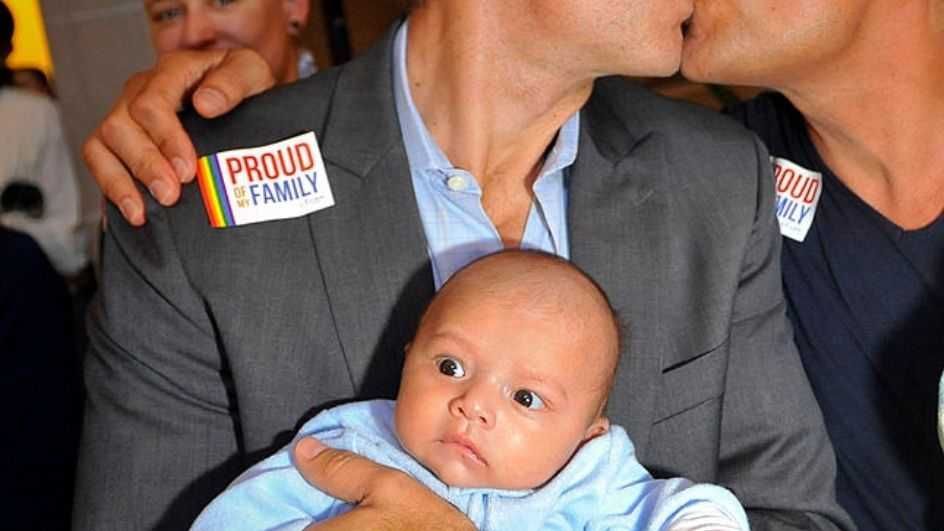


A video recently surfaced online featuring a young American who proudly insisted that same-sex couples make better parents than the boring old bread-and-butter type.

The ferociously fabulous man then casually revealed that he has three lesbian mothers, two gay fathers, and an array of gay siblings.

For thousands of years, human societies operated on the assumption that mothers and fathers were not interchangeable.

Notice how far the argument has traveled. The cultural case for same-sex parenting once rested largely on tolerance: Gay couples could provide loving homes, and their children should not be stigmatized. Increasingly, the claim is something altogether different — that mothers and fathers are interchangeable, perhaps even that dispensing with one sex represents an improvement.

Luxury beliefs

Right around the time the video started circulating, an interactive global map showing where same-sex adoption enjoys full legal approval and where it remains strictly forbidden caught my eye.

The map is fascinating because it presents a hilarious study in regional priorities. Virtually the entire Western world glows a self-righteous green, while moving eastward reveals solid red. Western progressive elites view that field of green as proof positive that we have ascended to the absolute peak of human enlightenment, having successfully dethroned the ancient, oppressive concept of a mother and a father.

But there's a question buried beneath all the celebration that we're increasingly discouraged from asking: Does family structure actually matter to children?

For thousands of years, human societies operated on the assumption that mothers and fathers were not interchangeable. A child ordinarily entered the world through a mother and father and, absent death, abandonment, abuse, or some other misfortune, was raised by them.

Modern Western culture increasingly treats that arrangement as merely one family configuration among many.

According to modern woke gospel, men are the sole source of domestic chaos and toxic aggression. The cultural narrative assures us almost daily that women are inherently more empathetic and nurturing. They are spiritually elevated beings. Taking that logic to its obvious endpoint, a household featuring two mothers ought to function like a conflict-free utopia of artisanal organic snacks and gentle conflict resolution.

The empirical picture, however, is considerably less settled than activists often pretend.

Widespread transformation

What makes this all the more important is that this is no longer a marginal social development. According to the Williams Institute, approximately 5 million American children are being raised by an LGBTQ parent. That figure includes single LGBTQ parents and shouldn't be confused with the much smaller number living with same-sex couples. But it gives some sense of the scale of the transformation.

Within little more than a generation, same-sex marriage went from legally nonexistent to the law of the land. Gay adoption followed. Reproductive technologies now allow children to be deliberately conceived for families in which either a mother or a father will be absent from the beginning.

We have changed not merely laws but one of society's most basic assumptions about the family: that all things being equal, a child should have a mother and a father.

Given the scale and speed of that change, asking what effects it may have on children should hardly be controversial.

RELATED: Florida man allegedly bragged about sexually abusing foster child — cops say he and his husband fostered 23 young boys

Pinellas County Sheriff's Office composite

Regnerus redux

In 2012, University of Texas sociologist Mark Regnerus published findings from the New Family Structures Study, which surveyed nearly 3,000 young adults and reported substantial differences between those who grew up continuously with their married biological parents and respondents whose mother or father had engaged in a same-sex relationship. Among the findings, 23% of respondents in Regnerus' "lesbian mother" category reported having been sexually touched by a parent or other adult, compared with roughly 2% of those raised continuously by their married biological parents.

That finding does not mean the lesbian mother or her partner committed the abuse. Indeed, one of the central controversies surrounding the study was how Regnerus constructed the category in the first place.

Critics argued that Regnerus had defined his categories too broadly. Many respondents classified as having a gay or lesbian parent had spent relatively little time living with that parent's same-sex partner, while many had experienced divorce or repeated changes in family structure. Subsequent re-analyses argued that once those factors were handled differently, many of Regnerus' headline findings lost statistical significance.

For years, that critique was treated as essentially the last word.

Then, in 2025, Cornell sociologists Cristobal Young and Erin Cumberworth subjected the Regnerus data to a much more exhaustive test. In their book "Multiverse Analysis," published by Cambridge University Press, they ran roughly 2.6 million alternative model specifications to determine how much Regnerus' results depended on debatable analytical choices.

They expected the exercise to vindicate his critics. It didn't.

Persistent effects

Young and Cumberworth found that the estimated negative association was often smaller under alternative specifications but remained remarkably persistent. Their conclusion was limited but important: There was room to debate the size of the effect and the quality of the underlying data, but within the NFSS dataset, the negative association could not simply be dismissed as an artifact of Regnerus' preferred statistical choices.

That doesn't establish that same-sex parenting caused the negative outcomes Regnerus identified. But it makes it harder to maintain that the evidence is so settled that questioning whether family structure matters amounts to bigotry.

Other research has produced similar disputes.

Methodological muddle

In 2010, Stanford sociologist Michael Rosenfeld analyzed U.S. census data and concluded that the school progress of children living with same-sex couples could not be statistically distinguished from that of children living with married heterosexual couples.

Two years later, Douglas Allen, Catherine Pakaluk, and Joseph Price re-analyzed the same data. Rosenfeld had restricted his main sample to children biologically related to the household head who had lived at the same address for at least five years. Allen and his colleagues argued that those restrictions removed more than half the available children and made differences harder to detect.

Using the larger sample and controlling for those factors instead, they found that children living in married heterosexual households had 35% higher odds of making normal progress through school than children living with same-sex couples. The difference was statistically significant.

The same census data, in other words, produced different results depending on which families researchers included and how they accounted for biological relatedness and stability.

Biological advantage

D. Paul Sullins encountered a related problem using federal health-survey data. His 2015 analysis of more than 200,000 children, including 512 living with same-sex couples, reported higher rates of serious emotional problems, ADHD, and learning disabilities among children in same-sex-parent households.

When Sullins accounted for whether children were living with their biological parents, however, much of the same-sex-parent disadvantage disappeared.

That raises another question about how these studies are constructed. Two men or two women cannot both be the biological parents of the same child. So when researchers "control" for biological relatedness, they may be removing a confounding variable — or they may be controlling for a difference that is inherent in the family structures being compared.

A 2016 Demography study by Corinne Reczek and three colleagues further illustrates the difficulty. Using federal health data on more than 167,000 children, the researchers found that children living with married same-sex parents were similar to those with married opposite-sex parents on most of the outcomes studied. They did, however, find that children with married same-sex parents were more than twice as likely to be reported as having behavioral problems after demographic and socioeconomic controls.

The study had important limitations. The same-sex sample was small, the behavioral measure relied on parental reporting, and the data could not establish causation. The National Center for Health Statistics also later disclosed classification errors affecting the identification of same-sex married couples during several of the survey years. Sullins subsequently argued that excluding those years materially changed some of the results.

Beyond statistics

None of these studies settles the question. Together, they suggest that the research is much less straightforward than the familiar claim that children do equally well in every family structure.

And family structure matters for reasons that extend beyond statistics. A mother and father offer something that two men or two women, however loving and devoted, cannot: a child's daily relationship with both sexes embodied in the two people from whom that child came.

Recognizing this doesn't require believing that every heterosexual marriage is happy, every biological parent is competent, or every alternative family is dysfunctional. Plenty of biological parents are disastrous. Plenty of adoptive parents perform heroic acts of love by giving children stable homes after circumstances have deprived them of their biological families.

But exceptions don't erase ideals.

The distinction becomes especially important when adoption is involved. Adoption has traditionally existed to find families for children who, through some misfortune, cannot be raised by their biological parents. Increasingly, the debate is framed from the opposite direction: around adults' entitlement to form whatever kind of family they desire.

The interests are not necessarily identical.

The question isn't whether gay people can love children. Nor is it whether children raised in unconventional families can grow into happy and successful adults.

The question is whether mothers and fathers provide children with something distinctive enough that society should continue to regard their union as the ideal environment for raising the next generation.

We have changed our answer to that question with extraordinary speed, and millions of children are now growing up on the other side of that change.

Surely we are still allowed to ask whether we got it right.

‘That far’ always becomes here


Decades ago, Gracie and I sat beside a woman on an airplane who held a leadership role in an Episcopal women’s organization. Our conversation turned to the church’s acceptance of homosexuality, and I asked whether she thought the denomination would eventually perform same-sex marriages.

“Oh, no,” she replied. “I don’t think we will ever go that far.”

The next level of depravity never introduces itself as depravity. It arrives as compassion for a newly identified victim.

I pointed out that approving homosexual relationships while withholding marriage had simply moved one moral boundary while leaving another in place: fornication, or even adultery.

She looked stunned. “I hadn’t thought about that.”

At the time, same-sex marriage was politically inconceivable to leaders in both parties. Whatever else changed, surely that boundary would hold.

“That far” is now many exits behind us.

We heard the same assurance about abortion. Bill Clinton repeatedly said it should be “safe, legal, and rare.”

Safe sounded responsible. Legal settled the political question. Rare acknowledged that abortion was regrettable. “Rare” did not survive.

Abortion moved from tragic necessity to a right increasingly defended against stigma. Then on August 10, Massachusetts Gov. Maura Healey (D) signed the Prioritizing Patient Access to Care Act.

The old law allowed abortions after 24 weeks only to preserve the mother’s life or health or because of a lethal or grave fetal diagnosis. The new law removed those specific conditions and left the decision to a physician’s professional judgment. The statute sets no upper gestational limit.

That is a long way from “safe, legal, and rare.”

In 2022, actress Anne Hathaway said abortion “can be another word for mercy.”

Hathaway and I have very different definitions of mercy.

RELATED: Maternal instinct joins the dark side: Why so many mothers are backing Lindsay Clancy

Jonathan Wiggs/The Boston Globe/Getty Images

No one announces the destination at the beginning. They rarely do. Each step arrives as an exception, an accommodation, or an act of compassion. We would never go that far.

Ten days after Healey signed the law, hundreds of people, most of them women wearing pink, gathered outside a Massachusetts courthouse in support of Lindsay Clancy.

Clancy does not deny killing her three children. Cora was 5. Dawson was 3. Callan was 8 months old. Her defense argues that postpartum psychosis left her unable to appreciate the wrongfulness of her actions; prosecutors contend that she knew what she was doing.

Postpartum psychosis is real. Women suffering from it need urgent treatment and compassion. Whether it relieves Clancy of criminal responsibility belongs to the jury.

But something broader is happening outside the courtroom. The rally was for Clancy. Her attorney says letters supporting her fill three banker’s boxes. He has become a social-media celebrity, praised as a “feminist icon.” When a reporter asked whether the children were being forgotten, he said, “Have a good weekend,” and walked away.

The legal line between abortion and homicide is birth. Yet in the public drama surrounding Clancy, the adult increasingly becomes the central victim while the children — victims in the most literal sense — fade into the scenery.

Rush Limbaugh often warned about the consequences of pushing the boundaries of social acceptance. What begins as a demand for tolerance becomes a demand for acceptance, then affirmation, then punishment for dissent. He predicted that normalizing homosexuality would lead to same-sex marriage, followed by another challenged boundary, and then another.

His larger point was that removing one boundary rarely contains the consequences. A movement built around victimhood also cannot afford to run out of victims; victory would put it out of business.

So another oppressed class must be identified. Tolerance is no longer enough. Acceptance, affirmation, and celebration are demanded, and dissent becomes suspect.

The next level of depravity never introduces itself as depravity. It arrives as compassion for a newly identified victim.

We ease up to a boundary, test it, then break it. Once it falls, we move the marker and stigmatize anyone who remembers where the line used to be.

RELATED: Gratitude is not perspective. It is remembering mercy.

everything bagel/iStock/Getty Images

Scripture’s oldest account of human rebellion begins with one boundary and a voice asking why God should impose it. Eve looked, desired, and ate. Then she gave the fruit to Adam. He did not merely tolerate her choice. He embraced it.

The argument has never improved. It has only been rebranded.

This tendency belongs to human beings. Give us a boundary that interferes with something we want, and we will manufacture a compelling exception.

That’s why “we will never go that far” is not reassuring. A boundary based only on what society currently accepts is not a boundary. It is a pause.

Then a speed bump. Eventually, a paved highway we are all forced to travel, with a tollbooth no one can avoid.

They say we will not go that far. They always say it. Then we do.

“That far” always becomes here.

Everyone Knows Father Absence Is Bad, So Why Does Designer Fatherlessness Get A Pass?

Why, when two women manufacture fatherlessness on purpose, do they avoid scrutiny?

Hello Fresh's unappetizing 'Pride' ad exposes the sordid truth about gay 'marriage'


This month, Hello Fresh ran a Pride-themed ad campaign that seems far removed from the assurances many Americans heard during the same-sex marriage debate. Remember? "My marriage won't affect your marriage." "What consenting adults do in private is none of anyone's business."

Many voters who supported same-sex marriage believed these assurances, understanding it as a request for legal recognition, not the beginning of a broader cultural project that would eventually permeate corporate branding, workplace policies, schools, and popular culture.

Ordinary moms and grandmas just wanted their gay relatives to be happy. They were assured that redefining marriage would be harmless.

But here we are, almost exactly 11 years since the Obergefell decision, and the most popular meal-kit delivery service in the country has brought gay sex out of the bedroom and right to the kitchen table.

'Bottoms up'

Now, I don't want to write about this any more than you want to read about it. But the unfortunate truth is that we can't afford to ignore it, no matter how distasteful we find it. Because if you and I won’t talk about these things on our terms, be assured, the sexual revolutionaries will talk about them on theirs.

So here is the ad Hello Fresh posted on Instagram: “We know eating isn’t always a top priority this month. We respect that. But for those of you who are … prepping … we have an extensive lineup of high-fiber recipes available. Happy Pride.”

Perhaps you are unfamiliar with the term “prepping.” In Megan Basham’s delicate translation: “For those not initiated into the sexual practices of gay men, let me help decipher what 'prepping' means. HelloFresh is saying that their product is useful for clearing out the rectum of feces in preparation for sodomy. Yes, that’s what it means.”

The company later added a discount code: BOTTOMS UP.

This tasteless Hello Fresh “Pride Month” campaign delivers your food with a side dish of unappetizing sexual innuendo, whether you ordered it or not.

Hardly harmless

What ever happened to that “gay marriage” deal about the privacy of the bedroom? Many people accepted that bargain in good faith. Ordinary moms and grandmas just wanted their gay relatives to be happy. They were assured that redefining marriage would be harmless.

I was a campaign spokeswoman for Proposition 8 in California, the ballot initiative that defined marriage as the union of one man and one woman. I was involved in the marriage debates from Prop 8 in 2008 all the way to 2015 and the Obergefell decision. I distinctly remember that many leaders of the pro-marriage effort made a conscious decision not to talk about gay sex.

“The gay marriage campaign is not about ‘gay.’ It’s about ‘marriage.’” This strategy suited a lot of us, including me. We didn’t want to talk about gay stuff at all, much less gay sex.

We wanted to talk about the meaning and purposes of marriage, how marriage attaches mothers and fathers to their children and to one another. We wanted to talk about how redefining marriage would inevitably redefine parenthood.

We feared that mentioning gay sex would gross people out. We didn’t want to offend the good, decent people who don’t want to talk about any sex in public, much less gay sex. We figured the first side to bring it up would lose.

RELATED: Trans is the natural progression from ‘gay marriage’

Justin Sullivan/Getty Images

Sanitizing sodomy

But there was a downside to this strategy. It allowed the gay lobby to sanitize the sexual activities of two men. The public was never asked to think about what gay men actually do together. Grandma could picture her grandson cuddling on the sofa with his boyfriend, listening to showtunes.

I recall giving a talk at Stanford. In response to a question about “marriage equality,” I asked the student, “Is there any sexual act that would equally consummate the marriage of a male couple and a female couple and a man-woman couple?”

The student thought for a minute. This was a new thought for her. She probably couldn’t imagine anyone getting married who hadn’t already performed the act that normally consummates a marriage, long before they walked down the aisle.

She finally said, “Well, marriage doesn’t necessarily have to be a sexual relationship.” This is a tacit admission that there is no “equal” way of consummating these “marriages.”

Intrinsically sterile

Maybe avoiding “gay” was a good tactic at the time. But the marketing geniuses at Hello Fresh broke the tacit deal: What happens in the bedroom doesn’t stay in the bedroom. It was wishful thinking to believe that it would.

Decent people prefer to keep a discreet lid on discussions of sex. Unfortunately, the sexual revolutionaries — be they gay, straight, nonbinary, or whatever — can’t shut up about it.

The marital act between a man and a woman can bring forth new human life. The combination of oxytocin and vasopressin during sex creates bonds between the man and the woman.

Neither babies nor bonding are part of the gay sex equation. Gay sex is intrinsically sterile. Gay sex is gross.

There: I said it.

But don’t forget who brought it up first.

No Andrew Sullivan, You Can’t Separate LGB From TQ Just Because It’s Backfiring

Longtime gay rights activist Andrew Sullivan is now confessing that the slope is greasier and nastier than he’s comfortable with.
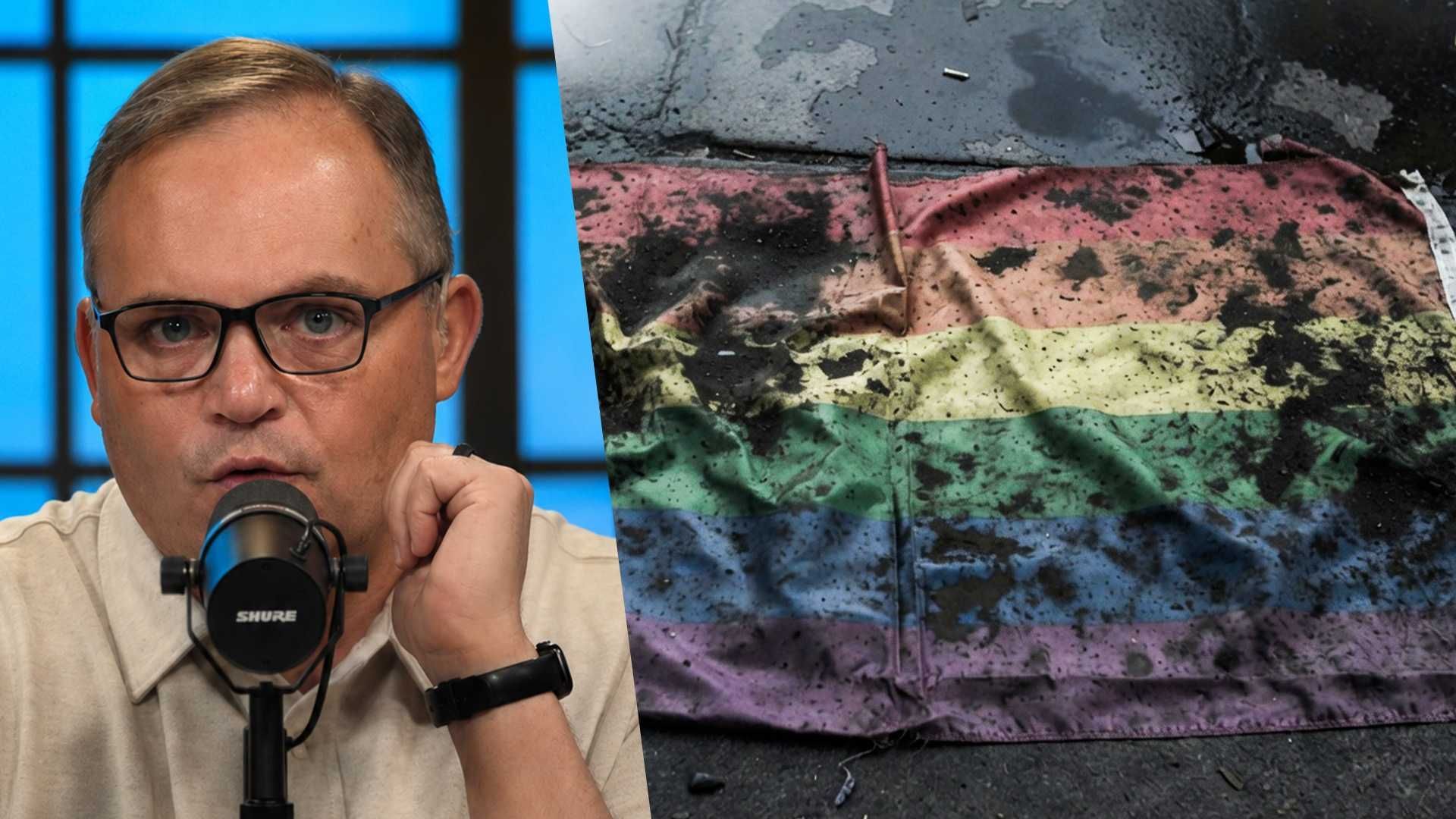
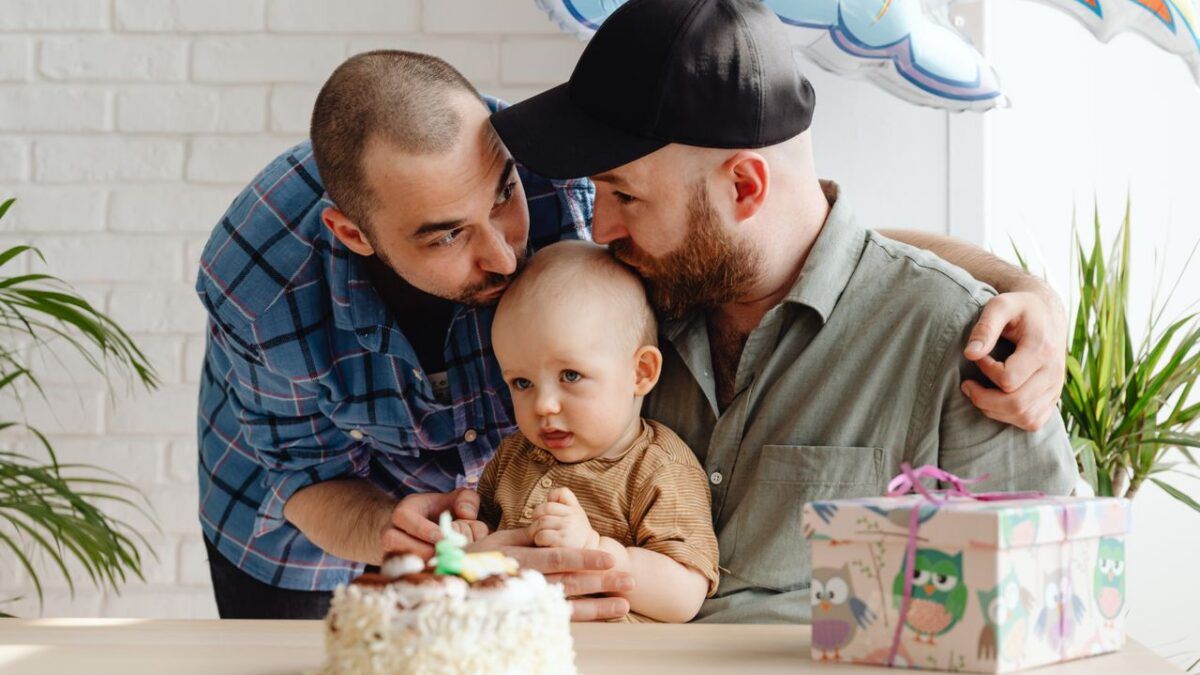
Has the rainbow craze peaked? New poll suggests Americans are rejecting homosexuality


For years, Americans were told the country was moving in only one direction on LGBTQ issues. But a new Gallup poll suggests that trend may be slowing — and in some cases reversing.

Support for same-sex marriage has fallen from its recent high-water mark, while fewer Americans now view gender transitions as morally acceptable than they did just a few years ago. And while Democrats remain the most supportive of LGBTQ issues, Republicans and independents have dropped in their support.

“How do you attribute this decline? What do you think it means?” BlazeTV host Steve Deace asks author Jon Harris.

“I think that the left pushed very hard, and it hurt people,” Harris answers. “And it seems like the right doesn’t get engaged until they’re hurting in some way. If it’s theoretical, let the left have what the left wants. It’s not going to affect my marriage.”


“Unfortunately, it did affect people because three seconds after they pushed for gay marriage, they wanted men in women’s sports, and they wanted to trans your kids. And so I think there was a backlash against it for that reason,” he adds.

Harris believes that if things “continue in the MAHA direction,” that “actually spells doom for the LGBT movement.”

“The whole logic of it is we need to get back to some kind of a created order, some kind of a way that we’re meant to function. And as soon as you start asking those questions, you’re going to start realizing, well, actually, men were made for women, women were made for men,” he explains.

“While I agree theoretically with MAHA is doing things that should light up the broader citizenry and maybe even the church, but the problem is that the church has got to be first and foremost,” co-host Todd Erzen chimes in.

While Erzen believes morality should be why Americans reject homosexuality, Harris points out that it seems like the rejection is coming from an evolutionary perspective.

“If that’s the message, if it’s, ‘We don’t want homosexual marriage because, well, that doesn't conform with science,’ then it’s not about being rooted in the Creator’s design for us in God,” Harris says.

“Unnatural as opposed to immoral,” Deace adds.

Want more from Steve Deace?

To enjoy more of Steve's take on national politics, Christian worldview, and principled conservatism with a snarky twist, subscribe to BlazeTV — the largest multi-platform network of voices who love America, defend the Constitution, and live the American dream.

Republicans Supported Gay Marriage ‘Rights’ Until They Saw It Destroy Children’s Rights

The law cannot simultaneously uphold same-sex marriage and a child's right to his mother and father.

Barney Frank’s dying warning should worry conservatives


Barney Frank spent his final months warning Democrats that the left had become a danger to itself.

Frank, the 16-term congressman from Massachusetts who died May 19 at 86, had been promoting a book scheduled for September publication: “The Hard Path to Unity: Why We Must Reform the Left to Rescue Democracy.”

The most effective revolutionaries do not always sound revolutionary. Sometimes they sound like men telling the revolutionaries to shut up, count the votes, and wait their turn.

That title says a great deal. Frank warned his fellow Democrats that they’re losing the electorate. But he was no mushy moderate. He was solidly a man of the left who understood that his party had developed habits that could cost it power — and, in his view, endanger the country.

Before anyone mistakes my point: This is not a eulogy for the co-author of Dodd-Frank, a man with more than his share of ethical lapses and scandals — male prostitution, anyone? — and a long record of expanding federal power and undermining American civilization. I am not here to praise Barney Frank’s life and career. I am here to draw a vital lesson about politics — how it works, who wins, and who loses.

Frank spent more than three decades in Congress advancing left-wing causes, from gay rights and anti-discrimination law to financial regulation and a more aggressive federal role in American life.

But not too aggressive too soon.

In one of his final interviews, Frank told CNN’s Jake Tapper that Democrats had succeeded in moving inequality to the center of the party’s agenda. But that success, he said, had “enabled people who wanted to use that as a platform for a wide range of social and cultural changes, some of which the public isn’t ready for.”

That little caveat — what “the public isn’t ready for” — carries a lot of weight.

To the activist mind, public reluctance often looks like bigotry, cowardice, or false consciousness. To Frank, it looked like politics. Voters were not clay to be molded by professors, nonprofits, and online scolds. They had to be persuaded, reassured, pressured, and moved over time.

Politics is persuasion — and persuasion can be the work of a lifetime.

Frank never confused delay with defeat. He treated delay as part of the cost of lasting victory. That was the real meaning of his final, misunderstood calls to “moderation” — something his irritating leftist critics missed or chose to ignore. He did not ask the left to abandon its goals. He asked the left to stop endangering them.

RELATED: Inside the left’s push to reshape 2028 with ranked-choice voting

Michael Blackshire/Chicago Tribune/Tribune News Service/Getty Images

His career offers a useful correction to our political vocabulary. We tend to call politicians “moderate” when they sound less insane than their allies. But Frank was not moderate in his ends. He was moderate only in his sense of timing, sequencing, and risk.

Consider same-sex marriage. Frank supported gay rights long before they became fashionable in elite institutions. But he understood that the movement first had to win more basic fights against discrimination before asking the public to redefine marriage.

“When we were fighting for gay rights — a fight I think we have essentially won — we knew that some issues were more popular than others,” Frank told the New York Times a week before his death. “So we tended to start by trying to win the ones that were most popular. Gays in the military. Employment. We didn’t go after same-sex marriage, we didn’t make marriage a litmus test, until the very end.”

Then he drew the analogy to biological males competing in women’s sports. “That is the most controversial part of the agenda — the equivalent of gay marriage — so put it at the end. If you go at it that way, you build support for it. But if you insist on the most controversial parts all at once, you make it harder.”

Notice what he did not say. He did not say men in women’s sports had crossed an uncrossable line. He said the left had mistimed the fight. Prepare the ground, then advance. Move the public, then consolidate the gain. Do not force every question at once and then denounce the electorate for failing to keep pace.

Call that whatever you like, but don’t call it mushy moderation. That’s professional politics.

The same instinct shaped Frank’s conduct in Congress. In 2007, he supported removing gender identity protections from the Employment Non-Discrimination Act because he believed the votes did not exist to pass the broader bill. Activists accused him of betrayal. Frank’s answer was coldly practical: Do what you can now, and return later for the rest.

Frank was a patient institutional leftist. He understood committees, votes, caucuses, and public opinion. He could be abrasive, partisan, and arrogant. But he did not mistake moral intensity for legislative power.

That separated him from Sen. Bernie Sanders (I-Vt.), whom Frank often criticized as a politician with little to show for decades in Congress. Sanders treats politics as indictment. The system is corrupt. The billionaires are guilty. The people have been betrayed. Some of that rhetoric can move voters, but rhetoric alone does not write statutes, build coalitions, or hold fragile majorities together.

Sanders rages against the system. Frank learned how to use it.

Alexandria Ocasio-Cortez complicates the picture. She entered Congress as a democratic socialist insurgent in the Sanders mold. But she has grown in office — not toward the center, exactly, but toward machinery. Frank would not have mistaken her for one of his own. But he might have recognized the beginning of her political education.

RELATED: Your enemies aren’t mentally ill. They apparently just want to kill you.

Blaze Media Illustration

A better comparison might be Jerry Brown.

California Republicans never got past the late-1970s caricature of “Governor Moonbeam,” and it cost them. “Moonbeam” was Jerry 1.0. The man who left the governor’s office in 2019 was Jerry 7.0, maybe 7.5: older, harder, more disciplined, more fiscally cautious, and vastly more dangerous. Brown was no conservative, though he possessed certain conservative instincts. Brown succeeded because he understood California’s currents better than the Republicans who mocked him.

Brown had his canoe theory of politics: Paddle a little to the left, paddle a little to the right, and you get where you need to go — ultimately, the to left bank of the river. Brown was smart enough and steady enough not to tip the canoe on the way there.

Conservatives should study politicians like Brown and Frank, not because we should admire or emulate their goals, but because we should understand their methods. A political movement that cannot describe its opponents accurately cannot defeat them. Worse, it cannot learn from them.

Frank’s final warning to Democrats was simple: Stop letting the loudest voices on the left turn every unpopular cultural demand into a test of moral seriousness. Read the room. Build consensus. Move when the ground can hold.

That warning should stir conservatives, too. The most effective revolutionaries do not always sound revolutionary. Sometimes they sound like men telling the revolutionaries to shut up, count the votes, and wait their turn.

In Its Hit Piece On Me, The Seattle Times Proves I’m Right About Obergefell

The Seattle Times 'reporter' spent thousands of words examining the dissenter while refusing to examine the dissent.

Why Biden’s targeting of Christians was EVEN WORSE than you thought


A newly released Department of Justice task force report is confirming concerns that religious Americans — particularly Christians — were unfairly targeted by their own government. And Assistant Attorney General Harmeet Dhillon has seen it herself.

“We’ve been compiling this stuff for a while now, and I experienced this type of anti-Christian and really anti-religious bias as a lawyer in private practice over the last several years,” Dhillon tells Blaze Media co-founder Glenn Beck on “The Glenn Beck Program.”

“I’ll just give you one example. Our government, not just the DOJ but, you know, various aspects of the government, viewed people seeking religious accommodations to not have to get the COVID vaccination if they were government employees as not legitimate,” she explains.

“They basically internally labeled all of those accommodation requests illegitimate,” she adds.


The Supreme Court Bostock ruling, Dhillon explains, “basically made it illegitimate for any person employed by the government to have a Christian viewpoint on gay marriage and issues like that, which are very much spiritual and religious in nature.”

“And so, there was just a complete lack of respect for the Christian,” she adds.

Dhillon explains that according to a FACE Act weaponization report, “disparaging remarks were made by DOJ prosecutors in [her] department” regarding “a magistrate judge being a Catholic, keeping people of faith off of juries, and going after and seeking sentences that were more than double for Christian protesters outside abortion clinics than for really domestic terrorists going after pro-life centers in Florida.”

“So these disparities were marked, they were open, they were written down in emails. And thank goodness that we have a president today who is not just dedicated to changing that but to also documenting what happened so that people should feel ashamed to do this to other people of faith in our country because our country is founded on faith,” she continues.

“And specifically,” she adds, “on the Christian faith.”

Want more from Glenn Beck?

To enjoy more of Glenn’s masterful storytelling, thought-provoking analysis, and uncanny ability to make sense of the chaos, subscribe to BlazeTV — the largest multi-platform network of voices who love America, defend the Constitution, and live the American dream.