Gavin McInnes tells conservatives: Stop ‘pearl-clutching’ over Kimmel’s 'expectant widow' joke


Two days before the White House Correspondents' Dinner, late-night comedy host Jimmy Kimmel, parodying the upcoming event, made a joke that Melania Trump had “a glow like an expectant widow.”

Many found the joke insensitive and inflammatory, especially given the repeated assassination attempts against President Trump — the most recent of which happened at the White House Correspondents' Dinner, during which a gunman rushed a security checkpoint and fired multiple shots in hopes of killing Trump and other administrative officials.

Kimmel doubled down on his joke in the wake of the WHCD assassination attempt, insisting that the widow joke wasn’t about assassination but Trump’s old age.

President Trump, Melania, and many other prominent conservatives are actively calling for Kimmel’s firing.

But some conservatives are pushing back. One of them is Canadian writer, podcaster, and political commentator Gavin McInnes.

“We got to drop the pearl-clutching,” he told Glenn Beck on a recent episode of “The Glenn Beck Program,” “because you lose the youth if you clutch the pearls, and if you don’t have youth on your side, you’re done, and we have the youth on our side right now.”

Further, McInnes believes that Kimmel really was joking about Trump and Melania’s age gap.

“The joke was way before the [White House] Correspondents' Dinner, and he always jokes about their age gap,” he says, encouraging conservatives to learn how to “take [a joke] on the chin.”

There are limitations though.

When people are “calling for violence,” that’s where we draw the line, says McInnes, citing multiple examples, including comedian Kathy Griffin’s 2017 stunt where she held up a prop that looked like a bloody, severed head resembling Donald Trump.

But Kimmel, he argues, made a genuine, albeit “cruel,” joke.

He calls conservatives out for spinning a narrative about Kimmel’s “expectant widow” comment that just isn’t true.

“That's what the left does. That's propaganda. They twist things, and I don't want to join that club,” he says.

To hear Glenn’s response, watch the video above.

Want more from Glenn Beck?

To enjoy more of Glenn’s masterful storytelling, thought-provoking analysis, and uncanny ability to make sense of the chaos, subscribe to BlazeTV — the largest multi-platform network of voices who love America, defend the Constitution, and live the American dream.
Glenn Beck: The real reason you can’t afford a home (it’s not what you think)


Many Americans today feel as if home ownership is a pipe dream. The prices, even for modest homes, are just too steep.

But why? What’s the real reason homes have become so unaffordable?

The answer is multifaceted, says Glenn Beck.

No doubt the broken economy is part of the problem. “We have to fix the fraud,” he urges. “The latest numbers from the GAO, the Government Accounting Office, is that they estimate that our government loses between $233 billion and $521 billion every year based on fraud between 2018 through 2022.”

However, there’s another factor most are unwilling to grapple with: Our expectations have increased.

In the 1950s — “the golden era of America,” says Glenn — the average size home for a family of four was “983 square feet.” Today, it’s “2,500 square feet.”

“If I told you you could afford a modest home of that size (under 1,000 square feet) and raise your family in it, would you take it?” he asks.

But the main driver behind the skyrocketing price of homes, he says, is the increase in land prices.

“Why is land so expensive?” Glenn asks. “Because our government made it that way” through “zoning laws, permits, restrictions, [and] endless layers of EPA approval.”

“We didn't run out of land. We restricted the access to the land,” he emphasizes.

Add to that the immigration boom, which led to “an overwhelming demand for homes,” and you get the situation we’re in today.

But America has been in a similar predicament before and survived it, says Glenn. After WWII, millions of soldiers returned home eager to buy homes and start families, resulting in a housing shortage “far, far worse in many ways than what we're facing today.”

Our answer back then was simply to build faster.

“Homes were built in days, not months — days,” says Glenn, noting that “the GI Bill,” “the interstate highway system [opening] up the land that had never been reachable before,” and “the government [getting] out of the way” are what allowed this to happen.

“Prices rose at first because everybody needed a home, and then they stabilized because supply caught up with demand,” he continues.

But today, things are different.

Instead of “unleashing builders,” we’re “restraining them”; instead of “expanding supply,” we’re “constraining it,” says Glenn.

“This is why the most important number is not the price of a home. It is the ratio between a home price and income,” he explains. “In 1960, the average cost was two times the average annual income. Today it's over five times.”

“That's the difference between opportunity and exclusion; that's the difference between a young family starting a life and one stuck renting indefinitely.”

Today, we’re a nation that believes more in “obstruction” than “building” — a nation that cares more about the “planet” than “people.”

Once upon a time, “the country believed that growth was good, expansion was good, opportunity was something that you created, not something that you rationed,” says Glenn, “and somewhere along the way, that whole mindset of America changed.”

“We didn't lose the land. We didn't lose the resources. We've lost the will. And until that changes, this doesn't get fixed,” he warns.

Contrary to popular belief, the American dream isn’t dead, he insists. It’s simply on pause until we can fix the long list of issues barring many Americans from buying homes.

While we have little control over fraud, government regulation, and land prices, we do have control over our own mindsets. Glenn urges his listeners to remember that the American dream isn’t about status — “it’s about freedom and opportunity and hard work and faith and building a life with the people that you love.”

“Let's remember what it means to actually be happy,” he pleads.

Want more from Glenn Beck?

To enjoy more of Glenn’s masterful storytelling, thought-provoking analysis, and uncanny ability to make sense of the chaos, subscribe to BlazeTV — the largest multi-platform network of voices who love America, defend the Constitution, and live the American dream.
Glenn Beck: Think NYC is ruined now? Wait until you hear about Mamdani’s newest proposal.


On April 28, New York City Mayor Zohran Mamdani (D), speaking at a joint press conference with Council Speaker Julie Menin, declared a "budget crisis of a historic magnitude" larger than any “since the Great Recession,” blaming inherited mismanagement and a structural imbalance with the state.

"We cannot close this deficit with savings alone. We need new revenue. And we need a structural reset in our relationship with the state. … That is the only way to meet our legal obligation to pass a balanced budget and to do so without imposing a financial burden onto the backs of working people,” he stated.

“When a politician says, ‘We need new revenue,’ it's not like when you're working at the S&P, man,” scoffs Glenn Beck. “What that means is we're going to tax people.”

But to avoid taking the working class, Mamdani is proposing what he always proposes: another “tax the rich” scheme.

There’s only one problem.

“You've already taxed [the rich] so much, and you've chased them out of your city!” exclaims Glenn.

“It happens every time. Socialism is neat until you run out of somebody else's money. They're running out of money. They're running out of the rich people to destroy. They're coming after you.”

Mamdani has also floated the idea of extending the timeline for the city to fully fund its pension obligations by pushing the deadline out to the 2040s.

“That's illegal!” Glenn laughs.

“Highly educated elites,” like Mamdani, he argues, are always the ones who “[start] these revolutions.”

“It's not the poor people. It's the highly educated elites who are like, ‘You know what? We have to help all these poor people. I mean, I don't want to touch them, but we have to help them,’” Glenn mocks.

The stats prove it.

Glenn’s executive producer, Rikki Ratliff-Fellman, points to a 2025 study from Skeptic Research Center that found that Americans with the highest levels of education (graduate or professional degree) are about twice as likely to support political violence than those with less formal education.

Glenn explains that this alarming trend has emerged because universities shifted from teaching “the Scriptures” to pushing “the philosophies of man.”

“And the philosophies of man are so rotted to the core now because there's no universal truth. There's no universal truth in science. They've made it so science is the exact opposite of faith and of God,” he laments.

“It’s nothing but nonstop arrogance.”

To hear more, watch the video above.

Want more from Glenn Beck?

To enjoy more of Glenn’s masterful storytelling, thought-provoking analysis, and uncanny ability to make sense of the chaos, subscribe to BlazeTV — the largest multi-platform network of voices who love America, defend the Constitution, and live the American dream.
Firsthand account: Katie Pavlich describes chaotic moments after WHCD shooting


When NewsNation anchor Katie Pavlich sat down at the White House Correspondents' Dinner, she was not expecting to end up on the ground as yet another would-be assassin attempted to take the president out.

And looking back on the events of that night, Pavlich tells Glenn Beck on “The Glenn Beck Program” that she’s feeling “anger and frustration that this continues to happen.”

“Being in the room and watching Karoline Leavitt, who’s nine months pregnant, have to be taken out of the room because there’s someone outside trying to assassinate her boss and the people she works with and … it’s just infuriating that this continues to be something that is acceptable,” she explains.

Pavlich also notes that the security surrounding the dinner was not nearly strong enough.


“I thought going into the night that security was going to be tough, that it would take me an hour to get into the hotel. It was not tough at all,” she tells Glenn. “I walked by those same protesters … with their Palestinian flags, and they were screaming that they hoped our dresses were ruined, that our night was ruined, that we were fascists.”

While security was lacking, Pavlich did notice that the president was evacuated “very quickly” and the situation seemed to be under control moments after it began.

“When I heard the shots, to me, it sounded like a controlled situation, because it ended quickly. There was not a real exchange of gunfire. It was not something that continued. There were five shots, when you listened to the audio, and it was over,” Pavlich explains.

“So, to me, that indicated that Secret Service or some other law enforcement agency that was there had handled the situation and it was not in the room,” she continues, pointing out that there was also some “sporadic” Wi-Fi access.

“When the president is in the room, they usually shut all of that stuff down so nobody can activate a bomb using cell service,” Glenn chimes in.

“There’s so many questions here about the security,” Pavlich agrees.

“I just think it’s a miracle that he was an amateur,” she adds.

Want more from Glenn Beck?

To enjoy more of Glenn’s masterful storytelling, thought-provoking analysis, and uncanny ability to make sense of the chaos, subscribe to BlazeTV — the largest multi-platform network of voices who love America, defend the Constitution, and live the American dream.
Caltech grad to ‘friendly federal assassin’: Glenn Beck on how politics radicalized Trump’s latest alleged would-be killer


Last weekend at the White House Correspondents’ Dinner at the Washington Hilton in D.C., a 31-year-old California resident named Cole Tomas Allen allegedly rushed a security checkpoint — armed with a shotgun, a handgun, and knives — and fired multiple shots in an attempt to target Trump administration officials. Fortunately, no one was seriously injured, and Allen was charged with attempted assassination of the president.

Allen, Glenn Beck says, is different from former would-be assassins. He isn’t “some lone wolf,” “crazed madman,” or “basement-dwelling nobody.” He’s “a brilliant Caltech graduate” with a long list of impressive credentials and a normal background by all measures.

Glenn wants to know how a man with a successful history in engineering, computer science, and education, whose students and colleagues “loved him,” became “the friendly federal assassin” — the nom de guerre Allen gave himself in the manifesto he sent to family and friends before he allegedly attempted to kill President Trump and other Cabinet members.

On this episode of “The Glenn Beck Program,” Glenn dives into how a bright person with great potential becomes a radicalized killer and what it means for America if this trend isn’t stopped.

“[Allen] was radicalized the same way our children are being radicalized today — not by some foreign terrorist group, but by the toxic stew that is American politics in 2026,” Glenn says.

From “endless media hysteria” and “the online echo chambers” — where Trump and others in the administration are constantly accused of being “rapists,” “pedophiles,” and “fascists” — to the pervasive “belief that our political opponents aren’t just wrong ... they’re evil,” modern society has become a factory that churns out radicals, he explains.

But it’s a complicated issue because these revolutionaries who commit acts of violence in the name of justice consider themselves the good guys.

“[Allen] saw himself as a hero — and that mindset is the danger. The guy thought he was Bonhoeffer!” Glenn exclaims.

Allen’s devolution from a bright man with great potential into an alleged would-be assassin is evidence that our republic is heading toward collapse, he warns.

“Bright young men convinced that violence is the only answer to a political disagreement, when assassination becomes thinkable, when fixing the world means opening fire at a dinner — that’s how our republic unravels,” Glenn says.

If the radicalization and violence continues, government officials and public figures will have to start “living behind the walls,” but it’s everyday Americans who will pay the steepest price by “[losing] a piece of the free open society” that we’ve known for so long.

“It’s the republic that pays the price as we lose yet just one more piece of our soul every time hatred wins,” Glenn says.

“[Allen] wasn’t born this way. He was taught to be this way. He was radicalized step by step, post by post, protest by protest, march after march. He actually began to believe that murder was moral,” he continues.

And Glenn fears he won’t be the last to commit violence against political opponents.

“In a country where political rage is treated like a virtue instead of poison, how many other guys are out there right now?” he asks.

“America, we are running out of warnings.”

To hear more, watch the video above.

Want more from Glenn Beck?

To enjoy more of Glenn’s masterful storytelling, thought-provoking analysis, and uncanny ability to make sense of the chaos, subscribe to BlazeTV — the largest multi-platform network of voices who love America, defend the Constitution, and live the American dream.
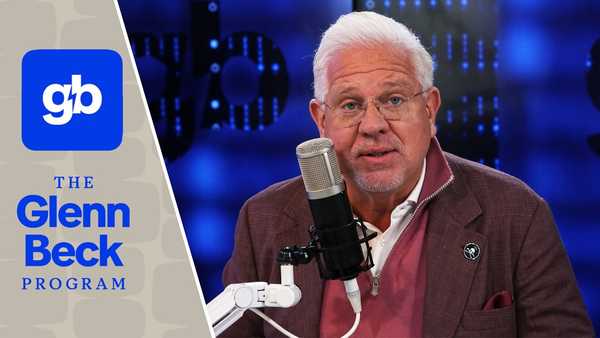
‘He was pretty emotional’: TPUSA’s Andrew Kolvet tells Glenn Beck about Fetterman’s tearful apology to Erika Kirk after WHCD shooting


In the wake of Saturday’s shooting at the White House Correspondents’ Dinner — in which 31-year-old Cole Tomas Allen allegedly rushed a security checkpoint and opened fire in an attempt to assassinate President Trump and other administration officials — at least one prominent Democrat is showing signs of remorse.

On a recent episode of “The Glenn Beck Program,” Glenn spoke with Turning Point USA spokesperson and executive producer of “The Charlie Kirk Show” Andrew Kolvet about Sen. John Fetterman’s recent conversation with Erika Kirk.

“There was a moment with John Fetterman and Erika that I heard about where he was pretty emotional, and he just apologized for whatever he could,” says Kolvet, noting that this conversation happened shortly after the WHCD incident.

“Good for John Fetterman. That’s a real moment,” he adds.

Glenn notes that for some time he has wanted to speak with Fetterman to tell him that despite their political differences, he admires Fetterman’s bravery to take stands against his own party, likely at the expense of being primaried.

“It’s interesting to me that somebody who just says common-sense stuff that is a Democrat … is so chased out of their own party. They can’t have anybody who is at all not a radical. They must have radicals in there,” Glenn emphasizes.

He calls the Democrats out for their complicity in the escalating political violence: “Democrats, you’re not an innocent bystander at this point. There’s too much evidence.”

“These people want to destroy the United States of America. If you want a violent destruction of your country, you just keep going down this road,” he cautions.

In the meantime, conservatives, he says, will continue to "do everything [they] can to stop it,” including continuing “to warn and to beg and to plead and to vote.”

But if Democrats continue to stoke the fires of violence, the consequences are bleak for everyone, including their own families.

“Your children and your grandchildren will suffer under Marxism and fascism and death and squalor — and you will be responsible for it!” Glenn warns.

Want more from Glenn Beck?

To enjoy more of Glenn’s masterful storytelling, thought-provoking analysis, and uncanny ability to make sense of the chaos, subscribe to BlazeTV — the largest multi-platform network of voices who love America, defend the Constitution, and live the American dream.