America needs to understand Golden Dome before it’s too late


America is entering an era when the threats to our nation are evolving faster than our public conversation about them. Yet one of the most important national security initiatives of this decade — Golden Dome — remains largely unknown to the very people whose support will determine whether it succeeds.

Most citizens have no idea what Golden Dome is, what threats it addresses, or why it is stabilizing rather than escalatory.

Congress is asking pointed questions, industry is unsure what to build, and the public has barely heard the name. If we don’t close this information gap now, we risk letting confusion, speculation, and adversarial narratives define a program designed to protect the nation.

Golden Dome is not a mystery. It is a modernization effort aimed at defending the United States against advanced 21st‑century threats — those that move faster, fly farther, and strike with greater precision than anything we faced in the past.

Its architecture integrates sensing, tracking, command and control, and layered defensive capabilities across multiple domains. In plain terms, it is a shield: a system designed to strengthen deterrence, reduce vulnerability, and give national leaders more time and options in a crisis.

But even the strongest shield is only as durable as the public trust behind it. And right now, that trust is at risk.

A strategic initiative without a public narrative

Golden Dome fits squarely within the nation’s core strategic frameworks. It supports the National Security Strategy’s mandate to protect the homeland and strengthen deterrence. It advances the National Defense Strategy’s focus on countering advanced adversary capabilities. And it complements U.S. nuclear policy by reinforcing the stability and resilience of the strategic environment — without altering nuclear doctrine.

Yet alignment with strategy is not enough. Congress, industry, allies, and the American people all need to understand what Golden Dome is and why it matters. Without that clarity, the initiative risks becoming a target for political friction, budgetary skepticism, and misinterpretation abroad.

Congress has already begun signaling frustration. Members in both chambers want clearer information about Golden Dome’s architecture, cost, schedule, and oversight mechanisms.

Industry, meanwhile, is being asked to innovate at speed without knowing the full scope of what the government needs.

Golden Dome requires rapid prototyping, open architectures, and competition. But companies cannot position themselves effectively without clear guidance. The result is hesitation at a moment when urgency is essential.

And then there is the American public.

Most citizens have no idea what Golden Dome is, what threats it addresses, or why it is stabilizing rather than escalatory. In an age of disinformation, that vacuum is dangerous. If the people do not understand the purpose of a major national security initiative, adversaries will happily define it for them.

RELATED: I saw the sky light up over Dubai. The real shock came next.

AFP/Getty Images

Golden Dome is not just a domestic issue. Allies and partners want reassurance that the United States is strengthening — not retreating from — collective defense commitments. They need to know that Golden Dome complements existing security architectures rather than replacing them or shifting burdens. Adversaries, too, are watching closely. Clear, consistent messaging is essential to avoid misinterpretation and to reinforce deterrence. Ambiguity invites miscalculations.

Private speeches aren’t enough

To date, Golden Dome has been discussed primarily at defense and military conferences. Those speeches were necessary and well received — but they only reached specialized audiences. They do not shape public understanding. They do not provide Congress with a bipartisan narrative. They do not give industry the clarity it needs. And they do not reassure allies or counter adversarial messaging. A national initiative requires a national conversation.

The solution is straightforward: a deliberate, public‑facing communications campaign anchored by a major national speech. Armed Forces Day — May 16, 2026 — offers the ideal moment. A speech delivered at the American Legion Mall in Indianapolis would reach veterans, military families, policymakers, and civic leaders. It would also signal that Golden Dome is not a niche technical program but a national commitment to America's protection.

A full rollout should include:

  • a clear, plain‑language narrative explaining what Golden Dome is and what it is not.
  • pre‑briefings for Congress and industry to ensure alignment and reduce uncertainty.
  • coordinated messaging with allies and partners to reinforce collective security.
  • calibrated communication to adversaries to strengthen deterrence without escalating tensions.

This approach builds bipartisan confidence, provides industry with direction, reassures the American people, and strengthens allied cohesion. Most importantly, it ensures that Golden Dome is defined by its strategic purpose — not by speculation or misinformation.

A moment we cannot miss

Golden Dome is a prudent, stabilizing investment in America’s security. But even the best ideas can falter without public understanding. The United States has reached a point where silence is no longer strategic. The stakes are too high, the threats too real, and the consequences of miscommunication too severe.

A national security initiative of this scale deserves a national conversation. Golden Dome must be explained, not whispered about. It must be understood, not assumed. And it must be introduced to the American people with the clarity, confidence, and transparency that the moment demands.

Armed Forces Day is approaching. The country is ready to listen. Now is the time to speak, General Guetlein, Secretary Hegseth, and President Trump.

Editor’s note: This article was originally published by RealClearDefense and made available via RealClearWire.
Greenland gets headlines. Alaska does the job.


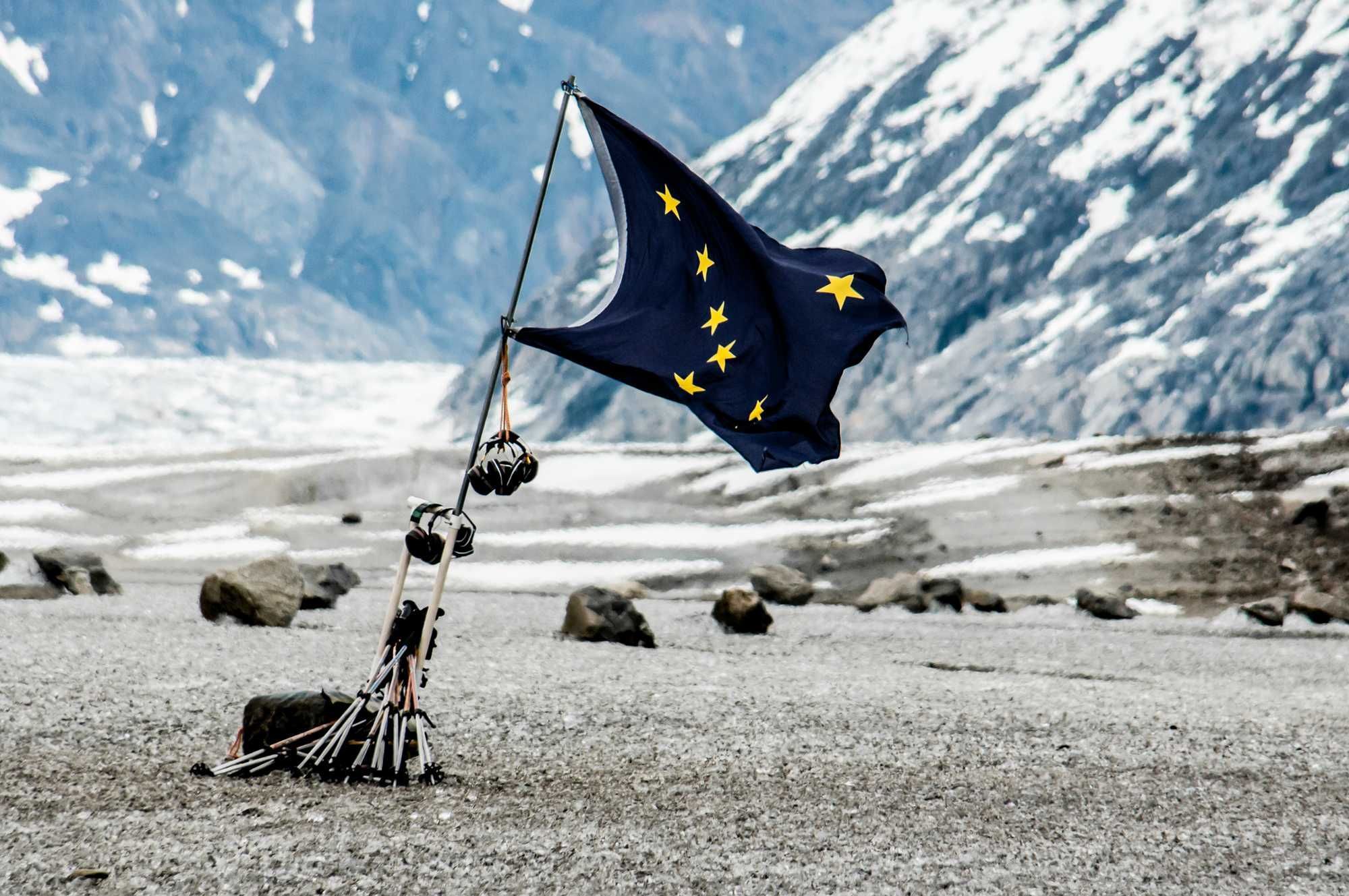
In recent years, the national conversation has drifted toward the Arctic and the geopolitical contest unfolding there. Greenland pops into the headlines as a strategic prize for the United States. But the truth is, we already hold the most important ground for early warning, deterrence, and defeat of airborne threats: Alaska.

No other place on American soil combines geography, infrastructure, military capacity, and testing range in a way that can anchor what defense planners call the “Golden Dome” — a multilayered, 21st-century shield against missile and air-launched threats.

From the polar sky to the missile fields below, Alaska stands as the nation’s shield — strong, tested, and ready.

For conservatives who believe in peace through strength, constitutional defense, and American sovereignty, Alaska is not just valuable; it is indispensable.

The geographic high ground

Alaska’s advantage begins with location. At the top of the world, it sits astride the northern approaches that matter in great-power competition. When Russia or China run long-range aviation patrols, they do not approach through Florida or California. They come over polar routes.

For decades, the Alaska NORAD Region has met them first. American and Canadian forces have executed countless intercepts, sending a message that never changes: We see you. You will not approach unnoticed.

That deterrence does real work. It prevents miscalculation. It keeps pressure off the rest of the country. Alaska makes that possible by standing watch on America’s northern frontier.

Building the Golden Dome

Homeland defense now faces threats that do not fit Cold War assumptions. Hypersonic glide vehicles, low-flying cruise missiles, and next-generation systems demand fast detection, precise tracking, and long-range defeat.

A Golden Dome won’t be a single system. It will require an integrated network of sensors, communications, long-range radar, interceptors, and command and control.

Alaska already hosts critical pieces of that architecture: early-warning infrastructure, long-range radar, secure communications, and the operational footprint to integrate new systems quickly. Fort Greely anchors an established missile defense mission, with layered capability aimed at threats inside and outside the atmosphere. That foundation allows faster expansion than any “build-it-from-scratch” option elsewhere.

Closing the gaps

Coastal coverage can track many high-altitude threats. Low-altitude cruise missile detection presents a harder challenge, because adversaries design these systems to fly fast and low and to exploit radar limitations.

The Army’s Long-Range Persistent Surveillance system offers a proven way to close those gaps. Alaska’s geography provides a vantage point no other state can match across northern air corridors.

Detection only matters when response follows. Alaska maintains frontline intercept forces today, including fifth-generation fighter squadrons. A Marine Corps presence in Alaska also supports a mobile ground-based air defense mission that can move to critical nodes and build resilient, flexible layers.

A responsive homeland air defense posture starts with geography. Alaska supplies it.

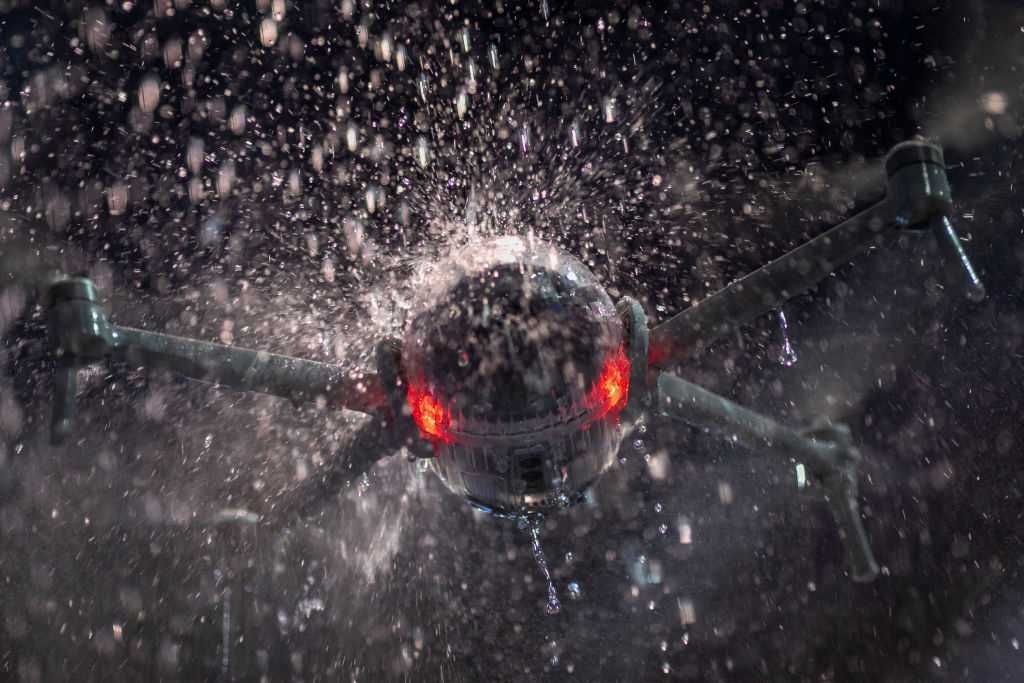
RELATED: America’s next-gen weapons face a down-to-earth foe: The elements

DAVID MCNEW/AFP/Getty Images

The world’s premier testing ground

Missile defense depends on systems tested, refined, and validated under realistic conditions. Alaska offers a unique advantage: the largest live-ordnance range on Earth.

That range supports testing and training at scale — emerging radar and sensor concepts, counter-hypersonic development, and joint-force exercises in conditions that mirror the northern environment where homeland defense may be decided.

Alaska lets the U.S. test what it builds and field what it tests in the same strategic space.

America’s shield, ready today

Alaska is more than a strategic location. Alaska is a living, operating defense ecosystem.

With infrastructure already in place, the latest technologies ready for deployment, multilayered detection systems available, and unmatched training and testing ranges at our disposal, Alaska stands ready to detect and defeat airborne threats long before they reach American cities.

Every investment that strengthens Alaska’s surveillance, detection, and intercept capacity multiplies security across the country. In an era of tight budgets and rising instability, that is exactly the kind of smart national defense conservatives should demand: protect American lives and territory by leveraging American assets that already work.

Other places capture attention. Alaska carries the burden. It remains the geographic high ground of missile defense, the first line of deterrence, and the proving ground for the systems America needs next. From the polar sky to the missile fields below, Alaska stands as the nation’s shield — strong, tested, and ready.

Trump Tells Room Full Of Global Leaders Why He Wants Greenland

'Build the greatest Golden Dome ever built'

America Needs Stronger Missile Defenses Against Expanding Enemy Arsenals

Our enemies fear the strategic edge Golden Dome would give us and are desperate to stop it before it starts.
Japan considers support for Trump's Golden Dome project as tariffs weigh heavily on nation


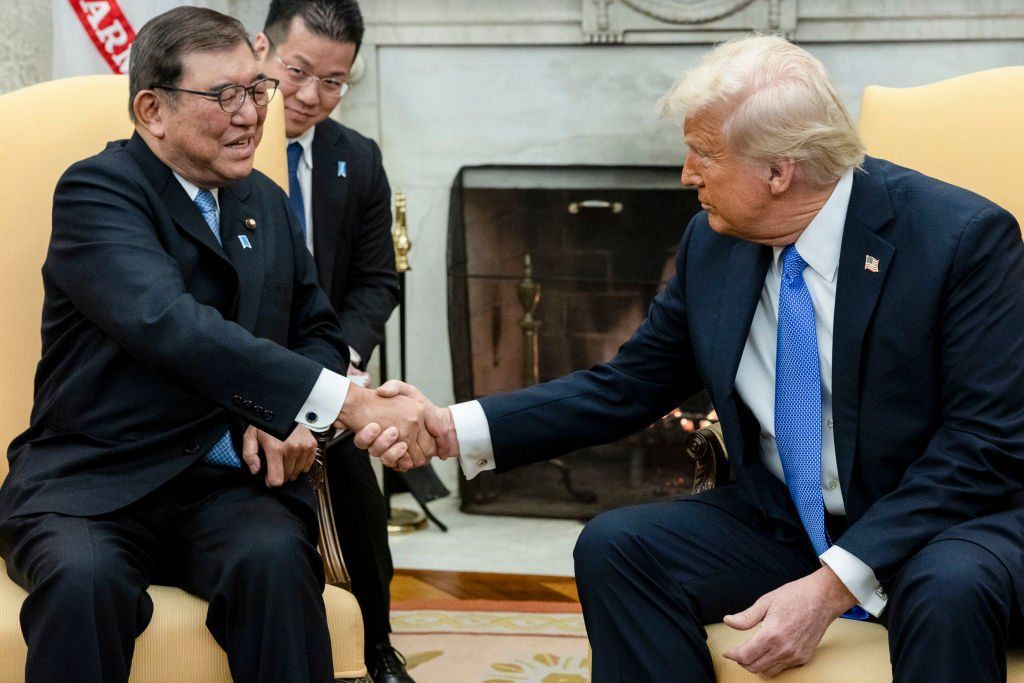
Following two phone calls between U.S. President Trump and Japanese Prime Minister Shigeru Ishiba, Nikkei Asia has reported that Japan is “exploring support” for the United States’ proposed “Golden Dome” project in the coming years. This potential cooperation comes in light of the global tariffs imposed by President Trump as well as a mutual ongoing commitment to promote a U.S.-Japan “golden age,” according to a White House press briefing.

The White House briefing reported that Japan and the U.S. have been in talks since February in an effort to reaffirm “bilateral security and defense” commitments between the two countries. At the end of last month, Trump and Ishiba discussed their views on the tariffs, “economic security cooperation,” and “diplomatic and security challenges,” per a report from Japan's Ministry of Foreign Affairs.

Some, including the original Nikkei report, have speculated that Japan may use its involvement in the project as a “bargaining chip” in economic negotiations. Prime Minister Ishiba has since noted in a press conference that Japan has “consistently advocated for an ‘investment rather than tariffs’” approach in cooperation.

RELATED: Trump says Canada is considering his offer to become the 51st US state after he made one key concession

Photo by Chip Somodevilla/Getty Images

The Golden Dome, modeled after Israel’s Iron Dome missile defense system, is set to cost an estimated $175 billion, with some long-term estimates, according to the Congressional Budget Office, reaching as high as $831 billion.

Trump has tapped U.S. Space Force General Michael Guetlein to oversee this project, which he hopes to complete by the end of his term in 2029. The state-of-the-art Golden Dome will be a “network of satellites, sensors, and interceptors to prevent aerial attacks on the U.S. mainland,” Time magazine reports. Proponents have insisted that the system is intended only as a deterrent.

Critics have expressed concerns that this project may push adversaries and even aligned nations into what Carnegie Politika called a “new arms race” against the U.S. in the space and defense industries. The building of the Golden Dome system may be taken as a threat by nations like China, Russia, and North Korea. Japan’s involvement in the project may raise concerns in the region.

Like Blaze News? Bypass the censors, sign up for our newsletters, and get stories like this direct to your inbox. Sign up here!

Cheapskate Canada 'threatens' NORAD? Trump dangles 51st-state solution


Canada could soon be booted from NORAD, the binational aerospace defense system it has shared with the U.S. since 1958.

The reason? Once again backing away from its commitment to replace its decrepit F-18s with the F-35 Joint Strike Fighter, the jet that is used by the U.S. Air Force, U.S. Navy, and Marines.

Canada has a long history of ... putting off the acquisition of military aircraft until they are nearing obsolescence when finally delivered.

Canada needs to buy the F-35 to be compatible with the U.S., as well as with the other principal allies that Canada also flies with: the U.K. and Australia.

East Alaska?

But President Donald Trump hinted at a way his penny-pinching neighbors to the north could get around the costly upgrade: Join the U.S. as its 51st state.

Who needs NORAD when you can enjoy the benefits of Trump's ambitious Golden Dome missile defense shield — free of charge?

“I told Canada, which very much wants to be part of our fabulous Golden Dome System, that it will cost $61 Billion Dollars if they remain a separate, but unequal, Nation, but will cost ZERO DOLLARS if they become our cherished 51st State,” Trump posted on Truth Social Tuesday.

“They are considering the offer!” the president couldn't resist adding.

Straight man

Canada was quick to play the straight man to Trump's trolling.

A spokesperson for Liberal Prime Minister Mark Carney said: “The prime minister has been clear at every opportunity, including in his conversations with president Trump, that Canada is an independent, sovereign nation, and it will remain one,” according to the Financial Times.

Carney ordered a review of the F-35 purchase in March, insisting that Canada could be better served with fighter jets produced by Sweden, France, or the U.K. Although Britain remains a primary military partner, Canada does virtually no military training or operations with Sweden or France.

That suggestion has prompted U.S. Ambassador to Canada Pete Hoekstra to note that any cancellation of the F-35 contract would have serious consequences for Canada — including threatening NORAD, over which the two countries have maintained joint command of operations for almost 60 years.

Plane speaking

“I think that's worked pretty well for the U.S., and it's worked well for Canada. It's, I think, one of the only, if not the only, bilateral military relationship in the world. So I think it would, but, I mean, there's criteria, OK, and some of those criteria are being questioned right now,” Hoekstra told CTV News.

Hoekstra continued:

One of the criteria for NORAD is interchangeability and interoperability. So that would mean that, you know, we're flying the same kinds of planes, we're using the parts, and, you know, it's all interchangeable. It's one system. You know, Canada is challenging that; they've made a decision to buy F-35s; that's now up for review. If Canadians are flying one airplane, we're flying another airplane, it's no longer interchangeable. And so that might even threaten NORAD, without talking about new alliances that promise even more security and safety to our people.

It’s not clear whether Hoekstra’s comments were designed for Trump to open the door on Golden Dome negotiations, but he has nonetheless exposed one of the more absurd and potentially tragic exercises in Canadian military procurement.

Jet set

Canada has a long history of either sabotaging its own aerospace industry — as with the cancellation of the famed Avro Arrow in 1958 — or by putting off the acquisition of military aircraft until they are nearing obsolescence when finally delivered.

The F-35 is another case in point. Canada has dithered so long on its decision to buy or not to buy that sixth-generation fighter jet technology is now on the horizon.

Incredibly, the government of Liberal Prime Minister Jean Chretien first signed on to the F-35 program in 2002. Even though that was almost 25 years ago, Canada has managed through successive governments never to see the delivery of one aircraft.

Chretien refused to make a decision on the F-35, as did his successor, Conservative Prime Minister Stephen Harper, who toyed with Canada’s air force for nine years over the deal. Meanwhile, the military continued to fly the F-18/A, as it had since 1982.

Today, those jets are over 45 years old.

Justin Trudeau campaigned in 2015 on a pledge never to buy the F-35, but after eight years of reviewing other aircraft, he flip-flopped on that promise in January 2023 and agreed to buy 88 of the jets at a cost of $85 million (USD) each.

Hoekstra's comments sent a clear message: fish or cut bait. Enough with using military spending as a political poker chip; upgrade to the F-35 or leave NORAD.

In response, Carney offered more dithering.

"The review of the F-35 contract is ongoing," he said at a news conference last week. "There's many factors that come into that interoperability that would relate to the NORAD element. There’s value for money, broader Canadian industrial impacts. All of those are factors that are under consideration."