Free money wins elections — and that’s why America’s debt will keep growing
As Republicans head toward what looks like a perilous midterm election, affordability is on everyone’s lips. The Biden administration never convinced voters that it had brought food and housing costs under control. Some Republicans have tried to pretend the problem does not exist; others have acknowledged it without making meaningful progress.
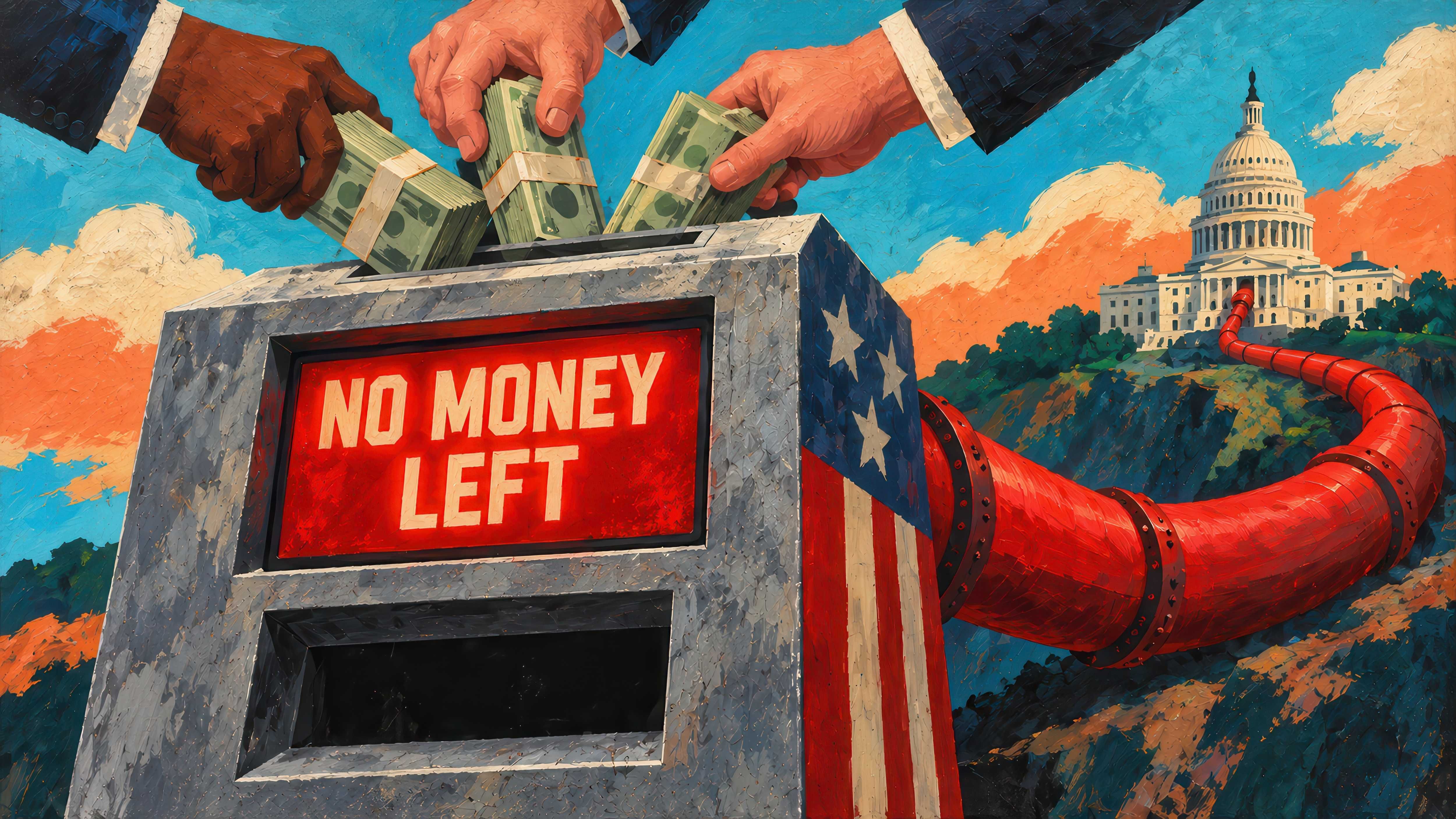
Both Joe Biden and Donald Trump made choices that worsened the pressure, from expanding federal spending to deepening costly foreign commitments. Neither party has a durable solution. The Congressional Budget Office projects a $1.9 trillion deficit for fiscal year 2026, and debt held by the public now tops 101% of GDP. Spending and inflation are not accidents at the edge of mass democracy. They follow from its incentives, and nothing will change until the incentives do.
In a democracy, giving voters something is the winning strategy, and Trump likes winning.
The affordability crisis has several causes, but much of the immediate pain comes from the cumulative rise in prices. Wages may rise and bank balances may grow, yet each dollar buys less. Inflation is a pernicious tax precisely because it is hidden. Normal taxes must be enacted and collected openly. No one votes directly for inflation, which instead erodes the value of money people have already earned and saved. It punishes careful savers while rewarding borrowers and speculators.
Deficit spending can fuel inflation when government expands demand faster than the economy can supply goods and services. Creating money makes it easier to distribute benefits today, but it can reduce the currency’s purchasing power tomorrow. Inflation also lightens the real burden of government debt by reducing the value of what was borrowed. The average person, however, rarely has early access to new money or the sophisticated financial instruments wealthy investors use to hedge against rising prices. He feels the loss at the grocery store.
The oldest move in politics is to offer people a material reward for their support. Every system does it, but democracy makes the exchange especially powerful because elections confer legitimacy. A politician rarely calls the arrangement a “bribe.” He routes the benefit through a program aimed at groups likely to reward him at the polls. The legal form gives the transaction respectability, but voters still understand the bargain.
Donald Trump recently dispensed with even that pretense. At the Republican midterm convention last week, he promised $5,000 to every adult citizen if Republicans retain the House and Senate. An independent estimate put the cost at more than $1.2 trillion, and Congress would have to approve it. Whether the payments ever materialize is not the point. The offer mocks the fiscal restraint conservatives claim to espouse. Conservative commentators objected, but Trump brushed them aside. He understands the incentives. He promised not to cut Social Security and Medicare because benefits win votes. In a democracy, giving voters something is the winning strategy, and Trump likes winning.
RELATED:The GOP still has a loser mentality
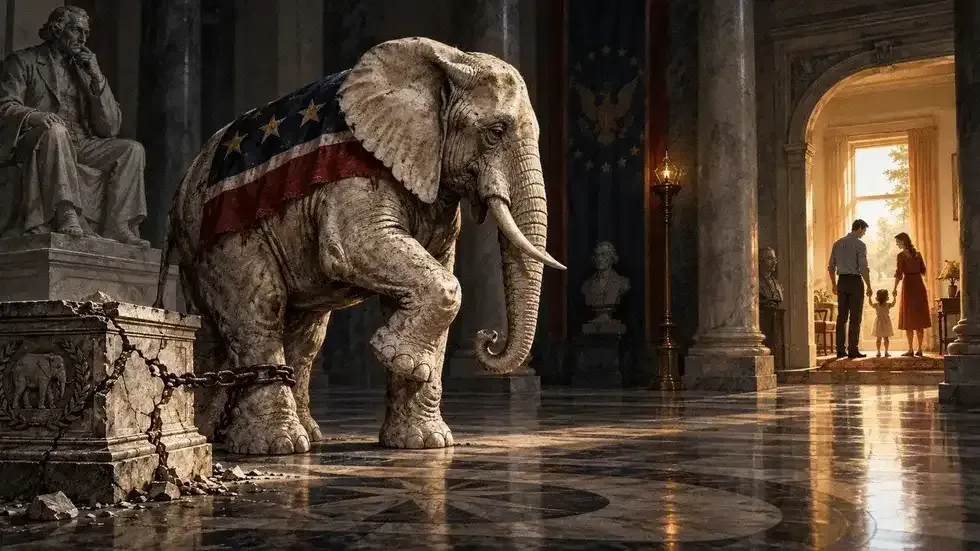
Warnings about democracy long predate modern America. Plato and Aristotle distrusted rule by the demos, and the American founders built a constitutional republic with layers of insulation against popular majorities. Their fear was simple: Once voters discover they can use the state to transfer other people’s money to themselves, restraint collapses. A republic may survive only if institutions impose limits that elections alone will not.
Is the $5,000 check good fiscal policy? Of course not. It’s a disaster. A transfer approaching $1.2 trillion would widen the deficit and almost certainly worsen inflation, especially in an economy already near capacity. Pandemic-era fiscal stimulus did not single-handedly cause the 2021-2022 inflation surge; supply shocks and monetary policy mattered too. But New York Federal Reserve research found that fiscal support contributed materially.
Is the check good politics? Yes. In a democracy, vote-buying is an optimal strategy, and anyone who refuses it risks losing to someone who will. Democrats have principles that let them hand out money and receive praise — and votes. Republicans profess principles that should forbid it. Sound economics grants no electoral advantage.
Reckless spending is terrible policy, but it can win elections. Conservatives may campaign on austerity, but austerity rarely inspires voters. If progressives alone use the winning strategy, conservative fiscal theory becomes irrelevant. Losers do not write budgets or exercise executive power. Both parties therefore spend when they hold office, though they direct the money toward different constituencies. The democratic incentive is to distribute everything you can while you can, because the other side may take power tomorrow and spend it instead.
RELATED: We need lawfare for white men
The philosopher Nick Land captured the logic in “The Dark Enlightenment”:
As the democratic virus burns through society, painstakingly accumulated habits and attitudes of forward-thinking, prudential, human and industrial investment are replaced by a sterile, orgiastic consumerism, financial incontinence, and a “reality television” political circus. Tomorrow might belong to the other team, so it’s best to eat it all now.
None of this is hopeful. Conservatives have made preserving mass democracy a principle even as the system rewards policies they oppose. A constitutional republic needs constraints on majoritarian appetite, but there is little political will even for modest spending cuts, much less fundamental limits on the franchise. The brutal truth is that both parties will keep spending recklessly while blaming each other for rising debt and prices.
As long as mass democracy reigns, buying votes with public money will remain one of the surest ways to gain and hold power. Every politician wants power.
 After securing the border and enacting mass deportations, Trump and the GOP should indeed turn their attention to balancing the budget and paying down the debt.

 If interest rates go to 8 percent, 'that can become a huge spiral that could take down the finances of this country,' says J.D. Vance.

 Even with a series of favorable and potentially unrealistic assumptions, a new CBO report shows how debt and deficits will soon skyrocket to unsustainable levels.
 Some experts believe that recent interest rate hikes will translate into a modest decline in growth, but such claims lack evidential support.
 thefederalist.com
 www.theblaze.com