We Could Completely Get Rid Of Social Security, And It Still Wouldn’t Balance The U.S. Budget

Today’s politicians are literally mortgaging away our children’s financial futures so they can try to win another election.
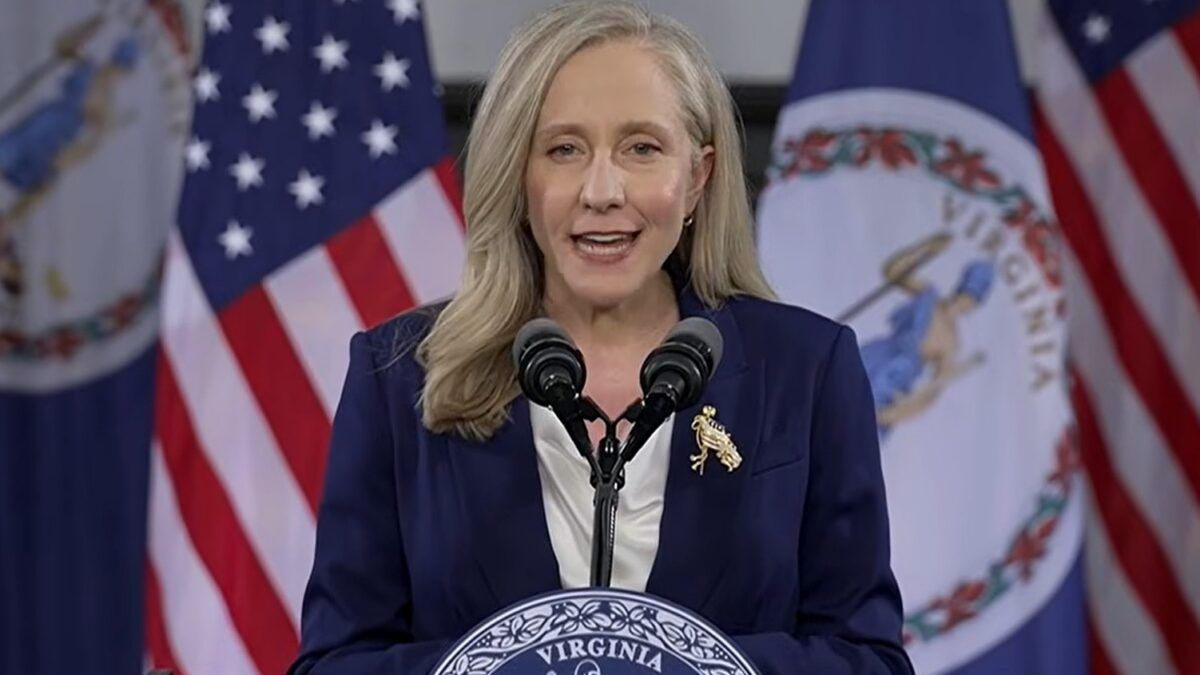
Virginia Passes Bill Requiring State Agencies To Discriminate Against White Men

The bill passed the Senate 21-19 and the House 62-36, almost entirely along party lines.

Mamdani Says Quiet Part Out Loud About Democrats’ Tax-Hiking Agenda

Elected Democrats rarely limit tax increases to wealthy families once in office.

Obtuse GOP Politicians Are Pretending The Courts Will Save Us

There is no evidence of any kind that Supreme Court rulings will stop government from continuing to get much bigger. This kind of make-believe is fatal. At some point it simply becomes a refusal to see where we are.

Democrats Claim GOP ‘Gutted’ Medicaid. Federal Data Shows The Opposite

The latest CBO report illustrates how Medicaid spending, like that of other federal health care programs, continues to grow ever higher.

The debt bomb is ticking, and DC spent the blast shield


America is edging toward a major economic crisis. Not a routine downturn or a mild recession, but something far worse. The Big One. We haven’t hit it yet, and we still have time to change course. But if Washington stays on its current track, trouble is coming.

You don’t need insider access to see it. It isn’t hidden. You only need to look at the numbers.

If Americans insist on responsible budgeting and smaller government, elected leaders will follow. That is how representative government works.

Federal budget documents describe an unsustainable path. Economists across the spectrum say the same. Credit rating agencies have issued warnings. The basic point is simple: We spend far more than we take in, year after year, and the bill keeps compounding.

What makes this moment dangerous is that we have little room left to respond when the next shock hits. We have nearly exhausted our fiscal space, which limits how much more we can borrow without triggering serious consequences. When the next crisis arrives, Washington won’t have the flexibility it relied on in the past. That’s when a bad situation turns into a true break.

Markets are already sounding alarms. Gold and silver prices have climbed. The dollar has weakened. Long-term rates have risen even as short-term rates fall. Foreign governments and major funds have reduced their appetite for U.S. debt. Investors don’t do that out of ideology. They do it when they see risk.

The hard part is not explaining the fix. The hard part is getting the country to accept it.

Too many Americans assume we are immune to the limits that bind every other nation. We are the biggest economy, the world’s reserve currency issuer, the greatest military power. So the thinking goes: Nothing can really happen to us.

That belief is the trap.

If we wait until the crisis becomes obvious to everyone, we will pay a much higher price. The damage will land on ordinary households first, and it will not be easily reversed. It is also immoral to hand our children and grandchildren a country buried under obligations it cannot meet.

RELATED:Washington printed promises. Gold called the bluff.

Damian Lemanski/Bloomberg via Getty Images

The remedy starts with first principles.

America’s founders did not build a system designed for permanent deficits and permanent expansion. They assumed limited government, manageable levels of debt, fiscal balance over time, and rules that protect the public without choking growth.

The economy has two broad parts: the public sector and the private sector. The public sector enforces law, protects the country, and provides basic administration. The private sector produces the goods and services that create real prosperity. When government grows beyond what taxpayers can support, it crowds out growth, drives up costs, and invites the temptation to paper over deficits with money creation.

Fiscal balance means spending and revenue align over time. When spending consistently exceeds revenue, debt rises. When debt becomes too large, governments lean on the central bank, and inflation follows. Inflation pushes interest rates higher and erodes purchasing power.

A growing government paired with chronic deficits becomes a slow-motion squeeze on the middle class through higher prices, higher borrowing costs, and higher taxes.

Regulation has a legitimate role. But today’s regulatory state has expanded into a sprawling, unelected bureaucracy that writes rules with little accountability. Burdensome regulation raises costs, slows productivity, and makes the economy less resilient.

RELATED:Congress needs to go big or go home

Photo by Michael M. Santiago/Getty Images

We need to bring the size of the federal government back in line with what the tax base can support. That means controlling spending, reforming programs that drive long-term obligations, and reining in regulation that serves bureaucracy more than citizens.

None of this is easy politically. Elected officials won’t act if voters demand ever more benefits and services without acknowledging the costs. That’s why public understanding matters.

Reform will require hard choices. It will require changes to benefits. But we can protect those who truly need help while restoring sanity to federal finances. The alternative is allowing events to impose those choices on us in the worst possible way — through crisis.

If Americans insist on responsible budgeting and smaller government, elected leaders will follow. That is how representative government works. The window for orderly reform is still open. It won’t stay open forever.

For once, Medicare is trying something that actually saves money


Medicare is the second-largest program in the federal budget, topping $1 trillion last year. In 2023, it accounted for 14% of federal spending — a share projected to reach 18% by 2032. After years of ballooning costs, something is finally being done to slow the growth. A new Medicare pilot program, the Wasteful and Inappropriate Service Reduction model, borrows a successful private-sector tool: prior authorization. And that’s good news.

Medicare Part B premiums now sit at $185 per month — up 28% from five years ago and a staggering 76% since 2015. Last year, 12% of the 61 million Americans enrolled in Part B spent more than a tenth of their annual income on premiums. That burden is unsustainable.

In a system as expensive and fragmented as ours, no one can afford to keep writing blank checks for low-value care.

WISeR, set to launch in Ohio, Texas, Washington, New Jersey, Arizona, and Oklahoma, will require prior approval for a short list of “low-value” services — procedures that research shows are frequently overused, costly, and sometimes harmful.

To some, the idea of Medicare reviewing certain treatments before covering them may sound like red tape. But when done correctly, prior authorization is not a barrier. It is a guardrail — one that protects patients, improves quality, and helps ensure that both tax dollars and premiums are spent appropriately.

The goal of WISeR is simple: Cut unnecessary treatments and shift resources toward more effective, evidence-based care. Critics warn about the possibility of delays or extra paperwork, and those concerns are worth monitoring. But they don’t negate prior authorization’s potential to make U.S. health care safer, more efficient, and more financially stable.

Prior authorization directly targets some of the most persistent problems in health care. Medicare spends billions each year on low-value services. A 2023 study identified just 47 such services that together cost Medicare more than $4 billion annually. Those are taxpayer dollars that could be put to better use.

The private insurance market shows the same pattern: unnecessary imaging, avoidable specialist referrals, and brand-name drugs chosen over generics all contribute to rising premiums. Prior authorization, when used properly, reins in this waste by ensuring coverage lines up with medical necessity and evidence-based best practices. Research from the University of Chicago shows that Medicare’s prior authorization rules for prescription drugs generate net savings even after administrative costs.

Consider one striking example. Medicare Part B covers wound-care products known as skin substitutes. But an Office of Inspector General report found that expenditures on these products skyrocketed over the past two years to more than $10 billion annually. Meanwhile, Medicare Advantage plans — which rely heavily on prior authorization — spent only a fraction of that amount for the same treatments.

RELATED: When a ‘too big to fail’ America meets a government too broke to bail it out

DNY59 via iStock/Getty Images

More importantly, prior authorization helps promote evidence-based medicine. It curbs outdated clinical habits and reduces financial incentives to overtreat. Health plans consistently say that prior authorization aligns care with gold-standard clinical guidelines, particularly in areas prone to misuse.

Of course, the system must be designed responsibly. A well-functioning PA process should be transparent, fast, and grounded in strong clinical evidence. Decisions should be made in close coordination with the patient’s treating provider. The appeals process must be straightforward. And both public and private payers should be held accountable for improper denials or harmful delays.

When structured this way, prior authorization is far more efficient than the current “pay-and-chase” model, where Medicare pays first and tries to recover improper payments later.

Prior authorization already works in the private sector. It can work in Medicare.

Public and private payers have an obligation to steward the dollars they spend — whether those dollars come from taxpayers or premium-payers. In a system as expensive and fragmented as ours, no one can afford to keep writing blank checks for low-value care. When implemented wisely, prior authorization keeps coverage aligned with medical necessity, elevates the value of care, and helps deliver better outcomes at a sustainable cost.

Do We Really Need to Slash the Debt?

John Tamny, the free-market economics commentator who edits RealClearMarkets, comes out swinging in The Deficit Delusion: Why Everything Left, Right, and Supply-Side Tells You About the National Debt Is Wrong. Perhaps this isn't surprising, given the book's title. It can feel like Tamny is a kid walking through the elementary-school playground, randomly shoving other kids—some of whom are bigger than he—as he attacks one op-ed writer after another for, allegedly, misunderstanding the national debt.

The post Do We Really Need to Slash the Debt? appeared first on .

Illegal alien steals from SNAP program in massive fraud scheme


As more than 40 million Americans prepare for a disruption to Supplemental Nutrition Assistance Program handouts amid the Democrat-led government shutdown, a member of a fraud conspiracy related to SNAP has been brought to justice.

On October 15, an Italian illegal alien living in Oregon was sentenced to federal prison after previously pleading guilty to one count of conspiracy to defraud the United States.

'By siphoning millions of dollars in government funds intended for food-insecure households, this illegal criminal alien proved to be one of the worst of the worst.'

Over the course of 14 months between August 2023 and October 2024, Giovanni Spirea, 29, and his co-conspirators purchased over 120,000 pounds of groceries using electronic skimming devices to steal SNAP benefits.

"Spirea shared stolen account information with other members of the organization, who, along with him, used the stolen benefits to purchase large quantities of infant formula, energy drinks, and other SNAP-eligible nonperishable food items from grocery stores ... and through websites associated with grocery stores offering curb-side pickup," the DOJ said in a press release.

The stolen items were then sold on the black market, the DOJ added.

RELATED: Democrats’ shutdown blame game backfires — even Jake Tapper calls them out on SNAP benefits

Photo by Spencer Platt/Getty Images

Spirea and his co-conspirators operated in Oregon, Washington, and California. The estimated value of the stolen goods is $2.4 million.

“By siphoning millions of dollars in government funds intended for food-insecure households, this illegal criminal alien proved to be one of the worst of the worst,” said April Miller, Homeland Security Investigations Seattle acting special agent in charge.

“Protecting government-funded programs, like the Supplemental Nutrition Assistance Program isn’t just about preserving funds — it’s about safeguarding trust in a vital lifeline that millions of families depend on to put food on the table,” said U.S. Attorney for the District of Oregon Scott Bradford. “Today’s sentencing should deter perpetrators from defrauding American families and the federal government for personal gain.”

Spirea was sentenced to two years in prison, three years of supervised release, and was ordered to pay $61,874.32 in restitution. Sixteen others were charged in the conspiracy.

Like Blaze News? Bypass the censors, sign up for our newsletters, and get stories like this direct to your inbox. Sign up here!