Perpetual victim Fani Willis cries RACISM and SEXISM again, this time over common-sense election law
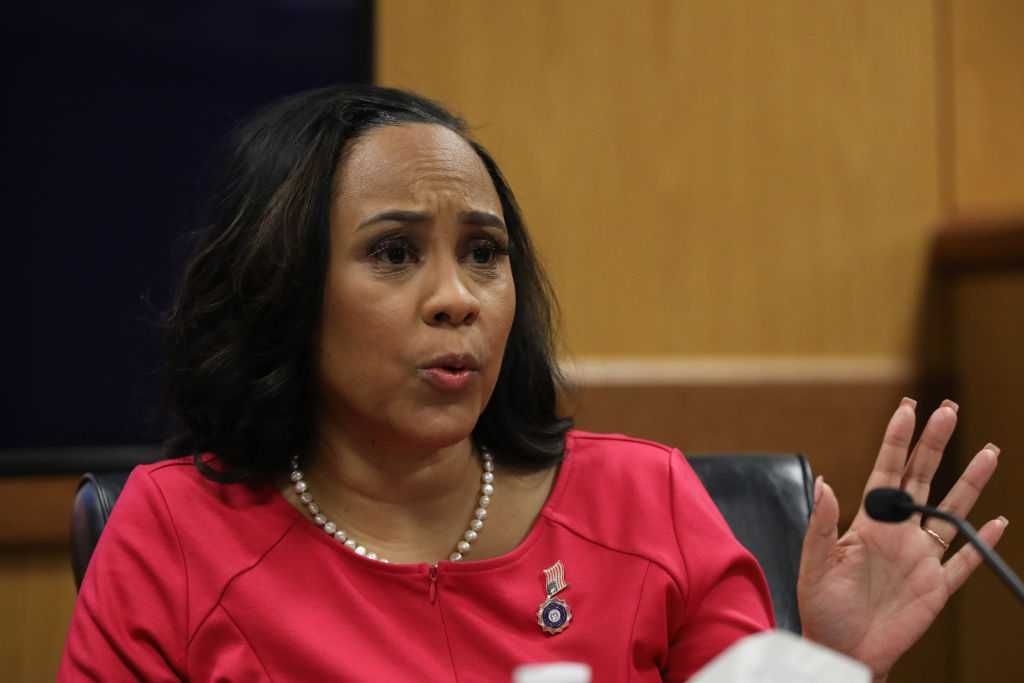


Fani Willis, the Democrat district attorney in Fulton County who tried and failed to throw President Donald Trump in prison, has found a new reason to rage publicly, level groundless accusations of racism, and masquerade as a victim of opposing forces.

To the chagrin of those Democrat officials and other race hustlers who demanded its veto, Georgia Gov. Brian Kemp (R) ratified legislation on Tuesday requiring nonpartisan elections for certain offices in the Peach State's five most populous counties — Fulton, DeKalb, Gwinnett, Cobb, and Clayton — effective Jan. 1, 2028.

It's supposedly 'racist' because the five district attorneys ... are black female Democrats.

Candidates running to become or remain county governing authorities, tax commissioners, superior court clerks, and solicitor-generals must run in nonpartisan elections. County sheriffs are exempt.

Under the law, district attorney candidates will no longer "be nominated by a political party or by a petition as a candidate of a political body or as an independent candidate." They will also forgo a nonpartisan primary, competing only in the general election.

During debate about the legislation in March, House Majority Leader Chuck Efstration (R) said, "The opinion from legislative counsel as it has been given to me [is] that it is constitutional and it treats certain local offices similar to how judges are classified at the local level so that partisan politics is minimized when providing basic local governmental services."

Efstration added, "There is no Republican line and a Democrat line when entering the courthouse."

"We're giving voters the opportunity to rid themselves of district attorneys who are more concerned with playing partisan games than prosecuting and delivering justice," said Republican Rep. Trey Kelley.
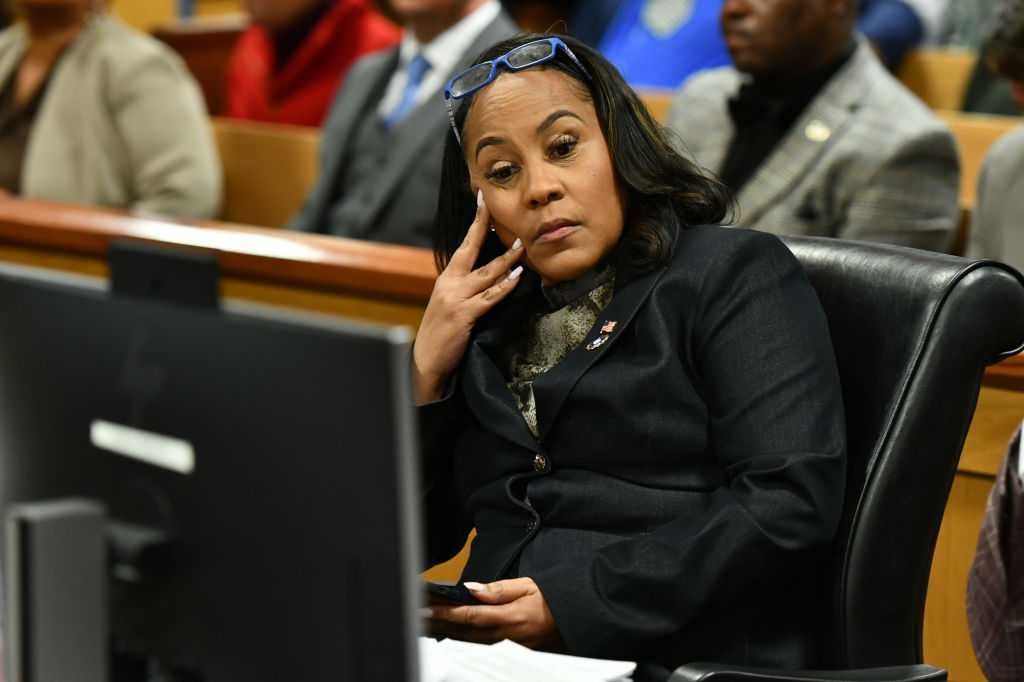
RELATED: Play stupid games: Tennessee GOP makes Democrats pay a heavy price for childish tantrums over redistricting

Dennis Byron-Pool/Getty Images

Democrats — evidently terrified that Georgia voters might cast ballots for individuals, not parties, when choosing officers of the law — are spewing their usual accusations and alarmist rhetoric, claiming, for instance, that the law is, according to Willis, "racist, sexist, and clearly unconstitutional."

It's supposedly "racist" because the five district attorneys in the affected counties are black female Democrats.

Willis said in a joint statement this week with DeKalb County DA Sherry Boston, "House Bill 369 is clearly unconstitutional, and we are appalled at Governor Brian Kemp's decision to sign it into law. This is a blatant attempt by Republicans to give their candidates an edge in Democratic counties by hiding their party affiliation from voters."

After hinting at their bigotry of low expectations regarding the aptitudes of voters in their counties, the Democrat duo promised to take "legal action to have this illegal bill overturned" and noted that "taxpayers will be the ones footing the bill to defend it in court."

Charlie Bailey, chairman of the Democratic Party of Georgia, previously suggested that the purpose of the law was to enable Republicans to "hide their party affiliation and confuse voters to have a hope of competing against the five duly elected Black women district attorneys that this bill was specifically designed to target."

Georgia Democrats received additional bad news this week concerning elections in 2028.

Kemp announced on Wednesday that state lawmakers will convene on June 17 to redraw the Peach State's congressional maps for 2028. While Republicans currently hold nine out of Georgia's 14 congressional districts, they could gain more ground — especially if the state corrects for recent court-ordered racial gerrymanders pursuant to the U.S. Supreme Courts' recent Callais ruling.

Like Blaze News? Bypass the censors, sign up for our newsletters, and get stories like this direct to your inbox. Sign up here!
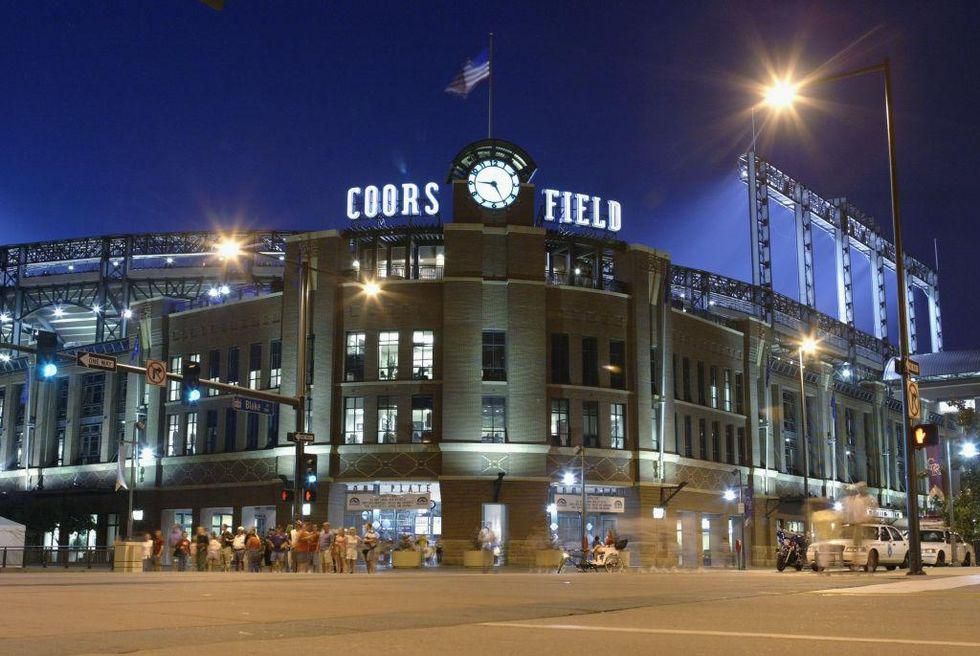

MLB reportedly moves All-Star Game from Georgia to Colorado, a state with similar voter ID laws


Major League Baseball has apparently found itself in the exact "tricky" spot reporters and critics predicted the league would end up in after pulling the 2021 All-Star Game out of Georgia in protest of the state's new voter ID laws. According to a report from the Associated Press, MLB will relocate the All-Star Game to Denver's Coors Field — a move that Georgia Gov. Brian Kemp (R) blasted as hypocritical because Colorado has similar and arguably more restrictive voting laws than Georgia.

Last Friday, MLB commissioner Rob Manfred issued a statement declaring that MLB "fundamentally supports voting rights for all Americans and opposes restrictions at the ballot box."

MLB's statement came after Kemp signed into law sweeping election reforms that, among other changes, would require absentee ballots to be verified with photo ID. Critics accused Georgia Republicans of attempting to suppress the minority vote in the state, despite the fact that the new Georgia law expands early voting for primary and general elections. Several other falsehoods were told about the law, including by President Joe Biden, who falsely claimed the law would suppress the votes of working people and said he would "strongly support" MLB moving its All-Star Game out of Atlanta.

Manfred said Friday "the best way to demonstrate our values as a sport is by relocating this year's All-Star Game and MLB Draft."

The only problem with relocating the game to Denver is, as Gov. Kemp pointed out during an interview on Fox News Tuesday, Colorado has very similar voter ID laws to Georgia.

"Georgia has 17 days of in-person early voting including two optional Sundays, Colorado has 15," Kemp said. "So what I'm being told, they also have a photo ID requirement. So it doesn't make a whole lot of sense to me."

Kemp also criticized the president for appearing at the NCAA championship game in Indiana, given Biden's comments, because Indiana was "the birthplace for the photo ID requirement."

"So hypocritical," said Kemp.

Watch:

Colorado law requires voters to show some form of non-photo identification when voting in person at the ballot box. "All voters who vote at the polls must provide identification. If you are voting by mail for the first time, you may also need to provide a photocopy of your identification when you return your mail ballot," the Colorado secretary of state's website explains.

Acceptable forms of identification include a valid Colorado's driver's license or valid ID card issued by the Department of Revenue, a valid U.S. passport, a copy of a recent utility bill, bank statement, paycheck, or other government documents.

When voting absentee in Colorado, voters only need to provide identification for the first time they cast an absentee ballot. The state uses signature matching to verify a voter's absentee ballots in subsequent elections.

The new Georgia law requires identification for in-person and all absentee voting. Georgia voters without ID can use the last four digits of their Social Security number, a utility bill, bank statement, government check, paycheck, or other government documents (similar to Colorado) as acceptable forms of ID, Secretary of State Brad Raffensperger's office told Fox News.

In addition to appearing hypocritical, MLB's decision may have a disproportionate effect on minority-owned businesses in Atlanta, which will lose revenues from the All-Star Game to Denver, Colorado. The 2019 All-Star Game in Cleveland, Ohio, generated an estimated $65 million in local economic activity. Nearly 30% of the businesses in Atlanta are black-owned, according to the Atlanta Journal-Constitution. Census data reported by Fox News indicates Atlanta is 51% black, while Denver is 76% white.

A Georgia tourism official told CNN on Friday that MLB's decision to move its All-Star Game out of Georgia could have a $100 million economic impact on the state.

Georgia Republicans want Coca-Cola products removed from their offices after CEO criticizes new voting law


A group of Republican legislators in Georgia want Coca-Cola products removed from their offices after the company's CEO criticized the new election reforms signed into law by Gov. Brian Kemp (R).

In a letter addressed to Kevin Perry, the president and CEO of the Georgia Beverage Association, eight lawmakers from the state House on Saturday accused the Coca-Cola company of spreading misinformation about Georgia elections law and caving to "out of control cancel culture."

"Your company has made the conscious decision to perpetrate a national dialogue which seeks to intentionally mislead the citizens of Georgia and deepen a divide in our great State," the lawmakers wrote. "We have the responsibility to all of Georgia not to engage in those misguided intentions nor continue to support corporations who choose to."

The letter was signed by GOP state Reps. Victor Anderson, Clint Crowe, Matt Barton, Jason Ridley, Lauren McDonald III, Stan Gunter, Dewayne Hill, and Marcus Wiedower.

Some Georgia Republican state legislators are removing @CocaCola products from their statehouse offices after the A… https://t.co/kbiTII19qK
— Greg Bluestein (@Greg Bluestein)1617492895.0

On March 25, Gov. Kemp signed a sweeping election reform bill into law that would require absentee ballots to be verified with a photo ID and expand early voting for primary and general elections, among other changes. Democrats including President Joe Biden and failed Georgia gubernatorial candidate Stacey Abrams have claimed the new law will make it harder for people to vote, particularly minorities and working-class Georgians. Biden falsely claimed that the new law "ends voting hours early so working people can't cast their vote after their shift is over," a claim refuted by experts who note the law does not change Election Day voting hours and actually expands opportunities to vote early.

Republicans have also faced backlash over the law from several corporations, including Coca-Cola, and prominently the Major League Baseball Association, which pulled its All-Star Game out of the state because of the new law.

Last week, Coca-Cola CEO James Quincy told CNBC the law was "unacceptable." He released a statement on behalf of the Coca-Cola Company "to be crystal clear and state unambiguously that we are disappointed in the outcome of the Georgia voting legislation."

Quincy asserted that some measures of the bill "would diminish or deter access to voting."

"Given Coke's choice to cave to the pressure of an out of control cancel culture, we respectfully request all Coca-Cola Company products be removed from our office suite immediately." the lawmakers wrote in response. "Should Coke chose to read the bill, share its true intentions and accept their role in the dissemination of mistruths, we would welcome a conversation to rebuild a working relationship."