College graduates are getting an ‘F’ in the real world


We graduated from Davidson College in 1982 and 2025, respectively. Connie serves on the board of Davidsonians for Freedom of Thought and Discourse, an alumni group that supports free inquiry and sponsors student organizations including Young Americans for Freedom and Turning Point USA. Hannah interned with DFTD during her senior year, where we met. Although she majored in biology, her work with DFTD and other campus groups led her to the Oversight Project in Washington, D.C.

Our experiences, separated by four decades, have produced the same concern: Higher education is failing to prepare too many students for demanding careers and responsible citizenship.

The answer is not to replace progressive indoctrination with conservative indoctrination. It is to restore the conditions under which education can do its job.

Connie began seeing the change in 2015. For nearly 40 years, her career has involved preparing, interviewing, and placing college graduates in their first jobs. She saw a growing share of seniors arrive less engaged and less prepared. By 2020, retention among some of her placements had fallen sharply. One employer told her that of five Davidson graduates it had hired, two had been fired within 18 months and a third was on probation. She also found fewer students eager to test themselves at the start of their careers.

At Davidson, a DFTD review of public voter registration records found that 3.17% of faculty were registered Republicans, compared with 46.03% registered Democrats. Party registration is not a complete measure of ideology, of course, but the imbalance is hard to dismiss. When one outlook dominates, students receive fewer opportunities to challenge assumptions and defend unpopular conclusions. Davidson is hardly alone. Connie also serves on the board of the Alumni Free Speech Alliance, a national network of alumni groups confronting similar problems.

Open inquiry is vital because employers value people who can think critically, absorb disagreement, and defend a position under pressure. Hannah saw the opposite at Davidson. One professor offered to help students find abortion services but did not mention prenatal or parenting resources. Another dismissed the possibility that COVID-19 originated in a Wuhan laboratory. Several of Hannah’s professors canceled class after Donald Trump won the 2024 election. Those episodes sent a clear message about which views were welcome.

Professors also control grades, giving students another reason to keep dissenting opinions to themselves. Conservative students learn to calculate the social and academic cost of speaking. Students who echo the campus consensus rarely face the same test.

RELATED: Campus free speech is alive — barely
Robyn Beck/AFP/Getty Images

Administrators shape the climate beyond the classroom. They approve speakers, recognize student groups, enforce conduct rules, and decide whether controversial events can proceed. Conservative groups at Davidson have repeatedly encountered restrictions that pushed events off campus, according to our work with DFTD. The point is not that every administrative decision is ideological. It is that vague rules and uneven enforcement teach students that permission matters more than argument.

DEI policy offers one example. President Trump’s January 2025 executive order directed federal agencies to end illegal race- and sex-based preferences and enforce civil rights law; it did not simply “ban DEI” in every college classroom.

The harder question is whether universities that formally changed policies continue embedding DEI concepts in curricula. In July 2025, the Oversight Project requested syllabi and course materials from more than 70 UNC-Chapel Hill classes. Faculty resisted the breadth of the request, and documents later surfaced through other channels. Months later, UNC System President Peter Hans adopted a systemwide policy treating syllabi as public records and requiring a searchable database.

Transparency will not settle every curriculum dispute, but it gives students, parents, and taxpayers a chance to see what public universities teach.

Anonymous bias-reporting systems raise a related concern. Maxient has said its platform receives about 7,000 reports a day across roughly 1,300 institutions, but that figure covers many kinds of campus cases — not 7,000 anonymous bias complaints. Bias portals are only one use. Even so, FIRE has documented hundreds of campus bias-response systems that invite reports about protected expression. Whatever administrators intend, systems that allow anonymous complaints about speech can make students hesitate before challenging campus orthodoxy.

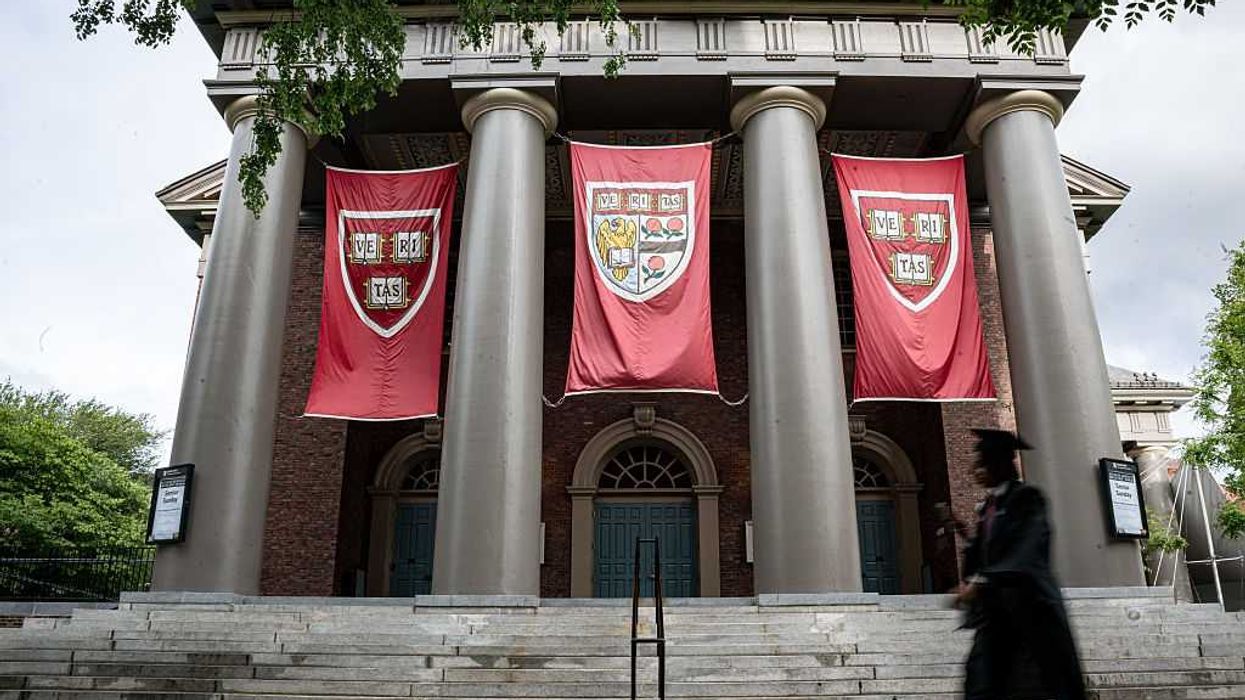
Academic standards deserve scrutiny too. Davidson’s Class of 2025 profile shows that roughly three-quarters of seniors had GPAs at or above 3.5, the college’s threshold for cum laude. Harvard’s faculty has now voted to limit flat A grades to 20% of a course, plus four additional students, beginning in fall 2027. The policy came after flat As reached two-thirds of Harvard College grades. Elite institutions do not adopt measures like that unless grade compression has become impossible to ignore.

Meanwhile, national academic performance is moving the wrong way. On the 2024 National Assessment of Educational Progress, only 35% of 12th-graders scored at or above Proficient in reading and 22% in math. Nearly half fell below Basic in math. Yet the National Center for Education Statistics projects colleges will award about 2.04 million bachelor’s degrees in 2025-26, roughly twice the 1989-90 total. More degrees are not a problem by themselves. The problem is expanding credentials while the preparation beneath them weakens.

RELATED: Want to think fearlessly like Charlie Kirk? Take the 28 free courses that shaped him.
Hillsdale College

Employers see the consequences. In a 2024 survey commissioned by Intelligent.com, 79% of companies that hired recent graduates said they had placed at least some underperforming hires on performance improvement plans, and 60% said they had fired at least some. The survey has limits, but the signal matches what Connie has heard from employers: Too many graduates need basic workplace habits taught after graduation.

Weak preparation, inflated grades, and narrow intellectual environments also leave many graduates in jobs that do not require their degrees. A 2024 report from the Strada Institute for the Future of Work and the Burning Glass Institute found that 52% of graduates were underemployed one year after college and 45% remained so a decade later. That is not evidence that college causes underemployment, and the figure varies greatly by major and internship experience. It is evidence that a diploma alone no longer guarantees a college-level start.

New York’s 13th Congressional District shows the civic stakes. In June, democratic socialist Darializa Avila Chevalier defeated longtime Rep. Adriano Espaillat in the Democratic primary. Chevalier attended Columbia and helped organize the pro-Palestinian movement on campus. She was involved in launching Columbia University Apartheid Divest, which seeks the “total eradication of Western civilization.”

Chevalier’s success cannot be blamed on the university alone, but campuses that teach students to regard their country primarily through oppression, grievance, and ideological conformity should not be surprised when some graduates carry those habits into politics.

This is why the problem is larger than a few offensive syllabi or one-sided classroom discussions. Colleges are supposed to prepare students to enter institutions they did not design, work alongside people who disagree with them, accept criticism, recover from failure, and distinguish argument from injury. Grade inflation, ideological conformity, administrative overprotection, and weak career preparation all work against those goals.

The answer is not to replace progressive indoctrination with conservative indoctrination. It is to restore the conditions under which education can do its job: serious academic standards, genuine intellectual diversity, transparent curricula, freedom to argue, and a campus culture that expects students to become adults.

Parents spend enormous sums on college, and students devote four formative years to earning their degrees. They deserve more than a credential and shelter from challenging ideas. They deserve an education that prepares them for work, citizenship, disagreement, responsibility, and life beyond the campus gates.

Artificial Intelligence Is Rewarding High School Grads For Being Dishonest Frauds

With widespread AI use, what distinguishes top graduates from their lower-ranked classmates is often just their greater willingness to cheat and lie about their work.

Ivy League Ideological Monoculture Is Useless To The U.S. Military

But the left would rather sacrifice the academy than reverse track.
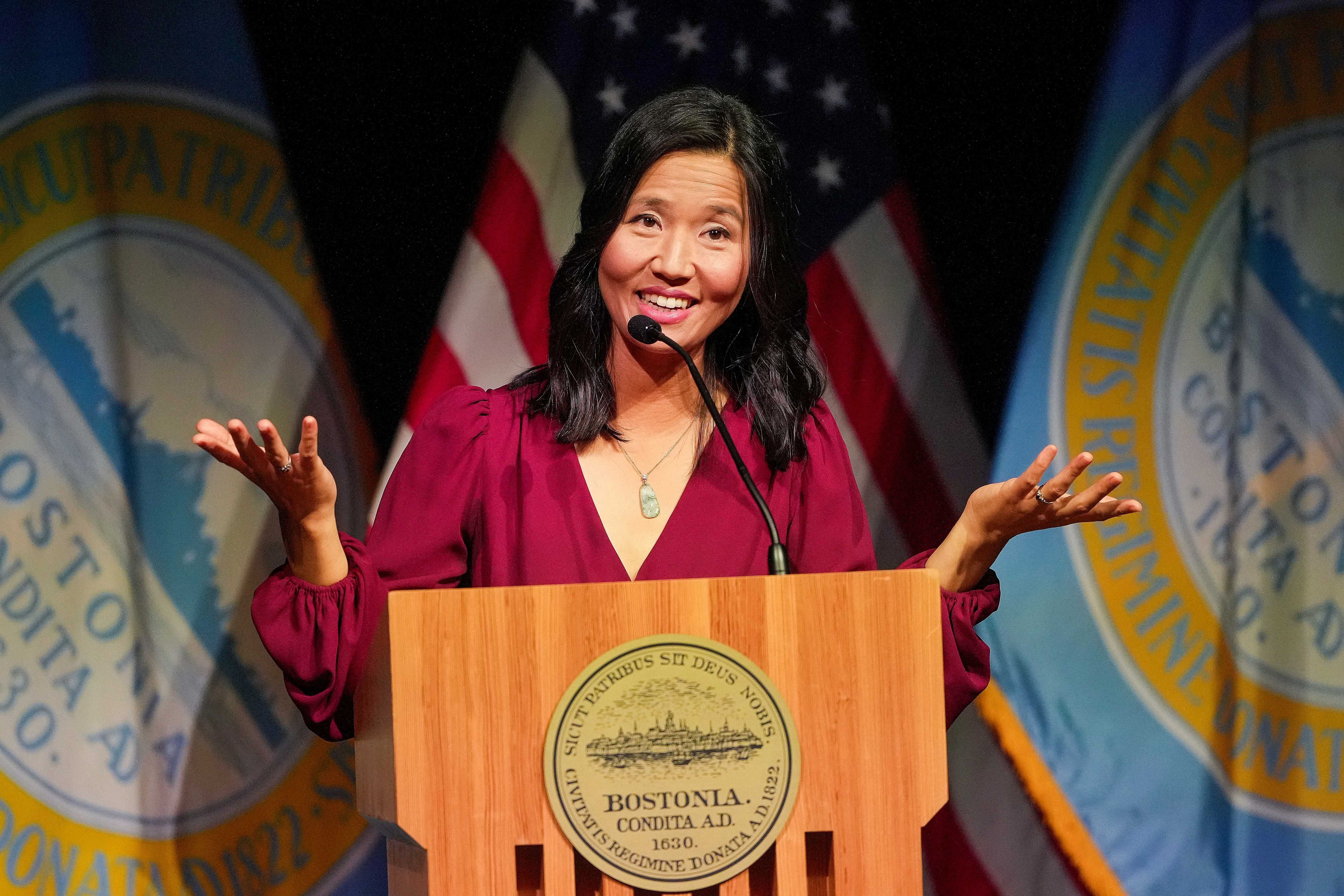

Boston mayor celebrates 'historic' school graduation rates — after banning 'F' grades, hiring $120K equity consultants


Officials in Boston are celebrating the highest graduation rates in their history after significantly lowering standards for students and hiring "equitable grading policy" consultants, according to a bombshell analysis.

Boston Mayor Michelle Wu (D) announced earlier in March that the graduation rate at Boston Public Schools had reached a new record high of 81.3%. The previous high had been 81%.

'The increase in graduation rates is more the result of policy changes than of students' rising academic achievement. And it comes at the expense of students' readiness for the real world.'

"I say every day around the city that our top priority is making Boston a home for everyone, and that has everything to do with our young people, our schools, school communities, and opportunities for families in Boston," Wu said at a press conference. "That is the story behind these numbers."

But another story behind these numbers says that the figure just represents grade inflation and that actual student achievement results have not improved at all.

An analysis from City Journal of the Manhattan Institute found that other metrics showed no improvement despite the allegedly inflated graduation rates.

BPS students did not score any better on the math and reading portions of the SAT, according to the analysis. Math scores for lower income students declined by 5%, even as their graduation rates improved.

Reading and math scores for English language learners fell by 9% and 13%, respectively, as their graduation rates improved by an astounding 21%, the analysis claimed.

And only about 40% of BPS 10th-graders meet expectations for reading and math in the Massachusetts Comprehensive Assessment System testing, both of which are lower than those from 2019, it said.

While Wu claimed they had not lowered student expectations or moved goalposts to artificially jack up graduation rates, the City Journal report claimed they had done just that.

One policy had teachers assign "incomplete marks" rather than give students failing grades, and the district spent $120,000 on education consultants who advocated for "equitable grading policies."

RELATED: School credit 'recovery' plans are apparently being misused for racial equity — and disadvantaging students even more

Critics are noting that many schools are offering "credit recovery" programs where students are able to make up failing grades with minimal effort, allowing them to move on to the next grade will remaining woefully uneducated.

"The increase in graduation rates is more the result of policy changes than of students' rising academic achievement. And it comes at the expense of students' readiness for the real world — a cost that the students themselves will ultimately pay," the report concluded.

Like Blaze News? Bypass the censors, sign up for our newsletters, and get stories like this direct to your inbox. Sign up here!

Study: K-12 Grade Inflation Making American Kids Dumber, Costing Them Millions

When teachers inflate grades — giving higher marks than students’ actual performance warrants — the effects ripple far beyond the classroom.

School credit 'recovery' plans are apparently being misused for racial equity — and disadvantaging students even more


An educational program meant to help students make up for their mistakes in school is apparently being misused by racial equity proponents and leading to children receiving high grades for very little work.

Credit recovery is a practice in which students, usually of high-school age, are given a second chance to learn a subject and prove their proficiency in that subject outside of normal class time.

'Credit recovery is the scandal hiding in plain sight in American education.'

Proponents say the practice can be very positive and effective when students fail because of circumstances out of their control, such as a death in the family or sudden financial loss and duress.

But in recent years, the program has seemingly been manipulated by diversity, equity, and inclusion advocates, resulting in even worse educational outcomes. Rather than giving students a second chance to prove themselves, the policy is being abused to unfairly allow failing students to pass on to the next grade level without actually completing learning objectives.

Some manage to complete the "recovery" work through make-up courses that can last a few hours or even a few minutes.

"The credit recovery classes have become, in many instances, get-out-of-jail-free cards for students who are chronically absent, truant, or are chronic disruptions in class," wrote Mike DiMatteo, a former teacher, for the Freedom in Education organization.

"They're receiving the same credit, but doing significantly less work — often as little as one-third to one-half of what a traditional course requires," he continued. "The evidence supports these concerns: Critics have raised alarms when students complete a semester of work in a matter of weeks or even days. In one egregious example, the NCAA discovered students receiving grades and credits for a semester's worth of work in a matter of days, sometimes hours, and in some cases just minutes."

DiMatteo cited one anecdote of a student who received an A- and a year's worth of credit in biology after only one four-hour recovery class split over two days.

"In Los Angeles, which reported that 16,000 students took at least one credit recovery course in 2016-2017, a student described raising his biology grade from an F to a C in one week," he added.

One study from 2020 found that credit recovery policies were being used to help disadvantaged black students but that often they ended up hurting rather than helping the students.

RELATED: Mass. teachers union says standardized tests have allowed 'white supremacy to flourish'

Robert Pondiscio, a teacher and American Enterprise Institute senior fellow, calls it an educational "scandal."

"Credit recovery is the scandal hiding in plain sight in American education," he wrote. "When districts say they've raised graduation rates to pre-COVID levels, ask what percentage of graduates finished with one or more classes completed with 'credit recovery.'"

The policy is just one part of the puzzle explaining how public schools are seemingly failing children more and more, as standardized testing shows across the nation.

Like Blaze News? Bypass the censors, sign up for our newsletters, and get stories like this direct to your inbox. Sign up here!

Welcome to Harvard, where studying is now a hate crime


News broke last week that Harvard University — that ancient temple of American prestige and intersectional pride — may finally attempt to curb its notorious grade inflation. For decades, Harvard has handed out A’s like party favors at a preschool graduation. But now, administrators seem to fear the public has noticed that every graduate’s transcript reads: Congratulations! You’re brilliant.

Naturally, the students have responded with calm reflection and humility.

The American university had one job — to cultivate wisdom and virtue. If Harvard students now treat studying as oppression, maybe it’s time to grade the universities themselves.

Just kidding. They’re in full moral meltdown — which is remarkable, since most of them deny morality exists unless it’s part of an identity rubric. Touch their grades, though, and suddenly they rediscover absolute truth, glowing with divine fire.

What provoked this crisis of the soul? The rumor — merely the rumor — that they might have to study.

One distraught undergraduate complained that stricter grading would force students to spend time on academics instead of extracurriculars. And as every Harvard student knows, college is all about extracurriculars. Academics are a high-school hazing ritual — a price of entry to the elite club where you never have to study again.

Other students reportedly spent the day crying. It’s a hard life.

When they lamented losing time for extracurriculars, some surely meant yachting. Others meant activism. Who will dismantle “colonizing heteronormativity” if the revolution has to pause for midterms? Who will liberate the oppressed from the tyranny of citations?

Their outrage, ridiculous as it sounds, reveals at least three uncomfortable truths about the American university system — and the students it produces.

1. They worked hard once so they never have to again.

Some students said they nearly killed themselves to get into Harvard. Not to study there — don’t be ridiculous! — but to ensure that they’d never need to study again.

If you’re an employer expecting a Harvard graduate to be a disciplined thinker, brace yourself. You may be hiring someone who hasn’t cracked a book in years. Many of them majored in activism and minored in demanding that you pay them to keep doing it.

These students treat the workplace as an extension of campus — a new platform for “advocacy,” complete with your office space, Slack channels, and HR department. You wanted an employee. You may get an organizer.

2. Entitlement isn’t an accident — it’s the admissions policy.

Harvard attracts a particular type: students convinced that excellence is their birthright and that hard work is a microaggression.

Some even claim that “work ethic” must be decolonized as a relic of whiteness — a fragile idea until you remember they say it while demanding an A for not working. One almost admires the nerve.

We should stop treating “Harvard graduate” as a compliment. It’s becoming a warning label. These students expect to skip effort, skip merit, skip discipline — and demand that you “check your privilege” if you object.

Why wouldn’t they? Harvard built an entire institutional culture around their sensitivities. The modern university no longer shapes students; it rearranges itself around their demands.

3. The university system has failed.

The Harvard meltdown exposes a national rot. For decades, Americans have been told that college is essential for success. Universities responded by expanding enrollment, inventing dozens of useless “studies” degrees, building administrative empires, and raising tuition to swallow every loan dollar available.

The result?

Now we’re mass-producing indebted graduates with inflated expectations of high-paying careers and no knowledge or skills to justify either. Education has become a luxury accessory — a handbag whose value lies in the logo.

To test the system’s bankruptcy, try asking a recent Ivy League graduate:

  • What is wisdom?
  • What is the highest good?
  • How did your education make you a more virtuous person?

You’ll likely get a breathless word salad about “advocating for marginalized identities and dismantling structures of oppression.” Ask how that helps anyone achieve the good, and you’ll get a vacant stare fit for a zoning map.

Of course, technical fields like engineering still demand real work. But those are small islands in a vast sea of bureaucratic waste. Most universities now operate as billion-dollar community centers with a few classes on the side — entertainment disguised as education.

RELATED: The real fraud in higher ed: Universities need that Chinese money

Photo by VCG / Contributor via Getty Images
Can the system be saved?

Maybe, but don’t bet on it.

You can’t “hire your way out” of a faculty that’s 97% left or far left. That’s not an imbalance; it’s a monoculture. And monocultures don’t reform themselves.

But the reckoning is coming. Enrollment is falling, budgets are exploding, and public trust is collapsing. The only thing keeping many universities alive is their ability to convince students that identity activism and LGBTQ+ advocacy are transcendent educational callings.

The solution is simple: Stop paying for the nonsense. No one is obliged to spend $80,000 a year to hear a gender-theory lecturer attack the biblical definition of marriage. No law, moral or otherwise, requires funding your own indoctrination.

Let them lecture to empty rooms.

The American university had one job — to cultivate wisdom and virtue. If Harvard students now treat studying as oppression, maybe it’s time to grade the universities themselves.

And the report card is long overdue.

'I Was Just Sobbing in Bed': Harvard Students Distraught as School Says It Gives Out Too Many As

Harvard College students reacted hysterically to a "soul-crushing" report from the school arguing that it's giving out too many As and must enact grading reforms to avoid "damaging the academic culture of the College." One student was so distraught she "skipped classes" and "was just sobbing in bed."

The post 'I Was Just Sobbing in Bed': Harvard Students Distraught as School Says It Gives Out Too Many As appeared first on .

How the National Intelligence University became a diploma mill for intel amateurs


The National Intelligence University, a kludge organization masquerading as an institution of higher learning, is likely the organization that seeded some of the bozos over at National Security Agency who were busy sexting instead of decrypting. As all 18 U.S. intelligence agencies send their mid-career personnel (civilian and military both) to NIU for continuing education, you can bet that at least some of the chief exporters of the extremist DEI nonsense that took hold at NSA and elsewhere were graduates of NIU.

The Department of Government Efficiency should pay a visit to the NIU campus (really just one building) in Bethesda, Maryland. The institution needs a thorough review — not necessarily to eliminate it but to scale back its most ineffective parts and personnel. The goal should be to restore the focus on meaningful instruction and improve the quality of its graduates.

NIU is as dysfunctional as the broader American higher education system — and for the same reasons. It doesn’t have to be this way.

NIU’s executive vice president, Patricia A. Larsen,has aggressively expanded DEI initiatives while neglecting common sense and academic rigor. Her approach puts the sensitivity of students over effective instruction, often at the expense of the faculty and staff. God forbid that any instruction ruffle the feathers of our delicate and sensitive intelligence community students! As a result, the quality of both incoming intelligence personnel and graduating students has declined sharply.

Since 1992, I have lectured at NIU and its predecessor organizations — the Defense Intelligence College, the Joint Military Intelligence College, and later the National Defense Intelligence College. Over the years, I have witnessed a significant drop in the quality of students and their academic preparedness.

Since 2021, when the Office of the Director of National Intelligence took control of the university, the institution has adopted an inflated sense of its own importance (doubtless with some input from the CIA). The ODNI lacked a clear plan for the university and had little understanding of its curriculum. This mismanagement, combined with a shift toward imitating civilian higher education practices, has severely undermined NIU’s standards.

Now, it wants to emulate prestigious schools like Harvard or Virginia Tech, but, in reality, it more closely resembles a military staff school or community college.

NIU’s current approach includes lax, student-centered learning policies that allow students to influence what is taught. Admission standards have dropped sharply — the university no longer requires GRE scores and accepts nearly everyone who applies. Many students and graduates struggle with basic writing skills, such as forming coherent sentences with proper subject-verb agreement. Grade inflation is rampant, with 4.0 GPAs now the norm.

Today, NIU attracts government edu-crats who rely on PowerPoint slides rather than effective teaching methods. It has also become a degree mill for students who lack writing and reasoning skills. In the past, I reviewed their unclassified theses and papers, which often consisted of fragmented sentences on slides written in text-message shorthand — hardly graduate-level work.

The university’s staff has also grown bloated, consisting mostly of non-teaching personnel who try to mimic large state universities. This is absurd given that NIU’s student body is smaller than that of many medium-sized high schools. Entire departments contribute nothing to the university’s core mission: providing high-quality, graduate-level education in strategic intelligence.

Worse, management at NIU has long focused on increasing the number of graduates, regardless of their competence, instead of producing fewer but better-prepared intelligence professionals. A search of the public course catalog reveals no instruction in ethics. The emphasis on quantity over quality risks corrupting the entire intelligence community.

This lack of standards may help explain why the intelligence community includes hundreds of people like those Director of National Intelligence Tulsi Gabbard fired last week from the National Security Agency for using classified systems to exchange lewd and obscene messages. If NIU enforced higher standards in reading, writing, reasoning, and ethics, it might produce graduates with the integrity, discipline, and dedication that once defined both military officers and intelligence personnel. Sadly, this does not seem to be the case today.

As a result, NIU is as dysfunctional as the broader American higher education system — and for the same reasons. It doesn’t have to be this way.

The DOGE and Gabbard must take decisive action to clean up the NIU. After Gabbard’s swift move to fire the NSA employees involved in misconduct, it’s clear that bold steps can yield results.

To prevent further decline in the intelligence community, the DOGE and Gabbard should conduct a thorough review and eliminate unnecessary activities and staff positions that do not directly contribute to effective teaching. NIU’s focus must return to preparing the next generation of intelligence professionals with the skills needed for the art and craft of intelligence work.

Public Elementary Schools Deploy Leftists’ Favorite DEI Terms — And Refuse To Define Them

The left's strategy is to redefine words that have clear definitions while being intentionally vague about terms like 'marginalized groups.'