Americans Who Say Economy, Politics Rigged Against Them Even Higher Than Right After Great Recession, Poll Shows
'historic levels of anger and disgust'
Like a highly contagious mind virus, democratic socialism is spreading fast among young Americans. The numbers, the polls, and the election results all point in the same direction: A growing share of the next generation is not just flirting with socialism — it is warming to it.
One poll from late 2025 found that nearly 60% of Americans ages 18 to 24 — and well north of 50% ages 25 to 29 — said they would support a democratic socialist for president in 2028. That support even included about a quarter of self-identified Republicans and 42% of moderates.
America needs a return to proper free-market economic policies — and a cultural renewal that treats liberty not as a slogan, but as a birthright worth defending.
Recent local elections reinforce the point. Democratic socialist mayors on both coasts — Zohran Mamdani in New York City and Katie Wilson in Seattle — won close to 80% of the youth vote in their respective races.
Plenty of institutions deserve blame for this trend. Public schools. Teacher unions. Academia. Legacy media. Social media. Hollywood. Parents too. Each has played a role in shaping how young Americans see the country and what they think “fairness” requires.
But focusing on those inputs misses the deeper driver.
A troubling share of young Americans believes the economy is rigged against them.
In late 2025, the Heartland Institute and Rasmussen Reports conducted polls on how young Americans view the U.S. economy and the American dream. The results were bleak. Only about 2 in 10 young Americans said they expect their economic future and personal happiness to be better than their parents’. Roughly three-quarters said housing costs have reached a “crisis level,” and they believe their odds of owning a home are shrinking by the day.
That despair didn’t come from nowhere.
This generation came of age in the aftermath of the Great Recession. They watched corporate bailouts become routine and “crony capitalism” harden into a feature of the system. They watched politicians arrive in Washington broke and leave rich, often by playing stock-market games that would end careers in the private sector.
They grew up under the shadow of foreign wars that burned trillions on “nation-building” while much of America decayed. They watched the dollar lose value as Washington normalized out-of-control spending, money printing, and debt accumulation. They watched manufacturing shrivel while leaders prioritized globalism over domestic production, dimming the prospects for secure, high-paying jobs.
RELATED: The party that made life more expensive wants credit for noticing
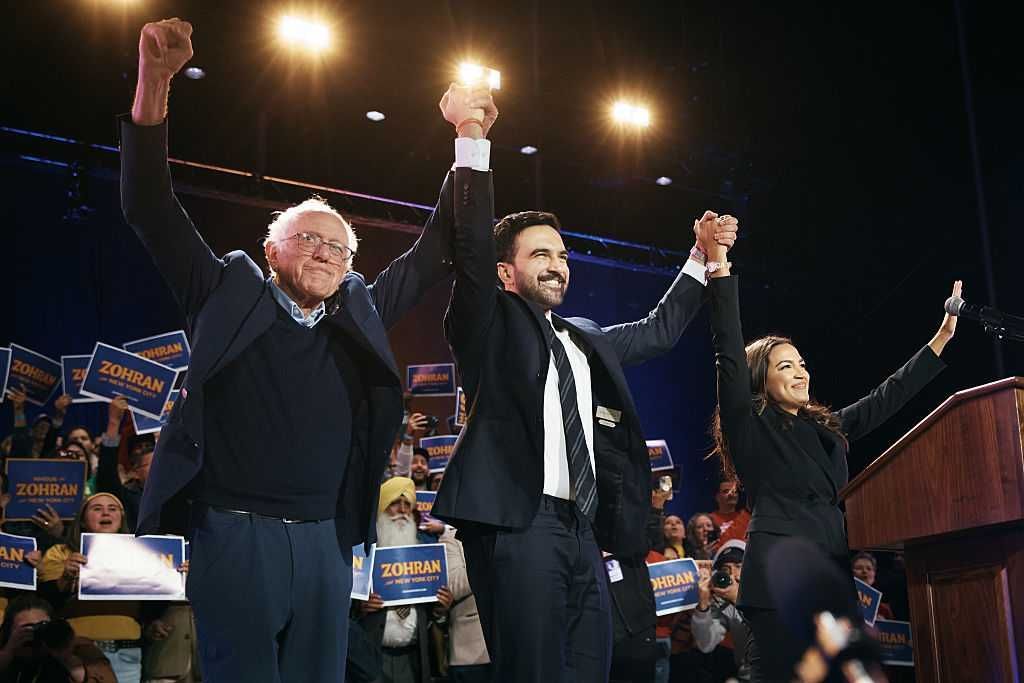
Put it together, and you get a generation primed to reject the system — and open to any ideology that promises to punish the winners and rewrite the rules.
Layer on the post-9/11 surveillance state, and the picture darkens further. Many young Americans have never lived in a country where privacy and liberty felt secure. They’ve grown numb to constant monitoring and to platforms that decide what they see, share, and believe. It should not surprise anyone if their commitment to free speech, property rights, and personal liberty weakens under that pressure.
That is why diagnosing the rise of democratic socialism requires more than blaming schools or Hollywood. Those are symptoms and accelerants. The cause is deeper: America has drifted away from too many of the principles that made it a beacon of freedom and a land of opportunity.
If that is true, the remedy won’t come from scolding young Americans for their politics. It will come from proving, again, that free markets can build a stable life, that honest work can buy a home, and that the rules apply to the powerful as well as the weak.
To reduce the appeal of democratic socialism, America needs a return to proper free-market economic policies — and a cultural renewal that treats liberty not as a slogan, but as a birthright worth defending.
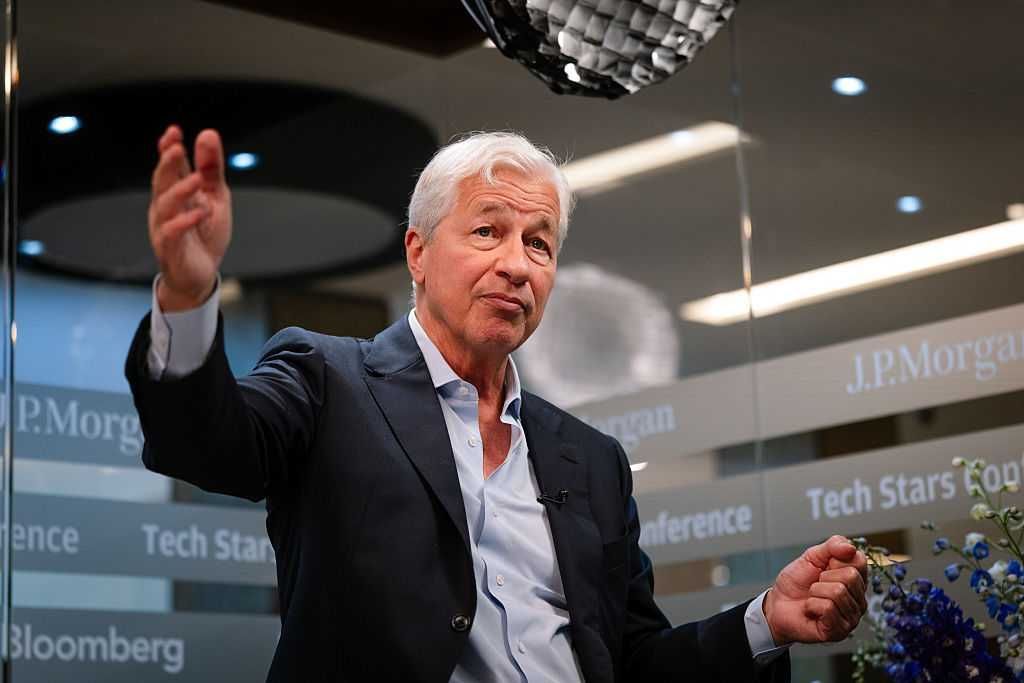
Jamie Dimon has been running JPMorgan Chase for nearly two decades. The business press still hails him as the man who steered the bank through the 2008 financial crisis.
I’m less impressed. It’s easy to look steady at the helm when you’re floating on a $29 trillion sea of taxpayer bailouts.
This is what half a century of bipartisan corruption produces: a crony capitalist system that privatizes profit, socializes loss, and lets the rest of us drown.
Yes, Dimon saw the 2008 crash coming and made some smart adjustments ahead of the collapse. Credit where it’s due — barely. But once the dust settled, JPMorgan rewarded itself handsomely for surviving the storm.
JP Morgan said yesterday that its earnings "fell short" of their potential last year — but it still felt able to hand its investment bankers a 22 per cent increase in their bonuses.
Kicking off what could be a stormy reporting season, America's second-largest bank paid them $9.3bn, compared with $7.7bn in 2008. Total pay for its 222,315 employees came in at $26.9bn — 18 per cent from $22.7bn the year before — largely because of a sharp increase in bonuses paid throughout the bank. The announced sparked outrage among critics who described the figures as "obscene."
"Obscene" doesn’t begin to cover it.
So when Dimon made headlines a couple of weeks ago with his “cockroaches” comment, I didn’t rush to celebrate another round of supposed insight.
“When you see one cockroach, there are probably more, and so everyone should be forewarned of this one,” Dimon told analysts, referring to the bankruptcies of subprime auto lender Tricolor and auto-parts maker First Brands.
Dimon’s metaphor was awkward enough — he mentioned two cockroaches while warning about seeing just one. But worse, he got caught by the same kind of subprime rot that tanked the global economy in 2008.
“Dimon said that JPMorgan is reviewing its controls after the Tricolor bankruptcy and said the $170 million loss is ‘not our finest moment.’”
No kidding. His “cockroach detector” still doesn’t work.
Now Dimon is back in the headlines again for another round of supposed “foresight.”
“JPMorgan Chase CEO Jamie Dimon warned in an interview that the stock market could be in line for a significant correction within the next few years amid heightened uncertainty. Dimon told the BBC that there is an elevated risk of a stock market correction in the next six months to two years, saying, ‘I am far more worried about that than others.’”
Glad to meet you, Mr. Dimon. Some of us have been worried for decades.
RELATED: America’s debt denial has gone global
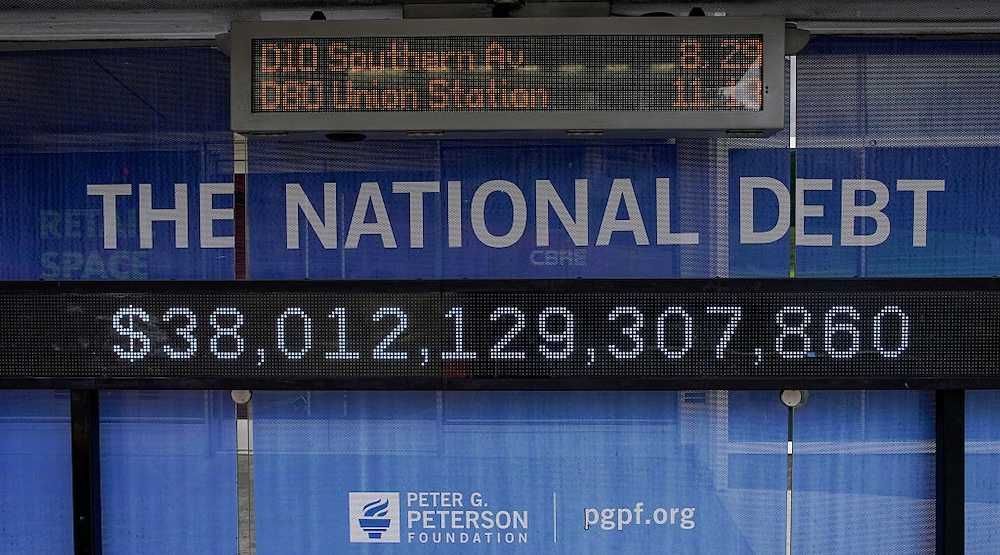
Back in 1989, when my high-school history teacher asked the class to name America’s biggest problem, I said “the federal debt.” Not just because debt is bad, but because Washington was pretending deficits didn’t matter — and voters let them.
Nearly 40 years later, nothing has changed. The numbers are bigger. The lies are the same. Ignore a problem long enough, and it grows until it devours you.
Our economy isn’t a Mr. Potato Head toy, where government spending sits neatly apart from everything else. It’s one big pile of money — and the federal government keeps shoveling from the productive side to the wasteful side.
Every dollar borrowed for political vanity projects is a dollar you can’t use to start a business or buy a home. As the federal machine consumes more and more of the pool, it’s not the elites who get crowded out. It’s everyone else.
Poor people’s home mortgages are down 46%. Rich people’s art-collection loans are up 30%.
This is what half a century of bipartisan corruption produces: a crony capitalist system that privatizes profit, socializes loss, and lets the rest of us drown.
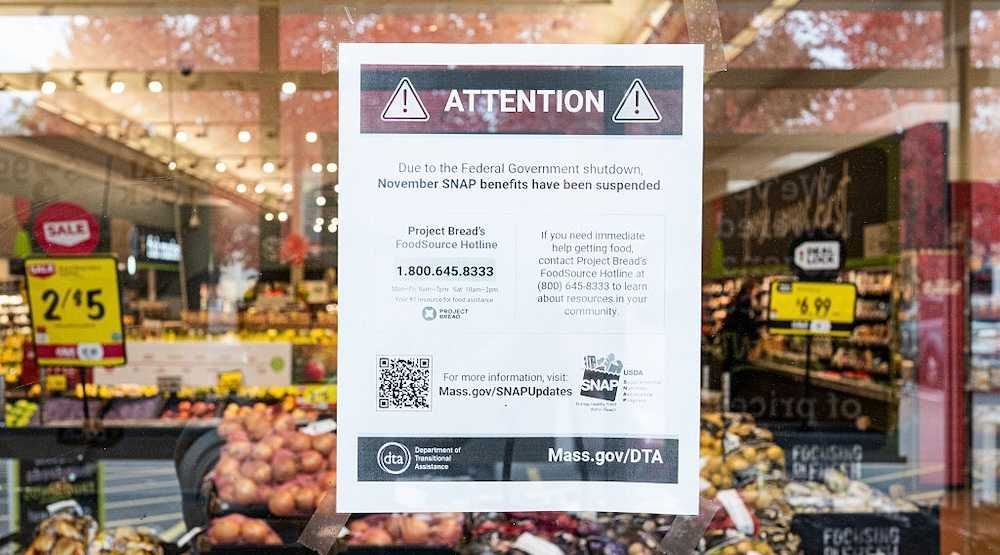
Look at Walmart. The company pulls tens of billions of taxpayer dollars a year through the SNAP program — the same program many of its employees rely on to eat because Walmart won’t pay them enough to live.
Independent research confirms it: Thousands of Walmart workers depend on Medicaid and food stamps.
Big government lets big business pocket our tax money on both ends — profits in private, losses in public. Even their labor costs get offloaded to us.
So when politicians wail about a “government shutdown” disrupting SNAP payments, remember who they’re really worried about. It’s not the families at the grocery store. It’s the corporations cashing in.
RELATED: Trump admin blames Senate Democrats for SNAP debacle: ‘The well has run dry’
A system this warped can’t last. You can call America the greatest nation in history if you like, but greatness doesn’t square with more than $38 trillion in government debt and record levels of personal debt.
Household debt, credit-card debt, mortgage debt — all at historic highs. Nearly a quarter of Americans are buying food on layaway. And 42% have zero emergency savings.
Meanwhile, Washington keeps inflating Wall Street’s floaties.
Main Street drowns while Big Government keeps Big Business comfortably above the surface.
Jamie Dimon thinks he’s just spotted the first cockroach. But the infestation started long ago — right inside the marble halls of Washington, D.C.
And if no one finally fumigates the place, the rot will force-condemn the entire country.

 The real threat to the economy is Joe Biden, his buffoonish treasury secretary and the rest of the capitalism-crushing useful idiots in this dangerous administration.
 Several themes stand out in 'Age of Easy Money,' beginning with the fact that the Federal Reserve lacks direct accountability.
 www.theblaze.com
 thefederalist.com
 www.theblaze.com
 www.theblaze.com